
 metals · microbes · host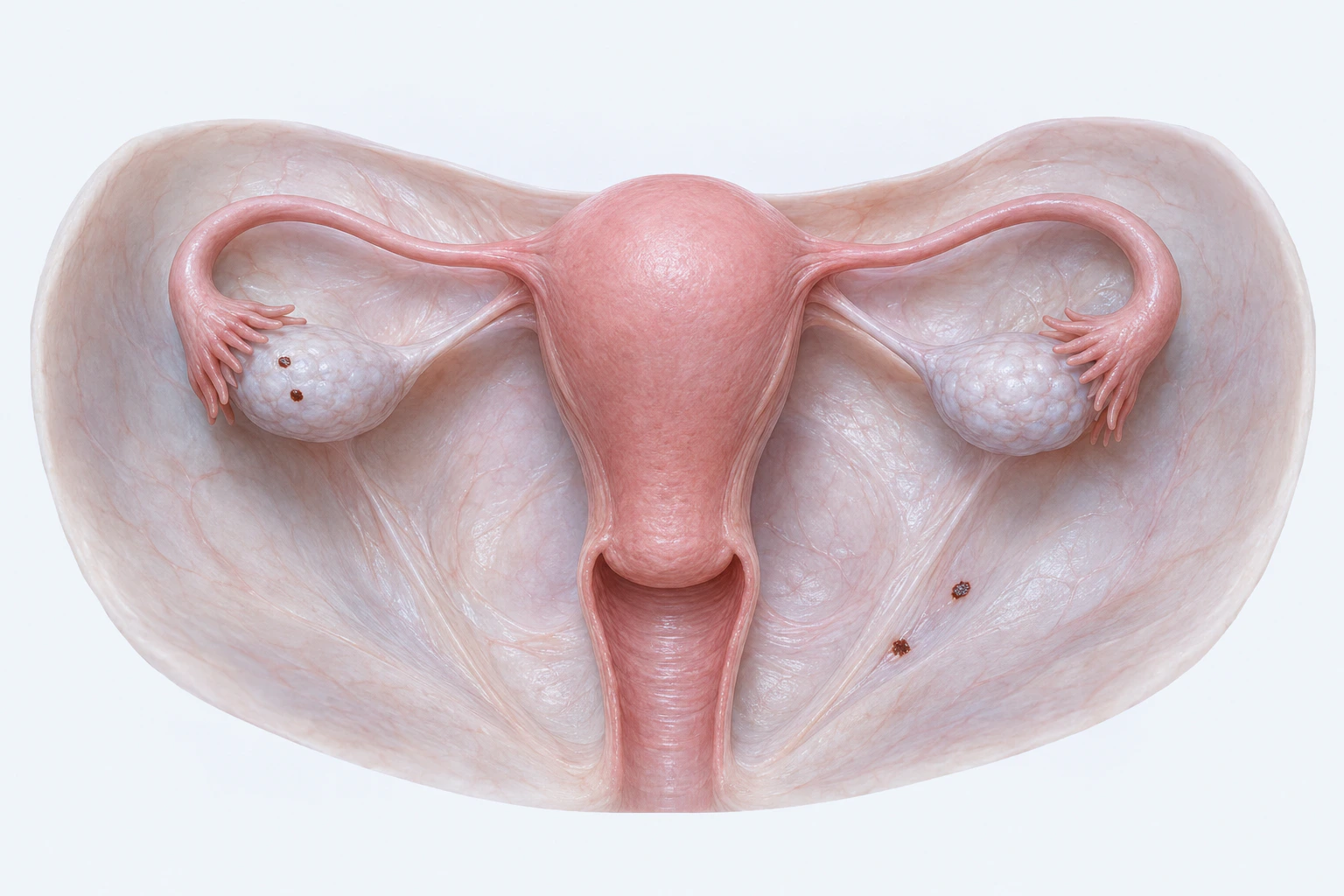
Internal pelvic orientation with four representative ectopic-tissue foci for endometriosis. The foci are editorial representations, not observed patient lesions, a universal distribution, stage, severity, fertility outcome, or diagnosis.
Scientific media record1 verified identifier
- Subject
- Endometriosiscondition
- Identifiers
- MeSH:D004715
- Review
- Editorial review completeIdentifiers authority-verified · Accessibility validated · · endometriosis|endometriosis-pathology-v1.webp
- Digital source
- Trained-algorithmic mediaCreated with a trained generative algorithm and reviewed by WikiBiome for subject identity, scientific framing, identifiers, provenance, and accessibility.
- Scientific basis
- Endometriosis — MeSHWhat is endometriosis?
- License
- CC BY-SA 4.0Created
Endometriosis is a chronic estrogen-dependent inflammatory condition affecting approximately 10% of reproductive-age women, characterized by the growth of endometrial-like tissue outside the uterus.[1]Gut and Vaginal Microbiota in the Endometriosis: Systematic Review and Meta-AnalysisColonetti T, Saggioratto MC, Grande AJ et al. · 2023Open reference 1 ↓ The conventional framing treats it as a hormonal or immune disorder.[2]Current Updates on the Role of Microbiome in Endometriosis: A Narrative ReviewSer HL, Au Yong SJ, Shafiee MN et al. · 2023Open reference 2 ↓
The metallomic and microbiome perspective—developed most comprehensively in the companion signature page—reveals it as an ecological disease driven by metal-dependent microbial communities.
This entity page provides the broader metallomics context: the systemic metal exposures, dietary paradoxes, and environmental links that feed the disease ecology described in the signature.
The pioneering finding is the extraordinary prevalence of nickel allergy in endometriosis patients: 90.3% tested positive for nickel allergic contact mucositis (nickel (Ni) ACM) in the[3]Irritable Bowel Syndrome-Like Disorders in Endometriosis: Prevalence of Nickel Sensitivity and Effects of a Low-Nickel Diet. An Open-Label Pilot StudyBorghini R, Porpora MG, Casale R et al. · 2020Open reference 3 ↓ study—a prevalence far exceeding the general population rate of approximately 30%.
Evidence map37 cited passagesInspect provenance +
Endometriosis is a chronic estrogen-dependent inflammatory condition affecting approximately 10% of reproductive-age women, characterized by the growth of endometrial-like tissue outside the uterus. The conventional framing treats it as a hormonal or immune disorder. The metallomic and microbiome perspective—developed most comprehensively in the companion
The pioneering finding is the extraordinary prevalence of nickel allergy in endometriosis patients: 90.3% tested positive for nickel allergic contact mucositis (Ni ACM) in the study—a prevalence far exceeding the general population rate of approximately 30%.
Metal-dependent pathogenic consortium. The enriched taxa (E. coli, B. fragilis, S. agalactiae, F. nucleatum, C. albicans) share a common feature: dependence on nickel, iron, and zinc for virulence enzymes. In the cervicovaginal niche, Gardnerella is enriched in endometriosis patients (67.7% vs 36.8% of non-Lactobacillus taxa in sensitivity analysis) and its
Estrobolome dysbiosis. Beta-glucuronidase-producing taxa (E. coli, B. fragilis, S. agalactiae) deconjugate estrogen glucuronides, driving hepatic estrogen recirculation that fuels the estrogen-dependent disease progression.
SCFA producer loss. Lachnospiraceae and Ruminococcus are depleted because they lack robust efflux pumps to survive the metal-rich, pro-inflammatory environment. Their loss causes colonocyte dysfunction, intestinal permeability, and microbial translocation—perpetuating the disease cycle.
Candida functional shielding. C. albicans biofilms consume oxygen (creating anaerobic niches for obligate anaerobes), shield bacteria from immune detection, and show increased biomass in the presence of nickel.
documented dramatically elevated peritoneal fluid metals in an endometriosis patient following a vegetarian diet with no occupational exposure. The case is instructive: the patient's lacto-ovo vegetarian diet rich in tomatoes, hazelnuts, walnuts, almonds, and olive oil provided a high-nickel dietary load that accumulated in the peritoneal environment.
reviewed evidence that plant-based diets reduce circulating estrogen by 10-25% through increased fiber, which should benefit this estrogen-dependent disease. A low-fat vegan diet increased sex-hormone binding globulin and reduced dysmenorrhea severity. Yet the plant-based foods recommended—legumes, whole grains, nuts, soy, leafy greens—are among the hi
found that higher dietary zinc intake (14 mg/day) was associated with a 60% increased odds of endometriosis (OR 1.6, 95% CI 1.12-2.27) in NHANES data (4,315 women). This is counterintuitive given zinc's antioxidant and anti-inflammatory roles. The resolution lies in the dual nature of zinc in endometriosis:
demonstrated that hydrogen sulfide promotes endometrial stromal cell proliferation via NF-kB activation. CBS and CSE (H2S-producing enzymes) are overexpressed in ectopic endometrium. NF-kB is also activated by nickel exposure in allergic contact mucositis. This creates a convergent pathway: dietary nickel activates NF-kB in the gut mucosa; H2S from endometri
This is the first disease signature fully analyzed using the Karen's Brain pipeline, presented at the Amsterdam Endometriosis Conference by karen pendergrass. The signature has been validated and expanded with data from 27 additional peer-reviewed papers spanning microbiome profiling, metabolomics, multi-site sequencing, and meta-analyses.
The tissue metallomic signature in endometriosis is characterized by elevated zinc, iron, cadmium, lead, and nickel. Cross-referencing 27 additional papers confirms this with quantified consensus frequencies:
Brassica vegetables are cadmium, lead, zinc, and nickel hyperaccumulators—and increased brassica consumption was found as a risk factor for endometriosis, consistent with the metallomic signature.
The host is actively fighting the metal/microbial imbalance. All of the following are elevated in endometriosis:
Cadmium and lead both enter cells through calcium channels, displacing correct cofactors like zinc or iron (Primitive 3: Mis-metallation and Toxic Metal Entry). When cadmium and lead are combined in the environment, they produce a synergistic effect generating even more oxidative stress and hypoxia than either metal alone.
Key insight: Glyoxalase is the enzyme that allows pathogens to evade neutrophils in the bloodstream. It is nickel-dependent. Remove the nickel, and you disable this evasion mechanism across all glyoxalase-positive pathogens simultaneously.
candida albicans is NOT an incidental finding and is NOT noise—it is a critical component of the disease ecology that 16S studies fail to detect (Primitive 6: Interkingdom Relationships and Functional Shielding).
The pioneering finding is the extraordinary prevalence of nickel allergy: 90.3% of symptomatic endometriosis patients tested positive for nickel allergic contact mucositis (Ni ACM) (, open-label pilot, n=31). Peritoneal fluid metal analysis revealed dramatically elevated nickel (4:1 ratio vs control), lead (90:1 ratio), and bismuth (1.5:1 ratio) even in pati
| Metal | Evidence | Confidence | |-------|----------|------------| | nickel | Peritoneal fluid 40.4 ug/L vs <LOD in control (4:1 ratio); 77.8% literature consensus; Ni ACM prevalence 90.3% in symptomatic patients (; ) | High | | iron | Elevated in peritoneal fluid via retrograde menstruation; 70.4% literature consensus; hepcidin elevation indicates function
The nickel-estrogen convergence. Cadmium binds ERa with affinity near estradiol, activating classical estrogen target genes (, expert opinion). Nickel acts via noncompetitive ERa binding and epigenetic mechanisms (histone deacetylation, H3K9 methylation). Both are classified as metalloestrogens, and both accumulate in the peritoneal environment where endomet
Diet (largest contributor): Nickel, zinc, iron, cadmium, lead through plant-based foods, nuts, legumes, whole grains. A lacto-ovo vegetarian patient with no occupational exposure showed dramatically elevated peritoneal metals ()
Retrograde menstruation: Iron exposure to the peritoneal microenvironment; LPS-contaminated menstrual blood drives cyclical inflammation ()
Brassica vegetables: Cadmium, lead, zinc, and nickel hyperaccumulators; increased brassica consumption identified as an endometriosis risk factor ()
The plant-based diet paradox. Plant-based diets reduce circulating estrogen by 10-25% through increased fiber (, prospective cohort review), which should benefit this estrogen-dependent disease. Yet the recommended foods—legumes, whole grains, nuts, soy—are among the highest-nickel foods. For the 90.3% of patients with nickel sensitivity, standard plan
Showing 24 of 37 evidence-bearing passages. Every remaining citation is still indexed in the reference record below.
One disease. Five evidence layers.
A generated systems view of the metals, organisms, host sequestration signals, ecological conditions, and microbial functions indexed for Endometriosis.
Evidence layer
Taxonomic signature
Organisms reported as enriched or depleted, with their indexed functional context kept beside the name.Primary pathobiont -- siderophore-mediated iron acquisition, LPS/TLR4 activation, beta-glucuronidase-driven estrogen deconjugation; LPS 4-6x higher in menstrual fluid of patients
zinc (Zn)-dependent BFT toxin cleaves E-cadherin; beta-glucuronidase activity drives estrogen recirculation; iron piracy via siderophores
Group B Strep — zinc (Zn)/nickel (Ni) critical cofactors, beta-glucuronidase positive, iron piracy
zinc (Zn)/nickel (Ni)-dependent enzymes, oxygen consumption creating local hypoxia, NOT involved in estrogen deconjugation
Interkingdom biofilm partner; oxygen consumption creates anaerobic niches; functional shielding of bacterial pathogens; increased biomass in presence of nickel
Enriched in cervicovaginal niche (67.7% vs 36.8% of non-Lactobacillus taxa); sialidase-driven mucus degradation facilitates pathobiont colonization
Enriched in cervical microbiota; beta-glucuronidase-producing species contribute to estrogen recirculation
Abundance positively correlated with serum estradiol; beta-glucuronidase activity links to estrobolome dysbiosis
Enriched in gut/peritoneum but DEPLETED in vaginal cavity — translocation likely; nickel-dependent, glyoxalase-positive
SCFA producers — lost competitive advantage in iron-rich pro-inflammatory environment
Decreased in endometriosis; fecal calprotectin correlated with Ruminococcus abundance suggesting inflammatory displacement
SCFA producers -- lost competitive advantage in metal-rich, pro-inflammatory environment; Lachnospira significantly decreased in stage 3/4 patients
SCFA producer depleted in endometriosis gut; lacks robust efflux pumps to survive metal-rich environment
Evidence layer
Nutritional immunity
Host metal-withholding, inflammatory, antioxidant, and microbial-metabolite signals indexed in the signature.Elevated host signals
5Depleted protective signals
1Evidence layer
Ecological state
The environmental conditions that connect the organism-level observations into a system.Evidence layer
Virulence functions
Microbial structures, enzymes, and acquisition systems implicated by the linked evidence.The disease record, in full.
The original WikiBiome disease narrative remains intact beneath the generated signature atlas.
Metallomic Signature#
The tissue metallomic signature from the endometriosis signature page shows elevated zinc, iron, cadmium, lead, and nickel with depleted glutathione. From the peritoneal fluid data:
| Metal | Peritoneal Fluid Finding | Systemic Relevance | |
|---|---|---|---|
| [[nickel | nickel (Ni)]] | 40.4 ug/L vs. <LOD in control (4:1 ratio); 77.8% literature consensus | Cofactor for Urease, glyoxalase, Hydrogenase in pathogenic taxa; nickel ACM prevalence 90.3% in symptomatic patients |
| [[iron | iron (Fe)]] | Elevated in peritoneal fluid via retrograde menstruation | 70.4% literature consensus; siderophore competition; functional anemia via hepcidin (host defense, NOT deficiency) |
| [[lead | lead (Pb)]] | 75 ug/L vs. 0.72 ug/L in control (90:1 ratio) | 59.3% consensus; mis-metallation via calcium (Ca) channels; synergistic with cadmium (Cd) for Oxidative Stress |
| [[cadmium | cadmium]] | Elevated in peritoneal environment | 18.5% consensus; metalloestrogen (ERa binding); synergistic with lead |
| [[zinc | zinc (Zn)]] | Elevated locally (lesion microenvironment) | 14.8% consensus; MMP cofactor enabling tissue invasion; calprotectin target |
| [[copper | copper (Cu)]] | Elevated | 14.8% consensus; microbial virulence cofactor |
The Hepcidin Signal: Functional Anemia vs. True Deficiency#
A critical clinical insight from the signature analysis: hepcidin is elevated in endometriosis, indicating the body is deliberately withholding iron from pathogens. Low serum iron in endometriosis patients represents a host defense strategy (functional anemia), not a nutritional deficiency.
This has direct therapeutic implications—iron supplementation may be counterproductive (see STOPs below).
Gut Microbiome Connection#
The microbiome dimension of endometriosis is extensively documented in the signature page. Key elements relevant to the metallomic context:
Metal-dependent pathogenic consortium. The enriched taxa (E. coli, B. fragilis, S. agalactiae, F. nucleatum, C. albicans) share a common feature: dependence on nickel, iron, and zinc for virulence enzymes.[4]Associations Between Endometriosis and Gut MicrobiotaSvensson A, Brunkwall L, Roth B et al. · 2021Open reference 4 ↓[5]The Endobiota Study: Comparison of Vaginal, Cervical and Gut Microbiota Between Women with Stage 3/4 Endometriosis and Healthy ControlsAta B, Yildiz S, Turkgeldi E et al. · 2019Open reference 5 ↓
In the cervicovaginal niche, *Gardnerella* is enriched in endometriosis patients (67.7% vs 36.8% of non-Lactobacillus taxa in sensitivity analysis) and its sialidase-driven mucus degradation may facilitate pathobiont colonization.[5]The Endobiota Study: Comparison of Vaginal, Cervical and Gut Microbiota Between Women with Stage 3/4 Endometriosis and Healthy ControlsAta B, Yildiz S, Turkgeldi E et al. · 2019Open reference 5 ↓ Nickel-dependent glyoxalase enables immune evasion across all glyoxalase-positive pathogens. Iron-dependent siderophores power biofilm formation.
Zinc-dependent metalloproteases enable tissue invasion.
Estrobolome Dysbiosis. Beta-glucuronidase-producing taxa (E. coli, B. fragilis, S. agalactiae) deconjugate estrogen glucuronides, driving hepatic estrogen recirculation that fuels the estrogen-dependent disease progression.[6]Gut microbiome in endometriosis: a cohort study on 1000 individualsPerez-Prieto I, Vargas E, Salas-Espejo E et al. · 2024Open reference 6 ↓[7]The bidirectional relationship between endometriosis and microbiomeUzuner C, Mak J, El-Assaad F et al. · 2023Open reference 7 ↓
SCFA producer loss. Lachnospiraceae and Ruminococcus are depleted because they lack robust efflux pumps to survive the metal-rich, pro-inflammatory environment.[8]Gut microbiota imbalance and its correlations with hormone and inflammatory factors in patients with stage 3/4 endometriosisShan J, Ni Z, Cheng W et al. · 2021Open reference 8 ↓[9]Ni 2020 — Fecal Metabolomics and Gut Microbiota Correlation in Endometriosis MiceZhexin Ni, Shuai Sun, Yanli Bi et al. · 2020Open reference 9 ↓ Their loss causes colonocyte dysfunction, intestinal permeability, and microbial translocation—perpetuating the disease cycle.
Candida functional shielding. C. albicans biofilms consume oxygen (creating anaerobic niches for obligate anaerobes), shield bacteria from immune detection, and show increased biomass in the presence of nickel.[10]Bacterial contamination hypothesis: a new concept in endometriosisKhan KN, Fujishita A, Hiraki K et al. · 2018Open reference 10 ↓
Environmental Metal Exposure Links#
[11]Elevated Lead, Nickel, and Bismuth Levels in the Peritoneal Fluid of a Peritoneal Endometriosis Patient without Toxic Habits or Occupational Exposure following a Vegetarian DietLopez-Botella A, Gomez-Torres MJ, Sanchez R et al. · 2023Open reference 11 ↓ documented dramatically elevated peritoneal fluid metals in an endometriosis patient following a vegetarian diet with no occupational exposure.
The case is instructive: the patient's lacto-ovo vegetarian diet rich in tomatoes, hazelnuts, walnuts, almonds, and olive oil provided a high-nickel dietary load that accumulated in the peritoneal environment.
Sources of the metal burden include. Diet (largest contributor): zinc (Zn), iron (Fe), nickel (Ni), cadmium (Cd), lead (Pb) through plant-based foods, nuts, legumes, whole grains. Brassica vegetables: Cadmium, lead, zinc, and nickel hyperaccumulators; increased brassica consumption was found as a risk factor for endometriosis.
Retrograde menstruation: iron exposure to the peritoneal microenvironment.
Smoking: cadmium, lead, nickel. Stainless steel cookware: nickel, chromium (Cr), iron. Cosmetics: lead, nickel, cadmium.
Dietary Metal Paradoxes#
Full evidence is maintained on the canonical paradox articles.
Developmental Vulnerability#
Endometriosis onset typically occurs during adolescence and early reproductive years, a period of high estrogen activity and ongoing reproductive tract development. Prenatal and pubertal exposure to metalloestrogens (cadmium (Cd), nickel (Ni)) during these windows may prime susceptibility.
No studies have evaluated chronic low-dose metalloestrogen exposure during puberty specifically in relation to endometriosis risk—this remains a critical gap. See Developmental Metal Vulnerability: Critical Windows of Susceptibility.
Current Interventions with Metal Relevance#
Validated (from signature page)#
| Intervention | Mechanism |
|---|---|
| Low-Nickel Diet | Disables nickel (Ni)-dependent glyoxalase, urease, hydrogenase; reduces Candida co-aggregate biofilm biomass; all 15 GI, 7 extra-intestinal, and 3 gynecological symptoms improved significantly |
| Low-Red-Meat Diet for Endometriosis | Reduces free iron and zinc available to pathogens |
| Low-Fat Diet for Endometriosis | Reduces E. coli growth; lowers circulating estrogen by 10-25% |
| E. coli Nissle 1917 | Outcompetes pathogenic E. coli via superior siderophore systems; lacks virulence genes |
| Saccharomyces boulardii | Outcompetes Candida; cell walls bind cadmium and lead |
| Lactoferrin Supplementation (Cross-Condition) | Supports nutritional immunity; chelates iron + nickel from pathogens; alternative to iron supplementation |
| NAC supplementation | Replenishes depleted glutathione—the only factor neutralizing cadmium (Cd) and lead (Pb) |
STOPs#
| STOP | Rationale |
|---|---|
| Iron supplementation | Hepcidin elevation = functional anemia (host defense). Iron feeds siderophore-producing pathogens. |
| Zinc supplementation | Calprotectin is already sequestering zinc as host defense. Zinc feeds MMP-producing pathogens. |
Open Questions#
Unresolved questions identified by the current evidence record.
01Nickel allergy as diagnostic tool: Should nickel (Ni) ACM testing (nickel omPT) become standard in the endometriosis workup, given 90.3% prevalence in symptomatic patients?+
The current WikiBiome record identifies this as an unresolved evidence gap.
02HBOT in humans: Complete remission in animal models via disrupting the hypoxic niche—when will this be clinically investigated?+
The current WikiBiome record identifies this as an unresolved evidence gap.
03Vegetarian diet modification: Can a modified "low-nickel vegetarian" diet capture the estrogen-lowering benefits of plant-based eating while avoiding nickel-driven symptom exacerbation?+
The current WikiBiome record identifies this as an unresolved evidence gap.
04Metformin + lactoferrin synergy: Does combined biofilm disruption + iron chelation show synergistic clinical benefit?+
The current WikiBiome record identifies this as an unresolved evidence gap.
05Cadmium-lead synergy quantification: What is the dose-response curve for synergistic oxidative stress from combined cadmium (Cd)+lead (Pb) exposure in peritoneal fluid?+
The current WikiBiome record identifies this as an unresolved evidence gap.
Comorbidities#
Polycystic Ovary Syndrome—both are estrogen-related conditions with shared metalloestrogen exposure (cadmium (Cd), nickel (Ni) binding ERa); 20% comorbidity rate in clinical series; endometriosis pain may mask PCOS symptoms and vice versa; shared nickel elevation and oxidative stress.
Depression—chronic pain and infertility drive high depression rates (40-50%) in endometriosis; shared neuroinflammation via gut-brain axis disruption; tryptophan pathway alterations reduce serotonin precursor availability.
Inflammatory Bowel Disease (IBD)—GI symptoms overlap significantly (90.3% of endometriosis patients have nickel ACM with IBS-like symptoms); shared NF-kB-driven intestinal Metal-Driven Inflammation and dysbiosis; nickel allergy may be a common driver in co-occurring cases.
Anxiety Disorders—chronic pain, diagnostic delays (average 7-10 years), and fertility concerns drive anxiety; shared HPA axis dysregulation and gut-brain axis disruption; nickel-driven systemic inflammation may contribute to neuropsychiatric symptoms.
Connections#
- Metal-Disease Matrix: A Cross-Source Synthesis—Cross-disease metallomic comparison; endometriosis signature mapped
- Endometriosis—Companion signature page with full taxonomic, virulence enzyme, and ecological analysis
- Dietary Metal Paradoxes: When Healthy Foods and Good Intentions Backfire—Plant-based diet paradox and zinc-MMP paradox documented here
- Nickel Allergy and Allergic Contact Dermatitis—90.3% nickel (Ni) ACM prevalence; nickel as metalloestrogen; SNAS overlap
- Metalloestrogens—cadmium (Cd) ERa binding (Kd 4.5x10^-10 M); nickel noncompetitive ERa binding
- Copper—Elevated in peritoneal environment; microbial virulence cofactor
- Cadmium—Metalloestrogen; peritoneal accumulation; glutathione depletion
- Iron—Functional anemia distinction; siderophore ecology; ferroptosis in peritoneal fluid
- Developmental Metal Vulnerability: Critical Windows of Susceptibility—Pubertal metalloestrogen exposure and endometriosis susceptibility
References 45
Numbered by first appearance in the article, then reconciled with its declared source list.
- 1
Colonetti T, Saggioratto MC, Grande AJ et al. (2023). Gut and Vaginal Microbiota in the Endometriosis: Systematic Review and Meta-Analysis. BioMed Research International.
- 2
Ser HL, Au Yong SJ, Shafiee MN et al. (2023). Current Updates on the Role of Microbiome in Endometriosis: A Narrative Review. Microorganisms.
- 3
Borghini R, Porpora MG, Casale R et al. (2020). Irritable Bowel Syndrome-Like Disorders in Endometriosis: Prevalence of Nickel Sensitivity and Effects of a Low-Nickel Diet. An Open-Label Pilot Study. Nutrients.
- 4
Svensson A, Brunkwall L, Roth B et al. (2021). Associations Between Endometriosis and Gut Microbiota. Reproductive Sciences.
- 5
Ata B, Yildiz S, Turkgeldi E et al. (2019). The Endobiota Study: Comparison of Vaginal, Cervical and Gut Microbiota Between Women with Stage 3/4 Endometriosis and Healthy Controls. Scientific Reports.
- 6
Perez-Prieto I, Vargas E, Salas-Espejo E et al. (2024). Gut microbiome in endometriosis: a cohort study on 1000 individuals. BMC Medicine.
- 7
Uzuner C, Mak J, El-Assaad F et al. (2023). The bidirectional relationship between endometriosis and microbiome. Frontiers in Endocrinology.
- 8
Shan J, Ni Z, Cheng W et al. (2021). Gut microbiota imbalance and its correlations with hormone and inflammatory factors in patients with stage 3/4 endometriosis. Archives of Gynecology and Obstetrics.
- 9
Zhexin Ni, Shuai Sun, Yanli Bi et al. (2020). Ni 2020 — Fecal Metabolomics and Gut Microbiota Correlation in Endometriosis Mice. American Journal of Reproductive Immunology.
- 10
Khan KN, Fujishita A, Hiraki K et al. (2018). Bacterial contamination hypothesis: a new concept in endometriosis. Reproductive Medicine and Biology.
- 11
Lopez-Botella A, Gomez-Torres MJ, Sanchez R et al. (2023). Elevated Lead, Nickel, and Bismuth Levels in the Peritoneal Fluid of a Peritoneal Endometriosis Patient without Toxic Habits or Occupational Exposure following a Vegetarian Diet. Toxics.
- 12
Barnard ND, Holtz DN, Schmidt N et al. (2023). Nutrition in the prevention and treatment of endometriosis: A review. Frontiers in Nutrition.
- 13
Huang Y, Wei Y, Liang F et al. (2024). Exploring the link between dietary zinc intake and endometriosis risk: insights from a cross-sectional analysis of American women. BMC Public Health.
- 14
Lei S, Cao Y, Sun J et al. (2018). H2S promotes proliferation of endometrial stromal cells via activating the NF-kB pathway in endometriosis. American Journal of Translational Research.
- 15
Karen Pendergrass (2026). Pendergrass 2026 — Endometriosis Conference Presentation (Amsterdam). Conference Presentation.
- 16
Yingmei Huang, Yumei Wei, Feng Liang et al. (2024). Huang 2024 — Exploring the Link Between Dietary Zinc Intake and Endometriosis Risk. BMC Public Health.
- 17
S. A. Roberts, L. Brabin, S. Diallo et al. (2019). Roberts 2019 — Mucosal Lactoferrin Response to Genital Tract Infections Is Associated with Iron and Nutritional Biomarkers. European Journal of Clinical Nutrition.
- 18
John MacSharry, Zsuzsanna Kovacs, Yongjing Xie et al. (2024). MacSharry 2024 — Endometriosis Specific Vaginal Microbiota Links to Urine and Serum N-Glycome. Scientific Reports.
- 19
Sa-Ra Lee, Jae-Chul Lee, Sung-Hoon Kim et al. (2021). Lee 2021 — Altered Composition of Microbiota in Women with Ovarian Endometrioma. International Journal of Molecular Sciences.
- 20
Chadchan SB, Cheng M, Parnell LA et al. (2019). Antibiotic therapy with metronidazole reduces endometriosis disease progression in mice: a potential role for gut microbiota. Human Reproduction.
- 21
Agnes Svensson, Louise Brunkwall, Bodil Roth et al. (2021). Svensson 2021 — Associations Between Endometriosis and Gut Microbiota. Reproductive Sciences.
- 22
Josefine Hantschel, Severin Weis, Karl-Herbert Schäfer et al. (2019). Hantschel 2019 — Effect of Endometriosis on the Fecal Bacteriota Composition of Mice During the Acute Phase of Lesion Formation. PLoS ONE.
- 23
Ming Yuan, Dong Li, Zhe Zhang et al. (2018). Yuan 2018 — Endometriosis Induces Gut Microbiota Alterations in Mice. Human Reproduction.
- 24
Jing Shan, Zhexin Ni, Wen Cheng et al. (2021). Shan 2021 — Gut Microbiota Imbalance and Correlations with Hormone and Inflammatory Factors in Stage 3/4 Endometriosis. Archives of Gynecology and Obstetrics.
- 25
Wang XM, Ma ZY, Song N (2018). Inflammatory cytokines IL-6, IL-10, IL-13, TNF-alpha and peritoneal fluid flora were associated with infertility in patients with endometriosis. European Review for Medical and Pharmacological Sciences.
- 26
Camila Hernandes, Paola Silveira, Aline Fernanda Rodrigues Sereia et al. (2020). Hernandes 2020 — Microbiome Profile of Deep Endometriosis Patients: Comparison of Vaginal Fluid, Endometrium and Lesion. Diagnostics.
- 27
Chen S, Gu Z, Zhang W et al. (2020). Microbiome of the lower genital tract in Chinese women with endometriosis by 16s-rRNA sequencing technique: a pilot study. Annals of Translational Medicine.
- 28
Wei W, Zhang X, Tang H et al. (2020). Microbiota composition and distribution along the female reproductive tract of women with endometriosis. Annals of Clinical Microbiology and Antimicrobials.
- 29
Khan KN, Fujishita A, Masumoto H et al. (2016). Khan 2016 — Molecular Detection of Intrauterine Microbial Colonization in Women with Endometriosis. European Journal of Obstetrics & Gynecology and Reproductive Biology.
- 30
★Aquino NB, Sevigny MB, Sabangan J et al. (2012). Role of Cadmium and Nickel in Estrogen Receptor Signaling and Breast Cancer: Metalloestrogens or Not?. Journal of Environmental Science and Health Part C - Environmental Carcinogenesis and Ecotoxicology Reviews.
- 31
Harris HR, Eke AC, Chavarro JE et al. (2018). Fruit and vegetable consumption and risk of endometriosis. Human Reproduction.
- 32
Piecuch M, Garbicz J, Waliczek M et al. (2022). I Am the 1 in 10 -- What Should I Eat? A Research Review of Nutrition in Endometriosis. Nutrients.
- 33
Mazza E, Troiano E, Mazza S et al. (2023). The impact of endometriosis on dietary choices and activities of everyday life: a cross-sectional study. Frontiers in Nutrition.
- 34
Unknown. Microbiome Diet for Endometriosis - Categorized Food Tables. Supplementary Material (no journal identified).
- 35
Georgina Quaranta, Mauro Pittiruti, Brunella Posteraro et al. (2019). Quaranta 2019 — FMT as a Potential Tool for Female Reproductive Tract Diseases (Review). Frontiers in Immunology.
- 36
Kanoko Akiyama, Keisuke Nishioka, Khaleque N. Khan et al. (2019). Akiyama 2019 — Molecular Detection of Microbial Colonization in Cervical Mucus of Women With and Without Endometriosis. American Journal of Reproductive Immunology.
- 37
Chloe Hicks, Mathew Leonardi, Xin-Yi Chua et al. (2025). Hicks et al. 2025 — Oral, Vaginal, and Stool Microbial Signatures in Patients With Endometriosis as Potential Diagnostic Non-Invasive Biomarkers. BJOG: An International Journal of Obstetrics and Gynaecology.
- 38
Baris Ata, Sule Yildiz, Engin Turkgeldi et al. (2019). Ata 2019 — The Endobiota Study: Comparison of Vaginal, Cervical and Gut Microbiota Between Women with Stage 3/4 Endometriosis and Healthy Controls. Scientific Reports.
- 39
Perrotta AR, Borrelli GM, Martins CO et al. (2020). The Vaginal Microbiome as a Tool to Predict rASRM Stage of Disease in Endometriosis: a Pilot Study. Reproductive Sciences.
- 40
Chao X, Liu Y, Fan Q et al. (2021). The role of the vaginal microbiome in distinguishing female chronic pelvic pain caused by endometriosis/adenomyosis. Annals of Translational Medicine.
- 41
Hooi-Leng Ser, Siu-Jung Au Yong, Mohamad Nasir Shafiee et al. (2023). Ser 2023 — Current Updates on the Role of Microbiome in Endometriosis: A Narrative Review. Microorganisms.
- 42
Inmaculada Perez-Prieto, Eva Vargas, Eduardo Salas-Espejo et al. (2024). Perez-Prieto 2024 — Gut Microbiome in Endometriosis: A Cohort Study on 1000 Individuals. BMC Medicine.
- 43
Carlos H Miyashira, Fernanda Reali Oliveira, Marina Paula Andres et al. (2022). Miyashira 2022 — The Microbiome and Endometriosis. Reproduction and Fertility.
- 44
Liping Shen, Wei Zhang, Yi Yuan et al. (2022). Shen 2022 — Vaginal Microecological Characteristics of Women in Different Physiological and Pathological Periods. Frontiers in Cellular and Infection Microbiology.
- 45
Khan KN, Fujishita A, Masumoto H et al. (2016). Molecular detection of intrauterine microbial colonization in women with endometriosis. European Journal of Obstetrics and Gynecology and Reproductive Biology.
Article network
Mentioned here 18
Pages linking here 106
Connect the evidence
Publicly readable discussion by ORCID-authenticated researchers. Questions, interpretation, methods, corrections, and new evidence stay attached to this record.
No discussion yet. Start with a precise question or a source-backed observation.
Activity and accepted changes
Accepted researcher context, editorial status, public discussion, and upstream Git revisions are shown together. Pending, declined, and withdrawn proposals remain private.
- published revision
Backfill oxidative stress concept links
Karen Pendergrass · +1 −1
Inspect exact Git diff ↗ - published revision
Backfill inflammation concept links
Karen Pendergrass · +1 −1
Inspect exact Git diff ↗ - published revision
Complete corpus-wide Dysbiosis linking
Karen Pendergrass · +1 −1
Inspect exact Git diff ↗ - published revision
Complete Hydrogenase contextual coverage
Karen Pendergrass · +1 −1
Inspect exact Git diff ↗ - published revision
Complete reviewed Urease contextual coverage
Karen Pendergrass · +1 −1
Inspect exact Git diff ↗ - published revision
massive wiki expansion: 149 stubs fixed, 100+ new pages, Rule 15 scan, keystone papers
WikiBiome Deploy Bot · +38 −38
Inspect exact Git diff ↗ - published revision
ingest: quaranta-2019-fmt-female-reproductive-tract-diseases
WikiBiome Deploy Bot · +2 −1
Inspect exact Git diff ↗ - published revision
nightly maintenance: 94 stub demotions, 181 source_count fixes, 22 auto-discovered stubs, 5 adversarial audits, 3 boundary fixes, 3 evidence-level corrections
WikiBiome Deploy Bot · +1 −0
Inspect exact Git diff ↗ - published revision
cycle 1: health check + lint fixes + 8 ingests + 2 stubs + gestational-diabetes signature
WikiBiome Deploy Bot · +1 −0
Inspect exact Git diff ↗ - published revision
pre-overnight checkpoint 2026-04-18
WikiBiome Deploy Bot · +2 −1
Inspect exact Git diff ↗ - published revision
Batch: fix 1025 broken wikilinks, wire 13 STOP pages, deepen PPD/GERD/T1D/8 microbes
WikiBiome Deploy Bot · +1 −1
Inspect exact Git diff ↗ - published revision
Deep citation pass on 10 disease entities + expand 3 thin entities
WikiBiome Deploy Bot · +5 −5
Inspect exact Git diff ↗ - published revision
Deepen metal/concept entities + 8 new sources for T1D/schizophrenia
WikiBiome Deploy Bot · +317 −0
Inspect exact Git diff ↗ - published revision
WikiBiome update — 2026-04-15 17:23
WikiBiome Deploy Bot · +10 −10
Inspect exact Git diff ↗ - published revision
v2 migration Priority 2: All 29 disease entity pages upgraded with associated_conditions, seo_target, wikipedia_differentiation
WikiBiome Deploy Bot · +6 −0
Inspect exact Git diff ↗ - published revision
WikiBiome update — 2026-04-11 22:49
WikiBiome Deploy Bot · +7 −0
Inspect exact Git diff ↗