
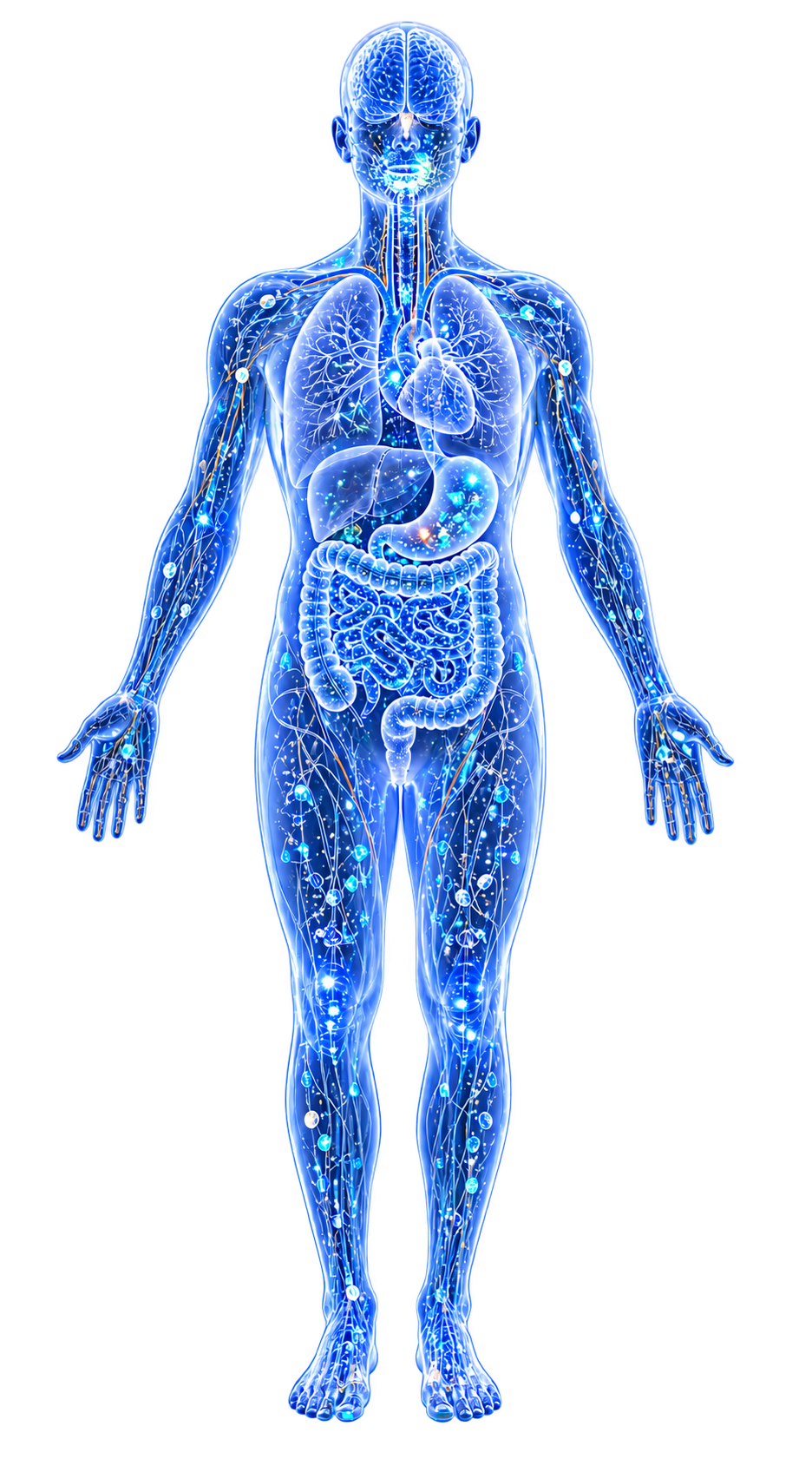
Lipocalin-2 (also known as NGAL—neutrophil gelatinase-associated lipocalin, or siderocalin) is a 25 kDa secreted protein produced by activated neutrophils, epithelial cells, and other innate immune cells. Its primary antimicrobial function is to sequester bacterial Siderophores—iron-scavenging molecules secreted by pathogenic bacteria—preventing pathogen iron acquisition.
Lipocalin-2 is one of the most potent anti-bacterial defenses in the Nutritional Immunity (Metal Sequestration) arsenal. Unlike Transferrin (which sequesters circulating iron (Fe)³⁺), lipocalin-2 directly targets the bacterial iron-uptake machinery.
Mechanism#
Siderophore binding: Lipocalin-2 contains a hydrophobic binding pocket that binds iron-loaded Siderophores with nanomolar affinity, particularly enterobactin (from Gram-negative bacteria like E. coli) and other catecholate siderophores. Once liganded, the siderophore-iron complex is sequestered and rendered unavailable for bacterial uptake.
Bacterial counter-mechanisms: Pathogens evolve multi-dentate "stealth" siderophores that have lower affinity for lipocalin-2. For example. E. coli K-12 produces enterobactin (recognized by lipocalin-2). E. coli strains pathogenic in urinary tract and bloodstream produce salmochelin (a glucosylated enterobactin derivative with reduced lipocalin-2 binding). salmonella produces salicylate-based siderophores with altered lipocalin-2 affinity.
Expression control: Lipocalin-2 is an acute-phase reactant—expression is induced by TNF-α, IL-6, LPS, and bacterial lipopolysaccharides. In the gut, both intestinal epithelial cells and infiltrating neutrophils upregulate lipocalin-2 in response to pathogenic Gram-negative bacteria.
Role in Disease#
Elevated fecal lipocalin-2 is a key biomarker of intestinal Metal-Driven Inflammation and pathogenic bacterial dominance.
Crohn's Disease: Markedly elevated in active inflammation; indicates AIEC-dominant signatures and nutritional immunity activation. Colorectal Cancer: Elevated in dysplastic lesions and tumor microenvironment; associated with Gram-negative pathobiont dominance. Obesity: Elevated in low-grade endotoxemia; reflects barrier breach and Gram-negative bacterial translocation.
ulcerative colitis: Surrogate marker of mucosal neutrophil infiltration. Bacterial infections generally: Urinary tract infection (elevated urinary lipocalin-2), pneumonia, sepsis.
Interpretation nuance: High lipocalin-2 indicates active immune engagement with iron-dependent Gram-negatives, not a failure of defense. It is a sign that the host is winning the nutritional immunity battle—if lipocalin-2 were absent, the pathogens would already be iron-replete and proliferating unchecked.
Metal Connections#
Lipocalin-2 is a master regulator of iron ecology in the gut. Siderophore sequestration: Traps iron-loaded enterobactin, preventing pathogenic E. coli from importing it via outer-membrane receptors (FepA, FecA).
Ecological reshaping: High lipocalin-2 → low bioavailable iron → selects against siderophore-dependent Gram-negatives → favors anaerobes (bacteroides, Lachnospiraceae) that use alternative iron uptake (e.g., heme-iron via B. fragilis IrgA).
Interkingdom spillover: Some fungi C. albicans also produce siderophores; lipocalin-2 also targets fungal iron uptake.
Connections#
Related proteins. Transferrin—serum iron sequestration; complementary mechanism to lipocalin-2. Lactoferrin—mucosal siderophore defense; overlapping mechanism with lipocalin-2 but higher affinity for iron (Fe)³⁺. Hepcidin—systemic iron regulation; often elevated in parallel with lipocalin-2 during infection.
Related concepts.—the substrate for lipocalin-2 binding. Nutritional Immunity (Metal Sequestration)—lipocalin-2 as a key defense component.—how lipocalin-2 shapes bacterial community structure.
Candida albicans—fungal pathogen also affected by siderophore sequestration.
Disease pages. Crohn's Disease, Colorectal Cancer, Obesity, ulcerative colitis—conditions with elevated lipocalin-2.
Metal entities. Iron—the target of the siderophore-lipocalin-2 battle.
References 8
Numbered by first appearance in the article, then reconciled with its declared source list.
- 1
Yuanzhao Xu, Lingyue An, Jiling Xie et al. (2026). Xu 2026 — The Gut-Prostate Axis in Benign Prostatic Hyperplasia: Systematic Review of Microbial Dysbiosis and Pathogenic Mechanisms. BMC Urology.
- 2
Xiaopeng Li, Jiahui Feng, Zhanggui Wang et al. (2023). Features of combined gut bacteria and fungi from a Chinese cohort of colorectal cancer, colorectal adenoma, and post-operative patients. Frontiers in Microbiology.
- 3
Yichao Shi, Jianfeng Li, Shuntian Cai et al. (2023). Shi 2023 — PPI-Induced Fungal Dysbiosis in Patients with Gastroesophageal Reflux Disease. Frontiers in Cellular and Infection Microbiology.
- 4
Wheeler RT, Fink GR (2006). Wheeler & Fink 2006 — A Drug-Sensitive Genetic Network Masks Fungi from the Immune System. PLoS Pathogens.
- 5
Eduardo De Pablo-Fernandez, Huw R Morris, Andrew J Lees et al. (2024). De Pablo-Fernandez 2024 -- The Faecal Metabolome and Mycobiome in Parkinson's Disease. npj Parkinson's Disease.
- 6
★Puthiyavalappil Rasin, Ashwathi A V, Sabeel M Basheer et al. (2025). Exposure to Cadmium and Its Impacts on Human Health: A Short Review. Journal of Hazardous Materials Advances.
- 7
Hiroki Mizutani, Shunsuke Fukui, Kazuki Oosuka et al. (2025). Biliary microbiome profiling via 16 S rRNA amplicon sequencing in patients with cholangiocarcinoma, pancreatic carcinoma and choledocholithiasis. Scientific Reports.
- 8
Agnieszka Krawczyk, Tomasz Kasperski, Tomasz Gosiewski et al. (2025). Krawczyk 2025 — Effects of Fecal Microbiota Transplantation on the Abundance and Diversity of Selected Fungal and Archaeal Species in the Gut Microbiota in the Rat Model of Schizophrenia. Pharmacological Reports.
Article network
Mentioned here 16
Pages linking here 18
Connect the evidence
Publicly readable discussion by ORCID-authenticated researchers. Questions, interpretation, methods, corrections, and new evidence stay attached to this record.
No discussion yet. Start with a precise question or a source-backed observation.
Activity and accepted changes
Accepted researcher context, editorial status, public discussion, and upstream Git revisions are shown together. Pending, declined, and withdrawn proposals remain private.
- published revision
Backfill inflammation concept links
Karen Pendergrass · +1 −1
Inspect exact Git diff ↗ - published revision
massive wiki expansion: 149 stubs fixed, 100+ new pages, Rule 15 scan, keystone papers
WikiBiome Deploy Bot · +28 −22
Inspect exact Git diff ↗ - published revision
nightly maintenance: 94 stub demotions, 181 source_count fixes, 22 auto-discovered stubs, 5 adversarial audits, 3 boundary fixes, 3 evidence-level corrections
WikiBiome Deploy Bot · +3 −0
Inspect exact Git diff ↗ - published revision
pre-overnight checkpoint 2026-04-18
WikiBiome Deploy Bot · +3 −1
Inspect exact Git diff ↗ - published revision
Deep content + citation pass: 10 entities enriched, 7 new sources, DOI integrity
WikiBiome Deploy Bot · +1 −1
Inspect exact Git diff ↗ - published revision
WikiBiome update — 2026-04-15 17:23
WikiBiome Deploy Bot · +4 −4
Inspect exact Git diff ↗ - published revision
WikiBiome update — integrity fixes, metallomic diet pages, cross-condition analyses
WikiBiome Deploy Bot · +22 −20
Inspect exact Git diff ↗ - published revision
WikiBiome update — 2026-04-10 17:16
WikiBiome Deploy Bot · +66 −0
Inspect exact Git diff ↗