
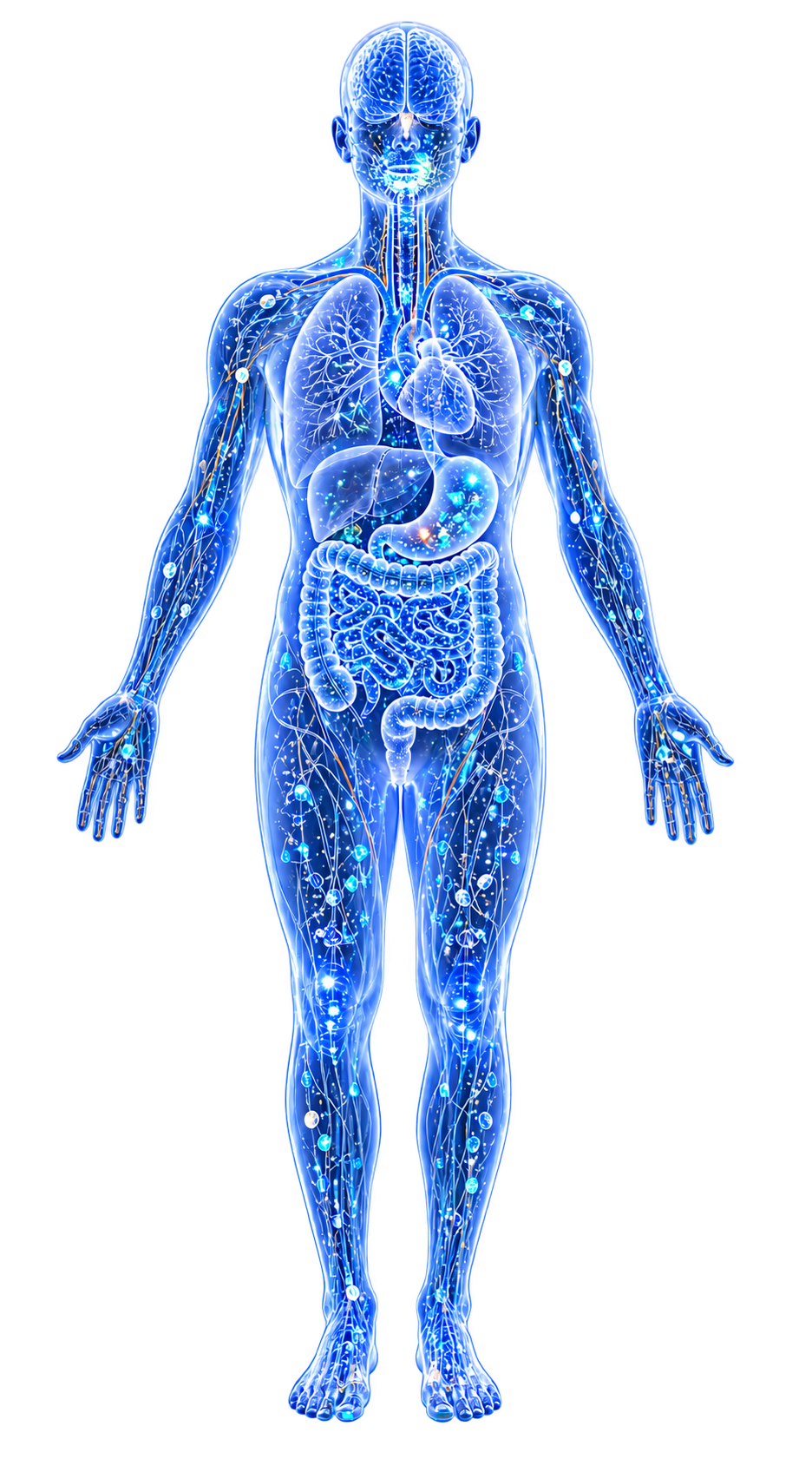
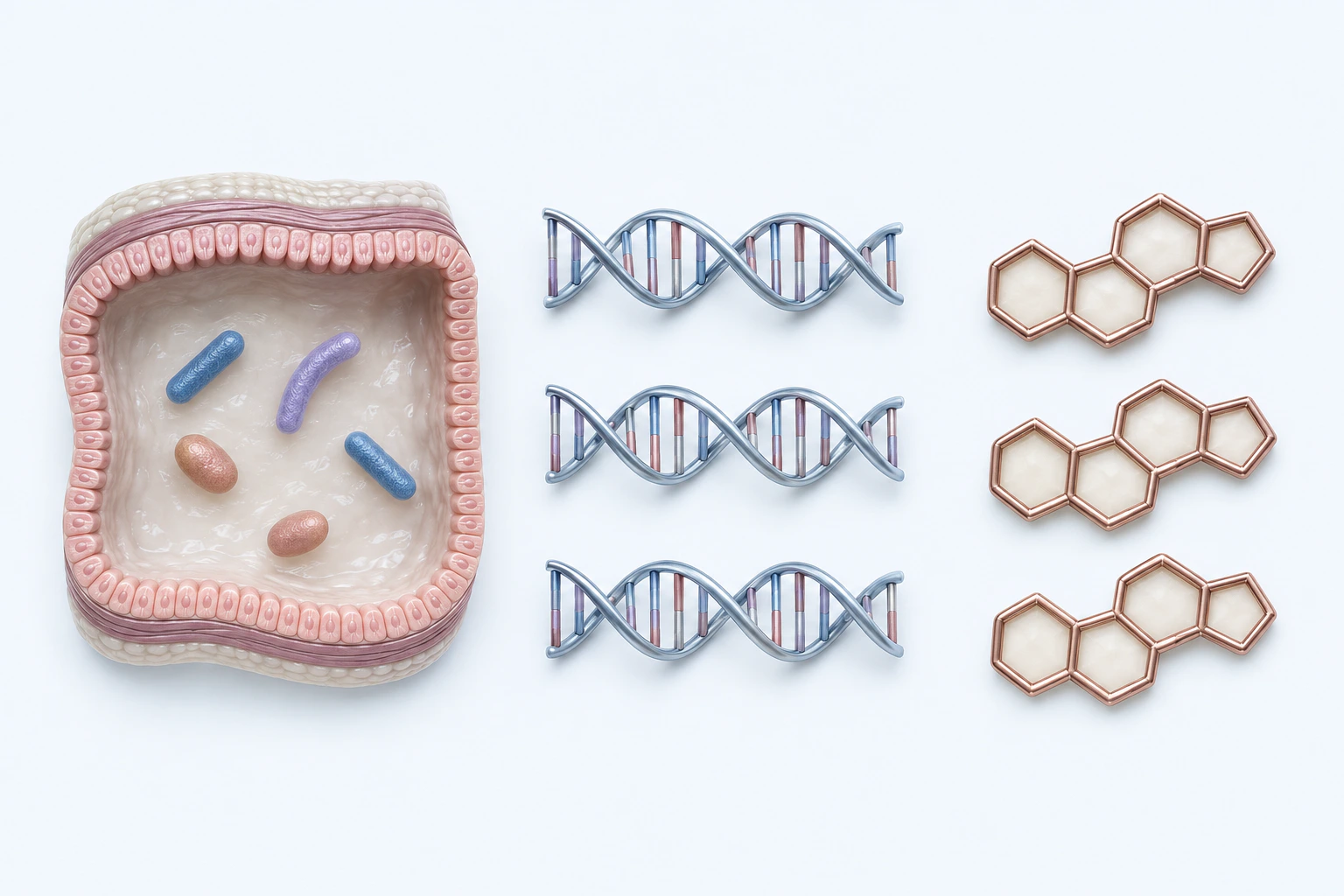
Generic intestinal, microbial, DNA, and steroid-context models orient the estrobolome concept. They do not identify taxa, assign genes, measure enzyme activity, show estrogen recirculation, or establish causality.
Scientific media record5 verified identifiers
- Subject
- Estrobolomebiological-process
- Identifiers
- WikiBiome:estrobolomePMID:22018233related-MeSH:D000069196related-MeSH:D004967related-MeSH:D005966
- Review
- Editorial review completeIdentifiers authority-verified · Accessibility validated · · estrobolome|estrobolome-mechanism-v1.webp
- Digital source
- Trained-algorithmic mediaCreated with a trained generative algorithm and reviewed by WikiBiome for subject identity, scientific framing, identifiers, provenance, and accessibility.
- Scientific basis
- EstrobolomeThe estrobolome: the gut microbiome and estrogen metabolismGut microbial beta-glucuronidases and estrogen reactivationEstrobolome research reviewGastrointestinal Microbiome — Medical Subject HeadingsEstrogens — Medical Subject HeadingsGlucuronidase — Medical Subject Headings
- License
- CC BY-SA 4.0Created
The estrobolome is the aggregate of enteric bacterial genes whose products are capable of metabolizing estrogens. First proposed by Plottel and Blaser (2011), the concept describes how the Gut Microbiome acts as an endocrine organ, modulating circulating estrogen levels through enzymatic deconjugation.
This concept is central to understanding why gut Dysbiosis contributes to estrogen-dependent conditions including Endometriosis, breast cancer, and Polycystic Ovary Syndrome.
Contents
1. Mechanism2. Key Bacterial Players3. Metal Connections4. Role in Disease5. Therapeutic Implications6. ConnectionsMechanism#
Estrogen metabolism follows a recycling loop through the Enterohepatic Circulation. The liver conjugates estrogens (estradiol, estrone, estriol) with glucuronic acid, rendering them water-soluble for excretion in bile. Conjugated estrogens enter the intestine via bile.
Gut bacteria possessing Beta-Glucuronidase (EC 3.2.1.31) cleave the glucuronic acid tag, freeing active estrogen.
Free estrogen is reabsorbed through the intestinal epithelium back into systemic circulation. This creates an Estrogen Recirculation loop that amplifies estrogen exposure.
In a healthy microbiome, this process is balanced—some estrogen is recycled, some is excreted. In dysbiosis enriched for beta-glucuronidase-producing taxa, the recycling rate increases dramatically, leading to hyperestrogenism.
Key Bacterial Players#
The estrobolome is not a single organism but a functional guild. Key contributors include:
| Taxon | Role | Metal Dependency |
|---|---|---|
| Escherichia coli | High beta-glucuronidase activity | Iron, Zinc |
| Bacteroides fragilis | Beta-glucuronidase, bile acid metabolism | Iron, Zinc |
| Eggerthella lenta | Steroid hormone metabolism, beta-glucuronidase | Iron, Molybdenum |
| Clostridium | Multiple species with glucuronidase activity | Iron |
| Collinsella | Estrogen hydroxylation | Iron |
Metal Connections#
The estrobolome is fundamentally metal-dependent, and metals modulate it through two distinct pathways:
Direct Metal Dependencies of Estrobolome Taxa#
Iron is the primary driver. Most beta-glucuronidase-producing taxa are iron-dependent organisms. Iron overload in the gut selectively enriches these taxa, amplifying estrogen recirculation.
This creates a feed-forward loop: Iron → pathogen enrichment → beta-glucuronidase → estrogen recirculation → tissue proliferation → Metal-Driven Inflammation → more iron release.
Zinc is required by several metalloprotease-producing estrobolome members for tissue invasion.
Nickel dependency in Helicobacter pylori connects gastric infection to altered estrogen metabolism through systemic inflammation.
Metals That Promote Estrobolome-Enriched Taxa#
Cadmium, lead, and arsenic all select for Enterobacteriaceae in dysbiosis models—the same taxa with the highest beta-glucuronidase activity. Metal-induced dysbiosis therefore indirectly enriches the estrobolome, increasing estrogen recirculation as a downstream consequence of toxic metal exposure.
Metalloestrogens—Direct Estrogenic Activity#
Certain metals bypass the estrobolome entirely by binding estrogen receptors directly. See Metalloestrogens. Cadmium—binds ERalpha with nanomolar affinity; the prototypical metalloestrogen.
Nickel—weak ERalpha binding; stronger effects via epigenetic deregulation of estrogen-responsive genes. Arsenic—modulates ER signaling at low concentrations.
Aluminum—binds ERalpha; implicated in breast tissue (antiperspirant exposure route). Lead—disrupts HPG axis signaling.
The combination of metalloestrogen activity + estrobolome enrichment by the same metals creates compounding estrogenic exposure—a double hit that is greater than either mechanism alone.
Role in Disease#
The estrobolome concept explains why gut dysbiosis contributes to conditions far removed from the GI tract. Endometriosis—Enriched estrobolome drives estrogen recirculation, fueling ectopic endometrial growth. The endometriosis metallomic signature shows elevated iron and nickel, which select for beta-glucuronidase producers.
Breast cancer—Elevated circulating estrogen from enhanced estrobolome activity is an established risk factor for estrogen receptor-positive breast cancer. Polycystic Ovary Syndrome—Altered estrobolome contributes to hormonal imbalance and hyperandrogenism through disrupted estrogen clearance. Obesity—Bidirectional relationship: adipose tissue produces estrogen via aromatase, while enriched estrobolome recirculates it.
Therapeutic Implications#
Understanding the estrobolome reframes intervention strategy:
Rather than targeting estrogen directly (e.g., aromatase inhibitors), the metallomics approach targets the metal dependencies of estrobolome bacteria. Restricting Iron availability through Lactoferrin or dietary modification reduces the competitive advantage of beta-glucuronidase producers, allowing beneficial taxa to recover and estrogen excretion to normalize.
Additional approaches. Probiotics—Lactobacillus strains with low beta-glucuronidase activity can shift the estrobolome toward lower estrogen recirculation. Calcium-D-glucarate—inhibits beta-glucuronidase, reducing estrogen deconjugation. Dietary fiber—increases fecal estrogen excretion by binding free estrogens and promoting SCFA-producing taxa over beta-glucuronidase producers.
Metalloestrogens avoidance—reducing cadmium, aluminum, and other metalloestrogen exposure removes both direct ER activation and dysbiosis-driven estrobolome enrichment.
This represents Karen's Brain Primitive 4 (Microbial Metal Dependencies as Achilles' Heels) applied to hormone-dependent disease.
Connections#
- Beta-Glucuronidase—The key enzyme enabling estrogen deconjugation
- Metalloestrogens—Metals that directly mimic estrogen, compounding estrobolome effects
- Breast Cancer—Estrogen-dependent malignancy linked to estrobolome
- Endometriosis—Estrogen-dependent condition with nickel and iron connections
- Polycystic Ovary Syndrome—Hormonal disorder with microbiome and metal dimensions
- dysbiosis—The microbiome disruption that shifts estrobolome activity
- Estrogen Recirculation—The recycling loop amplified by the estrobolome
- Enterohepatic Circulation—The broader physiological system
- Functional Shielding—Biofilm protection of estrobolome members
- Nutritional Immunity (Metal Sequestration)—Host defense that restricts metals from estrobolome pathogens
References 4
Numbered by first appearance in the article, then reconciled with its declared source list.
- 1
Borghini R, Porpora MG, Casale R et al. (2020). Irritable Bowel Syndrome-Like Disorders in Endometriosis: Prevalence of Nickel Sensitivity and Effects of a Low-Nickel Diet. An Open-Label Pilot Study. Nutrients.
- 2
M. Firoze Khan, Hui Wang (2020). Environmental Exposures and Autoimmune Diseases: Contribution of Gut Microbiome. Frontiers in Immunology.
- 3
★Federica Giambo, Sebastiano Italia, Michele Teodoro et al. (2021). Influence of Toxic Metal Exposure on the Gut Microbiota (Review). World Academy of Sciences Journal.
- 4
Fatemeh Rezazadegan, Maryam Mahmoudi, Seyed Mohammad Mousavi (2025). Rezazadegan et al. 2025 — Heavy Metals and Gut Microbiota: A Systematic Review. Journal of Health, Population and Nutrition.
Article network
Mentioned here 18
Pages linking here 44
Connect the evidence
Publicly readable discussion by ORCID-authenticated researchers. Questions, interpretation, methods, corrections, and new evidence stay attached to this record.
No discussion yet. Start with a precise question or a source-backed observation.
Activity and accepted changes
Accepted researcher context, editorial status, public discussion, and upstream Git revisions are shown together. Pending, declined, and withdrawn proposals remain private.
- published revision
Backfill gut microbiome concept links
Karen Pendergrass · +1 −1
Inspect exact Git diff ↗ - published revision
Backfill inflammation concept links
Karen Pendergrass · +1 −1
Inspect exact Git diff ↗ - published revision
Complete corpus-wide Dysbiosis linking
Karen Pendergrass · +3 −3
Inspect exact Git diff ↗ - published revision
massive wiki expansion: 149 stubs fixed, 100+ new pages, Rule 15 scan, keystone papers
WikiBiome Deploy Bot · +21 −21
Inspect exact Git diff ↗ - published revision
nightly maintenance: 94 stub demotions, 181 source_count fixes, 22 auto-discovered stubs, 5 adversarial audits, 3 boundary fixes, 3 evidence-level corrections
WikiBiome Deploy Bot · +1 −0
Inspect exact Git diff ↗ - published revision
pre-overnight checkpoint 2026-04-18
WikiBiome Deploy Bot · +6 −4
Inspect exact Git diff ↗ - published revision
WikiBiome update — 2026-04-11 22:49
WikiBiome Deploy Bot · +37 −9
Inspect exact Git diff ↗ - published revision
WikiBiome update — integrity fixes, metallomic diet pages, cross-condition analyses
WikiBiome Deploy Bot · +8 −6
Inspect exact Git diff ↗ - published revision
WikiBiome update — 2026-04-10 17:26
WikiBiome Deploy Bot · +74 −0
Inspect exact Git diff ↗