
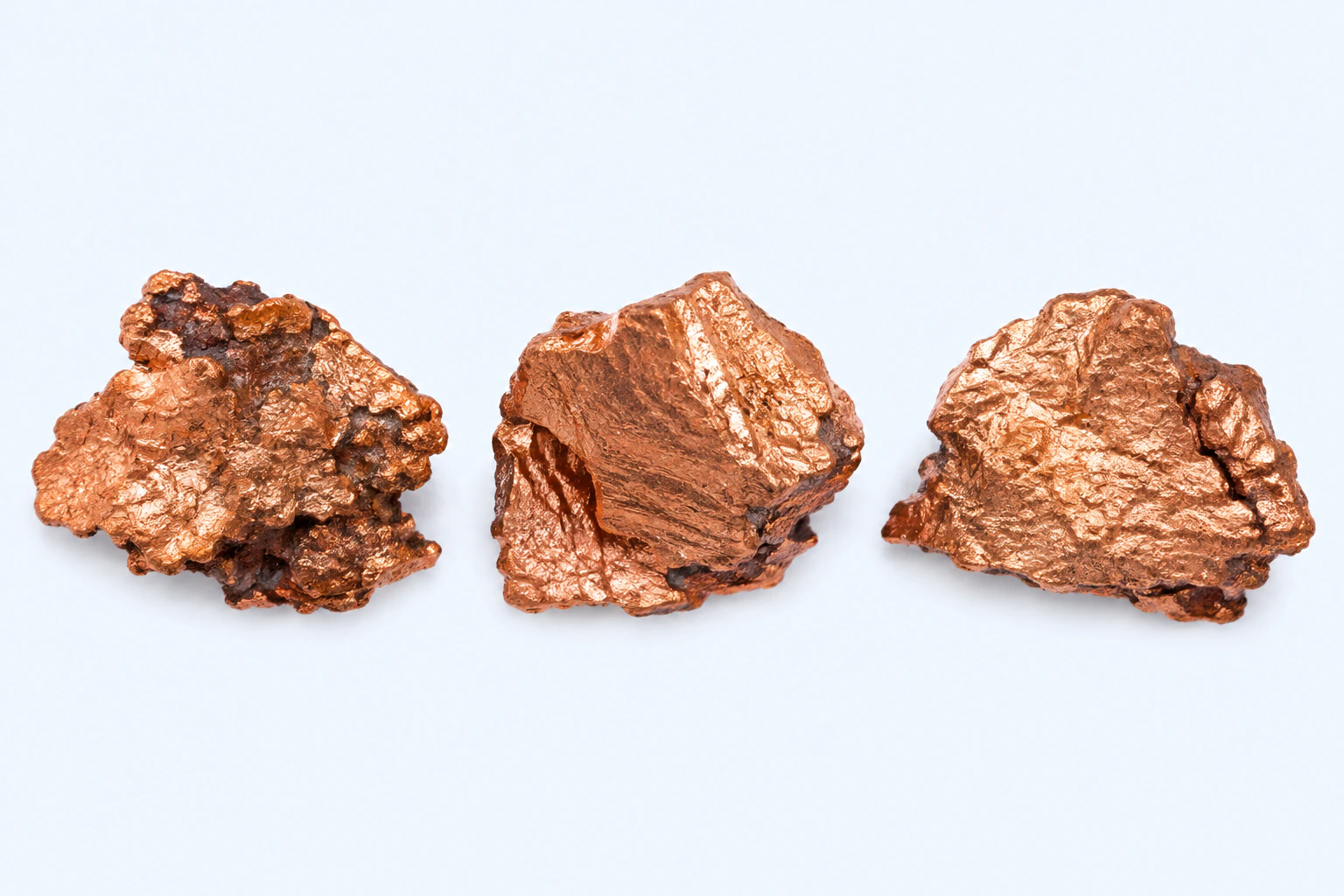
Elemental copper (Cu), shown as three representative reddish metallic specimens with minor surface oxidation. Form and surface vary with purity, processing, and storage; this is not ore, analytical reference material, or a photograph.
Scientific media record2 verified identifiers
- Subject
- Copperelement
- Identifiers
- Atomic number 29PubChem CID:23978
- Review
- Editorial review completeIdentifiers authority-verified · Accessibility validated · · copper|copper-technical-specimen-v1.webp
- Digital source
- Trained-algorithmic mediaCreated with a trained generative algorithm and reviewed by WikiBiome for subject identity, scientific framing, identifiers, provenance, and accessibility.
- Scientific basis
- Copper — PubChem ElementCopper, PubChem CID 23978
- License
- CC BY-SA 4.0Created
An essential trace element with a striking dual nature: required for survival as a cofactor for critical enzymes (SOD1, cytochrome c oxidase, ceruloplasmin), yet toxic in excess through Fenton-like redox cycling and Mis-Metallation of iron-sulfur clusters.
Copper is elevated in nearly every disease state examined in this wiki—PCOS, breast cancer, lung cancer, prostate cancer, pancreatic cancer, colorectal cancer, AMI, IBD, and rheumatoid arthritis—making it perhaps the most pervasive metallomic disease signature.
Simultaneously, copper is decreased in neurodegenerative brain tissue, creating a paradox of peripheral excess and central deficiency.[1]Scholefield et al. 2024 — Brain Metallomic Signatures Distinguish DLB from AD and PDDMelissa Scholefield, Stephanie J. Church, Jingshu Xu et al. · 2024Open reference 1 ↓
Copper sits at the apex of the Irving-Williams series (magnesium (Mg) < manganese (Mn) < iron (Fe) < cobalt (Co) < nickel (Ni) < copper (Cu) > zinc (Zn)), meaning it binds biological ligands more tightly than any other divalent metal ion.[2]Robinson & Glasfeld 2020 — Metalation and Mis-metalation: Nature's Challenge in Metal CoordinationNigel J. Robinson, Andrea Glasfeld · 2020Open reference 2 ↓
This thermodynamic property makes copper the metal most likely to cause Mis-Metallation when its concentration rises—displacing iron from iron-S clusters, zinc from zinc-finger proteins, and manganese from SOD active sites.[3]Andrei 2020 — Cu Homeostasis in Bacteria: The Ins and OutsAndreea Andrei, Yavuz Ozturk, Bahia Khalfaoui-Hassani et al. · 2020Open reference 3 ↓
Cells counter this by maintaining cytosolic copper at extraordinarily low free concentrations—estimated at less than one free copper+ ion per cell—and delivering it exclusively through metallochaperones.[4]Helmann 2025 — Metals in Motion: Understanding Labile Metal Pools in BacteriaJohn D. Helmann · 2025Open reference 4 ↓[2]Robinson & Glasfeld 2020 — Metalation and Mis-metalation: Nature's Challenge in Metal CoordinationNigel J. Robinson, Andrea Glasfeld · 2020Open reference 2 ↓
The host immune system exploits copper's toxicity as a deliberate antimicrobial weapon: macrophages pump copper into phagosomes at concentrations exceeding 500 uM to kill engulfed bacteria through iron-S cluster destruction and Fenton chemistry.[5]Bushman 2025 — The Exploitation of Nutrient Metals by Bacteria for Survival and Infection in the GutSummer D Bushman, Eric P Skaar, N Luisa Hiller · 2025Open reference 5 ↓[3]Andrei 2020 — Cu Homeostasis in Bacteria: The Ins and OutsAndreea Andrei, Yavuz Ozturk, Bahia Khalfaoui-Hassani et al. · 2020Open reference 3 ↓
Pathogens that lack copper efflux systems cannot survive inside host cells.[3]Andrei 2020 — Cu Homeostasis in Bacteria: The Ins and OutsAndreea Andrei, Yavuz Ozturk, Bahia Khalfaoui-Hassani et al. · 2020Open reference 3 ↓ This dual identity—essential nutrient at trace levels, lethal weapon at elevated concentrations—makes copper one of the most biologically consequential metals in human health.
Evidence map103 cited passagesInspect provenance +
An essential trace element with a striking dual nature: required for survival as a cofactor for critical enzymes (SOD1, cytochrome c oxidase, ceruloplasmin), yet toxic in excess through Fenton-like redox cycling and mis metallation of iron-sulfur clusters. Copper is elevated in nearly every disease state examined in this wiki—PCOS, breast cancer, lung can
Copper sits at the apex of the Irving-Williams series (Mg < Mn < Fe < Co < Ni < Cu Zn), meaning it binds biological ligands more tightly than any other divalent metal ion. This thermodynamic property makes copper the metal most likely to cause mis metallation when its concentration rises—displacing iron from Fe-S clusters, zinc from zinc-finger proteins,
The host immune system exploits copper's toxicity as a deliberate antimicrobial weapon: macrophages pump copper into phagosomes at concentrations exceeding 500 uM to kill engulfed bacteria through Fe-S cluster destruction and Fenton chemistry,. Pathogens that lack copper efflux systems cannot survive inside host cells. This dual identity—essential nutrien
Transition metal existing in Cu(I) (cuprous) and Cu(II) (cupric) states; redox cycling between these states generates hydroxyl radicals via Fenton-like reactions (Cu+ + H2O2 - Cu2+ + OH- + HO),.
U-shaped dose-response curve: both deficiency and excess cause harm.
Approximately 30% of all bacterial proteins depend on metals for function; copper's position atop the Irving-Williams series makes it the most dangerous displacer when homeostasis fails.
Almost all cuproenzymes in bacteria are metalated in the periplasm or at the membrane surface, not in the cytoplasm—a key evolutionary strategy to prevent cytoplasmic copper toxicity.
Copper's biological role is shaped by Earth's geochemical history. On the early anoxic Earth (2.4 Ga), copper was sequestered as insoluble copper sulfides (Cu2S, Ksp = 6.1 x 10^-49), making it virtually unavailable to life. The palaeo-metallome of 3.33-billion-year-old fossils shows modest copper enrichment relative to iron, vanadium, and nickel, consistent
Cytochrome c oxidase: Terminal enzyme of the mitochondrial electron transport chain. Contains two copper centers (CuA, CuB). Bacterial cytochrome c oxidase biogenesis requires the dedicated copper importer CcoA.
Ceruloplasmin: Ferroxidase that oxidizes Fe2+ to Fe3+ for transferrin loading. Contains six copper atoms per molecule. Its dysfunction in Wilson disease leads to iron accumulation.
Lysyl oxidase (LOX): Cross-links collagen and elastin. Copper-dependent LOX also promotes tumor angiogenesis via VEGF signaling.
Dopamine beta-hydroxylase: Converts dopamine to norepinephrine. Copper deficiency impairs catecholamine synthesis, with implications for psychiatric conditions.
Copper peaks in wound tissue at day 7 during the proliferative phase of healing. In a combined metallomics/transcriptomics study, copper-associated genes were enriched for oxidoreductase, electron transport, mineral absorption, and free radical removal functions. Metal-linked genes constituted 16% of all wound-responsive genes, with nearly 2-fold overreprese
Copper stabilizes hypoxia-inducible factor 1-alpha (HIF-1alpha) by mediating inhibition of prolyl-4-hydroxylation. This positions copper as an angiogenic agent and promoter of endothelial cell migration—properties exploited by tumors to ensure blood supply,.
Dietary: Liver and organ meats, shellfish (oysters), nuts, seeds, chocolate, whole grains, legumes. Beef consumption correlates with serum Cu in PCOS.
Environmental: Farm soil contamination from pesticides and fungicides—high soil Cu correlated with RA disease activity in Taiwan. Copper and nickel commonly co-contaminate freshwater environments (log-log correlation R2 = 0.493 across 239 global water bodies).
Occupational: Mining, smelting, welding, electronics manufacturing, brick kiln factories. A randomized controlled trial in Pakistani brick kiln workers (n=152) found blood Cu levels of 1,246 +/- 20.7 ug/L at baseline, substantially above population norms.
Prenatal transfer: Maternal hair trace element levels predict infant gut microbiome diversity; Shannon diversity in 3-month-old infants correlated negatively with copper exposure.
The primary mechanism of copper toxicity at the molecular level is destruction of iron-sulfur clusters in metabolic enzymes. Copper binds to and destroys solvent-accessible Fe-S clusters in enzymes including isopropylmalate isomerase (IPMI, leucine biosynthesis), fumarase A (TCA cycle), and GOGAT (glutamate synthase, contains 4Fe-4S cluster), causing branche
Synergistic metal toxicity: When nickel and copper co-occur at environmentally relevant concentrations (30 uM Ni + 15 uM Cu), neither metal alone causes significant toxicity, but the combination triggers massive transcriptomic disruption with 70% of differentially expressed genes (360/512) uniquely affected by the combination. Iron-sulfur cluster assembly ma
Cu(I)/Cu(II) redox cycling generates hydroxyl radicals through Fenton-like chemistry, causing lipid peroxidation, protein oxidation, and DNA damage,. However, ROS generation is an aerobic-only mechanism—copper remains lethal under anaerobic conditions through Fe-S cluster targeting and protein aggregation.
Copper sits atop the Irving-Williams series and thus outcompetes all other divalent metals for binding sites. When copper homeostasis fails:
Cu+ displaces Fe2+ from Fe-S clusters in metabolic enzymes
Cu+ displaces Zn2+ from zinc-finger transcription factors and structural proteins
Showing 24 of 103 evidence-bearing passages. Every remaining citation is still indexed in the reference record below.
Contents
1. Chemical Properties and Forms2. Evolutionary Context3. Biological Roles4. Dietary and Environmental Sources5. Mechanisms of Toxicity6. Microbiome Interactions7. Nutritional Immunity: Copper as Antimicrobial Weapon8. Conditions Associated9. The Cu/Zn Ratio10. Interactions with Other Metals11. Biomarkers12. Key Studies13. Open Questions14. Cross-ReferencesChemical Properties and Forms#
Transition metal existing in copper(I) (cuprous) and copper(II) (cupric) states; redox cycling between these states generates hydroxyl radicals via Fenton-like reactions (copper+ + H2O2 -> copper(II) (Cu2+) + OH- + HO*).[6]Heavy Metal Pollution in the Environment and Their Toxicological Effects on HumansJessica Briffa, Emmanuel Sinagra, Renald Blundell · 2020Open reference 6 ↓[3]Andrei 2020 — Cu Homeostasis in Bacteria: The Ins and OutsAndreea Andrei, Yavuz Ozturk, Bahia Khalfaoui-Hassani et al. · 2020Open reference 3 ↓
Transported by ceruloplasmin (>90% of serum copper), albumin, and transcuprein in blood. Intracellular copper trafficking involves ATP7A (Menkes protein, intestinal absorption) and ATP7B (Wilson disease protein, biliary excretion and ceruloplasmin loading).
Essential cofactor for: copper/zinc superoxide dismutase (Cu/Zn-SOD) (SOD1, antioxidant defense), cytochrome c oxidase (mitochondrial respiration), ceruloplasmin (iron oxidation), lysyl oxidase (collagen/elastin crosslinking), dopamine beta-hydroxylase (catecholamine synthesis), tyrosinase (melanin synthesis).
U-shaped dose-response curve: both deficiency and excess cause harm.[6]Heavy Metal Pollution in the Environment and Their Toxicological Effects on HumansJessica Briffa, Emmanuel Sinagra, Renald Blundell · 2020Open reference 6 ↓
Approximately 30% of all bacterial proteins depend on metals for function; copper's position atop the Irving-Williams series makes it the most dangerous displacer when homeostasis fails.[3]Andrei 2020 — Cu Homeostasis in Bacteria: The Ins and OutsAndreea Andrei, Yavuz Ozturk, Bahia Khalfaoui-Hassani et al. · 2020Open reference 3 ↓
Almost all cuproenzymes in bacteria are metalated in the periplasm or at the membrane surface, not in the cytoplasm—a key evolutionary strategy to prevent cytoplasmic copper toxicity.[3]Andrei 2020 — Cu Homeostasis in Bacteria: The Ins and OutsAndreea Andrei, Yavuz Ozturk, Bahia Khalfaoui-Hassani et al. · 2020Open reference 3 ↓
Evolutionary Context#
Copper's biological role is shaped by Earth's geochemical history. On the early anoxic Earth (>2.4 Ga), copper was sequestered as insoluble copper sulfides (Cu2S, Ksp = 6.1 x 10^-49), making it virtually unavailable to life.[4]Helmann 2025 — Metals in Motion: Understanding Labile Metal Pools in BacteriaJohn D. Helmann · 2025Open reference 4 ↓
The palaeo-metallome of 3.33-billion-year-old fossils shows modest copper enrichment relative to iron, vanadium, and nickel, consistent with limited bioavailability in anoxic oceans.[7]Metallomics in deep time and the influence of ocean chemistry on the metabolic landscapes of Earth's earliest ecosystemsHickman-Lewis K, Cavalazzi B, Sorieul S et al. · 2020Open reference 7 ↓
The Great Oxygenation Event (~2.4 Ga) oxidized sulfide minerals and released copper into solution, fundamentally changing its bioavailability.[4]Helmann 2025 — Metals in Motion: Understanding Labile Metal Pools in BacteriaJohn D. Helmann · 2025Open reference 4 ↓
This drove the evolution of copper efflux systems, metallochaperones, and the integration of copper into aerobic enzymes like cytochrome c oxidase and SOD1—enzymes that became essential for oxygen-dependent metabolism.
Biological Roles#
Essential Enzymatic Functions#
Copper is required by enzymes spanning energy metabolism, antioxidant defense, connective tissue integrity, and neurotransmitter synthesis. copper/zinc superoxide dismutase (Cu/Zn-SOD) (SOD1): Converts superoxide anion to hydrogen peroxide. Requires both copper (catalytic site) and zinc (structural).
Disruption of SOD1 copper loading is implicated in motor neuron disease.
Cytochrome c oxidase: Terminal enzyme of the mitochondrial electron transport chain. Contains two copper centers (CuA, CuB). Bacterial cytochrome c oxidase biogenesis requires the dedicated copper importer CcoA.[3]Andrei 2020 — Cu Homeostasis in Bacteria: The Ins and OutsAndreea Andrei, Yavuz Ozturk, Bahia Khalfaoui-Hassani et al. · 2020Open reference 3 ↓
Ceruloplasmin: Ferroxidase that oxidizes iron(II) (Fe2+) to iron(III) for transferrin loading. Contains six copper atoms per molecule. Its dysfunction in Wilson disease leads to iron accumulation.[8]Common and Trace Metals in Alzheimer's and Parkinson's DiseasesDoroszkiewicz J, Farhan JA, Mroczko J et al. · 2023Open reference 8 ↓
Lysyl oxidase (LOX): Cross-links collagen and elastin. Copper-dependent LOX also promotes tumor angiogenesis via VEGF signaling.[9]Chen et al. 2026 — Metalloimmunology in the Tumor MicroenvironmentChen, et al. · 2026Open reference 9 ↓ Dopamine beta-hydroxylase: Converts dopamine to norepinephrine.
Copper deficiency impairs catecholamine synthesis, with implications for psychiatric conditions.[10]The serum trace metal signature distinguishes patients with psychiatric disorders from healthy controlsSquitti R, Bonvicini C, Fostinelli S et al. · 2025Open reference 10 ↓
Copper in Wound Healing#
Copper peaks in wound tissue at day 7 during the proliferative phase of healing. In a combined metallomics/transcriptomics study, copper-associated genes were enriched for oxidoreductase, electron transport, mineral absorption, and free radical removal functions.[11]Combined Metallomics/Transcriptomics Profiling Reveals a Major Role for Metals in Wound RepairWilkinson HN, Guinn BA, Hardman MJ · 2021Open reference 11 ↓
Metal-linked genes constituted 16% of all wound-responsive genes, with nearly 2-fold overrepresentation (p = 10^-94.3).[11]Combined Metallomics/Transcriptomics Profiling Reveals a Major Role for Metals in Wound RepairWilkinson HN, Guinn BA, Hardman MJ · 2021Open reference 11 ↓ Copper-impregnated wound dressings have accelerated epithelialization in diabetic foot ulcers in clinical trials.[12]Wang 2025 — Engineering Copper and Copper-Based Materials for a Post-Antibiotic EraYingxian Wang, Tongqiang Wen, Fuchao Mao et al. · 2025Open reference 12 ↓
HIF-1alpha Stabilization and Angiogenesis#
Copper stabilizes hypoxia-inducible factor 1-alpha (HIF-1alpha) by mediating inhibition of prolyl-4-hydroxylation. This positions copper as an angiogenic agent and promoter of endothelial cell migration—properties exploited by tumors to ensure blood supply.[13]Metallomic profile in non-cirrhotic hepatocellular carcinoma supports a phenomenon of metal metabolism adaptation in tumor cellsCano L, Bertani S, Island ML et al. · 2021Open reference 13 ↓[9]Chen et al. 2026 — Metalloimmunology in the Tumor MicroenvironmentChen, et al. · 2026Open reference 9 ↓
Dietary and Environmental Sources#
Dietary: Liver and organ meats, shellfish (oysters), nuts, seeds, chocolate, whole grains, legumes. Beef consumption correlates with serum copper (Cu) in PCOS.[14]Association of Trace Elements with Polycystic Ovary Syndrome in Women -- A Case-Control StudySmovrsnik T, Pinter B, Horvat M et al. · 2025Open reference 14 ↓
Drinking water: Copper pipes leach copper, especially with acidic water; regulated by EPA and WHO.
Environmental: Farm soil contamination from pesticides and fungicides—high soil copper correlated with RA disease activity in Taiwan.[15]Increased inflammation in rheumatoid arthritis patients living where farm soils contain high levels of copperYang TH, Yuan TH, Hwang YH et al. · 2016Open reference 15 ↓
Copper and nickel commonly co-contaminate freshwater environments (log-log correlation R2 = 0.493 across 239 global water bodies).[16]Darwiche 2025 — The Molecular Basis of the Synergistic Toxicity of Nickel and Copper, Common Environmental Co-ContaminantsLinda Darwiche, Carlos A Rodriguez-Bornot, Rebecca A Ingrassia et al. · 2025Open reference 16 ↓
Occupational: Mining, smelting, welding, electronics manufacturing, brick kiln factories. A randomized controlled trial in Pakistani brick kiln workers (n=152) found blood copper levels of 1,246 +/- 20.7 ug/L at baseline, substantially above population norms.[17]Feng 2022 — Human supplementation with Pediococcus acidilactici GR-1 decreases heavy metal levels through modifying the gut microbiota and metabolomeFeng P, Yang J, Zhao S et al. · 2022Open reference 17 ↓
Supplements and devices: Copper IUDs; multivitamins; some traditional remedies.
Prenatal transfer: Maternal hair trace element levels predict infant Gut Microbiome diversity; Shannon diversity in 3-month-old infants correlated negatively with copper exposure.[18]Xiong 2025 — Prenatal Exposure to Trace Elements Impacts Mother-Infant Gut Microbiome, Metabolome and Resistome During the First Year of LifeShimao Xiong, Bing Xie, Naiyi Yin et al. · 2025Open reference 18 ↓
Mechanisms of Toxicity#
Fe-S Cluster Destruction (Primary Intracellular Target)#
The primary mechanism of copper toxicity at the molecular level is destruction of iron-sulfur clusters in metabolic enzymes.
Copper binds to and destroys solvent-accessible iron (Fe)-S clusters in enzymes including isopropylmalate isomerase (IPMI, leucine biosynthesis), fumarase A (TCA cycle), and GOGAT (glutamate synthase, contains 4Fe-4S cluster), causing branched-chain amino acid auxotrophy and glutamate starvation.[19]Sullivan 2024 — Resisting Death by Metal: Metabolism and Cu/Zn Homeostasis in BacteriaMatthew J. Sullivan, Ignacio Teran, Kelvin GK Goh et al. · 2024Open reference 19 ↓
This damage proceeds even under anaerobic conditions where ROS cannot form, demonstrating that iron-S cluster destruction is independent of Oxidative Stress.[12]Wang 2025 — Engineering Copper and Copper-Based Materials for a Post-Antibiotic EraYingxian Wang, Tongqiang Wen, Fuchao Mao et al. · 2025Open reference 12 ↓[19]Sullivan 2024 — Resisting Death by Metal: Metabolism and Cu/Zn Homeostasis in BacteriaMatthew J. Sullivan, Ignacio Teran, Kelvin GK Goh et al. · 2024Open reference 19 ↓
Synergistic metal toxicity: When nickel and copper co-occur at environmentally relevant concentrations (30 uM nickel (Ni) + 15 uM copper (Cu)), neither metal alone causes significant toxicity, but the combination triggers massive transcriptomic disruption with 70% of differentially expressed genes (360/512) uniquely affected by the combination.
Iron-sulfur cluster assembly machinery (ISC) is upregulated only during combined exposure.[16]Darwiche 2025 — The Molecular Basis of the Synergistic Toxicity of Nickel and Copper, Common Environmental Co-ContaminantsLinda Darwiche, Carlos A Rodriguez-Bornot, Rebecca A Ingrassia et al. · 2025Open reference 16 ↓
Oxidative Stress via Fenton Chemistry#
copper (Cu)(I)/copper(II) redox cycling generates hydroxyl radicals through Fenton-like chemistry, causing lipid peroxidation, protein oxidation, and DNA damage.[6]Heavy Metal Pollution in the Environment and Their Toxicological Effects on HumansJessica Briffa, Emmanuel Sinagra, Renald Blundell · 2020Open reference 6 ↓[3]Andrei 2020 — Cu Homeostasis in Bacteria: The Ins and OutsAndreea Andrei, Yavuz Ozturk, Bahia Khalfaoui-Hassani et al. · 2020Open reference 3 ↓
However, ROS generation is an aerobic-only mechanism—copper remains lethal under anaerobic conditions through iron (Fe)-S cluster targeting and protein aggregation.[12]Wang 2025 — Engineering Copper and Copper-Based Materials for a Post-Antibiotic EraYingxian Wang, Tongqiang Wen, Fuchao Mao et al. · 2025Open reference 12 ↓
Mis-metallation Cascade#
Copper sits atop the Irving-Williams series and thus outcompetes all other divalent metals for binding sites.[2]Robinson & Glasfeld 2020 — Metalation and Mis-metalation: Nature's Challenge in Metal CoordinationNigel J. Robinson, Andrea Glasfeld · 2020Open reference 2 ↓ When copper homeostasis fails.
copper (Cu)+ displaces iron(II) (Fe2+) from iron-S clusters in metabolic enzymes.[19]Sullivan 2024 — Resisting Death by Metal: Metabolism and Cu/Zn Homeostasis in BacteriaMatthew J. Sullivan, Ignacio Teran, Kelvin GK Goh et al. · 2024Open reference 19 ↓ copper+ displaces zinc(II) (Zn2+) from zinc-finger transcription factors and structural proteins.[20]Barras 2018 — Silver and Antibiotic, New Facts to an Old StoryFrederic Barras, Laurent Aussel, Benjamin Ezraty · 2018Open reference 20 ↓
copper+ displaces manganese(II) (Mn2+) from SOD active sites, compromising antioxidant defense.[21]Goh 2024 — An Opportunistic Pathogen Under Stress: How Group B Streptococcus Responds to Cytotoxic Reactive Species and Conditions of Metal Ion Imbalance to SurviveKelvin G K Goh, Devika Desai, Ruby Thapa et al. · 2024Open reference 21 ↓ In S. pyogenes, copper mis-metallates GapA (GAPDH), reducing glycolytic flux.[19]Sullivan 2024 — Resisting Death by Metal: Metabolism and Cu/Zn Homeostasis in BacteriaMatthew J. Sullivan, Ignacio Teran, Kelvin GK Goh et al. · 2024Open reference 19 ↓
When copper excess triggers iron-S cluster damage in Vibrio parahaemolyticus, 64 of 90 Fur regulon genes (iron acquisition) are upregulated—a transcriptomic signature of copper-induced iron starvation.[22]Zheng 2025 — The CueR-Regulated Transporters CopA and CusFABC Coordinate Copper Detoxification in Vibrio parahaemolyticusChengkun Zheng, Yimeng Zhai, Mengxian Wang et al. · 2025Open reference 22 ↓
Cuproplasia#
Copper-dependent cell growth—an emerging concept in cancer biology. Elevated copper supports tumor cell proliferation through epigenetic dysregulation, receptor tyrosine kinase signaling, PD-L1-mediated immune evasion, and altered cellular metabolism.[23]Recent advances in the application of metallomics in diagnosis and prognosis of human cancerYan Zhang, Jie He, Jiao Jin et al. · 2022Open reference 23 ↓
Tumors actively remodel their metal microenvironment, accumulating copper to promote angiogenesis via LOX and VEGF signaling while suppressing anti-tumor immunity.[9]Chen et al. 2026 — Metalloimmunology in the Tumor MicroenvironmentChen, et al. · 2026Open reference 9 ↓
Cuproptosis#
A distinct copper-dependent regulated cell death mechanism in which excess copper binds directly to lipoylated proteins in the mitochondrial tricarboxylic acid cycle (particularly DLAT—dihydrolipoamide S-acetyltransferase), causing protein aggregation and proteotoxic stress. The key mediator is ferredoxin FDX1, which reduces copper(II) (Cu2+) to the more toxic copper+.
Cuproptosis is mechanistically distinct from apoptosis, necroptosis, and Ferroptosis.[9]Chen et al. 2026 — Metalloimmunology in the Tumor MicroenvironmentChen, et al. · 2026Open reference 9 ↓ A cuproptosis-like mechanism operates in bacteria, where copper+/copper(II) disrupt TCA cycle enzymes and iron (Fe)-S cluster proteins, triggering metabolic collapse.[12]Wang 2025 — Engineering Copper and Copper-Based Materials for a Post-Antibiotic EraYingxian Wang, Tongqiang Wen, Fuchao Mao et al. · 2025Open reference 12 ↓
Metalloestrogen Activity#
copper (Cu) may have estrogen-like activity, contributing to endocrine disruption. In PCOS, high copper concentrations could contribute to the release of luteinizing hormone and adrenocorticotropic hormone via pituitary effects.[24]Serum Copper Level and Polycystic Ovarian Syndrome: A Meta-AnalysisJiang Q, Zhang F, Han L et al. · 2021Open reference 24 ↓
Amyloid-Beta Interaction (Brain)#
copper (Cu) binds to amyloid-beta peptide, generating ROS through redox cycling. Copper-amyloid-beta complexes are highly toxic to neurons. Paradoxically, AD brains show increased copper in plaques but decreased intracellular copper, suggesting a redistribution problem rather than simple excess.[25]Exposure of metal toxicity in Alzheimer's disease: An extensive reviewIslam F, Shohag S, Akhter S et al. · 2022Open reference 25 ↓
Zinc Displacement#
copper (Cu) has higher affinity for metallothionein than zinc (Zn), and elevated copper can displace zinc from binding sites, disrupting zinc-dependent enzyme function.
This copper-zinc antagonism is observed across multiple cancer types[26]Serum Levels of Selenium, Zinc, Copper, Manganese, and Iron in Prostate Cancer PatientsSaleh A. K. Saleh, Heba M. Adly, Altaf A. Abdelkhaliq et al. · 2020Open reference 26 ↓ and is particularly relevant in autism, where toxic metals compete with zinc for approximately 10% of the human proteome that encodes zinc-binding proteins.[27]Metal Profiles in Autism Spectrum Disorders: A Crosstalk between Toxic and Essential MetalsBlazewicz A, Grabrucker AM · 2023Open reference 27 ↓
Microbiome Interactions#
This section covers copper-microbiome relationships that Wikipedia does not address—making it one of WikiBiome's distinctive contributions.
Copper Shapes Gut Community Composition#
Excess dietary or environmental copper alters the composition, diversity, and structure of the gut microbiota.[28]Influence of Toxic Metal Exposure on the Gut Microbiota (Review)Federica Giambo, Sebastiano Italia, Michele Teodoro et al. · 2021Open reference 28 ↓[29]Zhu 2024 — Toxic and Essential Metals: Metabolic Interactions with the Gut Microbiota and Health ImplicationsQinheng Zhu, Boyan Chen, Fu Zhang et al. · 2024Open reference 29 ↓
In a cross-sectional study of 342 infants, copper was the primary driver of Clostridium sensu stricto 1 expansion (PIP = 0.867) and showed synergistic interactions with manganese (beta = 0.797) and barium (beta = 0.720) in shaping microbial alpha diversity.[30]Yan 2025 — Association Between Infants' Serum Levels of 26 Metals and Gut Microbiota: A Hospital-Based Cross-Sectional Study in ChinaXing Yan, Jun Qiu, Ruiwen Huang et al. · 2025Open reference 30 ↓
High levels of prenatal copper exposure may also enrich antibiotic resistance genes (ARGs) in the infant gut.[18]Xiong 2025 — Prenatal Exposure to Trace Elements Impacts Mother-Infant Gut Microbiome, Metabolome and Resistome During the First Year of LifeShimao Xiong, Bing Xie, Naiyi Yin et al. · 2025Open reference 18 ↓
Bacteria That Modulate Copper Levels#
The gut microbiome can reduce host copper burden. In a randomized controlled trial (n=152), the probiotic Pediococcus acidilactici GR-1 reduced blood copper by 34.45% (from 1,246 to 817 ug/L, p < 0.0001) in occupationally exposed workers after 12 weeks, versus 16.41% reduction in the conventional yogurt control group.
Fecal copper increased in the probiotic group, indicating the mechanism was enhanced copper excretion via the gut.[17]Feng 2022 — Human supplementation with Pediococcus acidilactici GR-1 decreases heavy metal levels through modifying the gut microbiota and metabolomeFeng P, Yang J, Zhao S et al. · 2022Open reference 17 ↓ The probiotic intervention enriched Blautia species (SCFA producers) and decreased proinflammatory IL-6 and IL-1beta.[17]Feng 2022 — Human supplementation with Pediococcus acidilactici GR-1 decreases heavy metal levels through modifying the gut microbiota and metabolomeFeng P, Yang J, Zhao S et al. · 2022Open reference 17 ↓
Copper-Microbiome-Behavior Axis#
Heavy metal burden, including copper, is linked to disrupted microbiome-associated catecholamine precursor metabolites in children, with downstream effects on social behavior, ADHD symptoms, and executive function.
Children with the lowest social behaviors had a sixfold increase in odds of high heavy metal loads.[31]Krajewski 2025 -- Heavy metals, noradrenaline/adrenaline ratio, and microbiome-associated hormone precursor metabolites: biomarkers for social behaviour, ADHD symptoms, and executive function in childrenKristin Krajewski · 2025Open reference 31 ↓
Yersiniabactin: A Dual-Function Metallophore#
The metallophore yersiniabactin (Ybt), secreted by uropathogenic E. coli and Klebsiella, binds both iron and copper. Its copper-binding ability helps pathogens resist copper toxicity in the host environment by converting copper (Cu)(II) to copper(I) and sequestering it extracellularly.
Yersiniabactin-copper complexes have been detected in patient urine during urinary tract infections.[32]Infection metallomics for critical care in the post-COVID eraPatil RH, Luptakova D, Havlicek V · 2021Open reference 32 ↓
ZIP8 and Crohn's Disease#
The ZIP8 A391T variant, a Crohn's disease risk allele, reduces luminal copper availability in the gut, potentially altering the metal landscape encountered by gut microbiota.[33]ZIP8 A391T Crohn's Disease-Linked Risk Variant Induces Colonic Metal Ion Dyshomeostasis, Microbiome Compositional Shifts, and InflammationYang JC, Zhao M, Chernikova D et al. · 2024Open reference 33 ↓
Nutritional Immunity: Copper as Antimicrobial Weapon#
The host immune system deploys copper deliberately as a bactericidal agent—a dimension of copper biology absent from standard encyclopedic treatments.
Phagosomal Copper Burst#
Macrophages pump copper into phagolysosomes at concentrations exceeding 500 uM to kill engulfed bacteria. This is mediated by the macrophage copper-ATPase ATP7A, which translocates to the phagosomal membrane during infection.[5]Bushman 2025 — The Exploitation of Nutrient Metals by Bacteria for Survival and Infection in the GutSummer D Bushman, Eric P Skaar, N Luisa Hiller · 2025Open reference 5 ↓[21]Goh 2024 — An Opportunistic Pathogen Under Stress: How Group B Streptococcus Responds to Cytotoxic Reactive Species and Conditions of Metal Ion Imbalance to SurviveKelvin G K Goh, Devika Desai, Ruby Thapa et al. · 2024Open reference 21 ↓
The killing mechanism operates through iron (Fe)-S cluster destruction and Fenton chemistry, not through a single target—making copper resistance require multiple simultaneous adaptations.[3]Andrei 2020 — Cu Homeostasis in Bacteria: The Ins and OutsAndreea Andrei, Yavuz Ozturk, Bahia Khalfaoui-Hassani et al. · 2020Open reference 3 ↓
PGRP Triple-Stress Killing#
Host peptidoglycan recognition proteins (PGRPs) kill bacteria through a synergistic triple-stress mechanism: oxidative stress, glutathione (thiol) depletion, and metal intoxication. PGRPs induce 60-100x increases in intracellular copper (Cu)+ in target bacteria.
Critically, chelation of copper with BCS completely abolished PGRP bactericidal activity, demonstrating that metal intoxication is a required component of immune killing, not a side effect.[34]Kashyap et al. 2014 — Peptidoglycan Recognition Proteins Kill Bacteria by Inducing Oxidative, Thiol, and Metal StressDipika R. Kashyap, Minhui Wang, Li-Hung Liu et al. · 2014Open reference 34 ↓
Copper on Contact Surfaces#
EPA-registered copper alloys kill 99.9% of bacteria within 2 hours on touch surfaces. Clinical ICU trials show 83-99.9% reduction in pathogen burden on copper-coated surfaces and up to 58% reduction in hospital-acquired infection rates.
Copper surfaces also inactivate SARS-CoV-2, influenza H1N1, and norovirus on contact.[12]Wang 2025 — Engineering Copper and Copper-Based Materials for a Post-Antibiotic EraYingxian Wang, Tongqiang Wen, Fuchao Mao et al. · 2025Open reference 12 ↓
Copper Nanoparticle "Trojan Horse"#
Copper nanoparticles use a "Trojan horse" mechanism: internalized nanoparticles release a burst of copper ions intracellularly, overwhelming bacterial efflux capacity.
The compound BMDC enhances intracellular copper accumulation 70-fold within 30 minutes in MRSA, and both copper-BMDC and zinc-BMDC combinations eradicate established biofilms as effectively as vancomycin.[35]Sanchez-Rosario 2026 — N-benzyl-N-methyldithiocarbamate (BMDC) Combines with Metals to Produce Antimicrobial and Anti-Biofilm Activity Against MRSA and S. epidermidisYamil Sanchez-Rosario, Natasha R Cornejo, Isaiah S Gonzalez et al. · 2026Open reference 35 ↓
Amylase-degradable copper-starch nanoparticles achieve effective anti-S. aureus activity at 4.2 ug/mL CuNP—an order of magnitude lower than free nanoparticles—by exploiting amylase secreted by bystander bacteria to trigger localized copper release.[36]Jones 2026 — Targeting of Bacteria Using Amylase-Degradable, Copper-Loaded Starch NanoparticlesNathan A Jones, Usha Kadiyala, Benjamin Serratos et al. · 2026Open reference 36 ↓
Bacterial Copper Resistance as Virulence Determinant#
Bacteria survive phagosomal copper through dedicated resistance systems. These systems are not merely housekeeping—they are essential for pathogenesis:
| System | Function | Organism | Reference |
|---|---|---|---|
| CopA (P1B-type ATPase) | Primary cytoplasmic copper (Cu)+ exporter | Universal in bacteria | [3]Andrei 2020 — Cu Homeostasis in Bacteria: The Ins and OutsAndreea Andrei, Yavuz Ozturk, Bahia Khalfaoui-Hassani et al. · 2020Open reference 3 ↓ |
| CusFABC (RND-type efflux) | Periplasmic copper+ export | E. coli, Vibrio | [22]Zheng 2025 — The CueR-Regulated Transporters CopA and CusFABC Coordinate Copper Detoxification in Vibrio parahaemolyticusChengkun Zheng, Yimeng Zhai, Mengxian Wang et al. · 2025Open reference 22 ↓ |
| CueO (multicopper oxidase) | Oxidizes copper(I) to less toxic copper(II) | E. coli | [3]Andrei 2020 — Cu Homeostasis in Bacteria: The Ins and OutsAndreea Andrei, Yavuz Ozturk, Bahia Khalfaoui-Hassani et al. · 2020Open reference 3 ↓ |
| CueR (copper-sensing regulator) | Activates copA and cueO expression | Multiple species | [22]Zheng 2025 — The CueR-Regulated Transporters CopA and CusFABC Coordinate Copper Detoxification in Vibrio parahaemolyticusChengkun Zheng, Yimeng Zhai, Mengxian Wang et al. · 2025Open reference 22 ↓ |
| Glutathione | Buffers free copper as Cu4GS6 clusters | Multiple species | [19]Sullivan 2024 — Resisting Death by Metal: Metabolism and Cu/Zn Homeostasis in BacteriaMatthew J. Sullivan, Ignacio Teran, Kelvin GK Goh et al. · 2024Open reference 19 ↓ |
| Csp (copper storage proteins) | Bind up to 80 copper atoms per tetramer | Multiple species | [3]Andrei 2020 — Cu Homeostasis in Bacteria: The Ins and OutsAndreea Andrei, Yavuz Ozturk, Bahia Khalfaoui-Hassani et al. · 2020Open reference 3 ↓ |
| Methanobactin | Copper metallophore (chalkophore) | Methanotrophs | [3]Andrei 2020 — Cu Homeostasis in Bacteria: The Ins and OutsAndreea Andrei, Yavuz Ozturk, Bahia Khalfaoui-Hassani et al. · 2020Open reference 3 ↓ |
In vanadium (V). parahaemolyticus, double deletion of copA and cusFABC significantly attenuates intestinal colonization in zebrafish, while single mutants remain virulent—demonstrating functional redundancy in copper defense.[22]Zheng 2025 — The CueR-Regulated Transporters CopA and CusFABC Coordinate Copper Detoxification in Vibrio parahaemolyticusChengkun Zheng, Yimeng Zhai, Mengxian Wang et al. · 2025Open reference 22 ↓
In S. agalactiae (Group B Streptococcus), CopA is essential for survival within macrophages, and the hypervirulent ST-17 neonatal meningitis lineage shows enhanced copper stress resistance.[21]Goh 2024 — An Opportunistic Pathogen Under Stress: How Group B Streptococcus Responds to Cytotoxic Reactive Species and Conditions of Metal Ion Imbalance to SurviveKelvin G K Goh, Devika Desai, Ruby Thapa et al. · 2024Open reference 21 ↓
Copper-Antibiotic Co-Selection#
Copper resistance genes can co-locate with antibiotic resistance genes on mobile genetic elements. The copper resistance gene tcrB is physically linked to vanA (vancomycin resistance) and ermB (macrolide resistance) on a single transferable plasmid in Enterococcus faecium.
Copper exposure alone selects for macrolide and glycopeptide resistance.[37]Baker-Austin 2006 — Co-selection of Antibiotic and Metal ResistanceBaker-Austin C, Wright MS, Stepanauskas R et al. · 2006Open reference 37 ↓ Unlike antibiotics, metals are not degradable and thus represent a persistent, indefinite selection pressure for resistance gene maintenance.[37]Baker-Austin 2006 — Co-selection of Antibiotic and Metal ResistanceBaker-Austin C, Wright MS, Stepanauskas R et al. · 2006Open reference 37 ↓
Copper-Drug Synergies#
Several compounds enhance copper's antimicrobial activity by overwhelming bacterial defenses. Disulfiram (FDA-approved): Synergizes with copper to kill M. tuberculosis and S. aureus without increasing intracellular copper, penetrating the cell envelope in a porin-independent manner.[19]Sullivan 2024 — Resisting Death by Metal: Metabolism and Cu/Zn Homeostasis in BacteriaMatthew J. Sullivan, Ignacio Teran, Kelvin GK Goh et al. · 2024Open reference 19 ↓
PBT2 (zinc ionophore): Breaks antibiotic resistance in S. pyogenes, S. aureus, and E. faecalis; reduces MICs of erythromycin, methicillin, and vancomycin.[19]Sullivan 2024 — Resisting Death by Metal: Metabolism and Cu/Zn Homeostasis in BacteriaMatthew J. Sullivan, Ignacio Teran, Kelvin GK Goh et al. · 2024Open reference 19 ↓
copper (Cu)-bisthiosemicarbazones: Membrane-permeable copper ionophores showing enhanced toxicity against N. gonorrhoeae.[19]Sullivan 2024 — Resisting Death by Metal: Metabolism and Cu/Zn Homeostasis in BacteriaMatthew J. Sullivan, Ignacio Teran, Kelvin GK Goh et al. · 2024Open reference 19 ↓ 8-hydroxyquinoline (8HQ): Potent copper-dependent bactericidal compound against M. tuberculosis.[3]Andrei 2020 — Cu Homeostasis in Bacteria: The Ins and OutsAndreea Andrei, Yavuz Ozturk, Bahia Khalfaoui-Hassani et al. · 2020Open reference 3 ↓
Conditions Associated#
Cancer (Nearly Universal Elevation)#
copper (Cu) is elevated in blood/serum/plasma across virtually all cancer types studied—the most consistent metallomic finding in cancer biology.[23]Recent advances in the application of metallomics in diagnosis and prognosis of human cancerYan Zhang, Jie He, Jiao Jin et al. · 2022Open reference 23 ↓
Breast cancer: Significantly higher copper in plasma/serum and tissue; SMD 2.44 (1.80, 3.09) in Africa/Europe. Associated with lysyl oxidase-like proteins and GPER1 signaling.[38]Relationships Between Biological Heavy Metals and Breast Cancer: A Systematic Review and Meta-AnalysisLiu L, Chen J, Liu C et al. · 2022Open reference 38 ↓[39]Impact of heavy metals on breast cancer (Review)Ali AS, Nazar ME, Mustafa RM et al. · 2024Open reference 39 ↓
Lung cancer: Elevated in serum alongside disrupted copper-iron (Fe) and copper-zinc (Zn) correlations.[40]Metallomic Signatures of Lung Cancer and Chronic Obstructive Pulmonary DiseaseBelen Callejon-Leblic, Saida Sanchez Espirilla, Carolina Gotera-Rivera et al. · 2023Open reference 40 ↓ Prostate cancer: Significantly increased (1.69 vs 1.02 ug/mL, p < 0.005) with corresponding zinc decrease.[26]Serum Levels of Selenium, Zinc, Copper, Manganese, and Iron in Prostate Cancer PatientsSaleh A. K. Saleh, Heba M. Adly, Altaf A. Abdelkhaliq et al. · 2020Open reference 26 ↓
Pancreatic cancer: Urinary copper significantly higher in PDAC; combined calcium (Ca)/magnesium (Mg)/copper/zinc panel achieves 99.5% sensitivity.[41]Urine metallomics signature as an indicator of pancreatic cancerKathrin Schilling, Fiona Larner, Amina Saad et al. · 2020Open reference 41 ↓
Hepatocellular carcinoma: copper was the only metal higher in tumor tissue than non-tumoral liver in the French cohort (median 12.35 ug/g), consistent with tumor copper accumulation for angiogenesis via HIF-1alpha stabilization.
This pattern was observed across geographically distinct cohorts (Peru and France) despite dramatically different environmental contexts.[13]Metallomic profile in non-cirrhotic hepatocellular carcinoma supports a phenomenon of metal metabolism adaptation in tumor cellsCano L, Bertani S, Island ML et al. · 2021Open reference 13 ↓
Colorectal cancer: copper/zinc ratio first suggested as a CRC marker.[23]Recent advances in the application of metallomics in diagnosis and prognosis of human cancerYan Zhang, Jie He, Jiao Jin et al. · 2022Open reference 23 ↓ Thyroid cancer: copper elevated among multiple altered metals.[23]Recent advances in the application of metallomics in diagnosis and prognosis of human cancerYan Zhang, Jie He, Jiao Jin et al. · 2022Open reference 23 ↓
Copper chelators reshape the immunosuppressive tumor microenvironment, converting it from immune-evasive to immune-permissive. Copper ionophores (e.g., elesclomol) can induce cuproptosis selectively in tumor cells with higher copper uptake.[9]Chen et al. 2026 — Metalloimmunology in the Tumor MicroenvironmentChen, et al. · 2026Open reference 9 ↓
However: Toenail copper showed no association with breast cancer risk in the Sister Study prospective analysis, suggesting biomarker matrix matters.[42]Metals and Breast Cancer Risk: A Prospective Study Using Toenail BiomarkersNiehoff NM, O'Brien KM, Keil AP et al. · 2021Open reference 42 ↓
PCOS (Consistently Elevated)#
Meta-analysis of 9 studies (1,168 PCOS patients): serum copper (Cu) significantly higher (SMD = 0.51, p < 0.0001).[24]Serum Copper Level and Polycystic Ovarian Syndrome: A Meta-AnalysisJiang Q, Zhang F, Han L et al. · 2021Open reference 24 ↓ Confirmed in large retrospective study (n=766): PCOS 17.27 vs controls 15.4 mcmol/L (p < 0.001).[43]Serum Copper Assessment in Patients with Polycystic Ovary Syndrome and Tubal Infertility: A Retrospective 5-Year StudyLiu Y, Zhang W, Liu Z et al. · 2024Open reference 43 ↓
copper positively correlates with BMI (r = 0.198) and triglycerides (r = 0.214) in PCOS—reflects metabolic status.[43]Serum Copper Assessment in Patients with Polycystic Ovary Syndrome and Tubal Infertility: A Retrospective 5-Year StudyLiu Y, Zhang W, Liu Z et al. · 2024Open reference 43 ↓
copper-serum levels positively correlate with leukocyte count in PCOS women, suggesting a role in inflammatory/oxidative stress response.[14]Association of Trace Elements with Polycystic Ovary Syndrome in Women -- A Case-Control StudySmovrsnik T, Pinter B, Horvat M et al. · 2025Open reference 14 ↓
One contradictory study (Kirmizi 2020) found lower copper in PCOS; when removed from meta-analysis, heterogeneity dropped from I2=78% to 43%.[24]Serum Copper Level and Polycystic Ovarian Syndrome: A Meta-AnalysisJiang Q, Zhang F, Han L et al. · 2021Open reference 24 ↓[44]Are Heavy Metal Exposure and Trace Element Levels Related to Metabolic and Endocrine Problems in Polycystic Ovary Syndrome?Kirmizi DA, Baser E, Turksoy VA et al. · 2020Open reference 44 ↓
copper does NOT independently predict IVF outcomes, suggesting it reflects metabolic status rather than directly causing reproductive failure.[43]Serum Copper Assessment in Patients with Polycystic Ovary Syndrome and Tubal Infertility: A Retrospective 5-Year StudyLiu Y, Zhang W, Liu Z et al. · 2024Open reference 43 ↓
Cardiovascular Disease / AMI#
Plasma copper (Cu) significantly elevated in AMI (0.85 vs 0.73 ug/mL, p < 0.01), remaining elevated at 1 month post-PCI.[45]Plasma metallomics reveals potential biomarkers and insights into the ambivalent associations of elements with acute myocardial infarctionSi Ying Lim, Hiranya Dayal, Song Jie Seah et al. · 2023Open reference 45 ↓
copper/selenium (Se) ratio increased in AMI and shows significant longitudinal trajectory. iron (Fe)/copper ratio significantly decreased in AMI—a sensitive biomarker.
Random forest model achieves AUC 0.942 for AMI classification—but this was a 10-feature model combining metallomic ratios (copper/selenium, iron/copper) WITH traditional risk factors, not from metals alone.[45]Plasma metallomics reveals potential biomarkers and insights into the ambivalent associations of elements with acute myocardial infarctionSi Ying Lim, Hiranya Dayal, Song Jie Seah et al. · 2023Open reference 45 ↓
Psychiatric Disorders (Transdiagnostic Elevation)#
In a study of 168 psychiatric patients (mood disorders, schizophrenia spectrum, personality disorders), the copper (Cu)/zinc (Zn) ratio was the most consistent discriminator across all subgroups (MHD 1.16 vs HC 0.75, p < 0.001).[10]The serum trace metal signature distinguishes patients with psychiatric disorders from healthy controlsSquitti R, Bonvicini C, Fostinelli S et al. · 2025Open reference 10 ↓
The copper PCA component was associated with 84% increased odds of psychiatric disease per unit increase (OR = 1.84, p = 0.047).[10]The serum trace metal signature distinguishes patients with psychiatric disorders from healthy controlsSquitti R, Bonvicini C, Fostinelli S et al. · 2025Open reference 10 ↓
A combined multi-metal model (zinc, TF, iron (Fe), copper PCA components + age/sex) achieved AUC = 0.92 for distinguishing psychiatric patients from controls.[10]The serum trace metal signature distinguishes patients with psychiatric disorders from healthy controlsSquitti R, Bonvicini C, Fostinelli S et al. · 2025Open reference 10 ↓
copper elevation was significant only in women (16.3 vs 14.5 uM, p = 0.026), highlighting sex-dependent metal metabolism.[10]The serum trace metal signature distinguishes patients with psychiatric disorders from healthy controlsSquitti R, Bonvicini C, Fostinelli S et al. · 2025Open reference 10 ↓
Rheumatoid Arthritis (Conflicting Findings)#
Earlier work (,[15]Increased inflammation in rheumatoid arthritis patients living where farm soils contain high levels of copperYang TH, Yuan TH, Hwang YH et al. · 2016Open reference 15 ↓ 2016, cross-sectional, n=122) suggested elevated blood copper (Cu) in RA patients, with copper being the only metal significantly correlated with ESR in multiple regression (p = 0.008), and RA patients having higher blood copper than gout, AS, and steel worker groups.
This was superseded in evidence level by[46]Role of Some Heavy Metals in Rheumatoid ArthritisArshad M, Riaz N, Bashir R et al. · 2023Open reference 46 ↓ (2023, case-control, n~99), which found significantly lower serum copper in RA patients compared to controls (p = 0.04).
Case-control design ranks above cross-sectional in the evidence hierarchy (see CLAUDE.md section 2b), so the lower-copper finding carries primary interpretive weight.
The discrepancy likely reflects: (a) ceruloplasmin as an acute-phase reactant (serum copper rises with Metal-Driven Inflammation, which could explain elevated copper in the higher-inflammation Taiwanese cohort); (b) population/exposure differences (environmental soil copper contamination in Changhua County, Taiwan, a heavy-industrial area, versus Sargodha, Pakistan); and (c) biomarker differences (blood vs. serum).
Neither study controlled for ceruloplasmin. Conflict is explicitly noted on both source pages.
Neurodegeneration (Brain Cu Decreased)#
Widespread copper (Cu) decreases are a common feature across all three dementias (DLB, AD, PDD), the most widespread brain metallomic alteration.[1]Scholefield et al. 2024 — Brain Metallomic Signatures Distinguish DLB from AD and PDDMelissa Scholefield, Stephanie J. Church, Jingshu Xu et al. · 2024Open reference 1 ↓
copper decreases in 5/10 brain regions in DLB; copper changes contributed most to VIP scores in PLS-DA disease separation.[1]Scholefield et al. 2024 — Brain Metallomic Signatures Distinguish DLB from AD and PDDMelissa Scholefield, Stephanie J. Church, Jingshu Xu et al. · 2024Open reference 1 ↓
copper-amyloid-beta complexes are highly toxic; AD brains show paradoxical redistribution—increased copper in plaques but decreased intracellular copper.[25]Exposure of metal toxicity in Alzheimer's disease: An extensive reviewIslam F, Shohag S, Akhter S et al. · 2022Open reference 25 ↓
Ceruloplasmin dysfunction alters copper distribution; Wilson's disease serves as a model of copper neurotoxicity.[8]Common and Trace Metals in Alzheimer's and Parkinson's DiseasesDoroszkiewicz J, Farhan JA, Mroczko J et al. · 2023Open reference 8 ↓
Autism Spectrum Disorder (Variable)#
A systematic review/meta-analysis of ASD biomedical factors (43 studies, N=577 for copper) found no significant difference in copper between ASD children and controls (MD = 0.293, p = 0.726).[47]A comparison between children and adolescents with autism spectrum disorders and healthy controls in biomedical factors, trace elements, and microbiota biomarkers: a meta-analysisPing Lin, Qianwen Zhang, Junyu Sun et al. · 2024Open reference 47 ↓
This meta-analytic null finding supersedes individual study reports of copper elevation per the evidence hierarchy.
However, a metal profile approach suggests the copper-zinc ratio (rather than copper alone) may be clinically relevant: autistic individuals had significantly elevated plasma copper (Cu)/zinc (Zn) ratio, and zinc therapy reduced copper only in the ASD subgroup with concurrent GI disease.[48]Russo 2011 — Increased Copper in Individuals with Autism Normalizes Post Zinc Therapy More Efficiently in Individuals with Concurrent GI DiseaseAnthony J. Russo · 2011Open reference 48 ↓
ASD candidate genes include COMMD1 (copper metabolism) and MTF1 (metal regulatory transcription), linking genetic variation in copper handling to ASD risk.[27]Metal Profiles in Autism Spectrum Disorders: A Crosstalk between Toxic and Essential MetalsBlazewicz A, Grabrucker AM · 2023Open reference 27 ↓
Fibromyalgia (Causal Signal)#
Two-sample Mendelian randomization (n > 400,000) established a causal association between higher copper status and fibromyalgia risk (OR = 1.095, p = 0.018), with iron showing an inverse association (OR = 0.440, p = 0.012).[49]Zeng 2025 — Copper, Iron and Trace Elements in Fibromyalgia (Mendelian Randomization)Zeng et al. · 2025Open reference 49 ↓
No significant causal signal for calcium (Ca), zinc (Zn), selenium (Se), magnesium (Mg), or folate in the same analysis, making copper (Cu)-iron (Fe) the dominant trace-element axis in fibromyalgia.[49]Zeng 2025 — Copper, Iron and Trace Elements in Fibromyalgia (Mendelian Randomization)Zeng et al. · 2025Open reference 49 ↓
Kidney Disease#
Urinary copper (Cu) associated with increased CKD/IKF risk (HR 1.03) and rapid eGFR decline (OR 1.12) in prospective Swiss cohort.[50]Association between urinary heavy metal/trace element concentrations and kidney function: a prospective studyXie S, Perrais M, Golshayan D et al. · 2025Open reference 50 ↓
copper nephrotoxicity operates through oxidative stress, lipid peroxidation, and mitochondrial dysfunction.[50]Association between urinary heavy metal/trace element concentrations and kidney function: a prospective studyXie S, Perrais M, Golshayan D et al. · 2025Open reference 50 ↓
Type 2 Diabetes#
- copper (Cu) imbalance linked to cholesterol elevation and disrupted HDL/LDL. copper deficiency leads to mitochondrial distortion in pancreatic acinar cells. Required for SOD catalytic activity.[51]Metals in the pathogenesis of type 2 diabetesAbdul Rehman Khan, Fazli Rabbi Awan · 2014Open reference 51 ↓
IBD#
copper (Cu) positively associated with CRP (beta = 2.548x10^2, p = 0.033) in Crohn's disease patients.[52]Clinical and inflammatory biomarkers of inflammatory bowel diseases are linked to plasma trace elements and toxic metals; new insights into an old conceptAmerikanou C, Karavoltsos S, Gioxari A et al. · 2022Open reference 52 ↓ ZIP8 A391T Crohn's disease-linked variant reduces luminal copper availability.[33]ZIP8 A391T Crohn's Disease-Linked Risk Variant Induces Colonic Metal Ion Dyshomeostasis, Microbiome Compositional Shifts, and InflammationYang JC, Zhao M, Chernikova D et al. · 2024Open reference 33 ↓
Important Caveat: Ceruloplasmin as Acute-Phase Reactant#
Ceruloplasmin is an acute-phase reactant that rises during inflammation. Since >90% of serum copper is bound to ceruloplasmin, serum copper elevation in disease states may reflect systemic inflammation rather than a causal role for copper in pathogenesis. This confound has not been adequately controlled in most studies.
In hepatocellular carcinoma, reduced catabolism of ceruloplasmin in tumor cells due to increased sialylation may explain elevated tumor copper.[13]Metallomic profile in non-cirrhotic hepatocellular carcinoma supports a phenomenon of metal metabolism adaptation in tumor cellsCano L, Bertani S, Island ML et al. · 2021Open reference 13 ↓ Studies measuring free (non-ceruloplasmin-bound) copper are needed to distinguish cause from consequence.
The Cu/Zn Ratio#
The copper (Cu)/zinc (Zn) ratio emerges as one of the most consistent disease biomarkers across the wiki. Elevated in breast, prostate, colorectal, pancreatic, and other cancers.[23]Recent advances in the application of metallomics in diagnosis and prognosis of human cancerYan Zhang, Jie He, Jiao Jin et al. · 2022Open reference 23 ↓ Elevated in PCOS (most studies).[24]Serum Copper Level and Polycystic Ovarian Syndrome: A Meta-AnalysisJiang Q, Zhang F, Han L et al. · 2021Open reference 24 ↓
Elevated in AMI.[45]Plasma metallomics reveals potential biomarkers and insights into the ambivalent associations of elements with acute myocardial infarctionSi Ying Lim, Hiranya Dayal, Song Jie Seah et al. · 2023Open reference 45 ↓
Elevated across all psychiatric subgroups (mood, schizophrenia, personality disorders), where it was the most consistent single discriminator with AUC = 0.77.[10]The serum trace metal signature distinguishes patients with psychiatric disorders from healthy controlsSquitti R, Bonvicini C, Fostinelli S et al. · 2025Open reference 10 ↓
The ratio captures the simultaneous copper accumulation and zinc depletion that characterizes many disease states.
In prostate cancer, the mechanism may involve copper displacing zinc from metallothionein due to higher binding affinity.[26]Serum Levels of Selenium, Zinc, Copper, Manganese, and Iron in Prostate Cancer PatientsSaleh A. K. Saleh, Heba M. Adly, Altaf A. Abdelkhaliq et al. · 2020Open reference 26 ↓
Recognized as a biomarker of systemic inflammation and oxidative stress; mechanistically, excess copper displaces zinc from metallothionein, reducing zinc-dependent protein function while simultaneously generating oxidative stress via Fenton-type reactions.[10]The serum trace metal signature distinguishes patients with psychiatric disorders from healthy controlsSquitti R, Bonvicini C, Fostinelli S et al. · 2025Open reference 10 ↓
Interactions with Other Metals#
Zinc: The most important interaction. copper (Cu) and zinc (Zn) compete for metallothionein binding, intestinal absorption (DMT-1), and SOD1 cofactor sites. Elevated copper/zinc ratio is a pan-disease biomarker.
Zinc supplementation induces metallothionein in enterocytes, which binds copper with high affinity and prevents its absorption—the basis for zinc therapy in Wilson's disease.[48]Russo 2011 — Increased Copper in Individuals with Autism Normalizes Post Zinc Therapy More Efficiently in Individuals with Concurrent GI DiseaseAnthony J. Russo · 2011Open reference 48 ↓
Iron: copper is required for ceruloplasmin-mediated iron oxidation (iron(II) (Fe2+) to iron(III)); copper deficiency impairs iron metabolism. iron/copper ratio is an AMI biomarker.[45]Plasma metallomics reveals potential biomarkers and insights into the ambivalent associations of elements with acute myocardial infarctionSi Ying Lim, Hiranya Dayal, Song Jie Seah et al. · 2023Open reference 45 ↓
copper+ destroys iron-S clusters in metabolic enzymes, causing iron starvation responses even when total iron is adequate.[22]Zheng 2025 — The CueR-Regulated Transporters CopA and CusFABC Coordinate Copper Detoxification in Vibrio parahaemolyticusChengkun Zheng, Yimeng Zhai, Mengxian Wang et al. · 2025Open reference 22 ↓
Nickel: cobalt (Co)-elevated in lung cancer; commonly co-contaminates freshwater. At environmentally relevant concentrations, nickel (Ni) and copper are synergistically toxic through converging iron-S cluster destruction—70% of affected genes are unique to the combination.[16]Darwiche 2025 — The Molecular Basis of the Synergistic Toxicity of Nickel and Copper, Common Environmental Co-ContaminantsLinda Darwiche, Carlos A Rodriguez-Bornot, Rebecca A Ingrassia et al. · 2025Open reference 16 ↓
Histidine supplementation rescues combined nickel/copper toxicity by chelating both metals.[16]Darwiche 2025 — The Molecular Basis of the Synergistic Toxicity of Nickel and Copper, Common Environmental Co-ContaminantsLinda Darwiche, Carlos A Rodriguez-Bornot, Rebecca A Ingrassia et al. · 2025Open reference 16 ↓
Molybdenum: Antagonistic relationship—excess copper decreases molybdenum (Mo) absorption by forming non-absorbable copper-molybdenum complexes in the GI tract. molybdenum deficiency may exacerbate copper excess.[14]Association of Trace Elements with Polycystic Ovary Syndrome in Women -- A Case-Control StudySmovrsnik T, Pinter B, Horvat M et al. · 2025Open reference 14 ↓ Copper chelators like tetrathiomolybdate exploit this interaction therapeutically.
Selenium: copper/selenium (Se) ratio is an AMI biomarker; both are altered in cancer.[45]Plasma metallomics reveals potential biomarkers and insights into the ambivalent associations of elements with acute myocardial infarctionSi Ying Lim, Hiranya Dayal, Song Jie Seah et al. · 2023Open reference 45 ↓ Cadmium: cadmium (Cd) disrupts copper homeostasis; both are elevated in cancer biofluids.
Manganese: Copper displaces manganese from manganese (Mn)-dependent enzymes including SodA, compromising antioxidant defense.[21]Goh 2024 — An Opportunistic Pathogen Under Stress: How Group B Streptococcus Responds to Cytotoxic Reactive Species and Conditions of Metal Ion Imbalance to SurviveKelvin G K Goh, Devika Desai, Ruby Thapa et al. · 2024Open reference 21 ↓ Calprotectin-mediated manganese restriction synergizes with copper toxicity in the phagosome.[5]Bushman 2025 — The Exploitation of Nutrient Metals by Bacteria for Survival and Infection in the GutSummer D Bushman, Eric P Skaar, N Luisa Hiller · 2025Open reference 5 ↓
Biomarkers#
| Matrix | What It Reflects | Notes |
|---|---|---|
| Serum/plasma copper (Cu) | Current copper status + acute phase response | Elevated in inflammation (ceruloplasmin is an acute-phase reactant) |
| Urinary copper | Excretion/overload | Elevated in PDAC; associated with CKD progression |
| copper/zinc (Zn) ratio | Systemic metal dyshomeostasis | Pan-cancer, pan-psychiatric, and pan-disease biomarker (AUC 0.77 in psychiatry) |
| copper/selenium (Se) ratio | Cardiovascular risk | AMI biomarker with longitudinal trajectory |
| iron (Fe)/copper ratio | Cardiovascular risk | Significantly decreased in AMI |
| copper/magnesium (Mg) ratio | Psychiatric risk | 84% increased odds of MHD per unit increase |
| Toenail copper | Longer-term exposure | No association with breast cancer in Sister Study |
| Brain tissue copper | Regional metal homeostasis | Decreased in AD, DLB, PDD |
| Hair copper | Prenatal/long-term exposure | Maternal hair copper predicts infant gut microbiome diversity |
Key Studies#
| Source | Evidence Level | Key Contribution |
|---|---|---|
| [2]Robinson & Glasfeld 2020 — Metalation and Mis-metalation: Nature's Challenge in Metal CoordinationNigel J. Robinson, Andrea Glasfeld · 2020Open reference 2 ↓ | Expert opinion | Irving-Williams framework: copper (Cu) most likely to cause mis-metallation |
| [19]Sullivan 2024 — Resisting Death by Metal: Metabolism and Cu/Zn Homeostasis in BacteriaMatthew J. Sullivan, Ignacio Teran, Kelvin GK Goh et al. · 2024Open reference 19 ↓ | Animal model | copper kills bacteria primarily through iron (Fe)-S cluster destruction |
| [3]Andrei 2020 — Cu Homeostasis in Bacteria: The Ins and OutsAndreea Andrei, Yavuz Ozturk, Bahia Khalfaoui-Hassani et al. · 2020Open reference 3 ↓ | Expert opinion | Definitive review of bacterial copper import, export, and chaperone trafficking |
| [34]Kashyap et al. 2014 — Peptidoglycan Recognition Proteins Kill Bacteria by Inducing Oxidative, Thiol, and Metal StressDipika R. Kashyap, Minhui Wang, Li-Hung Liu et al. · 2014Open reference 34 ↓ | In vitro | 60-100x copper increase by PGRPs; chelation abolishes killing (proof metal stress is required) |
| [5]Bushman 2025 — The Exploitation of Nutrient Metals by Bacteria for Survival and Infection in the GutSummer D Bushman, Eric P Skaar, N Luisa Hiller · 2025Open reference 5 ↓ | Animal model | Phagosomal copper >500 uM; host metal weaponization framework |
| [23]Recent advances in the application of metallomics in diagnosis and prognosis of human cancerYan Zhang, Jie He, Jiao Jin et al. · 2022Open reference 23 ↓ | Expert opinion | copper elevated across virtually all cancer types; cuproplasia concept |
| [10]The serum trace metal signature distinguishes patients with psychiatric disorders from healthy controlsSquitti R, Bonvicini C, Fostinelli S et al. · 2025Open reference 10 ↓ | Expert opinion | copper/zinc (Zn) ratio as transdiagnostic psychiatric biomarker (AUC 0.92 combined model) |
| [17]Feng 2022 — Human supplementation with Pediococcus acidilactici GR-1 decreases heavy metal levels through modifying the gut microbiota and metabolomeFeng P, Yang J, Zhao S et al. · 2022Open reference 17 ↓ | RCT | Probiotic reduces blood copper by 34% via gut-mediated excretion |
| [16]Darwiche 2025 — The Molecular Basis of the Synergistic Toxicity of Nickel and Copper, Common Environmental Co-ContaminantsLinda Darwiche, Carlos A Rodriguez-Bornot, Rebecca A Ingrassia et al. · 2025Open reference 16 ↓ | Animal model | nickel (Ni)-copper synergistic toxicity through iron-S cluster destruction |
| [49]Zeng 2025 — Copper, Iron and Trace Elements in Fibromyalgia (Mendelian Randomization)Zeng et al. · 2025Open reference 49 ↓ | Quasi-experimental | Mendelian randomization establishes causal copper-fibromyalgia link |
Open Questions#
Unresolved questions identified by the current evidence record.
01Why is copper (Cu) elevated in so many diseases?+
Is it a cause, consequence (acute-phase response), or mediator of disease? Ceruloplasmin is an acute-phase reactant, so inflammation alone could drive copper (Cu) elevation—but the consistency across cancers, PCOS, AMI, psychiatry, and RA suggests a deeper biological pattern.
02Brain copper (Cu) paradox: copper is decreased in neurodegenerative brain tissue but often elevated in serum. Is the problem one of redistribution rather than total body copper?+
The current WikiBiome record identifies this as an unresolved evidence gap.
03Gut-tumor metal axis: Does the gut microbiome's metal metabolism influence systemic metal availability and thus tumor microenvironment copper composition?[9]Chen et al. 2026 — Metalloimmunology in the Tumor MicroenvironmentChen, et al. · 2026Open reference 9 ↓+
The current WikiBiome record identifies this as an unresolved evidence gap.
04Cuproplasia as a therapeutic target: Can copper (Cu)-dependent cancer cell growth be inhibited without disrupting essential copper-dependent enzymes?+
The current WikiBiome record identifies this as an unresolved evidence gap.
05Copper-antibiotic co-selection: How much does environmental copper contamination contribute to the global antibiotic resistance burden?[37]Baker-Austin 2006 — Co-selection of Antibiotic and Metal ResistanceBaker-Austin C, Wright MS, Stepanauskas R et al. · 2006Open reference 37 ↓+
The current WikiBiome record identifies this as an unresolved evidence gap.
06Synergistic metal toxicity: Most toxicological studies examine metals individually, but real-world exposures are mixtures. The nickel (Ni)-copper (Cu) synergy data[16]Darwiche 2025 — The Molecular Basis of the Synergistic Toxicity of Nickel and Copper, Common Environmental Co-ContaminantsLinda Darwiche, Carlos A Rodriguez-Bornot, Rebecca A Ingrassia et al. · 2025Open reference 16 ↓ suggests current risk assessments systematically underestimate harm.+
The current WikiBiome record identifies this as an unresolved evidence gap.
07copper (Cu)/zinc (Zn) ratio clinical utility: Could this ratio be standardized as a screening biomarker across cancer, psychiatric, and cardiovascular contexts?+
The current WikiBiome record identifies this as an unresolved evidence gap.
08Infant metal programming: How do prenatal copper levels shape the developing gut microbiome and influence long-term disease risk?[18]Xiong 2025 — Prenatal Exposure to Trace Elements Impacts Mother-Infant Gut Microbiome, Metabolome and Resistome During the First Year of LifeShimao Xiong, Bing Xie, Naiyi Yin et al. · 2025Open reference 18 ↓[30]Yan 2025 — Association Between Infants' Serum Levels of 26 Metals and Gut Microbiota: A Hospital-Based Cross-Sectional Study in ChinaXing Yan, Jun Qiu, Ruiwen Huang et al. · 2025Open reference 30 ↓+
The current WikiBiome record identifies this as an unresolved evidence gap.
Cross-References#
- Zinc—the most critical interaction; copper (Cu)/zinc (Zn) ratio is a pan-disease biomarker
- Iron—copper required for ceruloplasmin/iron (Fe) oxidation; iron-S clusters are copper's primary intracellular target
- Nickel—synergistic toxicity through converging iron-S cluster destruction
- Manganese—copper displaces manganese (Mn) from SOD and other enzymes
- Selenium—copper/selenium (Se) ratio as cardiovascular biomarker
- Cadmium—both elevated in cancer; both interact with metallothionein
- Lead—shared DMT-1 transport; both metalloestrogens in breast cancer
- Arsenic—co-measured in metallomic panels; co-contaminant in food
- Mis-Metallation—copper sits atop Irving-Williams series; primary displacer of iron from iron-S clusters
- Nutritional Immunity (Metal Sequestration)—phagosomal copper burst as innate immune weapon
- oxidative stress—Fenton-like redox cycling as toxicity mechanism
- Metal Carcinogenesis—cuproplasia and cuproptosis; copper as universal cancer biomarker
- Metallomics—copper is the anchor element in cancer and cardiovascular metallomic signatures
- Antimicrobial Resistance—copper co-selects for antibiotic resistance via linked genetic elements
- Gut-Metal-Microbiome Interactions—copper shapes gut community composition and diversity
- Staphylococcus aureus—MRSA targeted by copper nanoparticles; staphylopine as dual vulnerability
- Escherichia coli—model organism for copper toxicity; CopA/Cus systems defined in E. coli
References 56
Numbered by first appearance in the article, then reconciled with its declared source list.
- 1
★Melissa Scholefield, Stephanie J. Church, Jingshu Xu et al. (2024). Scholefield et al. 2024 — Brain Metallomic Signatures Distinguish DLB from AD and PDD. Frontiers in Neuroscience.
- 2
Nigel J. Robinson, Andrea Glasfeld (2020). Robinson & Glasfeld 2020 — Metalation and Mis-metalation: Nature's Challenge in Metal Coordination. Journal of Biological Inorganic Chemistry.
- 3
Andreea Andrei, Yavuz Ozturk, Bahia Khalfaoui-Hassani et al. (2020). Andrei 2020 — Cu Homeostasis in Bacteria: The Ins and Outs. Membranes.
- 4
John D. Helmann (2025). Helmann 2025 — Metals in Motion: Understanding Labile Metal Pools in Bacteria. Biochemistry.
- 5
Summer D Bushman, Eric P Skaar, N Luisa Hiller (2025). Bushman 2025 — The Exploitation of Nutrient Metals by Bacteria for Survival and Infection in the Gut. PLOS Pathogens.
- 6
Jessica Briffa, Emmanuel Sinagra, Renald Blundell (2020). Heavy Metal Pollution in the Environment and Their Toxicological Effects on Humans. Heliyon.
- 7
Hickman-Lewis K, Cavalazzi B, Sorieul S et al. (2020). Metallomics in deep time and the influence of ocean chemistry on the metabolic landscapes of Earth's earliest ecosystems. Scientific Reports.
- 8
Doroszkiewicz J, Farhan JA, Mroczko J et al. (2023). Common and Trace Metals in Alzheimer's and Parkinson's Diseases. International Journal of Molecular Sciences.
- 9
Chen, et al. (2026). Chen et al. 2026 — Metalloimmunology in the Tumor Microenvironment. Theranostics.
- 10
Squitti R, Bonvicini C, Fostinelli S et al. (2025). The serum trace metal signature distinguishes patients with psychiatric disorders from healthy controls. Biometals.
- 11
Wilkinson HN, Guinn BA, Hardman MJ (2021). Combined Metallomics/Transcriptomics Profiling Reveals a Major Role for Metals in Wound Repair. Frontiers in Cell and Developmental Biology.
- 12
Yingxian Wang, Tongqiang Wen, Fuchao Mao et al. (2025). Wang 2025 — Engineering Copper and Copper-Based Materials for a Post-Antibiotic Era. Frontiers in Bioengineering and Biotechnology.
- 13
Cano L, Bertani S, Island ML et al. (2021). Metallomic profile in non-cirrhotic hepatocellular carcinoma supports a phenomenon of metal metabolism adaptation in tumor cells. Scientific Reports.
- 14
Smovrsnik T, Pinter B, Horvat M et al. (2025). Association of Trace Elements with Polycystic Ovary Syndrome in Women -- A Case-Control Study. Metabolites.
- 15
Yang TH, Yuan TH, Hwang YH et al. (2016). Increased inflammation in rheumatoid arthritis patients living where farm soils contain high levels of copper. Journal of the Formosan Medical Association.
- 16
Linda Darwiche, Carlos A Rodriguez-Bornot, Rebecca A Ingrassia et al. (2025). Darwiche 2025 — The Molecular Basis of the Synergistic Toxicity of Nickel and Copper, Common Environmental Co-Contaminants. Applied and Environmental Microbiology.
- 17
Feng P, Yang J, Zhao S et al. (2022). Feng 2022 — Human supplementation with Pediococcus acidilactici GR-1 decreases heavy metal levels through modifying the gut microbiota and metabolome. npj Biofilms and Microbiomes.
- 18
Shimao Xiong, Bing Xie, Naiyi Yin et al. (2025). Xiong 2025 — Prenatal Exposure to Trace Elements Impacts Mother-Infant Gut Microbiome, Metabolome and Resistome During the First Year of Life. Nature Communications.
- 19
Matthew J. Sullivan, Ignacio Teran, Kelvin GK Goh et al. (2024). Sullivan 2024 — Resisting Death by Metal: Metabolism and Cu/Zn Homeostasis in Bacteria. Emerging Topics in Life Sciences.
- 20
Frederic Barras, Laurent Aussel, Benjamin Ezraty (2018). Barras 2018 — Silver and Antibiotic, New Facts to an Old Story. Antibiotics.
- 21
Kelvin G K Goh, Devika Desai, Ruby Thapa et al. (2024). Goh 2024 — An Opportunistic Pathogen Under Stress: How Group B Streptococcus Responds to Cytotoxic Reactive Species and Conditions of Metal Ion Imbalance to Survive. FEMS Microbiology Reviews.
- 22
Chengkun Zheng, Yimeng Zhai, Mengxian Wang et al. (2025). Zheng 2025 — The CueR-Regulated Transporters CopA and CusFABC Coordinate Copper Detoxification in Vibrio parahaemolyticus. Virulence.
- 23
Yan Zhang, Jie He, Jiao Jin et al. (2022). Recent advances in the application of metallomics in diagnosis and prognosis of human cancer. Metallomics.
- 24
Jiang Q, Zhang F, Han L et al. (2021). Serum Copper Level and Polycystic Ovarian Syndrome: A Meta-Analysis. Gynecologic and Obstetric Investigation.
- 25
Islam F, Shohag S, Akhter S et al. (2022). Exposure of metal toxicity in Alzheimer's disease: An extensive review. Frontiers in Pharmacology.
- 26
★Saleh A. K. Saleh, Heba M. Adly, Altaf A. Abdelkhaliq et al. (2020). Serum Levels of Selenium, Zinc, Copper, Manganese, and Iron in Prostate Cancer Patients. Current Urology.
- 27
Blazewicz A, Grabrucker AM (2023). Metal Profiles in Autism Spectrum Disorders: A Crosstalk between Toxic and Essential Metals. International Journal of Molecular Sciences.
- 28
★Federica Giambo, Sebastiano Italia, Michele Teodoro et al. (2021). Influence of Toxic Metal Exposure on the Gut Microbiota (Review). World Academy of Sciences Journal.
- 29
Qinheng Zhu, Boyan Chen, Fu Zhang et al. (2024). Zhu 2024 — Toxic and Essential Metals: Metabolic Interactions with the Gut Microbiota and Health Implications. Frontiers in Nutrition.
- 30
Xing Yan, Jun Qiu, Ruiwen Huang et al. (2025). Yan 2025 — Association Between Infants' Serum Levels of 26 Metals and Gut Microbiota: A Hospital-Based Cross-Sectional Study in China. Frontiers in Microbiology.
- 31
Kristin Krajewski (2025). Krajewski 2025 -- Heavy metals, noradrenaline/adrenaline ratio, and microbiome-associated hormone precursor metabolites: biomarkers for social behaviour, ADHD symptoms, and executive function in children. Scientific Reports.
- 32
★Patil RH, Luptakova D, Havlicek V (2021). Infection metallomics for critical care in the post-COVID era. Mass Spectrometry Reviews.
- 33
★Yang JC, Zhao M, Chernikova D et al. (2024). ZIP8 A391T Crohn's Disease-Linked Risk Variant Induces Colonic Metal Ion Dyshomeostasis, Microbiome Compositional Shifts, and Inflammation. Digestive Diseases and Sciences.
- 34
Dipika R. Kashyap, Minhui Wang, Li-Hung Liu et al. (2014). Kashyap et al. 2014 — Peptidoglycan Recognition Proteins Kill Bacteria by Inducing Oxidative, Thiol, and Metal Stress. PLoS Pathogens.
- 35
Yamil Sanchez-Rosario, Natasha R Cornejo, Isaiah S Gonzalez et al. (2026). Sanchez-Rosario 2026 — N-benzyl-N-methyldithiocarbamate (BMDC) Combines with Metals to Produce Antimicrobial and Anti-Biofilm Activity Against MRSA and S. epidermidis. mSphere.
- 36
Nathan A Jones, Usha Kadiyala, Benjamin Serratos et al. (2026). Jones 2026 — Targeting of Bacteria Using Amylase-Degradable, Copper-Loaded Starch Nanoparticles. Antibiotics.
- 37
Baker-Austin C, Wright MS, Stepanauskas R et al. (2006). Baker-Austin 2006 — Co-selection of Antibiotic and Metal Resistance. Trends in Microbiology.
- 38
★Liu L, Chen J, Liu C et al. (2022). Relationships Between Biological Heavy Metals and Breast Cancer: A Systematic Review and Meta-Analysis. Frontiers in Nutrition.
- 39
★Ali AS, Nazar ME, Mustafa RM et al. (2024). Impact of heavy metals on breast cancer (Review). World Academy of Sciences Journal.
- 40
Belen Callejon-Leblic, Saida Sanchez Espirilla, Carolina Gotera-Rivera et al. (2023). Metallomic Signatures of Lung Cancer and Chronic Obstructive Pulmonary Disease. International Journal of Molecular Sciences.
- 41
Kathrin Schilling, Fiona Larner, Amina Saad et al. (2020). Urine metallomics signature as an indicator of pancreatic cancer. Metallomics.
- 42
Niehoff NM, O'Brien KM, Keil AP et al. (2021). Metals and Breast Cancer Risk: A Prospective Study Using Toenail Biomarkers. American Journal of Epidemiology.
- 43
Liu Y, Zhang W, Liu Z et al. (2024). Serum Copper Assessment in Patients with Polycystic Ovary Syndrome and Tubal Infertility: A Retrospective 5-Year Study. Food Science & Nutrition.
- 44
★Kirmizi DA, Baser E, Turksoy VA et al. (2020). Are Heavy Metal Exposure and Trace Element Levels Related to Metabolic and Endocrine Problems in Polycystic Ovary Syndrome?. Biological Trace Element Research.
- 45
Si Ying Lim, Hiranya Dayal, Song Jie Seah et al. (2023). Plasma metallomics reveals potential biomarkers and insights into the ambivalent associations of elements with acute myocardial infarction. Journal of Trace Elements in Medicine and Biology.
- 46
Arshad M, Riaz N, Bashir R et al. (2023). Role of Some Heavy Metals in Rheumatoid Arthritis. Research Developments in Medicine and Medical Science Vol. 7.
- 47
Ping Lin, Qianwen Zhang, Junyu Sun et al. (2024). A comparison between children and adolescents with autism spectrum disorders and healthy controls in biomedical factors, trace elements, and microbiota biomarkers: a meta-analysis. Frontiers in Psychiatry.
- 48
Anthony J. Russo (2011). Russo 2011 — Increased Copper in Individuals with Autism Normalizes Post Zinc Therapy More Efficiently in Individuals with Concurrent GI Disease. Nutrition and Metabolic Insights.
- 49
Zeng et al. (2025). Zeng 2025 — Copper, Iron and Trace Elements in Fibromyalgia (Mendelian Randomization). Scientific Reports.
- 50
Xie S, Perrais M, Golshayan D et al. (2025). Association between urinary heavy metal/trace element concentrations and kidney function: a prospective study. Clinical Kidney Journal.
- 51
★Abdul Rehman Khan, Fazli Rabbi Awan (2014). Metals in the pathogenesis of type 2 diabetes. Journal of Diabetes and Metabolic Disorders.
- 52
Amerikanou C, Karavoltsos S, Gioxari A et al. (2022). Clinical and inflammatory biomarkers of inflammatory bowel diseases are linked to plasma trace elements and toxic metals; new insights into an old concept. Frontiers in Nutrition.
- 53
Sabath E, Robles-Osorio ML (2012). Renal health and the environment: heavy metal nephrotoxicity. Nefrologia.
- 54
Maria Godoy-Gallardo, Ulrich Eckhard, Luis M Delgado et al. (2021). Godoy-Gallardo 2021 — Antibacterial Approaches in Tissue Engineering Using Metal Ions and Nanoparticles: From Mechanisms to Applications. Bioactive Materials.
- 55
Amira Khochtali, Marine Ote, Hugo Balon et al. (2025). Khochtali 2025 — Key Roles in Copper Efflux and Protein Homeostasis of the Intrinsically Disordered Region of a Bacterial Outer Membrane Channel. Journal of Biological Chemistry.
- 56
Haddad R, Elbeialy A, El Sawy S et al. (2024). Impact of heavy metals on serum vitamin D3 and PTH in fibromyalgia and rheumatoid arthritis and their correlation to disease activity. Research Square (Preprint).
Article network
Mentioned here 18
Pages linking here 101
Connect the evidence
Publicly readable discussion by ORCID-authenticated researchers. Questions, interpretation, methods, corrections, and new evidence stay attached to this record.
No discussion yet. Start with a precise question or a source-backed observation.
Activity and accepted changes
Accepted researcher context, editorial status, public discussion, and upstream Git revisions are shown together. Pending, declined, and withdrawn proposals remain private.
- published revision
Backfill oxidative stress concept links
Karen Pendergrass · +2 −2
Inspect exact Git diff ↗ - published revision
Backfill gut microbiome concept links
Karen Pendergrass · +1 −1
Inspect exact Git diff ↗ - published revision
Backfill inflammation concept links
Karen Pendergrass · +1 −1
Inspect exact Git diff ↗ - published revision
Add reviewed Histidine concept coverage
Karen Pendergrass · +1 −1
Inspect exact Git diff ↗ - published revision
massive wiki expansion: 149 stubs fixed, 100+ new pages, Rule 15 scan, keystone papers
WikiBiome Deploy Bot · +68 −68
Inspect exact Git diff ↗ - published revision
ops: token-saving levers (batch 5, audit 3, alt-night maintenance, sonnet) + accumulated ingest work
WikiBiome Deploy Bot · +223 −46
Inspect exact Git diff ↗ - published revision
semantic integrity pass: boundary fixes, 10 interventions, 31 STOPs, 2 supersessions, keystone revalidation
WikiBiome Deploy Bot · +2 −4
Inspect exact Git diff ↗ - published revision
Deepen metal/concept entities + 8 new sources for T1D/schizophrenia
WikiBiome Deploy Bot · +10 −0
Inspect exact Git diff ↗ - published revision
wiki: bulk entity upgrades, new article pages, and site regeneration
WikiBiome Deploy Bot · +6 −0
Inspect exact Git diff ↗ - published revision
WikiBiome v2 migration: signature pages + safety fixes + gap analysis
WikiBiome Deploy Bot · +6 −1
Inspect exact Git diff ↗ - published revision
WikiBiome update — integrity fixes, metallomic diet pages, cross-condition analyses
WikiBiome Deploy Bot · +2 −0
Inspect exact Git diff ↗ - published revision
WikiBiome v7 — interactive microbiome metallomics encyclopedia
Karen Pendergrass · +147 −0
Inspect exact Git diff ↗