
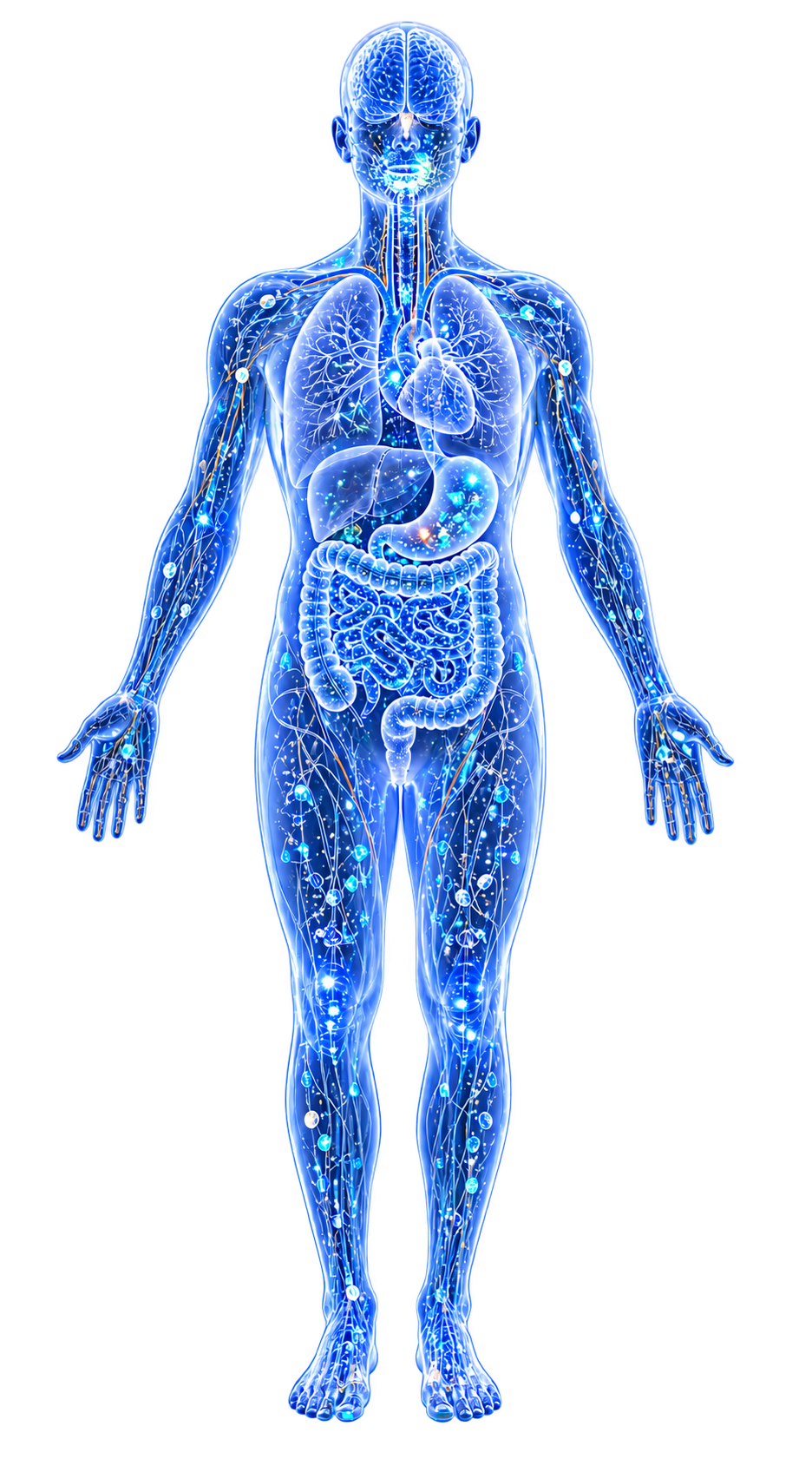
 metals · microbes · host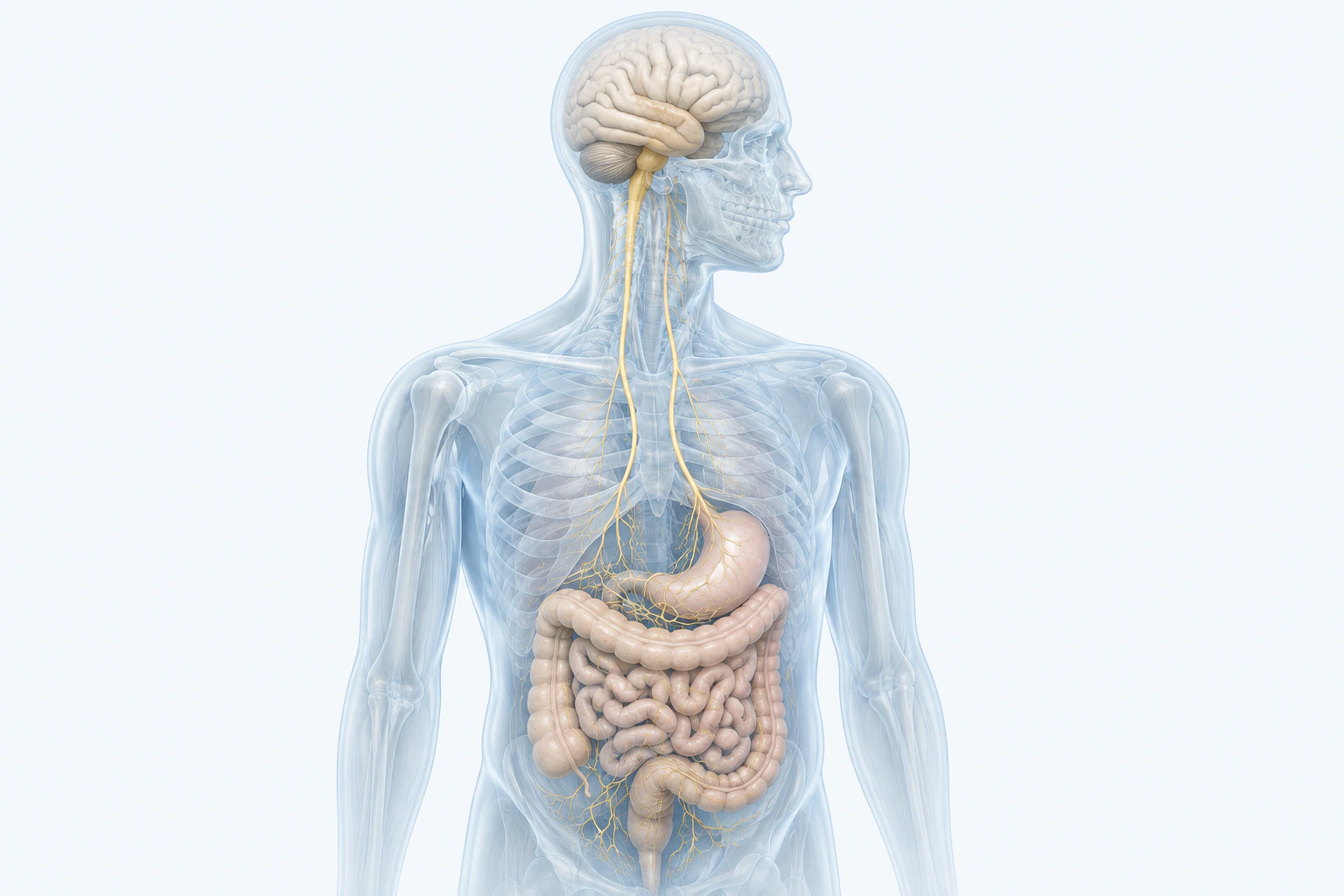
Neutral anatomical orientation to the brain, autonomic pathways, and gastrointestinal tract discussed in anxiety-disorders research. Anxiety disorders do not have a single visible anatomy; this reconstruction is not a patient portrait, scan, biomarker, or diagnostic image.
Scientific media record1 verified identifier
- Subject
- Anxiety Disorderscondition
- Identifiers
- MeSH:D001008
- Review
- Editorial review completeIdentifiers authority-verified · Accessibility validated · · anxiety|anxiety-pathology-v1.webp
- Digital source
- Trained-algorithmic mediaCreated with a trained generative algorithm and reviewed by WikiBiome for subject identity, scientific framing, identifiers, provenance, and accessibility.
- Scientific basis
- Anxiety Disorders — MeSHAnxiety disorders
- License
- CC BY-SA 4.0Created
Anxiety disorders are the most prevalent mental health conditions globally, affecting ~280 million people (~4.8% of the world population). They encompass generalized anxiety disorder (GAD), social anxiety, panic disorder, and phobias.
In the WikiBiome context, anxiety frequently appears as a comorbidity across conditions with documented microbiome Dysbiosis—suggesting shared pathophysiology through the Gut-Brain Axis.
The gut-brain axis connects intestinal microbiome composition to anxiety through three primary routes: the vagus nerve (direct neural signaling), neuroactive metabolites (Serotonin, Kynurenine, GABA, SCFAs), and immune-inflammatory pathways (cytokines, TLR4 activation).
Evidence map19 cited passagesInspect provenance +
Selective serotonin reuptake inhibitors (SSRIs) affect gut microbiome composition, and baseline microbiome may predict treatment response—a pharmacomicrobiomics interaction.
Anxiety disorders are the most prevalent mental health conditions globally (~280 million affected, ~4.8% of world population), encompassing generalized anxiety disorder, social anxiety, panic disorder, and phobias. The gut-brain axis provides three primary mechanistic routes from intestinal dysbiosis to anxiety: vagus nerve signaling, neuroactive metabolite
Anxiety frequently appears as a comorbidity across conditions with documented microbiome dysbiosis—endometriosis, crohns disease, parkinsons disease, multiple sclerosis, fibromyalgia—suggesting shared pathophysiology through the gut-brain axis rather than purely psychological causation. FMT from depressed/anxious donors into germ-free mice reproduces anx
Magnesium (depleted): Cofactor for 300 enzymes including serotonin synthesis. Magnesium is an NMDA receptor antagonist; its depletion permits excessive glutamatergic signaling and amplifies HPA axis reactivity. Shared depletion with depression and fibromyalgia.
Zinc (depleted): Essential for GABA-A receptor function, synaptic plasticity, and immune regulation. Zinc deficiency impairs BDNF signaling and amplifies neuroinflammation.
Iron (depleted): Cofactor for tryptophan hydroxylase (rate-limiting enzyme in serotonin synthesis) and tyrosine hydroxylase (dopamine synthesis). Functional iron deficiency may compound neurotransmitter deficits.
SSRIs, the first-line pharmacological treatment for anxiety, have bidirectional effects on the gut microbiome. SSRIs exhibit antimicrobial properties that can disrupt microbial homeostasis, and baseline microbiome composition may predict treatment response—a pharmacomicrobiomics interaction. This creates a paradox: the primary medication for anxiety may it
Elevated cortisol: HPA axis hyperactivation is a hallmark of anxiety. Gut microbiota modulate the HPA axis; dysbiosis impairs normal stress-responsive cortisol regulation.
Elevated TNF-alpha, IL-6, IL-1beta: Pro-inflammatory cytokines from gut barrier dysfunction cross the blood-brain barrier and activate microglia, driving neuroinflammation. Inflammasome activation exacerbates the neuroinflammatory cascade.
Depleted butyrate: Butyrate inhibits the NLRP3 inflammasome, stabilizes gut and blood-brain barrier tight junctions (JAM-A/ZO-1), and promotes BDNF expression via HDAC inhibition.
escherichia coli and other Enterobacteriaceae produce LPS, which activates TLR4 on intestinal epithelium and on microglia when it crosses the BBB. LPS-driven neuroinflammation is a well-characterized pathway from gut dysbiosis to anxiety behavior.
faecalibacterium prausnitzii depletion is the most consistent finding across anxiety, depression, fibromyalgia, and IBS—conditions with high comorbidity. Its loss reduces butyrate, impairs anti-inflammatory signaling, and disrupts vagal afferent modulation.
bifidobacterium and lactobacillus depletion removes key GABA producers. Their anxiolytic effects in animal models are abolished by vagotomy, confirming the vagus nerve as the communication pathway.
roseburia and blautia depletion compounds the SCFA deficit, reducing colonocyte nutrition and anti-inflammatory metabolite production. Germ-free mice exhibit markedly reduced serotonin with depressive/anxious phenotypes reversed by microbial colonization.
Indoleamine 2,3-dioxygenase (IDO): Upregulated by pro-inflammatory cytokines; shunts tryptophan from serotonin toward the kynurenine pathway. In the brain, microglia produce neurotoxic quinolinic acid while astrocytes produce neuroprotective kynurenic acid—the balance is disrupted toward neurotoxicity in anxiety.
HPA axis dysregulation—Chronic stress elevates cortisol, which increases gut permeability and alters microbial composition.
SCFA depletion—Loss of butyrate-producing taxa removes the primary metabolite that maintains barrier integrity, inhibits NLRP3 inflammasome, and stabilizes the BBB via JAM-A/ZO-1.
SSRI feedback—Treatment with SSRIs exerts antimicrobial effects that may further disrupt the microbiome, potentially explaining tachyphylaxis (loss of drug efficacy over time).
Clinical FMT trials show transient anxiety improvements (3-6 months) then return to baseline, suggesting microbiome recolonization is not self-sustaining without dietary or lifestyle adjunctive strategies.
One disease. Five evidence layers.
A generated systems view of the metals, organisms, host sequestration signals, ecological conditions, and microbial functions indexed for Anxiety Disorders.
Evidence layer
Taxonomic signature
Organisms reported as enriched or depleted, with their indexed functional context kept beside the name.Pro-inflammatory; enriched in anxiety and multiple neuropsychiatric conditions; promotes gut permeability via tight junction disruption
LPS producer; drives TLR4-mediated neuroinflammation and HPA axis activation
Altered abundance associated with anxiety phenotype in multiple studies
Primary butyrate producer; depletion reduces anti-inflammatory signaling and vagal afferent modulation
Butyrate producer; loss impairs intestinal barrier and reduces SCFA-mediated neuroprotection
GABA producer; loss reduces GABAergic signaling through gut-brain axis; anxiolytic effects abolished by vagotomy
GABA and serotonin modulator; depletion reduces psychobiotic potential
Acetate/propionate producer; loss reduces colonocyte nutrition and anti-inflammatory metabolites
SCFA-producing family; depletion consistent across psychiatric conditions
Evidence layer
Nutritional immunity
Host metal-withholding, inflammatory, antioxidant, and microbial-metabolite signals indexed in the signature.Elevated host signals
5Depleted protective signals
4Evidence layer
Ecological state
The environmental conditions that connect the organism-level observations into a system.Evidence layer
Virulence functions
Microbial structures, enzymes, and acquisition systems implicated by the linked evidence.The disease record, in full.
The original WikiBiome disease narrative remains intact beneath the generated signature atlas.
Microbiome Associations#
Gut-Brain Axis Mechanisms#
Serotonin: ~90-95% produced in the gut by enterochromaffin cells; microbially stimulated. Tryptophan diversion from serotonin to Kynurenine under Metal-Driven Inflammation reduces serotonin availability. GABA: Produced by Lactobacillus and Bifidobacterium species; GABAergic deficits are a core anxiety mechanism.
Short-Chain Fatty Acids (SCFAs): Butyrate modulates HPA axis reactivity and neuroinflammation; SCFA producer depletion is associated with anxiety. Vagal signaling: Gut-to-brain signaling via vagal afferents; probiotics' anxiolytic effects are abolished by vagotomy in animal models.
SSRI-Microbiome Bidirectionality#
Selective serotonin reuptake inhibitors (SSRIs) affect Gut Microbiome composition, and baseline microbiome may predict treatment response—a Pharmacomicrobiomics interaction.[1]Sjostedt 2021 — Serotonin Reuptake Inhibitors and the Gut Microbiome: Significance of the Gut Microbiome in Relation to Mechanism of Action, Treatment Response, Side Effects, and TachyphylaxisPeter Sjostedt, Jesper Enander, Josef Isung · 2021Open reference 1 ↓
Anxiety as Comorbidity#
Anxiety appears as a significant comorbidity across multiple WikiBiome disease entities, suggesting shared microbiome-mediated pathophysiology:
| Condition | Anxiety Prevalence | Shared Mechanism |
|---|---|---|
| Endometriosis | Elevated | Inflammatory cytokines; estrogen-serotonin interactions |
| Crohn's Disease | 30-40% | Gut inflammation → vagal signaling → HPA axis |
| Graves' Disease | Common | Thyroid hormone effects on neurotransmission; autoimmune inflammation |
| Parkinson's Disease | 25-40% | Dopaminergic dysfunction; gut-brain axis disruption |
| Multiple Sclerosis | 22-54% | Neuroinflammation; kynurenine pathway activation |
| Fibromyalgia | 20-60% | Shared tryptophan/serotonin metabolism alteration with IBS |
| Irritable Bowel Syndrome (IBS) | 30-50% | Visceral hypersensitivity; serotonin dysregulation |
| Depression | >50% comorbid | Shared HPA axis, tryptophan, and inflammatory pathways |
Open Questions#
Unresolved questions identified by the current evidence record.
01Which specific taxa are causally anxiogenic vs. anxiolytic?+
Few MR studies address anxiety specifically.
02Does metal-driven dysbiosis (via Iron-Sulfur Clusters damage to SCFA producers) contribute to anxiety through SCFA depletion?+
The current WikiBiome record identifies this as an unresolved evidence gap.
03Can microbiome-targeted interventions (probiotics, FMT, dietary fiber) reduce anxiety in conditions where it is comorbid?+
The current WikiBiome record identifies this as an unresolved evidence gap.
Cross-References#
- Depression—Primary comorbidity; shared mechanisms
- Gut-Brain Axis—Primary pathophysiological pathway
- Serotonin—Key neurotransmitter linking microbiome to anxiety
- Kynurenine—Tryptophan diversion under inflammation
- Tryptophan Metabolism—Parent metabolic pathway
- Pharmacomicrobiomics—SSRI-microbiome interactions
- Probiotics—Anxiolytic potential ("psychobiotics")
- Synbiotics—GI and anxiety improvements in ASD (Mitchell 2024)
References 12
Numbered by first appearance in the article, then reconciled with its declared source list.
- 1
Peter Sjostedt, Jesper Enander, Josef Isung (2021). Sjostedt 2021 — Serotonin Reuptake Inhibitors and the Gut Microbiome: Significance of the Gut Microbiome in Relation to Mechanism of Action, Treatment Response, Side Effects, and Tachyphylaxis. Frontiers in Psychiatry.
- 2
Srinivas Kamath, Elysia Sokolenko, Scott R Clark et al. (2025). Kamath 2025 — Gut Microbiome and Mental Health: Causation or Correlation? (Review). Preprint (no DOI found in document).
- 3
Zhang Ruohan, Wang Ruting, Wu Hongxi et al. (2025). Zhang 2025 — Gut Microbiota as a Novel Target for Treating Anxiety and Depression: From Mechanisms to Multimodal Interventions. Frontiers in Microbiology.
- 4
Mahmoud A. Ghannoum, Mary Kate Ford, Robert A. Bonomo et al. (2021). Ghannoum et al. 2021 — Microbiome-Driven Approach to Combating Depression During COVID-19. Frontiers in Nutrition.
- 5
Cristina Vocca, Diana Marisol Abrego-Guandique, Erika Cione et al. (2025). Vocca 2025 — Probiotics in the Management of Chronic Bacterial Prostatitis: A Randomized, Double-Blind Trial to Evaluate a Possible Link Between Gut Microbiota Restoring and Symptom Relief. Microorganisms.
- 6
Lamtai M, Azirar S, Zghari O et al. (2018). Effect of Chronic Administration of Nickel on Affective and Cognitive Behavior in Male and Female Rats. Brain Sciences.
- 7
Siegmann EM, Muller HHO, Luecke C et al. (2020). Graves' disease as a driver of depression: a mechanistic insight. Frontiers in Endocrinology.
- 8
Otto LD (2024). Cancer and cancer treatments induce immune dysfunction, gut microbiome disruption, and physiological and behavioral symptoms. The Ohio State University PhD Dissertation.
- 9
Julia Cook, Laura Hull, Laura Crane et al. (2021). Cook 2021 — Camouflaging in Autism: A Systematic Review. Clinical Psychology Review.
- 10
Courtney Dye, Kathryn M. Lenz, Benedetta Leuner (2022). Dye et al. 2022 — Immune System Alterations in Postpartum Mental Illness. Frontiers in Global Women's Health.
- 11
Bo Liu, Guangbin Wang, Dongmei Gao et al. (2014). Liu 2014 — GABA and Glutamate-Glutamine Alterations in PMDD (3T MRS). Psychiatry Research: Neuroimaging.
- 12
Kaitlin Romano, Ashka N. Shah, Anett Schumacher et al. (2023). Romano 2023 — Gut Microbiome in Children with Mood, Anxiety, and NDDs: Umbrella Review. Gut Microbiome.
Article network
Mentioned here 18
Pages linking here 10
Connect the evidence
Publicly readable discussion by ORCID-authenticated researchers. Questions, interpretation, methods, corrections, and new evidence stay attached to this record.
No discussion yet. Start with a precise question or a source-backed observation.
Activity and accepted changes
Accepted researcher context, editorial status, public discussion, and upstream Git revisions are shown together. Pending, declined, and withdrawn proposals remain private.
- published revision
Backfill gut microbiome concept links
Karen Pendergrass · +1 −1
Inspect exact Git diff ↗ - published revision
Backfill inflammation concept links
Karen Pendergrass · +1 −1
Inspect exact Git diff ↗ - published revision
Complete corpus-wide Dysbiosis linking
Karen Pendergrass · +1 −1
Inspect exact Git diff ↗ - published revision
massive wiki expansion: 149 stubs fixed, 100+ new pages, Rule 15 scan, keystone papers
WikiBiome Deploy Bot · +24 −18
Inspect exact Git diff ↗ - published revision
nightly maintenance: 94 stub demotions, 181 source_count fixes, 22 auto-discovered stubs, 5 adversarial audits, 3 boundary fixes, 3 evidence-level corrections
WikiBiome Deploy Bot · +2 −0
Inspect exact Git diff ↗ - published revision
cycle 1: health check + lint fixes + 8 ingests + 2 stubs + gestational-diabetes signature
WikiBiome Deploy Bot · +1 −0
Inspect exact Git diff ↗ - published revision
pre-overnight checkpoint 2026-04-18
WikiBiome Deploy Bot · +69 −0
Inspect exact Git diff ↗