
 metals · microbes · host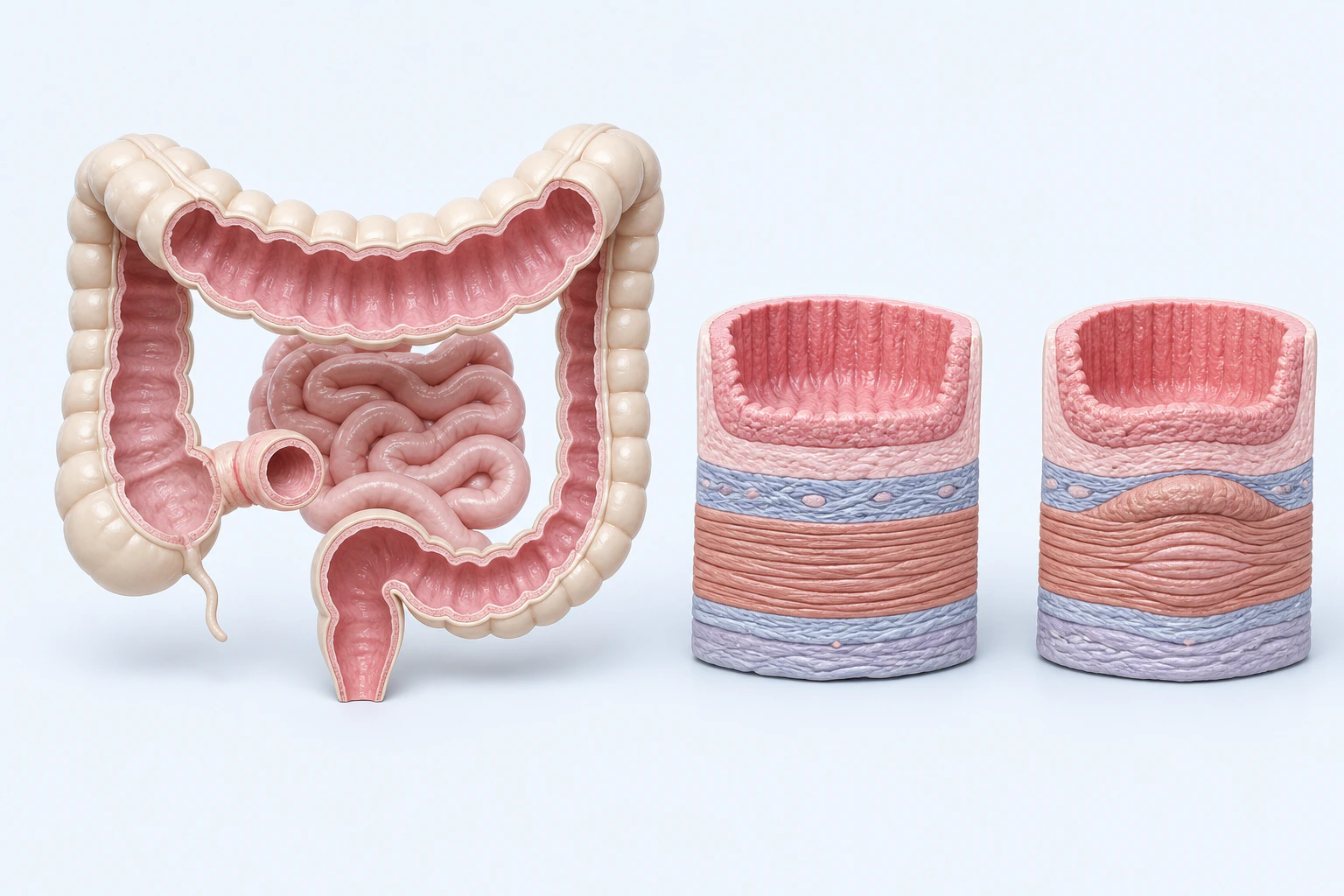
Representative structural-inflammation orientation for inflammatory bowel disease. The selected wall models are not literal endoscopy or histology and cannot classify Crohn disease or ulcerative colitis, stage, severity, complication, or diagnosis.
Scientific media record1 verified identifier
- Subject
- Inflammatory Bowel Diseasescondition
- Identifiers
- MeSH:D015212
- Review
- Editorial review completeIdentifiers authority-verified · Accessibility validated · · inflammatory-bowel-disease|inflammatory-bowel-disease-pathology-v1.webp
- Digital source
- Trained-algorithmic mediaCreated with a trained generative algorithm and reviewed by WikiBiome for subject identity, scientific framing, identifiers, provenance, and accessibility.
- License
- CC BY-SA 4.0Created
An umbrella term for chronic relapsing-remitting inflammatory conditions of the gastrointestinal tract, principally Crohn's Disease (CD; transmural, any GI segment) and ulcerative colitis (UC; mucosal, colon only). Approximately 6 million patients worldwide.
IBD represents the most direct manifestation of gut Dysbiosis, barrier failure, and immune dysregulation—the same triad that metals produce—making it a central disease in the Metallomics-microbiome framework.
Evidence map30 cited passagesInspect provenance +
The ZIP8 (SLC39A8) A391T variant in Crohn's disease directly links zinc transport dysfunction to barrier integrity, microbiome composition, and inflammation.
Selenium significantly lower in both CD and UC vs controls; impairs selenoprotein-dependent antioxidant defense (GPx, TrxR).
Manganese depleted in UC patients. Nickel elevated in active CD vs inactive UC.
Thallium positively associated with UC disease activity—a novel finding.
Shared mechanisms: chronic inflammation, endothelial dysfunction, tmao elevation, dysbiosis-driven LPS translocation.
Iron deficiency anemia affects 36-76% of IBD patients, driven by chronic blood loss, malabsorption, and inflammation-mediated iron sequestration (, cross-sectional, n=153). hepcidin is elevated by IL-6 during IBD flares, blocking ferroportin-mediated iron export from enterocytes and macrophages—trapping iron intracellularly while producing systemic defici
The oral iron paradox: Supplementation worsens dysbiosis by providing growth substrate for siderophilic pathogens (Enterobacteriaceae, E. coli) while suppressing beneficial anaerobes (; ).
Zinc is depleted via diarrheal losses, malabsorption, and increased urinary excretion during inflammation. Depletion impairs intestinal barrier integrity (ZO-1, claudin-1 expression), wound healing, and immune function. The ZIP8 A391T variant in Crohn's disease directly links zinc transport dysfunction to barrier integrity, microbiome composition, and inflam
Selenium is significantly lower in both CD and UC versus controls, impairing selenoprotein-dependent antioxidant defense (GPx, TrxR) (). Manganese is depleted in UC patients. Nickel is elevated in active CD versus inactive UC. Thallium is positively associated with UC disease activity—a novel finding ().
copper is positively associated with CRP in CD (), consistent with ceruloplasmin elevation during the acute-phase response. Copper elevation supports oxidative stress through Fenton-like chemistry while simultaneously being deployed by macrophages as an antimicrobial weapon.
NSAIDs: Induce enteropathy and alter gut microbiome composition, compounding barrier dysfunction (; )
Antibiotics: Usage within 1 month increases microbial dysbiosis index independent of genetic effects ()
Dietary patterns: Mediterranean diet is protective against CD (HR: 0.42) but not UC ()
calprotectin—The gold-standard non-invasive IBD biomarker. S100A8/A9 protein released by activated neutrophils; sequesters zinc and manganese from pathogens. Fecal calprotectin correlates with endoscopic disease activity and is simultaneously a diagnostic marker and an active nutritional immunity agent ().
escherichia coli and enterobacteriaceae—The hallmark IBD bloom. AIEC in CD (75% prevalence in ileal mucosa vs 6% healthy ()); Enterobacteriaceae expansion associated with NOD2 risk allele dosage (). These organisms thrive via siderophore-mediated iron acquisition in the inflamed, iron-rich mucosal environment.
fusobacterium nucleatum—Pro-inflammatory; adhesin-mediated mucosal colonization; NF-kB activation. Enriched in both CD and colorectal cancer ().
faecalibacterium prausnitzii—The most consistently depleted taxon across all IBD cohorts (; ). Primary butyrate producer; suppresses NF-kB and induces IL-10. Its depletion is the single most informative taxonomic biomarker for IBD.
lachnospiraceae family—Mendelian randomization confirms causal protective role: Lachnospiraceae UCG001 protective for CD (OR: 0.81); Eubacterium ventriosum protective for UC (OR: 0.68) (, computational prediction).
Firmicutes/Bacteroidetes ratio is consistently altered in IBD, with reduced microbial diversity overall ().
Barrier dysfunction—Tight junction degradation (zinc-dependent claudins/occludins impaired by zinc depletion; E-cadherin cleaved by BFT toxin); reduced mucus layer thickness (mucinase activity from R. gnavus); impaired Paneth cell defensin secretion (NOD2 mutations + zinc depletion) ().
Ferroptosis—Intracellular iron trapping during hepcidin elevation catalyzes lipid peroxidation through Fenton chemistry. GPX3 is causally protective ().
LPS translocation—Bacterial translocation across the compromised epithelium triggers innate immune activation via NF-kB; systemic LPS absorption drives endothelial dysfunction and CVD risk ().
TMAO elevation—Dysbiosis-driven trimethylamine N-oxide production promotes foam cell formation, endothelial dysfunction, and platelet activation—linking IBD to cardiovascular disease risk (, expert opinion).
As IBD subtypes, CD and UC share the core signature but differ in important ways. CD shows more severe alpha diversity reduction (). Mediterranean diet protects against CD but not UC. Mendelian randomization reveals disease-specific causal genera (). Metal profiles differ: thallium associates with UC activity while copper-CRP association is CD-specific ().
Showing 24 of 30 evidence-bearing passages. Every remaining citation is still indexed in the reference record below.
One disease. Five evidence layers.
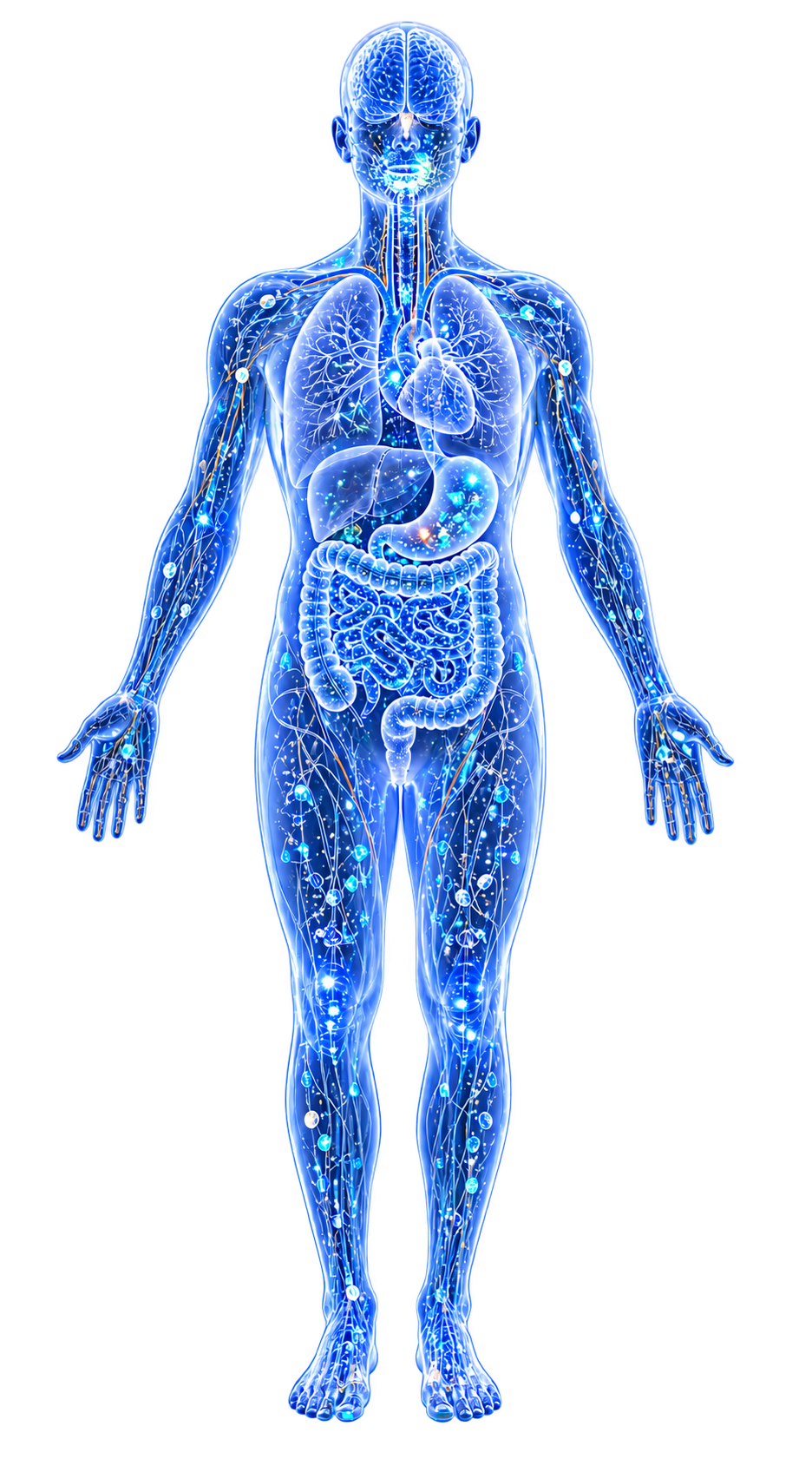
A generated systems view of the metals, organisms, host sequestration signals, ecological conditions, and microbial functions indexed for Inflammatory Bowel Disease (IBD).
Evidence layer
Taxonomic signature
Organisms reported as enriched or depleted, with their indexed functional context kept beside the name.AIEC in CD; enterotoxigenic strains in UC; siderophore-dependent iron acquisition; LPS/TLR4/NF-kB activation; Enterobacteriaceae bloom is hallmark of IBD
Pro-inflammatory; NF-kB activation; adhesin-mediated mucosal colonization; enriched in both CD and CRC
Mucin-degrading; barrier damage; enriched across IBD subtypes
Bloom favored by inflammation-driven iron redistribution and oxygen availability; NOD2 allele dosage-dependent
Primary butyrate producer; anti-inflammatory (NF-kB suppression, IL-10 induction); most consistently depleted taxon in IBD across all cohorts
Butyrate and propionate producer; part of Clostridia cluster XIVa; consistently reduced in IBD
SCFA production; depleted in IBD; contributes to butyrate collapse
Carbohydrate fermentation and cross-feeding with butyrate producers; depleted in IBD
SCFA production; Mendelian randomization confirms causal protective role in IBD and CD specifically
Depleted in IBD; associated with plant-rich dietary patterns
Evidence layer
Nutritional immunity
Host metal-withholding, inflammatory, antioxidant, and microbial-metabolite signals indexed in the signature.Elevated host signals
4Depleted protective signals
2Evidence layer
Ecological state
The environmental conditions that connect the organism-level observations into a system.Evidence layer
Virulence functions
Microbial structures, enzymes, and acquisition systems implicated by the linked evidence.The disease record, in full.
The original WikiBiome disease narrative remains intact beneath the generated signature atlas.
Metallomic Signature#
Iron Dysregulation: The Defining Metal Feature#
Iron deficiency anemia affects 36-76% of IBD patients, driven by chronic blood loss, malabsorption, and Metal-Driven Inflammation-mediated iron sequestration.
Hepcidin is elevated by IL-6 during IBD flares, blocking ferroportin-mediated iron export from enterocytes and macrophages—trapping iron intracellularly while producing systemic deficiency.
This creates a paradox: intracellular iron excess (promoting Oxidative Stress and potentially Ferroptosis) alongside systemic iron deficiency (causing anemia and fatigue). Oral iron supplementation worsens dysbiosis by providing growth substrate for siderophilic pathogens (Enterobacteriaceae, E. coli) while suppressing beneficial anaerobes.
Zinc Depletion#
Zinc is depleted in IBD via diarrheal losses, malabsorption, and increased urinary excretion during inflammation. zinc (Zn) deficiency impairs intestinal barrier integrity (ZO-1, claudin-1 expression), wound healing, and immune function.
The ZIP8 (SLC39A8) A391T variant in Crohn's disease directly links zinc transport dysfunction to barrier integrity, microbiome composition, and inflammation.[1]ZIP8 A391T Crohn's Disease-Linked Risk Variant Induces Colonic Metal Ion Dyshomeostasis, Microbiome Compositional Shifts, and InflammationYang JC, Zhao M, Chernikova D et al. · 2024Open reference 1 ↓
Selenium and Other Trace Elements#
Selenium significantly lower in both CD and UC vs controls; impairs selenoprotein-dependent antioxidant defense (GPx, TrxR).[2]Clinical and inflammatory biomarkers of inflammatory bowel diseases are linked to plasma trace elements and toxic metals; new insights into an old conceptAmerikanou C, Karavoltsos S, Gioxari A et al. · 2022Open reference 2 ↓ Manganese depleted in UC patients. Nickel elevated in active CD vs inactive UC.[2]Clinical and inflammatory biomarkers of inflammatory bowel diseases are linked to plasma trace elements and toxic metals; new insights into an old conceptAmerikanou C, Karavoltsos S, Gioxari A et al. · 2022Open reference 2 ↓
Thallium positively associated with UC disease activity—a novel finding.[2]Clinical and inflammatory biomarkers of inflammatory bowel diseases are linked to plasma trace elements and toxic metals; new insights into an old conceptAmerikanou C, Karavoltsos S, Gioxari A et al. · 2022Open reference 2 ↓
Dysbiosis Signature#
IBD dysbiosis is among the most characterized in the literature. Depleted: Faecalibacterium prausnitzii (most consistent finding), Roseburia, Blautia, Bifidobacterium, Prevotella—all major Short-Chain Fatty Acids (SCFAs) producers. Enriched: Enterobacteriaceae (adherent-invasive E. coli in CD), Fusobacterium, Ruminococcus gnavus.
Firmicutes/Bacteroidetes ratio altered; reduced microbial diversity overall.
This signature overlaps substantially with metal-induced dysbiosis patterns, raising the question of whether environmental metal exposure contributes to IBD incidence.
Biomarkers#
Fecal Calprotectin (S100A8/A9): The gold-standard non-invasive biomarker for intestinal inflammation in IBD. S100A8/A9 protein released by activated neutrophils; sequesters zinc and manganese as part of Nutritional Immunity (Metal Sequestration). Correlates with endoscopic disease activity.
CRP, SAA: Systemic inflammation markers; CRP elevated in active disease. Fecal lactoferrin: Iron-binding neutrophil protein; elevated in active IBD. IL-6, TNF-alpha, IL-1beta: Pro-inflammatory cytokines driving disease pathology.
IBD-CVD Comorbidity#
IBD patients have significantly increased Cardiovascular Disease risk.
2x increased heart failure risk; 19% increase in HF risk up to 20 years post-diagnosis. Shared mechanisms: chronic inflammation, endothelial dysfunction, Trimethylamine N-Oxide (TMAO) elevation, dysbiosis-driven LPS translocation.[3]Inflammatory Bowel Disease and Cardiovascular Disease: An Integrative Review With a Focus on the Gut MicrobiomeCamila Sanchez Cruz, Anahi Rojas Huerta, Jesus Lima Barrientos et al. · 2024Open reference 3 ↓ Calprotectin (S100A8/A9) and CRP predict both IBD activity and CVD risk.
Connections#
- Crohn's Disease—transmural IBD subtype; ZIP8 variant links metal transport to pathogenesis
- Calprotectin (S100A8/A9)—gold-standard IBD biomarker; metal-sequestering antimicrobial protein
- Hepcidin—iron-regulatory hormone elevated in IBD, driving the anemia-of-inflammation paradox
- Ferroptosis—intracellular iron trapping during hepcidin elevation may promote ferroptotic cell death
- Short-Chain Fatty Acids (SCFAs)—SCFA producer depletion is the functional consequence of IBD dysbiosis
- dysbiosis—IBD has the most characterized dysbiosis signature in the literature
- inflammation—chronic NF-kB-driven inflammation is the hallmark of IBD
- Cardiovascular Disease—IBD patients at significantly increased CVD risk via shared inflammatory mechanisms
- Nutritional Immunity (Metal Sequestration)—calprotectin and lactoferrin are nutritional immunity effectors elevated in IBD
- Metal-Disease Matrix: A Cross-Source Synthesis—IBD is a key disease in the metal-disease interaction landscape
- Prebiotics—prebiotic fiber supports SCFA producer recovery in IBD remission maintenance
- Fecal Microbiota Transplant (FMT)—strongest evidence in UC subtype; 25-35% remission; donor diversity predicts response
- Microbial Biomarkers—fecal calprotectin and microbial diversity as non-invasive IBD monitoring tools
- Microbiome-Derived Metabolites—SCFA depletion, bile acid alterations, and tryptophan shunting in IBD
- Biomarkers—calprotectin, CRP, hepcidin, and metallomic panels for disease activity tracking
References 19
Numbered by first appearance in the article, then reconciled with its declared source list.
- 1
★Yang JC, Zhao M, Chernikova D et al. (2024). ZIP8 A391T Crohn's Disease-Linked Risk Variant Induces Colonic Metal Ion Dyshomeostasis, Microbiome Compositional Shifts, and Inflammation. Digestive Diseases and Sciences.
- 2
Amerikanou C, Karavoltsos S, Gioxari A et al. (2022). Clinical and inflammatory biomarkers of inflammatory bowel diseases are linked to plasma trace elements and toxic metals; new insights into an old concept. Frontiers in Nutrition.
- 3
Camila Sanchez Cruz, Anahi Rojas Huerta, Jesus Lima Barrientos et al. (2024). Inflammatory Bowel Disease and Cardiovascular Disease: An Integrative Review With a Focus on the Gut Microbiome. Cureus.
- 4
Zhu R, He P, Liu Z et al. (2021). Editorial: Microbiome in IBD: From Composition to Therapy. Frontiers in Pharmacology.
- 5
Rashed R, Valcheva R, Dieleman LA (2022). Manipulation of Gut Microbiota as a Key Target for Crohn's Disease. Frontiers in Medicine.
- 6
Borghini R, Porpora MG, Casale R et al. (2020). Irritable Bowel Syndrome-Like Disorders in Endometriosis: Prevalence of Nickel Sensitivity and Effects of a Low-Nickel Diet. An Open-Label Pilot Study. Nutrients.
- 7
Syer SD, Blackler RW, Martin R et al. (2015). NSAID Enteropathy and Bacteria: A Complicated Relationship. Journal of Gastroenterology.
- 8
Fabian Mermans, Evelien Heiremans, Maud Van Belleghem et al. (2019). Nonsteroidal Anti-Inflammatory Drugs as Therapeutic Allies of the Gut Microbiome on Chronic Inflammation. Facta Universitatis Series Medicine and Biology.
- 9
Li H, Christman LM, Li R et al. (2020). Synergic Interactions between Polyphenols and Gut Microbiota in Mitigating Inflammatory Bowel Diseases. Food & Function.
- 10
Knights D, Silverberg MS, Weersma RK et al. (2014). Complex Host Genetics Influence the Microbiome in Inflammatory Bowel Disease. Genome Medicine.
- 11
Khalili H, Hakansson N, Chan SS et al. (2024). Adherence to a Mediterranean Diet is Associated with a Lower Risk of Later-Onset Crohn's Disease: Results From Two Large Prospective Cohort Studies. Gut.
- 12
Haag LM, Siegmund B (2015). Intestinal Microbiota and the Innate Immune System - a Crosstalk in Crohn's Disease Pathogenesis. Frontiers in Immunology.
- 13
Kang DY, Park JL, Yeo MK et al. (2023). Diagnosis of Crohn's Disease and Ulcerative Colitis Using the Microbiome. BMC Microbiology.
- 14
Liu B, Ye D, Yang H et al. (2022). Two-Sample Mendelian Randomization Analysis Investigates Causal Associations Between Gut Microbial Genera and Inflammatory Bowel Disease, and Specificity Causal Associations in Ulcerative Colitis or Crohn's Disease. Frontiers in Immunology.
- 15
Xu S, Li X, Zhang S et al. (2023). Oxidative Stress Gene Expression, DNA Methylation, and Gut Microbiota Interaction Trigger Crohn's Disease: a Multi-Omics Mendelian Randomization Study. BMC Medicine.
- 16
Shen J, Zuo ZX, Mao AP (2014). Effect of Probiotics on Inducing Remission and Maintaining Therapy in Ulcerative Colitis, Crohn's Disease, and Pouchitis: Meta-analysis of Randomized Controlled Trials. Inflammatory Bowel Diseases.
- 17
Li P, Zhang T, Xiao Y et al. (2019). Timing for the Second Fecal Microbiota Transplantation to Maintain the Long-Term Benefit from the First Treatment for Crohn's Disease. Applied Microbiology and Biotechnology.
- 18
Sokol H, Landman C, Seksik P et al. (2020). Fecal Microbiota Transplantation to Maintain Remission in Crohn's Disease: A Pilot Randomized Controlled Study. Microbiome.
- 19
Zhang M, Sun K, Wu Y et al. (2017). Interactions between Intestinal Microbiota and Host Immune Response in Inflammatory Bowel Disease. Frontiers in Immunology.
Article network
Mentioned here 18
Pages linking here 47
Connect the evidence
Publicly readable discussion by ORCID-authenticated researchers. Questions, interpretation, methods, corrections, and new evidence stay attached to this record.
No discussion yet. Start with a precise question or a source-backed observation.
Activity and accepted changes
Accepted researcher context, editorial status, public discussion, and upstream Git revisions are shown together. Pending, declined, and withdrawn proposals remain private.
- published revision
Strengthen Metallomics and link high-leverage contexts
Karen Pendergrass · +1 −1
Inspect exact Git diff ↗ - published revision
Backfill oxidative stress concept links
Karen Pendergrass · +1 −1
Inspect exact Git diff ↗ - published revision
Backfill inflammation concept links
Karen Pendergrass · +3 −3
Inspect exact Git diff ↗ - published revision
Complete corpus-wide Dysbiosis linking
Karen Pendergrass · +3 −3
Inspect exact Git diff ↗ - published revision
massive wiki expansion: 149 stubs fixed, 100+ new pages, Rule 15 scan, keystone papers
WikiBiome Deploy Bot · +6 −6
Inspect exact Git diff ↗ - published revision
nightly maintenance: 94 stub demotions, 181 source_count fixes, 22 auto-discovered stubs, 5 adversarial audits, 3 boundary fixes, 3 evidence-level corrections
WikiBiome Deploy Bot · +1 −0
Inspect exact Git diff ↗ - published revision
cycle 1: health check + lint fixes + 8 ingests + 2 stubs + gestational-diabetes signature
WikiBiome Deploy Bot · +1 −0
Inspect exact Git diff ↗ - published revision
Citation integrity pass: 38 citations added, 24 parenthesized citations fixed
WikiBiome Deploy Bot · +1 −14
Inspect exact Git diff ↗ - published revision
WikiBiome update — 2026-04-15 17:23
WikiBiome Deploy Bot · +0 −1
Inspect exact Git diff ↗ - published revision
v2 migration Priority 2: All 29 disease entity pages upgraded with associated_conditions, seo_target, wikipedia_differentiation
WikiBiome Deploy Bot · +6 −0
Inspect exact Git diff ↗ - published revision
WikiBiome v2 migration: signature pages + safety fixes + gap analysis
WikiBiome Deploy Bot · +5 −0
Inspect exact Git diff ↗ - published revision
WikiBiome update — integrity fixes, metallomic diet pages, cross-condition analyses
WikiBiome Deploy Bot · +22 −11
Inspect exact Git diff ↗ - published revision
WikiBiome update — 2026-04-10 23:44
WikiBiome Deploy Bot · +1 −0
Inspect exact Git diff ↗ - published revision
WikiBiome update — 2026-04-10 15:45
WikiBiome Deploy Bot · +80 −0
Inspect exact Git diff ↗