
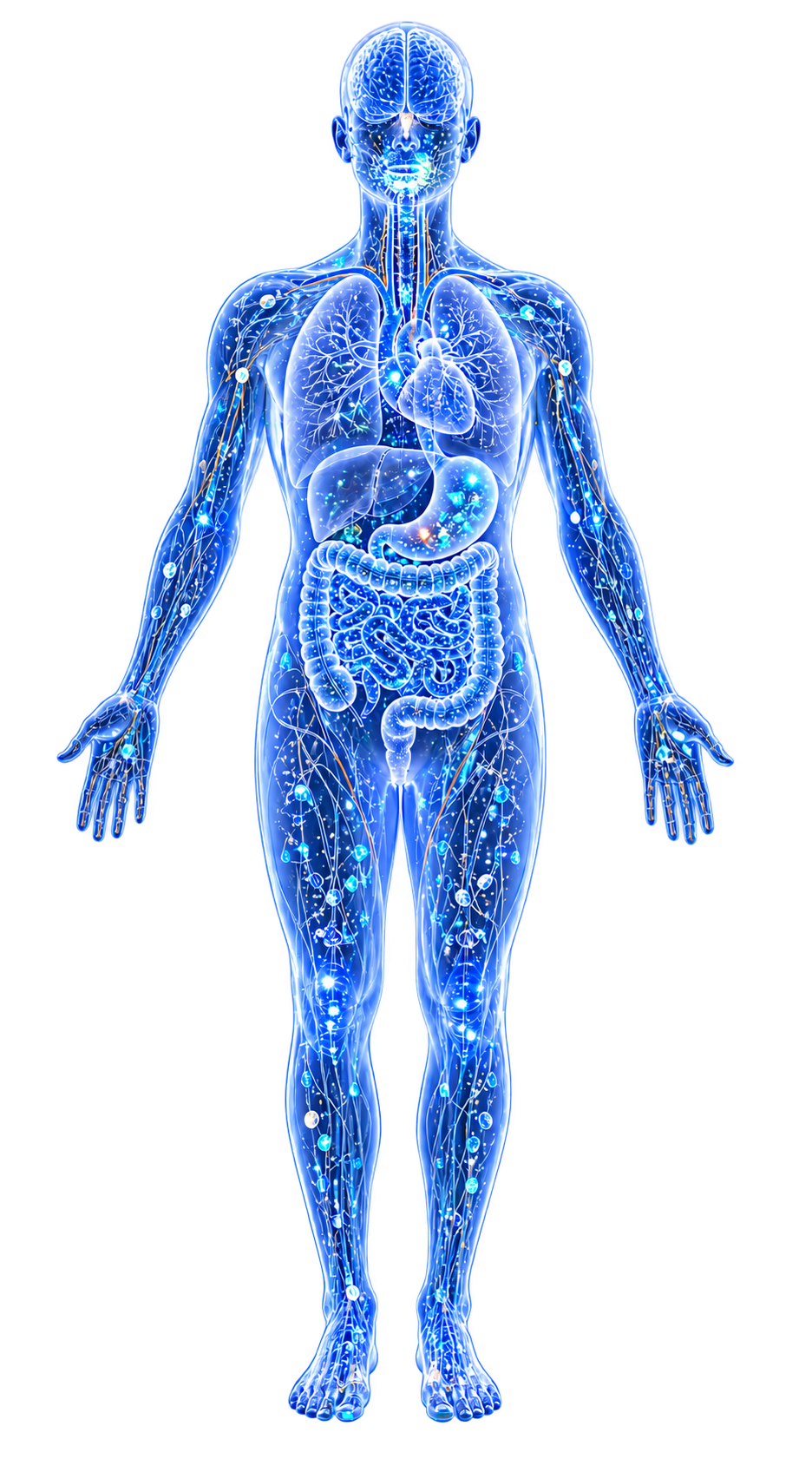
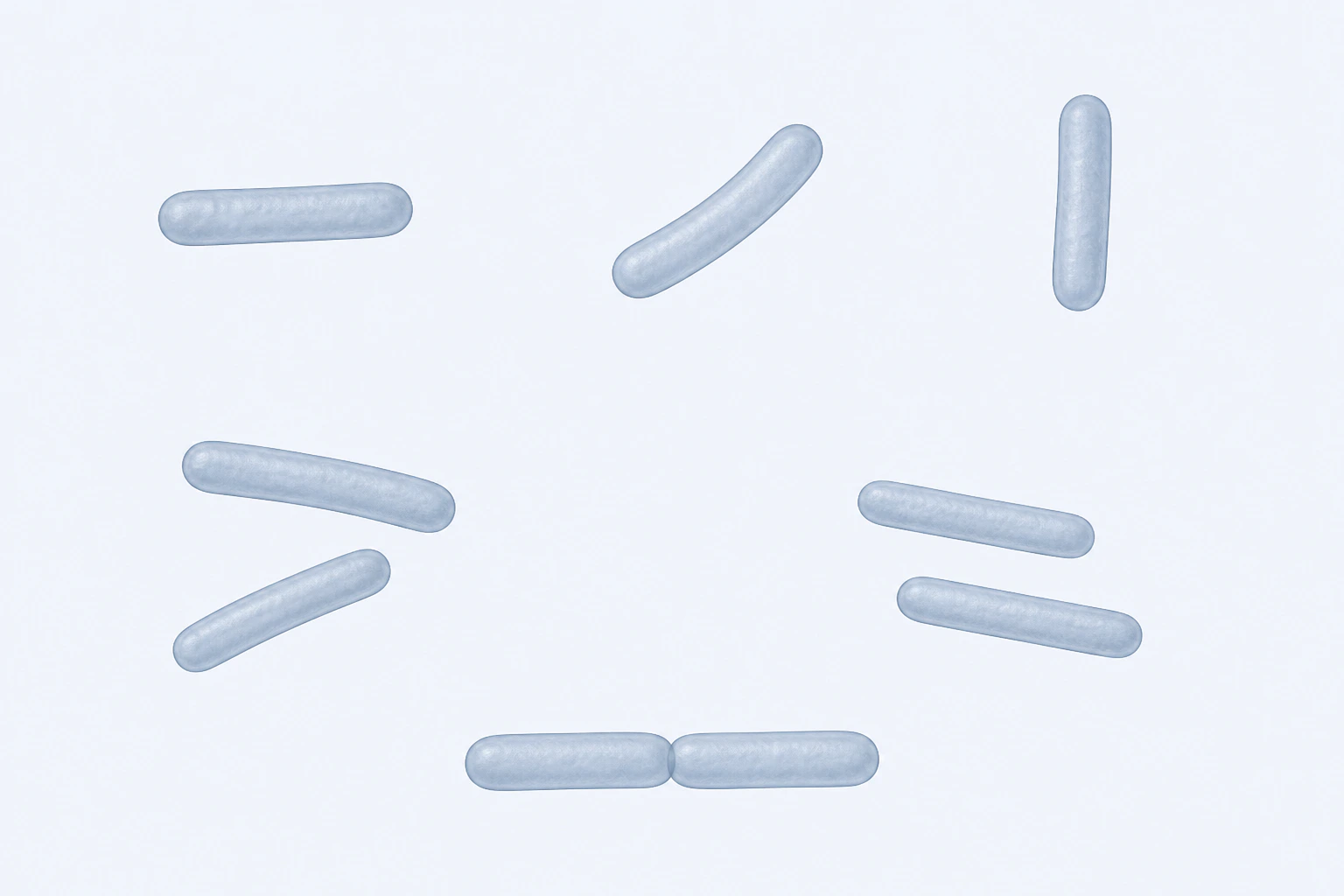
Selected type-species-anchored rod forms for Clostridium, shown as nine bodies in six groupings. This genus-level reconstruction is representative, non-exhaustive, non-diagnostic, and makes no genus-wide sporulation or motility claim.
Scientific media record1 verified identifier
- Subject
- Clostridiumtaxon · genus
- Identifiers
- NCBITaxon:1485
- Review
- Editorial review completeIdentifiers authority-verified · Accessibility validated · · clostridium|clostridium-morphology-v1.webp
- Digital source
- Trained-algorithmic mediaCreated with a trained generative algorithm and reviewed by WikiBiome for subject identity, scientific framing, identifiers, provenance, and accessibility.
- Scientific basis
- Clostridium — NCBI TaxonomyClostridium — LPSNRestriction of Clostridium to the type-species cladeEmended description of ClostridiumClostridium butyricum — LPSNClostridium butyricum type strain — BacDive
- License
- CC BY-SA 4.0Created
A large, polyphyletic genus of Gram-positive, obligate anaerobic, spore-forming bacteria encompassing both critical beneficial commensals and dangerous pathogens. Former Clostridium clusters IV and XIVa are now reclassified into Ruminococcus-family Ruminococcaceae and Lachnospiraceae respectively, though legacy nomenclature persists widely. Distinguishing beneficial from pathogenic species is essential when interpreting microbiome data.
Evidence map5 cited passagesInspect provenance +
Depleted in multiple sclerosis: loss reduces SCFA production, impairs Treg differentiation and anti-inflammatory cytokine output.
Secondary bile acids—7-alpha-dehydroxylation by C. scindens and related species converts primary to secondary bile acids (DCA, LCA), influencing cardiovascular disease and CRC risk.
Clostridium sp. CAG:307 enriched in endometriosis.
CAG9 (Clostridium) negatively correlated with glycerophospholipids in CAD severity analysis.
NSAID-induced enteropathy disrupts clostridial communities, reducing protective SCFA output.
Contents
1. Beneficial Species2. Pathogenic Species3. Metal Dependencies4. Key Metabolites5. Disease Associations6. ConnectionsBeneficial Species#
Clusters IV and XIVa (Reclassified)#
The dominant Butyrate-producing communities in the healthy human colon, representing up to 40% of total fecal bacteria. Depleted in Multiple Sclerosis: loss reduces SCFA production, impairs Treg differentiation and anti-inflammatory cytokine output.[1]Feeding the gut microbiome: impact on multiple sclerosisMatteo Bronzini, Alessandro Maglione, Rachele Rosso et al. · 2023Open reference 1 ↓ Depleted across Crohn's Disease, IBD broadly, Colorectal Cancer, and Cardiovascular Disease.
Induce colonic Tregs via butyrate-HDAC inhibition, a cornerstone of mucosal immune tolerance.
C. butyricum#
Probiotic species used therapeutically in Japan and parts of Asia. Produces butyrate via butyryl-CoA:acetate CoA-transferase pathway. Protective against Clostridioides difficile infection and necrotizing enterocolitis in premature infants.
Enhances gut barrier integrity through butyrate-mediated upregulation of tight junction proteins.
Pathogenic Species#
C. perfringens#
Produces at least 20 toxins including alpha-toxin (phospholipase C), beta-toxin, epsilon-toxin, and enterotoxin. Causes gas gangrene, food poisoning, and necrotizing enteritis. Iron-dependent virulence.
C. botulinum#
Produces botulinum neurotoxin, the most potent biological toxin known. The toxin is a Zinc-metalloprotease that cleaves SNARE proteins at neuromuscular junctions.
C. difficile (now [[clostridioides-difficile]])#
Reclassified to Clostridioides. Causes antibiotic-associated diarrhea and pseudomembranous colitis. Opportunistic pathogen that blooms when beneficial Clostridium clusters are depleted by antibiotics.
Metal Dependencies#
Iron: Ferredoxin iron-sulfur clusters are central to clostridial anaerobic metabolism and butyrate synthesis. Iron perturbation in the gut directly affects the metabolic output of beneficial species.
Cobalt: Some species require B12 (cobalamin) for key enzymatic reactions. Zinc: Botulinum toxin is a zinc (Zn)-metalloprotease; C. perfringens phospholipase C also requires metal cofactors. Heavy metal stress Cadmium, Lead preferentially depletes beneficial clostridial clusters while sparing spore-forming pathogenic species, shifting the genus balance toward virulence.
Key Metabolites#
Butyrate—primary SCFA from clusters IV/XIVa; HDAC inhibitor, colonocyte fuel, anti-inflammatory.
Secondary bile acids—7-alpha-dehydroxylation by C. scindens and related species converts primary to secondary bile acids (DCA, LCA), influencing Cardiovascular Disease and CRC risk.[2]Bile acids at the cross-roads of gut microbiome-host cardiometabolic interactionsPaul M. Ryan, Catherine Stanton, Noel M. Caplice · 2017Open reference 2 ↓
Indole derivatives—tryptophan metabolism by some Clostridium species produces AHR ligands with immune-modulatory activity.
Disease Associations#
Clostridium sp. CAG:307 enriched in Endometriosis.[3]Gut microbiome in endometriosis: a cohort study on 1000 individualsPerez-Prieto I, Vargas E, Salas-Espejo E et al. · 2024Open reference 3 ↓ CAG9 (Clostridium) negatively correlated with glycerophospholipids in CAD severity analysis.[4]Alterations in the gut microbiome and metabolism with coronary artery disease severityHonghong Liu, Xi Chen, Xiaomin Hu et al. · 2019Open reference 4 ↓
NSAID-induced enteropathy disrupts clostridial communities, reducing protective SCFA output.[5]Gut Microbiota in NSAID Enteropathy: New Insights From InsideXianglu Wang, Qiang Tang, Huiqin Hou et al. · 2021Open reference 5 ↓
Connections#
- Lachnospiraceae—former cluster XIVa; major butyrate-producing family co-depleted in disease
- Ruminococcus—former cluster IV members; co-depleted in IBD and MS
- Clostridioides difficile—opportunistic pathogen that blooms when beneficial clostridia are depleted
- Multiple Sclerosis—cluster IV/XIVa depletion impairs Treg function
- Colorectal Cancer—beneficial species depleted; bile acid metabolism affects CRC risk
- Iron—iron (Fe)-S clusters essential for anaerobic metabolism and butyrate production
- Zinc—botulinum toxin mechanism; metal cofactors in virulence factors
- Dysbiosis—loss of beneficial clusters is a universal dysbiosis signature
- Metal-Driven Inflammation—butyrate loss removes HDAC-mediated anti-inflammatory brake
- Gut-Metal-Microbiome Interactions—metal stress shifts genus balance from beneficial to pathogenic species
References 5
Numbered by first appearance in the article, then reconciled with its declared source list.
- 1
Matteo Bronzini, Alessandro Maglione, Rachele Rosso et al. (2023). Feeding the gut microbiome: impact on multiple sclerosis. Frontiers in Immunology.
- 2
Paul M. Ryan, Catherine Stanton, Noel M. Caplice (2017). Bile acids at the cross-roads of gut microbiome-host cardiometabolic interactions. Diabetology and Metabolic Syndrome.
- 3
Perez-Prieto I, Vargas E, Salas-Espejo E et al. (2024). Gut microbiome in endometriosis: a cohort study on 1000 individuals. BMC Medicine.
- 4
Honghong Liu, Xi Chen, Xiaomin Hu et al. (2019). Alterations in the gut microbiome and metabolism with coronary artery disease severity. Microbiome.
- 5
Xianglu Wang, Qiang Tang, Huiqin Hou et al. (2021). Gut Microbiota in NSAID Enteropathy: New Insights From Inside. Frontiers in Cellular and Infection Microbiology.
Article network
Mentioned here 17
Pages linking here 21
Connect the evidence
Publicly readable discussion by ORCID-authenticated researchers. Questions, interpretation, methods, corrections, and new evidence stay attached to this record.
No discussion yet. Start with a precise question or a source-backed observation.
Activity and accepted changes
Accepted researcher context, editorial status, public discussion, and upstream Git revisions are shown together. Pending, declined, and withdrawn proposals remain private.
- published revision
Complete Tight junctions contextual coverage
Karen Pendergrass · +1 −1
Inspect exact Git diff ↗ - published revision
massive wiki expansion: 149 stubs fixed, 100+ new pages, Rule 15 scan, keystone papers
WikiBiome Deploy Bot · +8 −8
Inspect exact Git diff ↗ - published revision
nightly maintenance: 94 stub demotions, 181 source_count fixes, 22 auto-discovered stubs, 5 adversarial audits, 3 boundary fixes, 3 evidence-level corrections
WikiBiome Deploy Bot · +1 −0
Inspect exact Git diff ↗ - published revision
Citation integrity pass: 38 citations added, 24 parenthesized citations fixed
WikiBiome Deploy Bot · +1 −1
Inspect exact Git diff ↗ - published revision
wiki: bulk entity upgrades, new article pages, and site regeneration
WikiBiome Deploy Bot · +6 −0
Inspect exact Git diff ↗ - published revision
WikiBiome update — integrity fixes, metallomic diet pages, cross-condition analyses
WikiBiome Deploy Bot · +8 −6
Inspect exact Git diff ↗ - published revision
WikiBiome update — 2026-04-10 13:49
WikiBiome Deploy Bot · +74 −0
Inspect exact Git diff ↗