
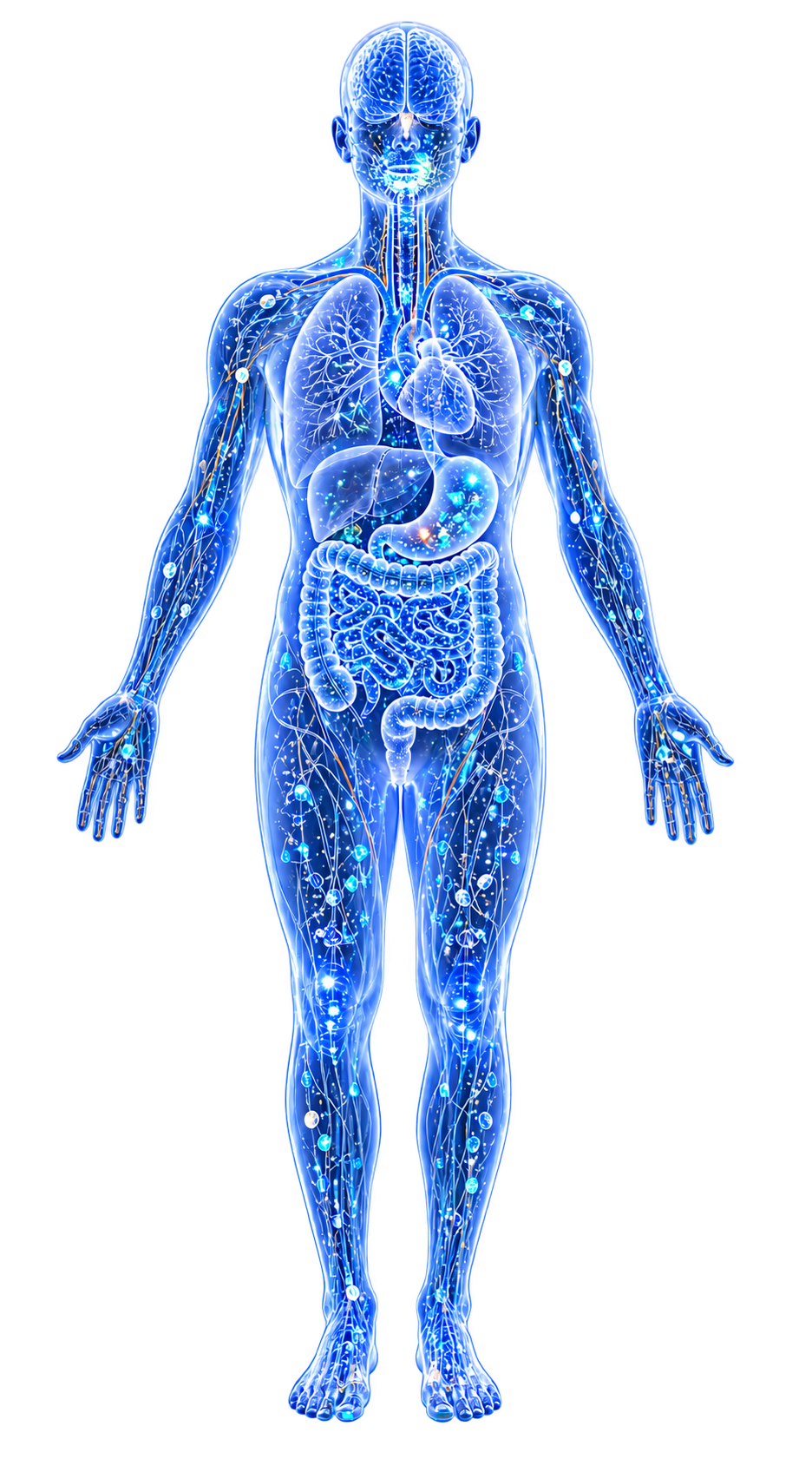
Zinc is depleted in nearly every disease state examined in this wiki—cancer (breast, prostate, lung, pancreatic, esophageal, colorectal), type 2 diabetes, PCOS, autism, postpartum depression, and IBD.
Zinc supplementation is generally beneficial: it reduces PPD risk by 75% (OR 0.249), improves gut barrier function, supports immune defense, and acts as an antioxidant cofactor for SOD1 Zinc. The default clinical instinct is that zinc supplementation is safe and helpful.
Yet Huang et al. (2024) found the opposite in endometriosis: women consuming >14 mg/day dietary zinc had a 60% increased odds of endometriosis compared to those consuming 8 mg/day or less (adjusted OR 1.6, 95% CI 1.12-2.27, p = 0.009).
The trend was dose-dependent (p = 0.008) and robust across subgroup analyses.[1]Exploring the link between dietary zinc intake and endometriosis risk: insights from a cross-sectional analysis of American womenHuang Y, Wei Y, Liang F et al. · 2024Open reference 1 ↓
Evidence map1 cited passagesInspect provenance +
Yet Huang et al. (2024) found the opposite in endometriosis: women consuming 14 mg/day dietary zinc had a 60% increased odds of endometriosis compared to those consuming 8 mg/day or less (adjusted OR 1.6, 95% CI 1.12-2.27, p = 0.009). The trend was dose-dependent (p = 0.008) and robust across subgroup analyses.
The Mechanism#
The proposed explanation is specific to endometriosis biology. Zinc is a cofactor for matrix metalloproteinases (MMP-2, MMP-9), enzymes that degrade extracellular matrix and facilitate tissue invasion. Endometriosis is fundamentally a disease of tissue invasion—endometrial cells must invade peritoneal surfaces to establish ectopic lesions.
In this context, zinc does not act as a protective antioxidant but as an enabler of the disease's defining pathological process.
This mechanism does not apply to most other conditions. In cancer, zinc deficiency impairs p53-mediated apoptosis, enabling malignant transformation. In endometriosis, zinc excess may enable the tissue invasion that IS the disease.
Same element, opposite clinical direction, different molecular pathway.
The Confounding Question#
Foods high in zinc (whole grains, nuts, legumes, shellfish, red meat) substantially overlap with high-Nickel foods. Huang et al. acknowledged this but did not measure nickel intake. It is possible that the zinc-endometriosis association partially reflects confounding by dietary nickel.
However, the MMP mechanism provides a biologically plausible zinc-specific pathway that is independent of nickel.
Clinical Implication#
The "zinc is always good" heuristic fails in endometriosis. Clinicians managing endometriosis patients should not reflexively supplement zinc without considering the MMP-mediated tissue invasion pathway.
This does not mean zinc is harmful in all reproductive contexts—it remains protective in PPD and likely in fertility more broadly—but endometriosis may be the exception that proves the rule of zinc's context-dependence.
References 1
Numbered by first appearance in the article, then reconciled with its declared source list.
- 1
Huang Y, Wei Y, Liang F et al. (2024). Exploring the link between dietary zinc intake and endometriosis risk: insights from a cross-sectional analysis of American women. BMC Public Health.
Article network
Connect the evidence
Publicly readable discussion by ORCID-authenticated researchers. Questions, interpretation, methods, corrections, and new evidence stay attached to this record.
No discussion yet. Start with a precise question or a source-backed observation.
Activity and accepted changes
Accepted researcher context, editorial status, public discussion, and upstream Git revisions are shown together. Pending, declined, and withdrawn proposals remain private.
- published revision
massive wiki expansion: 149 stubs fixed, 100+ new pages, Rule 15 scan, keystone papers
WikiBiome Deploy Bot · +25 −25
Inspect exact Git diff ↗ - published revision
nightly maintenance: 94 stub demotions, 181 source_count fixes, 22 auto-discovered stubs, 5 adversarial audits, 3 boundary fixes, 3 evidence-level corrections
WikiBiome Deploy Bot · +2 −1
Inspect exact Git diff ↗ - published revision
WikiBiome update — 2026-04-15 17:23
WikiBiome Deploy Bot · +31 −31
Inspect exact Git diff ↗ - published revision
WikiBiome update — integrity fixes, metallomic diet pages, cross-condition analyses
WikiBiome Deploy Bot · +2 −0
Inspect exact Git diff ↗ - published revision
WikiBiome v7 — interactive microbiome metallomics encyclopedia
Karen Pendergrass · +384 −0
Inspect exact Git diff ↗