
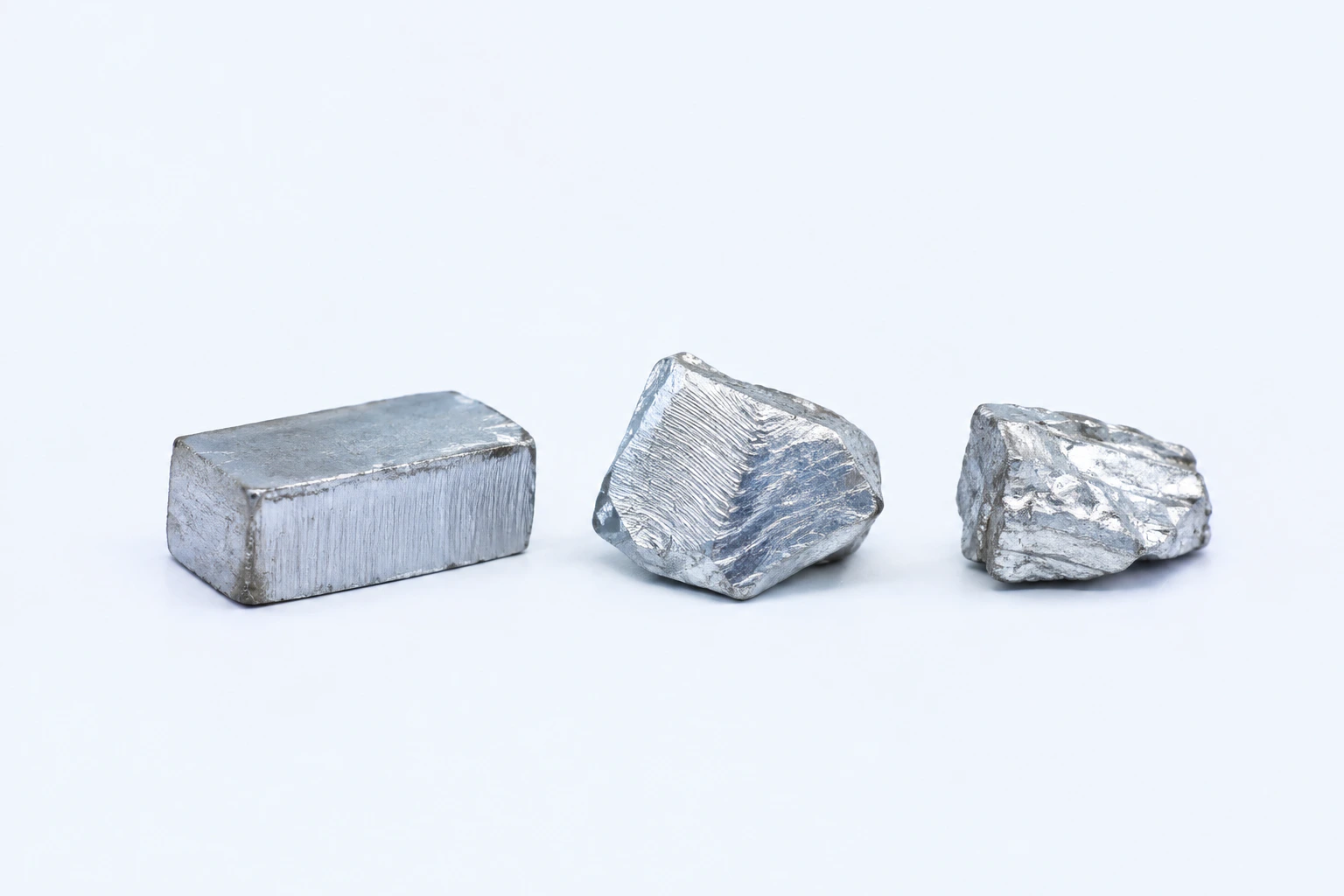
Elemental cadmium (Cd), shown as three representative blue-tinged silver-white solid specimens. Form and surface vary with purity, processing, oxidation, and storage; this is not analytical reference material or a photograph.
Scientific media record2 verified identifiers
- Subject
- Cadmiumelement
- Identifiers
- Atomic number 48PubChem CID:23973
- Review
- Editorial review completeIdentifiers authority-verified · Accessibility validated · · cadmium|cadmium-technical-specimen-v1.webp
- Digital source
- Trained-algorithmic mediaCreated with a trained generative algorithm and reviewed by WikiBiome for subject identity, scientific framing, identifiers, provenance, and accessibility.
- Scientific basis
- Cadmium — PubChem ElementCadmium, PubChem CID 23973
- License
- CC BY-SA 4.0Created
Cadmium is a toxic non-essential heavy metal (IARC Group 1 carcinogen) with a biological half-life of 17--30 years in mammals, primarily accumulating in the renal cortex via proximal tubular reabsorption of the cadmium (Cd)-metallothionein complex.[1]Exposure to Cadmium and Its Impacts on Human Health: A Short ReviewPuthiyavalappil Rasin, Ashwathi A V, Sabeel M Basheer et al. · 2025Open reference 1 ↓[2]The Effects of Cadmium ToxicityGiuseppe Genchi, Maria Stefania Sinicropi, Graziantonio Lauria et al. · 2020Open reference 2 ↓[3]Toxic Mechanisms of Five Heavy Metals: Mercury, Lead, Chromium, Cadmium, and ArsenicBalali-Mood M, Naseri K, Tahergorabi Z et al. · 2021Open reference 3 ↓
With no known biological function, cadmium enters cells through transporters intended for essential metals --- divalent metal transporter 1 (DMT1, shared with iron), ZIP transporters (shared with zinc), and voltage-gated calcium channels --- a molecular mimicry that underlies both its toxicity and its ecological effects on the microbiome.[4]Ghosh 2023 — Evaluation of Therapeutic Efficacy of Fecal Microbiota Transplantation on Cadmium-Induced Testicular Degeneration in RatsAditi Ghosh · 2023Open reference 4 ↓[5]Zheng 2024 — ZntA Maintains Zinc and Cadmium Homeostasis and Promotes Oxidative Stress Resistance and Virulence in Vibrio parahaemolyticusChengkun Zheng, Yimeng Zhai, Jun Qiu et al. · 2024Open reference 5 ↓
What distinguishes cadmium in the WikiBiome framework is the convergence of three properties no other toxic metal combines to the same degree: (1) it is the most potent known metalloestrogen, (2) it creates functional zinc deficiency through competitive displacement across 300+ zinc (Zn)-dependent enzymes, and (3) it reshapes the Gut Microbiome through selective pressure on metal-dependent taxa while simultaneously destroying the intestinal barrier that limits its own absorption --- a self-amplifying cycle.
Evidence map73 cited passagesInspect provenance +
Cadmium is a toxic non-essential heavy metal (IARC Group 1 carcinogen) with a biological half-life of 17--30 years in mammals, primarily accumulating in the renal cortex via proximal tubular reabsorption of the Cd-metallothionein complex,,. With no known biological function, cadmium enters cells through transporters intended for essential metals --- divalent
oxidative stress. Cadmium generates reactive oxygen species (ROS) by inhibiting electron transport chain complexes II and III in mitochondria, collapsing membrane potential and activating the caspase cascade. Simultaneously, Cd depletes the cellular antioxidant arsenal --- it binds glutathione via thiol groups, inhibits superoxide dismutase (SOD) by displaci
Epigenetic modification. Cd exposure alters DNA methylation patterns globally (hypomethylation with chronic exposure), modifies histone acetylation, and dysregulates microRNA expression. In MCF-7 breast cancer cells, Cd treatment altered 997 genes by epigenetic modification, 400 of which are associated with breast cancer. Defective DNA repair following Cd-in
Metallothionein induction. The liver and kidneys synthesize metallothionein (MT) proteins (MW 7--8 kDa, containing 18--23 cysteine residues) that can complex 7 divalent cations. Cd binds MT with higher affinity than zinc, and the Cd-MT complex has a half-life of 25--30 years, accounting for cadmium's extraordinary persistence in biological tissue. MT overexp
Diet accounts for approximately 90% of non-occupational cadmium exposure. A large Chinese population study (n=56,191) found that diet contributes 59.78% of total Cd intake (mean 4.62 ug/day of 7.73 ug/day total), with smoking contributing 37.84%, water 1.91%, and air 0.47%.
Grains and rice: The largest dietary contributors in Asian populations, providing a mean of 1.55 ug Cd/day. Rice grown in contaminated paddies is especially high,.
Shellfish and organ meats: Naturally concentrate Cd through bioaccumulation. Vegetarians and shellfish consumers face higher Cd intake than omnivores.
Leafy vegetables, mushrooms, cocoa: Accumulate Cd from soil contamination; cocoa powder contains both significant Cd and significant polyphenols (3,450 mg/100g).
Tobacco smoke: A single cigarette contains approximately 1 ug Cd, of which 40--60% is absorbed via inhalation. Smokers show 4--5x higher blood Cd levels,. Smoking is the predominant determinant of non-essential metal levels in plasma.
Baby food contamination: Commercial baby foods across Italy, Brazil, Germany, and Nigeria contain detectable Cd alongside nickel, lead, and arsenic,. The developmental vulnerability window means infant exposure has disproportionate long-term consequences.
Drinking water: Regulated under the EU Drinking Water Directive at 5 ug/L.
Geographic variation matters. Mean blood Cd in China (1.54 ug/L) is 3--4x higher than in European countries (Italy 0.53 ug/L, Germany 0.38 ug/L), with the highest levels in industrialized provinces: Henan (4.14), Shanxi (2.84), and Jiangxi (2.82 ug/L).
The relationship between cadmium and the gut microbiome is bidirectional: Cd reshapes microbial communities through selective pressure, while the microbiome modulates Cd absorption, bioavailability, and toxicity,. This bidirectional axis makes the gut the critical interface in cadmium toxicology.
Across multiple animal models and a systematic review spanning 3,000+ subjects, cadmium exposure consistently disrupts gut microbiota composition:
Enriched under Cd exposure: Prevotella, Treponema (in wild hamsters); Helicobacter, Campylobacter; Proteobacteria at the phylum level; ClostridiaUCG014, NK4A214group, LachnospiraceaeNK4B4group (in rats); Prevotella (from 0 to ~300 OTUs in ApoE4-KI mice on low Cd); Collinsella as a cross-metal pathobiont marker.
Depleted under Cd exposure: akkermansia muciniphila (at low doses),; Bacteroides ovatus; Clostridium cocleatum (a beneficial commensal protecting against C. difficile); Clostridiaceae and Lactobacillaceae SCFA producers; bifidobacterium; butyrate-producing genera including blautia, Anaerostipes, Gemmiger, Intestinimonas; Ruminococcaceae.
Diversity loss: Cd exposure caused a significant decrease in microbial alpha diversity (p=0.0028) in a controlled mouse study, with Bacteroidetes significantly decreased and Proteobacteria and Tenericutes increased.
The dysbiosis pattern is not random. Cd selects for metal-tolerant organisms while eliminating metal-sensitive ones --- a direct demonstration of metals as selective pressures. Microbial communities under metal stress adopt three functional roles: sensitive (eliminated by metal), resistant (survive via efflux and sequestration), and actor (actively reduce me
In a head-to-head comparison of five toxic metals given to rats by oral gavage, cadmium affected only 5 genera (compared to nickel's 37), but produced significant dose-dependent compositional shifts (PERMANOVA). This narrower but consistent taxonomic effect distinguishes Cd from the broader disruption caused by nickel and arsenic.
Short-chain fatty acid (SCFA) depletion: Cd decreases fecal acetate, propionate, and butyrate by depleting SCFA-producing taxa,.
Uremic toxin accumulation: Cd exposure upregulates indoxyl sulfate, p-cresol sulfate, and phenol sulfate --- known uremic toxins and CVD risk factors --- linking Cd-induced dysbiosis to cardiovascular risk.
Amino acid disruption: Valine, aspartic acid, methionine, tyrosine, and norleucine are differentially abundant under Cd exposure.
Bile acid perturbation: Cd shifts bile acid homeostasis, compounding the metabolic consequences of taxonomic disruption.
Catecholamine precursor disruption: In children, Cd exposure correlates with altered microbiome-associated phenylalanine and tyrosine metabolites, predicting behavioral outcomes (r=-0.38, p=0.003 for Cd-social behaviour correlation).
Showing 24 of 73 evidence-bearing passages. Every remaining citation is still indexed in the reference record below.
Contents
1. Biological Roles2. Dietary and Environmental Sources3. Microbiome Interactions4. Nutritional Immunity5. Cd-Zn Competition and Mis-metallation6. Metalloestrogen Activity7. Conditions Associated8. Metal-Antibiotic Co-resistance9. Biomarkers10. Key Studies11. Cross-ReferencesBiological Roles#
Cadmium has no essential biological function. Its toxicity operates through several interconnected mechanisms:
Oxidative Stress. Cadmium generates reactive oxygen species (ROS) by inhibiting electron transport chain complexes II and III in mitochondria, collapsing membrane potential and activating the caspase cascade.[2]The Effects of Cadmium ToxicityGiuseppe Genchi, Maria Stefania Sinicropi, Graziantonio Lauria et al. · 2020Open reference 2 ↓
Simultaneously, cadmium (Cd) depletes the cellular antioxidant arsenal --- it binds Glutathione (GSH) via thiol groups, inhibits superoxide dismutase (SOD) by displacing zinc and manganese cofactors, and reduces catalase and glutathione peroxidase activity.[3]Toxic Mechanisms of Five Heavy Metals: Mercury, Lead, Chromium, Cadmium, and ArsenicBalali-Mood M, Naseri K, Tahergorabi Z et al. · 2021Open reference 3 ↓[6]Begg et al. 2015 — Dysregulation of Transition Metal Ion Homeostasis Is the Molecular Basis for Cadmium Toxicity in Streptococcus pneumoniaeStephanie L. Begg, Bart A. Eijkelkamp, Zhenyao Luo et al. · 2015Open reference 6 ↓
The result is a synergistic toxicity: cadmium induces oxidative stress while simultaneously disabling the enzymes that would neutralize it.
Epigenetic modification. cadmium exposure alters DNA methylation patterns globally (hypomethylation with chronic exposure), modifies histone acetylation, and dysregulates microRNA expression. In MCF-7 breast cancer cells, cadmium treatment altered 997 genes by epigenetic modification, 400 of which are associated with breast cancer.[7]Cadmium and breast cancer - Current state and research gaps in the underlying mechanismsTarhonska K, Lesicka M, Janasik B et al. · 2022Open reference 7 ↓
Defective DNA repair following cadmium-induced oxidative damage is considered a primary carcinogenic mechanism.[3]Toxic Mechanisms of Five Heavy Metals: Mercury, Lead, Chromium, Cadmium, and ArsenicBalali-Mood M, Naseri K, Tahergorabi Z et al. · 2021Open reference 3 ↓
Metallothionein induction. The liver and kidneys synthesize metallothionein (MT) proteins (MW 7--8 kDa, containing 18--23 cysteine residues) that can complex 7 divalent cations.
cadmium binds MT with higher affinity than zinc, and the cadmium-MT complex has a half-life of 25--30 years, accounting for cadmium's extraordinary persistence in biological tissue.[2]The Effects of Cadmium ToxicityGiuseppe Genchi, Maria Stefania Sinicropi, Graziantonio Lauria et al. · 2020Open reference 2 ↓ MT overexpression predicts cancer progression and drug resistance.[7]Cadmium and breast cancer - Current state and research gaps in the underlying mechanismsTarhonska K, Lesicka M, Janasik B et al. · 2022Open reference 7 ↓
Dietary and Environmental Sources#
Diet accounts for approximately 90% of non-occupational cadmium exposure. A large Chinese population study (n=56,191) found that diet contributes 59.78% of total cadmium (Cd) intake (mean 4.62 ug/day of 7.73 ug/day total), with smoking contributing 37.84%, water 1.91%, and air 0.47%.[8]Li 2023 — Burden of diabetes attributable to dietary cadmium exposure in adolescents and adults in ChinaShan Li, Muhadasi Tuerxunyiming, Zhe Sun et al. · 2023Open reference 8 ↓
Grains and rice: The largest dietary contributors in Asian populations, providing a mean of 1.55 ug cadmium/day. Rice grown in contaminated paddies is especially high.[8]Li 2023 — Burden of diabetes attributable to dietary cadmium exposure in adolescents and adults in ChinaShan Li, Muhadasi Tuerxunyiming, Zhe Sun et al. · 2023Open reference 8 ↓[2]The Effects of Cadmium ToxicityGiuseppe Genchi, Maria Stefania Sinicropi, Graziantonio Lauria et al. · 2020Open reference 2 ↓
Shellfish and organ meats: Naturally concentrate cadmium through bioaccumulation. Vegetarians and shellfish consumers face higher cadmium intake than omnivores.[2]The Effects of Cadmium ToxicityGiuseppe Genchi, Maria Stefania Sinicropi, Graziantonio Lauria et al. · 2020Open reference 2 ↓
Leafy vegetables, mushrooms, cocoa: Accumulate cadmium from soil contamination; cocoa powder contains both significant cadmium and significant polyphenols (3,450 mg/100g).[2]The Effects of Cadmium ToxicityGiuseppe Genchi, Maria Stefania Sinicropi, Graziantonio Lauria et al. · 2020Open reference 2 ↓
Tobacco smoke: A single cigarette contains approximately 1 ug cadmium, of which 40--60% is absorbed via inhalation. Smokers show 4--5x higher blood cadmium levels.[1]Exposure to Cadmium and Its Impacts on Human Health: A Short ReviewPuthiyavalappil Rasin, Ashwathi A V, Sabeel M Basheer et al. · 2025Open reference 1 ↓[7]Cadmium and breast cancer - Current state and research gaps in the underlying mechanismsTarhonska K, Lesicka M, Janasik B et al. · 2022Open reference 7 ↓
Smoking is the predominant determinant of non-essential metal levels in plasma.[9]Plasma metallomics reveals potential biomarkers and insights into the ambivalent associations of elements with acute myocardial infarctionSi Ying Lim, Hiranya Dayal, Song Jie Seah et al. · 2023Open reference 9 ↓
Baby food contamination: Commercial baby foods across Italy, Brazil, Germany, and Nigeria contain detectable cadmium alongside Nickel, Lead, and Arsenic.[10]Meli 2024 — Chemical characterization of baby food consumed in ItalyMaria Assunta Meli, Donatella Desideri, Davide Sisti et al. · 2024Open reference 10 ↓[11]Toxic Metals and Metalloids in Infant Formulas Marketed in Brazil, and Child Health Risks According to the Target Hazard Quotients and Target Cancer RiskCristine Couto de Almeida, Diego dos Santos Baiao, Paloma de Almeida Rodrigues et al. · 2022Open reference 11 ↓
The developmental vulnerability window means infant exposure has disproportionate long-term consequences.[12]Age-Window Metabolic and Toxicokinetic Vulnerability in Vegetable-Based Baby Foods: Separating Developmental Readiness from Toxicant SusceptibilityKaren Pendergrass · 2026Open reference 12 ↓
Industrial sources: nickel (Ni)-cadmium batteries, pigments, electroplating, phosphate fertilizers. Drinking water: Regulated under the EU Drinking Water Directive at 5 ug/L.[13]Directive (EU) 2020/2184 on the Quality of Water Intended for Human Consumption (Recast)European Parliament, Council of the European Union · 2020Open reference 13 ↓
Geographic variation matters. Mean blood cadmium in China (1.54 ug/L) is 3--4x higher than in European countries (Italy 0.53 ug/L, Germany 0.38 ug/L), with the highest levels in industrialized provinces: Henan (4.14), Shanxi (2.84), and Jiangxi (2.82 ug/L).[8]Li 2023 — Burden of diabetes attributable to dietary cadmium exposure in adolescents and adults in ChinaShan Li, Muhadasi Tuerxunyiming, Zhe Sun et al. · 2023Open reference 8 ↓
Microbiome Interactions#
The relationship between cadmium and the gut microbiome is bidirectional: cadmium (Cd) reshapes microbial communities through selective pressure, while the microbiome modulates cadmium absorption, bioavailability, and toxicity.[14]Gut Microbiota: A Target for Heavy Metal Toxicity and a Probiotic Protective StrategyHui Duan, Leilei Yu, Fengwei Tian et al. · 2020Open reference 14 ↓[15]Toxic and Essential Metals: Metabolic Interactions with the Gut Microbiota and Health ImplicationsQinheng Zhu, Boyan Chen, Fu Zhang et al. · 2024Open reference 15 ↓
This bidirectional axis makes the gut the critical interface in cadmium toxicology.
Cd-Induced Dysbiosis#
Across multiple animal models and a systematic review spanning 3,000+ subjects, cadmium exposure consistently disrupts gut microbiota composition.[16]Rezazadegan et al. 2025 — Heavy Metals and Gut Microbiota: A Systematic ReviewFatemeh Rezazadegan, Maryam Mahmoudi, Seyed Mohammad Mousavi · 2025Open reference 16 ↓
Enriched under cadmium (Cd) exposure: Prevotella, Treponema (in wild hamsters);[17]Tao 2024 — Cadmium exposure induces changes in gut microbial composition and metabolic function in long-tailed dwarf hamstersMengfan Tao, Kanglin Cao, Xinsheng Pu et al. · 2024Open reference 17 ↓ Helicobacter, Campylobacter;[15]Toxic and Essential Metals: Metabolic Interactions with the Gut Microbiota and Health ImplicationsQinheng Zhu, Boyan Chen, Fu Zhang et al. · 2024Open reference 15 ↓ Proteobacteria at the phylum level;[18]Zhang 2021 -- Cadmium Exposure and Gut Microbiome Disruption in NeurodegenerationPengya Zhang, Huizhen Zheng, Guangbo Qu · 2021Open reference 18 ↓ Clostridia_UCG_014, NK4A214_group, Lachnospiraceae_NK4B4_group (in rats);[19]Environmental cadmium exposure alters the internal microbiota and metabolome of Sprague-Dawley ratsSongqing Liu, Xin Deng, Zheng Li et al. · 2023Open reference 19 ↓ Prevotella (from 0 to ~300 OTUs in ApoE4-KI mice on low cadmium);[20]Cadmium exposure modulates the gut-liver axis in an Alzheimer's disease mouse modelAngela Zhang, Megumi Matsushita, Liang Zhang et al. · 2021Open reference 20 ↓ Collinsella as a cross-metal pathobiont marker.[16]Rezazadegan et al. 2025 — Heavy Metals and Gut Microbiota: A Systematic ReviewFatemeh Rezazadegan, Maryam Mahmoudi, Seyed Mohammad Mousavi · 2025Open reference 16 ↓
Depleted under cadmium exposure: Akkermansia muciniphila (at low doses);[21]Effects of Heavy Metals on Gut Barrier Integrity and Gut MicrobiotaSweta Ghosh, Syam P. Nukavarpu, Venkatakrishna Rao Jala · 2024Open reference 21 ↓[22]Influence of Toxic Metal Exposure on the Gut Microbiota (Review)Federica Giambo, Sebastiano Italia, Michele Teodoro et al. · 2021Open reference 22 ↓ Bacteroides ovatus;[20]Cadmium exposure modulates the gut-liver axis in an Alzheimer's disease mouse modelAngela Zhang, Megumi Matsushita, Liang Zhang et al. · 2021Open reference 20 ↓ Clostridium cocleatum (a beneficial commensal protecting against C. difficile);[20]Cadmium exposure modulates the gut-liver axis in an Alzheimer's disease mouse modelAngela Zhang, Megumi Matsushita, Liang Zhang et al. · 2021Open reference 20 ↓ Clostridiaceae and Lactobacillaceae SCFA producers;[20]Cadmium exposure modulates the gut-liver axis in an Alzheimer's disease mouse modelAngela Zhang, Megumi Matsushita, Liang Zhang et al. · 2021Open reference 20 ↓ Bifidobacterium;[16]Rezazadegan et al. 2025 — Heavy Metals and Gut Microbiota: A Systematic ReviewFatemeh Rezazadegan, Maryam Mahmoudi, Seyed Mohammad Mousavi · 2025Open reference 16 ↓ Butyrate-producing genera including Blautia, Anaerostipes, Gemmiger, Intestinimonas;[23]Heavy Metal Exposure Causes Changes in the Metabolic Health-Associated Gut Microbiome and MetabolitesXuanji Li, Asker Daniel Brejnrod, Madeleine Ernst et al. · 2019Open reference 23 ↓ Ruminococcaceae.[24]Sun et al. 2024 — Zinc-Curcumin Complex Reverses Cadmium-Aggravated Diabetic Nephropathy via Microbiome MediationYujie Sun, Xiaoyu Zhang, Yingying Liu et al. · 2024Open reference 24 ↓
Diversity loss: cadmium exposure caused a significant decrease in microbial alpha diversity (p=0.0028) in a controlled mouse study, with Bacteroidetes significantly decreased and Proteobacteria and Tenericutes increased.[23]Heavy Metal Exposure Causes Changes in the Metabolic Health-Associated Gut Microbiome and MetabolitesXuanji Li, Asker Daniel Brejnrod, Madeleine Ernst et al. · 2019Open reference 23 ↓
The Dysbiosis pattern is not random. cadmium selects for metal-tolerant organisms while eliminating metal-sensitive ones --- a direct demonstration of metals as selective pressures.
Microbial communities under metal stress adopt three functional roles: sensitive (eliminated by metal), resistant (survive via efflux and sequestration), and actor (actively reduce metal bioavailability, improving conditions for sensitive species).[25]Selective pressures of heavy metals on microbial community determine microbial functional roles during composting: Sensitive, resistant and actorChen X, Zhao Y, Zhao X et al. · 2020Open reference 25 ↓
Metal-Specific Microbiome Effects Compared#
In a head-to-head comparison of five toxic metals given to rats by oral gavage, cadmium affected only 5 genera (compared to nickel's 37), but produced significant dose-dependent compositional shifts (PERMANOVA).[26]Exposure to toxic metals triggers unique responses from the rat gut microbiotaRichardson JB, Dancy BCR, Horton CL et al. · 2018Open reference 26 ↓
This narrower but consistent taxonomic effect distinguishes cadmium (Cd) from the broader disruption caused by nickel and arsenic.
Metabolomic Consequences of Cd-Induced Dysbiosis#
cadmium (Cd)-driven microbial disruption cascades into measurable metabolite shifts. Short-chain fatty acid (SCFA) depletion: cadmium decreases fecal acetate, propionate, and butyrate by depleting SCFA-producing taxa.[14]Gut Microbiota: A Target for Heavy Metal Toxicity and a Probiotic Protective StrategyHui Duan, Leilei Yu, Fengwei Tian et al. · 2020Open reference 14 ↓[20]Cadmium exposure modulates the gut-liver axis in an Alzheimer's disease mouse modelAngela Zhang, Megumi Matsushita, Liang Zhang et al. · 2021Open reference 20 ↓
Uremic toxin accumulation: cadmium exposure upregulates indoxyl sulfate, p-cresol sulfate, and phenol sulfate --- known uremic toxins and CVD risk factors --- linking cadmium-induced dysbiosis to cardiovascular risk.[19]Environmental cadmium exposure alters the internal microbiota and metabolome of Sprague-Dawley ratsSongqing Liu, Xin Deng, Zheng Li et al. · 2023Open reference 19 ↓
Amino acid disruption: Valine, aspartic acid, methionine, tyrosine, and norleucine are differentially abundant under cadmium exposure.[23]Heavy Metal Exposure Causes Changes in the Metabolic Health-Associated Gut Microbiome and MetabolitesXuanji Li, Asker Daniel Brejnrod, Madeleine Ernst et al. · 2019Open reference 23 ↓
Bile acid perturbation: cadmium shifts bile acid homeostasis, compounding the metabolic consequences of taxonomic disruption.[23]Heavy Metal Exposure Causes Changes in the Metabolic Health-Associated Gut Microbiome and MetabolitesXuanji Li, Asker Daniel Brejnrod, Madeleine Ernst et al. · 2019Open reference 23 ↓
Catecholamine precursor disruption: In children, cadmium exposure correlates with altered microbiome-associated phenylalanine and tyrosine metabolites, predicting behavioral outcomes (r=-0.38, p=0.003 for cadmium-social behaviour correlation).[27]Krajewski 2025 -- Heavy metals, noradrenaline/adrenaline ratio, and microbiome-associated hormone precursor metabolites: biomarkers for social behaviour, ADHD symptoms, and executive function in childrenKristin Krajewski · 2025Open reference 27 ↓
Gut Barrier Destruction --- The Vicious Cycle#
Cadmium destroys the intestinal barrier through direct reduction of tight junction proteins: ZO-1, ZO-2, JAM-A, occludin, and claudin-1.[21]Effects of Heavy Metals on Gut Barrier Integrity and Gut MicrobiotaSweta Ghosh, Syam P. Nukavarpu, Venkatakrishna Rao Jala · 2024Open reference 21 ↓[28]Oral Administration of Probiotics Inhibits Absorption of the Heavy Metal Cadmium by Protecting the Intestinal BarrierZhai Q, Wang G, Zhao J et al. · 2016Open reference 28 ↓
In Caco-2 and T84 intestinal cell lines, cadmium (Cd) at 20 uM reduced transepithelial electrical resistance (TEER) dose-dependently; at 68 uM, resistance was abolished entirely.[29]Does oral exposure to cadmium and lead mediate susceptibility to colitis? The dark-and-bright sides of heavy metals in gut ecologyBreton J, Daniel C, Vignal C et al. · 2016Open reference 29 ↓
Inflammatory cytokines TNF-alpha and IL-6 increase significantly in both intestine and blood following cadmium exposure.[19]Environmental cadmium exposure alters the internal microbiota and metabolome of Sprague-Dawley ratsSongqing Liu, Xin Deng, Zheng Li et al. · 2023Open reference 19 ↓
This creates a self-amplifying loop: cadmium damages the barrier, increasing permeability, which increases cadmium absorption, which further damages the barrier.
The loop also enables bacterial translocation --- in cadmium-exposed rats, gut bacteria (Muribaculaceae) translocated into the blood, directly demonstrating how cadmium-induced barrier failure enables microbial invasion of the circulatory system.[19]Environmental cadmium exposure alters the internal microbiota and metabolome of Sprague-Dawley ratsSongqing Liu, Xin Deng, Zheng Li et al. · 2023Open reference 19 ↓
Germ-free mice accumulate significantly more cadmium in organs than conventional mice, demonstrating that the intact microbiome is itself a defense against metal absorption.[21]Effects of Heavy Metals on Gut Barrier Integrity and Gut MicrobiotaSweta Ghosh, Syam P. Nukavarpu, Venkatakrishna Rao Jala · 2024Open reference 21 ↓
Probiotic Protection#
The microbiome is not merely a victim of cadmium (Cd) toxicity --- it is also a first line of defense. Several probiotic strategies have demonstrated protection against cadmium.
L. plantarum CCFM8610 protects through four mechanisms: intestinal cadmium sequestration (binding before absorption), oxidative stress alleviation, tight junction protection (restoring ZO-1, ZO-2, occludin, claudin-1), and immune modulation (restoring sIgA, modulating TNF-alpha, IL-1beta, IL-6, IL-8, IL-10).
Key insight: strains with both metal-binding and antioxidative capacity were superior to strains with only one property.[28]Oral Administration of Probiotics Inhibits Absorption of the Heavy Metal Cadmium by Protecting the Intestinal BarrierZhai Q, Wang G, Zhao J et al. · 2016Open reference 28 ↓
Pediococcus acidilactici GR-1 in an RCT of occupational workers (n=152) reduced blood metal levels through gut microbiome-mediated metal excretion, enriched Blautia species (SCFA producers), decreased pro-inflammatory IL-6 and IL-1beta, and increased fecal SCFA production.[30]Feng 2022 — Human supplementation with Pediococcus acidilactici GR-1 decreases heavy metal levels through modifying the gut microbiota and metabolomeFeng P, Yang J, Zhao S et al. · 2022Open reference 30 ↓
FMT from probiotic-enriched donors significantly increased fecal cadmium excretion (0.2147 vs 0.123 mg/L, p<0.05) in cadmium-exposed rats, demonstrating enhanced cadmium clearance via microbial binding. The mechanism involves gram-positive bacteria binding cadmium to cell wall peptidoglycan and teichoic acid.[4]Ghosh 2023 — Evaluation of Therapeutic Efficacy of Fecal Microbiota Transplantation on Cadmium-Induced Testicular Degeneration in RatsAditi Ghosh · 2023Open reference 4 ↓
Bacterial Resistance and Metabolic Reprogramming#
Individual bacterial species respond to cadmium (Cd) stress in dramatically different ways.
Enterococcus faecium CX 2-6 responds to cadmium with massive transcriptional reprogramming: 1,152 differentially expressed genes (47% of the genome). The response proceeds in phases --- nucleotide metabolism shutdown, translation upregulation, then defense via P-type ATPase efflux pumps and exopolysaccharide (EPS) production for extracellular cadmium sequestration.
This is a conserved core-genome strategy across 138 E. faecium strains.[31]Cadmium stress triggers significant metabolic reprogramming in Enterococcus faecium CX 2-6Cheng X, Yang B, Zheng J et al. · 2021Open reference 31 ↓
Acinetobacter baumannii uses the CDF transporter CzcE (upregulated ~480-fold by the CadR sensor) to export cadmium from cytoplasm to periplasm, then the HME system CzcCBA to export it extracellularly. A 67-gene cadmium resistome was identified by TraDIS.
Critically, cadmium stress caused zinc depletion (below detection at 15 uM cadmium) and copper hyperaccumulation, demonstrating cross-metal disruption.[32]The Molecular Basis of Acinetobacter baumannii Cadmium Toxicity and ResistanceAlquethamy SF, Adams FG, Maharjan R et al. · 2021Open reference 32 ↓
Vibrio parahaemolyticus uses the ZntA P-type ATPase for cadmium efflux. ZntA expression is induced ~19-fold by cadmium. Ferrous iron supplementation at 0.25 mM rescued growth under cadmium excess, revealing iron-zinc-cadmium cross-talk where iron can compensate for cadmium-mediated zinc homeostasis defects.[5]Zheng 2024 — ZntA Maintains Zinc and Cadmium Homeostasis and Promotes Oxidative Stress Resistance and Virulence in Vibrio parahaemolyticusChengkun Zheng, Yimeng Zhai, Jun Qiu et al. · 2024Open reference 5 ↓
Nutritional Immunity#
Cadmium's toxicity intersects with the host's nutritional immunity system in several ways:
cadmium (Cd) enters through essential metal transporters. DMT1 (the primary non-heme iron transporter) also imports cadmium.
Low iron availability and acidic pH increase DMT1 expression, paradoxically enhancing cadmium uptake --- making iron-deficient individuals more vulnerable to cadmium absorption.[4]Ghosh 2023 — Evaluation of Therapeutic Efficacy of Fecal Microbiota Transplantation on Cadmium-Induced Testicular Degeneration in RatsAditi Ghosh · 2023Open reference 4 ↓[33]Relationships Between Biological Heavy Metals and Breast Cancer: A Systematic Review and Meta-AnalysisLiu L, Chen J, Liu C et al. · 2022Open reference 33 ↓
ZIP14, a zinc transporter in the small intestine and kidneys, is another route; cadmium downregulates ZIP14, reducing zinc bioavailability and creating functional zinc deficiency even with adequate dietary zinc.[24]Sun et al. 2024 — Zinc-Curcumin Complex Reverses Cadmium-Aggravated Diabetic Nephropathy via Microbiome MediationYujie Sun, Xiaoyu Zhang, Yingying Liu et al. · 2024Open reference 24 ↓
Convergence with host zinc weaponization. In Streptococcus pneumoniae, cadmium competes with manganese for the PsaA permease --- the same transporter that host zinc targets during nutritional immunity. At 30 uM, cadmium reduces intracellular manganese (Mn) and zinc (Zn) by ~70%, causing widespread enzyme dysfunction.[6]Begg et al. 2015 — Dysregulation of Transition Metal Ion Homeostasis Is the Molecular Basis for Cadmium Toxicity in Streptococcus pneumoniaeStephanie L. Begg, Bart A. Eijkelkamp, Zhenyao Luo et al. · 2015Open reference 6 ↓
This convergence of environmental cadmium toxicity and host zinc defense on the same transporter demonstrates that PsaA is a critical vulnerability node.
Glutathione as the cadmium buffer. Glutathione (GSH) serves as the primary intracellular cadmium chelator, binding free cadmium via thiol groups. When glutathione is depleted --- whether by genetic mutation, oxidative stress, or cadmium overload itself --- the cell loses its defense against cadmium-mediated mis-metallation.
Strains of S. pneumoniae with impaired glutathione synthesis show dramatically increased cadmium sensitivity.[6]Begg et al. 2015 — Dysregulation of Transition Metal Ion Homeostasis Is the Molecular Basis for Cadmium Toxicity in Streptococcus pneumoniaeStephanie L. Begg, Bart A. Eijkelkamp, Zhenyao Luo et al. · 2015Open reference 6 ↓
Cd-Zn Competition and Mis-metallation#
Cadmium and Zinc share similar ionic radius and coordination chemistry, enabling cadmium (Cd) to substitute for zinc (Zn) in metalloenzymes, transcription factors, and structural proteins. This competition is the molecular engine of much of cadmium's pathology.
Proteome-wide mis-metallation. The most comprehensive demonstration comes from S. pneumoniae, where cadmium was shown to mis-metallate at least 16 metalloproteins, including glycolytic enzymes (enolase, phosphofructokinase) and superoxide dismutase (SOD). This forced metabolic rerouting from glycolysis to the pentose phosphate pathway --- a systems-level metabolic rewiring from a single toxic metal.
The downstream consequence was altered membrane fatty acid composition and reduced capsule production (the primary virulence factor), potentially attenuating pathogenicity.[34]Neville et al. 2020 — Cadmium Stress Dictates Central Carbon Flux and Alters Membrane Composition in Streptococcus pneumoniaeStephanie L. Neville, Jacqueline R. Morey, Erin B. Gillen et al. · 2020Open reference 34 ↓
Functional zinc deficiency. Across cancer types, cadmium elevation co-occurs with zinc depletion. A meta-analysis of 36 case-control studies (n=4,151) confirmed that cadmium is significantly elevated in breast cancer patients (SMD 2.55 in Asia) while zinc is significantly depleted (SMD -2.09).[33]Relationships Between Biological Heavy Metals and Breast Cancer: A Systematic Review and Meta-AnalysisLiu L, Chen J, Liu C et al. · 2022Open reference 33 ↓
The copper (Cu)/zinc ratio is proposed as a pan-cancer biomarker.[35]Recent advances in the application of metallomics in diagnosis and prognosis of human cancerYan Zhang, Jie He, Jiao Jin et al. · 2022Open reference 35 ↓[36]Zinc Deficiency as a General Feature of Cancer: A Review of the LiteratureRie Sugimoto, Lingaku Lee, Yuki Tanaka et al. · 2024Open reference 36 ↓
In ASD, the same pattern recurs: toxic metals (lead (Pb), mercury (Hg), cadmium) elevated alongside consistent zinc depletion, with ~10% of the human genome encoding zinc-binding proteins that become vulnerable targets.[37]Metal Profiles in Autism Spectrum Disorders: A Crosstalk between Toxic and Essential MetalsBlazewicz A, Grabrucker AM · 2023Open reference 37 ↓
The zinc/cadmium ratio as biomarker. In diabetic nephropathy, the zinc-to-cadmium ratio functions as a critical injury biomarker. A zinc-curcumin complex reversed cadmium-induced dysbiosis and nephropathy in mice, with FMT from treated mice reproducing the effect --- confirming microbiome mediation of the zinc/cadmium antagonism.[24]Sun et al. 2024 — Zinc-Curcumin Complex Reverses Cadmium-Aggravated Diabetic Nephropathy via Microbiome MediationYujie Sun, Xiaoyu Zhang, Yingying Liu et al. · 2024Open reference 24 ↓
Bidirectionality. The competition is bidirectional: zinc deficiency exacerbates cadmium toxicity (more cadmium enters through vacant zinc binding sites), and cadmium exposure induces functional zinc deficiency (cadmium occupies zinc sites, rendering them nonfunctional).
Prenatal zinc deficiency causes ASD-like behavior in mice, and prenatal zinc therapy prevents VPA-induced ASD-like behaviors --- connecting the cadmium-zinc axis to neurodevelopmental outcomes.[37]Metal Profiles in Autism Spectrum Disorders: A Crosstalk between Toxic and Essential MetalsBlazewicz A, Grabrucker AM · 2023Open reference 37 ↓
Metalloestrogen Activity#
Cadmium is the most potent known metalloestrogen. It binds estrogen receptor alpha (ERa) with a dissociation constant (Kd) of approximately 4.5 x 10^-10 M (picomolar affinity), near-equivalent to estradiol.[38]Role of Cadmium and Nickel in Estrogen Receptor Signaling and Breast Cancer: Metalloestrogens or Not?Aquino NB, Sevigny MB, Sabangan J et al. · 2012Open reference 38 ↓ This binding.
Activates ER target genes (CycD1, c-myc, CTD) in breast cancer cell lines at concentrations as low as 1 uM.[38]Role of Cadmium and Nickel in Estrogen Receptor Signaling and Breast Cancer: Metalloestrogens or Not?Aquino NB, Sevigny MB, Sabangan J et al. · 2012Open reference 38 ↓
Activates the membrane-bound estrogen receptor GPR30/GPER, inducing proliferative responses via ERK-1/2 at 50--500 nM in ER-negative cells. Chronic exposure (2.5 uM, 40+ weeks) transforms normal MCF-10A epithelial cells to a basal-like phenotype with increased invasive potential.
Promotes epithelial-mesenchymal transition (EMT) by downregulating E-cadherin through Snail upregulation.[7]Cadmium and breast cancer - Current state and research gaps in the underlying mechanismsTarhonska K, Lesicka M, Janasik B et al. · 2022Open reference 7 ↓ Disrupts the hypothalamic-pituitary-gonadal axis, affecting ovulation, steroidogenesis, and pituitary function.[39]Female Infertility Associated with Blood Lead and Cadmium LevelsLee S, Min JY, Min KB · 2020Open reference 39 ↓
Nickel also shows metalloestrogen activity but with weaker epidemiological support.[38]Role of Cadmium and Nickel in Estrogen Receptor Signaling and Breast Cancer: Metalloestrogens or Not?Aquino NB, Sevigny MB, Sabangan J et al. · 2012Open reference 38 ↓
Conditions Associated#
Chronic Kidney Disease#
The kidney is cadmium's primary chronic target organ. The cadmium (Cd)-metallothionein (cadmium-MT) complex is filtered at the glomerulus and reabsorbed in proximal tubules, where lysosomal degradation at pH 4.5--5.5 releases free cadmium, causing tubular damage.[1]Exposure to Cadmium and Its Impacts on Human Health: A Short ReviewPuthiyavalappil Rasin, Ashwathi A V, Sabeel M Basheer et al. · 2025Open reference 1 ↓
Beta-2 microglobulin in urine serves as a biomarker for cadmium-induced tubular toxicity (detectable at urinary cadmium as low as 360 ug/L).[3]Toxic Mechanisms of Five Heavy Metals: Mercury, Lead, Chromium, Cadmium, and ArsenicBalali-Mood M, Naseri K, Tahergorabi Z et al. · 2021Open reference 3 ↓
The vicious cycle: cadmium accumulates in renal cortex proportional to lifetime exposure; cadmium impairs electron transport chain complexes II/III, inducing mitochondrial dysfunction and oxidative stress; tubular damage reduces GFR, impairing cadmium elimination; declining renal function increases cadmium retention, accelerating further damage.[40]Molecular Mechanisms of Cellular Injury and Role of Toxic Heavy Metals in Chronic Kidney DiseaseManish Mishra, Larry Nichols, Aditi A. Dave et al. · 2022Open reference 40 ↓
Epidemiological evidence: Blood cadmium >=0.4 ug/L independently associated with CKD risk (OR 1.23); combined elevated lead (Pb) + cadmium shows highest risk (OR 1.65). Elevated cadmium associated with 42% increased mortality in CKD patients (HR 1.42).[41]Association of low-level heavy metal exposure with risk of chronic kidney disease and long-term mortalityKuo PF, Huang YT, Chuang MH et al. · 2024Open reference 41 ↓
A longitudinal study (n=384, 4 repeated measurements) found synergistic effects of cadmium-chromium (Cr) on renal biomarkers (NAG, UACR), and a triple synergistic effect of lead-cadmium-chromium on UACR. Females and smokers showed greater kidney damage at equivalent exposure levels.[42]Complex interplay of heavy metals and renal injury: New perspectives from longitudinal epidemiological evidenceYin G, Zhao S, Zhao M et al. · 2024Open reference 42 ↓
Breast Cancer#
cadmium (Cd) accumulates preferentially in the mammary gland. A meta-analysis of 36 studies (n=4,151) confirmed significantly higher cadmium in plasma/serum of breast cancer patients.[33]Relationships Between Biological Heavy Metals and Breast Cancer: A Systematic Review and Meta-AnalysisLiu L, Chen J, Liu C et al. · 2022Open reference 33 ↓ The cadmium-breast cancer relationship involves multiple mechanisms beyond estrogenicity.
Epigenetic: 997 genes altered by epigenetic modification in MCF-7 cells, 400 associated with breast cancer; chronic exposure leads to global DNA hypomethylation.[7]Cadmium and breast cancer - Current state and research gaps in the underlying mechanismsTarhonska K, Lesicka M, Janasik B et al. · 2022Open reference 7 ↓
Oxidative: cadmium inhibits DNA repair enzymes (hOGG1), disrupting NER and BER pathways. Metallothionein: MT overexpression predicts cancer progression and drug resistance. miRNA: miR-374c-5p inhibition, miR-30 downregulation (facilitating EMT), miR-21 upregulation (promoting proliferation).[7]Cadmium and breast cancer - Current state and research gaps in the underlying mechanismsTarhonska K, Lesicka M, Janasik B et al. · 2022Open reference 7 ↓
cadmium enhanced mammary tumorigenesis in animal models when combined with gut microbiome disruption.[15]Toxic and Essential Metals: Metabolic Interactions with the Gut Microbiota and Health ImplicationsQinheng Zhu, Boyan Chen, Fu Zhang et al. · 2024Open reference 15 ↓
Cardiovascular Disease#
An overview of 8 systematic reviews (153 studies, ~160,000+ participants) confirmed that cadmium (Cd) exposure independently increases risk of atherosclerosis, coronary artery disease, hypertension, myocardial infarction, and stroke.[43]Nucera 2024 — Non-essential heavy metal effects in cardiovascular diseases: overview of systematic reviewsNucera S, Serra M, Caminiti R et al. · 2024Open reference 43 ↓ cadmium correlates with hypertension even at low concentrations (<1 ug/L plasma).
The mechanism involves ROS generation, TNF-alpha and NF-kB p65 activation, NLRP3 inflammasome engagement, endothelial damage via reduced NO and increased endothelin-1 (EDN-1).[43]Nucera 2024 — Non-essential heavy metal effects in cardiovascular diseases: overview of systematic reviewsNucera S, Serra M, Caminiti R et al. · 2024Open reference 43 ↓
cadmium also drives cardiovascular risk indirectly through the microbiome: cadmium-induced dysbiosis upregulates indoxyl sulfate production (a pro-atherogenic uremic toxin) and depletes Clostridium and Lactobacillus species that produce protective tryptophan metabolites (IPA, IAld).[1]Exposure to Cadmium and Its Impacts on Human Health: A Short ReviewPuthiyavalappil Rasin, Ashwathi A V, Sabeel M Basheer et al. · 2025Open reference 1 ↓[19]Environmental cadmium exposure alters the internal microbiota and metabolome of Sprague-Dawley ratsSongqing Liu, Xin Deng, Zheng Li et al. · 2023Open reference 19 ↓
Type 2 Diabetes#
A burden-of-disease analysis across 46 studies (n=56,191) estimated that eliminating cadmium exposure would reduce T2D incidence by approximately 65% (population attributable fraction). The dose-response relationship is linear: RR of 1.47 at 1.5--2.0 ug/L blood cadmium (Cd), 2.43 at 2.0--2.5 ug/L, and 4.00 at >2.5 ug/L.[8]Li 2023 — Burden of diabetes attributable to dietary cadmium exposure in adolescents and adults in ChinaShan Li, Muhadasi Tuerxunyiming, Zhe Sun et al. · 2023Open reference 8 ↓
cadmium disrupts pancreatic beta-cell lipid metabolism, induces pancreatic Metal-Driven Inflammation, and alters glucose homeostasis. cadmium aggravated diabetic nephropathy alongside TLR4/NF-kB activation in an animal model.[24]Sun et al. 2024 — Zinc-Curcumin Complex Reverses Cadmium-Aggravated Diabetic Nephropathy via Microbiome MediationYujie Sun, Xiaoyu Zhang, Yingying Liu et al. · 2024Open reference 24 ↓
Neurodegenerative Disease#
cadmium (Cd) enters neurons via voltage-gated calcium channels and diminishes glutathione peroxidase, catalase, and SOD activity.
In humanized ApoE4-KI mice (an Alzheimer's model), cadmium exposure caused gut microbiota changes --- increasing Prevotella (an AD microbial biomarker) and decreasing SCFA-producing Clostridiaceae and Lactobacillaceae --- and activated NF-kB/IL-1beta in the liver, disrupting the gut-liver axis.[20]Cadmium exposure modulates the gut-liver axis in an Alzheimer's disease mouse modelAngela Zhang, Megumi Matsushita, Liang Zhang et al. · 2021Open reference 20 ↓
cadmium has been linked to Alzheimer's disease, Parkinson's disease, and multiple sclerosis through calcium signaling disruption and protein misfolding.[44]Heavy Metals Exposure and Alzheimer's Disease and Related DementiasBakulski KM, Seo YA, Hickman RC et al. · 2020Open reference 44 ↓[1]Exposure to Cadmium and Its Impacts on Human Health: A Short ReviewPuthiyavalappil Rasin, Ashwathi A V, Sabeel M Basheer et al. · 2025Open reference 1 ↓
In the Parkinson's context, cadmium-driven enrichment of Proteobacteria (including iron-scavenging Enterobacteriaceae) mirrors the PD microbiome signature. cadmium competes with iron for DMT1 and ZIP transporter uptake, dysregulating iron homeostasis in a pattern consistent with PD pathology.[18]Zhang 2021 -- Cadmium Exposure and Gut Microbiome Disruption in NeurodegenerationPengya Zhang, Huizhen Zheng, Guangbo Qu · 2021Open reference 18 ↓
Polycystic Ovary Syndrome (PCOS)#
A systematic review of 15 controlled studies found consistently elevated cadmium (Cd) in women with PCOS (1.2 vs 0.7 ppb; 1.75 vs 0.59 ppb in two studies). cadmium levels positively correlated with oxidative stress markers (MDA, TNF-alpha) and insulin resistance (HOMA-IR).
The metalloestrogen activity of cadmium disrupts the hypothalamic-pituitary-gonadal axis, contributing to the hormonal dysregulation characteristic of PCOS.[45]Heavy Metals and Essential Elements in Association with Oxidative Stress in Women with Polycystic Ovary Syndrome -- A Systematic ReviewSmovrsnik T, Virant-Klun I, Pinter B · 2023Open reference 45 ↓
Autism Spectrum Disorder#
A comprehensive narrative review of 25+ studies across multiple biomatrices found cadmium (Cd) elevated in hair and urine of individuals with ASD.
The proposed mechanism centers on cadmium competing with zinc for binding sites across the ~10% of human genome that encodes zinc-binding proteins, creating functional zinc deficiency during critical neurodevelopmental windows.
Key synaptic ASD-associated pathways (NLGN-NRXN-SHANK, mTOR/PI3K) are modified by zinc and calcium and are vulnerable to toxic metal displacement.[37]Metal Profiles in Autism Spectrum Disorders: A Crosstalk between Toxic and Essential MetalsBlazewicz A, Grabrucker AM · 2023Open reference 37 ↓
Female Infertility#
In a population-based analysis (NHANES 2013--2016), a two-fold increase in blood cadmium (Cd) was associated with 1.84-fold increased odds of infertility (95% CI 1.07--3.15) after full adjustment. Effects were observed even at low blood metal levels (geometric mean cadmium = 0.26 ug/L).[39]Female Infertility Associated with Blood Lead and Cadmium LevelsLee S, Min JY, Min KB · 2020Open reference 39 ↓
cadmium affects ovulation, steroidogenesis, and pituitary function through both metalloestrogen activity and direct gonadotoxicity.
Inflammatory Bowel Disease#
Short-term cadmium (Cd) exposure (1 week) exacerbated acute colitis in mice, but paradoxically, subchronic (6-week) exposure showed protective effects through metallothionein induction and immunomodulation --- reducing IL-6, IL-1beta, and Nos2 transcription while upregulating TGF-beta.
This hormesis-like dose-duration response challenges simple dose-response assumptions in cadmium toxicology.[29]Does oral exposure to cadmium and lead mediate susceptibility to colitis? The dark-and-bright sides of heavy metals in gut ecologyBreton J, Daniel C, Vignal C et al. · 2016Open reference 29 ↓
Male Reproductive Toxicity#
FMT from probiotic-enriched donors reversed cadmium (Cd)-induced testicular degeneration in rats, restoring sperm motility from 23% to 53%, concentration from 1.98 x 10^7 to 1.14 x 10^8/mL, and serum testosterone from 2.053 to 4.54 ng/mL.
cadmium enters testes via ZIP8 and CatSper channels (mimicking calcium(II) (Ca2+)), disrupting the blood-testis barrier and Leydig cell function.[4]Ghosh 2023 — Evaluation of Therapeutic Efficacy of Fecal Microbiota Transplantation on Cadmium-Induced Testicular Degeneration in RatsAditi Ghosh · 2023Open reference 4 ↓
Itai-Itai Disease#
The historical epidemic of cadmium poisoning in Toyama Prefecture, Japan (1910s--1960s) produced itai-itai ("it hurts-it hurts") disease --- severe osteomalacia with renal tubular dysfunction. cadmium (Cd) interferes with calcium metabolism and bone mineralization, causing pathological fractures.
This remains the most dramatic example of chronic dietary cadmium poisoning.[1]Exposure to Cadmium and Its Impacts on Human Health: A Short ReviewPuthiyavalappil Rasin, Ashwathi A V, Sabeel M Basheer et al. · 2025Open reference 1 ↓
Metal-Antibiotic Co-resistance#
Enterococcus species carry metal tolerance (MeT) genes for mercury, arsenic, and copper that co-occur with antibiotic resistance (ABR) genes on mobile genetic elements. MeT genes have been present since at least the 1900s, but co-occurrence with ABR genes has increased since the 1990s.
These resistance cassettes transfer horizontally across genera.[46]Diversity of metal and antibiotic resistance genes in Enterococcus spp. from the last century reflects multiple pollution and genetic exchange among phyla from overlapping ecosystemsRebelo A, Mourao J, Freitas AR et al. · 2021Open reference 46 ↓
Three molecular mechanisms drive co-selection: (1) co-resistance --- physical linkage on the same plasmid or transposon; (2) cross-resistance --- the same gene conferring resistance to both (e.g., CzcCBA system expelling cobalt (Co), zinc (Zn), cadmium (Cd) and certain antibiotics); and (3) co-regulatory mechanisms --- shared transcriptional responses.[47]Baker-Austin 2006 — Co-selection of Antibiotic and Metal ResistanceBaker-Austin C, Wright MS, Stepanauskas R et al. · 2006Open reference 47 ↓ Heavy Metals, unlike antibiotics, are non-degradable and represent a permanent selective pressure in contaminated environments.
Biomarkers#
| Biomarker | What it reflects | Reference values | Key findings |
|---|---|---|---|
| Blood cadmium (Cd) | Recent exposure (half-life ~3--4 months) | <0.4 ug/L normal; >5 ug/L pathologic | >=0.4 ug/L associated with CKD risk (OR 1.23)[41]Association of low-level heavy metal exposure with risk of chronic kidney disease and long-term mortalityKuo PF, Huang YT, Chuang MH et al. · 2024Open reference 41 ↓ |
| Urine cadmium | Cumulative body burden, tubular damage | Biologically permissible 0.0445 mol/L | Prevalence 2.3% elevated in US population[41]Association of low-level heavy metal exposure with risk of chronic kidney disease and long-term mortalityKuo PF, Huang YT, Chuang MH et al. · 2024Open reference 41 ↓ |
| Urine beta-2 microglobulin | Proximal tubular damage | Detectable at urinary cadmium ~360 ug/L | Earliest biomarker of cadmium nephrotoxicity[3]Toxic Mechanisms of Five Heavy Metals: Mercury, Lead, Chromium, Cadmium, and ArsenicBalali-Mood M, Naseri K, Tahergorabi Z et al. · 2021Open reference 3 ↓ |
| Blood cadmium in CKD | Disease progression | Mean 0.60 vs 0.53 in non-CKD (p<0.01) | HR 1.42 for mortality[41]Association of low-level heavy metal exposure with risk of chronic kidney disease and long-term mortalityKuo PF, Huang YT, Chuang MH et al. · 2024Open reference 41 ↓ |
| Smoker blood cadmium | Tobacco-specific exposure | 4--5x non-smoker levels | Dominant determinant of plasma toxic metals[9]Plasma metallomics reveals potential biomarkers and insights into the ambivalent associations of elements with acute myocardial infarctionSi Ying Lim, Hiranya Dayal, Song Jie Seah et al. · 2023Open reference 9 ↓ |
| Tissue cadmium | Lifetime accumulation | Renal cortex proportional to age | Mammary tissue elevated in breast cancer[7]Cadmium and breast cancer - Current state and research gaps in the underlying mechanismsTarhonska K, Lesicka M, Janasik B et al. · 2022Open reference 7 ↓ |
| zinc (Zn)/cadmium ratio | Functional zinc status under cadmium burden | Declining ratio indicates injury | Biomarker for diabetic nephropathy severity[24]Sun et al. 2024 — Zinc-Curcumin Complex Reverses Cadmium-Aggravated Diabetic Nephropathy via Microbiome MediationYujie Sun, Xiaoyu Zhang, Yingying Liu et al. · 2024Open reference 24 ↓ |
Key Studies#
Rezazadegan et al. 2025 (systematic review, n=3,000+): Universal dysbiosis across cadmium (Cd) and other heavy metals; Collinsella enriched as pathobiont marker.[16]Rezazadegan et al. 2025 — Heavy Metals and Gut Microbiota: A Systematic ReviewFatemeh Rezazadegan, Maryam Mahmoudi, Seyed Mohammad Mousavi · 2025Open reference 16 ↓
Nucera et al. 2024 (overview of 8 systematic reviews, ~160,000+ participants): cadmium independently increases CVD risk including hypertension at <1 ug/L plasma.[43]Nucera 2024 — Non-essential heavy metal effects in cardiovascular diseases: overview of systematic reviewsNucera S, Serra M, Caminiti R et al. · 2024Open reference 43 ↓
Liu et al. 2022 (meta-analysis, 36 studies, n=4,151): cadmium elevated, zinc (Zn) depleted in breast cancer across five continents.[33]Relationships Between Biological Heavy Metals and Breast Cancer: A Systematic Review and Meta-AnalysisLiu L, Chen J, Liu C et al. · 2022Open reference 33 ↓
lithium (Li) et al. 2023 (burden-of-disease, n=56,191): PAF ~65% for cadmium-attributable diabetes; dose-response RR up to 4.00 at >2.5 ug/L.[8]Li 2023 — Burden of diabetes attributable to dietary cadmium exposure in adolescents and adults in ChinaShan Li, Muhadasi Tuerxunyiming, Zhe Sun et al. · 2023Open reference 8 ↓
Neville et al. 2020 (in-vitro): 16+ mis-metallated proteins in pneumococcus; glycolysis rerouted to pentose phosphate pathway; capsule production reduced.[34]Neville et al. 2020 — Cadmium Stress Dictates Central Carbon Flux and Alters Membrane Composition in Streptococcus pneumoniaeStephanie L. Neville, Jacqueline R. Morey, Erin B. Gillen et al. · 2020Open reference 34 ↓
Feng et al. 2022 (RCT, n=152): Probiotic yogurt reduced blood metals through gut microbiome-mediated excretion in occupational workers.[30]Feng 2022 — Human supplementation with Pediococcus acidilactici GR-1 decreases heavy metal levels through modifying the gut microbiota and metabolomeFeng P, Yang J, Zhao S et al. · 2022Open reference 30 ↓
Baker-Austin et al. 2006 (seminal review): Established the three-mechanism framework for metal-antibiotic co-selection.[47]Baker-Austin 2006 — Co-selection of Antibiotic and Metal ResistanceBaker-Austin C, Wright MS, Stepanauskas R et al. · 2006Open reference 47 ↓
Cross-References#
Nickel—co-occurring heavy metal; both are metalloestrogens, both disrupt tight junctions. Zinc—competitive binding; cadmium (Cd)-induced zinc (Zn) displacement is a primary toxicity mechanism. Iron—shares DMT1 transporter with cadmium; iron deficiency enhances cadmium absorption.
Manganese—cadmium displaces manganese (Mn) from PsaA and SOD, compounding oxidative vulnerability. Lead—synergistic toxicity with cadmium, especially for CKD and mortality risk. oxidative stress—central mediator of cadmium toxicity across all organ systems.
Glutathione (GSH)—cadmium depletes GSH via thiol binding; GSH depletion amplifies oxidative damage. Mis-Metallation—cadmium displaces zinc/manganese/calcium (Ca) from metalloproteins; 16+ targets mapped in pneumococcus. Nutritional Immunity (Metal Sequestration)—cadmium exploits the same transporters used by host metal weaponization.
Co-Selection—cadmium contamination drives antibiotic resistance via co-resistance and cross-resistance. Akkermansia muciniphila—depleted at low cadmium doses; paradoxically increased in some Alzheimer's models. Blautia—enriched by probiotic intervention against cadmium; depleted by cadmium exposure.
Cardiovascular Disease—endothelial damage, atherosclerosis, uremic toxin accumulation. Colorectal Cancer—cadmium in the cancer metallomics landscape. Metal-Disease Matrix: A Cross-Source Synthesis—cadmium appears across multiple disease columns.
Metal Carcinogenesis—epigenetic carcinogenesis, metalloestrogen activity. Ovarian Cancer—cadmium as metalloestrogen binding ERa; ovarian tissue accumulation. Gastric Cancer—cadmium elevated in gastric cancer tissue.
Metal Chelation Therapy—EDTA and DMSA used for cadmium poisoning; limited efficacy due to renal cadmium accumulation. Environmental Metal Exposure—dietary and tobacco cadmium are the dominant non-occupational exposure routes. Heavy Metals—cadmium is among the most toxic heavy metals with a 25--30 year biological half-life.
Biomarkers—urinary cadmium and blood cadmium as exposure biomarkers; beta-2-microglobulin for nephrotoxicity. Ferroptosis—iron-dependent cell death in cadmium-damaged renal tubular cells. Estrobolome—cadmium mimics estradiol at picomolar affinity; same glucuronidase enzymes mediate estrogen and androgen recirculation.
References 50
Numbered by first appearance in the article, then reconciled with its declared source list.
- 1
★Puthiyavalappil Rasin, Ashwathi A V, Sabeel M Basheer et al. (2025). Exposure to Cadmium and Its Impacts on Human Health: A Short Review. Journal of Hazardous Materials Advances.
- 2
Giuseppe Genchi, Maria Stefania Sinicropi, Graziantonio Lauria et al. (2020). The Effects of Cadmium Toxicity. International Journal of Environmental Research and Public Health.
- 3
★Balali-Mood M, Naseri K, Tahergorabi Z et al. (2021). Toxic Mechanisms of Five Heavy Metals: Mercury, Lead, Chromium, Cadmium, and Arsenic. Frontiers in Pharmacology.
- 4
Aditi Ghosh (2023). Ghosh 2023 — Evaluation of Therapeutic Efficacy of Fecal Microbiota Transplantation on Cadmium-Induced Testicular Degeneration in Rats. M.Sc. Thesis, ICAR-National Dairy Research Institute (Deemed University).
- 5
Chengkun Zheng, Yimeng Zhai, Jun Qiu et al. (2024). Zheng 2024 — ZntA Maintains Zinc and Cadmium Homeostasis and Promotes Oxidative Stress Resistance and Virulence in Vibrio parahaemolyticus. Gut Microbes.
- 6
Stephanie L. Begg, Bart A. Eijkelkamp, Zhenyao Luo et al. (2015). Begg et al. 2015 — Dysregulation of Transition Metal Ion Homeostasis Is the Molecular Basis for Cadmium Toxicity in Streptococcus pneumoniae. Nature Communications.
- 7
Tarhonska K, Lesicka M, Janasik B et al. (2022). Cadmium and breast cancer - Current state and research gaps in the underlying mechanisms. Toxicology Letters.
- 8
Shan Li, Muhadasi Tuerxunyiming, Zhe Sun et al. (2023). Li 2023 — Burden of diabetes attributable to dietary cadmium exposure in adolescents and adults in China. Environmental Science and Pollution Research.
- 9
Si Ying Lim, Hiranya Dayal, Song Jie Seah et al. (2023). Plasma metallomics reveals potential biomarkers and insights into the ambivalent associations of elements with acute myocardial infarction. Journal of Trace Elements in Medicine and Biology.
- 10
Maria Assunta Meli, Donatella Desideri, Davide Sisti et al. (2024). Meli 2024 — Chemical characterization of baby food consumed in Italy. PLOS ONE.
- 11
Cristine Couto de Almeida, Diego dos Santos Baiao, Paloma de Almeida Rodrigues et al. (2022). Toxic Metals and Metalloids in Infant Formulas Marketed in Brazil, and Child Health Risks According to the Target Hazard Quotients and Target Cancer Risk. International Journal of Environmental Research and Public Health.
- 12
Karen Pendergrass (2026). Age-Window Metabolic and Toxicokinetic Vulnerability in Vegetable-Based Baby Foods: Separating Developmental Readiness from Toxicant Susceptibility. Zenodo Preprint.
- 13
European Parliament, Council of the European Union (2020). Directive (EU) 2020/2184 on the Quality of Water Intended for Human Consumption (Recast). Official Journal of the European Union (L 435/1).
- 14
★Hui Duan, Leilei Yu, Fengwei Tian et al. (2020). Gut Microbiota: A Target for Heavy Metal Toxicity and a Probiotic Protective Strategy. Science of the Total Environment.
- 15
★Qinheng Zhu, Boyan Chen, Fu Zhang et al. (2024). Toxic and Essential Metals: Metabolic Interactions with the Gut Microbiota and Health Implications. Frontiers in Nutrition.
- 16
Fatemeh Rezazadegan, Maryam Mahmoudi, Seyed Mohammad Mousavi (2025). Rezazadegan et al. 2025 — Heavy Metals and Gut Microbiota: A Systematic Review. Journal of Health, Population and Nutrition.
- 17
Mengfan Tao, Kanglin Cao, Xinsheng Pu et al. (2024). Tao 2024 — Cadmium exposure induces changes in gut microbial composition and metabolic function in long-tailed dwarf hamsters. Ecology and Evolution.
- 18
Pengya Zhang, Huizhen Zheng, Guangbo Qu (2021). Zhang 2021 -- Cadmium Exposure and Gut Microbiome Disruption in Neurodegeneration. Communications Biology.
- 19
Songqing Liu, Xin Deng, Zheng Li et al. (2023). Environmental cadmium exposure alters the internal microbiota and metabolome of Sprague-Dawley rats. Frontiers in Veterinary Science.
- 20
Angela Zhang, Megumi Matsushita, Liang Zhang et al. (2021). Cadmium exposure modulates the gut-liver axis in an Alzheimer's disease mouse model. Communications Biology.
- 21
★Sweta Ghosh, Syam P. Nukavarpu, Venkatakrishna Rao Jala (2024). Effects of Heavy Metals on Gut Barrier Integrity and Gut Microbiota. Microbiota and Host.
- 22
★Federica Giambo, Sebastiano Italia, Michele Teodoro et al. (2021). Influence of Toxic Metal Exposure on the Gut Microbiota (Review). World Academy of Sciences Journal.
- 23
Xuanji Li, Asker Daniel Brejnrod, Madeleine Ernst et al. (2019). Heavy Metal Exposure Causes Changes in the Metabolic Health-Associated Gut Microbiome and Metabolites. Environment International.
- 24
Yujie Sun, Xiaoyu Zhang, Yingying Liu et al. (2024). Sun et al. 2024 — Zinc-Curcumin Complex Reverses Cadmium-Aggravated Diabetic Nephropathy via Microbiome Mediation. Frontiers in Pharmacology.
- 25
Chen X, Zhao Y, Zhao X et al. (2020). Selective pressures of heavy metals on microbial community determine microbial functional roles during composting: Sensitive, resistant and actor. Journal of Hazardous Materials.
- 26
Richardson JB, Dancy BCR, Horton CL et al. (2018). Exposure to toxic metals triggers unique responses from the rat gut microbiota. Scientific Reports.
- 27
Kristin Krajewski (2025). Krajewski 2025 -- Heavy metals, noradrenaline/adrenaline ratio, and microbiome-associated hormone precursor metabolites: biomarkers for social behaviour, ADHD symptoms, and executive function in children. Scientific Reports.
- 28
★Zhai Q, Wang G, Zhao J et al. (2016). Oral Administration of Probiotics Inhibits Absorption of the Heavy Metal Cadmium by Protecting the Intestinal Barrier. Appl Environ Microbiol.
- 29
Breton J, Daniel C, Vignal C et al. (2016). Does oral exposure to cadmium and lead mediate susceptibility to colitis? The dark-and-bright sides of heavy metals in gut ecology. Scientific Reports.
- 30
Feng P, Yang J, Zhao S et al. (2022). Feng 2022 — Human supplementation with Pediococcus acidilactici GR-1 decreases heavy metal levels through modifying the gut microbiota and metabolome. npj Biofilms and Microbiomes.
- 31
Cheng X, Yang B, Zheng J et al. (2021). Cadmium stress triggers significant metabolic reprogramming in Enterococcus faecium CX 2-6. Computational and Structural Biotechnology Journal.
- 32
Alquethamy SF, Adams FG, Maharjan R et al. (2021). The Molecular Basis of Acinetobacter baumannii Cadmium Toxicity and Resistance. Applied and Environmental Microbiology.
- 33
★Liu L, Chen J, Liu C et al. (2022). Relationships Between Biological Heavy Metals and Breast Cancer: A Systematic Review and Meta-Analysis. Frontiers in Nutrition.
- 34
Stephanie L. Neville, Jacqueline R. Morey, Erin B. Gillen et al. (2020). Neville et al. 2020 — Cadmium Stress Dictates Central Carbon Flux and Alters Membrane Composition in Streptococcus pneumoniae. Communications Biology.
- 35
Yan Zhang, Jie He, Jiao Jin et al. (2022). Recent advances in the application of metallomics in diagnosis and prognosis of human cancer. Metallomics.
- 36
Rie Sugimoto, Lingaku Lee, Yuki Tanaka et al. (2024). Zinc Deficiency as a General Feature of Cancer: A Review of the Literature. Biological Trace Element Research.
- 37
Blazewicz A, Grabrucker AM (2023). Metal Profiles in Autism Spectrum Disorders: A Crosstalk between Toxic and Essential Metals. International Journal of Molecular Sciences.
- 38
★Aquino NB, Sevigny MB, Sabangan J et al. (2012). Role of Cadmium and Nickel in Estrogen Receptor Signaling and Breast Cancer: Metalloestrogens or Not?. Journal of Environmental Science and Health Part C - Environmental Carcinogenesis and Ecotoxicology Reviews.
- 39
Lee S, Min JY, Min KB (2020). Female Infertility Associated with Blood Lead and Cadmium Levels. International Journal of Environmental Research and Public Health.
- 40
★Manish Mishra, Larry Nichols, Aditi A. Dave et al. (2022). Molecular Mechanisms of Cellular Injury and Role of Toxic Heavy Metals in Chronic Kidney Disease. International Journal of Molecular Sciences.
- 41
Kuo PF, Huang YT, Chuang MH et al. (2024). Association of low-level heavy metal exposure with risk of chronic kidney disease and long-term mortality. PLOS ONE.
- 42
Yin G, Zhao S, Zhao M et al. (2024). Complex interplay of heavy metals and renal injury: New perspectives from longitudinal epidemiological evidence. Ecotoxicology and Environmental Safety.
- 43
Nucera S, Serra M, Caminiti R et al. (2024). Nucera 2024 — Non-essential heavy metal effects in cardiovascular diseases: overview of systematic reviews. Frontiers in Cardiovascular Medicine.
- 44
★Bakulski KM, Seo YA, Hickman RC et al. (2020). Heavy Metals Exposure and Alzheimer's Disease and Related Dementias. Journal of Alzheimer's Disease.
- 45
Smovrsnik T, Virant-Klun I, Pinter B (2023). Heavy Metals and Essential Elements in Association with Oxidative Stress in Women with Polycystic Ovary Syndrome -- A Systematic Review. Antioxidants.
- 46
Rebelo A, Mourao J, Freitas AR et al. (2021). Diversity of metal and antibiotic resistance genes in Enterococcus spp. from the last century reflects multiple pollution and genetic exchange among phyla from overlapping ecosystems. Science of the Total Environment.
- 47
Baker-Austin C, Wright MS, Stepanauskas R et al. (2006). Baker-Austin 2006 — Co-selection of Antibiotic and Metal Resistance. Trends in Microbiology.
- 48
Xing Yan, Jun Qiu, Ruiwen Huang et al. (2025). Yan 2025 — Association Between Infants' Serum Levels of 26 Metals and Gut Microbiota: A Hospital-Based Cross-Sectional Study in China. Frontiers in Microbiology.
- 49
Aguilera M, Lamas B, Van Pamel E et al. (2021). Editorial: Risk of dietary hazardous substances and impact on human microbiota: possible role in several dysbiosis phenotypes. Frontiers in Microbiology.
- 50
Liu S, Deng X, Li Z et al. (2023). Liu 2023 — Environmental cadmium exposure alters the internal microbiota and metabolome of Sprague–Dawley rats. Frontiers in Veterinary Science.
Article network
Mentioned here 18
Pages linking here 155
Connect the evidence
Publicly readable discussion by ORCID-authenticated researchers. Questions, interpretation, methods, corrections, and new evidence stay attached to this record.
No discussion yet. Start with a precise question or a source-backed observation.
Activity and accepted changes
Accepted researcher context, editorial status, public discussion, and upstream Git revisions are shown together. Pending, declined, and withdrawn proposals remain private.
- published revision
Strengthen TLR4 and link high-leverage contexts
Karen Pendergrass · +1 −1
Inspect exact Git diff ↗ - published revision
Backfill heavy metals concept links
Karen Pendergrass · +2 −2
Inspect exact Git diff ↗ - published revision
Backfill oxidative stress concept links
Karen Pendergrass · +2 −2
Inspect exact Git diff ↗ - published revision
Backfill gut microbiome concept links
Karen Pendergrass · +1 −1
Inspect exact Git diff ↗ - published revision
Backfill inflammation concept links
Karen Pendergrass · +1 −1
Inspect exact Git diff ↗ - published revision
Complete corpus-wide Dysbiosis linking
Karen Pendergrass · +1 −1
Inspect exact Git diff ↗ - published revision
Complete Tight junctions contextual coverage
Karen Pendergrass · +1 −1
Inspect exact Git diff ↗ - published revision
Add NLRP3 inflammasome concept and link batch
Karen Pendergrass · +3 −3
Inspect exact Git diff ↗ - published revision
massive wiki expansion: 149 stubs fixed, 100+ new pages, Rule 15 scan, keystone papers
WikiBiome Deploy Bot · +52 −52
Inspect exact Git diff ↗ - published revision
deepen 7 metal entity pages: iron, zinc, cadmium, lead, mercury, nickel, arsenic
WikiBiome Deploy Bot · +184 −72
Inspect exact Git diff ↗ - published revision
pre-overnight checkpoint 2026-04-18
WikiBiome Deploy Bot · +1 −1
Inspect exact Git diff ↗ - published revision
Deepen metal/concept entities + 8 new sources for T1D/schizophrenia
WikiBiome Deploy Bot · +4 −4
Inspect exact Git diff ↗ - published revision
wiki: bulk entity upgrades, new article pages, and site regeneration
WikiBiome Deploy Bot · +6 −0
Inspect exact Git diff ↗ - published revision
WikiBiome v2 migration: signature pages + safety fixes + gap analysis
WikiBiome Deploy Bot · +8 −0
Inspect exact Git diff ↗ - published revision
WikiBiome update — integrity fixes, metallomic diet pages, cross-condition analyses
WikiBiome Deploy Bot · +3 −1
Inspect exact Git diff ↗