
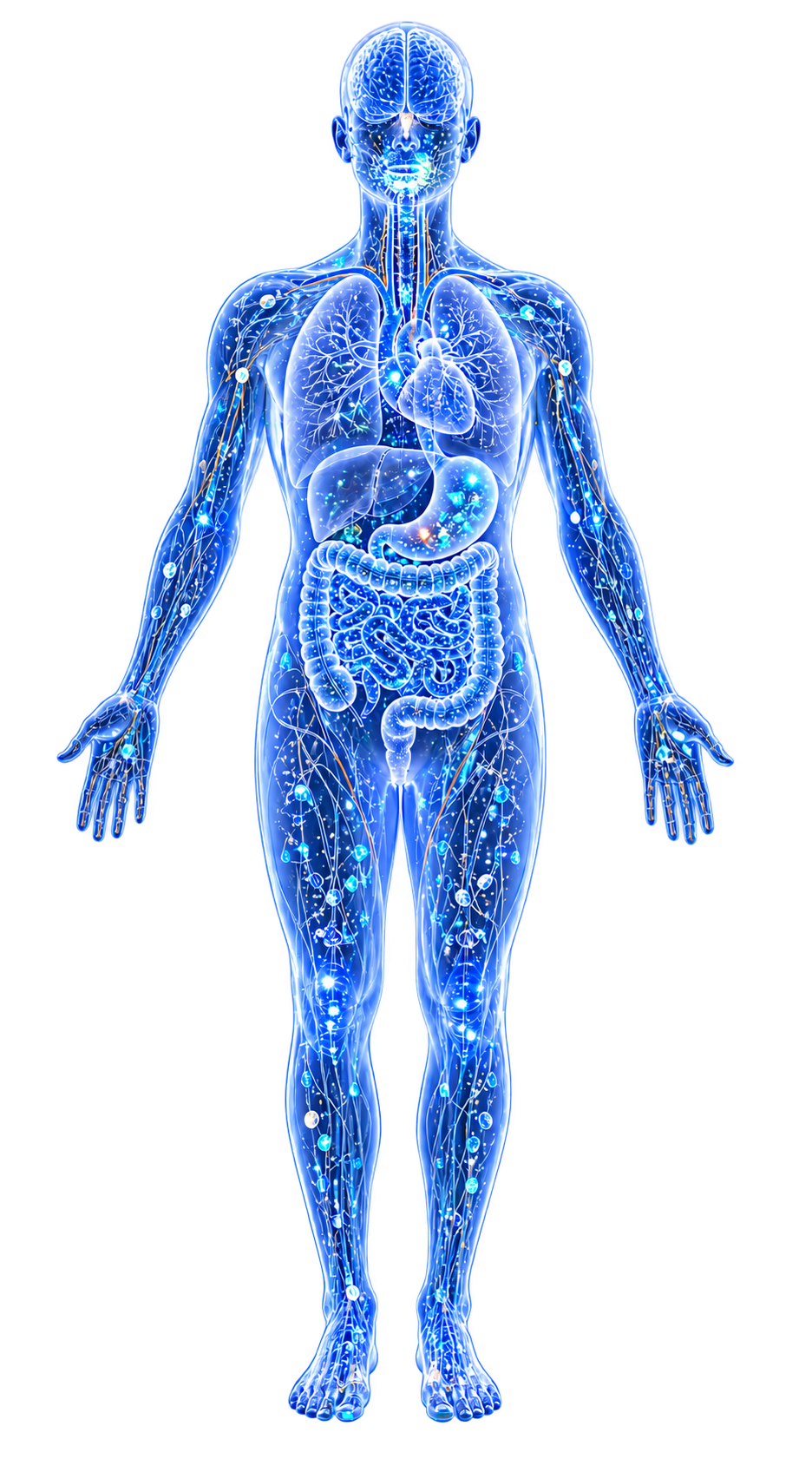
Fermentative metabolism is the set of anaerobic metabolic pathways by which bacteria break down carbohydrates and amino acids in the absence of oxygen, producing short-chain fatty acids (SCFAs) (primarily Butyrate, propionate, acetate), gases (H₂, CO₂, CH₄), and organic acids (lactate, formate).
In a healthy colon, fermentation is the dominant metabolic mode for the majority of the microbiota, and SCFA production is protective: butyrate feeds colonocytes, propionate regulates immunity, and acetate is a substrate for systemic metabolism.
In Dysbiosis, fermentation shifts toward proteolytic fermentation—breakdown of amino acids rather than carbohydrates—producing toxic byproducts (Ammonia, phenols, indoles, hydrogen sulfide) that damage the epithelium and drive Metal-Driven Inflammation.
This exemplifies primitive-9-oxygen-state: the oxygenation state of an ecological niche determines which metabolic pathways dominate and which taxa thrive.
Mechanism#
Saccharolytic fermentation (healthy state). Glycolysis: Glucose → pyruvate (via Embden-Meyerhof pathway or other routes). End-point metabolism: Pyruvate → acetyl-CoA (or other intermediates) → fermentation end products.
Major fermentation pathways. Acetate fermentation: Pyruvate → Acetyl-CoA → acetate (via acetyl-CoA synthetase). Example taxa: bacteroides, Prevotella.
Butyrate fermentation: Pyruvate → Acetyl-CoA → butyryl-CoA → butyrate (via key pathway enzyme butyrate kinase).
Example taxa: Lachnospiraceae (Roseburia, Faecalibacterium), clostridium-cluster-iv. Propionate fermentation: Succinate or pyruvate → propionyl-CoA → propionate. Example taxa: Phascolarctobacterium, Bacteroides vulgatus.
Metal cofactors in fermentation. Nickel: nickel (Ni)-dependent hydrogenases enable H₂ production; crucial for H₂ cycling and Nickel-Glyoxalase-mediated detoxification. Iron: iron (Fe)-dependent ferredoxins shuttle electrons in anaerobic pathways.
Magnesium: magnesium (Mg)²⁺ cofactor for glycolytic enzymes and pyruvate carboxylase.
Zinc: zinc (Zn)²⁺ in aldolase and other glycolytic enzymes; dysbiotic taxa often have zinc-dependent enzyme variants.
Proteolytic fermentation (dysbiotic state):
In low-carbohydrate or dysbiotic environments, taxa shift to amino acid fermentation. Amino acid breakdown: Tryptophan → indoles; phenylalanine → phenol; cysteine → H₂S; tyrosine → tyramine, dopamine. Toxic end products: These are far more genotoxic and pro-inflammatory than SCFAs.
Associated taxa: Clostridioides difficile, proteolytic Bacteroides fragilis, Fusobacterium nucleatum.
Oxygen state switch. Healthy colon: Anaerobic, but with localized oxygen gradients near the epithelium. Facultative anaerobes Escherichia coli are suppressed; obligate anaerobes flourish.
Dysbiosis: Hypoxia worsens; facultative anaerobes overgrow; proteolytic fermentation dominates. IBD: Epithelial damage impairs oxygen barrier; microaerobic zones expand; Adherent-Invasive Escherichia coli (AIEC) (AIEC) proliferates.
Role in Disease#
Fermentative metabolism imbalance is central to dysbiosis-driven conditions. Inflammatory Bowel Disease (IBD)—Loss of Lachnospiraceae (butyrate producers) and shift to proteolytic bacteroides; butyrate deficiency impairs barrier function; toxic fermentation end products drive inflammation.
Colorectal Cancer—Dysbiotic shift toward Fusobacterium nucleatum (proteolytic) and away from Faecalibacterium prausnitzii (butyrate); butyrate loss removes histone deacetylase inhibition, impairing tumor suppression.
Type 2 Diabetes—Butyrate-producing Lachnospiraceae depleted; short-chain fatty acid deficit impairs glucose homeostasis and insulin sensitivity. Obesity—SCFA-producing bacteroidetes reduced; caloric extraction and metabolism shift.
Endometriosis—Dysbiotic shift toward Escherichia coli (saccharolytic but also high in Nickel-Glyoxalase and Siderophores); loss of Faecalibacterium prausnitzii and other butyrate producers.
Metal Connections#
Nickel and zinc are intimately linked to fermentative metabolic capacity.
Nickel-hydrogenase: nickel (Ni)-dependent; essential for H₂ metabolism in many anaerobes. Dysbiotic taxa often have elevated nickel-hydrogenase expression to cope with metal-stress-induced metabolic inefficiency. Zinc-dependent glycolytic enzymes: Dysbiotic taxa may upregulate zinc (Zn)-dependent variants when zinc availability is low (part of nutritional immunity response).
Iron-ferredoxins: iron (Fe)²⁺-dependent electron shuttles in anaerobic pathways. Dysbiotic E. coli upregulate iron-acquisition Siderophores to maintain fermentation rates under iron starvation.
Metabolic consequences of metal dysregulation. High circulating nickel → suppression of nickel-independent fermenters, overgrowth of nickel-dependent Escherichia coli. Low bioavailable zinc → shift toward zinc-independent enzyme variants; altered metabolic efficiency; inflammatory byproduct accumulation.
Elevated iron + hepcidin → Lachnospiraceae outcompeted by siderophore-producing bacteroides.
Connections#
Linked concepts. Acidic Microenvironment—Fermentation produces organic acids; low pH impairs growth of acid-sensitive taxa.—Primary determinant of which fermentation pathways are active.—The primary output of healthy saccharolytic fermentation.
—Proteolytic fermentation byproducts drive epithelial damage. Nutritional Immunity (Metal Sequestration)—Metal availability shapes which fermentative pathways dominate.
Linked entities. Lachnospiraceae (Roseburia, Faecalibacterium)—Primary butyrate producers; depleted in dysbiosis. bacteroides—Saccharolytic fermenters; some shift to proteolytic mode in dysbiosis.—Butyrate producers; reduced in IBD.
Escherichia coli—Saccharolytic but also proteolytic; fermentation supports virulence. Nickel, Iron, Zinc—Key metal cofactors in fermentation enzymes.
Intervention implications. Prebiotic fibers (inulin, FOS, pectin) support butyrate-producing Lachnospiraceae. Resistant starch feeds Faecalibacterium prausnitzii and other SCFA producers.
Nickel restriction may suppress dysbiotic Escherichia coli fermentation, reducing nickel-dependent pathogenic metabolism.
Polyphenol-rich foods (berries, green tea) inhibit proteolytic taxa and support saccharolytic fermenters.
References 8
Numbered by first appearance in the article, then reconciled with its declared source list.
- 1
Denise Mafra, Natalia A. Borges, Livia Alvarenga et al. (2022). Fermented Food: Should Patients with Cardiometabolic Diseases Go Back to an Early Neolithic Diet?. Critical Reviews in Food Science and Nutrition.
- 2
Qiang Luo, Yilan Hu, Xin Chen et al. (2022). Effects of Gut Microbiota and Metabolites on Heart Failure and Its Risk Factors: A Two-Sample Mendelian Randomization Study. Frontiers in Nutrition.
- 3
Natalia A. Borges, Amanda F. Barros, Lia S. Nakao et al. (2016). Protein-Bound Uremic Toxins from Gut Microbiota and Inflammatory Markers in CKD. Journal of Renal Nutrition.
- 4
Juan J. Carrero, Ailema Gonzalez-Ortiz, Carla M. Avesani et al. (2020). Plant-Based Diets to Manage the Risks and Complications of Chronic Kidney Disease. Nature Reviews Nephrology.
- 5
Zhi Li, Shuai Liu, Fang Liu et al. (2023). Li 2023 — Gut Microbiota and Autism Spectrum Disorders: A Bidirectional Mendelian Randomization Study. Frontiers in Cellular and Infection Microbiology.
- 6
K. S. Shivashankara, S. N. Acharya (2010). Bioavailability of Dietary Polyphenols and the Cardiovascular Diseases. The Open Nutraceuticals Journal.
- 7
Denise Mafra, Natalia A. Borges, Bo Lindholm et al. (2021). Food as Medicine: Targeting the Uraemic Phenotype in Chronic Kidney Disease. Nature Reviews Nephrology.
- 8
Lu, Huang, Wang et al. (2019). Lu et al. 2019 — Constipation and ESRD Risk in CKD. BMC Nephrology.
Article network
Mentioned here 18
Pages linking here 6
Connect the evidence
Publicly readable discussion by ORCID-authenticated researchers. Questions, interpretation, methods, corrections, and new evidence stay attached to this record.
No discussion yet. Start with a precise question or a source-backed observation.
Activity and accepted changes
Accepted researcher context, editorial status, public discussion, and upstream Git revisions are shown together. Pending, declined, and withdrawn proposals remain private.
- published revision
Backfill inflammation concept links
Karen Pendergrass · +1 −1
Inspect exact Git diff ↗ - published revision
Complete corpus-wide Dysbiosis linking
Karen Pendergrass · +1 −1
Inspect exact Git diff ↗ - published revision
Complete Ammonia contextual coverage
Karen Pendergrass · +1 −1
Inspect exact Git diff ↗ - published revision
Complete Hydrogenase contextual coverage
Karen Pendergrass · +1 −1
Inspect exact Git diff ↗ - published revision
massive wiki expansion: 149 stubs fixed, 100+ new pages, Rule 15 scan, keystone papers
WikiBiome Deploy Bot · +47 −41
Inspect exact Git diff ↗ - published revision
ingest: 87 papers (17 endometriosis, 67 erectile dysfunction, 3 cross-condition)
WikiBiome Deploy Bot · +2 −2
Inspect exact Git diff ↗ - published revision
nightly maintenance: 94 stub demotions, 181 source_count fixes, 22 auto-discovered stubs, 5 adversarial audits, 3 boundary fixes, 3 evidence-level corrections
WikiBiome Deploy Bot · +3 −0
Inspect exact Git diff ↗ - published revision
pre-overnight checkpoint 2026-04-18
WikiBiome Deploy Bot · +4 −2
Inspect exact Git diff ↗ - published revision
Deep content + citation pass: 10 entities enriched, 7 new sources, DOI integrity
WikiBiome Deploy Bot · +2 −2
Inspect exact Git diff ↗ - published revision
WikiBiome update — 2026-04-15 17:23
WikiBiome Deploy Bot · +7 −7
Inspect exact Git diff ↗ - published revision
WikiBiome update — integrity fixes, metallomic diet pages, cross-condition analyses
WikiBiome Deploy Bot · +20 −18
Inspect exact Git diff ↗ - published revision
WikiBiome update — 2026-04-10 17:16
WikiBiome Deploy Bot · +95 −0
Inspect exact Git diff ↗