
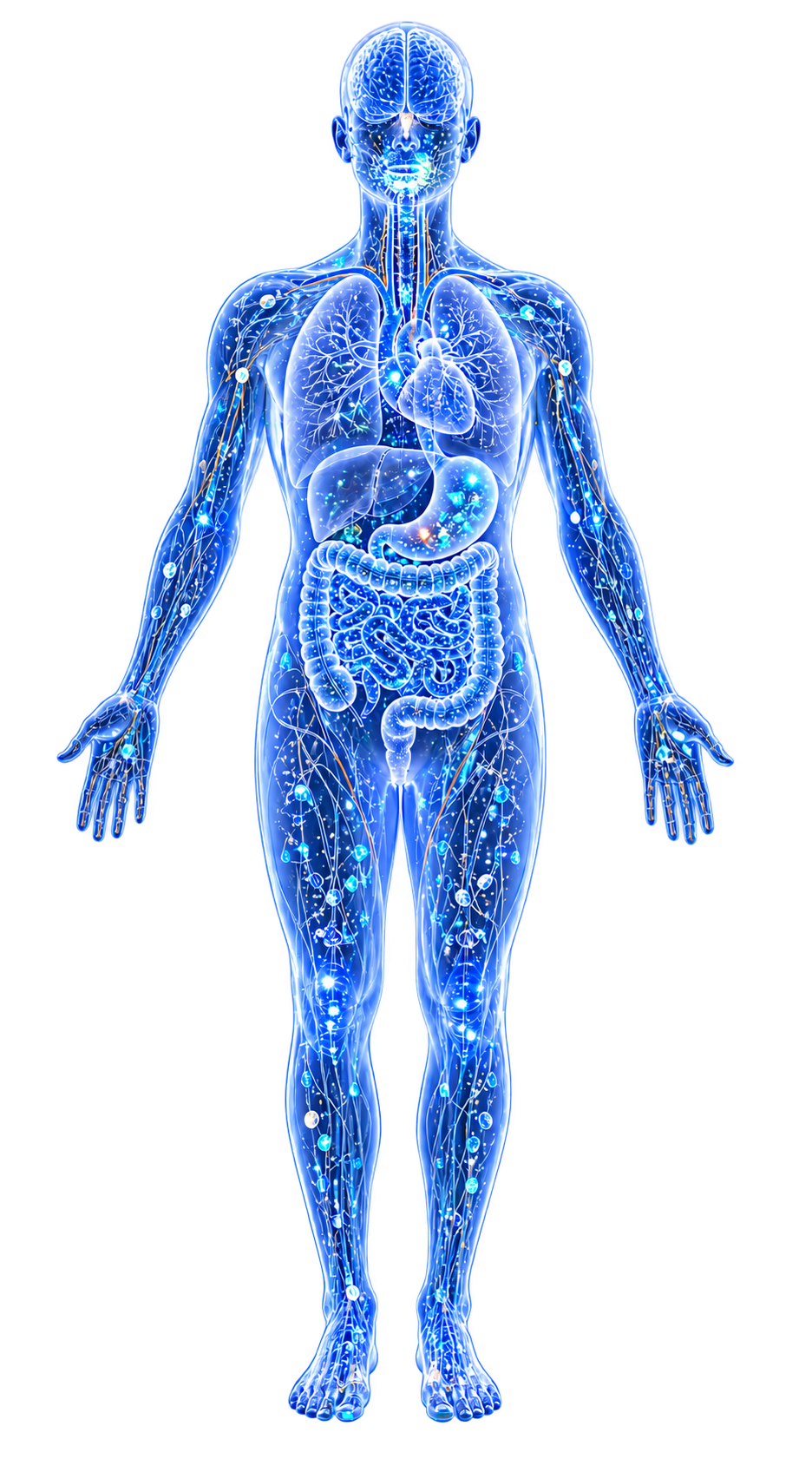
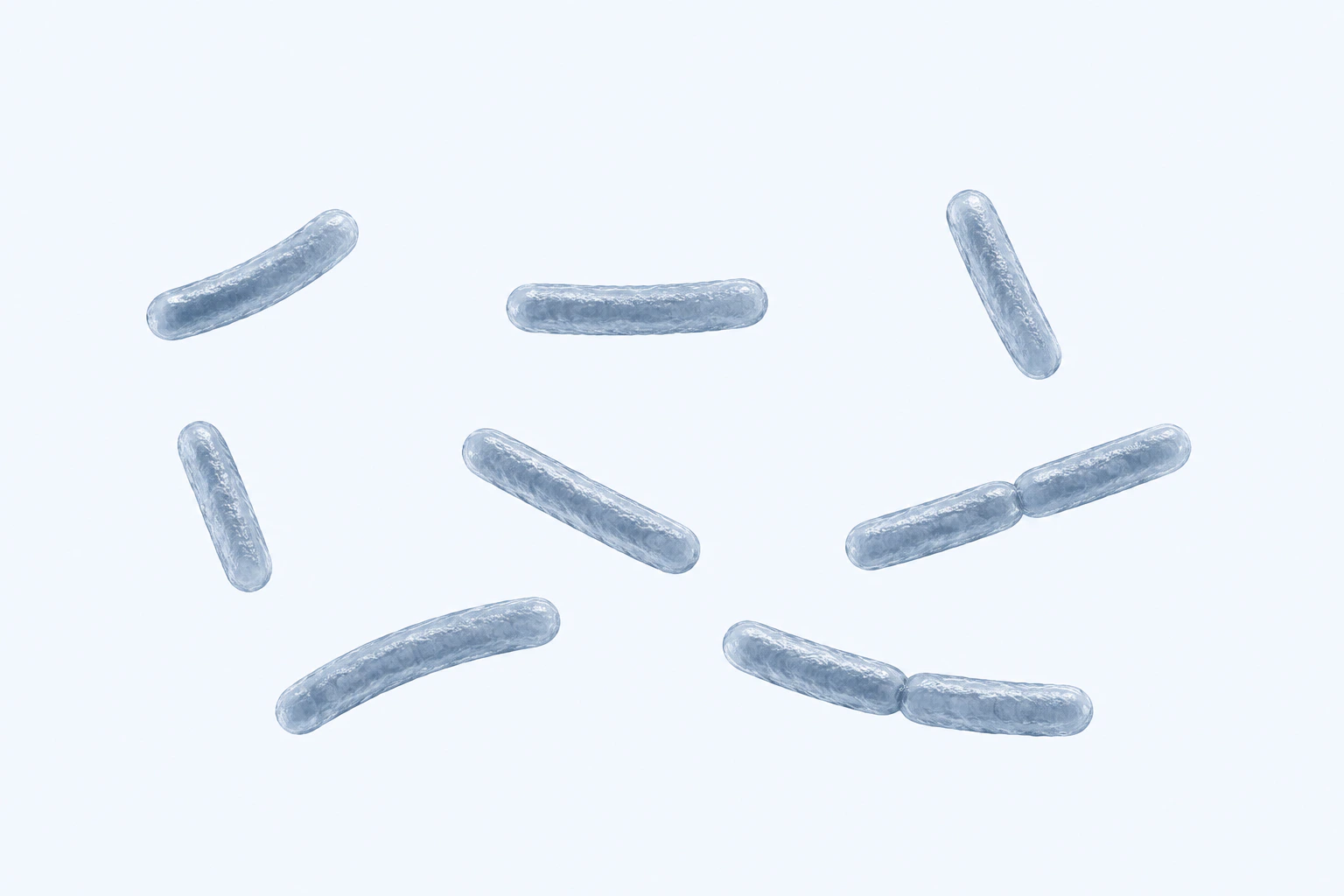
Type-species-anchored Roseburia reconstruction with ten rods in six single and two paired groupings. Type-species flagella are intentionally absent rather than generalized across the genus; the plate is representative, non-universal, non-diagnostic, and not a micrograph.
Scientific media record1 verified identifier
- Subject
- Roseburiataxon · genus
- Identifiers
- NCBITaxon:841
- Review
- Editorial review completeIdentifiers authority-verified · Accessibility validated · · roseburia|roseburia-morphology-v1.webp
- Digital source
- Trained-algorithmic mediaCreated with a trained generative algorithm and reviewed by WikiBiome for subject identity, scientific framing, identifiers, provenance, and accessibility.
- License
- CC BY-SA 4.0Created
A genus of Gram-positive, obligate anaerobic, flagellated bacteria within the Lachnospiraceae family that ranks among the most important Butyrate producers in the human gut. Key species include R. intestinalis and R. hominis.
Roseburia is consistently depleted across inflammatory, metabolic, and neurodegenerative diseases, and its sensitivity to metal stress places it at the center of the Gut-Metal-Microbiome Interactions axis.
Evidence map11 cited passagesInspect provenance +
Produces butyrate as its primary fermentation end-product from dietary fiber, particularly via the butyryl-CoA:acetate CoA-transferase pathway.
Flagellin from R. hominis specifically activates TLR5 signaling in a beneficial context, promoting mucosal immune homeostasis rather than inflammation.
Cardiovascular disease: depleted in ACVD patients in the Jie et al. study; CAG4 containing Faecalibacterium and Roseburia was closely related to 10 serum metabolite modules and important for maintaining normal coronary physiology.
Hypertension: bidirectional Mendelian randomization links reduced Roseburia to elevated blood pressure.
IBD: reduced in both Crohn's disease and ulcerative colitis; inversely correlated with disease activity scores.
Multiple sclerosis: depleted alongside other lachnospiraceae members; loss reduces SCFA-mediated immune modulation.
Colorectal cancer: reduced; butyrate loss diminishes anti-tumorigenic HDAC inhibition in colonocytes.
Chronic kidney disease: depleted across CKD progression, contributing to loss of SCFA-mediated renal protection.
Endometriosis: Roseburia sp. CAG:45 decreased in endometriosis.
Parkinson's disease: depleted alongside other SCFA producers as part of the metal-driven dysbiosis framework.
Schizophrenia: Roseburia is significantly depleted in schizophrenia patients (p=0.023), and its abundance is negatively correlated with fMRI regional homogeneity (ReHo) indices in the right superior temporal cortex, right middle temporal cortex, and left cuneus—brain regions showing decreased ReHo in schizophrenia.
Contents
1. Butyrate Production and Anti-inflammatory Mechanisms2. Depletion Across Disease States3. Metal Sensitivity4. Key Metabolites5. ConnectionsButyrate Production and Anti-inflammatory Mechanisms#
Produces butyrate as its primary fermentation end-product from dietary fiber, particularly via the butyryl-CoA:acetate CoA-transferase pathway.[1]The interplay between diet and the gut microbiome: implications for health and diseaseFiona C. Ross, Dhrati Patangia, Ghjuvan Grimaud et al. · 2024Open reference 1 ↓
Butyrate from Roseburia acts through multiple anti-inflammatory pathways. HDAC inhibition: butyrate inhibits histone deacetylases in colonocytes and immune cells, promoting anti-inflammatory gene expression and Treg differentiation. GPR109A signaling: butyrate activates the GPR109A receptor on colonic epithelial cells and dendritic cells, inducing IL-10 production and suppressing NF-kB-mediated Metal-Driven Inflammation.
Barrier maintenance: supports tight junction integrity (ZO-1, occludin, claudin-1) and maintains colonocyte oxygen consumption, preserving the anaerobic lumen.
Flagellin from R. hominis specifically activates TLR5 signaling in a beneficial context, promoting mucosal immune homeostasis rather than inflammation.[2]The Gut Microbiome is Associated with Brain Structure and Function in SchizophreniaLi S, Song J, Ke P et al. · 2021Open reference 2 ↓
Depletion Across Disease States#
Roseburia depletion is among the most reproducible microbiome findings in human disease.
Cardiovascular disease: depleted in ACVD patients in the Jie et al. study; CAG4 containing Faecalibacterium and Roseburia was closely related to 10 serum metabolite modules and important for maintaining normal coronary physiology.[3]The gut microbiome in atherosclerotic cardiovascular diseaseZhuye Jie, Huihua Xia, Shi-Long Zhong et al. · 2017Open reference 3 ↓[4]Alterations in the gut microbiome and metabolism with coronary artery disease severityHonghong Liu, Xi Chen, Xiaomin Hu et al. · 2019Open reference 4 ↓[5]The potential links between human gut microbiota and cardiovascular health and disease - is there a gut-cardiovascular axis?Catia Almeida, J. Guilherme Goncalves-Nobre, Diogo Alpuim Costa et al. · 2023Open reference 5 ↓
Hypertension: bidirectional Mendelian randomization links reduced Roseburia to elevated blood pressure.[6]Causality of gut microbiome and hypertension: A bidirectional mendelian randomization studyYihui Li, Ru Fu, Ruixuan Li et al. · 2023Open reference 6 ↓ IBD: reduced in both Crohn's disease and ulcerative colitis; inversely correlated with disease activity scores.[7]Synergic Interactions between Polyphenols and Gut Microbiota in Mitigating Inflammatory Bowel DiseasesLi H, Christman LM, Li R et al. · 2020Open reference 7 ↓
Multiple sclerosis: depleted alongside other Lachnospiraceae members; loss reduces SCFA-mediated immune modulation.[8]Investigating the metabolite signature of an altered oral microbiota as a discriminant factor for multiple sclerosis: a pilot studyLéo Boussamet, Emmanuel Montassier, Camille Mathé et al. · 2024Open reference 8 ↓
Colorectal cancer: reduced; butyrate loss diminishes anti-tumorigenic HDAC inhibition in colonocytes.[9]Diet, microbiota, and dysbiosis: a 'recipe' for colorectal cancerKishore Vipperla, Stephen J. O'Keefe · 2016Open reference 9 ↓[10]Dissecting the Role of the Gut Microbiome and Fecal Microbiota Transplantation in Radio- and Immunotherapy Treatment of Colorectal CancerLena Van Dingenen, Charlotte Segers, Shari Wouters et al. · 2023Open reference 10 ↓
Type 2 diabetes: depleted; inversely correlated with HbA1c and insulin resistance.
Chronic kidney disease: depleted across CKD progression, contributing to loss of SCFA-mediated renal protection.[11]Tang et al. 2023 — Gut Microbiome Tango with CKD ProgressionTang, Lai, Bhatt · 2023Open reference 11 ↓[12]Yasuno et al. 2024 — Dysbiosis of Gut Microbiota in CKDYasuno, Nakahama, Kurogi et al. · 2024Open reference 12 ↓[13]Zhang 2023 — Metagenome-Wide Analysis of ESRD Microbiome and Uremic ToxinsZhang, Liao, Mei et al. · 2023Open reference 13 ↓
Endometriosis: Roseburia sp. CAG:45 decreased in endometriosis.[14]Gut microbiome in endometriosis: a cohort study on 1000 individualsPerez-Prieto I, Vargas E, Salas-Espejo E et al. · 2024Open reference 14 ↓
Parkinson's disease: depleted alongside other SCFA producers as part of the metal-driven Dysbiosis framework.[15]Microbial Metallomics and Parkinson's Disease: A Unified Metal-Driven Framework Linking Ferroptosis, Dysbiosis, and alpha-Synuclein PathologyKaren Pendergrass · 2025Open reference 15 ↓[16]Houser 2019 -- Microbiome and Inflammation in Parkinson's Disease ProgressionMadelyn C Houser, Malú G Tansey · 2019Open reference 16 ↓[17]Sampson 2024 -- A Microbiome Signature of Parkinson's DiseaseTimothy R Sampson, Andrew S Neish · 2024Open reference 17 ↓
Schizophrenia: Roseburia is significantly depleted in schizophrenia patients (p=0.023), and its abundance is negatively correlated with fMRI regional homogeneity (ReHo) indices in the right superior temporal cortex, right middle temporal cortex, and left cuneus—brain regions showing decreased ReHo in schizophrenia.[2]The Gut Microbiome is Associated with Brain Structure and Function in SchizophreniaLi S, Song J, Ke P et al. · 2021Open reference 2 ↓
Metal Sensitivity#
Roseburia is particularly sensitive to heavy metal stress, more so than many other gut commensals.
Iron-sulfur cluster enzymes in the butyrate synthesis pathway are vulnerable to disruption by Cadmium, Lead, and other toxic metals that compete for iron binding sites.
Under metal-stressed conditions, Roseburia is outcompeted by siderophore-producing Enterobacteriaceae that aggressively scavenge Iron, compounding its depletion. This metal sensitivity positions Roseburia as an early biomarker for environmental metal exposure effects on the Gut Microbiome.
Key Metabolites#
Butyrate—primary output; HDAC inhibitor, colonocyte fuel, Treg inducer. Acetate—secondary fermentation product; feeds acetogenic pathways. Formate—minor product; serves as electron carrier in anaerobic cross-feeding.
Flagellin—immunostimulatory protein from R. hominis that promotes beneficial TLR5 signaling.
Connections#
- Lachnospiraceae—parent family; Roseburia is a flagship genus
- Faecalibacterium prausnitzii—co-depleted partner; together represent the core butyrate-producing guild
- Ruminococcus—receives starch degradation products from R. bromii for butyrate conversion
- Cardiovascular Disease—CAG4 (Faecalibacterium/Roseburia) loss correlated with CAD severity
- Crohn's Disease—depleted; inversely correlated with disease activity
- Colorectal Cancer—butyrate loss reduces HDAC-mediated tumor suppression
- Parkinson's Disease—depleted in metal-driven dysbiosis framework
- Iron—iron (Fe)-S clusters essential for butyrate production; iron competition from pathogens
- Cadmium—particularly sensitive to cadmium (Cd)-induced depletion
- dysbiosis—one of the most reliably depleted genera across disease states
- inflammation—butyrate/HDAC/GPR109A anti-inflammatory axis
- Gut-Metal-Microbiome Interactions—metal sensitivity makes it an early indicator of metal-induced dysbiosis
References 17
Numbered by first appearance in the article, then reconciled with its declared source list.
- 1
Fiona C. Ross, Dhrati Patangia, Ghjuvan Grimaud et al. (2024). The interplay between diet and the gut microbiome: implications for health and disease. Nature Reviews Microbiology.
- 2
Li S, Song J, Ke P et al. (2021). The Gut Microbiome is Associated with Brain Structure and Function in Schizophrenia. Scientific Reports.
- 3
Zhuye Jie, Huihua Xia, Shi-Long Zhong et al. (2017). The gut microbiome in atherosclerotic cardiovascular disease. Nature Communications.
- 4
Honghong Liu, Xi Chen, Xiaomin Hu et al. (2019). Alterations in the gut microbiome and metabolism with coronary artery disease severity. Microbiome.
- 5
Catia Almeida, J. Guilherme Goncalves-Nobre, Diogo Alpuim Costa et al. (2023). The potential links between human gut microbiota and cardiovascular health and disease - is there a gut-cardiovascular axis?. Frontiers in Gastroenterology.
- 6
Yihui Li, Ru Fu, Ruixuan Li et al. (2023). Causality of gut microbiome and hypertension: A bidirectional mendelian randomization study. Frontiers in Cardiovascular Medicine.
- 7
Li H, Christman LM, Li R et al. (2020). Synergic Interactions between Polyphenols and Gut Microbiota in Mitigating Inflammatory Bowel Diseases. Food & Function.
- 8
Léo Boussamet, Emmanuel Montassier, Camille Mathé et al. (2024). Investigating the metabolite signature of an altered oral microbiota as a discriminant factor for multiple sclerosis: a pilot study. Scientific Reports.
- 9
Kishore Vipperla, Stephen J. O'Keefe (2016). Diet, microbiota, and dysbiosis: a 'recipe' for colorectal cancer. Food & Function.
- 10
Lena Van Dingenen, Charlotte Segers, Shari Wouters et al. (2023). Dissecting the Role of the Gut Microbiome and Fecal Microbiota Transplantation in Radio- and Immunotherapy Treatment of Colorectal Cancer. Frontiers in Cellular and Infection Microbiology.
- 11
Tang, Lai, Bhatt (2023). Tang et al. 2023 — Gut Microbiome Tango with CKD Progression. Journal of Translational Medicine.
- 12
Yasuno, Nakahama, Kurogi et al. (2024). Yasuno et al. 2024 — Dysbiosis of Gut Microbiota in CKD. Internal Medicine.
- 13
Zhang, Liao, Mei et al. (2023). Zhang 2023 — Metagenome-Wide Analysis of ESRD Microbiome and Uremic Toxins. Genome Biology.
- 14
Perez-Prieto I, Vargas E, Salas-Espejo E et al. (2024). Gut microbiome in endometriosis: a cohort study on 1000 individuals. BMC Medicine.
- 15
★Karen Pendergrass (2025). Microbial Metallomics and Parkinson's Disease: A Unified Metal-Driven Framework Linking Ferroptosis, Dysbiosis, and alpha-Synuclein Pathology. Conference Presentation.
- 16
Madelyn C Houser, Malú G Tansey (2019). Houser 2019 -- Microbiome and Inflammation in Parkinson's Disease Progression. npj Parkinson's Disease.
- 17
Timothy R Sampson, Andrew S Neish (2024). Sampson 2024 -- A Microbiome Signature of Parkinson's Disease. Communications Medicine.
Article network
Mentioned here 17
Pages linking here 95
Connect the evidence
Publicly readable discussion by ORCID-authenticated researchers. Questions, interpretation, methods, corrections, and new evidence stay attached to this record.
No discussion yet. Start with a precise question or a source-backed observation.
Activity and accepted changes
Accepted researcher context, editorial status, public discussion, and upstream Git revisions are shown together. Pending, declined, and withdrawn proposals remain private.
- published revision
Backfill gut microbiome concept links
Karen Pendergrass · +1 −1
Inspect exact Git diff ↗ - published revision
Backfill inflammation concept links
Karen Pendergrass · +1 −1
Inspect exact Git diff ↗ - published revision
Complete corpus-wide Dysbiosis linking
Karen Pendergrass · +2 −2
Inspect exact Git diff ↗ - published revision
Complete Tight junctions contextual coverage
Karen Pendergrass · +1 −1
Inspect exact Git diff ↗ - published revision
massive wiki expansion: 149 stubs fixed, 100+ new pages, Rule 15 scan, keystone papers
WikiBiome Deploy Bot · +19 −19
Inspect exact Git diff ↗ - published revision
nightly maintenance: 94 stub demotions, 181 source_count fixes, 22 auto-discovered stubs, 5 adversarial audits, 3 boundary fixes, 3 evidence-level corrections
WikiBiome Deploy Bot · +1 −0
Inspect exact Git diff ↗ - published revision
11 new sources for Hashimotos/MS/CVD + 10 microbe entity citation pass
WikiBiome Deploy Bot · +10 −7
Inspect exact Git diff ↗ - published revision
WikiBiome update — 2026-04-15 17:23
WikiBiome Deploy Bot · +3 −4
Inspect exact Git diff ↗ - published revision
wiki: bulk entity upgrades, new article pages, and site regeneration
WikiBiome Deploy Bot · +6 −0
Inspect exact Git diff ↗ - published revision
WikiBiome update — integrity fixes, metallomic diet pages, cross-condition analyses
WikiBiome Deploy Bot · +10 −3
Inspect exact Git diff ↗ - published revision
WikiBiome update — 2026-04-10 13:49
WikiBiome Deploy Bot · +64 −0
Inspect exact Git diff ↗