
 metals · microbes · host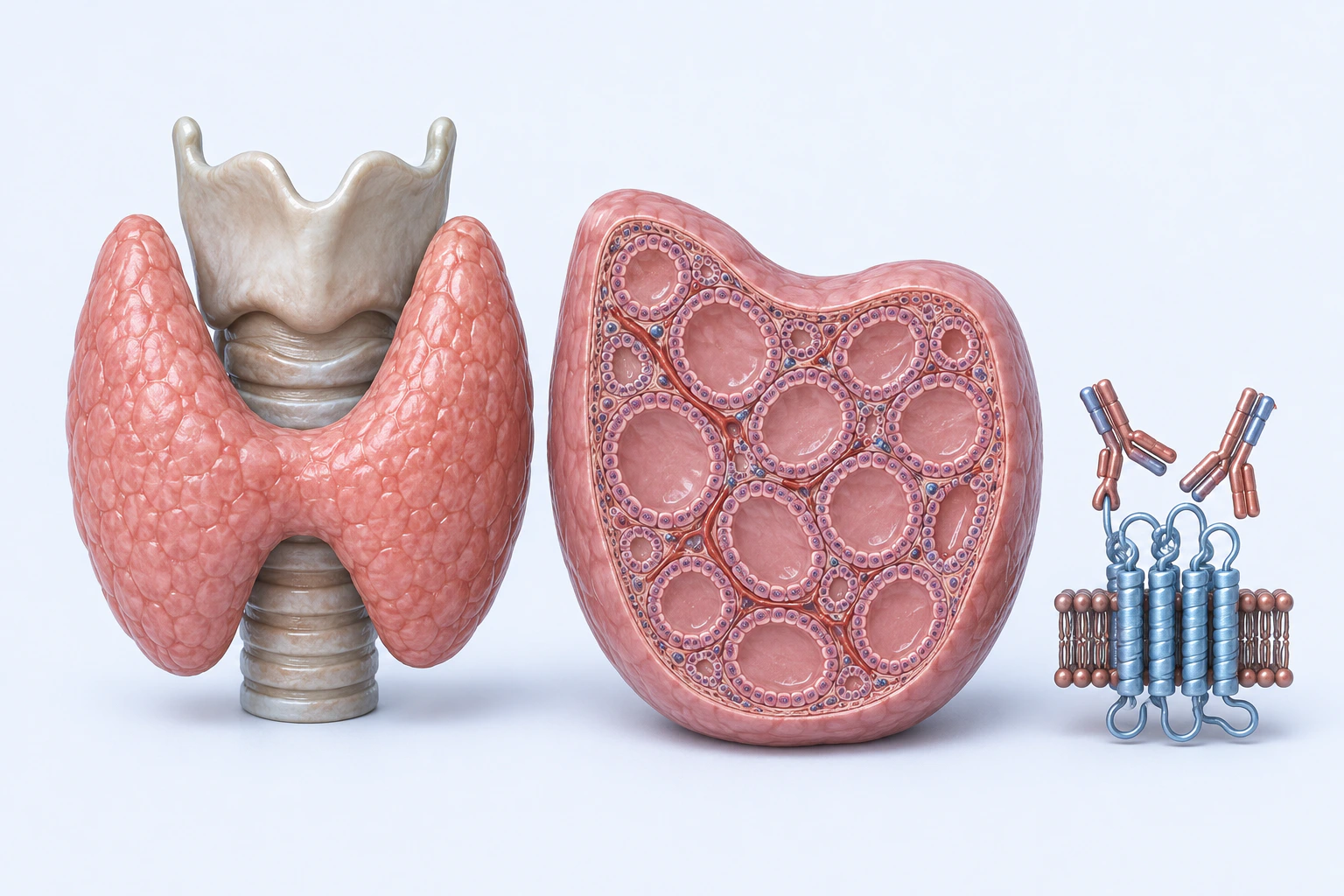
Representative thyroid and molecular orientation for Graves disease. Appearance does not establish a receptor or antibody identity, eye disease, activity, stage, severity, treatment response, or diagnosis.
Scientific media record1 verified identifier
- Subject
- Graves Diseasecondition
- Identifiers
- MeSH:D006111
- Review
- Editorial review completeIdentifiers authority-verified · Accessibility validated · · graves-disease|graves-disease-pathology-v1.webp
- Digital source
- Trained-algorithmic mediaCreated with a trained generative algorithm and reviewed by WikiBiome for subject identity, scientific framing, identifiers, provenance, and accessibility.
- Scientific basis
- Graves Disease — MeSHGraves' Disease
- License
- CC BY-SA 4.0Created
Graves' disease (GD) is an autoimmune thyroid disorder characterized by TSH receptor antibodies (TRAb) that stimulate the thyroid gland, causing hyperthyroidism.[1]Viola et al. 2025 — Graves' Disease: Is It Time for Targeted Therapy? A Narrative ReviewViola N, Colleo A, Casula M et al. · 2025Open reference 1 ↓
It is the most common cause of hyperthyroidism, with concordance rates of 35% in monozygotic vs 3% in dizygotic twins, indicating both genetic susceptibility (HLA-DRB1, PTPN22, JAK/STAT pathway) and environmental triggers.[2]Graves' disease: Epidemiology, genetic and environmental risk factors and virusesAntonelli A, Ferrari SM, Ragusa F et al. · 2023Open reference 2 ↓
The metallomic dimension reveals selenium as the critical protective element, while the gut-thyroid axis provides a mechanistic framework linking microbial Dysbiosis to autoimmune thyroid activation. There is no effective pharmacological therapy for the underlying autoimmunity—treatment remains symptomatic with thyrostatics (methimazole)—making microbiome and mineral interventions particularly relevant.
Evidence map36 cited passagesInspect provenance +
Graves' disease (GD) is an autoimmune thyroid disorder characterized by TSH receptor antibodies (TRAb) that stimulate the thyroid gland, causing hyperthyroidism. It is the most common cause of hyperthyroidism, with concordance rates of 35% in monozygotic vs 3% in dizygotic twins, indicating both genetic susceptibility (HLA-DRB1, PTPN22, JAK/STAT pathway) and
Selenium deficiency is an independent risk factor for both Graves' disease and Graves' ophthalmopathy. Key clinical evidence:
200 ug Se/day for 6 months in a double-blind RCT significantly decreased Graves' ophthalmopathy severity, improved quality of life, and prevented disease worsening; benefits persisted after therapy withdrawal
Se + vitamin D + methimazole combination resulted in significantly greater FT4 reduction and better quality of life compared to methimazole monotherapy
Se supplementation reduces anti-TPO antibodies in autoimmune thyroiditis (40% reduction in those with levels 1200 IU/mL)
Se protects against cadmium toxicity by binding Cd and facilitating biliary excretion
Se has an antagonistic relationship with mercury, providing protective effects when Hg levels are elevated
found that berberine upregulated enterobactin biosynthesis (essential for microbial iron uptake), potentially improving Fe availability for thyroid function
iodine is essential for thyroid hormone synthesis but excess iodine can paradoxically trigger autoimmune thyroiditis:
Excess I activates the NLRP3 inflammasome in susceptible individuals
Prevalence of autoimmune thyroiditis increases after salt iodization programs
In combined Se and I deficiency, normalizing Se without iodine worsens hypothyroidism
Two independent cohorts (Shanghai and Nanjing) consistently demonstrate:
Reduced alpha diversity (Shannon, Simpson, observed OTUs) in untreated GD vs healthy controls
Enriched in GD: Lactobacillus, Veillonella, Streptococcus, Collinsella, Bifidobacterium
Depleted in GD: Phascolarctobacterium, Synergistetes, Dialister, Roseburia
Recovery after methimazole treatment: diversity significantly improves; Phascolarctobacterium increases; Streptococcus, Blautia, Ruminococcus decrease
identified causal relationships:
demonstrated that Crohn's disease increases GD risk by 30% (OR 1.30), while ulcerative colitis is paradoxically protective (OR 0.71). Shared genetic susceptibility via HLA-DRB1, PTPN22, and the JAK/STAT pathway underlies the comorbidity. The altered gut microbiota in IBD may influence thyroid function through uptake of iodine, selenium, and iron. Additional
demonstrated that berberine combined with methimazole was superior to methimazole alone:
found that GFD significantly altered the microbiome in autoimmune thyroiditis after 4 weeks, but the changes (increased Desulfobacterota and Proteobacteria; decreased Bifidobacterium) may indicate increasing inflammation rather than improvement. No significant changes in thyroid function markers were observed after 8 weeks.
Th17/Treg imbalance: The central immunological feature of Graves' dysbiosis. Loss of butyrate-producing taxa removes HDAC inhibition required for Foxp3+ Treg differentiation. Simultaneously, LPS and dysbiotic metabolites drive Th17 polarization. IL-17 elevation drives thyroid infiltration and TPO/TSH receptor autoimmunity.
Molecular mimicry: Streptococcus and other enriched taxa share epitopes cross-reactive with thyroid peroxidase and the TSH receptor. Combined with barrier dysfunction enabling bacterial antigen presentation to Peyer's patches, this triggers autoimmune recognition.
| Metal | Direction | Key Evidence | |-------|-----------|-------------| | selenium | Depleted | The thyroid contains the highest Se concentration in the body. Se deficiency is an independent risk factor for GD and Graves' ophthalmopathy. 200 ug/day Se for 6 months significantly decreased GO severity in double-blind RCT | | Iodine | Dysregulated | Both exces
Showing 24 of 36 evidence-bearing passages. Every remaining citation is still indexed in the reference record below.
One disease. Five evidence layers.
A generated systems view of the metals, organisms, host sequestration signals, ecological conditions, and microbial functions indexed for Graves' Disease.
Evidence layer
Taxonomic signature
Organisms reported as enriched or depleted, with their indexed functional context kept beside the name.Elevated B. fragilis — beta-glucuronidase, LPS production, Th17 skewing
Gram-negative LPS producers — drive intestinal permeability and systemic inflammation
Enriched in untreated GD; molecular mimicry with thyroid peroxidase epitopes; decreases after methimazole
Mucin-degrading; LPS production; associated with intestinal permeability
Opportunistic expansion — zinc (Zn)/iron (Fe)/nickel (Ni)-dependent virulence enzymes, LPS translocation
Paradoxically enriched -- positively correlated with TRAb (R=0.489) and TPOAb (R=0.607); not protective in GD context
Significantly enriched in untreated GD vs controls and treated patients; MR risk factor (OR 1.301)
Paradoxically positively correlated with TRAb (R=0.588); MR-confirmed risk factor (OR 1.246); protective in other conditions
MR risk factor (OR 1.216); sulfate-reducing bacterium
Significantly increased in untreated GD (P=0.039)
Primary butyrate producer -- negatively correlated with FT3/FT4 and TRAb; loss impairs Treg induction
SCFA producers — loss drives HDAC inhibition failure and NF-kB activation
Mucus-layer specialist — depletion drives barrier dysfunction and Treg loss
Paradoxical — generally protective but dysbiotic expansion pattern reported in some cohorts
Propionate producer -- strongly negatively correlated with TRAb (R=-0.544); depleted in GD, increases after treatment
Butyrate producer depleted in untreated GD
Significantly depleted in untreated GD vs controls
MR-confirmed protective (OR 0.824); SCFA-mediated protection
Protective against both GD and Plummer disease in MR analysis
Evidence layer
Nutritional immunity
Host metal-withholding, inflammatory, antioxidant, and microbial-metabolite signals indexed in the signature.Elevated host signals
3Depleted protective signals
4Evidence layer
Ecological state
The environmental conditions that connect the organism-level observations into a system.Evidence layer
Virulence functions
Microbial structures, enzymes, and acquisition systems implicated by the linked evidence.The disease record, in full.
The original WikiBiome disease narrative remains intact beneath the generated signature atlas.
Metal Connections#
Selenium -- The Critical Thyroid Element#
The thyroid contains the highest concentration of Selenium in the body, owing to its dependence on three selenoprotein families. Iodothyronine deiodinases (DIO1, DIO2, DIO3): essential for T4 to T3 conversion. Glutathione peroxidases (GPx): protect thyrocytes from H2O2 generated during thyroid hormone synthesis.
Thioredoxin reductases (TrxR): maintain cellular redox balance.
Selenium deficiency is an independent risk factor for both Graves' disease and Graves' ophthalmopathy.[3]McGregor Brock 2015 — The Role of Selenium in Thyroid Autoimmunity: A ReviewMcGregor Brock · 2015Open reference 3 ↓ Key clinical evidence.
200 ug selenium (Se)/day for 6 months in a double-blind RCT significantly decreased Graves' ophthalmopathy severity, improved quality of life, and prevented disease worsening; benefits persisted after therapy withdrawal.[3]McGregor Brock 2015 — The Role of Selenium in Thyroid Autoimmunity: A ReviewMcGregor Brock · 2015Open reference 3 ↓
selenium + vitamin D + methimazole combination resulted in significantly greater FT4 reduction and better quality of life compared to methimazole monotherapy.[4]Effects of Trace Elements on Endocrine Function and Pathogenesis of Thyroid Diseases — A Literature ReviewBrylinski L, Kostelecka K, Wolinski F et al. · 2025Open reference 4 ↓
selenium supplementation reduces anti-TPO antibodies in autoimmune thyroiditis (40% reduction in those with levels >1200 IU/mL).[3]McGregor Brock 2015 — The Role of Selenium in Thyroid Autoimmunity: A ReviewMcGregor Brock · 2015Open reference 3 ↓ selenium protects against Cadmium toxicity by binding cadmium (Cd) and facilitating biliary excretion.[5]Kravchenko 2023 — Thyroid hormones and minerals in immunocorrection of disorders in autoimmune thyroid diseasesKravchenko V, Zakharchenko T · 2023Open reference 5 ↓
selenium has an antagonistic relationship with Mercury, providing protective effects when mercury (Hg) levels are elevated.[5]Kravchenko 2023 — Thyroid hormones and minerals in immunocorrection of disorders in autoimmune thyroid diseasesKravchenko V, Zakharchenko T · 2023Open reference 5 ↓
Iron Deficiency#
Iron deficiency is common in autoimmune thyroid disease. iron (Fe) decreases TPO (thyroid peroxidase) activity, leading to reduced T3/T4 synthesis and increased TSH. 58% of Hashimoto's thyroiditis patients have iron deficiency anemia. iron has immunomodulating effects on M1/M2 macrophage polarization relevant to autoimmune regulation.
[6]Han et al. 2022 — The Potential Prebiotic Berberine Combined With Methimazole Improved the Therapeutic Effect of Graves' Disease Patients Through Regulating the Intestinal MicrobiomeHan Z, Cen C, Ou Q et al. · 2022Open reference 6 ↓ found that berberine upregulated enterobactin biosynthesis (essential for microbial iron uptake), potentially improving iron availability for thyroid function.
Copper and Zinc#
Copper stimulates T4 production and inhibits excessive T4 absorption in blood cells. Patients with GD/Graves' ophthalmopathy had altered copper (Cu) and selenium (Se) levels. copper/zinc (Zn) ratio is altered in thyroid diseases; elevated in thyroid cancer.
Zinc is necessary for TRH, TSH, T3, and T4 production; required for thymulin activation and T cell differentiation. zinc deficiency impairs immune function and increases autoimmune susceptibility.
Iodine -- The Double-Edged Sword#
Iodine is essential for thyroid hormone synthesis but excess iodine can paradoxically trigger autoimmune thyroiditis:[7]Editorial: How can diet impair thyroid function?Mian C, Foresta C, Vermiglio F · 2022Open reference 7 ↓
- Excess I inhibits TH synthesis via the Wolff-Chaikoff effect
- Excess I activates the NLRP3 inflammasome in susceptible individuals[5]Kravchenko 2023 — Thyroid hormones and minerals in immunocorrection of disorders in autoimmune thyroid diseasesKravchenko V, Zakharchenko T · 2023Open reference 5 ↓
- Prevalence of autoimmune thyroiditis increases after salt iodization programs[2]Graves' disease: Epidemiology, genetic and environmental risk factors and virusesAntonelli A, Ferrari SM, Ragusa F et al. · 2023Open reference 2 ↓
- In combined selenium (Se) and I deficiency, normalizing selenium without iodine worsens hypothyroidism[4]Effects of Trace Elements on Endocrine Function and Pathogenesis of Thyroid Diseases — A Literature ReviewBrylinski L, Kostelecka K, Wolinski F et al. · 2025Open reference 4 ↓
Toxic Metal Thyroid Disruption#
Cadmium: inhibits hepatic 5'-monodeiodinase activity, interfering with T4 to T3 conversion; decreases thyroid follicle size and epithelial thickness; induces UGT activity increasing TH metabolism.
Lead: prevents deiodination, reducing T3 while T4 and TSH rise; causes DNA damage in thyroid cells. Mercury: interferes with TSH production, inhibits TPO; both methylmercury (MeHg) and inorganic compounds inhibit Tg iodination.
Gut Microbiome Connection (Thyroid-Gut Axis)#
Dysbiosis in Graves' Disease#
Two independent cohorts (Shanghai and Nanjing) consistently demonstrate:[8]Chen et al. 2021 — Associations between Gut Microbiota and Thyroidal Function Status in Chinese Patients with Graves' DiseaseChen J, Wang W, Guo Z et al. · 2021Open reference 8 ↓[9]Preliminary Observation of the Changes in the Intestinal Flora of Patients With Graves' Disease Before and After Methimazole TreatmentYang M, Zheng X, Wu Y et al. · 2022Open reference 9 ↓
- Reduced alpha diversity (Shannon, Simpson, observed OTUs) in untreated GD vs healthy controls[8]Chen et al. 2021 — Associations between Gut Microbiota and Thyroidal Function Status in Chinese Patients with Graves' DiseaseChen J, Wang W, Guo Z et al. · 2021Open reference 8 ↓
- Enriched in GD: Lactobacillus, Veillonella, Streptococcus, Collinsella, Bifidobacterium[8]Chen et al. 2021 — Associations between Gut Microbiota and Thyroidal Function Status in Chinese Patients with Graves' DiseaseChen J, Wang W, Guo Z et al. · 2021Open reference 8 ↓
- Depleted in GD: Phascolarctobacterium, Synergistetes, Dialister, Roseburia[8]Chen et al. 2021 — Associations between Gut Microbiota and Thyroidal Function Status in Chinese Patients with Graves' DiseaseChen J, Wang W, Guo Z et al. · 2021Open reference 8 ↓
- Recovery after methimazole treatment: diversity significantly improves; Phascolarctobacterium increases; Streptococcus, Blautia, Ruminococcus decrease[9]Preliminary Observation of the Changes in the Intestinal Flora of Patients With Graves' Disease Before and After Methimazole TreatmentYang M, Zheng X, Wu Y et al. · 2022Open reference 9 ↓
Key Microbiome-Antibody Correlations#
Synergistetes: strongly protective—negatively correlated with TRAb (R=-0.702), TGAb (R=-0.624), TPOAb (R=-0.711). Phascolarctobacterium: protective via propionate production—negatively correlated with TRAb (R=-0.544). Bifidobacterium: paradoxically positively correlated with TRAb (R=0.588), TGAb, and TPOAb; confirmed as GD risk factor by Mendelian randomization (OR 1.246).
Lactobacillus: positively correlated with TRAb (R=0.489) and TPOAb (R=0.607). Ruminococcus and Phascolarctobacterium abundance changes tracked with TRAb changes during treatment.
Mendelian Randomization Evidence#
[10]Uncovering a Causal Connection between Gut Microbiota and Six Thyroid Diseases: A Two-Sample Mendelian Randomization StudyChen J, Wang Y, Yao H et al. · 2024Open reference 10 ↓ identified causal relationships.
Protective for GD: Ruminiclostridium9 (OR 0.749), Victivallis (OR 0.847), Butyricimonas (OR 0.824). Risk for GD: Eubacterium rectale group (OR 1.305), Desulfovibrio (OR 1.216), Bifidobacterium (OR 1.246), Collinsella (OR 1.301), Oscillospira (OR 1.231), Catenibacterium (OR 1.331). Butyricimonas and Lachnospira are protective against both GD and Plummer disease, suggesting shared SCFA-mediated mechanisms.
IBD-Graves' Disease Connection#
[11]Graves Disease and Inflammatory Bowel Disease: A Bidirectional Mendelian RandomizationXian W, Wu D, Liu B et al. · 2023Open reference 11 ↓ demonstrated that Crohn's disease increases GD risk by 30% (OR 1.30), while ulcerative colitis is paradoxically protective (OR 0.71). Shared genetic susceptibility via HLA-DRB1, PTPN22, and the JAK/STAT pathway underlies the comorbidity.
The altered gut microbiota in IBD may influence thyroid function through uptake of iodine, selenium, and iron. Additional MR evidence from[12]Zheng 2025 — Gut-thyroid axis causality with AITD: bidirectional Mendelian randomizationTing Zheng, Xin Li, Hongyu Xiang · 2025Open reference 12 ↓ and[13]Fang et al. 2024 — Gut Microbiota and Autoimmune Thyroid Disease: A Bidirectional Mendelian Randomization Study and Mediation AnalysisFang Y, Zhang X, Huang R et al. · 2024Open reference 13 ↓ supports causal gut-thyroid axis relationships in autoimmune thyroid disease.
Bidirectional Gut-Thyroid Axis#
The relationship between thyroid function and microbiome composition is bidirectional. Hyperthyroidism disrupts gut motility and microbiome composition. Dysbiosis impairs mineral absorption (I, selenium (Se), iron (Fe)) essential for thyroid function.
Methimazole treatment and thyroid function recovery lead to significant microbiome diversity improvement.
SCFA-producing bacteria (propionate via Phascolarctobacterium, Butyrate via Butyricimonas) appear protective through anti-inflammatory mechanisms.
Diet Interventions#
Selenium and Vitamin D Supplementation#
selenium (Se) (200 ug/day) combined with vitamin D and methimazole represents the best-studied dietary intervention for GD, with RCT evidence of faster thyroid function normalization and improved quality of life.
Berberine as Microbiome Modulator#
[6]Han et al. 2022 — The Potential Prebiotic Berberine Combined With Methimazole Improved the Therapeutic Effect of Graves' Disease Patients Through Regulating the Intestinal MicrobiomeHan Z, Cen C, Ou Q et al. · 2022Open reference 6 ↓ demonstrated that berberine combined with methimazole was superior to methimazole alone:
- Restored TSH and FT3 to healthy thresholds (methimazole alone restored only FT3)
- Significantly altered microbiota structure (methimazole alone did not)
- Increased Lactococcus lactis and Enterococcus hirae; decreased Enterobacter hormaechei
- Upregulated enterobactin biosynthesis (iron uptake) and TCA cycle pathways
- F. prausnitzii and L. lactis negatively correlated with FT3/FT4 and TRAb
Gluten-Free Diet -- Cautionary Evidence#
[14]Rodziewicz et al. 2024 — Gluten-Free Diet Alters the Gut Microbiome in Women with Autoimmune ThyroiditisRodziewicz A, Szewczyk A, Bryl E · 2024Open reference 14 ↓ found that GFD significantly altered the microbiome in autoimmune thyroiditis after 4 weeks, but the changes (increased Desulfobacterota and Proteobacteria; decreased Bifidobacterium) may indicate increasing Metal-Driven Inflammation rather than improvement. No significant changes in thyroid function markers were observed after 8 weeks.
Fish and Mercury Balance#
Omega-3 PUFA from fish is beneficial for thyroid autoimmunity, but fish consumption also exposes to mercury and other Heavy Metals that impair thyroid function. Selenium co-supplementation may mitigate this risk through selenium (Se)-mercury (Hg) antagonism.
Comorbidities#
Hashimoto's Thyroiditis—sister autoimmune thyroid disease (AITD) with shared genetics (HLA-DRB1, PTPN22) and mineral dependencies (selenium (Se), I, iron (Fe)); patients can convert from Graves' to Hashimoto's and vice versa; both feature gut-thyroid axis disruption and SCFA producer depletion.
Depression—thyroid hormone fluctuations (hyper- then hypothyroidism during treatment) drive mood instability; shared neuroinflammation via gut-brain axis; tryptophan pathway disruption documented in AITD; depression persists even after achieving euthyroid state in some patients.
Anxiety Disorders—hyperthyroidism directly causes anxiety symptoms via catecholamine sensitization; Graves' patients have 2-3x higher anxiety rates even after treatment; shared HPA axis dysregulation.
Connections#
References 22
Numbered by first appearance in the article, then reconciled with its declared source list.
- 1
Viola N, Colleo A, Casula M et al. (2025). Viola et al. 2025 — Graves' Disease: Is It Time for Targeted Therapy? A Narrative Review. Medicina.
- 2
Antonelli A, Ferrari SM, Ragusa F et al. (2023). Graves' disease: Epidemiology, genetic and environmental risk factors and viruses. Best Practice & Research Clinical Endocrinology & Metabolism.
- 3
McGregor Brock (2015). McGregor Brock 2015 — The Role of Selenium in Thyroid Autoimmunity: A Review. Journal of Restorative Medicine.
- 4
★Brylinski L, Kostelecka K, Wolinski F et al. (2025). Effects of Trace Elements on Endocrine Function and Pathogenesis of Thyroid Diseases — A Literature Review. Nutrients.
- 5
★Kravchenko V, Zakharchenko T (2023). Kravchenko 2023 — Thyroid hormones and minerals in immunocorrection of disorders in autoimmune thyroid diseases. Frontiers in Endocrinology.
- 6
Han Z, Cen C, Ou Q et al. (2022). Han et al. 2022 — The Potential Prebiotic Berberine Combined With Methimazole Improved the Therapeutic Effect of Graves' Disease Patients Through Regulating the Intestinal Microbiome. Frontiers in Immunology.
- 7
Mian C, Foresta C, Vermiglio F (2022). Editorial: How can diet impair thyroid function?. Frontiers in Endocrinology.
- 8
Chen J, Wang W, Guo Z et al. (2021). Chen et al. 2021 — Associations between Gut Microbiota and Thyroidal Function Status in Chinese Patients with Graves' Disease. Journal of Endocrinological Investigation.
- 9
Yang M, Zheng X, Wu Y et al. (2022). Preliminary Observation of the Changes in the Intestinal Flora of Patients With Graves' Disease Before and After Methimazole Treatment. Frontiers in Cellular and Infection Microbiology.
- 10
Chen J, Wang Y, Yao H et al. (2024). Uncovering a Causal Connection between Gut Microbiota and Six Thyroid Diseases: A Two-Sample Mendelian Randomization Study. Biology.
- 11
Xian W, Wu D, Liu B et al. (2023). Graves Disease and Inflammatory Bowel Disease: A Bidirectional Mendelian Randomization. The Journal of Clinical Endocrinology & Metabolism.
- 12
Ting Zheng, Xin Li, Hongyu Xiang (2025). Zheng 2025 — Gut-thyroid axis causality with AITD: bidirectional Mendelian randomization. Endokrynologia Polska.
- 13
Fang Y, Zhang X, Huang R et al. (2024). Fang et al. 2024 — Gut Microbiota and Autoimmune Thyroid Disease: A Bidirectional Mendelian Randomization Study and Mediation Analysis. Frontiers in Microbiology.
- 14
Rodziewicz A, Szewczyk A, Bryl E (2024). Rodziewicz et al. 2024 — Gluten-Free Diet Alters the Gut Microbiome in Women with Autoimmune Thyroiditis. Nutrients.
- 15
Su X, Yin X, Liu Y et al. (2020). Su et al. 2020 — Gut Dysbiosis Contributes to the Imbalance of Treg and Th17 Cells in Graves' Disease Patients by Propionic Acid. The Journal of Clinical Endocrinology & Metabolism.
- 16
Wu D, Xian W, Hong S et al. (2021). Graves' Disease and Rheumatoid Arthritis: A Bidirectional Mendelian Randomization Study. Frontiers in Endocrinology.
- 17
Song Y, Wang X, Ma W et al. (2023). Graves' Disease as a Driver of Depression: A Mechanistic Insight. Frontiers in Endocrinology.
- 18
Kun Y, Xiaodong W, Haijun W et al. (2023). Kun et al. 2023 — Exploring the Oral-Gut Microbiota During Thyroid Cancer: Factors Affecting Thyroid Functions and Cancer Development. Food Science and Nutrition.
- 19
Abraham P, Avenell A, Park CM et al. (2005). Abraham et al. 2005 — A Systematic Review of Drug Therapy for Graves' Hyperthyroidism. European Journal of Endocrinology.
- 20
Yang M, Zheng X, Wu Y et al. (2022). Preliminary Observation of the Changes in the Intestinal Flora of Patients With Graves' Disease Before and After Methimazole Treatment. Frontiers in Cellular and Infection Microbiology.
- 21
Liu H, Liu H, Liu C et al. (2022). Liu et al. 2022 — Gut Microbiome and the Role of Metabolites in the Study of Graves' Disease. Frontiers in Molecular Biosciences.
- 22
Yalei Liu, Shasha Tang, Yu Feng et al. (2024). Alteration in gut microbiota is associated with immune imbalance in Graves' disease. Frontiers in Cellular and Infection Microbiology.
Article network
Mentioned here 17
Pages linking here 29
Connect the evidence
Publicly readable discussion by ORCID-authenticated researchers. Questions, interpretation, methods, corrections, and new evidence stay attached to this record.
No discussion yet. Start with a precise question or a source-backed observation.
Activity and accepted changes
Accepted researcher context, editorial status, public discussion, and upstream Git revisions are shown together. Pending, declined, and withdrawn proposals remain private.
- published revision
Backfill heavy metals concept links
Karen Pendergrass · +1 −1
Inspect exact Git diff ↗ - published revision
Backfill inflammation concept links
Karen Pendergrass · +1 −1
Inspect exact Git diff ↗ - published revision
Complete corpus-wide Dysbiosis linking
Karen Pendergrass · +1 −1
Inspect exact Git diff ↗ - published revision
massive wiki expansion: 149 stubs fixed, 100+ new pages, Rule 15 scan, keystone papers
WikiBiome Deploy Bot · +19 −19
Inspect exact Git diff ↗ - published revision
nightly maintenance: 94 stub demotions, 181 source_count fixes, 22 auto-discovered stubs, 5 adversarial audits, 3 boundary fixes, 3 evidence-level corrections
WikiBiome Deploy Bot · +1 −0
Inspect exact Git diff ↗ - published revision
cycle 1: health check + lint fixes + 8 ingests + 2 stubs + gestational-diabetes signature
WikiBiome Deploy Bot · +1 −0
Inspect exact Git diff ↗ - published revision
Deep citation pass on 10 disease entities + expand 3 thin entities
WikiBiome Deploy Bot · +17 −17
Inspect exact Git diff ↗ - published revision
Deepen metal/concept entities + 8 new sources for T1D/schizophrenia
WikiBiome Deploy Bot · +275 −0
Inspect exact Git diff ↗ - published revision
WikiBiome update — 2026-04-15 17:23
WikiBiome Deploy Bot · +10 −10
Inspect exact Git diff ↗ - published revision
v2 migration Priority 2: All 29 disease entity pages upgraded with associated_conditions, seo_target, wikipedia_differentiation
WikiBiome Deploy Bot · +6 −0
Inspect exact Git diff ↗ - published revision
WikiBiome update — 2026-04-11 22:49
WikiBiome Deploy Bot · +6 −0
Inspect exact Git diff ↗ - published revision
WikiBiome update — integrity fixes, metallomic diet pages, cross-condition analyses
WikiBiome Deploy Bot · +2 −0
Inspect exact Git diff ↗ - published revision
WikiBiome update — 2026-04-10 15:45
WikiBiome Deploy Bot · +5 −1
Inspect exact Git diff ↗ - published revision
WikiBiome v7 — interactive microbiome metallomics encyclopedia
Karen Pendergrass · +139 −0
Inspect exact Git diff ↗