
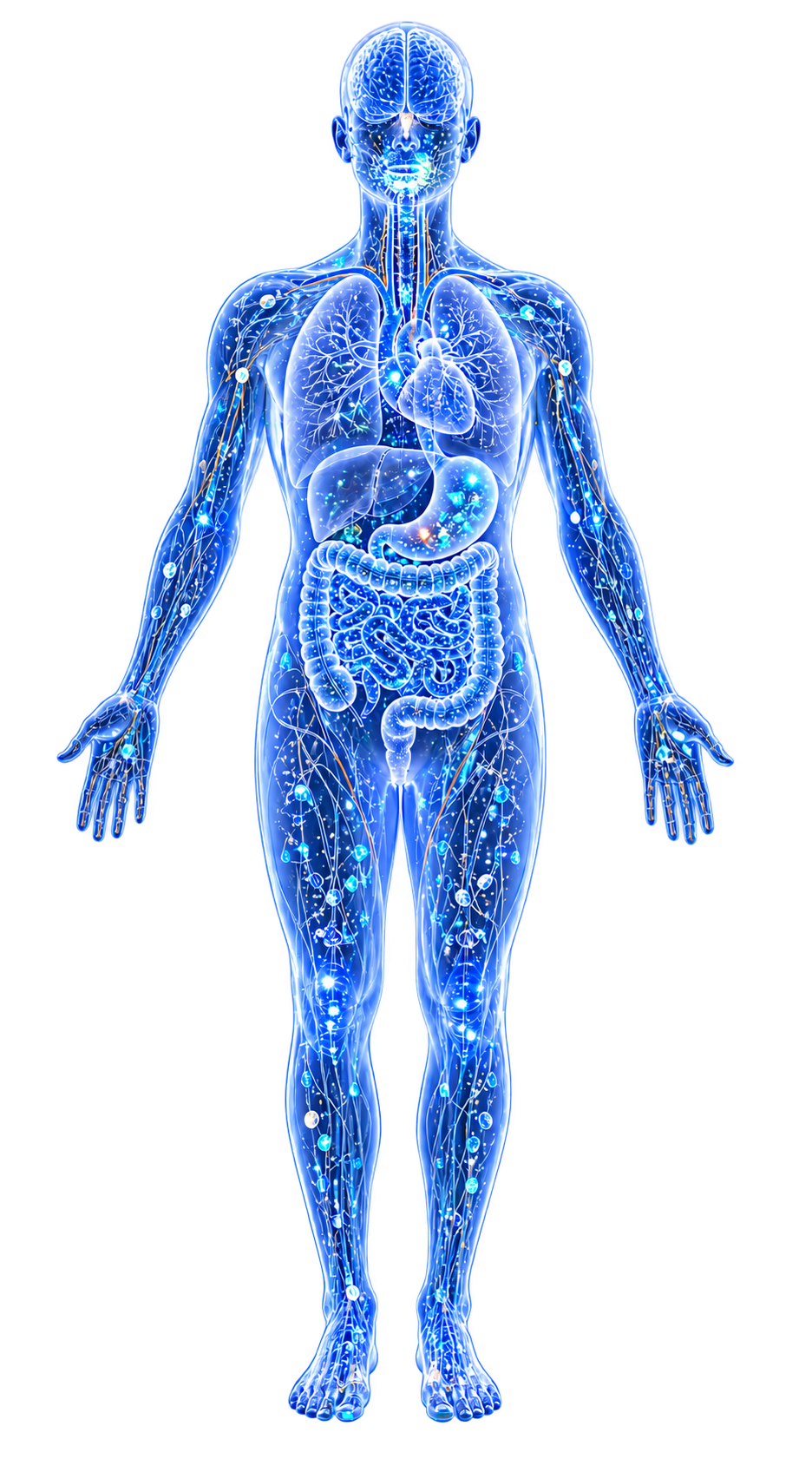
Heavy metals is a widely used but chemically imprecise umbrella term for elements discussed because of their density, persistence, environmental occurrence, or toxicity. One common convention uses density above 5 g/cm3, but density alone does not determine biological hazard.
The label is also routinely applied to Arsenic, which is a metalloid, and to essential trace metals whose toxicity depends on dose and chemical form.[1]Heavy Metal Pollution in the Environment and Their Toxicological Effects on HumansJessica Briffa, Emmanuel Sinagra, Renald Blundell · 2020Open reference 1 ↓
WikiBiome therefore uses heavy metals as an operational navigation category, not as a claim that every included element shares one chemistry or risk profile. A useful interpretation must name the element, oxidation state or compound when known, exposure route, dose, duration, and biological context.
Evidence map15 cited passagesInspect provenance +
Heavy metals is a widely used but chemically imprecise umbrella term for elements discussed because of their density, persistence, environmental occurrence, or toxicity. One common convention uses density above 5 g/cm3, but density alone does not determine biological hazard. The label is also routinely applied to arsenic, which is a metalloid, and to essenti
These elements converge on some cellular injury pathways, but they should not be treated as interchangeable exposures,.
Hazard statements about one compound, valence state, or exposure setting should not be generalized automatically to every form of the element,.
These elements typically show deficiency as well as excess phenotypes. Calling them simply “toxic” erases the central role of metal homeostasis.
Metals may be encountered through contaminated food or water, inhaled dusts and fumes, tobacco smoke, consumer or occupational materials, soil, and other environmental media. The biologically effective dose depends on absorption, chemical speciation, particle size, nutritional status, age, pregnancy, kidney function, co-exposures, and the tissue in which the
These are mechanistic families, not proof that all metals produce the same disease or that oxidative stress is always the initiating event,.
For ingested exposures, the intestinal lumen and epithelium are an early contact site. Metals can change microbial growth, community structure, metabolite production, resistance genes, and barrier function. Microorganisms can in turn bind, accumulate, precipitate, methylate, demethylate, or otherwise transform metals, potentially changing their solubility, a
Experimental studies report metal-associated changes in diversity, bile acids, amino acids, short chain fatty acids, and metabolically relevant taxa. In mice, environmentally framed arsenic and cadmium exposures altered microbiome-metabolite networks, with the magnitude and direction differing by metal. A systematic review covering arsenic, lead, mercury, an
Reviews describe metal-associated loss of mucus or tight-junction components, increased permeability, microbial metabolite changes, and inflammatory signaling. The affected junctional proteins and supporting evidence differ among arsenic, lead, mercury, cadmium, and chromium. This places intestinal permeability and the gut metal microbiome axis among plausib
A disrupted community may reduce microbial sequestration or transformation of a metal, while barrier injury may increase host exposure. Conversely, metal-tolerant organisms may persist or expand under selective pressure. This feedback model is useful for organizing mechanisms, but the microbiome is only one determinant among chemical form, host transport, li
Target organs reflect exposure route and toxicokinetics rather than the umbrella label alone. The kidney is important for cadmium, inorganic mercury, lead, arsenic, and chromium handling; the nervous system is especially vulnerable to lead, methylmercury, and excess manganese; inhaled chromium(VI), nickel compounds, cadmium, and arsenic can create respirator
Prenatal development, infancy, childhood, pregnancy, nutritional deficiency, and impaired kidney function can change susceptibility or internal dose. Dietary metal exposure is also discussed as one contributor to neurodegenerative mechanisms, but disease attribution usually requires evidence beyond the presence of a metal or a shared oxidative marker.
Microbiome findings are heterogeneous. Taxonomic changes vary with metal, dose, route, host species, baseline community, diet, sequencing method, and sampling time.
The first principle is to identify and reduce a verified exposure source when feasible. Clinical testing and treatment depend on the element, chemical form, timing, symptoms, and validated specimen. Chelation is metal-specific, can redistribute metals or remove essential elements, and is not a general-purpose response to nonspecific symptoms or an unvalidate
Microbial binding and probiotic strategies are biologically plausible. Reviews describe biosorption, bioaccumulation, biotransformation, altered transporter expression, barrier support, and increased excretion; engineered microorganisms can increase binding capacity in experimental systems,. However, strain specificity, survival, gene-transfer risk, chronic-
Contents
1. Operational Classification2. Exposure Is Not the Same as Toxicity3. Shared Toxicity Mechanisms4. The Gut-Metal-Microbiome Interface5. Organ and Life-Stage Context6. Evidence Interpretation7. Intervention Boundaries8. ConnectionsOperational Classification#
Elements Without an Established Nutritional Requirement#
Lead (lead (Pb)) interferes with heme synthesis, calcium-dependent signaling, and neurological development. Bone can act as a long-term internal reservoir. Mercury (mercury (Hg)) includes inorganic mercury and organomercury compounds such as methylmercury; these forms differ substantially in absorption, distribution, and target organs.
Cadmium (cadmium (Cd)) accumulates over long periods and is strongly associated with renal tubular injury, bone effects, and carcinogenic mechanisms. Arsenic (arsenic (As)) is included operationally even though it is a metalloid. Toxicity varies among inorganic and methylated species.
These elements converge on some cellular injury pathways, but they should not be treated as interchangeable exposures.[2]Toxicity, Mechanism and Health Effects of Some Heavy MetalsMonisha Jaishankar, Tenzin Tseten, Naresh Anbalagan et al. · 2014Open reference 2 ↓[3]Toxic Mechanisms of Five Heavy Metals: Mercury, Lead, Chromium, Cadmium, and ArsenicBalali-Mood M, Naseri K, Tahergorabi Z et al. · 2021Open reference 3 ↓
Form-Dependent Hazards#
Chromium toxicity depends strongly on oxidation state. Hexavalent chromium, chromium (Cr)(VI), is much more readily taken up by cells and has a different hazard profile from chromium(III).
Nickel is biologically relevant to many microorganisms, including as a cofactor for Urease and Hydrogenase, while particular nickel compounds and occupational exposures have distinct allergic, respiratory, and carcinogenic hazards.
Aluminium is often grouped with heavy metals in biomedical discussion despite not meeting the common density convention.
Hazard statements about one compound, valence state, or exposure setting should not be generalized automatically to every form of the element.[1]Heavy Metal Pollution in the Environment and Their Toxicological Effects on HumansJessica Briffa, Emmanuel Sinagra, Renald Blundell · 2020Open reference 1 ↓[2]Toxicity, Mechanism and Health Effects of Some Heavy MetalsMonisha Jaishankar, Tenzin Tseten, Naresh Anbalagan et al. · 2014Open reference 2 ↓
Essential Metals That Become Harmful Outside Homeostatic Ranges#
Iron supports heme, electron transport, and iron-sulfur proteins; excess labile iron can drive Fenton chemistry and Ferroptosis. Copper supports redox enzymes but can catalyze oxidative injury when poorly buffered. Zinc is required by many proteins yet can disrupt other metal pools and cellular signaling in excess.
Manganese supports enzymes including mitochondrial superoxide dismutase, while chronic excess can produce neurological injury. Cobalt is required within vitamin B12 but has different effects as free ionic cobalt or in occupational particles.
These elements typically show deficiency as well as excess phenotypes. Calling them simply “toxic” erases the central role of Metal Homeostasis.[1]Heavy Metal Pollution in the Environment and Their Toxicological Effects on HumansJessica Briffa, Emmanuel Sinagra, Renald Blundell · 2020Open reference 1 ↓
Exposure Is Not the Same as Toxicity#
Metals may be encountered through contaminated food or water, inhaled dusts and fumes, tobacco smoke, consumer or occupational materials, soil, and other environmental media.
The biologically effective dose depends on absorption, chemical speciation, particle size, nutritional status, age, pregnancy, kidney function, co-exposures, and the tissue in which the element is retained.[1]Heavy Metal Pollution in the Environment and Their Toxicological Effects on HumansJessica Briffa, Emmanuel Sinagra, Renald Blundell · 2020Open reference 1 ↓[4]Heavy metals in the diet: unraveling the molecular pathways linked to neurodegenerative disease riskGuevara-Ramirez P, Tamayo-Trujillo R, Cadena-Ullauri S et al. · 2024Open reference 4 ↓
Three measurements answer different questions:
- External exposure measurements quantify a metal in water, food, air, soil, or another source.
- Internal-dose biomarkers quantify a metal or metabolite in blood, urine, hair, nails, or tissue, each with a different exposure window and susceptibility to contamination.
- Effect biomarkers assess downstream biology such as renal injury, altered heme synthesis, Metal-Driven Inflammation, or Oxidative Stress.
An environmental concentration alone does not establish the absorbed dose, and a biomarker alone does not necessarily identify the source or prove that the measured metal caused a clinical outcome.
The Gut-Metal-Microbiome Interface#
For ingested exposures, the intestinal lumen and epithelium are an early contact site. Metals can change microbial growth, community structure, metabolite production, resistance genes, and barrier function.
Microorganisms can in turn bind, accumulate, precipitate, methylate, demethylate, or otherwise transform metals, potentially changing their solubility, absorption, and fecal elimination.[5]Gut Microbiota: A Target for Heavy Metal Toxicity and a Probiotic Protective StrategyHui Duan, Leilei Yu, Fengwei Tian et al. · 2020Open reference 5 ↓[6]Influence of Toxic Metal Exposure on the Gut Microbiota (Review)Federica Giambo, Sebastiano Italia, Michele Teodoro et al. · 2021Open reference 6 ↓
Community and Metabolite Effects#
Experimental studies report metal-associated changes in diversity, bile acids, amino acids, Short-Chain Fatty Acids (SCFAs), and metabolically relevant taxa. In mice, environmentally framed arsenic and cadmium exposures altered microbiome-metabolite networks, with the magnitude and direction differing by metal.[7]Heavy Metal Exposure Causes Changes in the Metabolic Health-Associated Gut Microbiome and MetabolitesXuanji Li, Asker Daniel Brejnrod, Madeleine Ernst et al. · 2019Open reference 7 ↓
A systematic review covering arsenic, lead, mercury, and cadmium found recurring Dysbiosis signals, but its disease-specific implications remain partly inferential.[8]Rezazadegan et al. 2025 — Heavy Metals and Gut Microbiota: A Systematic ReviewFatemeh Rezazadegan, Maryam Mahmoudi, Seyed Mohammad Mousavi · 2025Open reference 8 ↓
Barrier and Immune Effects#
Reviews describe metal-associated loss of mucus or tight-junction components, increased permeability, microbial metabolite changes, and inflammatory signaling. The affected junctional proteins and supporting evidence differ among arsenic, lead, mercury, cadmium, and chromium.[9]Effects of Heavy Metals on Gut Barrier Integrity and Gut MicrobiotaSweta Ghosh, Syam P. Nukavarpu, Venkatakrishna Rao Jala · 2024Open reference 9 ↓
This places Intestinal Permeability and the Gut-Metal-Microbiome Interactions axis among plausible mediators, not universal consequences of every exposure.
Bidirectional Feedback#
A disrupted community may reduce microbial sequestration or transformation of a metal, while barrier injury may increase host exposure. Conversely, metal-tolerant organisms may persist or expand under selective pressure.
This feedback model is useful for organizing mechanisms, but the microbiome is only one determinant among chemical form, host transport, liver and kidney handling, diet, and exposure intensity.[5]Gut Microbiota: A Target for Heavy Metal Toxicity and a Probiotic Protective StrategyHui Duan, Leilei Yu, Fengwei Tian et al. · 2020Open reference 5 ↓[6]Influence of Toxic Metal Exposure on the Gut Microbiota (Review)Federica Giambo, Sebastiano Italia, Michele Teodoro et al. · 2021Open reference 6 ↓
Organ and Life-Stage Context#
Target organs reflect exposure route and toxicokinetics rather than the umbrella label alone.
The kidney is important for cadmium, inorganic mercury, lead, arsenic, and chromium handling; the nervous system is especially vulnerable to lead, methylmercury, and excess manganese; inhaled chromium(VI), nickel compounds, cadmium, and arsenic can create respiratory hazards; and bone can store lead for years.[2]Toxicity, Mechanism and Health Effects of Some Heavy MetalsMonisha Jaishankar, Tenzin Tseten, Naresh Anbalagan et al. · 2014Open reference 2 ↓[3]Toxic Mechanisms of Five Heavy Metals: Mercury, Lead, Chromium, Cadmium, and ArsenicBalali-Mood M, Naseri K, Tahergorabi Z et al. · 2021Open reference 3 ↓
Prenatal development, infancy, childhood, pregnancy, nutritional deficiency, and impaired kidney function can change susceptibility or internal dose.
Dietary metal exposure is also discussed as one contributor to neurodegenerative mechanisms, but disease attribution usually requires evidence beyond the presence of a metal or a shared oxidative marker.[4]Heavy metals in the diet: unraveling the molecular pathways linked to neurodegenerative disease riskGuevara-Ramirez P, Tamayo-Trujillo R, Cadena-Ullauri S et al. · 2024Open reference 4 ↓
Evidence Interpretation#
The heavy-metal literature spans environmental monitoring, occupational cohorts, cross-sectional biomonitoring, toxicokinetic studies, animal experiments, cell culture, and mechanistic reviews. These designs answer different questions.
Association is not attribution. A higher metal biomarker in a disease group may reflect exposure, altered elimination, diet, treatment, or disease-related physiology. **Mixtures complicate inference.
** People encounter multiple metals and other pollutants, while experimental studies commonly isolate one compound.
Species and dose matter. Results from one oxidation state, salt, particle, or high-dose model may not generalize to another.
Microbiome findings are heterogeneous. Taxonomic changes vary with metal, dose, route, host species, baseline community, diet, sequencing method, and sampling time.[6]Influence of Toxic Metal Exposure on the Gut Microbiota (Review)Federica Giambo, Sebastiano Italia, Michele Teodoro et al. · 2021Open reference 6 ↓
Mechanistic plausibility is not clinical proof. Oxidative stress, dysbiosis, or barrier injury can support a pathway without demonstrating that reducing the metal or modifying the microbiome improves a human outcome.
Intervention Boundaries#
The first principle is to identify and reduce a verified exposure source when feasible. Clinical testing and treatment depend on the element, chemical form, timing, symptoms, and validated specimen.
Chelation is metal-specific, can redistribute metals or remove essential elements, and is not a general-purpose response to nonspecific symptoms or an unvalidated screening result.[3]Toxic Mechanisms of Five Heavy Metals: Mercury, Lead, Chromium, Cadmium, and ArsenicBalali-Mood M, Naseri K, Tahergorabi Z et al. · 2021Open reference 3 ↓
Microbial binding and probiotic strategies are biologically plausible. Reviews describe biosorption, bioaccumulation, biotransformation, altered transporter expression, barrier support, and increased excretion; engineered microorganisms can increase binding capacity in experimental systems.[5]Gut Microbiota: A Target for Heavy Metal Toxicity and a Probiotic Protective StrategyHui Duan, Leilei Yu, Fengwei Tian et al. · 2020Open reference 5 ↓[10]Potential Application of Living Microorganisms in the Detoxification of Heavy MetalsRunqiu Chen, Huaijun Tu, Tingtao Chen · 2022Open reference 10 ↓
However, strain specificity, survival, gene-transfer risk, chronic-exposure models, regulation, and limited human outcome evidence prevent these approaches from being treated as established detoxification therapy.
Connections#
- Environmental Metal Exposure—sources, routes, and exposure context
- Metal Homeostasis—uptake, trafficking, storage, and export
- Metallomics—systems-level measurement of elemental states
- Gut-Metal-Microbiome Interactions—bidirectional metal-microbe interactions
- Oxidative Stress—a common but nonspecific injury pathway
- Mis-Metallation—displacement of native metal cofactors
- Intestinal Permeability—one proposed mediator of systemic effects
- Metal Carcinogenesis—compound-specific genotoxic and epigenetic mechanisms
- Heavy Metal Neurotoxicity—nervous-system mechanisms and evidence
- Nutritional Immunity (Metal Sequestration)—host control of biologically required metals during infection
References 10
Numbered by first appearance in the article, then reconciled with its declared source list.
- 1
Jessica Briffa, Emmanuel Sinagra, Renald Blundell (2020). Heavy Metal Pollution in the Environment and Their Toxicological Effects on Humans. Heliyon.
- 2
★Monisha Jaishankar, Tenzin Tseten, Naresh Anbalagan et al. (2014). Toxicity, Mechanism and Health Effects of Some Heavy Metals. Interdisciplinary Toxicology.
- 3
★Balali-Mood M, Naseri K, Tahergorabi Z et al. (2021). Toxic Mechanisms of Five Heavy Metals: Mercury, Lead, Chromium, Cadmium, and Arsenic. Frontiers in Pharmacology.
- 4
★Guevara-Ramirez P, Tamayo-Trujillo R, Cadena-Ullauri S et al. (2024). Heavy metals in the diet: unraveling the molecular pathways linked to neurodegenerative disease risk. Food and Agricultural Immunology.
- 5
★Hui Duan, Leilei Yu, Fengwei Tian et al. (2020). Gut Microbiota: A Target for Heavy Metal Toxicity and a Probiotic Protective Strategy. Science of the Total Environment.
- 6
★Federica Giambo, Sebastiano Italia, Michele Teodoro et al. (2021). Influence of Toxic Metal Exposure on the Gut Microbiota (Review). World Academy of Sciences Journal.
- 7
Xuanji Li, Asker Daniel Brejnrod, Madeleine Ernst et al. (2019). Heavy Metal Exposure Causes Changes in the Metabolic Health-Associated Gut Microbiome and Metabolites. Environment International.
- 8
Fatemeh Rezazadegan, Maryam Mahmoudi, Seyed Mohammad Mousavi (2025). Rezazadegan et al. 2025 — Heavy Metals and Gut Microbiota: A Systematic Review. Journal of Health, Population and Nutrition.
- 9
★Sweta Ghosh, Syam P. Nukavarpu, Venkatakrishna Rao Jala (2024). Effects of Heavy Metals on Gut Barrier Integrity and Gut Microbiota. Microbiota and Host.
- 10
Runqiu Chen, Huaijun Tu, Tingtao Chen (2022). Potential Application of Living Microorganisms in the Detoxification of Heavy Metals. Foods.
Article network
Mentioned here 18
Pages linking here 112
Connect the evidence
Publicly readable discussion by ORCID-authenticated researchers. Questions, interpretation, methods, corrections, and new evidence stay attached to this record.
No discussion yet. Start with a precise question or a source-backed observation.
Activity and accepted changes
Accepted researcher context, editorial status, public discussion, and upstream Git revisions are shown together. Pending, declined, and withdrawn proposals remain private.
- published revision
Preserve heavy metals graph relationships
Karen Pendergrass · +2 −2
Inspect exact Git diff ↗ - published revision
Backfill heavy metals concept links
Karen Pendergrass · +100 −37
Inspect exact Git diff ↗ - published revision
Complete corpus-wide Dysbiosis linking
Karen Pendergrass · +1 −1
Inspect exact Git diff ↗ - published revision
massive wiki expansion: 149 stubs fixed, 100+ new pages, Rule 15 scan, keystone papers
WikiBiome Deploy Bot · +17 −17
Inspect exact Git diff ↗ - published revision
nightly maintenance: 94 stub demotions, 181 source_count fixes, 22 auto-discovered stubs, 5 adversarial audits, 3 boundary fixes, 3 evidence-level corrections
WikiBiome Deploy Bot · +1 −0
Inspect exact Git diff ↗ - published revision
pre-overnight checkpoint 2026-04-18
WikiBiome Deploy Bot · +4 −2
Inspect exact Git diff ↗ - published revision
WikiBiome update — integrity fixes, metallomic diet pages, cross-condition analyses
WikiBiome Deploy Bot · +9 −3
Inspect exact Git diff ↗ - published revision
WikiBiome update — 2026-04-10 15:45
WikiBiome Deploy Bot · +52 −0
Inspect exact Git diff ↗