
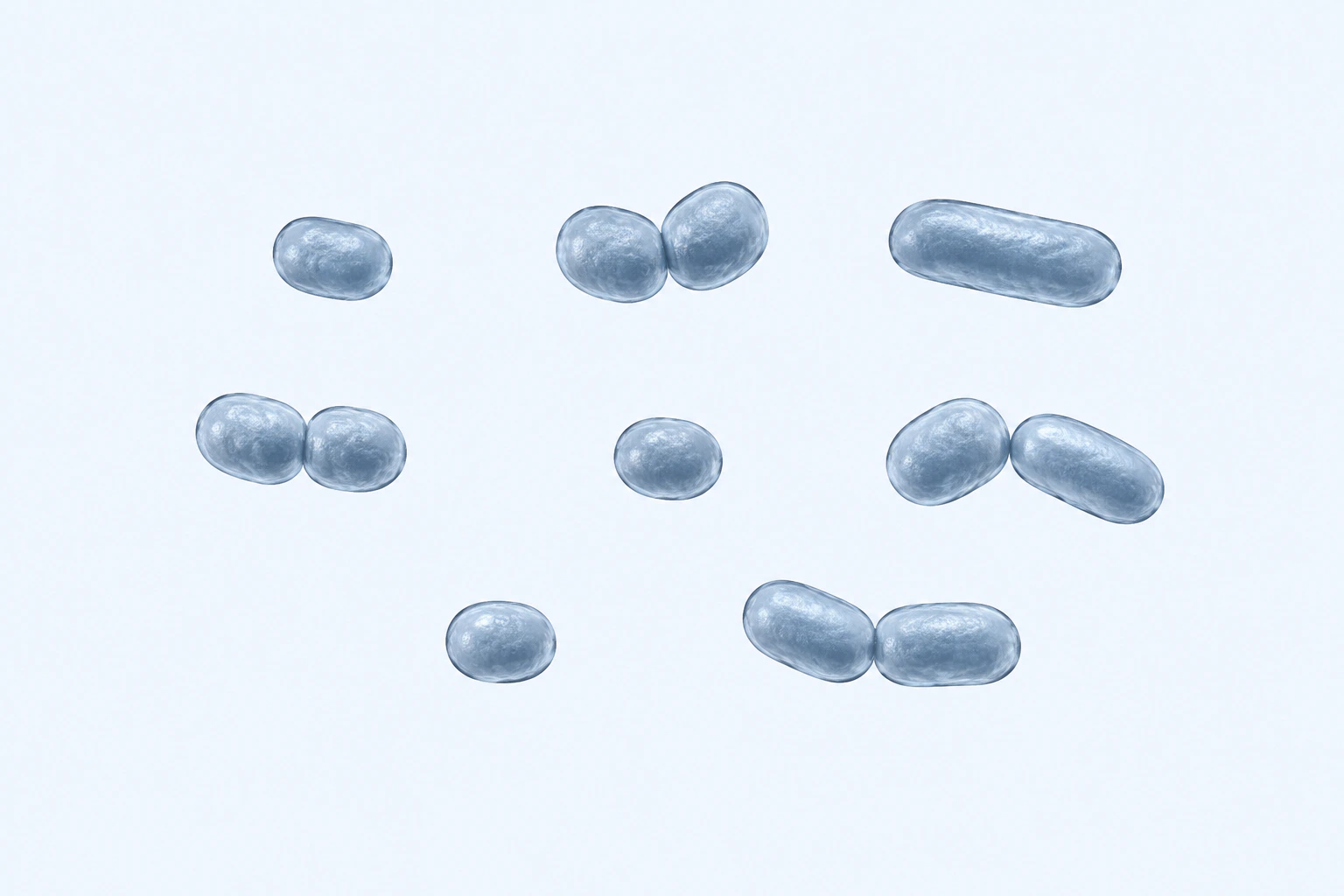
Type-species-anchored Prevotella reconstruction showing twelve short rod-to-coccobacillary bodies in four single and four paired groupings. This genus plate is representative, non-universal, non-diagnostic, and not a micrograph.
Scientific media record1 verified identifier
- Subject
- Prevotellataxon · genus
- Identifiers
- NCBITaxon:838
- Review
- Editorial review completeIdentifiers authority-verified · Accessibility validated · · prevotella|prevotella-morphology-v1.webp
- Digital source
- Trained-algorithmic mediaCreated with a trained generative algorithm and reviewed by WikiBiome for subject identity, scientific framing, identifiers, provenance, and accessibility.
- Scientific basis
- Prevotella — NCBI TaxonomyPrevotella — LPSNPrevotella, a new genus to include Bacteroides melaninogenicus and related species
- License
- CC BY-SA 4.0Created
A Gram-negative, obligate anaerobic genus within the Bacteroidetes phylum that exemplifies context-dependent microbiome effects—beneficial in some settings, pathogenic in others. P. copri is the dominant species in the human gut and a hallmark of plant-rich, fiber-rich diets, while P. intermedia and P. nigrescens are established periodontal pathogens.
Evidence map9 cited passagesInspect provenance +
P. copri is strongly enriched in individuals consuming plant-based, high-fiber diets and is the defining taxon of the "Prevotella enterotype" (enterotype 2).
Specializes in fermenting complex plant polysaccharides (hemicelluloses, pectins) into short chain fatty acids, particularly propionate and succinate.
The P. copri-dominated enterotype modifies the relationship between dietary fiber intake and systemic inflammation: fiber's ability to lower C-reactive protein (CRP) is partly mediated through Prevotella-driven SCFA production.
Multiple sclerosis: decreased in MS patients; negatively associated with Th17 cell frequency. Its loss may reduce anti-inflammatory SCFA signaling to the CNS via the gut brain axis.
Parkinson's disease: Prevotellaceae consistently reduced in PD patients. Depletion correlates with reduced SCFA production and increased gut permeability, potentially facilitating alpha-synuclein propagation.
Endometriosis: Prevotella abundance correlates with constipation and GI symptoms in endometriosis patients.
Schizophrenia: Prevotella is enriched in first-episode and chronic schizophrenia cohorts and is causally implicated in Mendelian randomization analyses.
GERD and esophageal disease: Prevotella is enriched in a Type II (Gram-negative, pro-inflammatory) esophageal microbiome signature associated with erosive reflux and Barrett's esophagus.
Ovarian / gynecologic cancers: Prevotella is altered in ovarian tumor-associated microbiome signatures and is a component of dysbiotic ascites metabolite profiles.
Contents
1. Dietary Association and Fiber Metabolism2. Depletion in Disease States3. Pathogenic Roles4. Metal Dependencies5. Key Metabolites6. ConnectionsDietary Association and Fiber Metabolism#
P. copri is strongly enriched in individuals consuming plant-based, high-fiber diets and is the defining taxon of the "Prevotella enterotype" (enterotype 2).[1]The interplay between diet and the gut microbiome: implications for health and diseaseFiona C. Ross, Dhrati Patangia, Ghjuvan Grimaud et al. · 2024Open reference 1 ↓[2]Dietary fiber intake, the gut microbiome, and chronic systemic inflammation in a cohort of adult menWenjie Ma, Long H. Nguyen, Mingyang Song et al. · 2021Open reference 2 ↓
Specializes in fermenting complex plant polysaccharides (hemicelluloses, pectins) into Short-Chain Fatty Acids (SCFAs), particularly propionate and succinate.[3]Al Bataineh 2023 — Multi-Omics Analysis of Gut Microbial Dysbiosis, Metabolomics, and Dietary Intake in Type 2 DiabetesMohammad Tahseen Al Bataineh, Axel Kunstner, Nihar Ranjan Dash et al. · 2023Open reference 3 ↓
The P. copri-dominated enterotype modifies the relationship between dietary fiber intake and systemic Metal-Driven Inflammation: fiber's ability to lower C-reactive protein (CRP) is partly mediated through Prevotella-driven SCFA production.[2]Dietary fiber intake, the gut microbiome, and chronic systemic inflammation in a cohort of adult menWenjie Ma, Long H. Nguyen, Mingyang Song et al. · 2021Open reference 2 ↓
Abundance declines rapidly on Western-style, low-fiber diets and is nearly absent in some industrialized populations.
Depletion in Disease States#
Prevotella depletion is a consistent finding across several autoimmune and neurodegenerative conditions. Multiple sclerosis: decreased in MS patients; negatively associated with Th17 cell frequency. Its loss may reduce anti-inflammatory SCFA signaling to the CNS via the Gut-Brain Axis.[4]Feeding the gut microbiome: impact on multiple sclerosisMatteo Bronzini, Alessandro Maglione, Rachele Rosso et al. · 2023Open reference 4 ↓
Parkinson's disease: Prevotellaceae consistently reduced in PD patients. Depletion correlates with reduced SCFA production and increased gut permeability, potentially facilitating alpha-synuclein propagation.[5]Microbial Metallomics and Parkinson's Disease: A Unified Metal-Driven Framework Linking Ferroptosis, Dysbiosis, and alpha-Synuclein PathologyKaren Pendergrass · 2025Open reference 5 ↓
Colorectal cancer: often depleted in CRC cohorts, with its niche occupied by Fusobacterium and other pathobionts. Cardiovascular disease: reduced in some CVD cohorts, though less consistently than Lachnospiraceae members.
Pathogenic Roles#
Despite its commensal reputation, Prevotella has pathobiont potential in specific contexts. Periodontitis: P. intermedia is a classic "orange complex" periodontal pathogen. Oral-to-systemic translocation may contribute to Cardiovascular Disease risk via chronic inflammation and bacteremia.
Rheumatoid arthritis: P. copri is paradoxically enriched in new-onset RA, where it may drive Th17-mediated joint inflammation. This contrasts with its protective role in healthy gut ecology.
Endometriosis: Prevotella abundance correlates with constipation and GI symptoms in endometriosis patients.[6]Associations Between Endometriosis and Gut MicrobiotaSvensson A, Brunkwall L, Roth B et al. · 2021Open reference 6 ↓[7]Gut microbiome in endometriosis: a cohort study on 1000 individualsPerez-Prieto I, Vargas E, Salas-Espejo E et al. · 2024Open reference 7 ↓
Schizophrenia: Prevotella is enriched in first-episode and chronic schizophrenia cohorts and is causally implicated in Mendelian randomization analyses.[8]Zhou 2024 — Gut Microbiome and Schizophrenia: Insights from Two-Sample Mendelian RandomizationKeer Zhou, Ancha Baranova, Hongbao Cao et al. · 2024Open reference 8 ↓[9]Genomics of Schizophrenia: Time to Consider the Gut Microbiome?Dinan TG, Borre YE, Cryan JF · 2014Open reference 9 ↓
GERD and esophageal disease: Prevotella is enriched in a Type II (Gram-negative, pro-inflammatory) esophageal microbiome signature associated with erosive reflux and Barrett's esophagus.[10]Alageel 2025 — Examining the Microbiome Composition in Patients with Gastroesophageal Reflux Disease: A Systematic ReviewAlageel AA, Alomran DA, Alharbi HB et al. · 2025Open reference 10 ↓[11]Deshpande 2018 — Esophageal Microbiome Signatures and Host GeneticsDeshpande NP, Riordan SM, Castano-Rodriguez N et al. · 2018Open reference 11 ↓[12]Park 2020 — NERD Treatment and Esophageal MicrobiomePark · 2020Open reference 12 ↓
Ovarian / gynecologic cancers: Prevotella is altered in ovarian tumor-associated microbiome signatures and is a component of dysbiotic ascites metabolite profiles.[13]Characteristics and potential diagnostic value of gut microbiota in ovarian tumor patientsGong W, Jin G, Bao Y et al. · 2025Open reference 13 ↓[14]Deng 2025 — Identification and Impact of Microbiota-Derived Metabolites in Ascites of Ovarian and Gastrointestinal CancerShutian Deng, Woojin Kim, Kai Cheng et al. · 2025Open reference 14 ↓
Metal Dependencies#
Some Prevotella species require Iron for heme-containing enzymes involved in anaerobic respiration. P. intermedia in particular uses iron acquisition systems for virulence in periodontal niches.
The genus is generally sensitive to heavy metal stress—Cadmium and Lead exposure reduces Prevotella abundance alongside other beneficial anaerobes. Iron supplementation in the gut can paradoxically suppress Prevotella while promoting iron-scavenging Enterobacteriaceae.
Key Metabolites#
Propionate and succinate—primary fermentation end-products from complex carbohydrates. Branched-chain amino acids (BCAAs)—P. copri possesses biosynthetic capacity for BCAAs, which may link to insulin resistance in some metabolic contexts. Bile acid transformation—participates in primary-to-secondary bile acid conversion via bile salt hydrolase activity.
Connections#
- Multiple Sclerosis—depleted; loss reduces anti-inflammatory SCFA signaling to the CNS
- Parkinson's Disease—Prevotellaceae depletion is a hallmark PD microbiome signature
- Rheumatoid Arthritis—paradoxically enriched in new-onset RA (Th17 activation)
- Cardiovascular Disease—P. intermedia periodontal pathogenesis contributes to systemic inflammation
- Endometriosis—correlated with GI symptoms in endometriosis patients
- Iron—iron-dependent species; sensitive to iron perturbation in the gut lumen
- Dysbiosis—its loss signals fiber-deprived or metal-stressed gut environments
- inflammation—context-dependent: anti-inflammatory via SCFAs, pro-inflammatory in RA and periodontitis
- Lachnospiraceae—co-depleted in many disease states; complementary fiber fermenters
- Faecalibacterium prausnitzii—metabolic cross-feeding partner in healthy gut ecology
References 24
Numbered by first appearance in the article, then reconciled with its declared source list.
- 1
Fiona C. Ross, Dhrati Patangia, Ghjuvan Grimaud et al. (2024). The interplay between diet and the gut microbiome: implications for health and disease. Nature Reviews Microbiology.
- 2
Wenjie Ma, Long H. Nguyen, Mingyang Song et al. (2021). Dietary fiber intake, the gut microbiome, and chronic systemic inflammation in a cohort of adult men. Genome Medicine.
- 3
Mohammad Tahseen Al Bataineh, Axel Kunstner, Nihar Ranjan Dash et al. (2023). Al Bataineh 2023 — Multi-Omics Analysis of Gut Microbial Dysbiosis, Metabolomics, and Dietary Intake in Type 2 Diabetes. Scientific Reports.
- 4
Matteo Bronzini, Alessandro Maglione, Rachele Rosso et al. (2023). Feeding the gut microbiome: impact on multiple sclerosis. Frontiers in Immunology.
- 5
★Karen Pendergrass (2025). Microbial Metallomics and Parkinson's Disease: A Unified Metal-Driven Framework Linking Ferroptosis, Dysbiosis, and alpha-Synuclein Pathology. Conference Presentation.
- 6
Svensson A, Brunkwall L, Roth B et al. (2021). Associations Between Endometriosis and Gut Microbiota. Reproductive Sciences.
- 7
Perez-Prieto I, Vargas E, Salas-Espejo E et al. (2024). Gut microbiome in endometriosis: a cohort study on 1000 individuals. BMC Medicine.
- 8
Keer Zhou, Ancha Baranova, Hongbao Cao et al. (2024). Zhou 2024 — Gut Microbiome and Schizophrenia: Insights from Two-Sample Mendelian Randomization. Schizophrenia (Nature Partner Journal).
- 9
Dinan TG, Borre YE, Cryan JF (2014). Genomics of Schizophrenia: Time to Consider the Gut Microbiome?. Molecular Psychiatry.
- 10
Alageel AA, Alomran DA, Alharbi HB et al. (2025). Alageel 2025 — Examining the Microbiome Composition in Patients with Gastroesophageal Reflux Disease: A Systematic Review. TPM (The Primary Care Companion for CNS Disorders).
- 11
Deshpande NP, Riordan SM, Castano-Rodriguez N et al. (2018). Deshpande 2018 — Esophageal Microbiome Signatures and Host Genetics. Microbiome.
- 12
Park (2020). Park 2020 — NERD Treatment and Esophageal Microbiome. Scientific Reports.
- 13
Gong W, Jin G, Bao Y et al. (2025). Characteristics and potential diagnostic value of gut microbiota in ovarian tumor patients. Scientific Reports.
- 14
Shutian Deng, Woojin Kim, Kai Cheng et al. (2025). Deng 2025 — Identification and Impact of Microbiota-Derived Metabolites in Ascites of Ovarian and Gastrointestinal Cancer. Cancer and Metabolism.
- 15
Adriel Latorre-Pérez, Marta Hernández, Jose Ramón Iglesias et al. (2021). Latorre-Pérez 2021 — The Spanish Gut Microbiome Reveals Links Between Microorganisms and Mediterranean Diet. Scientific Reports.
- 16
Qian Yang, Yaping Wang, Xinyi Wei et al. (2020). Yang 2020 — Vaginal Microbiome Alterations in HPV16 Infection by Shotgun Metagenomics. Frontiers in Cellular and Infection Microbiology.
- 17
Ata B, Yildiz S, Turkgeldi E et al. (2019). The Endobiota Study: Comparison of Vaginal, Cervical and Gut Microbiota Between Women with Stage 3/4 Endometriosis and Healthy Controls. Scientific Reports.
- 18
Zhao H, Yuan L, Zhu D et al. (2022). Alterations and Mechanism of Gut Microbiota in Graves' Disease and Hashimoto's Thyroiditis. Polish Journal of Microbiology.
- 19
Capuco A, Urits I, Hasoon J et al. (2020). Current Perspectives on Gut Microbiome Dysbiosis and Depression. Advances in Therapy.
- 20
Tiffany L Weir, Daniel K Manter, Amy M Sheflin et al. (2013). Stool Microbiome and Metabolome Differences between Colorectal Cancer Patients and Healthy Adults. PLoS ONE.
- 21
Yan F, Xia L, Xu L et al. (2022). A Comparative Study to Determine the Association of Gut Microbiome with Schizophrenia in Zhejiang, China. BMC Psychiatry.
- 22
Qiang Geng, Shaofeng Chen, Yuan Sun et al. (2021). Geng 2021 — Gut Microbiota Diversity and Functional Erectile Dysfunction. Research Square (preprint).
- 23
Yuanzhao Xu, Lingyue An, Jiling Xie et al. (2026). Xu 2026 — The Gut-Prostate Axis in Benign Prostatic Hyperplasia: Systematic Review of Microbial Dysbiosis and Pathogenic Mechanisms. BMC Urology.
- 24
Ismail MA, Althiyabi HA, Alotaibi NM et al. (2025). Understanding the Mechanisms Underlying Gastroesophageal Reflux Disease (GERD) Development: A Systematic Review. TPM.
Article network
Mentioned here 16
Pages linking here 45
Connect the evidence
Publicly readable discussion by ORCID-authenticated researchers. Questions, interpretation, methods, corrections, and new evidence stay attached to this record.
No discussion yet. Start with a precise question or a source-backed observation.
Activity and accepted changes
Accepted researcher context, editorial status, public discussion, and upstream Git revisions are shown together. Pending, declined, and withdrawn proposals remain private.
- published revision
Backfill inflammation concept links
Karen Pendergrass · +3 −3
Inspect exact Git diff ↗ - published revision
massive wiki expansion: 149 stubs fixed, 100+ new pages, Rule 15 scan, keystone papers
WikiBiome Deploy Bot · +33 −18
Inspect exact Git diff ↗ - published revision
nightly maintenance: 94 stub demotions, 181 source_count fixes, 22 auto-discovered stubs, 5 adversarial audits, 3 boundary fixes, 3 evidence-level corrections
WikiBiome Deploy Bot · +1 −0
Inspect exact Git diff ↗ - published revision
11 new sources for Hashimotos/MS/CVD + 10 microbe entity citation pass
WikiBiome Deploy Bot · +7 −4
Inspect exact Git diff ↗ - published revision
WikiBiome update — 2026-04-15 17:23
WikiBiome Deploy Bot · +0 −1
Inspect exact Git diff ↗ - published revision
wiki: bulk entity upgrades, new article pages, and site regeneration
WikiBiome Deploy Bot · +6 −0
Inspect exact Git diff ↗ - published revision
WikiBiome update — integrity fixes, metallomic diet pages, cross-condition analyses
WikiBiome Deploy Bot · +11 −3
Inspect exact Git diff ↗ - published revision
WikiBiome update — 2026-04-10 13:49
WikiBiome Deploy Bot · +63 −0
Inspect exact Git diff ↗