
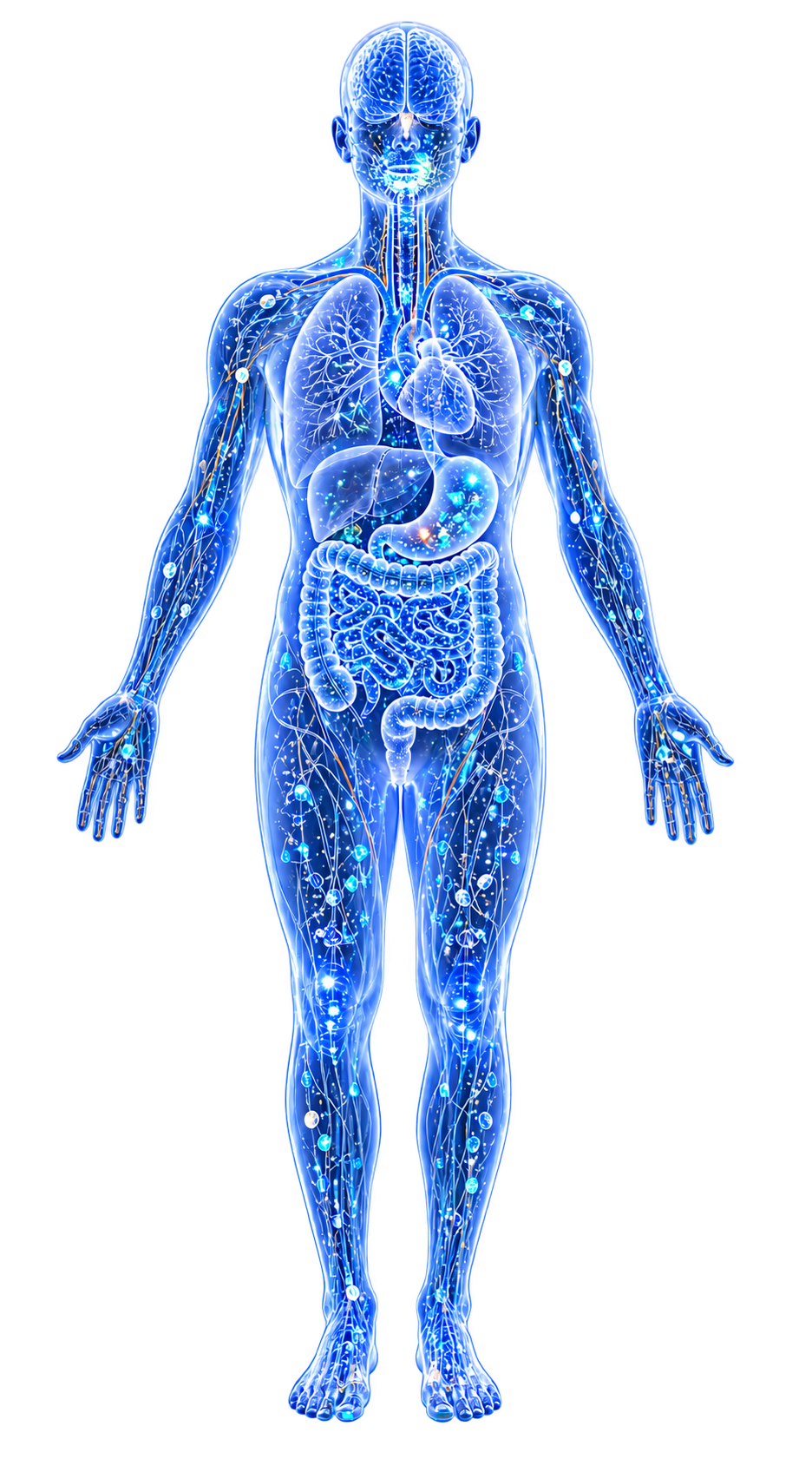
 metals · microbes · host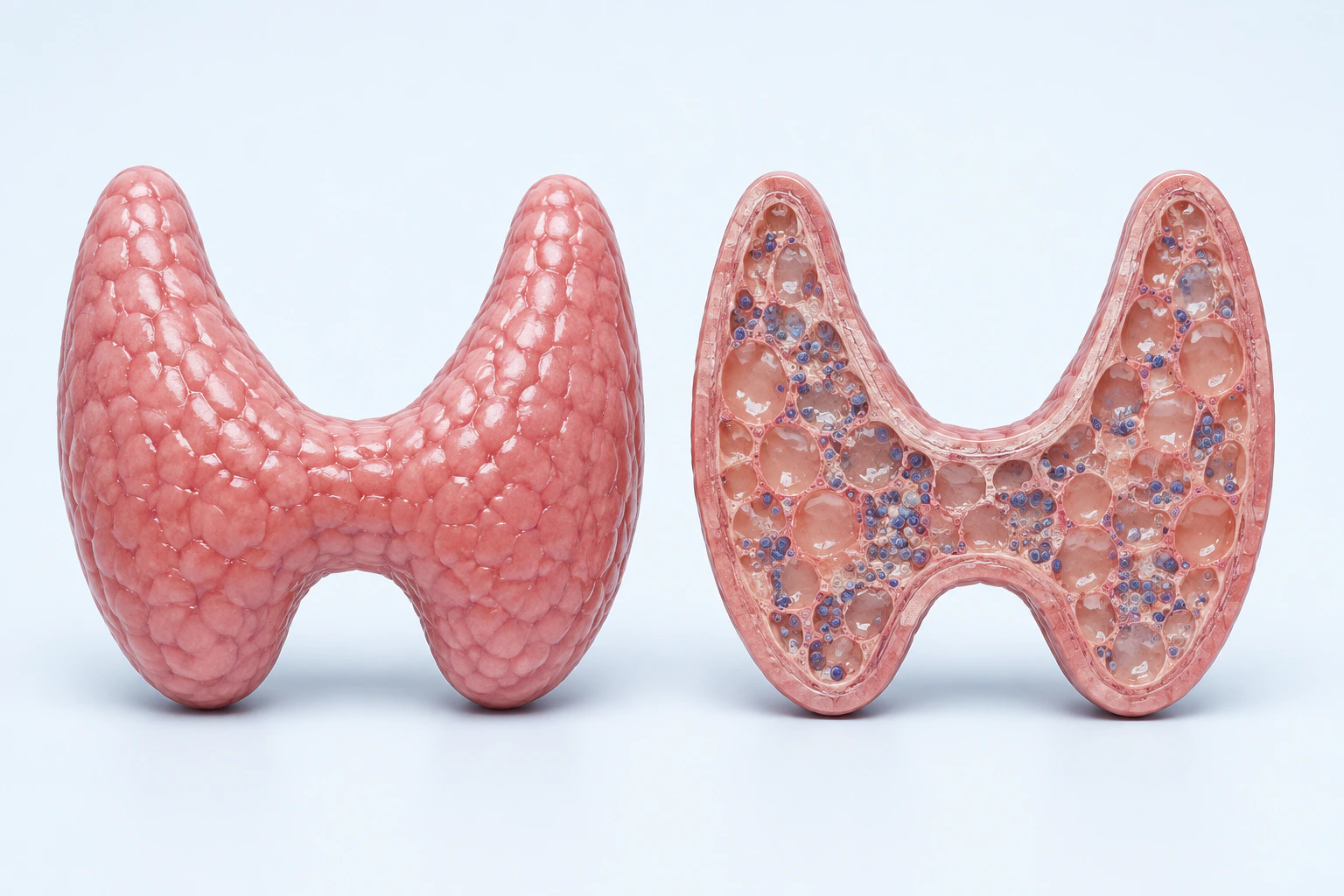
Representative thyroid and follicular orientation for Hashimoto disease. The cutaway is not diagnostic histology and does not establish immune-cell type, stage, activity, severity, treatment response, or diagnosis.
Scientific media record1 verified identifier
- Subject
- Hashimoto Diseasecondition
- Identifiers
- MeSH:D050031
- Review
- Editorial review completeIdentifiers authority-verified · Accessibility validated · · hashimotos-thyroiditis|hashimotos-thyroiditis-pathology-v1.webp
- Digital source
- Trained-algorithmic mediaCreated with a trained generative algorithm and reviewed by WikiBiome for subject identity, scientific framing, identifiers, provenance, and accessibility.
- Scientific basis
- Hashimoto Disease — MeSHHashimoto's Disease
- License
- CC BY-SA 4.0Created
Hashimoto's thyroiditis (HT) is the most common autoimmune disease globally and the leading cause of hypothyroidism. Chronic lymphocytic infiltration of the thyroid gland progressively destroys follicular architecture, reducing thyroid hormone output. Prevalence is 5-10% with a striking 10:1 female-to-male ratio.
Diagnosis rests on elevated anti-TPO and anti-Tg antibodies, often with rising TSH and declining free T4. Concordance in monozygotic twins (~35%) indicates shared genetic susceptibility (HLA-DRB1, PTPN22) with environmental triggers.
Unlike Graves' Disease, which causes hyperthyroidism via stimulatory TRAb, HT produces destructive autoimmunity—yet both are autoimmune thyroid diseases (AITD) with overlapping genetic architecture and mineral dependencies.
Evidence map41 cited passagesInspect provenance +
| Metal | Direction | Key Evidence | |-------|-----------|-------------| | selenium | Depleted (critical) | Thyroid has highest Se concentration of any organ; selenoproteins (GPx, TrxR, DIO1-3) essential for hormone synthesis and H2O2 detoxification; 200 ug/day reduces anti-TPO by up to 40% | | iron | Depleted (58% deficient) | Fe required for TPO activity;
Critical interaction: In combined Se and I deficiency, normalizing Se without iodine worsens hypothyroidism—the elements must be balanced together.
| Factor | Status | Function | |--------|--------|----------| | calprotectin | Elevated | Zinc sequestration from gut pathogens; marker of intestinal inflammation in HT | | hepcidin | Altered | Reflects iron redistribution; 58% Fe deficiency rate suggests functional iron withholding | | Selenoproteins (GPx, TrxR) | Depleted | Loss of primary thyroid antioxid
HT patients show significantly reduced alpha diversity (Shannon, Chao1; p<0.001) and distinct microbiome composition versus controls.
| Taxon | Ecological Role | Pathogenic Mechanism | |-------|----------------|---------------------| | proteobacteria | Phylum-level bloom | LPS-driven innate immune activation; iodine excess selects for Proteobacteria dominance | | actinobacteria | Phylum-level enrichment | Includes gender-specific Bifidobacterium expansion in females | | blautia | Tryptopha
| Taxon | Normal Function | Why Lost | Evidence | |-------|----------------|----------|---------| | faecalibacterium prausnitzii | Primary butyrate producer; Treg induction | Cannot compete in iodine-disrupted, SCFA-depleted environment | Consistently depleted across HT cohorts | | lactobacillus | Se/Fe absorption support; mucosal barrier | Lost in dysbiotic
1. Iodine-driven dysbiosis: Excess iodine directly disrupts gut microbial communities, reducing SCFA producers and selecting for Proteobacteria. Sodium butyrate supplementation partially rescues this phenotype in mouse models, confirming the causal chain.
4. Tryptophan metabolism disruption: Tryptophan levels are significantly lower in HT (p<0.0001). Disrupted IDO1-Kyn-AhR axis impairs immune tolerance. Tryptophan supplementation alleviates thyroid damage and rebalances T cell subsets via PI3K-Akt pathway suppression.
| Intervention | Mechanism | Evidence | |-------------|-----------|---------| | selenium supplementation (200 ug/day) | Restores selenoprotein (GPx, TrxR, DIO) activity; reduces anti-TPO by up to 40% in patients 1200 IU/mL; modulates Th1/Th2/Th17/Treg balance; increases Tregs; antagonizes Cd/Hg toxicity | Validated—multiple RCTs; best-evidenced mineral int
| Intervention | Mechanism | Evidence | |-------------|-----------|---------| | low nickel diet | Removes Ni dose-response thyroid disruption (78.7% of men at elevated Ni face 10% higher dysfunction risk); reduces oxidative stress and apoptotic disruption in thyroid tissue | Promising—dose-response relationship established | | AIP diet | Eliminates immune-
| Intervention | Mechanism | Evidence | |-------------|-----------|---------| | Probiotics (multi-strain) | Meta-analysis (9 RCTs, 395 participants): significant TSH reduction (SMD: -1.10), increased free T3/T4; probiotics alone outperform synbiotics for TSH reduction; shorter interventions (<=8 weeks) show stronger effects | Validated—| | Tryptophan suppl
| STOP | Conventional Rationale | Why Counterproductive | |------|----------------------|----------------------| | Excess iodine supplementation | "Iodine is needed for thyroid hormone synthesis" | Excess iodine inhibits TPO activity via the Wolff-Chaikoff effect, activates the NLRP3 inflammasome, promotes Th17 proliferation, generates ROS in thyroid cells,
Selenium is the most critical element. The thyroid has the highest Se concentration of any organ, owing to selenoprotein-dependent hormone synthesis (DIO1-3) and antioxidant defense (GPx, TrxR). Se levels are significantly lower in HT (104.36 ug/L) and Graves' disease (97.68 ug/L) vs. controls (122.63 ug/L, p<0.001). Se supplementation at 200 ug/day reduces
Zinc deficiency prevalence reaches 49.1% in hypothyroid patients (OR 5.926). Zn is a cofactor for 300 metalloenzymes including those in the TRH-TSH pathway and deiodinases. Zn mediates IL-1, IL-6, and TNF-alpha synthesis and is required for thymulin activation.
Iron deficiency affects 58% of HT patients. Fe is essential for thyroid peroxidase (TPO) activity; deficiency impairs T4 synthesis and elevates TSH. Meta-analysis of 47 studies (53,152 pregnant women) shows Fe deficiency associates with higher TSH (2.31 vs. 1.75 mIU/L) and lower free T4.
Iodine has a U-shaped dose-response with AITD. Excess iodine inhibits TPO activity via the Wolff-Chaikoff effect, activates the NLRP3 inflammasome, promotes Th17 proliferation, and generates ROS in thyroid cells. In mouse models, increasing iodine dose-dependently altered gut microbiota and increased thyroid inflammation severity.
Nickel shows a dose-response relationship with thyroid function: at blood Ni levels of 1.36-60.9 ug/L, 78.7% of men may face 10% higher risk of thyroid dysfunction. Cd inhibits hepatic 5'-monodeiodinase (T4-to-T3 conversion); Pb prevents deiodination.
Iodine excess from salt iodization programs increases AITD prevalence—a well-documented public health paradox
Dietary patterns: Meat consumption increases HT odds via AGE accumulation and selenoenzyme suppression; Mediterranean diet traits are protective
Heavy metals (Cd, Pb, As, Hg, Ni) classified as endocrine-disrupting chemicals with thyroid-disrupting potential; combined exposure may be more harmful than individual metals
Air pollution: PM2.5 is associated with increased thyroid cancer risk (18% increased PTC odds per 5 ug/m3 increase over 24 months)
Selenoprotein depletion—Glutathione peroxidase and thioredoxin reductase activity are significantly lower in HT (p=0.020 and p=0.023 respectively), with total plasma antioxidant activity also reduced (p=0.002). This represents a failure of the selenium-dependent antioxidant defense.
Advanced glycation end products (AGEs)—Significantly elevated in HT (p=0.0001), reflecting oxidative stress and associated with animal food consumption.
akkermansia muciniphila—A paradox: enriched in HT patients observationally, yet Mendelian randomization shows strong causal protection against HT (OR=0.71, p=9.9E-14) mediated through effector memory CD4+ T cells. The enrichment may represent compensatory expansion in response to dysbiosis.
Showing 24 of 41 evidence-bearing passages. Every remaining citation is still indexed in the reference record below.
One disease. Five evidence layers.
A generated systems view of the metals, organisms, host sequestration signals, ecological conditions, and microbial functions indexed for Hashimoto's Thyroiditis.
Evidence layer
Taxonomic signature
Organisms reported as enriched or depleted, with their indexed functional context kept beside the name.Phylum-level enrichment — Gram-negative LPS producers; iodine-driven dysbiosis shifts toward Proteobacteria dominance
Phylum-level enrichment — includes Bifidobacterium expansion in female HT patients
Enriched in HT patients; genus within Lachnospiraceae with altered metabolite production
Enriched in HT — associated with Th17 inflammatory response
Context-dependent enrichment — may drive molecular mimicry with thyroid antigens
Mucin degrader — enriched in HT but causally protective per MR (OR=0.71); paradoxical enrichment may reflect compensatory expansion
Enriched in HT, particularly in females; gender-dependent abundance intensifies with disease progression
Causally associated with increased HT risk via MR (OR=1.20)
Causally associated with increased HT risk via MR (OR=1.16)
Enriched in HT; potential molecular mimicry with thyroid antigens
Depleted in gut (paradoxically enriched in some female-specific analyses) — SCFA production and immune modulation impaired
Depleted — loss of selenium (Se)/iron (Fe) absorption support and mucosal barrier maintenance
Major butyrate producer — depleted in HT; regulated by FT4; its absence reduces anti-inflammatory SCFA output
Strongly protective (MR OR=0.71, p=9.9E-14) — depleted in HT; mediates effects through CD4+ T cells and IL-6/TNF-alpha
Butyrate producer — depleted in HT; loss contributes to Th17/Treg imbalance via reduced butyrate
SCFA-producing family — regulated by FT4; protective against HT progression
Significantly altered in HT vs. controls; butyrate-producing genus
Evidence layer
Nutritional immunity
Host metal-withholding, inflammatory, antioxidant, and microbial-metabolite signals indexed in the signature.Elevated host signals
4Depleted protective signals
7Evidence layer
Ecological state
The environmental conditions that connect the organism-level observations into a system.Evidence layer
Virulence functions
Microbial structures, enzymes, and acquisition systems implicated by the linked evidence.The disease record, in full.
The original WikiBiome disease narrative remains intact beneath the generated signature atlas.
Metallomic Signature#
Selenium -- The Critical Protector#
The thyroid has the highest Selenium concentration of any organ, owing to selenoprotein-dependent hormone synthesis and antioxidant defense (GPx, TrxR, DIO1-3). selenium (Se) supplementation at 200 ug/day reduces anti-TPO antibodies by up to 40% in patients with levels >1200 IU/mL.
selenium modulates Th1/Th2/Th17/Treg balance, increases regulatory T cells, and protects against Oxidative Stress generated by H2O2 during thyroid hormone synthesis. selenium also antagonizes Cadmium and Mercury toxicity through direct binding and biliary excretion.
Iron Deficiency#
58% of HT patients have Iron deficiency anemia. iron (Fe) is essential for TPO (thyroid peroxidase) activity; deficiency impairs T4 synthesis and elevates TSH. Meta-analysis of 47 studies (53,152 pregnant women) shows iron deficiency associates with higher TSH (2.31 vs 1.75 mIU/L) and lower free T4.
iron also modulates M1/M2 macrophage polarization relevant to autoimmune regulation, connecting to Nutritional Immunity (Metal Sequestration) dynamics.
Zinc and Copper#
Zinc is a cofactor for >300 metalloenzymes including those in the TRH-TSH pathway and deiodinases. Low zinc (Zn) prevalence reaches 49.1% in hypothyroid patients (OR 5.926).
zinc mediates IL-1, IL-6, and TNF-alpha synthesis and is required for thymulin activation. Copper serves as cofactor for superoxide dismutase (SOD) and stimulates T4 production; the copper (Cu)/zinc ratio is characteristically altered in thyroid autoimmunity.
Iodine Excess Paradox#
Iodine has a U-shaped dose-response with AITD. Excess iodine inhibits TPO activity via the Wolff-Chaikoff effect, activates the NLRP3 inflammasome, promotes Th17 proliferation, and generates ROS in thyroid cells. Autoimmune thyroiditis prevalence increases after salt iodization programs.
In combined selenium (Se) and I deficiency, normalizing selenium without iodine worsens hypothyroidism—the elements must be balanced together.
Heavy Metals and Nickel#
cadmium (Cd) inhibits hepatic 5'-monodeiodinase (T4-to-T3 conversion); lead (Pb) prevents deiodination; mercury (Hg) inhibits TPO and Tg iodination.
Nickel shows a dose-response relationship with thyroid function parameters: at blood nickel (Ni) levels of 1.36-60.9 ug/L, 78.7% of men may face 10% higher risk of thyroid dysfunction, operating through oxidative stress and apoptotic disruption in thyroid tissue. See Gut-Metal-Microbiome Interactions and Metal-Disease Matrix: A Cross-Source Synthesis.
Gut-Thyroid Axis#
HT patients show significantly reduced alpha diversity (Shannon, Chao1; p<0.001) and distinct microbiome composition vs controls. Iodine-driven Dysbiosis reduces Butyrate and disrupts Th17/Treg balance—sodium butyrate supplementation partially rescues this phenotype in mouse models.
The relationship is bidirectional: dysbiosis impairs mineral absorption (I, selenium (Se), iron (Fe)) while thyroid hormones (FT3, FT4) regulate specific taxa. Molecular mimicry between gut bacterial antigens and thyroid proteins provides a mechanistic bridge. Gender intensifies microbial differences as HT progresses, with Bifidobacterium much more abundant in females.
Microbiome Signature#
Enriched in HT: Proteobacteria, Actinobacteria, Blautia, Dorea, Lachnospira, Bifidobacterium, Akkermansia. Depleted: Faecalibacterium, Roseburia, SCFA-producing Firmicutes. Mendelian randomization provides causal evidence: Akkermansia is strongly protective (OR=0.71, p=9.9E-14) mediated through effector memory CD4+ T cells and IL-6/TNF-alpha modulation. Prevotella associations are context-dependent.
Intestinimonas and Turicibacter increase HT risk. Altered bile acid and Tryptophan Metabolism characterize the HT metabolome.
Key Metabolites#
Indolelactate is the only gut metabolite causally associated with autoimmune hypothyroidism after FDR correction (OR=1.592, MR evidence). Tryptophan levels are significantly lower in HT (p<0.0001); supplementation alleviates thyroid damage and rebalances T cell subsets via the IDO1-Kyn-AhR axis and PI3K-Akt pathway suppression. Methylmalonic acid is elevated.
Phospholipid and sphingolipid metabolism is disrupted, with altered phosphatidylcholine species in follicular fluid affecting fertility. butyrate and valeric acid are significantly decreased (p<0.01). See Metal-Driven Inflammation and NF-kB Signaling Pathway.
Diet and Probiotics#
AIP diet pilot (n=16): significant QoL improvement across all SF-36 subscales and 29% hs-CRP reduction, but no change in thyroid antibodies or hormones. Mediterranean diet traits are protective; meat consumption increases HT odds via AGE accumulation and selenoenzyme suppression.
Selenium 200 ug/day + vitamin D supplementation is the best-evidenced mineral intervention. Gluten-free diet alters the microbiome but may paradoxically increase Desulfobacterota/Proteobacteria without improving thyroid markers. Fiber intake of 30g/day supports SCFA production.
Probiotic meta-analysis (9 RCTs, 395 participants) shows significant TSH reduction (SMD: -1.10) and increased free T3/T4. Probiotics alone outperform synbiotics for TSH reduction. Shorter interventions (<=8 weeks) show stronger effects.
B. longum + methimazole synergy demonstrated for Graves' Disease. Strain-specific effects and high heterogeneity across trials mean probiotic prescriptions remain evolving.
Comorbidities#
81% of HT patients have Comorbidities: thyroid nodules (53%), breast hyperplasia (47%), uterine leiomyomas (24%). Female patients are 6.2x more likely to have comorbidities than males. Levothyroxine therapy reduces comorbidity risk by correcting TSH-driven tissue overstimulation.
Graves' Disease—sister AITD with shared genetics (HLA-DRB1, PTPN22) and mineral dependencies; patients can convert between HT and GD; both feature gut-thyroid axis disruption, selenium (Se) dependence, and SCFA producer depletion.
Depression—depression occurs even in euthyroid HT through neuroinflammation mechanisms; shared tryptophan pathway disruption (tryptophan significantly lower in HT, p<0.0001); shared gut-brain axis disruption and SCFA depletion.
Celiac Disease—celiac prevalence is 2-5x higher in HT than general population; shared autoimmune architecture and mucosal immune dysregulation; gluten-driven intestinal inflammation may trigger thyroid autoimmunity via molecular mimicry; both improve partially with gluten-free diet in some patients.
Connections#
- Graves' Disease—sister AITD with shared genetics but opposite functional outcome
- Selenium, Iron, Zinc, Copper, Iodine—the essential mineral quintet
- dysbiosis, Gut-Metal-Microbiome Interactions, oxidative stress, inflammation, NF-kB Signaling Pathway
- Short-Chain Fatty Acids (SCFAs), butyrate, Tryptophan Metabolism
- Akkermansia muciniphila, Blautia, Prevotella, Probiotics
- Metal-Disease Matrix: A Cross-Source Synthesis, Comorbidities, Nutritional Immunity (Metal Sequestration)
References 17
Numbered by first appearance in the article, then reconciled with its declared source list.
- 1
McGregor Brock (2015). McGregor Brock 2015 — The Role of Selenium in Thyroid Autoimmunity: A Review. Journal of Restorative Medicine.
- 2
Li S, Xu Q, Wang S et al. (2025). Recent advances of trace elements in autoimmune thyroid disease. Frontiers in Immunology.
- 3
Gong B, Meng F, Wang X et al. (2024). Effects of iodine intake on gut microbiota and gut metabolites in Hashimoto thyroiditis-diseased humans and mice. Communications Biology.
- 4
★Street ME, Shulhai A, Petraroli M et al. (2024). Street et al. 2024 — The Impact of Environmental Factors and Contaminants on Thyroid Function and Disease from Fetal to Adult Life. Frontiers in Endocrinology.
- 5
Maric D, Baralic K, Javorac D et al. (2023). Nickel as a potential disruptor of thyroid function: benchmark modelling of human data. Frontiers in Endocrinology.
- 6
Liu J, Qin X, Lin B et al. (2022). Analysis of gut microbiota diversity in Hashimoto's thyroiditis patients. BMC Microbiology.
- 7
Liu X, Yuan J, Liu S et al. (2024). Investigating causal associations among gut microbiota, metabolites and autoimmune hypothyroidism: a univariable and multivariable Mendelian randomization study. Frontiers in Immunology.
- 8
Zhang L, Zhou X, Cheng T et al. (2025). Dysregulated tryptophan metabolism: driving T cell subsets and PI3K-Akt pathway alterations in Hashimoto's thyroiditis. Frontiers in Immunology.
- 9
Pei XQ, Wang WH, Gao YH et al. (2024). Role of immune cells in mediating the effect of gut microbiota on Hashimoto's thyroiditis: a 2-sample Mendelian randomization study. Frontiers in Microbiology.
- 10
Abbott RD, Sadowski A, Alt AG (2019). Efficacy of the Autoimmune Protocol Diet as Part of a Multi-disciplinary, Supported Lifestyle Intervention for Hashimoto's Thyroiditis. Cureus.
- 11
Ruggeri RM, Giovinazzo S, Barbalace MC et al. (2021). Influence of Dietary Habits on Oxidative Stress Markers in Hashimoto's Thyroiditis. Thyroid.
- 12
Karimi M, Rabiei R, Kazemi K et al. (2025). Karimi et al. 2025 — Effects of Probiotics and Synbiotics Oral Supplementation on Thyroid Function in Adults: A Grade-Assessed Systematic Review and Meta-Analysis. Thyroid Research.
- 13
Zhao C, Xiong H, Zhu L et al. (2025). An Investigation of the Pattern and Mechanism of Comorbidity in Patients with Hashimoto's Thyroiditis. Frontiers in Endocrinology.
- 14
Wang G, Ye X, Lu T et al. (2025). Integrated plasma metabolomics and lipidomics profiling highlight distinctive signatures with Hashimoto's thyroiditis. Scientific Reports.
- 15
Bastos DC, Chiamolera MI, Silva RE et al. (2023). Metabolomic analysis of follicular fluid from women with Hashimoto thyroiditis. Scientific Reports.
- 16
★Sweta Ghosh, Syam P. Nukavarpu, Venkatakrishna Rao Jala (2024). Effects of Heavy Metals on Gut Barrier Integrity and Gut Microbiota. Microbiota and Host.
- 17
★Federica Giambo, Sebastiano Italia, Michele Teodoro et al. (2021). Influence of Toxic Metal Exposure on the Gut Microbiota (Review). World Academy of Sciences Journal.
Article network
Mentioned here 18
Pages linking here 43
Connect the evidence
Publicly readable discussion by ORCID-authenticated researchers. Questions, interpretation, methods, corrections, and new evidence stay attached to this record.
No discussion yet. Start with a precise question or a source-backed observation.
Activity and accepted changes
Accepted researcher context, editorial status, public discussion, and upstream Git revisions are shown together. Pending, declined, and withdrawn proposals remain private.
- published revision
Backfill oxidative stress concept links
Karen Pendergrass · +2 −2
Inspect exact Git diff ↗ - published revision
Backfill inflammation concept links
Karen Pendergrass · +1 −1
Inspect exact Git diff ↗ - published revision
Complete corpus-wide Dysbiosis linking
Karen Pendergrass · +1 −1
Inspect exact Git diff ↗ - published revision
Add NLRP3 inflammasome concept and link batch
Karen Pendergrass · +3 −3
Inspect exact Git diff ↗ - published revision
nightly maintenance: 94 stub demotions, 181 source_count fixes, 22 auto-discovered stubs, 5 adversarial audits, 3 boundary fixes, 3 evidence-level corrections
WikiBiome Deploy Bot · +1 −0
Inspect exact Git diff ↗ - published revision
cycle 1: health check + lint fixes + 8 ingests + 2 stubs + gestational-diabetes signature
WikiBiome Deploy Bot · +1 −0
Inspect exact Git diff ↗ - published revision
Batch: fix 1025 broken wikilinks, wire 13 STOP pages, deepen PPD/GERD/T1D/8 microbes
WikiBiome Deploy Bot · +3 −1
Inspect exact Git diff ↗ - published revision
Adversarial audit fixes: confidence downgrades, disclaimers, STOP safety, entity cleanup
WikiBiome Deploy Bot · +2 −2
Inspect exact Git diff ↗ - published revision
WikiBiome update — 2026-04-15 17:23
WikiBiome Deploy Bot · +1 −1
Inspect exact Git diff ↗ - published revision
WikiBiome update — 2026-04-15 17:23
WikiBiome Deploy Bot · +15 −15
Inspect exact Git diff ↗ - published revision
v2 migration Priority 2: All 29 disease entity pages upgraded with associated_conditions, seo_target, wikipedia_differentiation
WikiBiome Deploy Bot · +6 −0
Inspect exact Git diff ↗ - published revision
WikiBiome v2 migration: signature pages + safety fixes + gap analysis
WikiBiome Deploy Bot · +261 −0
Inspect exact Git diff ↗ - published revision
WikiBiome update — 2026-04-11 22:49
WikiBiome Deploy Bot · +5 −1
Inspect exact Git diff ↗ - published revision
WikiBiome update — integrity fixes, metallomic diet pages, cross-condition analyses
WikiBiome Deploy Bot · +2 −0
Inspect exact Git diff ↗ - published revision
WikiBiome update — 2026-04-10 20:24
WikiBiome Deploy Bot · +83 −0
Inspect exact Git diff ↗