
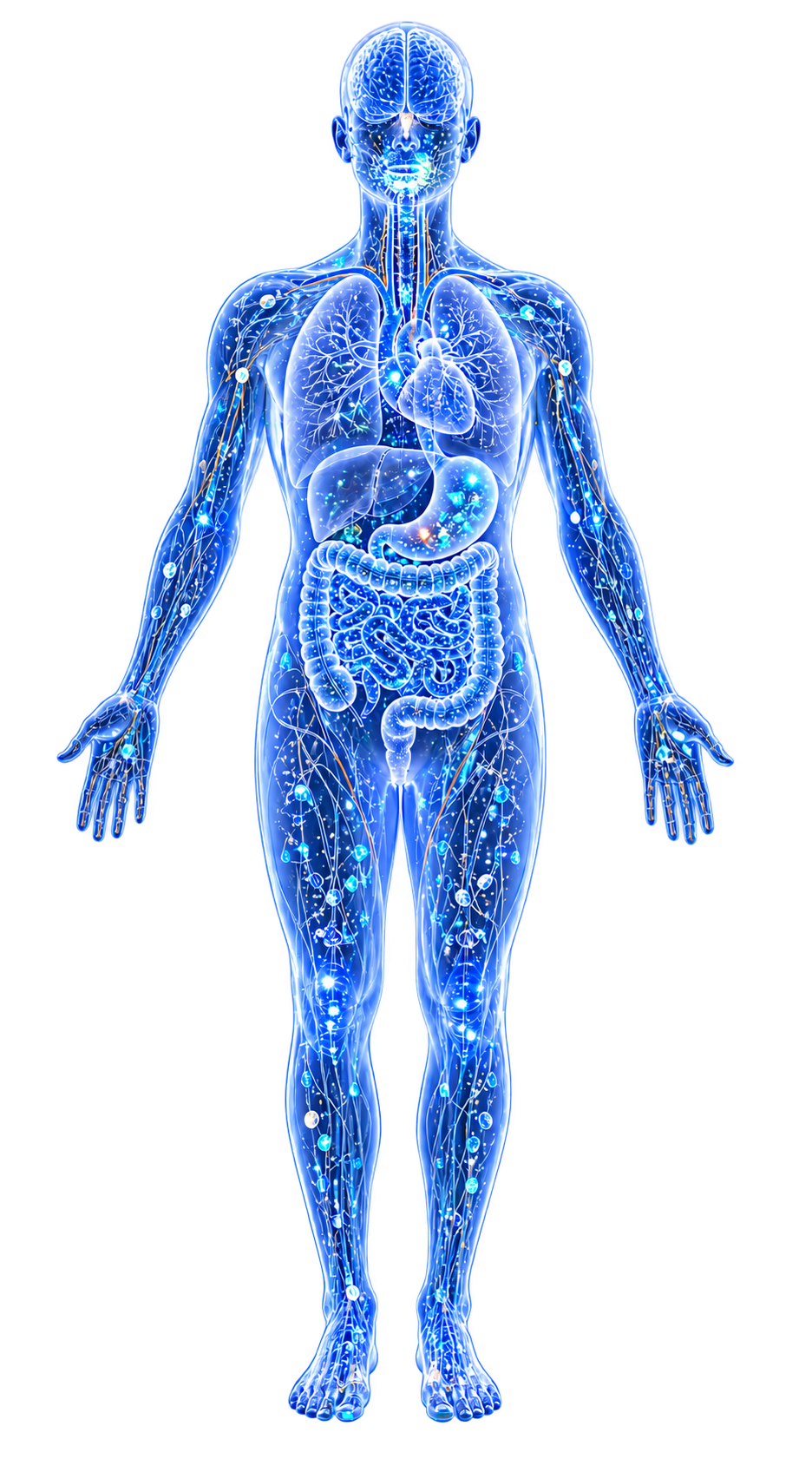
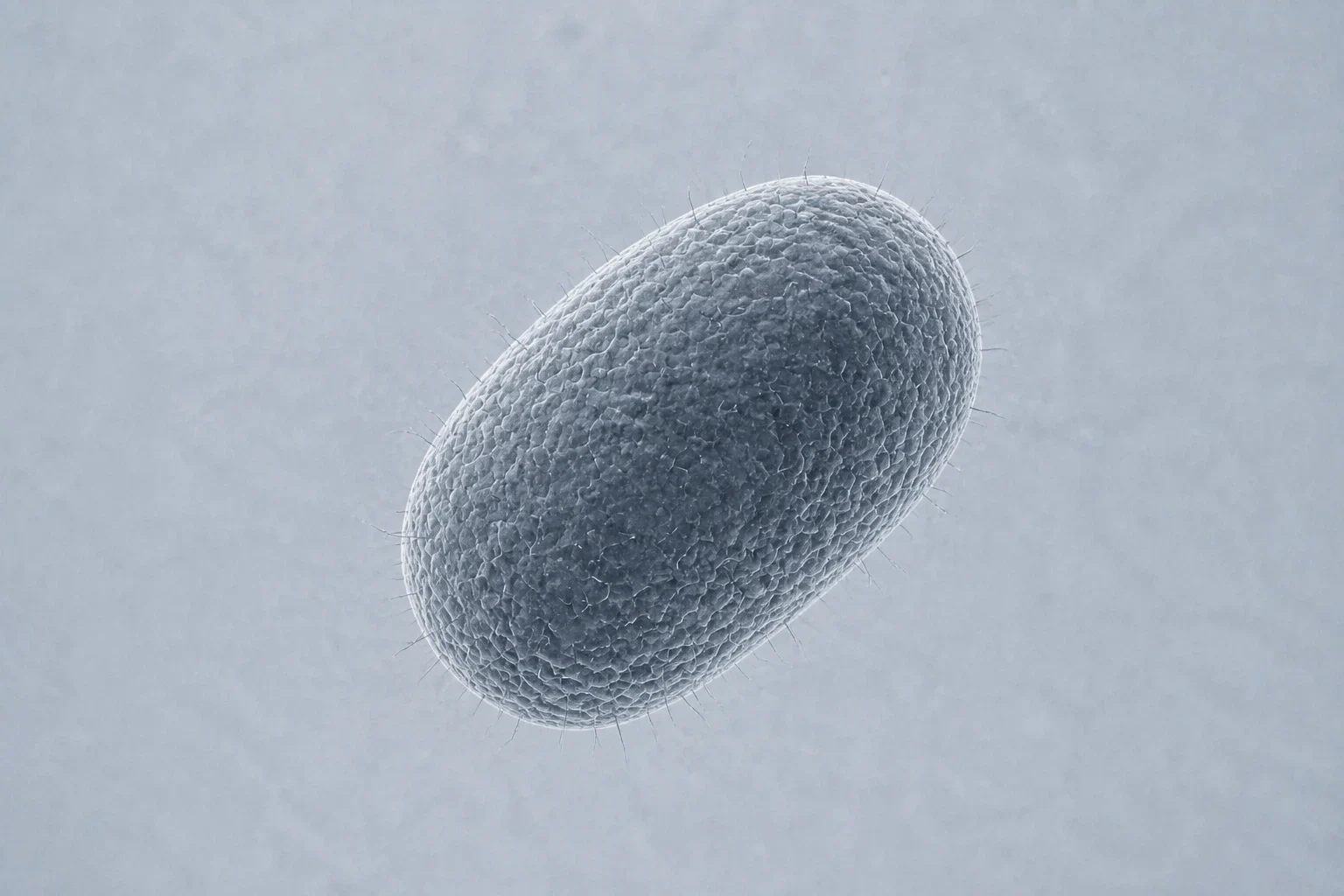
Representative morphology of A. muciniphila: an oval, Gram-negative, nonmotile, non-spore-forming bacterium. Surface structures vary by strain and culture conditions.
Scientific media record1 verified identifier
- Subject
- Akkermansia muciniphilataxon · species
- Identifiers
- NCBITaxon:239935
- Review
- Editorial review completeIdentifiers authority-verified · Accessibility validated · · akkermansia-muciniphila|akkermansia-muciniphila-morphology-v2.webp
- Digital source
- Trained-algorithmic mediaCreated with a trained generative algorithm and reviewed by WikiBiome for subject identity, scientific framing, identifiers, provenance, and accessibility.
- License
- CC BY-SA 4.0Created
A Gram-negative, obligate anaerobic, mucin-degrading bacterium that colonizes the intestinal mucus layer and has emerged as one of the most important next-generation probiotics.
A. muciniphila is consistently depleted in disease states associated with metal dyshomeostasis and is notably sensitive to heavy metal exposure, positioning it as both a biomarker and mediator of the Gut-Metal-Microbiome Interactions axis.
Evidence map16 cited passagesInspect provenance +
The primary description, NCBI Taxonomy, and LPSN all identify Akkermansia muciniphila as the recognized species, with type strain Muc (ATCC BAA-835; CIP 107961; DSM 22959). The former WikiBiome record “Akkermansia mucinicola” was not a supported second species: its declared sources referred to A. muciniphila or to the genus Akkermansia. That invalid record i
Specializes in degrading intestinal mucins (MUC2), using the breakdown products as carbon and nitrogen sources.
Paradoxically, mucin degradation by A. muciniphila stimulates mucin production by goblet cells, maintaining a thicker and healthier mucus layer.
Produces short chain fatty acids (acetate, propionate) that support epithelial barrier function and feed butyrate-producing bacteria like faecalibacterium prausnitzii via cross-feeding.
Strengthens tight junction protein expression (ZO-1, occludin, claudin), opposing the barrier-disrupting effects of heavy metals.
A. muciniphila is particularly sensitive to low-dose cadmium exposure. Cd-treated mice show rapid depletion of Akkermansia even at doses that do not yet perturb overall diversity.
Pb exposure decreases A. muciniphila abundance. Lead-intolerant gut microbes including Akkermansia can reduce Pb burden when supplemented, suggesting a protective role.
Occupational nickel exposure is associated with reduced abundance of beneficial commensals including mucin-degrading taxa, though Akkermansia-specific nickel effects are less well characterized.
Inflammatory bowel disease (IBD): reduced in Crohn's disease. The ZIP8 A391T Crohn's risk variant alters colonic metal availability and shifts microbiome composition, with Akkermansia enriched in older mutant mice as a potential compensatory response.
Multiple sclerosis: altered abundance in MS patients. Some studies report increased Akkermansia in MS (possibly pro-inflammatory in this context), illustrating context-dependent effects.
Obesity and type 2 diabetes: consistently depleted; inversely correlated with metabolic syndrome markers.
Parkinson's disease: altered abundance linked to gut-brain axis dysfunction. Metal-induced dysbiosis in the gut may promote alpha-synuclein aggregation.
Autism spectrum disorder: altered in ASD gut microbiome profiles.
Cardiovascular disease: oral supplementation of A. muciniphila inhibits abdominal aortic aneurysm formation in mice by restoring microbial diversity and modulating IL-33 and peripheral immune factors.
Classified as a next-generation probiotic alongside faecalibacterium prausnitzii.
Proposed for metal detoxification strategies: supplementation could restore mucus barrier function compromised by heavy metal exposure.
Contents
1. Taxonomic Identity2. Role in Gut Barrier Integrity3. Sensitivity to Heavy Metals4. Depletion Across Disease States5. Next-Generation Probiotic Potential6. ConnectionsTaxonomic Identity#
The primary description, NCBI Taxonomy, and LPSN all identify Akkermansia muciniphila as the recognized species, with type strain Muc (ATCC BAA-835; CIP 107961; DSM 22959).[1]Akkermansia muciniphila gen. nov., sp. nov., a human intestinal mucin-degrading bacteriumMuriel Derrien, Elaine E Vaughan, Caroline M Plugge et al. · 2004Open reference 1 ↓[2]NCBI Taxonomy — Akkermansia muciniphila (NCBITaxon:239935)Author information pendingOpen reference 2 ↓[3]LPSN — Akkermansia muciniphilaAuthor information pendingOpen reference 3 ↓
The former WikiBiome record “Akkermansia mucinicola” was not a supported second species: its declared sources referred to A. muciniphila or to the genus Akkermansia. That invalid record is retired rather than treated as an independent taxon.
Role in Gut Barrier Integrity#
Specializes in degrading intestinal mucins (MUC2), using the breakdown products as carbon and nitrogen sources.[4]Gut Microbiota: A Target for Heavy Metal Toxicity and a Probiotic Protective StrategyHui Duan, Leilei Yu, Fengwei Tian et al. · 2020Open reference 4 ↓
Paradoxically, mucin degradation by A. muciniphila stimulates mucin production by goblet cells, maintaining a thicker and healthier mucus layer.[5]Akkermansia muciniphila Alters Gut Microbiota and Immune System to Improve Cardiovascular Diseases in Murine ModelXin He, Yang Bai, Haiyang Zhou et al. · 2022Open reference 5 ↓
Produces Short-Chain Fatty Acids (SCFAs) (acetate, propionate) that support epithelial barrier function and feed Butyrate-producing bacteria like Faecalibacterium prausnitzii via cross-feeding.[6]Heavy Metal-Gut Microbiota Interactions: Probiotics Modulation and Biosensors DetectionLiliana Anchidin-Norocel, Oana C. Iatcu, Andrei Lobiuc et al. · 2025Open reference 6 ↓
Strengthens tight junction protein expression (ZO-1, occludin, claudin), opposing the barrier-disrupting effects of Heavy Metals.[7]Effects of Heavy Metals on Gut Barrier Integrity and Gut MicrobiotaSweta Ghosh, Syam P. Nukavarpu, Venkatakrishna Rao Jala · 2024Open reference 7 ↓
Sensitivity to Heavy Metals#
Cadmium#
A. muciniphila is particularly sensitive to low-dose cadmium exposure. cadmium (Cd)-treated mice show rapid depletion of Akkermansia even at doses that do not yet perturb overall diversity.[8]Toxic and Essential Metals: Metabolic Interactions with the Gut Microbiota and Health ImplicationsQinheng Zhu, Boyan Chen, Fu Zhang et al. · 2024Open reference 8 ↓
Loss of Akkermansia under cadmium exposure compromises mucus layer integrity, creating a vicious cycle: barrier breakdown increases cadmium absorption, further depleting the protective mucus layer.
Lead#
- lead (Pb) exposure decreases A. muciniphila abundance. Lead-intolerant gut microbes including Akkermansia can reduce lead burden when supplemented, suggesting a protective role.[4]Gut Microbiota: A Target for Heavy Metal Toxicity and a Probiotic Protective StrategyHui Duan, Leilei Yu, Fengwei Tian et al. · 2020Open reference 4 ↓
Nickel and Chromium#
- Occupational nickel exposure is associated with reduced abundance of beneficial commensals including mucin-degrading taxa, though Akkermansia-specific nickel effects are less well characterized.[8]Toxic and Essential Metals: Metabolic Interactions with the Gut Microbiota and Health ImplicationsQinheng Zhu, Boyan Chen, Fu Zhang et al. · 2024Open reference 8 ↓
Depletion Across Disease States#
A. muciniphila depletion is a recurring finding across diseases linked to metal dyshomeostasis.
Inflammatory bowel disease (IBD): reduced in Crohn's disease. The ZIP8 A391T Crohn's risk variant alters colonic metal availability and shifts microbiome composition, with Akkermansia enriched in older mutant mice as a potential compensatory response.[9]ZIP8 A391T Crohn's Disease-Linked Risk Variant Induces Colonic Metal Ion Dyshomeostasis, Microbiome Compositional Shifts, and InflammationYang JC, Zhao M, Chernikova D et al. · 2024Open reference 9 ↓
Multiple sclerosis: altered abundance in MS patients. Some studies report increased Akkermansia in MS (possibly pro-inflammatory in this context), illustrating context-dependent effects.[10]Feeding the gut microbiome: impact on multiple sclerosisMatteo Bronzini, Alessandro Maglione, Rachele Rosso et al. · 2023Open reference 10 ↓
Obesity and type 2 diabetes: consistently depleted; inversely correlated with metabolic syndrome markers.[11]Influence of Toxic Metal Exposure on the Gut Microbiota (Review)Federica Giambo, Sebastiano Italia, Michele Teodoro et al. · 2021Open reference 11 ↓
Parkinson's disease: altered abundance linked to gut-brain axis dysfunction. Metal-induced Dysbiosis in the gut may promote alpha-synuclein aggregation.[12]Microbial Metallomics and Parkinson's Disease: A Unified Metal-Driven Framework Linking Ferroptosis, Dysbiosis, and alpha-Synuclein PathologyKaren Pendergrass · 2025Open reference 12 ↓
Autism spectrum disorder: altered in ASD Gut Microbiome profiles.[13]Amadi 2022 — Dietary Interventions for ASD: Updated Systematic ReviewC.N. Amadi, Ch.N. Orish, Ch. Frazzoli et al. · 2022Open reference 13 ↓
Cardiovascular disease: oral supplementation of A. muciniphila inhibits abdominal aortic aneurysm formation in mice by restoring microbial diversity and modulating IL-33 and peripheral immune factors.[5]Akkermansia muciniphila Alters Gut Microbiota and Immune System to Improve Cardiovascular Diseases in Murine ModelXin He, Yang Bai, Haiyang Zhou et al. · 2022Open reference 5 ↓
Next-Generation Probiotic Potential#
Classified as a next-generation probiotic alongside Faecalibacterium prausnitzii.[4]Gut Microbiota: A Target for Heavy Metal Toxicity and a Probiotic Protective StrategyHui Duan, Leilei Yu, Fengwei Tian et al. · 2020Open reference 4 ↓ Pasteurized A. muciniphila and its outer membrane protein Amuc_1100 retain protective activity, making it feasible for clinical use.
Proposed for metal detoxification strategies: supplementation could restore mucus barrier function compromised by heavy metal exposure.[6]Heavy Metal-Gut Microbiota Interactions: Probiotics Modulation and Biosensors DetectionLiliana Anchidin-Norocel, Oana C. Iatcu, Andrei Lobiuc et al. · 2025Open reference 6 ↓
Unlike pathogenic Enterobacteriaceae, A. muciniphila does not depend on nickel (Ni)-enzymes for virulence—it is a beneficiary of the nickel-poor environment that starves pathogens.
Connections#
- Gut-Metal-Microbiome Interactions—central player in metal-microbiome bidirectional interactions
- Faecalibacterium prausnitzii—metabolic cross-feeding partner; co-depleted in many diseases
- Cadmium—particularly sensitive to cadmium (Cd); early indicator of cadmium-induced dysbiosis
- Lead—depleted by lead (Pb) exposure; supplementation reduces lead burden
- Nickel—indirectly affected; benefits from nickel-poor environments
- Nutritional Immunity (Metal Sequestration)—the mucus barrier it maintains is part of innate defense
- dysbiosis—its loss is a hallmark of metal-induced and disease-associated dysbiosis
- Lactobacillus—co-depleted under heavy metal exposure; complementary probiotic mechanisms
- Metal-Driven Inflammation—anti-inflammatory via barrier maintenance and SCFA production
References 13
Numbered by first appearance in the article, then reconciled with its declared source list.
- 1
Muriel Derrien, Elaine E Vaughan, Caroline M Plugge et al. (2004). Akkermansia muciniphila gen. nov., sp. nov., a human intestinal mucin-degrading bacterium. International Journal of Systematic and Evolutionary Microbiology.
- 2
Author information pending. NCBI Taxonomy — Akkermansia muciniphila (NCBITaxon:239935). NCBI Taxonomy.
- 3
Author information pending. LPSN — Akkermansia muciniphila. List of Prokaryotic names with Standing in Nomenclature.
- 4
★Hui Duan, Leilei Yu, Fengwei Tian et al. (2020). Gut Microbiota: A Target for Heavy Metal Toxicity and a Probiotic Protective Strategy. Science of the Total Environment.
- 5
Xin He, Yang Bai, Haiyang Zhou et al. (2022). Akkermansia muciniphila Alters Gut Microbiota and Immune System to Improve Cardiovascular Diseases in Murine Model. Frontiers in Microbiology.
- 6
★Liliana Anchidin-Norocel, Oana C. Iatcu, Andrei Lobiuc et al. (2025). Heavy Metal-Gut Microbiota Interactions: Probiotics Modulation and Biosensors Detection. Biosensors.
- 7
★Sweta Ghosh, Syam P. Nukavarpu, Venkatakrishna Rao Jala (2024). Effects of Heavy Metals on Gut Barrier Integrity and Gut Microbiota. Microbiota and Host.
- 8
★Qinheng Zhu, Boyan Chen, Fu Zhang et al. (2024). Toxic and Essential Metals: Metabolic Interactions with the Gut Microbiota and Health Implications. Frontiers in Nutrition.
- 9
★Yang JC, Zhao M, Chernikova D et al. (2024). ZIP8 A391T Crohn's Disease-Linked Risk Variant Induces Colonic Metal Ion Dyshomeostasis, Microbiome Compositional Shifts, and Inflammation. Digestive Diseases and Sciences.
- 10
Matteo Bronzini, Alessandro Maglione, Rachele Rosso et al. (2023). Feeding the gut microbiome: impact on multiple sclerosis. Frontiers in Immunology.
- 11
★Federica Giambo, Sebastiano Italia, Michele Teodoro et al. (2021). Influence of Toxic Metal Exposure on the Gut Microbiota (Review). World Academy of Sciences Journal.
- 12
★Karen Pendergrass (2025). Microbial Metallomics and Parkinson's Disease: A Unified Metal-Driven Framework Linking Ferroptosis, Dysbiosis, and alpha-Synuclein Pathology. Conference Presentation.
- 13
C.N. Amadi, Ch.N. Orish, Ch. Frazzoli et al. (2022). Amadi 2022 — Dietary Interventions for ASD: Updated Systematic Review. Psychiatriki.
Article network
Mentioned here 14
Pages linking here 62
Connect the evidence
Publicly readable discussion by ORCID-authenticated researchers. Questions, interpretation, methods, corrections, and new evidence stay attached to this record.
No discussion yet. Start with a precise question or a source-backed observation.
Activity and accepted changes
Accepted researcher context, editorial status, public discussion, and upstream Git revisions are shown together. Pending, declined, and withdrawn proposals remain private.
- published revision
Backfill heavy metals concept links
Karen Pendergrass · +1 −1
Inspect exact Git diff ↗ - published revision
Backfill gut microbiome concept links
Karen Pendergrass · +1 −1
Inspect exact Git diff ↗ - published revision
Complete corpus-wide Dysbiosis linking
Karen Pendergrass · +2 −2
Inspect exact Git diff ↗ - published revision
Complete Tight junctions contextual coverage
Karen Pendergrass · +1 −1
Inspect exact Git diff ↗ - published revision
Record Akkermansia taxonomy identifier
Karen Pendergrass · +2 −1
Inspect exact Git diff ↗ - published revision
Reconcile current taxonomic identities
Karen Pendergrass · +7 −3
Inspect exact Git diff ↗ - published revision
massive wiki expansion: 149 stubs fixed, 100+ new pages, Rule 15 scan, keystone papers
WikiBiome Deploy Bot · +10 −10
Inspect exact Git diff ↗ - published revision
nightly maintenance: 94 stub demotions, 181 source_count fixes, 22 auto-discovered stubs, 5 adversarial audits, 3 boundary fixes, 3 evidence-level corrections
WikiBiome Deploy Bot · +1 −0
Inspect exact Git diff ↗ - published revision
11 new sources for Hashimotos/MS/CVD + 10 microbe entity citation pass
WikiBiome Deploy Bot · +6 −5
Inspect exact Git diff ↗ - published revision
WikiBiome update — 2026-04-15 17:23
WikiBiome Deploy Bot · +0 −1
Inspect exact Git diff ↗ - published revision
wiki: bulk entity upgrades, new article pages, and site regeneration
WikiBiome Deploy Bot · +6 −0
Inspect exact Git diff ↗ - published revision
WikiBiome update — integrity fixes, metallomic diet pages, cross-condition analyses
WikiBiome Deploy Bot · +16 −9
Inspect exact Git diff ↗ - published revision
WikiBiome v7 — interactive microbiome metallomics encyclopedia
Karen Pendergrass · +66 −0
Inspect exact Git diff ↗