
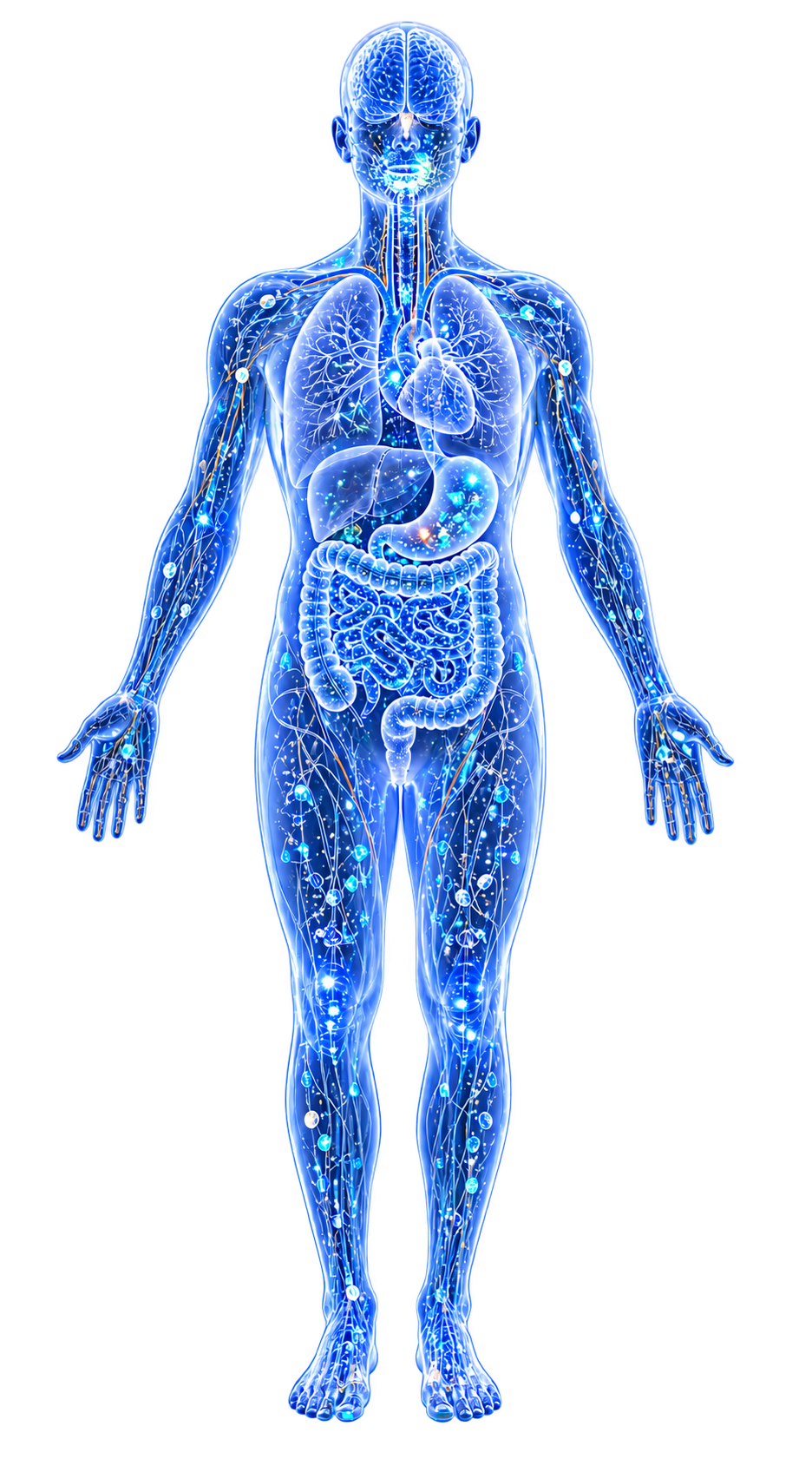
The strategy by which mammalian hosts withhold essential metals from invading pathogens to limit their growth. Well-established for iron and zinc; underexplored but potentially powerful for Nickel.
Evidence map12 cited passagesInspect provenance +
Pathogens require metal cofactors for virulence enzymes.
Hosts sequester these metals using binding proteins, lowering free metal availability at infection sites.
Best characterized for iron (ferritin, transferrin, lactoferrin, hepcidin, NRAMP1) and zinc/manganese (calprotectin),.
Dual strategy: Hosts both withhold metals (restriction) and flood pathogens with toxic metal levels (intoxication). Macrophages pump Cu (500 uM) and Zn into phagolysosomes to kill engulfed bacteria, and PGRPs induce 60-100x intracellular Zn/Cu increases in target cells,.
Mis-metallation is the killing mechanism: Zn flooding mis-metalates the PerR regulator in Gram-positive pathogens, causing heme toxicity and oxidative death. Chelating either Zn or Cu completely abolishes PGRP bactericidal activity, confirming metal intoxication is required, not incidental.
Calprotectin (S100A8/A9): neutrophil-derived; 1 mg/mL at infection sites. Canonically sequesters Mn and Zn to starve S. aureus of Mn-SOD cofactors,. Recent finding: also coordinates Ni(II) at the hexahistidine site preferentially over Zn(II), sequestering nickel from S. aureus and K. pneumoniae and inhibiting their urease activity. In response, S. aureus act
Lactoferrin: primarily known for iron binding via bi-lobal transferrin fold; histidine/tyrosine ligands can also bind nickel. Nickel-sequestering effect is plausible but unstudied.
Transferrin: serum iron carrier that restricts iron availability to extracellular pathogens; exploited by siderophore-producing Enterobacteriaceae.
Hepcidin: master regulator of iron homeostasis that degrades ferroportin and induces functional iron restriction during infection. Role in nickel restriction unknown but likely given overlap in metal handling.
NRAMP1 (SLC11A1): divalent metal transporter in macrophage phagolysosomes. Can export Ni(II), restricting availability to engulfed intracellular pathogens.
Peptidoglycan Recognition Proteins (PGRPs): Kill bacteria by inducing 60-100x intracellular Zn2+ and Cu+, synergistically with oxidative stress and glutathione depletion. Metal intoxication is a required component of killing.
Targeting nickel availability is proposed as a therapeutic strategy:
Contents
1. General Principle2. Nickel Sequestration [[maier-2019-nickel-microbial-pathogenesis]]3. Therapeutic Potential4. The Two-Kingdom Conundrum5. ConnectionsGeneral Principle#
Pathogens require metal cofactors for virulence enzymes.[1]Robinson & Glasfeld 2020 — Metalation and Mis-metalation: Nature's Challenge in Metal CoordinationNigel J. Robinson, Andrea Glasfeld · 2020Open reference 1 ↓ Hosts sequester these metals using binding proteins, lowering free metal availability at infection sites.[2]Bushman 2025 — The Exploitation of Nutrient Metals by Bacteria for Survival and Infection in the GutSummer D Bushman, Eric P Skaar, N Luisa Hiller · 2025Open reference 2 ↓ This is an innate immune mechanism—part of the "nutritional immunity" concept.
Best characterized for iron (ferritin, transferrin, lactoferrin, hepcidin, NRAMP1) and zinc/manganese (calprotectin).[3]Metal Ion Acquisition in Staphylococcus aureus: Overcoming Nutritional ImmunityJames E. Cassat, Eric P. Skaar · 2012Open reference 3 ↓[2]Bushman 2025 — The Exploitation of Nutrient Metals by Bacteria for Survival and Infection in the GutSummer D Bushman, Eric P Skaar, N Luisa Hiller · 2025Open reference 2 ↓
Dual strategy: Hosts both withhold metals (restriction) and flood pathogens with toxic metal levels (intoxication).
Macrophages pump copper (Cu) (>500 uM) and zinc (Zn) into phagolysosomes to kill engulfed bacteria, and PGRPs induce 60-100x intracellular zinc/copper increases in target cells.[4]Kashyap et al. 2014 — Peptidoglycan Recognition Proteins Kill Bacteria by Inducing Oxidative, Thiol, and Metal StressDipika R. Kashyap, Minhui Wang, Li-Hung Liu et al. · 2014Open reference 4 ↓[2]Bushman 2025 — The Exploitation of Nutrient Metals by Bacteria for Survival and Infection in the GutSummer D Bushman, Eric P Skaar, N Luisa Hiller · 2025Open reference 2 ↓
Mis-metallation is the killing mechanism: zinc flooding mis-metalates the PerR regulator in Gram-positive pathogens, causing heme toxicity and oxidative death.[5]Chandrangsu & Helmann 2016 — Intracellular Zn Intoxication Mis-metalates PerR, Causing Heme Toxicity and Oxidative DeathPete Chandrangsu, John D. Helmann · 2016Open reference 5 ↓
Chelating either zinc or copper completely abolishes PGRP bactericidal activity, confirming metal intoxication is required, not incidental.[4]Kashyap et al. 2014 — Peptidoglycan Recognition Proteins Kill Bacteria by Inducing Oxidative, Thiol, and Metal StressDipika R. Kashyap, Minhui Wang, Li-Hung Liu et al. · 2014Open reference 4 ↓
Nickel Sequestration [[maier-2019-nickel-microbial-pathogenesis]]#
Why Nickel is a Good Target#
Mammals do not synthesize known nickel (Ni)-requiring proteins—so restricting nickel imposes no cost on the host. Nickel is already scarce in mammalian tissues: <5 ppm in most organs, <0.1% of zinc levels. Many important pathogens (Helicobacter pylori, Staphylococcus aureus, Salmonella, *Brucella*) depend on nickel-enzymes (Urease, Hydrogenase) for virulence.
Host Proteins Involved#
Calprotectin (S100A8/A9): neutrophil-derived; >1 mg/mL at infection sites.[2]Bushman 2025 — The Exploitation of Nutrient Metals by Bacteria for Survival and Infection in the GutSummer D Bushman, Eric P Skaar, N Luisa Hiller · 2025Open reference 2 ↓ Canonically sequesters manganese (Mn) and zinc (Zn) to starve S. aureus of manganese-SOD cofactors.[3]Metal Ion Acquisition in Staphylococcus aureus: Overcoming Nutritional ImmunityJames E. Cassat, Eric P. Skaar · 2012Open reference 3 ↓[6]Martin & Waters 2022 — Manganese Homeostasis, Stress, and Pathogenesis in BacteriaJulia E. Martin, Lauren S. Waters · 2022Open reference 6 ↓
Recent finding: also coordinates nickel (Ni)(II) at the hexahistidine site preferentially over zinc(II), sequestering nickel from S. aureus and K. pneumoniae and inhibiting their urease activity.[7]Role of Nickel in Microbial PathogenesisRobert J. Maier, Stéphane L. Benoit · 2019Open reference 7 ↓
In response, S. aureus activates the small RNA RsaC to suppress manganese-dependent SodA translation, freeing scarce manganese for other essential processes.[8]McFarlane 2025 — A Manganese-Sparing Response Balances Competing Cellular Demands to Enable Staphylococcus aureus InfectionRiley A McFarlane, Jana N Radin, Rafat Mazgaj et al. · 2025Open reference 8 ↓
Lactoferrin: primarily known for iron binding via bi-lobal transferrin fold; Histidine/tyrosine ligands can also bind nickel.[7]Role of Nickel in Microbial PathogenesisRobert J. Maier, Stéphane L. Benoit · 2019Open reference 7 ↓ Nickel-sequestering effect is plausible but unstudied.
Transferrin: serum iron carrier that restricts iron availability to extracellular pathogens; exploited by siderophore-producing Enterobacteriaceae.[2]Bushman 2025 — The Exploitation of Nutrient Metals by Bacteria for Survival and Infection in the GutSummer D Bushman, Eric P Skaar, N Luisa Hiller · 2025Open reference 2 ↓
Hepcidin: master regulator of iron homeostasis that degrades ferroportin and induces functional iron restriction during infection.[2]Bushman 2025 — The Exploitation of Nutrient Metals by Bacteria for Survival and Infection in the GutSummer D Bushman, Eric P Skaar, N Luisa Hiller · 2025Open reference 2 ↓ Role in nickel restriction unknown but likely given overlap in metal handling.
NRAMP1 (SLC11A1): divalent metal transporter in macrophage phagolysosomes. Can export nickel(II), restricting availability to engulfed intracellular pathogens.[7]Role of Nickel in Microbial PathogenesisRobert J. Maier, Stéphane L. Benoit · 2019Open reference 7 ↓
Peptidoglycan Recognition Proteins (PGRPs): Kill bacteria by inducing 60-100x intracellular zinc(II) and copper (Cu)+, synergistically with Oxidative Stress and glutathione depletion. Metal intoxication is a required component of killing.[4]Kashyap et al. 2014 — Peptidoglycan Recognition Proteins Kill Bacteria by Inducing Oxidative, Thiol, and Metal StressDipika R. Kashyap, Minhui Wang, Li-Hung Liu et al. · 2014Open reference 4 ↓
Pathogen Counter-Strategies#
Pathogens have evolved elaborate systems to overcome nickel scarcity. High-affinity transporters: ABC-type (NikABCDE, NiuBDE), NiCoT-type (NixA), ECF-type. Metallophores (nickel-scavenging small molecules).
Staphylopine (S. aureus): nicotianamine-like, broad-spectrum metal chelator.
Pseudopaline (P. aeruginosa): primary nickel acquisition mechanism. Yersiniabactin (E. coli, Klebsiella, Yersinia): originally iron siderophore, also binds nickel. Storage proteins: Hpn/HpnI in H. pylori—buffer against nickel fluctuations.
Efficient recycling: some pathogens recycle nickel from metallophore complexes.
Therapeutic Potential#
Targeting nickel availability is proposed as a therapeutic strategy.[7]Role of Nickel in Microbial PathogenesisRobert J. Maier, Stéphane L. Benoit · 2019Open reference 7 ↓ Block nickel trafficking pathways in pathogens. Enhance host nickel sequestration.
Complication: disrupting nickel for pathogens could also affect the (nickel (Ni)-utilizing) commensal microbiota → potential Dysbiosis.
The Two-Kingdom Conundrum#
An evolutionary puzzle. Plants use nickel (nickel (Ni)-urease is widespread) and naturally compete with pathogens for it. Mammals don't use nickel, so sequestration is "free"—no self-harm.
Yet very few plant pathogens use nickel (only Streptomyces scabies and relatives).
This asymmetry remains unexplained.
Connections#
- Nickel—the metal being sequestered
- Helicobacter pylori—most nickel-dependent human pathogen
- oxidative stress—macrophage killing involves both ROS and metal restriction
References 11
Numbered by first appearance in the article, then reconciled with its declared source list.
- 1
Nigel J. Robinson, Andrea Glasfeld (2020). Robinson & Glasfeld 2020 — Metalation and Mis-metalation: Nature's Challenge in Metal Coordination. Journal of Biological Inorganic Chemistry.
- 2
Summer D Bushman, Eric P Skaar, N Luisa Hiller (2025). Bushman 2025 — The Exploitation of Nutrient Metals by Bacteria for Survival and Infection in the Gut. PLOS Pathogens.
- 3
★James E. Cassat, Eric P. Skaar (2012). Metal Ion Acquisition in Staphylococcus aureus: Overcoming Nutritional Immunity. Seminars in Immunopathology.
- 4
Dipika R. Kashyap, Minhui Wang, Li-Hung Liu et al. (2014). Kashyap et al. 2014 — Peptidoglycan Recognition Proteins Kill Bacteria by Inducing Oxidative, Thiol, and Metal Stress. PLoS Pathogens.
- 5
Pete Chandrangsu, John D. Helmann (2016). Chandrangsu & Helmann 2016 — Intracellular Zn Intoxication Mis-metalates PerR, Causing Heme Toxicity and Oxidative Death. PLoS Genetics.
- 6
Julia E. Martin, Lauren S. Waters (2022). Martin & Waters 2022 — Manganese Homeostasis, Stress, and Pathogenesis in Bacteria. Frontiers in Molecular Biosciences.
- 7
★Robert J. Maier, Stéphane L. Benoit (2019). Role of Nickel in Microbial Pathogenesis. Inorganics.
- 8
Riley A McFarlane, Jana N Radin, Rafat Mazgaj et al. (2025). McFarlane 2025 — A Manganese-Sparing Response Balances Competing Cellular Demands to Enable Staphylococcus aureus Infection. mBio.
- 9
Deenah Osman, Andrew W. Foster, Junjun Chen et al. (2017). Osman et al. 2017 — Fine Control of Metal Concentrations Is Necessary for Cells to Discern Zinc from Cobalt. Nature Communications.
- 10
Bart A. Eijkelkamp, Jacqueline R. Morey, Stephanie L. Neville et al. (2014). Eijkelkamp et al. 2014 — Extracellular Zinc Competitively Inhibits Manganese Uptake in Streptococcus pneumoniae. PLoS ONE.
- 11
Stephanie L. Neville, Jacqueline R. Morey, Erin B. Gillen et al. (2020). Neville et al. 2020 — Cadmium Stress Dictates Central Carbon Flux and Alters Membrane Composition in Streptococcus pneumoniae. Communications Biology.
Article network
Mentioned here 9
Pages linking here 176
Connect the evidence
Publicly readable discussion by ORCID-authenticated researchers. Questions, interpretation, methods, corrections, and new evidence stay attached to this record.
No discussion yet. Start with a precise question or a source-backed observation.
Activity and accepted changes
Accepted researcher context, editorial status, public discussion, and upstream Git revisions are shown together. Pending, declined, and withdrawn proposals remain private.
- published revision
Backfill oxidative stress concept links
Karen Pendergrass · +2 −2
Inspect exact Git diff ↗ - published revision
Complete corpus-wide Dysbiosis linking
Karen Pendergrass · +1 −1
Inspect exact Git diff ↗ - published revision
Add reviewed Histidine concept coverage
Karen Pendergrass · +1 −1
Inspect exact Git diff ↗ - published revision
Complete Hydrogenase contextual coverage
Karen Pendergrass · +1 −1
Inspect exact Git diff ↗ - published revision
Complete reviewed Urease contextual coverage
Karen Pendergrass · +1 −1
Inspect exact Git diff ↗ - published revision
massive wiki expansion: 149 stubs fixed, 100+ new pages, Rule 15 scan, keystone papers
WikiBiome Deploy Bot · +19 −19
Inspect exact Git diff ↗ - published revision
nightly maintenance: 94 stub demotions, 181 source_count fixes, 22 auto-discovered stubs, 5 adversarial audits, 3 boundary fixes, 3 evidence-level corrections
WikiBiome Deploy Bot · +1 −0
Inspect exact Git diff ↗ - published revision
pre-overnight checkpoint 2026-04-18
WikiBiome Deploy Bot · +4 −2
Inspect exact Git diff ↗ - published revision
Deepen metal/concept entities + 8 new sources for T1D/schizophrenia
WikiBiome Deploy Bot · +13 −9
Inspect exact Git diff ↗ - published revision
WikiBiome update — 2026-04-15 17:23
WikiBiome Deploy Bot · +3 −3
Inspect exact Git diff ↗ - published revision
WikiBiome update — integrity fixes, metallomic diet pages, cross-condition analyses
WikiBiome Deploy Bot · +4 −2
Inspect exact Git diff ↗ - published revision
WikiBiome v7 — interactive microbiome metallomics encyclopedia
Karen Pendergrass · +63 −0
Inspect exact Git diff ↗