
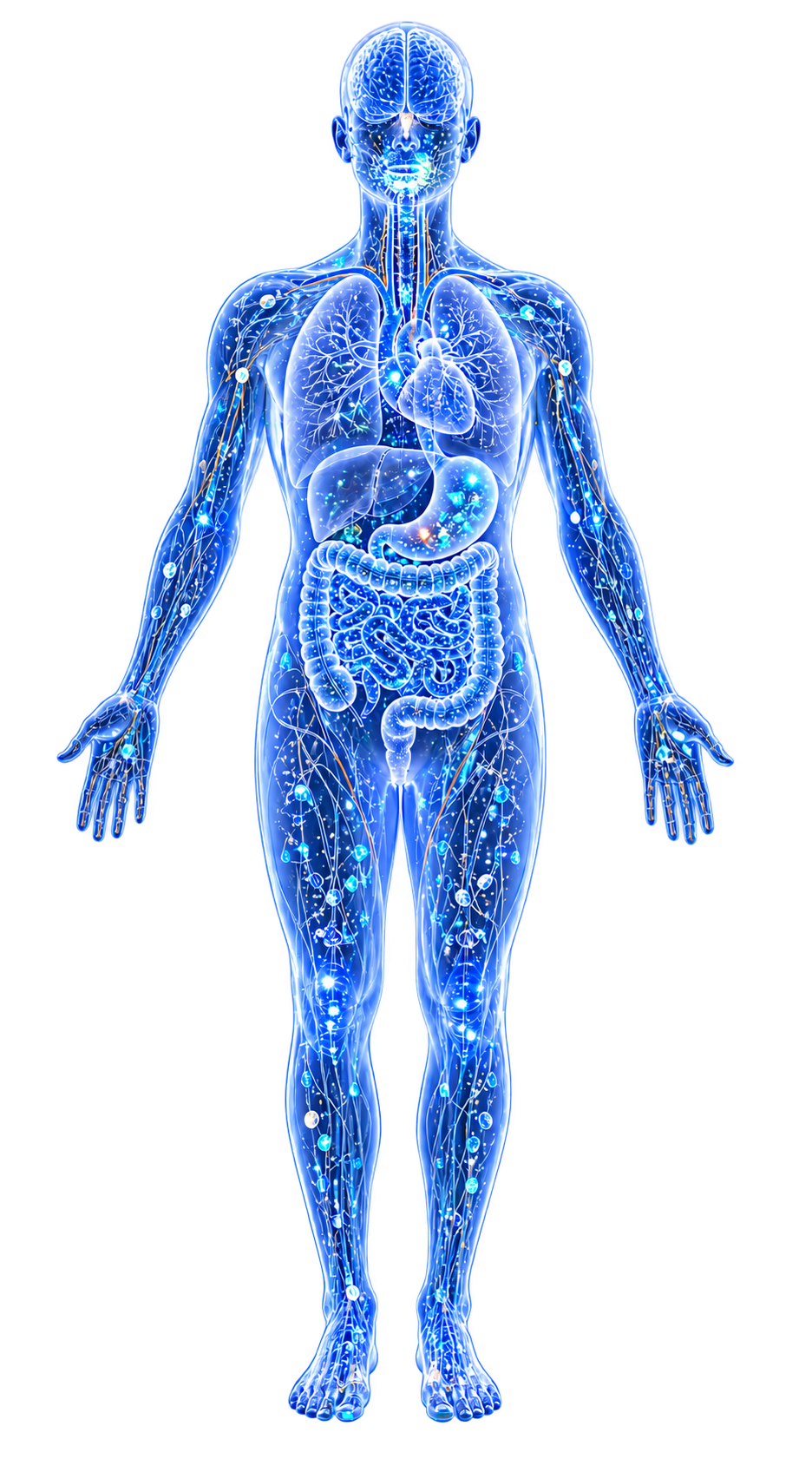
Measurable indicators of biological state, exposure, or disease. In the Metallomics context, biomarkers span three interconnected domains: metal biomarkers (quantifying exposure and body burden), microbiome biomarkers (reflecting microbial community disruption), and metabolite biomarkers (capturing downstream functional consequences). Integrating these layers is the promise of the metallomics approach.
Evidence map3 cited passagesInspect provenance +
Urinary Cd: Reflects long-term body burden (renal accumulation); beta-2 microglobulin co-measurement indicates tubular damage.
Metallophores: Emerging—microbial siderophores detectable in urine as infection biomarkers.
Multi-metal signatures in pancreatic cancer (urinary Cd, Ni, Co patterns).
Contents
1. Metal Biomarkers2. Microbiome Biomarkers3. Metabolite Biomarkers4. Metallomic Signatures5. Challenges6. See AlsoMetal Biomarkers#
Blood#
Blood lead level (BLL): Standard for lead (Pb) exposure; reflects recent/ongoing exposure (half-life ~30 days in blood). No safe threshold established. Blood mercury (Hg): Total and speciated (methyl vs. inorganic); reflects recent fish consumption and chronic exposure.
Serum zinc (Zn), copper (Cu), iron (Fe): Reflect circulating levels but are confounded by Metal-Driven Inflammation (acute-phase responses alter copper and iron distribution). Ceruloplasmin: Copper-containing acute-phase protein; elevated in inflammation, low in Wilson's disease.
Urine#
Urinary cadmium (Cd): Reflects long-term body burden (renal accumulation); beta-2 microglobulin co-measurement indicates tubular damage.[1]Toxic Mechanisms of Five Heavy Metals: Mercury, Lead, Chromium, Cadmium, and ArsenicBalali-Mood M, Naseri K, Tahergorabi Z et al. · 2021Open reference 1 ↓ Urinary As: Speciation (inorganic vs. organic) distinguishes toxic exposure from dietary arsenobetaine (seafood). 8-OHdG: Urinary oxidative DNA damage marker; elevated with arsenic (As), chromium (Cr), cadmium exposure.
Metallophores: Emerging—microbial siderophores detectable in urine as infection biomarkers.[2]Infection metallomics for critical care in the post-COVID eraPatil RH, Luptakova D, Havlicek V · 2021Open reference 2 ↓
Hair and Toenails#
Hair metals: Reflect months of exposure; used in epidemiological studies of mercury (Hg) (from fish), arsenic (As), and lead (Pb). Subject to external contamination. Toenail metals: Integrate 6-12 months of exposure; less prone to external contamination than hair; used for selenium (Se), arsenic, mercury assessment.
Tissue#
Liver iron (Fe) (ferritin, MRI): Gold standard for iron overload assessment. Bone lead (Pb): K-XRF measurement reflects cumulative lifetime lead exposure (half-life ~20-30 years in bone).
Microbiome Biomarkers#
See Microbial Biomarkers for detailed treatment. Key examples. F. prausnitzii depletion: IBD diagnostic and relapse predictor.
F. nucleatum enrichment: CRC diagnostic and prognostic marker. Alpha diversity reduction: Non-specific but consistent marker of Dysbiosis across metal exposure and disease states.
Metabolite Biomarkers#
Trimethylamine N-Oxide (TMAO): Plasma levels predict cardiovascular events; reflects gut microbial choline/carnitine metabolism. p-Cresol sulfate: Elevated in ASD and CKD; reflects Clostridioides activity in gut. Calprotectin (S100A8/A9) (fecal): Neutrophil-derived; gold standard for non-invasive IBD monitoring.
Hepcidin: Circulating peptide reflecting iron status and inflammatory state; low in iron deficiency, high in inflammation. Fecal SCFAs: Reduced Butyrate/propionate reflects loss of fermentative microbiome capacity. Indoxyl sulfate: Uremic toxin; microbial indole derivative accumulating in CKD.
Metallomic Signatures#
The metallomics approach measures the complete metal profile (ionome) rather than individual metals, revealing patterns invisible to single-metal analysis.
Multi-metal signatures in pancreatic cancer (urinary cadmium (Cd), nickel (Ni), cobalt (Co) patterns).[3]Metabolomics: a promising tool for deciphering metabolic impairment in heavy metal toxicitiesAkash MSH, Yaqoob A, Rehman K et al. · 2023Open reference 3 ↓ Hair metal ratios (e.g., zinc (Zn)/copper (Cu), iron (Fe)/lead (Pb)) as integrative exposure metrics. Serum metallome changes tracking disease progression in Alzheimer's, Parkinson's, and cardiovascular disease.
Challenges#
Specimen timing: Blood reflects acute exposure; urine reflects recent clearance; hair/nails reflect chronic burden. No single specimen captures the full picture. Confounders: Inflammation alters metal distribution (hypoferremia, hypercupremia of infection); dietary intake affects both metal and microbiome markers.
Reference ranges: Vary by population, age, sex, and analytical method; no universal thresholds for most metals.
See Also#
- Metallomics—systems-level metal analysis
- Microbial Biomarkers—microbiome-specific diagnostics
- Calprotectin (S100A8/A9)—fecal inflammation biomarker
- Hepcidin—iron homeostasis biomarker
References 3
Numbered by first appearance in the article, then reconciled with its declared source list.
- 1
★Balali-Mood M, Naseri K, Tahergorabi Z et al. (2021). Toxic Mechanisms of Five Heavy Metals: Mercury, Lead, Chromium, Cadmium, and Arsenic. Frontiers in Pharmacology.
- 2
★Patil RH, Luptakova D, Havlicek V (2021). Infection metallomics for critical care in the post-COVID era. Mass Spectrometry Reviews.
- 3
Akash MSH, Yaqoob A, Rehman K et al. (2023). Metabolomics: a promising tool for deciphering metabolic impairment in heavy metal toxicities. Frontiers in Molecular Biosciences.
Article network
Mentioned here 8
Pages linking here 20
Connect the evidence
Publicly readable discussion by ORCID-authenticated researchers. Questions, interpretation, methods, corrections, and new evidence stay attached to this record.
No discussion yet. Start with a precise question or a source-backed observation.
Activity and accepted changes
Accepted researcher context, editorial status, public discussion, and upstream Git revisions are shown together. Pending, declined, and withdrawn proposals remain private.
- published revision
Strengthen Metallomics and link high-leverage contexts
Karen Pendergrass · +3 −3
Inspect exact Git diff ↗ - published revision
Backfill inflammation concept links
Karen Pendergrass · +1 −1
Inspect exact Git diff ↗ - published revision
massive wiki expansion: 149 stubs fixed, 100+ new pages, Rule 15 scan, keystone papers
WikiBiome Deploy Bot · +24 −24
Inspect exact Git diff ↗ - published revision
nightly maintenance: 94 stub demotions, 181 source_count fixes, 22 auto-discovered stubs, 5 adversarial audits, 3 boundary fixes, 3 evidence-level corrections
WikiBiome Deploy Bot · +1 −0
Inspect exact Git diff ↗ - published revision
pre-overnight checkpoint 2026-04-18
WikiBiome Deploy Bot · +3 −1
Inspect exact Git diff ↗ - published revision
WikiBiome update — integrity fixes, metallomic diet pages, cross-condition analyses
WikiBiome Deploy Bot · +5 −3
Inspect exact Git diff ↗ - published revision
WikiBiome update — 2026-04-10 15:45
WikiBiome Deploy Bot · +70 −0
Inspect exact Git diff ↗