
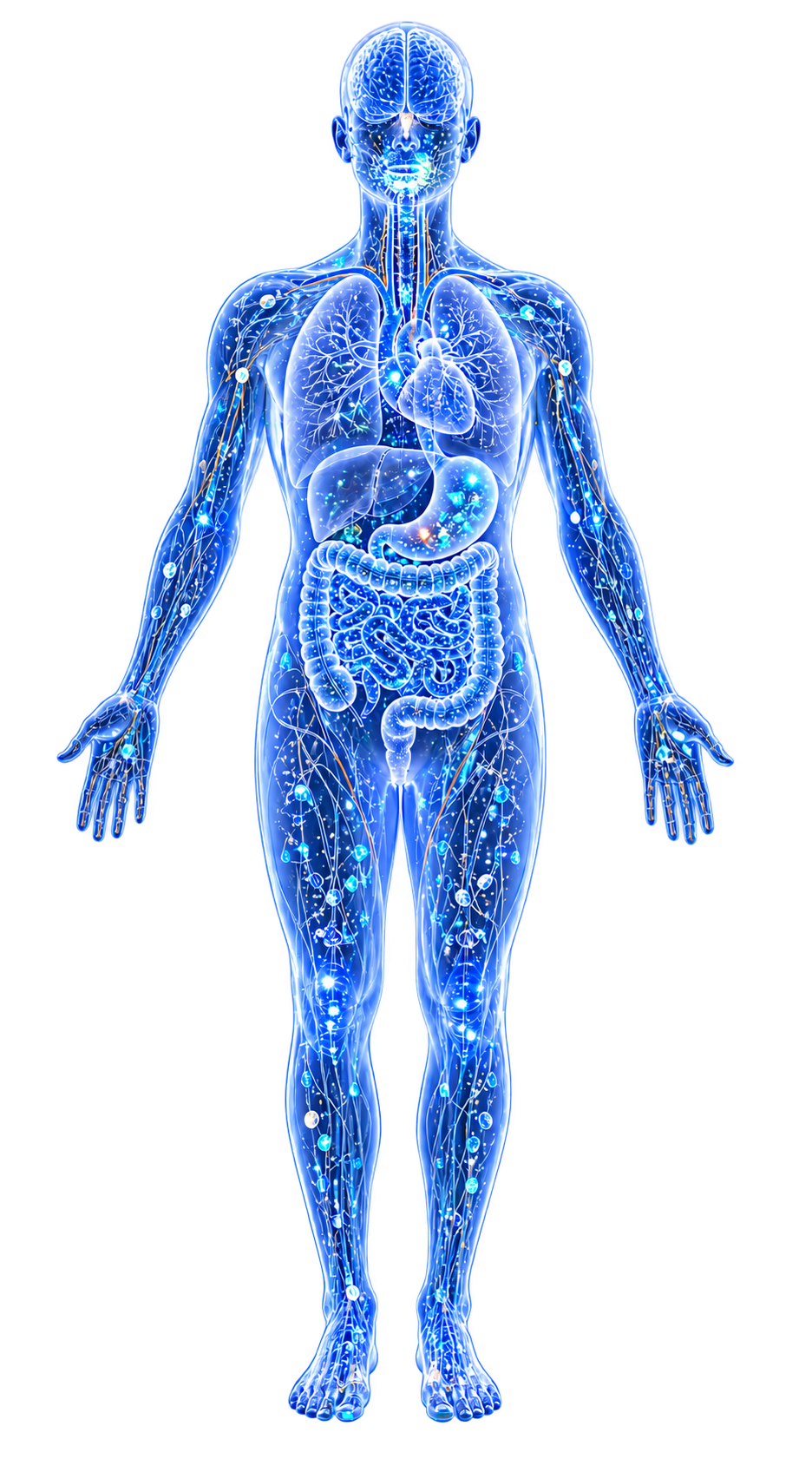
Microbiome-derived metabolites are small molecules made, consumed, or chemically transformed through activity in the Gut Microbiome and other host-associated communities.
They connect community function to host biology, but the phrase covers several kinds of provenance: a molecule may be produced directly by microbes, converted from a dietary or host substrate, or completed through sequential microbial and host reactions.
Reviews therefore group together chemically diverse families whose production sites, transport, receptors, and evidence bases differ substantially.[1]Local and systemic effects of microbiome-derived metabolitesIgor Spivak, Leviel Fluhr, Eran Elinav · 2023Open reference 1 ↓
The term should not be used as a synonym for every molecule detected in stool, blood, or urine. A metabolomics association can identify a candidate functional signal without proving which organism produced it, whether it entered the circulation, or whether it caused an observed phenotype.
Evidence map13 cited passagesInspect provenance +
Microbiome-derived metabolites are small molecules made, consumed, or chemically transformed through activity in the gut microbiome and other host-associated communities. They connect community function to host biology, but the phrase covers several kinds of provenance: a molecule may be produced directly by microbes, converted from a dietary or host substra
Some molecules begin as host or dietary compounds and are transformed by microbes. Primary bile acids are synthesized by the host, then deconjugated and converted by microbial enzymes into secondary bile acids. Those products participate in enterohepatic circulation and signal through receptors including FXR and TGR5.
Other compounds require both microbial and host steps. Gut microbes convert choline, carnitine, and related substrates to trimethylamine; hepatic FMO enzymes then oxidize it to trimethylamine N-oxide. Indoxyl sulfate similarly combines microbial conversion of tryptophan to indole with host absorption and hepatic conjugation. Calling such molecules “microbiom
Host metabolites, drug metabolites, metal complexes, and dietary molecules are not microbiome-derived merely because they appear in a microbiome study. Structural microbial products such as lipopolysaccharide are also often discussed alongside metabolites because they signal to the host, but they are better described as microbial molecular products than as p
Acetate, propionate, and butyrate are produced during microbial fermentation of carbohydrates and other substrates. They can serve as fuels and signal through free-fatty-acid receptors; butyrate also inhibits histone deacetylases and can support tight-junction regulation. Their effects on barrier function and inflammation vary by molecule, concentration, ana
Microbial bile salt hydrolases and other enzymes reshape the host bile-acid pool. Secondary bile acids can alter intestinal ecology while signaling through host receptors involved in bile-acid synthesis, glucose and lipid metabolism, epithelial function, and immunity. “More” or “less” secondary bile acid is not a universal health direction: individual molecu
Microbial tryptophan metabolism generates indole, indole-3-acetic acid, indole-3-propionic acid, indole-3-lactic acid, tryptamine, and related compounds. Some act as ligands for the aryl hydrocarbon receptor, but effects depend on the ligand and responding cell type. The host-dominant kynurenine and serotonin pathways are distinct pathways that can neverthel
The TMA/TMAO pathway is substrate-, microbiome-, liver-, sex-, and kidney-dependent. TMAO has been studied in atherosclerosis, thrombosis, heart failure, and renal disease, but a circulating value integrates dietary precursor exposure, microbial TMA-forming capacity, hepatic oxidation, and renal clearance. It is therefore not a microbiome-only measurement.
In chronic kidney disease, reduced renal clearance allows compounds including indoxyl sulfate, p-cresyl sulfate, and TMAO to accumulate. Kidney dysfunction also changes the intestinal environment, creating a feedback loop between urea handling, barrier function, microbial ecology, and proteolytic fermentation. These molecules should be interpreted through bo
Some microbial products act primarily near their site of production, whereas others reach the portal circulation or systemic tissues. SCFAs and bile-acid products can affect epithelial and immune cells locally; absorbed products may reach the liver, kidney, vasculature, or nervous system. A systems review maps these local and systemic routes but does not imp
Large multi-omic studies can connect metagenomic functions with circulating or urinary features across human disease states. In the 1,241-person MetaCardis cohort, microbiome and metabolome features varied across the cardiometabolic disease spectrum, while treatment and disease stage complicated simple healthy-versus-diseased interpretations. Smaller case-co
For example, an integrated mouse study found that arsenic exposure changed microbial composition and hundreds of fecal molecular features across bile-acid, lipid, amino-acid, and indole-related chemistry. Reviews of intestinal iron homeostasis likewise describe links among iron availability, community remodeling, SCFA production, indole signaling, and bile-a
There is condition-specific interventional evidence. A meta-analysis of 10 randomized trials involving 292 people with CKD found that dietary-fiber supplementation reduced indoxyl sulfate and p-cresyl sulfate, with heterogeneity across fiber types and study designs. That result supports substrate-sensitive microbial metabolism in a defined clinical context;
Contents
1. Scope and Terminology2. From Production to Host Exposure3. Major Metabolite Families4. Local and Systemic Effects5. Metal and Environmental Interactions6. Measuring and Attributing Origin7. Evidence Interpretation8. Intervention Boundaries9. ConnectionsScope and Terminology#
Direct Microbial Products#
Direct products are synthesized by microbial pathways. Examples include short-chain fatty acids such as propionate generated during fermentation, indoles made from tryptophan, and gases such as hydrogen sulfide. Even here, production depends on substrate availability, strain-level genes, cross-feeding, oxygen state, and the local ecological community.
Microbially Transformed Compounds#
Some molecules begin as host or dietary compounds and are transformed by microbes. Primary bile acids are synthesized by the host, then deconjugated and converted by microbial enzymes into secondary bile acids.
Those products participate in enterohepatic circulation and signal through receptors including FXR and TGR5.[2]Bile acid physiologyDi Ciaula A, Garruti G, Lunardi Baccetto R et al. · 2017Open reference 2 ↓
Host-Microbial Co-Metabolites#
Other compounds require both microbial and host steps. Gut microbes convert choline, carnitine, and related substrates to trimethylamine; hepatic FMO enzymes then oxidize it to trimethylamine N-oxide.[3]The gut microbial metabolite trimethylamine N-oxide and cardiovascular diseasesJing Zhen, Zhou Zhou, Meng He et al. · 2023Open reference 3 ↓ Indoxyl sulfate similarly combines microbial conversion of tryptophan to indole with host absorption and hepatic conjugation.
Calling such molecules “microbiome-derived” describes a causal contribution from the microbiome, not exclusive microbial synthesis.
What Does Not Automatically Count#
Host metabolites, drug metabolites, metal complexes, and dietary molecules are not microbiome-derived merely because they appear in a microbiome study.
Structural microbial products such as lipopolysaccharide are also often discussed alongside metabolites because they signal to the host, but they are better described as microbial molecular products than as products of small-molecule metabolism.[1]Local and systemic effects of microbiome-derived metabolitesIgor Spivak, Leviel Fluhr, Eran Elinav · 2023Open reference 1 ↓
From Production to Host Exposure#
A detected molecule can occupy several distinct compartments:
- Luminal production occurs where microbes and substrates meet.
- Microbes or neighboring taxa may consume or transform the initial product.
- The intestinal epithelium may absorb, exclude, or metabolize what remains.
- The liver can conjugate or oxidize absorbed precursors before systemic release.
- Host tissues may respond through receptors, transporters, epigenetic enzymes, or immune pathways.
- The kidneys, bile, lungs, and intestine determine clearance and recirculation.
This sequence explains why fecal abundance, portal exposure, peripheral-blood concentration, and tissue dose are not interchangeable measurements. A low fecal concentration can reflect low production, high absorption, or rapid consumption; a high circulating concentration can reflect increased generation, reduced clearance, or both.
Major Metabolite Families#
Short-Chain Fatty Acids#
Acetate, propionate, and Butyrate are produced during microbial fermentation of carbohydrates and other substrates. They can serve as fuels and signal through free-fatty-acid receptors; butyrate also inhibits histone deacetylases and can support tight-junction regulation.
Their effects on barrier function and Metal-Driven Inflammation vary by molecule, concentration, anatomical site, receptor distribution, and disease context.
Reviews of intestinal and cardiovascular biology emphasize barrier, immune, endocrine, and metabolic pathways while also noting uncertainty about physiologically relevant tissue concentrations.[4]Participation of short-chain fatty acids and their receptors in gut inflammation and colon cancerMaria Daniella Carretta, John Quiroga, Rodrigo Lopez et al. · 2021Open reference 4 ↓[5]Role of Gut Microbiota-Generated Short-Chain Fatty Acids in Metabolic and Cardiovascular HealthEdward S. Chambers, Tom Preston, Gary Frost et al. · 2018Open reference 5 ↓
Bile Acid Products#
Microbial bile salt hydrolases and other enzymes reshape the host bile-acid pool. Secondary bile acids can alter intestinal ecology while signaling through host receptors involved in bile-acid synthesis, glucose and lipid metabolism, epithelial function, and immunity.
“More” or “less” secondary bile acid is not a universal health direction: individual molecules can have different and sometimes opposing effects.[2]Bile acid physiologyDi Ciaula A, Garruti G, Lunardi Baccetto R et al. · 2017Open reference 2 ↓
Tryptophan and Aromatic-Amino-Acid Products#
Microbial tryptophan metabolism generates indole, indole-3-acetic acid, indole-3-propionic acid, indole-3-lactic acid, tryptamine, and related compounds. Some act as ligands for the aryl hydrocarbon receptor, but effects depend on the ligand and responding cell type.
The host-dominant kynurenine and serotonin pathways are distinct pathways that can nevertheless be influenced by microbial substrates and immune signals.[6]Microbiota-derived tryptophan metabolites in vascular inflammation and cardiovascular diseaseNadja Paeslack, Maximilian Mimmler, Stefanie Becker et al. · 2022Open reference 6 ↓
Tyrosine and phenylalanine metabolism also yields microbial precursors of p-cresyl sulfate and phenylacetylglutamine. These examples illustrate why aromatic-amino-acid metabolism must be described as a network of direct microbial products and host–microbial co-metabolites, not as one pathway with one net effect.
Trimethylamine Pathway#
The TMA/TMAO pathway is substrate-, microbiome-, liver-, sex-, and kidney-dependent. TMAO has been studied in atherosclerosis, thrombosis, heart failure, and renal disease, but a circulating value integrates dietary precursor exposure, microbial TMA-forming capacity, hepatic oxidation, and renal clearance.
It is therefore not a microbiome-only measurement.[3]The gut microbial metabolite trimethylamine N-oxide and cardiovascular diseasesJing Zhen, Zhou Zhou, Meng He et al. · 2023Open reference 3 ↓
Uremic Solutes#
In Chronic Kidney Disease, reduced renal clearance allows compounds including indoxyl sulfate, p-cresyl sulfate, and TMAO to accumulate. Kidney dysfunction also changes the intestinal environment, creating a feedback loop between urea handling, barrier function, microbial ecology, and proteolytic fermentation.[7]Chen et al. 2019 — Microbiome-Metabolome Reveals the Contribution of Gut-Kidney Axis on Kidney DiseaseYuan-Yuan Chen, Dan-Qian Chen, Lin Chen et al. · 2019Open reference 7 ↓
These molecules should be interpreted through both production and clearance rather than attributed to community composition alone.
Local and Systemic Effects#
Some microbial products act primarily near their site of production, whereas others reach the portal circulation or systemic tissues. SCFAs and bile-acid products can affect epithelial and immune cells locally; absorbed products may reach the liver, kidney, vasculature, or nervous system.
A systems review maps these local and systemic routes but does not imply that every detected association represents a causal endocrine signal.[1]Local and systemic effects of microbiome-derived metabolitesIgor Spivak, Leviel Fluhr, Eran Elinav · 2023Open reference 1 ↓
Large multi-omic studies can connect metagenomic functions with circulating or urinary features across human disease states. In the 1,241-person MetaCardis cohort, microbiome and metabolome features varied across the cardiometabolic disease spectrum, while treatment and disease stage complicated simple healthy-versus-diseased interpretations.[8]Microbiome and metabolome features of the cardiometabolic disease spectrumSebastien Fromentin, Sofia K. Forslund, Kanta Chechi et al. · 2022Open reference 8 ↓
Smaller case-control work can generate useful hypotheses but has less power to distinguish disease, diet, medication, and sampling effects; a colorectal-cancer study of 21 participants illustrates both paired microbiome–metabolome measurement and this limitation.[9]Stool Microbiome and Metabolome Differences between Colorectal Cancer Patients and Healthy AdultsTiffany L Weir, Daniel K Manter, Amy M Sheflin et al. · 2013Open reference 9 ↓
Metal and Environmental Interactions#
Metals can alter microbial metabolism by changing community composition, substrate competition, enzyme activity, redox conditions, and host barrier or immune state. Conversely, microbial products can affect metal solubility, absorption, sequestration, and host responses, including the metal-withholding and redistribution processes grouped under Nutritional Immunity (Metal Sequestration).
These relationships belong to the Gut-Metal-Microbiome Interactions interface, but the direction is metal-, dose-, model-, and metabolite-specific.
For example, an integrated mouse study found that arsenic exposure changed microbial composition and hundreds of fecal molecular features across bile-acid, lipid, amino-acid, and indole-related chemistry.[10]Arsenic exposure perturbs the gut microbiome and its metabolic profile in mice: an integrated metagenomics and metabolomics analysisKun Lu, Ryan P. Abo, Katherine A. Schlieper et al. · 2014Open reference 10 ↓
Reviews of intestinal iron homeostasis likewise describe links among iron availability, community remodeling, SCFA production, indole signaling, and bile-acid metabolism.[11]Mechanism of Iron Ion Homeostasis in Intestinal Immunity and Gut Microbiota RemodelingHonghong Bao, Yi Wang, Hanlin Xiong et al. · 2024Open reference 11 ↓
These findings support an interaction framework; they do not establish that all metal exposures uniformly suppress beneficial metabolites or increase harmful ones in humans.
Measuring and Attributing Origin#
Common approaches answer different questions. Targeted assays quantify predefined molecules with relatively strong chemical specificity. Untargeted metabolomics surveys many molecular features but may leave annotations provisional.
Metagenomics identifies genes with potential metabolic capacity, not necessarily active flux.
Metatranscriptomics and metaproteomics add activity evidence but still do not directly measure metabolite transfer. Culture, gnotobiotic experiments, isotope tracing, and gene perturbation provide stronger evidence of microbial production or transformation. Paired stool, portal, plasma, urine, and tissue measurements help separate local production, absorption, distribution, and clearance.
Associating a taxon with a molecule is not enough to identify a producer. Cross-feeding means one organism may create a precursor while another makes the measured end product, and host enzymes may complete the pathway.
Evidence Interpretation#
The most defensible interpretation specifies. the exact molecule rather than an undifferentiated “metabolite profile”. whether the molecule is directly microbial, microbially transformed, or a host–microbial co-metabolite. the sampled compartment and timing.
the evidence type used to attribute microbial origin. diet, medication, kidney and liver function, age, and other major confounders. whether the result is associative, mechanistic, or interventional.
Changes in community composition and changes in metabolic function can diverge. Different taxa may perform the same reaction, while closely related strains can have different pathway genes. Functional claims should therefore not be inferred from taxonomy alone.
Intervention Boundaries#
Microbial metabolites are not uniformly beneficial or harmful, and a metabolite-associated pathway is not automatically an intervention target. Increasing a precursor, organism, or end product can have different effects depending on dose, site, host clearance, and concurrent disease.
There is condition-specific interventional evidence. A meta-analysis of 10 randomized trials involving 292 people with CKD found that dietary-fiber supplementation reduced indoxyl sulfate and p-cresyl sulfate, with heterogeneity across fiber types and study designs.[12]Yang 2021 — Dietary Fiber Supplementation Reduces Uremic Toxins in CKD: Meta-AnalysisHui-Li Yang, Ping Feng, Yi Xu et al. · 2021Open reference 12 ↓
That result supports substrate-sensitive microbial metabolism in a defined clinical context; it does not establish a universal fiber dose or justify treating an abnormal metabolomics result without clinical evaluation.
Connections#
- Metabolomics—measurement of small-molecule profiles and pathway features
- Bile Acid Metabolism—host synthesis and microbial transformation of the bile-acid pool
- Tryptophan Metabolism—microbial indole production and host-dominant kynurenine and serotonin pathways
- Uremic Toxins—gut-derived precursors combined with host conjugation and renal clearance
- Gut-Brain Axis—neural, immune, endocrine, and metabolic communication routes
- Dysbiosis—ecological disruption that may change function without a single universal metabolite signature
References 12
Numbered by first appearance in the article, then reconciled with its declared source list.
- 1
Igor Spivak, Leviel Fluhr, Eran Elinav (2023). Local and systemic effects of microbiome-derived metabolites. EMBO Reports.
- 2
Di Ciaula A, Garruti G, Lunardi Baccetto R et al. (2017). Bile acid physiology. Annals of Hepatology.
- 3
Jing Zhen, Zhou Zhou, Meng He et al. (2023). The gut microbial metabolite trimethylamine N-oxide and cardiovascular diseases. Frontiers in Endocrinology.
- 4
Maria Daniella Carretta, John Quiroga, Rodrigo Lopez et al. (2021). Participation of short-chain fatty acids and their receptors in gut inflammation and colon cancer. Frontiers in Physiology.
- 5
Edward S. Chambers, Tom Preston, Gary Frost et al. (2018). Role of Gut Microbiota-Generated Short-Chain Fatty Acids in Metabolic and Cardiovascular Health. Current Nutrition Reports.
- 6
Nadja Paeslack, Maximilian Mimmler, Stefanie Becker et al. (2022). Microbiota-derived tryptophan metabolites in vascular inflammation and cardiovascular disease. Amino Acids.
- 7
Yuan-Yuan Chen, Dan-Qian Chen, Lin Chen et al. (2019). Chen et al. 2019 — Microbiome-Metabolome Reveals the Contribution of Gut-Kidney Axis on Kidney Disease. Journal of Translational Medicine.
- 8
Sebastien Fromentin, Sofia K. Forslund, Kanta Chechi et al. (2022). Microbiome and metabolome features of the cardiometabolic disease spectrum. Nature Medicine.
- 9
Tiffany L Weir, Daniel K Manter, Amy M Sheflin et al. (2013). Stool Microbiome and Metabolome Differences between Colorectal Cancer Patients and Healthy Adults. PLoS ONE.
- 10
Kun Lu, Ryan P. Abo, Katherine A. Schlieper et al. (2014). Arsenic exposure perturbs the gut microbiome and its metabolic profile in mice: an integrated metagenomics and metabolomics analysis. Environmental Health Perspectives.
- 11
★Honghong Bao, Yi Wang, Hanlin Xiong et al. (2024). Mechanism of Iron Ion Homeostasis in Intestinal Immunity and Gut Microbiota Remodeling. International Journal of Molecular Sciences.
- 12
Hui-Li Yang, Ping Feng, Yi Xu et al. (2021). Yang 2021 — Dietary Fiber Supplementation Reduces Uremic Toxins in CKD: Meta-Analysis. Journal of Renal Nutrition.
Article network
Mentioned here 17
Pages linking here 43
Connect the evidence
Publicly readable discussion by ORCID-authenticated researchers. Questions, interpretation, methods, corrections, and new evidence stay attached to this record.
No discussion yet. Start with a precise question or a source-backed observation.
Activity and accepted changes
Accepted researcher context, editorial status, public discussion, and upstream Git revisions are shown together. Pending, declined, and withdrawn proposals remain private.
- published revision
Consolidate microbial metabolite knowledge
Karen Pendergrass · +99 −92
Inspect exact Git diff ↗ - published revision
Consolidate microbial metabolite knowledge
Karen Pendergrass · +0 −74
Inspect exact Git diff ↗ - published revision
Backfill gut microbiome concept links
Karen Pendergrass · +1 −1
Inspect exact Git diff ↗ - published revision
Backfill inflammation concept links
Karen Pendergrass · +2 −2
Inspect exact Git diff ↗ - published revision
Complete corpus-wide Dysbiosis linking
Karen Pendergrass · +2 −2
Inspect exact Git diff ↗ - published revision
Complete Tight junctions contextual coverage
Karen Pendergrass · +1 −1
Inspect exact Git diff ↗ - published revision
massive wiki expansion: 149 stubs fixed, 100+ new pages, Rule 15 scan, keystone papers
WikiBiome Deploy Bot · +23 −23
Inspect exact Git diff ↗ - published revision
massive wiki expansion: 149 stubs fixed, 100+ new pages, Rule 15 scan, keystone papers
WikiBiome Deploy Bot · +74 −0
Inspect exact Git diff ↗ - published revision
Deepen 8 concept pages + 2 CP source pages (co-selection, AMR, alpha-synuclein, metabolites, gut-microbiome, propionic-acid, amyloid-beta, dyshomeostasis)
WikiBiome Deploy Bot · +120 −19
Inspect exact Git diff ↗ - published revision
WikiBiome update — integrity fixes, metallomic diet pages, cross-condition analyses
WikiBiome Deploy Bot · +8 −6
Inspect exact Git diff ↗ - published revision
WikiBiome update — 2026-04-10 23:44
WikiBiome Deploy Bot · +30 −0
Inspect exact Git diff ↗