
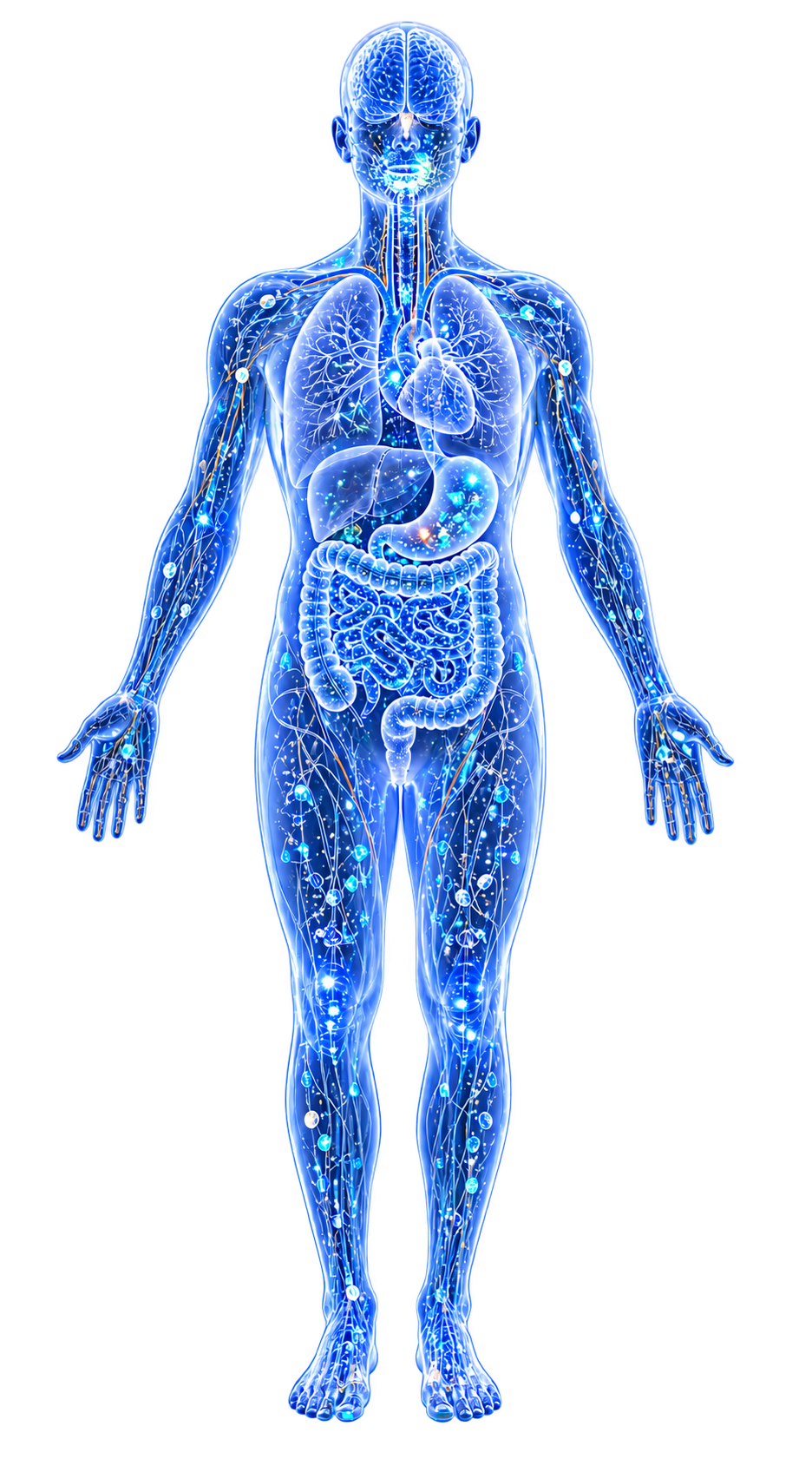
Ferroptosis is a form of iron-dependent regulated cell death driven by the accumulation of lipid peroxides on cellular membranes.[1]Microbial Metallomics and Parkinson's Disease: A Unified Metal-Driven Framework Linking Ferroptosis, Dysbiosis, and alpha-Synuclein PathologyKaren Pendergrass · 2025Open reference 1 ↓[2]Riederer 2021 — Iron as Concert Master in Parkinson's DiseaseRiederer P, Monoranu C, Strobel S et al. · 2021Open reference 2 ↓
Unlike apoptosis or necrosis, ferroptosis requires iron, polyunsaturated fatty acid-containing phospholipids, and the failure of lipid peroxide repair systems—particularly glutathione peroxidase 4 (GPX4).[1]Microbial Metallomics and Parkinson's Disease: A Unified Metal-Driven Framework Linking Ferroptosis, Dysbiosis, and alpha-Synuclein PathologyKaren Pendergrass · 2025Open reference 1 ↓[3]Effects of Trace Elements on Endocrine Function and Pathogenesis of Thyroid Diseases — A Literature ReviewBrylinski L, Kostelecka K, Wolinski F et al. · 2025Open reference 3 ↓
The term was coined by Dixon et al. in 2012, but the underlying biochemistry connects directly to long-established observations about iron-mediated oxidative damage via Fenton chemistry.[4]Toxic Mechanisms of Five Heavy Metals: Mercury, Lead, Chromium, Cadmium, and ArsenicBalali-Mood M, Naseri K, Tahergorabi Z et al. · 2021Open reference 4 ↓
Evidence map4 cited passagesInspect provenance +
Ferroptosis is a form of iron-dependent regulated cell death driven by the accumulation of lipid peroxides on cellular membranes,. Unlike apoptosis or necrosis, ferroptosis requires iron, polyunsaturated fatty acid-containing phospholipids, and the failure of lipid peroxide repair systems—particularly glutathione peroxidase 4 (GPX4),. The term was coined
Glutathione peroxidase 4 (GPX4) is the primary enzyme that reduces lipid hydroperoxides to non-toxic lipid alcohols, using glutathione (GSH) as a cofactor. GPX4 is a selenoprotein (requiring selenium for catalytic activity), which connects ferroptosis vulnerability to selenium status. Loss of GPX4 function—whether through genetic deletion, selenium defici
Iron accumulation in the substantia nigra (SN) is a hallmark of PD—iron acts as the "concert master" coordinating age-dependent accumulation beyond normal aging. Dopaminergic neurons in the SN are uniquely vulnerable because they contain neuromelanin—a mixed polymer of eumelanin and pheomelanin components that normally sequesters redox-active iron. When
In chronic kidney disease (CKD), iron-dependent phospholipid peroxidation in renal tubular cells represents a key pathological mechanism. GPX4 loss of function is a critical trigger, and iron-restricted diet has shown protective effects in animal models. As CKD progresses and GFR decreases, the ability to eliminate environmental toxicants declines, creating
Contents
1. Core Biochemistry2. Ferroptosis in Parkinson's Disease3. Ferroptosis in Cancer4. Ferroptosis in Kidney Disease5. Ferroptosis in Gut Pathology6. Key Molecular Players7. Connections to Other ConceptsCore Biochemistry#
The Fenton Reaction and Lipid Peroxidation#
Excess labile (free, non-protein-bound) iron catalyzes Fenton reactions, generating hydroxyl radicals (OH.) from hydrogen peroxide:
> iron(II) (Fe2+) + H2O2 --> iron(III) + OH. + OH-
These hydroxyl radicals attack polyunsaturated fatty acids (PUFAs) in cell membranes, initiating self-propagating lipid peroxidation chain reactions. When membrane lipid peroxide accumulation exceeds the cell's capacity to repair or neutralize them, the membrane loses integrity and the cell dies.
GPX4: The Central Brake#
Glutathione peroxidase 4 (GPX4) is the primary enzyme that reduces lipid hydroperoxides to non-toxic lipid alcohols, using glutathione (GSH) as a cofactor.[3]Effects of Trace Elements on Endocrine Function and Pathogenesis of Thyroid Diseases — A Literature ReviewBrylinski L, Kostelecka K, Wolinski F et al. · 2025Open reference 3 ↓ GPX4 is a selenoprotein (requiring selenium for catalytic activity), which connects ferroptosis vulnerability to selenium status.[5]Recent advances in the application of metallomics in diagnosis and prognosis of human cancerYan Zhang, Jie He, Jiao Jin et al. · 2022Open reference 5 ↓
Loss of GPX4 function—whether through genetic deletion, selenium deficiency, GSH depletion, or pharmacological inhibition—removes the brake on ferroptotic death and is a critical trigger in tubular cells in CKD, dopaminergic neurons in Parkinson's disease, and several cancers.[6]Molecular Mechanisms of Cellular Injury and Role of Toxic Heavy Metals in Chronic Kidney DiseaseManish Mishra, Larry Nichols, Aditi A. Dave et al. · 2022Open reference 6 ↓[2]Riederer 2021 — Iron as Concert Master in Parkinson's DiseaseRiederer P, Monoranu C, Strobel S et al. · 2021Open reference 2 ↓[3]Effects of Trace Elements on Endocrine Function and Pathogenesis of Thyroid Diseases — A Literature ReviewBrylinski L, Kostelecka K, Wolinski F et al. · 2025Open reference 3 ↓
Iron Homeostasis and Ferroptosis Susceptibility#
The hepcidin-ferroportin axis is the master regulator of systemic iron levels. Key iron transport proteins include DMT1 (SLC11A2) for import and ferroportin (SLC40A1/FPN) for export, with hepcidin acting as a negative regulator. Iron regulatory proteins IRP1 and IRP2 sense cellular iron and adjust transferrin receptor and ferritin expression accordingly.
Disruption at any point in this regulatory network can tip cells toward iron overload and ferroptotic vulnerability.
Ferroptosis in Parkinson's Disease#
The connection between iron, ferroptosis, and Parkinson's disease (PD) represents one of the most developed threads in the metal toxicology literature.
Substantia Nigra Iron Accumulation#
Iron accumulation in the substantia nigra (SN) is a hallmark of PD—iron acts as the "concert master" coordinating age-dependent accumulation beyond normal aging.[2]Riederer 2021 — Iron as Concert Master in Parkinson's DiseaseRiederer P, Monoranu C, Strobel S et al. · 2021Open reference 2 ↓
Dopaminergic neurons in the SN are uniquely vulnerable because they contain neuromelanin—a mixed polymer of eumelanin and pheomelanin components that normally sequesters redox-active iron.[7]Pheomelanin, Eumelanin, and Neuromelanin: A Metal-Linked Hypothesis for Parkinson's Risk in RedheadsEyer K, Karen Pendergrass · 2025Open reference 7 ↓
When neuromelanin's iron-binding capacity is exceeded or compromised, free iron catalyzes lipid peroxidation and ferroptotic cell death.[2]Riederer 2021 — Iron as Concert Master in Parkinson's DiseaseRiederer P, Monoranu C, Strobel S et al. · 2021Open reference 2 ↓[1]Microbial Metallomics and Parkinson's Disease: A Unified Metal-Driven Framework Linking Ferroptosis, Dysbiosis, and alpha-Synuclein PathologyKaren Pendergrass · 2025Open reference 1 ↓
The Neuromelanin-Metal Hypothesis#
The pheomelanin-eumelanin ratio in neuromelanin may modulate ferroptotic vulnerability. Eumelanin contains catechol and carboxyl groups enabling strong chelation of iron(III) (Fe3+) and copper(II) (Cu2+), whereas pheomelanin's benzothiazine units bind metals less effectively and can themselves catalyze pro-oxidant reactions.
Individuals with MC1R loss-of-function variants (e.g., redheads) produce more pheomelanin, potentially reducing neuromelanin iron-chelation capacity in the SN and increasing the labile iron pool available to drive ferroptosis. Epidemiological data show approximately 50-100% increased PD risk in individuals with red hair phenotypes.
The Gut-Brain Ferroptosis Axis#
The Pendergrass framework proposes ferroptosis as the convergent cell death mechanism linking peripheral gut pathology to central dopaminergic neuron loss in PD:
- Dietary/environmental Heavy Metals (iron (Fe), manganese (Mn), nickel (Ni)) reshape gut microbial communities, favoring metal-tolerant pathogens over SCFA-producing commensals
- Loss of gut barrier integrity permits bacterial translocation and systemic Metal-Driven Inflammation
- Alpha-synuclein aggregation in the enteric nervous system may be triggered by metal-induced Oxidative Stress
- Ferroptosis drives both gut epithelial damage and dopaminergic neuron death
PD patients consistently show reduced Prevotellaceae, Lachnospiraceae, and Faecalibacterium with increased Enterobacteriaceae—a pattern consistent with metal-driven Dysbiosis.
Ferroptosis in Cancer#
Ferroptosis has emerged as a therapeutic target in oncology. Cancer cells with disrupted iron homeostasis or elevated iron requirements may be selectively vulnerable to ferroptosis induction. Platinum-based chemotherapy (cisplatin, carboplatin) relies partly on ferroptotic cell death, and platinum resistance converges on ferroptosis evasion via the Keap1-Nrf2-GPX4 axis.
Thyroid Cancer#
GPX4 has been identified as a ferroptosis regulator in thyroid cancer. Additionally, cuproptosis (copper-dependent cell death via FDX1) represents a parallel metal-dependent death pathway in thyroid malignancies. The disulfiram/copper (Cu) complex inhibits cancer stem cell activity in thyroid cancer, suggesting therapeutic potential for metal-dependent death induction.
Metallomic Signatures#
Across multiple cancer types, copper is nearly universally elevated while selenium tends to decrease in blood/serum—a pattern that may reflect both altered antioxidant defense (selenium-dependent GPX4) and disrupted metal homeostasis relevant to ferroptotic susceptibility.
Metalloprotein gene variants including GPX1, GPX4, TXNRD1/2 are associated with cancer risk across multiple malignancies.
Ferroptosis in Kidney Disease#
In chronic kidney disease (CKD), iron-dependent phospholipid peroxidation in renal tubular cells represents a key pathological mechanism.[6]Molecular Mechanisms of Cellular Injury and Role of Toxic Heavy Metals in Chronic Kidney DiseaseManish Mishra, Larry Nichols, Aditi A. Dave et al. · 2022Open reference 6 ↓ GPX4 loss of function is a critical trigger, and iron-restricted diet has shown protective effects in animal models.[6]Molecular Mechanisms of Cellular Injury and Role of Toxic Heavy Metals in Chronic Kidney DiseaseManish Mishra, Larry Nichols, Aditi A. Dave et al. · 2022Open reference 6 ↓
As CKD progresses and GFR decreases, the ability to eliminate environmental toxicants declines, creating a vicious cycle of metal accumulation, further ferroptotic injury, and progressive kidney damage.[6]Molecular Mechanisms of Cellular Injury and Role of Toxic Heavy Metals in Chronic Kidney DiseaseManish Mishra, Larry Nichols, Aditi A. Dave et al. · 2022Open reference 6 ↓
Ferroptosis in Gut Pathology#
Iron homeostasis in the intestinal epithelium directly influences ferroptotic susceptibility. Iron excess in the gut lumen—whether from dietary sources, supplementation, or impaired regulation—can drive ferroptotic damage to epithelial cells, compromising barrier integrity.
This connects to the broader gut-metal-microbiome relationship: iron deficiency reduces commensal beneficial bacteria (Lactobacillus) while iron excess increases harmful bacteria (Bacteroides, E. coli), and both extremes can contribute to epithelial vulnerability.
Key Molecular Players#
| Component | Role in Ferroptosis |
|---|---|
| GPX4 | Primary lipid peroxide detoxification enzyme; its loss triggers ferroptosis |
| Glutathione (GSH) | Essential cofactor for GPX4; depletion sensitizes to ferroptosis |
| Selenium | Required for GPX4 catalytic activity; deficiency impairs defense |
| Transferrin/TfR | Iron import; overexpression increases labile iron pool |
| Ferritin | Iron storage; degradation (ferritinophagy) releases iron |
| Hepcidin | Systemic iron regulator; dysregulation alters tissue iron loading |
| System Xc- | Cystine/glutamate antiporter; provides cysteine for GSH synthesis |
| Neuromelanin | Iron chelator in substantia nigra; composition affects PD risk |
Connections to Other Concepts#
oxidative stress—ferroptosis is a specific, regulated outcome of iron-driven oxidative damage. Gut-Metal-Microbiome Interactions—iron availability shapes microbial communities and gut epithelial ferroptotic vulnerability. Metallomics—brain metallomic profiling can detect iron dysregulation patterns associated with neurodegeneration.
Mis-Metallation—displacement of iron from regulatory proteins can disrupt iron homeostasis controls. Environmental Metal Exposure—dietary and environmental iron exposure initiates the causal chain leading to ferroptosis in susceptible tissues.
References 10
Numbered by first appearance in the article, then reconciled with its declared source list.
- 1
★Karen Pendergrass (2025). Microbial Metallomics and Parkinson's Disease: A Unified Metal-Driven Framework Linking Ferroptosis, Dysbiosis, and alpha-Synuclein Pathology. Conference Presentation.
- 2
Riederer P, Monoranu C, Strobel S et al. (2021). Riederer 2021 — Iron as Concert Master in Parkinson's Disease. Journal of Neural Transmission.
- 3
★Brylinski L, Kostelecka K, Wolinski F et al. (2025). Effects of Trace Elements on Endocrine Function and Pathogenesis of Thyroid Diseases — A Literature Review. Nutrients.
- 4
★Balali-Mood M, Naseri K, Tahergorabi Z et al. (2021). Toxic Mechanisms of Five Heavy Metals: Mercury, Lead, Chromium, Cadmium, and Arsenic. Frontiers in Pharmacology.
- 5
Yan Zhang, Jie He, Jiao Jin et al. (2022). Recent advances in the application of metallomics in diagnosis and prognosis of human cancer. Metallomics.
- 6
★Manish Mishra, Larry Nichols, Aditi A. Dave et al. (2022). Molecular Mechanisms of Cellular Injury and Role of Toxic Heavy Metals in Chronic Kidney Disease. International Journal of Molecular Sciences.
- 7
★Eyer K, Karen Pendergrass (2025). Pheomelanin, Eumelanin, and Neuromelanin: A Metal-Linked Hypothesis for Parkinson's Risk in Redheads. Conference Presentation.
- 8
★Honghong Bao, Yi Wang, Hanlin Xiong et al. (2024). Mechanism of Iron Ion Homeostasis in Intestinal Immunity and Gut Microbiota Remodeling. International Journal of Molecular Sciences.
- 9
★Melissa Scholefield, Stephanie J. Church, Jingshu Xu et al. (2024). Scholefield et al. 2024 — Brain Metallomic Signatures Distinguish DLB from AD and PDD. Frontiers in Neuroscience.
- 10
Doroszkiewicz J, Farhan JA, Mroczko J et al. (2023). Common and Trace Metals in Alzheimer's and Parkinson's Diseases. International Journal of Molecular Sciences.
Article network
Mentioned here 9
Pages linking here 65
Connect the evidence
Publicly readable discussion by ORCID-authenticated researchers. Questions, interpretation, methods, corrections, and new evidence stay attached to this record.
No discussion yet. Start with a precise question or a source-backed observation.
Activity and accepted changes
Accepted researcher context, editorial status, public discussion, and upstream Git revisions are shown together. Pending, declined, and withdrawn proposals remain private.
- published revision
Backfill heavy metals concept links
Karen Pendergrass · +1 −1
Inspect exact Git diff ↗ - published revision
Backfill oxidative stress concept links
Karen Pendergrass · +2 −2
Inspect exact Git diff ↗ - published revision
Backfill inflammation concept links
Karen Pendergrass · +1 −1
Inspect exact Git diff ↗ - published revision
Complete corpus-wide Dysbiosis linking
Karen Pendergrass · +1 −1
Inspect exact Git diff ↗ - published revision
massive wiki expansion: 149 stubs fixed, 100+ new pages, Rule 15 scan, keystone papers
WikiBiome Deploy Bot · +1 −1
Inspect exact Git diff ↗ - published revision
nightly maintenance: 94 stub demotions, 181 source_count fixes, 22 auto-discovered stubs, 5 adversarial audits, 3 boundary fixes, 3 evidence-level corrections
WikiBiome Deploy Bot · +1 −0
Inspect exact Git diff ↗ - published revision
pre-overnight checkpoint 2026-04-18
WikiBiome Deploy Bot · +4 −2
Inspect exact Git diff ↗ - published revision
Deepen metal/concept entities + 8 new sources for T1D/schizophrenia
WikiBiome Deploy Bot · +6 −5
Inspect exact Git diff ↗ - published revision
WikiBiome update — 2026-04-15 17:23
WikiBiome Deploy Bot · +0 −1
Inspect exact Git diff ↗ - published revision
WikiBiome update — integrity fixes, metallomic diet pages, cross-condition analyses
WikiBiome Deploy Bot · +15 −0
Inspect exact Git diff ↗ - published revision
WikiBiome v7 — interactive microbiome metallomics encyclopedia
Karen Pendergrass · +96 −0
Inspect exact Git diff ↗