
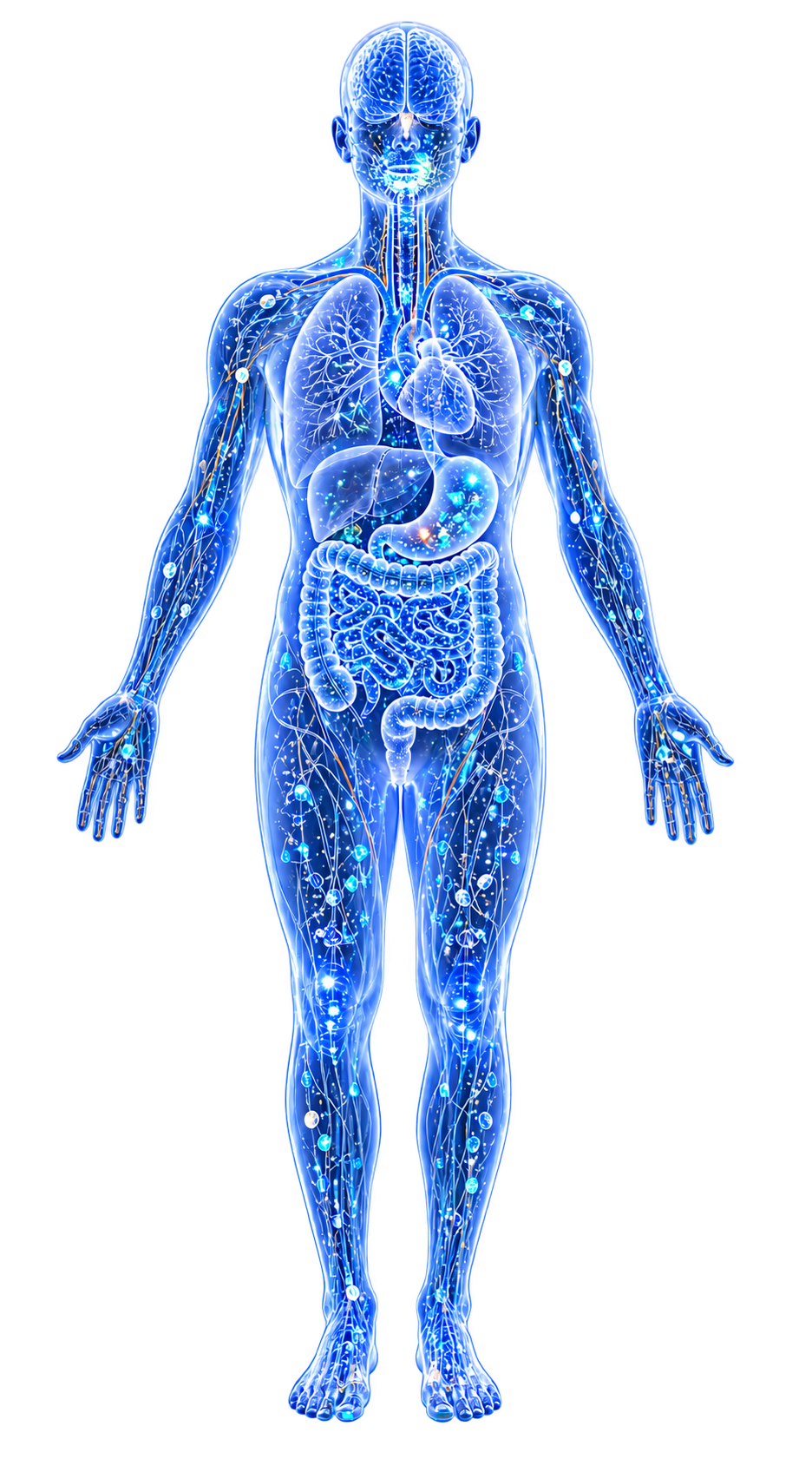
Neuroinflammation is an immune response within the central nervous system (CNS)—the brain and spinal cord. It involves changing states of Microglia, astrocytes, cells of the neurovascular unit, and, in some settings, immune cells recruited from the circulation.
The response can help contain injury and clear damaged material, but persistent or dysregulated activity can also impair synapses, myelin, or neurons.[1]Microglia in neurodegenerative diseases: mechanism and potential therapeutic targetsGao C, Jiang J, Tan Y et al. · 2023Open reference 1 ↓[2]Vascular Pathology in Multiple Sclerosis: Reframing Pathogenesis Around the Blood-Brain BarrierJonathan I. Spencer, Jack S. Bell, Gabriele C. DeLuca · 2018Open reference 2 ↓
The term does not mean every rise in a blood inflammatory marker is inflammation in the brain. It is also not interchangeable with microglial activation, Systemic Inflammation, or Neurodegeneration and Metals.
Those processes can overlap, but evidence for one does not by itself establish the others.[1]Microglia in neurodegenerative diseases: mechanism and potential therapeutic targetsGao C, Jiang J, Tan Y et al. · 2023Open reference 1 ↓[3]The Inflamed Brain in Schizophrenia: The Convergence of Genetic and Environmental Risk Factors That Lead to Uncontrolled NeuroinflammationComer AL, Carrier M, Tremblay ME et al. · 2020Open reference 3 ↓
Evidence map23 cited passagesInspect provenance +
Neuroinflammation is an immune response within the central nervous system (CNS)—the brain and spinal cord. It involves changing states of microglia, astrocytes, cells of the neurovascular unit, and, in some settings, immune cells recruited from the circulation. The response can help contain injury and clear damaged material, but persistent or dysregulated ac
The term does not mean every rise in a blood inflammatory marker is inflammation in the brain. It is also not interchangeable with microglial activation, systemic inflammation, or neurodegeneration. Those processes can overlap, but evidence for one does not by itself establish the others.
Neuroinflammation is a tissue response rather than a single molecule or test result. Stronger evidence comes from measurements within the CNS—such as brain or spinal-cord tissue, cerebrospinal fluid, CNS-focused imaging, or a convergent set of central markers. Circulating cytokines, gut-microbiome differences, or an inflammatory diagnosis can support a pathw
Protective versus damaging: microglia can clear debris and abnormal proteins, yet prolonged or poorly regulated responses can amplify tissue injury.
Acute versus persistent: a short response to infection or injury is biologically different from a self-sustaining inflammatory state in chronic disease.
Central versus peripheral: blood cytokines and systemic immune activation can influence the CNS, but they are not themselves proof of inflammation inside CNS tissue.
Microglia are the CNS-resident immune cells that survey their local environment, remove debris, remodel synapses, and respond to infection or injury. Single-cell studies show that reactive microglia occupy diverse, time- and region-dependent states. The familiar “M1” and “M2” labels can be useful experimental shorthand for selected pro-inflammatory and repai
Microglial effects are context-dependent. Around protein aggregates, some states support clearance, whereas others release inflammatory mediators, activate the nlrp3 inflammasome, or promote pathological protein spread. The direction can change with disease stage, anatomical region, genetics, and signals from infiltrating immune cells.
Astrocytes regulate neurotransmitter handling, metabolic support, and the environment surrounding neurons and blood vessels. In multiple-sclerosis tissue and experimental models, astrocyte and microglial states respond to bile-acid receptor signaling, illustrating that glial inflammation is shaped by metabolic as well as immune inputs.
The blood brain barrier is a multicellular interface formed by vascular endothelial cells, supporting cells, basement membranes, and glial end-feet. Loss of endothelial tight junction integrity can allow more circulating mediators and immune cells to influence CNS tissue. In multiple sclerosis, barrier disruption can appear early, although whether it initiat
Barrier and vascular signaling: microbial products and circulating cytokines can activate vascular or immune signaling at CNS interfaces; altered barrier integrity may increase their influence.
Immune-cell trafficking: intestinal immune programs can affect circulating T-cell populations. A review of multiple-sclerosis evidence describes intestine-associated Th17 responses as one route into CNS autoimmunity, while emphasizing that human intervention evidence remains limited.
Microbial metabolites: short chain fatty acids, bile acids, and tryptophan-derived molecules can modify barrier, immune, and glial signaling. Their effects depend on molecule, concentration, receptor, and disease model; they are not uniformly anti-inflammatory.
Neural signaling: vagal and enteric pathways can transmit physiological information without requiring a bacterium or metabolite to enter brain tissue. Reviews of autism and Parkinson’s-related models treat this as one route among several, not proof that a gut change caused a CNS lesion.
Gut dysbiosis is therefore a possible upstream contributor, not a synonym for neuroinflammation. A microbiome association becomes a mechanistic claim only when the intervening barrier, immune, metabolic, or neural steps are supported.
Metals can intersect with CNS inflammation directly through neural or vascular exposure and indirectly through systemic or microbial pathways. Experimental studies reviewed for arsenic, manganese, lead, and cadmium report overlapping effects involving oxidative stress, mitochondrial or autophagic dysfunction, protein aggregation, and barrier injury. Most of
Broader environmental literature links lead, mercury, arsenic, manganese, and other pollutant metals to processes relevant to Alzheimer’s or Parkinson’s disease, including altered protein handling, redox stress, and developmental epigenetic effects. Exposure timing, chemical form, dose, and tissue distribution matter, and the reviewed evidence mixes epidemio
An additional WikiBiome hypothesis is ecological: metal exposure may reshape the gut microbiome, weaken metabolite and barrier functions, and thereby alter signals reaching the brain. The vault’s Parkinson’s framework integrates that proposed chain with ferroptosis and alpha synuclein biology, but it is a founder-authored conference synthesis rather than an
| Context | What the cited evidence supports | Important boundary | |---|---|---| | alzheimers disease | Microglial states can participate in aggregate clearance or inflammatory amplification; metal-exposure models converge on several Alzheimer-relevant pathways | Neuroinflammation is one component of a multifactorial disease, not a stand-alone diagnosis or
Preclinical intervention results can test mechanisms without establishing clinical treatment. In a mouse cardiac-arrest model, sodium butyrate altered gut measures, TLR4/MyD88/NF-kB signaling, microglial marker patterns, and neurological outcomes. That experiment supports pathway plausibility in that model; it does not establish butyrate as a general treatme
In multiple sclerosis research, human metabolomics identified altered bile-acid profiles, while cell and EAE experiments found that TUDCA affected astrocyte and microglial states through GPBAR1. The study links a human association to experimental mechanism, but the disease-modifying effect was demonstrated in a model rather than a therapeutic trial in people
A review of small randomized trials of immunoregulatory or anti-inflammatory agents in autism reported some symptom signals and mixed findings, with short follow-up and small samples limiting inference. Those trials do not make neuroinflammation a diagnostic test for autism or show that one inflammatory mechanism explains all participants.
These questions matter because neuroinflammation is a dynamic response shared by many conditions, not a single disease, biomarker, or treatment target with one meaning.
Contents
1. What Counts as Neuroinflammation2. Cells and Tissue Interfaces3. How Peripheral and Gut Signals Reach the CNS4. Metals and Neuroinflammatory Pathways5. Disease Contexts6. What Intervention Studies Establish7. Reading the Evidence8. ConnectionsWhat Counts as Neuroinflammation#
Neuroinflammation is a tissue response rather than a single molecule or test result. Stronger evidence comes from measurements within the CNS—such as brain or spinal-cord tissue, cerebrospinal fluid, CNS-focused imaging, or a convergent set of central markers.
Circulating cytokines, gut-microbiome differences, or an inflammatory diagnosis can support a pathway hypothesis, but they are indirect proxies unless a central response is also demonstrated.[1]Microglia in neurodegenerative diseases: mechanism and potential therapeutic targetsGao C, Jiang J, Tan Y et al. · 2023Open reference 1 ↓[2]Vascular Pathology in Multiple Sclerosis: Reframing Pathogenesis Around the Blood-Brain BarrierJonathan I. Spencer, Jack S. Bell, Gabriele C. DeLuca · 2018Open reference 2 ↓
Three distinctions prevent the term from becoming too broad. Protective versus damaging: microglia can clear debris and abnormal proteins, yet prolonged or poorly regulated responses can amplify tissue injury.[1]Microglia in neurodegenerative diseases: mechanism and potential therapeutic targetsGao C, Jiang J, Tan Y et al. · 2023Open reference 1 ↓
Acute versus persistent: a short response to infection or injury is biologically different from a self-sustaining inflammatory state in chronic disease.[1]Microglia in neurodegenerative diseases: mechanism and potential therapeutic targetsGao C, Jiang J, Tan Y et al. · 2023Open reference 1 ↓
Central versus peripheral: blood cytokines and systemic immune activation can influence the CNS, but they are not themselves proof of inflammation inside CNS tissue.[3]The Inflamed Brain in Schizophrenia: The Convergence of Genetic and Environmental Risk Factors That Lead to Uncontrolled NeuroinflammationComer AL, Carrier M, Tremblay ME et al. · 2020Open reference 3 ↓
Cells and Tissue Interfaces#
Microglia#
Microglia are the CNS-resident immune cells that survey their local environment, remove debris, remodel synapses, and respond to infection or injury. Single-cell studies show that reactive microglia occupy diverse, time- and region-dependent states.
The familiar “M1” and “M2” labels can be useful experimental shorthand for selected pro-inflammatory and repair-associated markers, but they do not describe two fixed cell types or the full range of human microglial biology.[1]Microglia in neurodegenerative diseases: mechanism and potential therapeutic targetsGao C, Jiang J, Tan Y et al. · 2023Open reference 1 ↓
Microglial effects are context-dependent. Around protein aggregates, some states support clearance, whereas others release inflammatory mediators, activate the NLRP3 Inflammasome, or promote pathological protein spread. The direction can change with disease stage, anatomical region, genetics, and signals from infiltrating immune cells.[1]Microglia in neurodegenerative diseases: mechanism and potential therapeutic targetsGao C, Jiang J, Tan Y et al. · 2023Open reference 1 ↓
Astrocytes and the Neurovascular Unit#
Astrocytes regulate neurotransmitter handling, metabolic support, and the environment surrounding neurons and blood vessels. In multiple-sclerosis tissue and experimental models, astrocyte and microglial states respond to bile-acid receptor signaling, illustrating that glial inflammation is shaped by metabolic as well as immune inputs.[4]Bile acid metabolism is altered in multiple sclerosis and supplementation ameliorates neuroinflammationPavan Bhargava, Matthew D. Smith, Leah Mische et al. · 2020Open reference 4 ↓
The Blood-Brain Barrier is a multicellular interface formed by vascular endothelial cells, supporting cells, basement membranes, and glial end-feet. Loss of endothelial tight junction integrity can allow more circulating mediators and immune cells to influence CNS tissue.
In multiple sclerosis, barrier disruption can appear early, although whether it initiates lesions or partly reflects ongoing inflammation remains unsettled.[2]Vascular Pathology in Multiple Sclerosis: Reframing Pathogenesis Around the Blood-Brain BarrierJonathan I. Spencer, Jack S. Bell, Gabriele C. DeLuca · 2018Open reference 2 ↓
How Peripheral and Gut Signals Reach the CNS#
The Gut-Brain Axis offers several routes by which intestinal events may alter CNS immune activity. These routes should be separated rather than compressed into a single “leaky gut causes brain inflammation” claim.
- Barrier and vascular signaling: microbial products and circulating cytokines can activate vascular or immune signaling at CNS interfaces; altered barrier integrity may increase their influence.[2]Vascular Pathology in Multiple Sclerosis: Reframing Pathogenesis Around the Blood-Brain BarrierJonathan I. Spencer, Jack S. Bell, Gabriele C. DeLuca · 2018Open reference 2 ↓[3]The Inflamed Brain in Schizophrenia: The Convergence of Genetic and Environmental Risk Factors That Lead to Uncontrolled NeuroinflammationComer AL, Carrier M, Tremblay ME et al. · 2020Open reference 3 ↓
- Immune-cell trafficking: intestinal immune programs can affect circulating T-cell populations. A review of multiple-sclerosis evidence describes intestine-associated Th17 responses as one route into CNS autoimmunity, while emphasizing that human intervention evidence remains limited.[5]Gut-oriented interventions in patients with multiple sclerosis: fact or fiction?V. Martinelli, M. Albanese, M. Altieri et al. · 2022Open reference 5 ↓
- Microbial metabolites: Short-Chain Fatty Acids (SCFAs), bile acids, and tryptophan-derived molecules can modify barrier, immune, and glial signaling. Their effects depend on molecule, concentration, receptor, and disease model; they are not uniformly anti-inflammatory.[4]Bile acid metabolism is altered in multiple sclerosis and supplementation ameliorates neuroinflammationPavan Bhargava, Matthew D. Smith, Leah Mische et al. · 2020Open reference 4 ↓[6]Sodium Butyrate Attenuates Microglia-Mediated Neuroinflammation by Modulating the TLR4/MyD88/NF-kB Pathway and Microbiome-Gut-Brain Axis in Cardiac Arrest MiceJianfei Sun, Liping Lu, Yingtao Lian et al. · 2025Open reference 6 ↓
- Neural signaling: vagal and enteric pathways can transmit physiological information without requiring a bacterium or metabolite to enter brain tissue. Reviews of autism and Parkinson’s-related models treat this as one route among several, not proof that a gut change caused a CNS lesion.[7]Zhou 2025 -- Intervention and Research Progress of Gut Microbiota-Immune-Nervous System in Autism Spectrum Disorders Among StudentsMin Zhou, Baoming Niu, Jiarui Ma et al. · 2025Open reference 7 ↓[8]Microbial Metallomics and Parkinson's Disease: A Unified Metal-Driven Framework Linking Ferroptosis, Dysbiosis, and alpha-Synuclein PathologyKaren Pendergrass · 2025Open reference 8 ↓
Gut Dysbiosis is therefore a possible upstream contributor, not a synonym for neuroinflammation. A microbiome association becomes a mechanistic claim only when the intervening barrier, immune, metabolic, or neural steps are supported.[5]Gut-oriented interventions in patients with multiple sclerosis: fact or fiction?V. Martinelli, M. Albanese, M. Altieri et al. · 2022Open reference 5 ↓[7]Zhou 2025 -- Intervention and Research Progress of Gut Microbiota-Immune-Nervous System in Autism Spectrum Disorders Among StudentsMin Zhou, Baoming Niu, Jiarui Ma et al. · 2025Open reference 7 ↓
Metals and Neuroinflammatory Pathways#
Metals can intersect with CNS inflammation directly through neural or vascular exposure and indirectly through systemic or microbial pathways. Experimental studies reviewed for arsenic, manganese, lead, and cadmium report overlapping effects involving Oxidative Stress, mitochondrial or autophagic dysfunction, protein aggregation, and barrier injury.
Most of those findings come from cell or animal models and should not be read as proof that a measured human metal concentration caused neuroinflammation.[9]Associations of Environmental Exposure to Arsenic, Manganese, Lead, and Cadmium with Alzheimer's Disease: A Review of Recent Evidence from Mechanistic StudiesGiasuddin Ahmed, Md. Shiblur Rahaman, Enrique Perez et al. · 2025Open reference 9 ↓
Broader environmental literature links Lead, Mercury, arsenic, Manganese, and other pollutant metals to processes relevant to Alzheimer’s or Parkinson’s disease, including altered protein handling, redox stress, and developmental epigenetic effects.
Exposure timing, chemical form, dose, and tissue distribution matter, and the reviewed evidence mixes epidemiological observations with experimental models.[10]Environmental pollutants as risk factors for neurodegenerative disorders: Alzheimer and Parkinson diseasesChin-Chan M, Navarro-Yepes J, Quintanilla-Vega B · 2015Open reference 10 ↓
An additional WikiBiome hypothesis is ecological: metal exposure may reshape the Gut Microbiome, weaken metabolite and barrier functions, and thereby alter signals reaching the brain.
The vault’s Parkinson’s framework integrates that proposed chain with Ferroptosis and Alpha-Synuclein biology, but it is a founder-authored conference synthesis rather than an independently validated causal model.[8]Microbial Metallomics and Parkinson's Disease: A Unified Metal-Driven Framework Linking Ferroptosis, Dysbiosis, and alpha-Synuclein PathologyKaren Pendergrass · 2025Open reference 8 ↓
Disease Contexts#
| Context | What the cited evidence supports | Important boundary |
|---|---|---|
| Alzheimer's Disease | Microglial states can participate in aggregate clearance or inflammatory amplification; metal-exposure models converge on several Alzheimer-relevant pathways[1]Microglia in neurodegenerative diseases: mechanism and potential therapeutic targetsGao C, Jiang J, Tan Y et al. · 2023Open reference 1 ↓[9]Associations of Environmental Exposure to Arsenic, Manganese, Lead, and Cadmium with Alzheimer's Disease: A Review of Recent Evidence from Mechanistic StudiesGiasuddin Ahmed, Md. Shiblur Rahaman, Enrique Perez et al. · 2025Open reference 9 ↓ | Neuroinflammation is one component of a multifactorial disease, not a stand-alone diagnosis or proven single cause. |
| Parkinson's Disease | Reactive microglia, inflammasome activity, peripheral immune input, and alpha-synuclein-related signaling are studied as interacting mechanisms[1]Microglia in neurodegenerative diseases: mechanism and potential therapeutic targetsGao C, Jiang J, Tan Y et al. · 2023Open reference 1 ↓ | The relative contribution of gut, metal, immune, and protein-aggregation pathways remains unresolved. |
| Multiple Sclerosis | Early barrier change, immune-cell entry, glial activation, and altered bile-acid signaling connect vascular, immune, and metabolic evidence[2]Vascular Pathology in Multiple Sclerosis: Reframing Pathogenesis Around the Blood-Brain BarrierJonathan I. Spencer, Jack S. Bell, Gabriele C. DeLuca · 2018Open reference 2 ↓[4]Bile acid metabolism is altered in multiple sclerosis and supplementation ameliorates neuroinflammationPavan Bhargava, Matthew D. Smith, Leah Mische et al. · 2020Open reference 4 ↓ | Human metabolomic associations and EAE treatment effects are different evidence layers. |
| Autism Spectrum Disorder | Reviews describe altered cytokines, immune-cell balance, microglial findings, gut-brain signaling, and lead-related experimental pathways[11]Interaction of Heavy Metal Lead with Gut Microbiota: Implications for Autism Spectrum DisorderTizabi Y, Bennani S, El Kouhen N et al. · 2023Open reference 11 ↓[7]Zhou 2025 -- Intervention and Research Progress of Gut Microbiota-Immune-Nervous System in Autism Spectrum Disorders Among StudentsMin Zhou, Baoming Niu, Jiarui Ma et al. · 2025Open reference 7 ↓ | Heterogeneous findings do not establish neuroinflammation as a universal cause of autism. |
| Schizophrenia | Genetic immune signals, environmental exposures, microglial function, barrier abnormalities, and gut-brain hypotheses converge in a neuroinflammatory framework[3]The Inflamed Brain in Schizophrenia: The Convergence of Genetic and Environmental Risk Factors That Lead to Uncontrolled NeuroinflammationComer AL, Carrier M, Tremblay ME et al. · 2020Open reference 3 ↓ | A framework built from several evidence types is not a single validated biomarker. |
What Intervention Studies Establish#
Preclinical intervention results can test mechanisms without establishing clinical treatment. In a mouse cardiac-arrest model, sodium Butyrate altered gut measures, TLR4/MyD88/NF-kB signaling, microglial marker patterns, and neurological outcomes.
That experiment supports pathway plausibility in that model; it does not establish butyrate as a general treatment for neuroinflammatory disease.[6]Sodium Butyrate Attenuates Microglia-Mediated Neuroinflammation by Modulating the TLR4/MyD88/NF-kB Pathway and Microbiome-Gut-Brain Axis in Cardiac Arrest MiceJianfei Sun, Liping Lu, Yingtao Lian et al. · 2025Open reference 6 ↓
In multiple sclerosis research, human metabolomics identified altered bile-acid profiles, while cell and EAE experiments found that TUDCA affected astrocyte and microglial states through GPBAR1.
The study links a human association to experimental mechanism, but the disease-modifying effect was demonstrated in a model rather than a therapeutic trial in people with MS.[4]Bile acid metabolism is altered in multiple sclerosis and supplementation ameliorates neuroinflammationPavan Bhargava, Matthew D. Smith, Leah Mische et al. · 2020Open reference 4 ↓
A review of small randomized trials of immunoregulatory or anti-inflammatory agents in autism reported some symptom signals and mixed findings, with short follow-up and small samples limiting inference.
Those trials do not make neuroinflammation a diagnostic test for autism or show that one inflammatory mechanism explains all participants.[12]Arteaga-Henriquez 2023 -- Immunoregulatory and/or Anti-inflammatory Agents for the Management of Core and Associated Symptoms in Individuals with ASDGara Arteaga-Henriquez, Laura Gisbert, Josep Antoni Ramos-Quiroga · 2023Open reference 12 ↓
Reading the Evidence#
When a study uses the word neuroinflammation, ask.
Was the signal measured in brain or spinal-cord tissue, cerebrospinal fluid, CNS-focused imaging, blood, or stool? Does the marker identify an inflammatory cell state, or only a correlated molecule? Is the study in people, an animal model, cultured cells, or a review integrating several layers?
Was the response protective, damaging, or different at separate disease stages? Does an intervention modify a pathway marker, a clinical outcome, or both?
These questions matter because neuroinflammation is a dynamic response shared by many conditions, not a single disease, biomarker, or treatment target with one meaning.[1]Microglia in neurodegenerative diseases: mechanism and potential therapeutic targetsGao C, Jiang J, Tan Y et al. · 2023Open reference 1 ↓
Connections#
- Metal-Driven Inflammation—the broader biological response; central and peripheral inflammation must be distinguished
- microglia—resident CNS immune cells with diverse, context-dependent states
- blood–brain barrier—neurovascular interface regulating exchange between blood and CNS tissue
- gut–brain axis—immune, metabolic, vascular, and neural communication routes
- NLRP3 inflammasome—one inflammatory signaling complex studied in reactive microglia
- oxidative stress—an interacting process that can both provoke and result from inflammatory signaling
- ferroptosis—iron-dependent lipid-peroxidation cell death, not a synonym for neuroinflammation
- short-chain fatty acids—microbial metabolites with context-dependent barrier and immune effects
- Tryptophan Metabolism—source of immune- and neuroactive metabolites
- neurodegeneration—neuronal dysfunction or loss that may precede, accompany, or follow inflammation
References 12
Numbered by first appearance in the article, then reconciled with its declared source list.
- 1
Gao C, Jiang J, Tan Y et al. (2023). Microglia in neurodegenerative diseases: mechanism and potential therapeutic targets. Signal Transduction and Targeted Therapy.
- 2
Jonathan I. Spencer, Jack S. Bell, Gabriele C. DeLuca (2018). Vascular Pathology in Multiple Sclerosis: Reframing Pathogenesis Around the Blood-Brain Barrier. Journal of Neurology, Neurosurgery and Psychiatry.
- 3
Comer AL, Carrier M, Tremblay ME et al. (2020). The Inflamed Brain in Schizophrenia: The Convergence of Genetic and Environmental Risk Factors That Lead to Uncontrolled Neuroinflammation. Frontiers in Cellular Neuroscience.
- 4
Pavan Bhargava, Matthew D. Smith, Leah Mische et al. (2020). Bile acid metabolism is altered in multiple sclerosis and supplementation ameliorates neuroinflammation. Journal of Clinical Investigation.
- 5
V. Martinelli, M. Albanese, M. Altieri et al. (2022). Gut-oriented interventions in patients with multiple sclerosis: fact or fiction?. European Review for Medical and Pharmacological Sciences.
- 6
Jianfei Sun, Liping Lu, Yingtao Lian et al. (2025). Sodium Butyrate Attenuates Microglia-Mediated Neuroinflammation by Modulating the TLR4/MyD88/NF-kB Pathway and Microbiome-Gut-Brain Axis in Cardiac Arrest Mice. Molecular Brain.
- 7
Min Zhou, Baoming Niu, Jiarui Ma et al. (2025). Zhou 2025 -- Intervention and Research Progress of Gut Microbiota-Immune-Nervous System in Autism Spectrum Disorders Among Students. Frontiers in Microbiology.
- 8
★Karen Pendergrass (2025). Microbial Metallomics and Parkinson's Disease: A Unified Metal-Driven Framework Linking Ferroptosis, Dysbiosis, and alpha-Synuclein Pathology. Conference Presentation.
- 9
★Giasuddin Ahmed, Md. Shiblur Rahaman, Enrique Perez et al. (2025). Associations of Environmental Exposure to Arsenic, Manganese, Lead, and Cadmium with Alzheimer's Disease: A Review of Recent Evidence from Mechanistic Studies. Journal of Xenobiotics.
- 10
★Chin-Chan M, Navarro-Yepes J, Quintanilla-Vega B (2015). Environmental pollutants as risk factors for neurodegenerative disorders: Alzheimer and Parkinson diseases. Frontiers in Cellular Neuroscience.
- 11
★Tizabi Y, Bennani S, El Kouhen N et al. (2023). Interaction of Heavy Metal Lead with Gut Microbiota: Implications for Autism Spectrum Disorder. Biomolecules.
- 12
Gara Arteaga-Henriquez, Laura Gisbert, Josep Antoni Ramos-Quiroga (2023). Arteaga-Henriquez 2023 -- Immunoregulatory and/or Anti-inflammatory Agents for the Management of Core and Associated Symptoms in Individuals with ASD. CNS Drugs.
Article network
Mentioned here 18
Pages linking here 50
Connect the evidence
Publicly readable discussion by ORCID-authenticated researchers. Questions, interpretation, methods, corrections, and new evidence stay attached to this record.
No discussion yet. Start with a precise question or a source-backed observation.
Activity and accepted changes
Accepted researcher context, editorial status, public discussion, and upstream Git revisions are shown together. Pending, declined, and withdrawn proposals remain private.
- published revision
Strengthen TLR4 and link high-leverage contexts
Karen Pendergrass · +1 −1
Inspect exact Git diff ↗ - published revision
Normalize Neuroinflammation cross-links
Karen Pendergrass · +8 −8
Inspect exact Git diff ↗ - published revision
Add reviewed neuroinflammation coverage batch
Karen Pendergrass · +70 −63
Inspect exact Git diff ↗ - published revision
Backfill heavy metals concept links
Karen Pendergrass · +1 −1
Inspect exact Git diff ↗ - published revision
Backfill oxidative stress concept links
Karen Pendergrass · +1 −1
Inspect exact Git diff ↗ - published revision
Backfill inflammation concept links
Karen Pendergrass · +3 −3
Inspect exact Git diff ↗ - published revision
Complete Tight junctions contextual coverage
Karen Pendergrass · +1 −1
Inspect exact Git diff ↗ - published revision
Render NLRP3 neuroinflammation link in prose
Karen Pendergrass · +2 −2
Inspect exact Git diff ↗ - published revision
Add NLRP3 inflammasome concept and link batch
Karen Pendergrass · +3 −3
Inspect exact Git diff ↗ - published revision
massive wiki expansion: 149 stubs fixed, 100+ new pages, Rule 15 scan, keystone papers
WikiBiome Deploy Bot · +15 −15
Inspect exact Git diff ↗ - published revision
nightly maintenance: 94 stub demotions, 181 source_count fixes, 22 auto-discovered stubs, 5 adversarial audits, 3 boundary fixes, 3 evidence-level corrections
WikiBiome Deploy Bot · +1 −0
Inspect exact Git diff ↗ - published revision
pre-overnight checkpoint 2026-04-18
WikiBiome Deploy Bot · +3 −1
Inspect exact Git diff ↗ - published revision
WikiBiome update — 2026-04-15 17:23
WikiBiome Deploy Bot · +0 −1
Inspect exact Git diff ↗ - published revision
WikiBiome update — integrity fixes, metallomic diet pages, cross-condition analyses
WikiBiome Deploy Bot · +20 −11
Inspect exact Git diff ↗ - published revision
WikiBiome update — 2026-04-10 15:45
WikiBiome Deploy Bot · +87 −0
Inspect exact Git diff ↗