
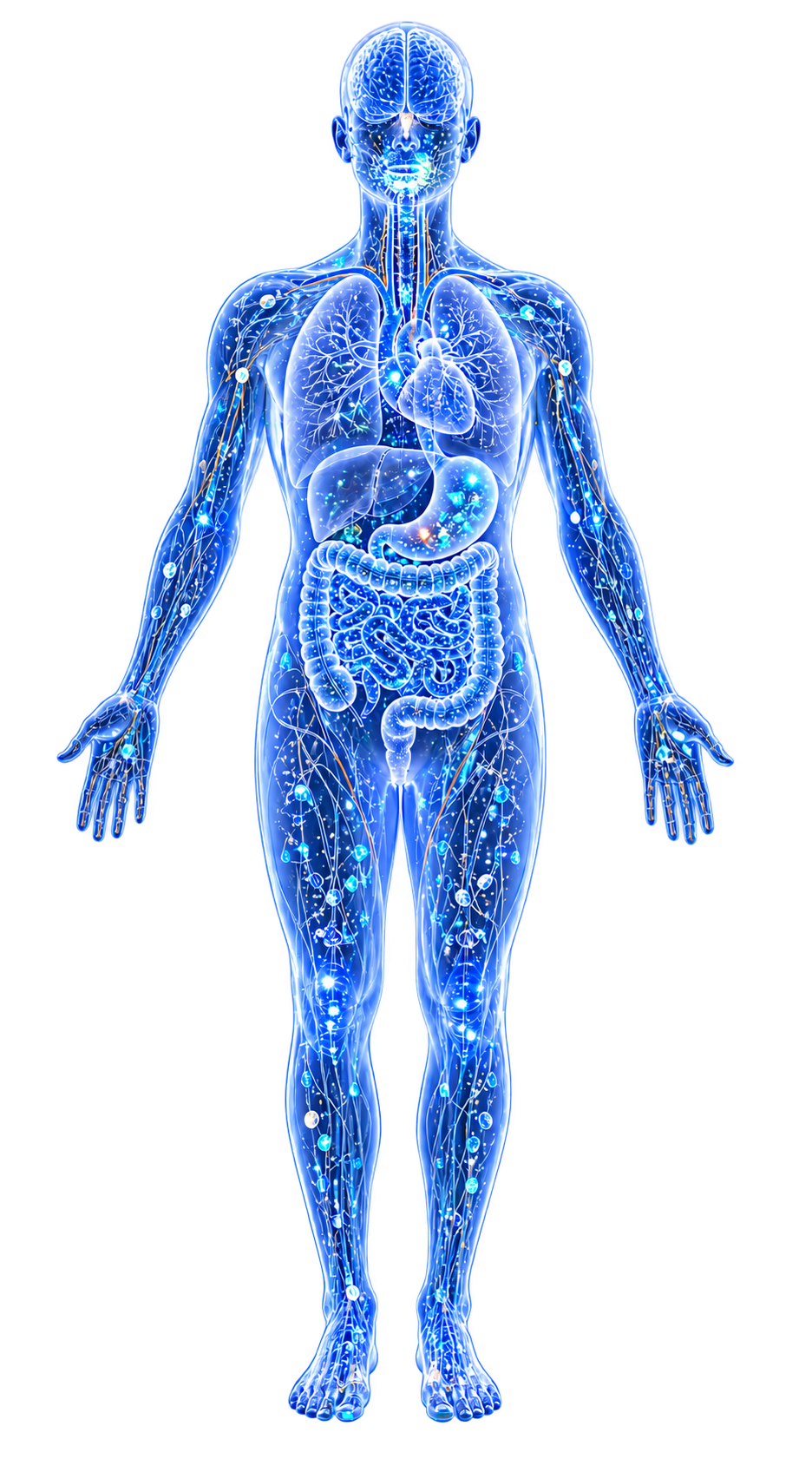
The biological processes by which organisms maintain proper intracellular and systemic concentrations of essential metals—importing what is needed, storing excess safely, and exporting or sequestering surplus. Both host and microbial systems have evolved elaborate metal homeostasis machinery.
When these systems fail—through genetic defects, toxic metal exposure, infection, or chronic Metal-Driven Inflammation—the result is disease.
Evidence map2 cited passagesInspect provenance +
The most tightly regulated metal in the body, controlled by the hepcidin-ferroportin axis:
Microbes face a dual challenge: acquiring essential metals from a host that actively withholds them nutritional immunity, while defending against metal toxicity weaponized by immune cells:
Host Metal Homeostasis#
Iron (Fe)#
The most tightly regulated metal in the body, controlled by the Hepcidin-ferroportin axis.[1]Mechanism of Iron Ion Homeostasis in Intestinal Immunity and Gut Microbiota RemodelingHonghong Bao, Yi Wang, Hanlin Xiong et al. · 2024Open reference 1 ↓
Import: Dietary non-heme iron reduced to iron(II) (Fe2+) by DcytB, transported into enterocytes via DMT1 (SLC11A2). Heme iron imported via HCP1. Storage: Intracellular ferritin sequesters excess iron as a mineralized core; liver is the primary storage organ.
Regulation: Hepcidin (hepatic peptide hormone) binds ferroportin, causing its internalization and degradation, blocking iron export from enterocytes and macrophages. Hepcidin is increased by inflammation (IL-6/STAT3) and iron loading; decreased by iron deficiency, erythropoietic demand, and hypoxia.
Export: Ferroportin (SLC40A1) is the sole known cellular iron exporter; hephaestin/ceruloplasmin oxidize iron(II) to iron(III) for transferrin loading. Sensing: Iron regulatory proteins (IRP1/IRP2) bind iron-responsive elements (IREs) in mRNA, post-transcriptionally controlling ferritin, ferroportin, DMT1, and transferrin receptor expression.
Zinc (Zn)#
Import: ZIP family transporters (SLC39A, 14 members) move zinc (Zn) into cytoplasm from extracellular space or organelles. Export/sequestration: ZnT family (SLC30A, 10 members) move zinc out of cytoplasm into organelles or extracellular space. Regulation: MTF-1 (metal-responsive transcription factor) senses cytoplasmic zinc and activates metallothionein and ZnT1 transcription.
Clinical: ZIP4 mutations cause acrodermatitis enteropathica (severe zinc deficiency); ZnT8 autoantibodies are a marker of type 1 diabetes.
Copper (Cu)#
Import: CTR1 (SLC31A1) is the primary copper importer; requires reduction of copper(II) (Cu2+) to copper+ by STEAP reductases. Intracellular trafficking: Copper chaperones (CCS for SOD1, Cox17 for cytochrome c oxidase, ATOX1 for ATP7A/B) deliver copper to specific targets.
Export: ATP7A (Menkes protein) in intestine and most tissues; ATP7B (Wilson protein) in liver for biliary excretion and ceruloplasmin loading. Clinical: Menkes disease (ATP7A loss) causes systemic copper deficiency; Wilson's disease (ATP7B loss) causes hepatic/neurological copper overload.
Pathogen Metal Homeostasis#
Microbes face a dual challenge: acquiring essential metals from a host that actively withholds them Nutritional Immunity (Metal Sequestration), while defending against metal toxicity weaponized by immune cells.[2]Metal Ion Acquisition in Staphylococcus aureus: Overcoming Nutritional ImmunityJames E. Cassat, Eric P. Skaar · 2012Open reference 2 ↓
Fur (ferric uptake regulator): Master iron (Fe)-sensing transcription factor in most bacteria; represses siderophore genes when iron is sufficient. NikR: Nickel-responsive regulator in H. pylori; controls Urease and nickel transporter expression. Zur: Zinc uptake regulator; controls zinc (Zn) import and ZnuABC transporter expression.
MntR: Manganese-responsive regulator controlling manganese (Mn) import. Siderophore systems: High-affinity iron chelators Siderophores and Metallophores produced under iron limitation; enterobactin, pyoverdine, mycobactin, staphyloferrin. Efflux pumps: CzcCBA (cadmium (Cd)/zinc/cobalt (Co)), CopA (copper (Cu)), and others protect bacteria from metal toxicity.
When Homeostasis Fails#
Disruption of metal homeostasis drives disease through. Mis-Metallation: Toxic metals displace essential metals from enzyme active sites (cadmium (Cd) for zinc (Zn), lead (Pb) for calcium (Ca), nickel (Ni) for iron (Fe) in non-cognate sites). Fenton chemistry: Free iron or copper (Cu) catalyzes hydroxyl radical generation, causing Oxidative Stress and Ferroptosis.
Immune dysfunction: zinc deficiency impairs T cell function; iron overload feeds pathogen growth; copper deficiency reduces neutrophil killing. Microbiome disruption: Excess metals kill metal-sensitive commensals; deficiency starves metal-dependent beneficial bacteria.
See Also#
- Hepcidin—master regulator of iron homeostasis
- Nutritional Immunity (Metal Sequestration)—host metal-withholding defense
- Mis-Metallation—toxic metal displacement of essential metals
- Metallomics—systems-level metal measurement
- Pathogen Metal Acquisition Systems—microbial strategies to overcome host defenses
References 3
Numbered by first appearance in the article, then reconciled with its declared source list.
- 1
★Honghong Bao, Yi Wang, Hanlin Xiong et al. (2024). Mechanism of Iron Ion Homeostasis in Intestinal Immunity and Gut Microbiota Remodeling. International Journal of Molecular Sciences.
- 2
★James E. Cassat, Eric P. Skaar (2012). Metal Ion Acquisition in Staphylococcus aureus: Overcoming Nutritional Immunity. Seminars in Immunopathology.
- 3
Akbari MS, Doran KS, Burcham LR (2022). Metal Homeostasis in Pathogenic Streptococci. Microorganisms.
Article network
Mentioned here 10
Pages linking here 14
Connect the evidence
Publicly readable discussion by ORCID-authenticated researchers. Questions, interpretation, methods, corrections, and new evidence stay attached to this record.
No discussion yet. Start with a precise question or a source-backed observation.
Activity and accepted changes
Accepted researcher context, editorial status, public discussion, and upstream Git revisions are shown together. Pending, declined, and withdrawn proposals remain private.
- published revision
Backfill inflammation concept links
Karen Pendergrass · +1 −1
Inspect exact Git diff ↗ - published revision
massive wiki expansion: 149 stubs fixed, 100+ new pages, Rule 15 scan, keystone papers
WikiBiome Deploy Bot · +23 −23
Inspect exact Git diff ↗ - published revision
nightly maintenance: 94 stub demotions, 181 source_count fixes, 22 auto-discovered stubs, 5 adversarial audits, 3 boundary fixes, 3 evidence-level corrections
WikiBiome Deploy Bot · +1 −0
Inspect exact Git diff ↗ - published revision
pre-overnight checkpoint 2026-04-18
WikiBiome Deploy Bot · +3 −1
Inspect exact Git diff ↗ - published revision
Deep content + citation pass: 10 entities enriched, 7 new sources, DOI integrity
WikiBiome Deploy Bot · +2 −2
Inspect exact Git diff ↗ - published revision
WikiBiome update — integrity fixes, metallomic diet pages, cross-condition analyses
WikiBiome Deploy Bot · +8 −2
Inspect exact Git diff ↗ - published revision
WikiBiome update — 2026-04-10 15:45
WikiBiome Deploy Bot · +61 −0
Inspect exact Git diff ↗