
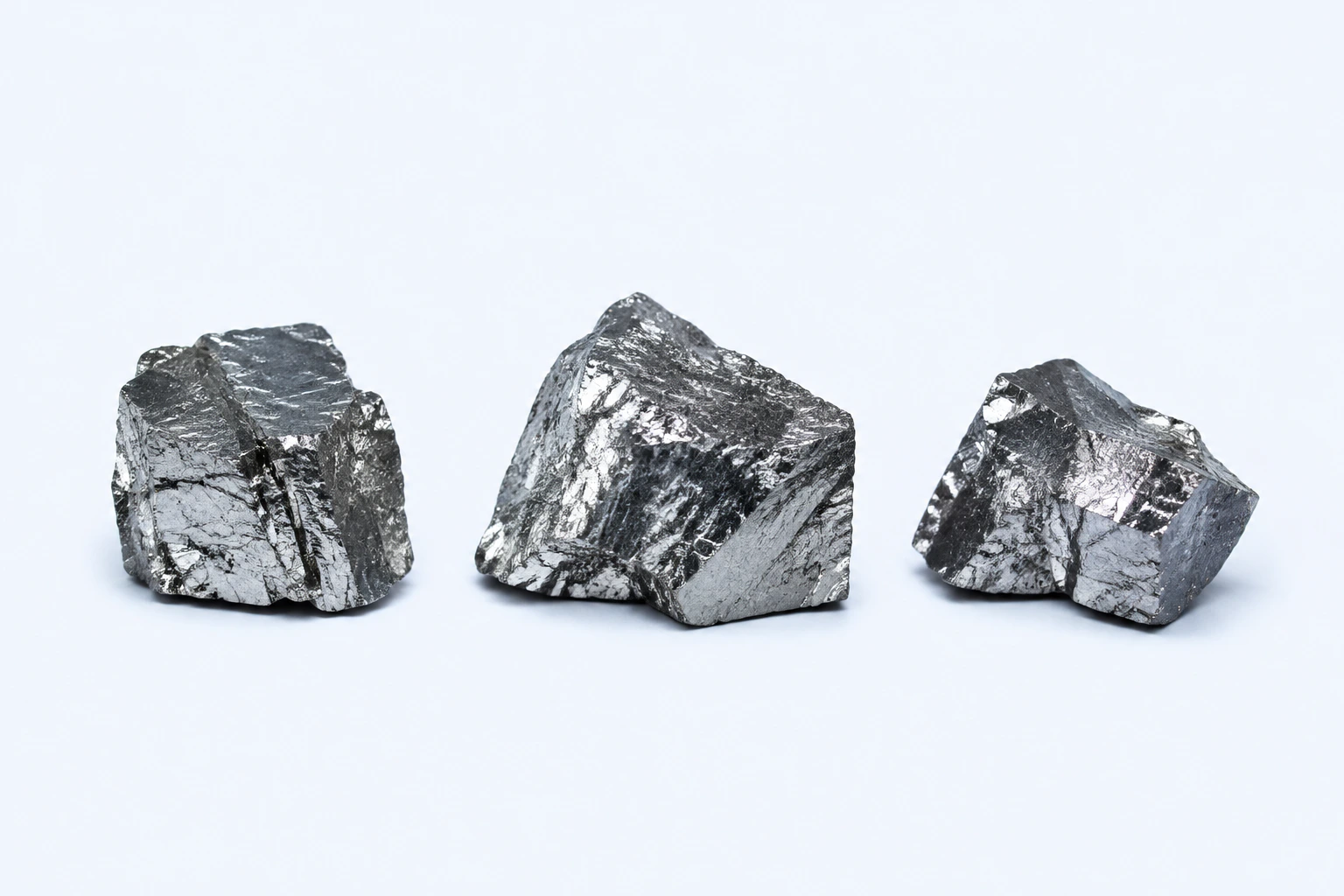
Elemental chromium (Cr), shown as three representative hard steel-gray specimens. Form and surface vary with purity, processing, and oxidation; this is not chromite, analytical reference material, or a photograph.
Scientific media record2 verified identifiers
- Subject
- Chromiumelement
- Identifiers
- Atomic number 24PubChem CID:23976
- Review
- Editorial review completeIdentifiers authority-verified · Accessibility validated · · chromium|chromium-technical-specimen-v1.webp
- Digital source
- Trained-algorithmic mediaCreated with a trained generative algorithm and reviewed by WikiBiome for subject identity, scientific framing, identifiers, provenance, and accessibility.
- Scientific basis
- Chromium — PubChem ElementChromium, PubChem CID 23976
- License
- CC BY-SA 4.0Created
Chromium is a transition metal (atomic number 24) whose toxicology is defined by a stark oxidation-state divide. Hexavalent chromium, chromium (Cr)(VI), is an IARC Group 1 human carcinogen that causes DNA damage through a unique mechanism of intracellular reduction and ternary adduct formation.[1]Genetic and Epigenetic Mechanisms in Metal Carcinogenesis and Cocarcinogenesis: Nickel, Arsenic, and ChromiumKonstantin Salnikov, Anatoly Zhitkovich · 2008Open reference 1 ↓
Trivalent chromium, chromium(III), is the stable end-product of that reduction and was historically considered an essential nutrient through the "glucose tolerance factor" hypothesis, though this designation is now contested—EFSA concluded in 2014 that no essential biological function for chromium(III) could be established, and the EU no longer classifies it as essential.[2]Metals in the pathogenesis of type 2 diabetesAbdul Rehman Khan, Fazli Rabbi Awan · 2014Open reference 2 ↓
Metallic chromium and chromium(III) compounds are classified as IARC Group 3 (not classifiable as carcinogenic).[3]Heavy Metal Pollution in the Environment and Their Toxicological Effects on HumansBriffa J, Sinagra E, Blundell R · 2020Open reference 3 ↓
What distinguishes chromium from other toxic metals in the WikiBiome framework is the convergence of three features rarely seen together: (1) a well-characterized DNA damage mechanism driven by the host's own antioxidant defenses, (2) direct effects on gut microbiota composition and intestinal barrier integrity, and (3) the capacity to co-select for antibiotic resistance in environmental and gut bacteria.
These features position chromium at the intersection of carcinogenesis, Dysbiosis, and antimicrobial resistance.
Evidence map34 cited passagesInspect provenance +
Chromium is a transition metal (atomic number 24) whose toxicology is defined by a stark oxidation-state divide. Hexavalent chromium, Cr(VI), is an IARC Group 1 human carcinogen that causes DNA damage through a unique mechanism of intracellular reduction and ternary adduct formation. Trivalent chromium, Cr(III), is the stable end-product of that reduction an
Cr(III) was long promoted as essential for glucose metabolism through the proposed chromodulin (low-molecular-weight chromium-binding substance, LMWCr), which was thought to amplify insulin receptor tyrosine kinase activity and stimulate GLUT4 translocation in muscle cells. However, meta-analyses of Cr supplementation in type 2 diabetes show inconsistent eff
Despite lacking an established essential role, Cr(III) interacts with biological metal-binding sites. Cr(III) can substitute for Fe(III) in transferrin binding, a form of mis metallation that may alter iron transport dynamics. This transferrin mimicry means that Cr(III) generated by intracellular Cr(VI) reduction is not inert—it occupies iron-binding site
Cr(VI) itself is chemically unreactive with DNA. Its carcinogenicity arises entirely from its intracellular reduction pathway: Cr(VI) enters cells via sulfate/phosphate anion channels (molecular mimicry of chromate for sulfate), then undergoes stepwise reduction—Cr(VI) to Cr(V) to Cr(IV) to Cr(III)—generating reactive intermediates at each step. The pr
Occupational settings remain the highest-intensity exposure route: chromate production, stainless steel welding, chrome plating, ferrochrome manufacturing, and tanneries. Classic occupational findings include chrome holes (painless ulcerating skin lesions on the hands) and nasal septum perforation. Cobalt-chromium hip replacement prostheses can release chrom
Approximately 30% of US drinking water supplies had chromium levels of concern at the time of the 2008 review. The EU Drinking Water Directive 2020/2184 adapted chromium parametric values per WHO recommendations, with a 15-year transitional period before more stringent limits take effect.
Chromium co-occurs with copper, nickel, and zinc in soils contaminated by electroplating industry waste, as documented in Changhua County, Taiwan—one of that country's highest heavy-metal contamination areas. Chromium is elevated in urine and blood of CKD/CKDu patients in central India, with pesticide use and surface water consumption as key risk factors.
Chromium has been detected in commercial baby food products at concentrations of 0.005--0.148 ug/g across multiple US brands, with contamination independent of packaging material, indicating that food type and soil origin drive exposure. Dietary chromium is the main exposure source for non-occupationally exposed populations, with broccoli, grape juice, whole
Oral exposure to sodium dichromate (Cr(VI)) in rats caused significant reductions in gut microbial alpha diversity (observed OTUs and Shannon diversity, p < 0.05) and altered the abundance of 10 bacterial genera. Proteobacteria increased in prevalence following chromium exposure, a pattern shared with arsenic and nickel treatments in the same study.
Combined Cr-Ni exposure caused imbalance of intestinal flora and disorders of metabolites and metabolic pathways, with an antagonistic effect between nickel and chromium—meaning the two metals partially offset each other's microbiome effects when co-administered. This antagonism is notable given that occupational and environmental co-exposure to chromium
In infants, serum chromium was among the metals associated with shifts in gut microbiota genera, with preterm infants showing particular sensitivity to chromium exposure effects that persisted after covariate adjustment. Antagonistic metal-metal interactions on microbial diversity included a Cr-W (tungsten) interaction (beta = -2.57).
Hexavalent chromium exposure damages the intestinal epithelial barrier through downregulation of key tight junction proteins—ZO-1, occludin, and claudin-1—and the mucin MUC2. This barrier disruption involves activation of the NLRP3 inflammasome, linking Cr(VI) exposure to inflammatory signaling cascades in the gut. The probiotic strain Lactobacillus pl
Bacteria possess enzymatic mechanisms to detoxify Cr(VI). NADH-dependent chromate reductases in Bacillus subtilis and related species reduce toxic Cr(VI) to the less mobile Cr(III), which precipitates intracellularly. Some Bacillus strains perform this reduction extracellularly, avoiding the intracellular ROS generation that accompanies Cr(VI) reduction insi
The fungal pathogen Candida albicans shows remarkable chromium tolerance, growing in concentrations up to 2000 ppm Cr(VI), and achieves 76% Cr(VI) biosorption removal efficiency via modified biomass (100% at 60 degrees C). This tolerance may contribute to Candida persistence in metal-contaminated gut and environmental niches.
Differential metal utilization varies dramatically between microorganisms: Enterobacter cloacae assimilated 19 metals (including chromium) into its cytoplasmic fraction compared to only 9 for Desulfovibrio vulgaris, despite both inhabiting similar heavy-metal-contaminated environments. These differences in metal handling shape which organisms thrive under ch
Chromium is among the heavy metals (alongside Hg, Pb, Cu, Zn, Cd, Ni) that trigger co-selection of antibiotic resistance in bacteria through both co-resistance (resistance genes on the same mobile element) and cross-resistance (shared efflux pumps) mechanisms. Metal resistance genes in Bacillus species frequently co-locate with antibiotic resistance determin
Chromium does not feature prominently in classical nutritional immunity (the host's withholding of essential metals from pathogens), because Cr(III) is not recognized as an essential metal for mammalian biology by current EU standards. However, the transferrin binding of Cr(III)—substituting for Fe(III)—represents an unintended interaction with the iro
The reduction of Cr(VI) consumes cellular reductants—glutathione, ascorbate, and NADPH—depleting the antioxidant defenses that are themselves components of immune function. Glutathione depletion is described as the "single most common early event" in metal toxicity across all toxic heavy metals, and chromium contributes to this through its reduction pa
The hallmark of chromium carcinogenesis is the ternary Cr-DNA adduct—Cr(III) crosslinking DNA with another molecule. When ascorbate is the reductant, Cr-ascorbate-DNA adducts comprise approximately 50--75% of all adducts formed. Additional adduct types include Cr-glutathione-DNA and Cr-cysteine-DNA complexes; only a fraction are binary (Cr directly on DNA
Ascorbate drives the very reduction of Cr(VI) that creates DNA-damaging intermediates, yet ascorbate is simultaneously needed for DNA repair and maintaining cellular redox balance. Cellular ascorbate is typically at millimolar levels (1.3 mM in human lung), far exceeding Cr(VI) concentrations, meaning the reductive pathway proceeds rapidly. The net effect: a
Cr(VI) suppresses mismatch repair (MMR) expression, particularly hMLH1, allowing replication errors to persist. Microsatellite instability is observed in lung cancers of chromate workers. This creates a selection model: low-dose Cr(VI) generates mutations while simultaneously disabling the repair system that would normally catch them. Additionally, Cr(VI) ca
Bioinformatic analysis of gene expression data revealed distinct molecular pathways depending on Cr exposure route:
In the inhalation dataset, TLR4 was identified as one hub gene; this is a gene-expression association, not evidence that chromium directly binds the receptor. DNA damage and metastasis were common toxic mechanisms across all three exposure routes.
Hexavalent chromium crosses the blood-brain barrier and accumulates in the brain, where it generates ROS via reduction to Cr(III), causing DNA strand breaks. This positions dietary Cr(VI) alongside mercury, lead, arsenic, and cadmium as a potential contributor to neurodegenerative disease through shared pathways of oxidative stress and mitochondrial dysfunct
Showing 24 of 34 evidence-bearing passages. Every remaining citation is still indexed in the reference record below.
Contents
1. Biological Roles2. Dietary and Environmental Sources3. Microbiome Interactions4. Nutritional Immunity5. Carcinogenic Mechanisms6. Conditions Associated7. Key Studies8. Comparison with Other Carcinogenic Metals9. Open Questions10. Cross-ReferencesBiological Roles#
The Cr(III) Essentiality Debate#
chromium (Cr)(III) was long promoted as essential for glucose metabolism through the proposed chromodulin (low-molecular-weight chromium-binding substance, LMWCr), which was thought to amplify insulin receptor tyrosine kinase activity and stimulate GLUT4 translocation in muscle cells.[2]Metals in the pathogenesis of type 2 diabetesAbdul Rehman Khan, Fazli Rabbi Awan · 2014Open reference 2 ↓
However, meta-analyses of chromium supplementation in type 2 diabetes show inconsistent effects, the US Institute of Medicine reduced the adequate intake, and EFSA's 2014 assessment found no established essential function.[2]Metals in the pathogenesis of type 2 diabetesAbdul Rehman Khan, Fazli Rabbi Awan · 2014Open reference 2 ↓
chromium supplementation in PCOS showed some metabolic benefits—decreased fasting blood glucose, insulin, HOMA-IR, triglycerides, VLDL, and cholesterol—but these findings come from a limited number of trials.[4]Heavy Metals and Essential Elements in Association with Oxidative Stress in Women with Polycystic Ovary Syndrome -- A Systematic ReviewSmovrsnik T, Virant-Klun I, Pinter B · 2023Open reference 4 ↓
Cr(III) and Mis-metallation#
Despite lacking an established essential role, chromium (Cr)(III) interacts with biological metal-binding sites. chromium(III) can substitute for iron (Fe)(III) in transferrin binding, a form of Mis-Metallation that may alter iron transport dynamics.[5]Toxicity, Mechanism and Health Effects of Some Heavy MetalsMonisha Jaishankar, Tenzin Tseten, Naresh Anbalagan et al. · 2014Open reference 5 ↓
This transferrin mimicry means that chromium(III) generated by intracellular chromium(VI) reduction is not inert—it occupies iron-binding sites and forms stable complexes with DNA and proteins.[1]Genetic and Epigenetic Mechanisms in Metal Carcinogenesis and Cocarcinogenesis: Nickel, Arsenic, and ChromiumKonstantin Salnikov, Anatoly Zhitkovich · 2008Open reference 1 ↓
Cr(VI) as a Pro-Carcinogen#
chromium (Cr)(VI) itself is chemically unreactive with DNA.
Its carcinogenicity arises entirely from its intracellular reduction pathway: chromium(VI) enters cells via sulfate/phosphate anion channels (molecular mimicry of chromate for sulfate), then undergoes stepwise reduction—chromium(VI) to chromium(vanadium (V)) to chromium(IV) to chromium(III)—generating reactive intermediates at each step.[1]Genetic and Epigenetic Mechanisms in Metal Carcinogenesis and Cocarcinogenesis: Nickel, Arsenic, and ChromiumKonstantin Salnikov, Anatoly Zhitkovich · 2008Open reference 1 ↓[6]Toxic Mechanisms of Five Heavy Metals: Mercury, Lead, Chromium, Cadmium, and ArsenicBalali-Mood M, Naseri K, Tahergorabi Z et al. · 2021Open reference 6 ↓
The primary reductant is ascorbate (~90% of chromium(VI) reduction in vivo), with glutathione and cysteine as secondary reductants.[1]Genetic and Epigenetic Mechanisms in Metal Carcinogenesis and Cocarcinogenesis: Nickel, Arsenic, and ChromiumKonstantin Salnikov, Anatoly Zhitkovich · 2008Open reference 1 ↓[5]Toxicity, Mechanism and Health Effects of Some Heavy MetalsMonisha Jaishankar, Tenzin Tseten, Naresh Anbalagan et al. · 2014Open reference 5 ↓
Dietary and Environmental Sources#
Occupational Exposure#
Occupational settings remain the highest-intensity exposure route: chromate production, stainless steel welding, chrome plating, ferrochrome manufacturing, and tanneries.[1]Genetic and Epigenetic Mechanisms in Metal Carcinogenesis and Cocarcinogenesis: Nickel, Arsenic, and ChromiumKonstantin Salnikov, Anatoly Zhitkovich · 2008Open reference 1 ↓[7]Adverse Human Health Effects of Chromium by Exposure Route: A Comprehensive Review Based on Toxicogenomic ApproachDong Yeop Shin, Sang Min Lee, Yujin Jang et al. · 2023Open reference 7 ↓
Classic occupational findings include chrome holes (painless ulcerating skin lesions on the hands) and nasal septum perforation.[6]Toxic Mechanisms of Five Heavy Metals: Mercury, Lead, Chromium, Cadmium, and ArsenicBalali-Mood M, Naseri K, Tahergorabi Z et al. · 2021Open reference 6 ↓ Cobalt-chromium hip replacement prostheses can release chromium into the bloodstream, causing systemic effects including thyroid dysfunction.[8]Effects of Trace Elements on Endocrine Function and Pathogenesis of Thyroid Diseases — A Literature ReviewBrylinski L, Kostelecka K, Wolinski F et al. · 2025Open reference 8 ↓
Drinking Water#
Approximately 30% of US drinking water supplies had chromium levels of concern at the time of the 2008 review.[1]Genetic and Epigenetic Mechanisms in Metal Carcinogenesis and Cocarcinogenesis: Nickel, Arsenic, and ChromiumKonstantin Salnikov, Anatoly Zhitkovich · 2008Open reference 1 ↓
The EU Drinking Water Directive 2020/2184 adapted chromium parametric values per WHO recommendations, with a 15-year transitional period before more stringent limits take effect.[9]Directive (EU) 2020/2184 on the Quality of Water Intended for Human Consumption (Recast)European Parliament, Council of the European Union · 2020Open reference 9 ↓
Agricultural and Soil Contamination#
Chromium co-occurs with Copper, Nickel, and Zinc in soils contaminated by electroplating industry waste, as documented in Changhua County, Taiwan—one of that country's highest heavy-metal contamination areas.[10]Prospective associations between environmental heavy metal exposure and renal outcomes in adults with chronic kidney diseaseTsai CC, Wu CL, Kor CT et al. · 2018Open reference 10 ↓
Chromium is elevated in urine and blood of CKD/CKDu patients in central India, with pesticide use and surface water consumption as key risk factors.[11]Heavy Metal Association with Chronic Kidney Disease of Unknown Cause in Central India - Results from a Case-Control StudyMahendra Atlani, Ashok Kumar, Rajesh Ahirwar et al. · 2024Open reference 11 ↓
Sewage sludge applied to farmland introduces chromium into agricultural soil and crops.[3]Heavy Metal Pollution in the Environment and Their Toxicological Effects on HumansBriffa J, Sinagra E, Blundell R · 2020Open reference 3 ↓
Food Contamination#
Chromium has been detected in commercial baby food products at concentrations of 0.005--0.148 ug/g across multiple US brands, with contamination independent of packaging material, indicating that food type and soil origin drive exposure.[12]Evaluation of Heavy Metals in Commercial Baby FoodsGaruba OD, Anglin JC, Good S et al. · 2024Open reference 12 ↓
Dietary chromium is the main exposure source for non-occupationally exposed populations, with broccoli, grape juice, whole grains, potatoes, and meat as common dietary sources.[13]Heavy metals in the diet: unraveling the molecular pathways linked to neurodegenerative disease riskGuevara-Ramirez P, Tamayo-Trujillo R, Cadena-Ullauri S et al. · 2024Open reference 13 ↓
Microbiome Interactions#
This section covers territory absent from standard chromium references: the bidirectional relationship between chromium and the gut microbiota, microbial chromate reduction, and co-selection of resistance.
Cr(VI) Effects on Gut Microbiota Composition#
Oral exposure to sodium dichromate (chromium (Cr)(VI)) in rats caused significant reductions in gut microbial alpha diversity (observed OTUs and Shannon diversity, p < 0.05) and altered the abundance of 10 bacterial genera.[14]Exposure to toxic metals triggers unique responses from the rat gut microbiotaRichardson JB, Dancy BCR, Horton CL et al. · 2018Open reference 14 ↓
Proteobacteria increased in prevalence following chromium exposure, a pattern shared with Arsenic and Nickel treatments in the same study.[14]Exposure to toxic metals triggers unique responses from the rat gut microbiotaRichardson JB, Dancy BCR, Horton CL et al. · 2018Open reference 14 ↓
Combined chromium-nickel (Ni) exposure caused imbalance of intestinal flora and disorders of metabolites and metabolic pathways, with an antagonistic effect between nickel and chromium—meaning the two metals partially offset each other's microbiome effects when co-administered.[15]Toxic and Essential Metals: Metabolic Interactions with the Gut Microbiota and Health ImplicationsQinheng Zhu, Boyan Chen, Fu Zhang et al. · 2024Open reference 15 ↓
This antagonism is notable given that occupational and environmental co-exposure to chromium and nickel is common (both are used in electroplating and stainless steel production).
In infants, serum chromium was among the metals associated with shifts in gut microbiota genera, with preterm infants showing particular sensitivity to chromium exposure effects that persisted after covariate adjustment.[16]Yan 2025 — Association Between Infants' Serum Levels of 26 Metals and Gut Microbiota: A Hospital-Based Cross-Sectional Study in ChinaXing Yan, Jun Qiu, Ruiwen Huang et al. · 2025Open reference 16 ↓
Antagonistic metal-metal interactions on microbial diversity included a chromium-tungsten (W) (tungsten) interaction (beta = -2.57).[16]Yan 2025 — Association Between Infants' Serum Levels of 26 Metals and Gut Microbiota: A Hospital-Based Cross-Sectional Study in ChinaXing Yan, Jun Qiu, Ruiwen Huang et al. · 2025Open reference 16 ↓
Gut Barrier Disruption#
Hexavalent chromium exposure damages the intestinal epithelial barrier through downregulation of key tight junction proteins—ZO-1, occludin, and claudin-1—and the mucin MUC2.[17]Effects of Heavy Metals on Gut Barrier Integrity and Gut MicrobiotaSweta Ghosh, Syam P. Nukavarpu, Venkatakrishna Rao Jala · 2024Open reference 17 ↓
This barrier disruption involves activation of the NLRP3 inflammasome, linking chromium (Cr)(VI) exposure to inflammatory signaling cascades in the gut.[17]Effects of Heavy Metals on Gut Barrier Integrity and Gut MicrobiotaSweta Ghosh, Syam P. Nukavarpu, Venkatakrishna Rao Jala · 2024Open reference 17 ↓
The probiotic strain Lactobacillus plantarum TW1-1 partially reversed chromium-exposure-linked effects and reduced chromium accumulation in experimental models.[18]Influence of Toxic Metal Exposure on the Gut Microbiota (Review)Federica Giambo, Sebastiano Italia, Michele Teodoro et al. · 2021Open reference 18 ↓[17]Effects of Heavy Metals on Gut Barrier Integrity and Gut MicrobiotaSweta Ghosh, Syam P. Nukavarpu, Venkatakrishna Rao Jala · 2024Open reference 17 ↓
Microbial Chromate Reduction#
Bacteria possess enzymatic mechanisms to detoxify chromium (Cr)(VI). NADH-dependent chromate reductases in Bacillus subtilis and related species reduce toxic chromium(VI) to the less mobile chromium(III), which precipitates intracellularly.[19]Alotaibi 2021 — Unraveling the Underlying Heavy Metal Detoxification Mechanisms of Bacillus SpeciesBadriyah Shadid Alotaibi, Maryam Khan, Saba Shamim et al. · 2021Open reference 19 ↓
Some Bacillus strains perform this reduction extracellularly, avoiding the intracellular ROS generation that accompanies chromium(VI) reduction inside the cell.[19]Alotaibi 2021 — Unraveling the Underlying Heavy Metal Detoxification Mechanisms of Bacillus SpeciesBadriyah Shadid Alotaibi, Maryam Khan, Saba Shamim et al. · 2021Open reference 19 ↓
chromium(VI) enters bacterial cells via sulfate transporters due to structural similarity to sulfate, the same molecular mimicry mechanism seen in mammalian cells.[19]Alotaibi 2021 — Unraveling the Underlying Heavy Metal Detoxification Mechanisms of Bacillus SpeciesBadriyah Shadid Alotaibi, Maryam Khan, Saba Shamim et al. · 2021Open reference 19 ↓[1]Genetic and Epigenetic Mechanisms in Metal Carcinogenesis and Cocarcinogenesis: Nickel, Arsenic, and ChromiumKonstantin Salnikov, Anatoly Zhitkovich · 2008Open reference 1 ↓
The fungal pathogen Candida albicans shows remarkable chromium tolerance, growing in concentrations up to 2000 ppm chromium(VI), and achieves 76% chromium(VI) biosorption removal efficiency via modified biomass (100% at 60 degrees C).[20]Biosorption of Heavy Metals by Candida albicansIsmael Acosta Rodriguez, Juan Fernando Cardenas-Gonzalez, Victor Manuel Martinez Juarez et al. · 2018Open reference 20 ↓
This tolerance may contribute to Candida persistence in metal-contaminated gut and environmental niches.
Differential metal utilization varies dramatically between microorganisms: Enterobacter cloacae assimilated 19 metals (including chromium) into its cytoplasmic fraction compared to only 9 for Desulfovibrio vulgaris, despite both inhabiting similar heavy-metal-contaminated environments.[21]Lancaster 2014 — Metallomics of Two Microorganisms Relevant to Heavy Metal Bioremediation Reveal Fundamental Differences in Metal Assimilation and UtilizationW. Andrew Lancaster, Angeli Lal Menon, Israel Scott et al. · 2014Open reference 21 ↓ These differences in metal handling shape which organisms thrive under chromium pressure.
Co-Selection of Antibiotic Resistance#
Chromium is among the Heavy Metals (alongside mercury (Hg), lead (Pb), copper (Cu), zinc (Zn), cadmium (Cd), nickel (Ni)) that trigger co-selection of antibiotic resistance in bacteria through both co-resistance (resistance genes on the same mobile element) and cross-resistance (shared efflux pumps) mechanisms.[22]Co-selection of multi-antibiotic resistance in bacterial pathogens in metal and microplastic contaminated environments: an emerging health threatImran M, Das KR, Naik MM · 2019Open reference 22 ↓
Metal resistance genes in Bacillus species frequently co-locate with antibiotic resistance determinants on mobile genetic elements.[19]Alotaibi 2021 — Unraveling the Underlying Heavy Metal Detoxification Mechanisms of Bacillus SpeciesBadriyah Shadid Alotaibi, Maryam Khan, Saba Shamim et al. · 2021Open reference 19 ↓ Unlike antibiotics, which degrade in the environment, metals persist indefinitely, creating sustained selective pressure for resistance.[22]Co-selection of multi-antibiotic resistance in bacterial pathogens in metal and microplastic contaminated environments: an emerging health threatImran M, Das KR, Naik MM · 2019Open reference 22 ↓
This means chromium contamination in soil, water, or the gut creates an enduring reservoir of antibiotic-resistant organisms even in the absence of antibiotic use.
Nutritional Immunity#
Chromium does not feature prominently in classical nutritional immunity (the host's withholding of essential metals from pathogens), because chromium (Cr)(III) is not recognized as an essential metal for mammalian biology by current EU standards.
However, the transferrin binding of chromium(III)—substituting for iron (Fe)(III)—represents an unintended interaction with the iron-sequestration arm of nutritional immunity.[5]Toxicity, Mechanism and Health Effects of Some Heavy MetalsMonisha Jaishankar, Tenzin Tseten, Naresh Anbalagan et al. · 2014Open reference 5 ↓ This means that chromium(III) generated from chromium(VI) reduction may interfere with the host's ability to restrict iron availability to pathogens.
The reduction of chromium(VI) consumes cellular reductants—glutathione, ascorbate, and NADPH—depleting the antioxidant defenses that are themselves components of immune function.[6]Toxic Mechanisms of Five Heavy Metals: Mercury, Lead, Chromium, Cadmium, and ArsenicBalali-Mood M, Naseri K, Tahergorabi Z et al. · 2021Open reference 6 ↓[5]Toxicity, Mechanism and Health Effects of Some Heavy MetalsMonisha Jaishankar, Tenzin Tseten, Naresh Anbalagan et al. · 2014Open reference 5 ↓
Glutathione depletion is described as the "single most common early event" in metal toxicity across all toxic heavy metals, and chromium contributes to this through its reduction pathway rather than through direct thiol binding as cadmium and mercury do.[5]Toxicity, Mechanism and Health Effects of Some Heavy MetalsMonisha Jaishankar, Tenzin Tseten, Naresh Anbalagan et al. · 2014Open reference 5 ↓
Carcinogenic Mechanisms#
DNA Damage: The Signature Lesion#
The hallmark of chromium carcinogenesis is the ternary chromium (Cr)-DNA adduct—chromium(III) crosslinking DNA with another molecule. When ascorbate is the reductant, chromium-ascorbate-DNA adducts comprise approximately 50--75% of all adducts formed.[1]Genetic and Epigenetic Mechanisms in Metal Carcinogenesis and Cocarcinogenesis: Nickel, Arsenic, and ChromiumKonstantin Salnikov, Anatoly Zhitkovich · 2008Open reference 1 ↓
Additional adduct types include chromium-glutathione-DNA and chromium-cysteine-DNA complexes; only a fraction are binary (chromium directly on DNA).[1]Genetic and Epigenetic Mechanisms in Metal Carcinogenesis and Cocarcinogenesis: Nickel, Arsenic, and ChromiumKonstantin Salnikov, Anatoly Zhitkovich · 2008Open reference 1 ↓ DNA-protein crosslinks, DNA interstrand crosslinks, and single- and double-strand breaks also occur.[1]Genetic and Epigenetic Mechanisms in Metal Carcinogenesis and Cocarcinogenesis: Nickel, Arsenic, and ChromiumKonstantin Salnikov, Anatoly Zhitkovich · 2008Open reference 1 ↓ The mutagenic spectrum is primarily G-to-T transversions.[1]Genetic and Epigenetic Mechanisms in Metal Carcinogenesis and Cocarcinogenesis: Nickel, Arsenic, and ChromiumKonstantin Salnikov, Anatoly Zhitkovich · 2008Open reference 1 ↓
The Ascorbate Paradox#
Ascorbate drives the very reduction of chromium (Cr)(VI) that creates DNA-damaging intermediates, yet ascorbate is simultaneously needed for DNA repair and maintaining cellular redox balance.[1]Genetic and Epigenetic Mechanisms in Metal Carcinogenesis and Cocarcinogenesis: Nickel, Arsenic, and ChromiumKonstantin Salnikov, Anatoly Zhitkovich · 2008Open reference 1 ↓
Cellular ascorbate is typically at millimolar levels (1.3 mM in human lung), far exceeding chromium(VI) concentrations, meaning the reductive pathway proceeds rapidly.[1]Genetic and Epigenetic Mechanisms in Metal Carcinogenesis and Cocarcinogenesis: Nickel, Arsenic, and ChromiumKonstantin Salnikov, Anatoly Zhitkovich · 2008Open reference 1 ↓ The net effect: ascorbate levels can paradoxically increase both chromium(VI) toxicity and carcinogenic potential.
Genomic Instability and Mismatch Repair#
chromium (Cr)(VI) suppresses mismatch repair (MMR) expression, particularly hMLH1, allowing replication errors to persist.[1]Genetic and Epigenetic Mechanisms in Metal Carcinogenesis and Cocarcinogenesis: Nickel, Arsenic, and ChromiumKonstantin Salnikov, Anatoly Zhitkovich · 2008Open reference 1 ↓ Microsatellite instability is observed in lung cancers of chromate workers.[1]Genetic and Epigenetic Mechanisms in Metal Carcinogenesis and Cocarcinogenesis: Nickel, Arsenic, and ChromiumKonstantin Salnikov, Anatoly Zhitkovich · 2008Open reference 1 ↓
This creates a selection model: low-dose chromium(VI) generates mutations while simultaneously disabling the repair system that would normally catch them.[1]Genetic and Epigenetic Mechanisms in Metal Carcinogenesis and Cocarcinogenesis: Nickel, Arsenic, and ChromiumKonstantin Salnikov, Anatoly Zhitkovich · 2008Open reference 1 ↓ Additionally, chromium(VI) causes cell cycle arrest via p53 activation and inhibits DNA ligase and DNA polymerase beta.[6]Toxic Mechanisms of Five Heavy Metals: Mercury, Lead, Chromium, Cadmium, and ArsenicBalali-Mood M, Naseri K, Tahergorabi Z et al. · 2021Open reference 6 ↓
Route-Dependent Toxicogenomics#
Bioinformatic analysis of gene expression data revealed distinct molecular pathways depending on chromium (Cr) exposure route:[7]Adverse Human Health Effects of Chromium by Exposure Route: A Comprehensive Review Based on Toxicogenomic ApproachDong Yeop Shin, Sang Min Lee, Yujin Jang et al. · 2023Open reference 7 ↓
| Exposure Route | Key Mechanisms | Hub Genes | Cancer Association |
|---|---|---|---|
| Dermal | DNA damage, immune disorders, allergic reactions | CXCL8, PTGS2, FOS, HMOX1 | Allergic contact dermatitis |
| Inhalation | DNA damage, cell cycle alteration, immune disorder | TLR4, TGM2, KIT, ZEB1 | Lung cancer (squamous cell) |
| Ingestion | DNA damage, metastasis, liver dysfunction | VEGFA, EGFR, APP, JUN, TLR2 | Colorectal cancer, GI diseases |
In the inhalation dataset, TLR4 was identified as one hub gene; this is a gene-expression association, not evidence that chromium directly binds the receptor. DNA damage and metastasis were common toxic mechanisms across all three exposure routes.[7]Adverse Human Health Effects of Chromium by Exposure Route: A Comprehensive Review Based on Toxicogenomic ApproachDong Yeop Shin, Sang Min Lee, Yujin Jang et al. · 2023Open reference 7 ↓
Neurotoxicity#
Hexavalent chromium crosses the blood-brain barrier and accumulates in the brain, where it generates ROS via reduction to chromium (Cr)(III), causing DNA strand breaks.[13]Heavy metals in the diet: unraveling the molecular pathways linked to neurodegenerative disease riskGuevara-Ramirez P, Tamayo-Trujillo R, Cadena-Ullauri S et al. · 2024Open reference 13 ↓
This positions dietary chromium(VI) alongside mercury, lead, arsenic, and cadmium as a potential contributor to neurodegenerative disease through shared pathways of Oxidative Stress and mitochondrial dysfunction.[13]Heavy metals in the diet: unraveling the molecular pathways linked to neurodegenerative disease riskGuevara-Ramirez P, Tamayo-Trujillo R, Cadena-Ullauri S et al. · 2024Open reference 13 ↓
Conditions Associated#
Cancers#
Lung cancer (squamous cell carcinoma) is the best-established malignancy in chromate workers, with epidemiological risks substantially higher than previously thought, triggering regulatory revisions.[1]Genetic and Epigenetic Mechanisms in Metal Carcinogenesis and Cocarcinogenesis: Nickel, Arsenic, and ChromiumKonstantin Salnikov, Anatoly Zhitkovich · 2008Open reference 1 ↓ chromium (Cr)(VI) causes cancers of the lung, larynx, bladder, kidneys, and bone.[6]Toxic Mechanisms of Five Heavy Metals: Mercury, Lead, Chromium, Cadmium, and ArsenicBalali-Mood M, Naseri K, Tahergorabi Z et al. · 2021Open reference 6 ↓
Ingestion-route chromium(VI) exposure is associated with colorectal cancer and GI tract diseases.[7]Adverse Human Health Effects of Chromium by Exposure Route: A Comprehensive Review Based on Toxicogenomic ApproachDong Yeop Shin, Sang Min Lee, Yujin Jang et al. · 2023Open reference 7 ↓ Elevated urinary chromium is reported in lung cancer patients as part of multi-element metallomic profiling.[23]Recent advances in the application of metallomics in diagnosis and prognosis of human cancerYan Zhang, Jie He, Jiao Jin et al. · 2022Open reference 23 ↓
In breast cancer, a systematic review and meta-analysis of 36 case-control studies found no significant difference in plasma/serum chromium between breast cancer patients and controls,[24]Relationships Between Biological Heavy Metals and Breast Cancer: A Systematic Review and Meta-AnalysisLiu L, Chen J, Liu C et al. · 2022Open reference 24 ↓ consistent with null findings from toenail biomarker analysis.[25]Metals and Breast Cancer Risk: A Prospective Study Using Toenail BiomarkersNiehoff NM, O'Brien KM, Keil AP et al. · 2021Open reference 25 ↓
chromium(VI) in drinking water increases susceptibility to UV-induced skin tumors in mice; dietary chromium combined with Nickel enhances UV carcinogenesis through compounded DNA damage and compromised repair.[1]Genetic and Epigenetic Mechanisms in Metal Carcinogenesis and Cocarcinogenesis: Nickel, Arsenic, and ChromiumKonstantin Salnikov, Anatoly Zhitkovich · 2008Open reference 1 ↓
Chronic Kidney Disease#
Chromium is positively associated with the renal injury biomarker NAG (beta = 2.12) and negatively associated with estimated glomerular filtration rate (eGFR) in longitudinal data from a Chinese cohort (n = 384, 4 repeated measurements over 5 years), with a near-linear dose-response relationship.[26]Complex interplay of heavy metals and renal injury: New perspectives from longitudinal epidemiological evidenceYin G, Zhao S, Zhao M et al. · 2024Open reference 26 ↓
Synergistic effects were observed for cadmium (Cd)-chromium (Cr) on NAG and UACR, lead (Pb)-chromium on multiple renal markers, and a triple synergistic effect of lead-cadmium-chromium on UACR.[26]Complex interplay of heavy metals and renal injury: New perspectives from longitudinal epidemiological evidenceYin G, Zhao S, Zhao M et al. · 2024Open reference 26 ↓
In Taiwan, soil-based chromium grouped with copper, nickel, and zinc (from electroplating contamination) was associated with increased ESRD risk in CKD patients (aHR 1.08, 95% CI 1.01--1.14).[10]Prospective associations between environmental heavy metal exposure and renal outcomes in adults with chronic kidney diseaseTsai CC, Wu CL, Kor CT et al. · 2018Open reference 10 ↓
Chromium is elevated in urine and blood of CKDu patients in central India.[11]Heavy Metal Association with Chronic Kidney Disease of Unknown Cause in Central India - Results from a Case-Control StudyMahendra Atlani, Ashok Kumar, Rajesh Ahirwar et al. · 2024Open reference 11 ↓ The mechanism involves ROS production, cell apoptosis, and mitochondrial dynamics disorder.[26]Complex interplay of heavy metals and renal injury: New perspectives from longitudinal epidemiological evidenceYin G, Zhao S, Zhao M et al. · 2024Open reference 26 ↓
Inflammatory Bowel Disease#
In a cross-sectional study of 153 subjects (76 Crohn's disease, 39 ulcerative colitis, 38 healthy controls), plasma chromium was negatively associated with IL-6 in Crohn's disease (beta = -3.558, p = 0.011).[27]Clinical and inflammatory biomarkers of inflammatory bowel diseases are linked to plasma trace elements and toxic metals; new insights into an old conceptAmerikanou C, Karavoltsos S, Gioxari A et al. · 2022Open reference 27 ↓
This inverse relationship between circulating chromium (Cr) and a key pro-inflammatory cytokine is notable and warrants further investigation—it does not imply that chromium is anti-inflammatory, but may reflect altered chromium metabolism in the inflamed IBD gut.
Rheumatoid Arthritis and Fibromyalgia#
Serum chromium is significantly elevated in both RA (0.53 ug/dl) and fibromyalgia (FMS) patients compared to controls (0.38 ug/dl, p < 0.001).[28]Environmental pollution impact on the severity of some rheumatic diseases: a comparative analytical study on inflammatory and non-inflammatory samplesElbeialy A, El Sawy S, Elzomor H et al. · 2024Open reference 28 ↓[29]Impact of heavy metals on serum vitamin D3 and PTH in fibromyalgia and rheumatoid arthritis and their correlation to disease activityHaddad R, Elbeialy A, El Sawy S et al. · 2024Open reference 29 ↓
Chromium correlates directly with disease activity scores (DAS28) in RA and symptom severity in FMS, and inversely with vitamin D levels (r = -0.925 in RA).[28]Environmental pollution impact on the severity of some rheumatic diseases: a comparative analytical study on inflammatory and non-inflammatory samplesElbeialy A, El Sawy S, Elzomor H et al. · 2024Open reference 28 ↓
chromium (Cr) co-occurs with Cadmium and Lead in farm-soil-contaminated rural populations with elevated RA activity.[30]Increased inflammation in rheumatoid arthritis patients living where farm soils contain high levels of copperYang TH, Yuan TH, Hwang YH et al. · 2016Open reference 30 ↓
Thyroid Disease#
Links between thyroid volume and chromium (along with selenium and zinc) have been documented in hair samples of children.[31]Street et al. 2024 — The Impact of Environmental Factors and Contaminants on Thyroid Function and Disease from Fetal to Adult LifeStreet ME, Shulhai A, Petraroli M et al. · 2024Open reference 31 ↓
Heavy metals including chromium have never been systematically tested as potential human thyroid carcinogens, and the dose/duration of exposure that might be harmful are not well defined.[31]Street et al. 2024 — The Impact of Environmental Factors and Contaminants on Thyroid Function and Disease from Fetal to Adult LifeStreet ME, Shulhai A, Petraroli M et al. · 2024Open reference 31 ↓ Cobalt-chromium hip replacement prostheses release metals that can cause thyroid dysfunction.[8]Effects of Trace Elements on Endocrine Function and Pathogenesis of Thyroid Diseases — A Literature ReviewBrylinski L, Kostelecka K, Wolinski F et al. · 2025Open reference 8 ↓
Type 2 Diabetes#
chromium (Cr)(III) stimulates insulin receptor signaling and GLUT4 translocation in muscle cells; chromium deficiency has been proposed to elevate blood glucose.[2]Metals in the pathogenesis of type 2 diabetesAbdul Rehman Khan, Fazli Rabbi Awan · 2014Open reference 2 ↓
However, the clinical evidence for chromium supplementation remains inconsistent, and the distinction between chromium(III) deficiency (if it exists) and chromium(VI) toxicity is critical—the former is debated, the latter is established.[2]Metals in the pathogenesis of type 2 diabetesAbdul Rehman Khan, Fazli Rabbi Awan · 2014Open reference 2 ↓
PCOS#
No significant differences in serum chromium were found between PCOS women and controls in one study measuring 8 trace elements.[32]Serum Micro- and Macroelements Levels in Women with Polycystic Ovary Syndrome Associated with Pelvic Inflammatory DiseaseTatarchuk TF, Kosei NV, Vetokh HV et al. · 2016Open reference 32 ↓
A systematic review noted that chromium supplementation may improve metabolic parameters in PCOS, but the evidence base remains limited.[4]Heavy Metals and Essential Elements in Association with Oxidative Stress in Women with Polycystic Ovary Syndrome -- A Systematic ReviewSmovrsnik T, Virant-Klun I, Pinter B · 2023Open reference 4 ↓
Key Studies#
| Source | Type | Key Chromium Finding |
|---|---|---|
| [1]Genetic and Epigenetic Mechanisms in Metal Carcinogenesis and Cocarcinogenesis: Nickel, Arsenic, and ChromiumKonstantin Salnikov, Anatoly Zhitkovich · 2008Open reference 1 ↓ | Review | Definitive account of ternary chromium (Cr)-DNA adducts, ascorbate paradox, MMR inhibition |
| [14]Exposure to toxic metals triggers unique responses from the rat gut microbiotaRichardson JB, Dancy BCR, Horton CL et al. · 2018Open reference 14 ↓ | Animal model | chromium(VI) reduces gut alpha diversity, alters 10 genera in rats |
| [17]Effects of Heavy Metals on Gut Barrier Integrity and Gut MicrobiotaSweta Ghosh, Syam P. Nukavarpu, Venkatakrishna Rao Jala · 2024Open reference 17 ↓ | Review | chromium(VI) downregulates ZO-1, occludin, claudin-1, MUC2; activates NLRP3 |
| [22]Co-selection of multi-antibiotic resistance in bacterial pathogens in metal and microplastic contaminated environments: an emerging health threatImran M, Das KR, Naik MM · 2019Open reference 22 ↓ | Review | Chromium co-selects antibiotic resistance via shared efflux/mobile elements |
| [26]Complex interplay of heavy metals and renal injury: New perspectives from longitudinal epidemiological evidenceYin G, Zhao S, Zhao M et al. · 2024Open reference 26 ↓ | Prospective cohort | chromium associated with declining eGFR; synergistic lead (Pb)-cadmium (Cd)-chromium nephrotoxicity |
| [7]Adverse Human Health Effects of Chromium by Exposure Route: A Comprehensive Review Based on Toxicogenomic ApproachDong Yeop Shin, Sang Min Lee, Yujin Jang et al. · 2023Open reference 7 ↓ | Computational | Route-specific hub genes and cancer associations for chromium exposure |
| [19]Alotaibi 2021 — Unraveling the Underlying Heavy Metal Detoxification Mechanisms of Bacillus SpeciesBadriyah Shadid Alotaibi, Maryam Khan, Saba Shamim et al. · 2021Open reference 19 ↓ | Review | Bacillus NADH-dependent chromate reductases detoxify chromium(VI) to chromium(III) |
| [27]Clinical and inflammatory biomarkers of inflammatory bowel diseases are linked to plasma trace elements and toxic metals; new insights into an old conceptAmerikanou C, Karavoltsos S, Gioxari A et al. · 2022Open reference 27 ↓ | Cross-sectional | chromium negatively associated with IL-6 in Crohn's disease |
| [28]Environmental pollution impact on the severity of some rheumatic diseases: a comparative analytical study on inflammatory and non-inflammatory samplesElbeialy A, El Sawy S, Elzomor H et al. · 2024Open reference 28 ↓ | Case-control | chromium elevated in RA and FMS; correlates with disease activity |
Comparison with Other Carcinogenic Metals#
| Feature | Chromium (chromium (Cr)(VI)) | Nickel | Arsenic | Cadmium |
|---|---|---|---|---|
| IARC classification | Group 1 | Group 1 | Group 1 | Group 1 |
| Primary mechanism | Direct DNA damage (ternary adducts) | Epigenetic | Proliferative/epigenetic | DNA repair inhibition |
| DNA adducts | Yes (chromium-ascorbate-DNA, chromium-GSH-DNA) | No | No | No |
| Key reductant | Ascorbate (~90%) | N/A | GSH/SAM | N/A |
| Repair pathway inhibited | MMR (hMLH1) | NER | NER, BER | OGG1, XPA |
| Intracellular accumulation | Massive (100x in 24h via sulfate channels) | Moderate | Via methylation | Slow (half-life 17-30y) |
| Gut Microbiome effect | Reduces alpha diversity, 10 genera affected | 37 genera affected | 17 genera affected | Reduces Akkermansia |
| Gut barrier disruption | ZO-1, occludin, claudin-1, MUC2 down | Not characterized | Paracellular transport up | E-cadherin, ZO-1 down |
Data from.[1]Genetic and Epigenetic Mechanisms in Metal Carcinogenesis and Cocarcinogenesis: Nickel, Arsenic, and ChromiumKonstantin Salnikov, Anatoly Zhitkovich · 2008Open reference 1 ↓[14]Exposure to toxic metals triggers unique responses from the rat gut microbiotaRichardson JB, Dancy BCR, Horton CL et al. · 2018Open reference 14 ↓[17]Effects of Heavy Metals on Gut Barrier Integrity and Gut MicrobiotaSweta Ghosh, Syam P. Nukavarpu, Venkatakrishna Rao Jala · 2024Open reference 17 ↓[5]Toxicity, Mechanism and Health Effects of Some Heavy MetalsMonisha Jaishankar, Tenzin Tseten, Naresh Anbalagan et al. · 2014Open reference 5 ↓
Open Questions#
Unresolved questions identified by the current evidence record.
01chromium (Cr)(III) essentiality: Is there a genuine biological requirement for trivalent chromium in mammalian metabolism, or is the glucose tolerance factor hypothesis an artifact?+
The current WikiBiome record identifies this as an unresolved evidence gap.
02Ascorbate supplementation in exposed workers: Would it be protective (reducing chromium (Cr)(VI) extracellularly before uptake) or harmful (providing more intracellular reductant for DNA-damaging intermediates)?+
The current WikiBiome record identifies this as an unresolved evidence gap.
03Gut microbiome recovery: How quickly does the microbiota recover after chromium (Cr)(VI) exposure ceases, and does L. plantarum TW1-1 or similar strains accelerate recovery?+
The current WikiBiome record identifies this as an unresolved evidence gap.
04cobalt (Co)-selection persistence: In populations exposed to chromium-contaminated soil/water, what is the prevalence of co-selected antibiotic resistance in gut commensals?+
The current WikiBiome record identifies this as an unresolved evidence gap.
05Metal mixture synergies: The lead (Pb)-cadmium (Cd)-chromium (Cr) triple synergy on renal biomarkers needs replication in larger cohorts and characterization of the mechanism.+
The current WikiBiome record identifies this as an unresolved evidence gap.
06Drinking water standards: Given revised cancer risk estimates and the EU's transitional period, are current global limits for chromium (Cr)(VI) in drinking water adequate?+
The current WikiBiome record identifies this as an unresolved evidence gap.
07chromium (Cr) and IBD: Does the inverse chromium-IL-6 association in Crohn's disease reflect altered absorption, sequestration, or a genuinely anti-inflammatory role for chromium(III)?+
The current WikiBiome record identifies this as an unresolved evidence gap.
Cross-References#
- Nickel, Arsenic, Cadmium, Lead—co-reviewed carcinogenic metals
- DNA Damage in Metal Carcinogenesis—primary chromium (Cr)(VI) carcinogenic mechanism
- oxidative stress—convergent pathway with other toxic metals
- Metal Carcinogenesis—overarching concept
- Heavy Metals—chromium(VI) is an IARC Group 1 carcinogen
- Environmental Metal Exposure—occupational (chrome plating, stainless steel welding) and environmental (contaminated water, soil) exposure
- Antimicrobial Resistance—chromium co-selects antibiotic resistance genes
- Mis-Metallation—chromium(III) substitutes for iron (Fe)(III) in transferrin
- Glutathione (GSH)—depleted by chromium(VI) reduction pathway
- Intestinal Permeability—chromium(VI) disrupts tight junctions
- Biofilm—bacterial biofilm formation as chromium resistance mechanism
- Chronic Kidney Disease—chromium associated with declining eGFR
- Rheumatoid Arthritis—elevated serum chromium correlates with disease activity
- Colorectal Cancer—ingestion-route chromium(VI) linked to GI cancers
References 32
Numbered by first appearance in the article, then reconciled with its declared source list.
- 1
Konstantin Salnikov, Anatoly Zhitkovich (2008). Genetic and Epigenetic Mechanisms in Metal Carcinogenesis and Cocarcinogenesis: Nickel, Arsenic, and Chromium. Chemical Research in Toxicology.
- 2
★Abdul Rehman Khan, Fazli Rabbi Awan (2014). Metals in the pathogenesis of type 2 diabetes. Journal of Diabetes and Metabolic Disorders.
- 3
Briffa J, Sinagra E, Blundell R (2020). Heavy Metal Pollution in the Environment and Their Toxicological Effects on Humans. Heliyon.
- 4
Smovrsnik T, Virant-Klun I, Pinter B (2023). Heavy Metals and Essential Elements in Association with Oxidative Stress in Women with Polycystic Ovary Syndrome -- A Systematic Review. Antioxidants.
- 5
★Monisha Jaishankar, Tenzin Tseten, Naresh Anbalagan et al. (2014). Toxicity, Mechanism and Health Effects of Some Heavy Metals. Interdisciplinary Toxicology.
- 6
★Balali-Mood M, Naseri K, Tahergorabi Z et al. (2021). Toxic Mechanisms of Five Heavy Metals: Mercury, Lead, Chromium, Cadmium, and Arsenic. Frontiers in Pharmacology.
- 7
Dong Yeop Shin, Sang Min Lee, Yujin Jang et al. (2023). Adverse Human Health Effects of Chromium by Exposure Route: A Comprehensive Review Based on Toxicogenomic Approach. International Journal of Molecular Sciences.
- 8
★Brylinski L, Kostelecka K, Wolinski F et al. (2025). Effects of Trace Elements on Endocrine Function and Pathogenesis of Thyroid Diseases — A Literature Review. Nutrients.
- 9
European Parliament, Council of the European Union (2020). Directive (EU) 2020/2184 on the Quality of Water Intended for Human Consumption (Recast). Official Journal of the European Union (L 435/1).
- 10
Tsai CC, Wu CL, Kor CT et al. (2018). Prospective associations between environmental heavy metal exposure and renal outcomes in adults with chronic kidney disease. Nephrology.
- 11
Mahendra Atlani, Ashok Kumar, Rajesh Ahirwar et al. (2024). Heavy Metal Association with Chronic Kidney Disease of Unknown Cause in Central India - Results from a Case-Control Study. BMC Nephrology.
- 12
Garuba OD, Anglin JC, Good S et al. (2024). Evaluation of Heavy Metals in Commercial Baby Foods. Archive of Food and Nutritional Science.
- 13
★Guevara-Ramirez P, Tamayo-Trujillo R, Cadena-Ullauri S et al. (2024). Heavy metals in the diet: unraveling the molecular pathways linked to neurodegenerative disease risk. Food and Agricultural Immunology.
- 14
Richardson JB, Dancy BCR, Horton CL et al. (2018). Exposure to toxic metals triggers unique responses from the rat gut microbiota. Scientific Reports.
- 15
★Qinheng Zhu, Boyan Chen, Fu Zhang et al. (2024). Toxic and Essential Metals: Metabolic Interactions with the Gut Microbiota and Health Implications. Frontiers in Nutrition.
- 16
Xing Yan, Jun Qiu, Ruiwen Huang et al. (2025). Yan 2025 — Association Between Infants' Serum Levels of 26 Metals and Gut Microbiota: A Hospital-Based Cross-Sectional Study in China. Frontiers in Microbiology.
- 17
★Sweta Ghosh, Syam P. Nukavarpu, Venkatakrishna Rao Jala (2024). Effects of Heavy Metals on Gut Barrier Integrity and Gut Microbiota. Microbiota and Host.
- 18
★Federica Giambo, Sebastiano Italia, Michele Teodoro et al. (2021). Influence of Toxic Metal Exposure on the Gut Microbiota (Review). World Academy of Sciences Journal.
- 19
Badriyah Shadid Alotaibi, Maryam Khan, Saba Shamim et al. (2021). Alotaibi 2021 — Unraveling the Underlying Heavy Metal Detoxification Mechanisms of Bacillus Species. Microorganisms.
- 20
Ismael Acosta Rodriguez, Juan Fernando Cardenas-Gonzalez, Victor Manuel Martinez Juarez et al. (2018). Biosorption of Heavy Metals by Candida albicans. Advances in Bioremediation and Phytoremediation (IntechOpen).
- 21
W. Andrew Lancaster, Angeli Lal Menon, Israel Scott et al. (2014). Lancaster 2014 — Metallomics of Two Microorganisms Relevant to Heavy Metal Bioremediation Reveal Fundamental Differences in Metal Assimilation and Utilization. Metallomics.
- 22
Imran M, Das KR, Naik MM (2019). Co-selection of multi-antibiotic resistance in bacterial pathogens in metal and microplastic contaminated environments: an emerging health threat. Chemosphere.
- 23
Yan Zhang, Jie He, Jiao Jin et al. (2022). Recent advances in the application of metallomics in diagnosis and prognosis of human cancer. Metallomics.
- 24
★Liu L, Chen J, Liu C et al. (2022). Relationships Between Biological Heavy Metals and Breast Cancer: A Systematic Review and Meta-Analysis. Frontiers in Nutrition.
- 25
Niehoff NM, O'Brien KM, Keil AP et al. (2021). Metals and Breast Cancer Risk: A Prospective Study Using Toenail Biomarkers. American Journal of Epidemiology.
- 26
Yin G, Zhao S, Zhao M et al. (2024). Complex interplay of heavy metals and renal injury: New perspectives from longitudinal epidemiological evidence. Ecotoxicology and Environmental Safety.
- 27
Amerikanou C, Karavoltsos S, Gioxari A et al. (2022). Clinical and inflammatory biomarkers of inflammatory bowel diseases are linked to plasma trace elements and toxic metals; new insights into an old concept. Frontiers in Nutrition.
- 28
Elbeialy A, El Sawy S, Elzomor H et al. (2024). Environmental pollution impact on the severity of some rheumatic diseases: a comparative analytical study on inflammatory and non-inflammatory samples. BMC Rheumatology.
- 29
Haddad R, Elbeialy A, El Sawy S et al. (2024). Impact of heavy metals on serum vitamin D3 and PTH in fibromyalgia and rheumatoid arthritis and their correlation to disease activity. Research Square (Preprint).
- 30
Yang TH, Yuan TH, Hwang YH et al. (2016). Increased inflammation in rheumatoid arthritis patients living where farm soils contain high levels of copper. Journal of the Formosan Medical Association.
- 31
★Street ME, Shulhai A, Petraroli M et al. (2024). Street et al. 2024 — The Impact of Environmental Factors and Contaminants on Thyroid Function and Disease from Fetal to Adult Life. Frontiers in Endocrinology.
- 32
Tatarchuk TF, Kosei NV, Vetokh HV et al. (2016). Serum Micro- and Macroelements Levels in Women with Polycystic Ovary Syndrome Associated with Pelvic Inflammatory Disease. Reproductive Endocrinology.
Article network
Mentioned here 18
Pages linking here 24
Connect the evidence
Publicly readable discussion by ORCID-authenticated researchers. Questions, interpretation, methods, corrections, and new evidence stay attached to this record.
No discussion yet. Start with a precise question or a source-backed observation.
Activity and accepted changes
Accepted researcher context, editorial status, public discussion, and upstream Git revisions are shown together. Pending, declined, and withdrawn proposals remain private.
- published revision
Place chromium TLR4 link in narrative
Karen Pendergrass · +2 −2
Inspect exact Git diff ↗ - published revision
Strengthen TLR4 and link high-leverage contexts
Karen Pendergrass · +1 −1
Inspect exact Git diff ↗ - published revision
Backfill heavy metals concept links
Karen Pendergrass · +2 −2
Inspect exact Git diff ↗ - published revision
Backfill oxidative stress concept links
Karen Pendergrass · +2 −2
Inspect exact Git diff ↗ - published revision
Backfill gut microbiome concept links
Karen Pendergrass · +1 −1
Inspect exact Git diff ↗ - published revision
Complete corpus-wide Dysbiosis linking
Karen Pendergrass · +1 −1
Inspect exact Git diff ↗ - published revision
Complete Tight junctions contextual coverage
Karen Pendergrass · +1 −1
Inspect exact Git diff ↗ - published revision
Add NLRP3 inflammasome concept and link batch
Karen Pendergrass · +3 −3
Inspect exact Git diff ↗ - published revision
massive wiki expansion: 149 stubs fixed, 100+ new pages, Rule 15 scan, keystone papers
WikiBiome Deploy Bot · +29 −29
Inspect exact Git diff ↗ - published revision
expand 40+ thin source pages, deepen chromium entity, fix STOP iron/Graves
WikiBiome Deploy Bot · +218 −73
Inspect exact Git diff ↗ - published revision
nightly maintenance: 94 stub demotions, 181 source_count fixes, 22 auto-discovered stubs, 5 adversarial audits, 3 boundary fixes, 3 evidence-level corrections
WikiBiome Deploy Bot · +2 −0
Inspect exact Git diff ↗ - published revision
Deepen metal/concept entities + 8 new sources for T1D/schizophrenia
WikiBiome Deploy Bot · +9 −8
Inspect exact Git diff ↗ - published revision
WikiBiome update — 2026-04-15 17:23
WikiBiome Deploy Bot · +4 −4
Inspect exact Git diff ↗ - published revision
wiki: bulk entity upgrades, new article pages, and site regeneration
WikiBiome Deploy Bot · +6 −0
Inspect exact Git diff ↗ - published revision
WikiBiome v2 migration: signature pages + safety fixes + gap analysis
WikiBiome Deploy Bot · +3 −0
Inspect exact Git diff ↗ - published revision
WikiBiome update — integrity fixes, metallomic diet pages, cross-condition analyses
WikiBiome Deploy Bot · +3 −1
Inspect exact Git diff ↗