
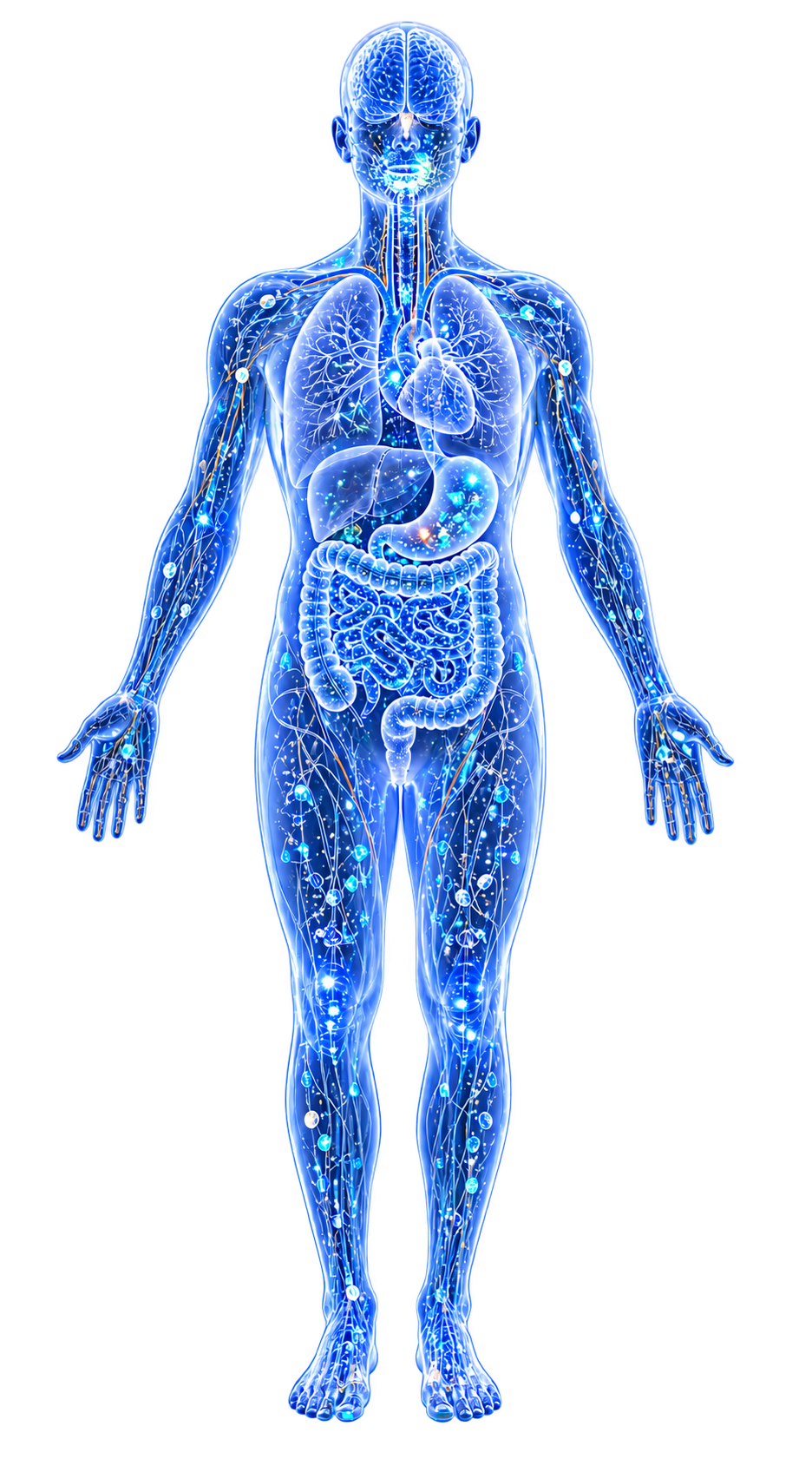
Hungatella hathewayi is a Gram-positive, obligate anaerobic bacterium within the Firmicutes phylum (family Clostridiaceae) that has rapidly emerged as a multi-disease cancer-associated pathobiont.
A recently reclassified genus (from Clostridium hathewayi), it is now recognized as one of the most consistently enriched taxa across Colorectal Cancer, Breast Cancer, polycystic-ovary-syndrome, and Multiple Sclerosis—united by its capacity to produce trimethylamine (TMA) and operate as a beta-glucuronidase producer in the estrobolome.
Evidence map10 cited passagesInspect provenance +
Beyond TMA, Hungatella expresses beta-glucuronidase—the enzyme that deconjugates glucuronide-bound estrogens in the gut, releasing free estrogens that can be reabsorbed and recirculated.
PCOS: Hungatella enrichment is present regardless of BMI (BMI-independent finding) alongside Lachnospira, E. coli-Shigella, and ErysipelotrichaceaeUCG-003, linking it to the hyperandrogenism/estrogen imbalance of PCOS through beta-glucuronidase-driven hormone recirculation.
Enriched in both old-onset and young-onset CRC alongside parvimonas micra, Clostridium symbiosum, and Peptostreptococcus stomatis.
Correlated with sessile serrated adenoma-associated viral OTUs in virome-bacteria network analyses, suggesting involvement from premalignant stages before frank carcinoma.
Enriched in newly diagnosed, treatment-naive breast cancer patients (38% prevalence vs. 9% in controls).
BMI-independent enrichment in PCOS: present in both normal-weight and overweight PCOS patients.
Enriched in some heart failure cohorts alongside Prevotella and Succinclasticum.
Increased in MS patients alongside Blautia and Eggerthella in the context of altered bacterial-fungal interaction networks.
Hungatella appears as a risk-associated taxon in Mendelian randomization analysis of gut microbiome effects on schizophrenia, adding a neuropsychiatric dimension to its multi-disease profile.
Beets, spinach, quinoa: provide betaine as alternative TMA substrate—explaining why "healthy" plant-based diets paradoxically support Hungatella in PCOS patients.
Contents
1. Taxonomy2. Metal Dependencies3. TMA/TMAO Production: The Cardiovascular-Cancer Bridge4. Beta-Glucuronidase and the Estrobolome5. Disease Associations6. Ecological Role in Dysbiosis7. Dietary Modulation8. Cross-ReferencesTaxonomy#
Hungatella hathewayi—type species; named after R.E. Hungate, pioneer of anaerobic microbiology. Reclassified from Clostridium hathewayi (Kaur et al., 2014) based on phylogenetic separation from core Clostridium sensu stricto.
Family Clostridiaceae, order Clostridiales, class Clostridia.
A second species, H. effluvii, has been described from anaerobic digesters, further distinguishing the genus from Clostridium.
Metal Dependencies#
Iron. Central to Hungatella's anaerobic respiration. Iron-sulfur cluster enzymes (ferredoxins, NADH oxidoreductases) support the electron flow required for TMA production from choline, carnitine, and betaine.
Iron availability in cancer and inflammatory environments—where hemorrhage and neovascularization release hemoglobin-derived iron—provides a selective growth advantage for iron-dependent anaerobes like Hungatella.
The iron-dependent carnitine oxygenase step in carnitine-to-TMA conversion requires non-heme iron as cofactor.
Selenium. Selenocysteine-containing proteins in the formate dehydrogenase family are widespread in Clostridiales; Hungatella likely encodes selenium-dependent oxidoreductases supporting its anaerobic metabolism.
Selenium status in the host influences the activity of selenium-dependent microbial enzymes, linking dietary selenium intake to the metabolic output of TMA-producing gut bacteria.
Cobalt. Corrinoid (B12-like) enzymes are required for the methyl-transfer reactions in betaine degradation: betaine → dimethylglycine → sarcosine, ultimately contributing to TMA production via the betaine-TMA lyase pathway.
Cobalt-dependent methionine synthase also supports one-carbon metabolism generating SAM—relevant to the epigenetic implications of Hungatella metabolite production.
TMA/TMAO Production: The Cardiovascular-Cancer Bridge#
H. hathewayi produces trimethylamine (TMA) from dietary choline, L-carnitine, and betaine through three distinct enzymatic pathways.
Choline TMA-lyase (CutC/CutD system): Cleaves choline directly to TMA + acetaldehyde; this is the highest-flux pathway in a choline-rich dietary environment (eggs, meat). Carnitine oxygenase pathway: L-carnitine → γ-butyrobetaine → TMA (via iron-dependent oxidation). Betaine reductase: Betaine (glycine betaine, found in beets, spinach, quinoa) → TMA via cobalt-dependent demethylation.
TMA is absorbed in the colon, transported to the liver, and oxidized to trimethylamine N-oxide (TMAO) by flavin monooxygenase 3 (FMO3). TMAO. Promotes macrophage foam cell formation and atherosclerosis via altered cholesterol reverse transport.
Enhances platelet hyperreactivity and thrombotic risk. Correlates with major adverse cardiovascular events in prospective cohort studies.
May also promote tumor growth via FMO3-TMAO-driven hepatic lipid metabolism.
This TMA/TMAO pathway is the mechanistic bridge connecting cancer-associated gut dysbiosis to cardiovascular risk—explaining why CRC patients have elevated cardiovascular mortality beyond what tumor burden alone would predict.
Beta-Glucuronidase and the Estrobolome#
Beyond TMA, Hungatella expresses beta-glucuronidase—the enzyme that deconjugates glucuronide-bound estrogens in the gut, releasing free estrogens that can be reabsorbed and recirculated.[1]Yin 2022 — Alterations of bacteriome, mycobiome and metabolome characteristics in PCOS patients with normal/overweight individualsYin G, Chen F, Chen G et al. · 2022Open reference 1 ↓
This positions Hungatella within the estrobolome: the subset of gut microbiota whose beta-glucuronidase activity drives estrogen recirculation. In estrogen-dependent conditions. Breast cancer: Hungatella enrichment elevates circulating estrogen, potentially fueling ER+ tumor growth.
PCOS: Hungatella enrichment is present regardless of BMI (BMI-independent finding) alongside Lachnospira, E. coli-Shigella, and Erysipelotrichaceae_UCG-003,[1]Yin 2022 — Alterations of bacteriome, mycobiome and metabolome characteristics in PCOS patients with normal/overweight individualsYin G, Chen F, Chen G et al. · 2022Open reference 1 ↓ linking it to the hyperandrogenism/estrogen imbalance of PCOS through beta-glucuronidase-driven hormone recirculation.
The TMA and beta-glucuronidase activities are independent pathways that may act synergistically in cancer and metabolic disease: TMA fuels cardiovascular co-morbidity while beta-glucuronidase fuels hormonal dysregulation.
Disease Associations#
Colorectal Cancer#
H. hathewayi is a core member of the CRC-associated microbiome signature. Enriched in both old-onset and young-onset CRC alongside Parvimonas micra, Clostridium symbiosum, and Peptostreptococcus stomatis.[2]Consistent signatures in the human gut microbiome of old- and young-onset colorectal cancerYouwen Qin, Xin Tong, Wei-Jian Mei et al. · 2024Open reference 2 ↓
Correlated with sessile serrated adenoma-associated viral OTUs in virome-bacteria network analyses, suggesting involvement from premalignant stages before frank carcinoma.[3]Characteristics of the gut virome in patients with premalignant colorectal adenomaPan Zhang, Xiaofeng Tuo, Jiong Jiang et al. · 2025Open reference 3 ↓
Enrichment across geographically diverse CRC cohorts supports a biologically meaningful role.
TMAO production provides a mechanistic hypothesis: local TMAO promotes tumor cell growth via FMO3-driven lipid metabolism and may suppress anti-tumor immune responses through macrophage polarization.
Breast Cancer#
Enriched in newly diagnosed, treatment-naive breast cancer patients (38% prevalence vs. 9% in controls).[4]Association between Gut Microbiota and Breast Cancer: Diet as a Potential Modulating FactorAltinok Dindar D, Chun B, Palma A et al. · 2023Open reference 4 ↓
Hungatella-positive participants had distinct dietary patterns: lower dairy and higher total vegetable intake—suggesting that plant-derived betaine (beets, spinach) rather than meat-derived carnitine may be the predominant TMA substrate in this population.
cobalt (Co)-enriched with Acidaminococcus and Tyzzerella as part of the breast cancer gut microbiome signature. Both TMA/TMAO production and beta-glucuronidase-driven estrogen recirculation provide mechanistic links to breast cancer biology.
Polycystic Ovary Syndrome#
BMI-independent enrichment in PCOS: present in both normal-weight and overweight PCOS patients.[1]Yin 2022 — Alterations of bacteriome, mycobiome and metabolome characteristics in PCOS patients with normal/overweight individualsYin G, Chen F, Chen G et al. · 2022Open reference 1 ↓ The PCOS-Hungatella connection links to estrobolome biology (beta-glucuronidase → estrogen recirculation) and cardiometabolic risk (TMA/TMAO production in the context of PCOS insulin resistance).
Targeting Hungatella TMA production has been proposed as a potential intervention for reducing cardiometabolic risk in PCOS.
Cardiovascular Disease#
Enriched in some heart failure cohorts alongside Prevotella and Succinclasticum.[5]The Gut Microbiota (Microbiome) in Cardiovascular Disease and Its Therapeutic RegulationMd. Mominur Rahman, Fahadul Islam, Md. Harun-Or-Rashid et al. · 2022Open reference 5 ↓ TMA/TMAO production provides a direct mechanistic link to atherosclerotic cardiovascular disease—Hungatella is among the most TMA-productive human gut anaerobes.
Dietary choline and L-carnitine intake (red meat, eggs) modulates the TMA substrate pool available to Hungatella.
Multiple Sclerosis#
Increased in MS patients alongside Blautia and Eggerthella in the context of altered bacterial-fungal interaction networks.[6]Multiple Sclerosis Patients Have an Altered Gut Mycobiome and Increased Fungal to Bacterial RichnessMeeta Yadav, Soham Ali, Rachel L. Shrode et al. · 2022Open reference 6 ↓
MS-Hungatella enrichment adds to a pattern of metabolically active cancer-associated taxa also appearing in neuroinflammatory conditions—a cross-condition pattern likely reflecting shared dysbiosis mechanisms.
Schizophrenia#
Hungatella appears as a risk-associated taxon in Mendelian randomization analysis of gut microbiome effects on schizophrenia,[7]Zhou 2024 — Gut Microbiome and Schizophrenia: Insights from Two-Sample Mendelian RandomizationKeer Zhou, Ancha Baranova, Hongbao Cao et al. · 2024Open reference 7 ↓ adding a neuropsychiatric dimension to its multi-disease profile.
The pathway may involve TMAO-driven neuroinflammation or TMA's known effects on brain mitochondrial function.
Ecological Role in Dysbiosis#
In the healthy gut, Hungatella is a minor member of the Clostridiaceae community held in check by SCFA producers and fiber-fermenting bacteria. In dysbiotic states:
- Selective advantage in iron-rich environments: Tumor, inflammatory, and high-red-meat dietary contexts all elevate available iron, fueling Hungatella's iron-dependent metabolism.
- Substrate abundance: High-choline, high-carnitine, high-betaine diets (typical of Western patterns) provide abundant TMA substrates.
- Community vacuums: Loss of Bifidobacterium, Lactobacillus, and Roseburia in dysbiosis removes competitors that occupy overlapping metabolic niches.
Dietary Modulation#
Hungatella abundance responds to dietary substrate availability. Red meat, eggs: provide L-carnitine and choline for TMA production via CutC/carnitine pathways.
Beets, spinach, quinoa: provide betaine as alternative TMA substrate—explaining why "healthy" plant-based diets paradoxically support Hungatella in PCOS patients.[1]Yin 2022 — Alterations of bacteriome, mycobiome and metabolome characteristics in PCOS patients with normal/overweight individualsYin G, Chen F, Chen G et al. · 2022Open reference 1 ↓
Dietary modulation of TMA production (not of Hungatella abundance per se) may be achievable through 3,3-dimethyl-1-butanol (DMB)—a natural TMA lyase inhibitor found in cold-pressed oils.
Cross-References#
- Colorectal Cancer—core member of the cross-cohort CRC microbiome signature
- Breast Cancer—enriched in treatment-naive BCa patients; TMA + estrobolome dual mechanism
- polycystic-ovary-syndrome—BMI-independent enrichment; beta-glucuronidase links to PCOS hyperandrogenism
- Cardiovascular Disease—TMA/TMAO production links gut metabolism to atherosclerosis and thrombosis
- Multiple Sclerosis—enriched in MS alongside altered mycobiome interactions
- Schizophrenia—MR-identified risk association
- Parvimonas—co-enriched CRC pathobiont in oral-gut translocation consortium
- Iron—required for iron-sulfur cluster enzymes and carnitine oxygenase
- Selenium—formate dehydrogenase-family selenoprotein cofactor
- Cobalt—corrinoid enzyme cofactor for betaine TMA-lyase pathway
- Estrobolome—beta-glucuronidase activity drives estrogen recirculation
- Dysbiosis—enrichment reflects disease-associated community restructuring across multiple conditions
References 7
Numbered by first appearance in the article, then reconciled with its declared source list.
- 1
Yin G, Chen F, Chen G et al. (2022). Yin 2022 — Alterations of bacteriome, mycobiome and metabolome characteristics in PCOS patients with normal/overweight individuals. Journal of Ovarian Research.
- 2
Youwen Qin, Xin Tong, Wei-Jian Mei et al. (2024). Consistent signatures in the human gut microbiome of old- and young-onset colorectal cancer. Nature Communications.
- 3
Pan Zhang, Xiaofeng Tuo, Jiong Jiang et al. (2025). Characteristics of the gut virome in patients with premalignant colorectal adenoma. Journal of Translational Medicine.
- 4
Altinok Dindar D, Chun B, Palma A et al. (2023). Association between Gut Microbiota and Breast Cancer: Diet as a Potential Modulating Factor. Nutrients.
- 5
Md. Mominur Rahman, Fahadul Islam, Md. Harun-Or-Rashid et al. (2022). The Gut Microbiota (Microbiome) in Cardiovascular Disease and Its Therapeutic Regulation. Frontiers in Cellular and Infection Microbiology.
- 6
Meeta Yadav, Soham Ali, Rachel L. Shrode et al. (2022). Multiple Sclerosis Patients Have an Altered Gut Mycobiome and Increased Fungal to Bacterial Richness. PLOS ONE.
- 7
Keer Zhou, Ancha Baranova, Hongbao Cao et al. (2024). Zhou 2024 — Gut Microbiome and Schizophrenia: Insights from Two-Sample Mendelian Randomization. Schizophrenia (Nature Partner Journal).
Article network
Connect the evidence
Publicly readable discussion by ORCID-authenticated researchers. Questions, interpretation, methods, corrections, and new evidence stay attached to this record.
No discussion yet. Start with a precise question or a source-backed observation.
Activity and accepted changes
Accepted researcher context, editorial status, public discussion, and upstream Git revisions are shown together. Pending, declined, and withdrawn proposals remain private.
- published revision
massive wiki expansion: 149 stubs fixed, 100+ new pages, Rule 15 scan, keystone papers
WikiBiome Deploy Bot · +23 −23
Inspect exact Git diff ↗ - published revision
pre-overnight checkpoint 2026-04-18
WikiBiome Deploy Bot · +3 −5
Inspect exact Git diff ↗ - published revision
Batch: fix 1025 broken wikilinks, wire 13 STOP pages, deepen PPD/GERD/T1D/8 microbes
WikiBiome Deploy Bot · +115 −41
Inspect exact Git diff ↗ - published revision
WikiBiome update — 2026-04-15 17:23
WikiBiome Deploy Bot · +1 −1
Inspect exact Git diff ↗ - published revision
wiki: bulk entity upgrades, new article pages, and site regeneration
WikiBiome Deploy Bot · +6 −0
Inspect exact Git diff ↗ - published revision
WikiBiome update — integrity fixes, metallomic diet pages, cross-condition analyses
WikiBiome Deploy Bot · +9 −7
Inspect exact Git diff ↗ - published revision
WikiBiome update — 2026-04-10 13:49
WikiBiome Deploy Bot · +63 −0
Inspect exact Git diff ↗