

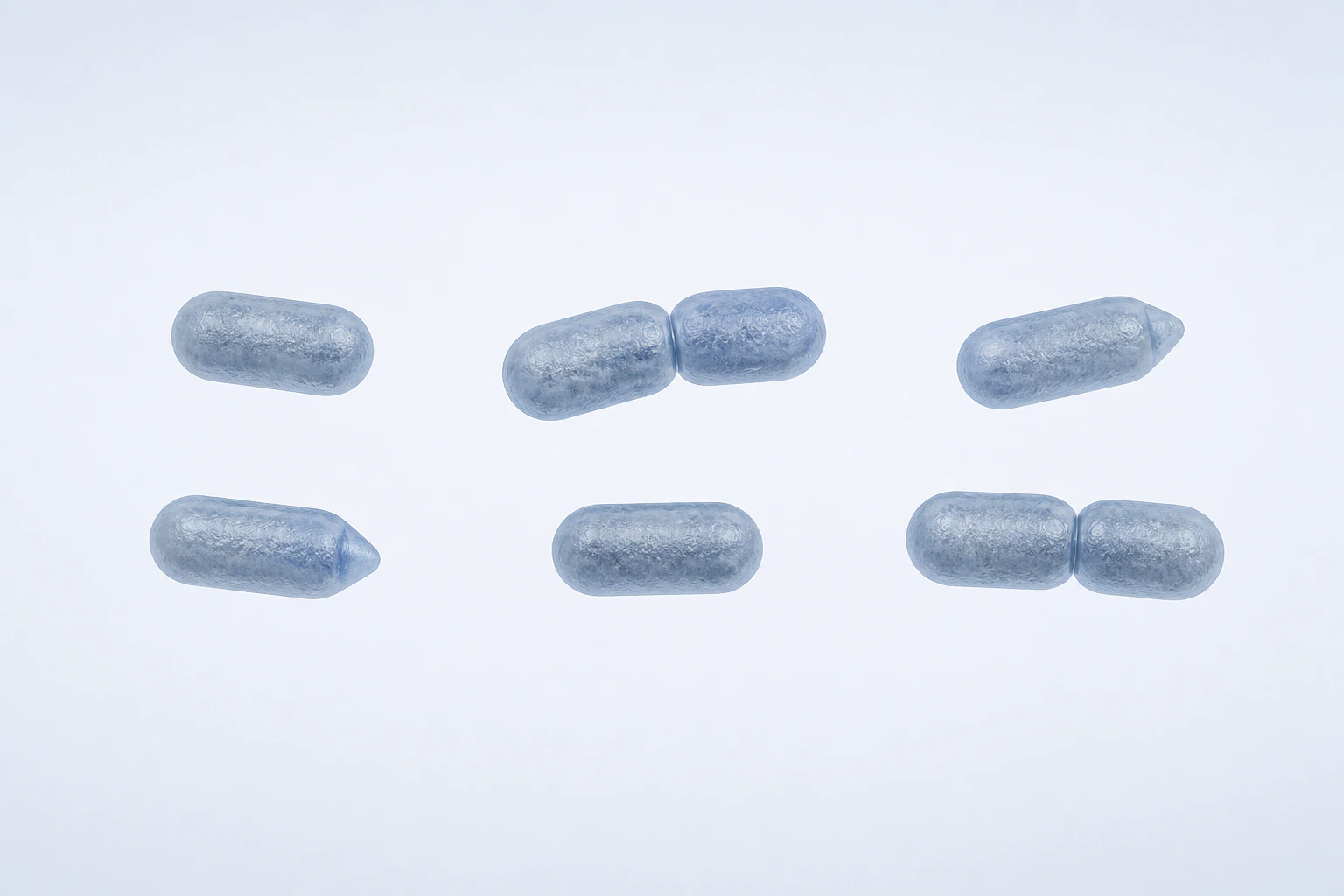
Type-species-anchored Gordonibacter short-rod and coccobacillary forms, shown as eight bodies in four single and two paired groupings, with exactly three restrained conical-apex treatments. This genus-level reconstruction is representative, non-diagnostic, and not a universal genus form or a micrograph.
Scientific media record1 verified identifier
- Subject
- Gordonibactertaxon · genus
- Identifiers
- NCBITaxon:644652
- Review
- Editorial review completeIdentifiers authority-verified · Accessibility validated · · gordonibacter|gordonibacter-morphology-v1.webp
- Digital source
- Trained-algorithmic mediaCreated with a trained generative algorithm and reviewed by WikiBiome for subject identity, scientific framing, identifiers, provenance, and accessibility.
- Scientific basis
- Gordonibacter — NCBI TaxonomyGordonibacter — LPSNGordonibacter pamelaeae gen. nov., sp. nov.Gordonibacter pamelaeae ultrastructure
- License
- CC BY-SA 4.0Created
Gordonibacter is a genus of Gram-positive, strictly anaerobic gut bacteria within the phylum Actinobacteria. It is recognized as a key participant in polyphenol metabolism, producing bioactive metabolites including equol (from dietary isoflavones) and urolithins (from ellagic acid and ellagitannins).
These metabolites have anti-inflammatory and estrogenic properties, making Gordonibacter functionally relevant to estrogen-dependent and neuroinflammatory conditions.
Fecal metabolomic studies in endometriosis mouse models show altered polyphenol metabolite profiles consistent with Gordonibacter depletion ([1]Ni 2020 — Fecal Metabolomics and Gut Microbiota Correlation in Endometriosis MiceZhexin Ni, Shuai Sun, Yanli Bi et al. · 2020Open reference 1 ↓), while microbial metabolite analyses in multiple sclerosis identify reduced urolithin-producing taxa as part of the broader dysbiotic pattern ([2]Microbial Metabolites in Multiple Sclerosis: Implications for Pathogenesis and TreatmentEduardo Duarte-Silva, Sven G. Meuth, Christina Alves Peixoto · 2022Open reference 2 ↓).
Evidence map1 cited passagesInspect provenance +
These metabolites have anti-inflammatory and estrogenic properties, making Gordonibacter functionally relevant to estrogen-dependent and neuroinflammatory conditions. Fecal metabolomic studies in endometriosis mouse models show altered polyphenol metabolite profiles consistent with Gordonibacter depletion (), while microbial metabolite analyses in multiple s
Contents
1. Cross-ReferencesCross-References#
- equol—bioactive metabolite produced by Gordonibacter
- Polyphenols—dietary substrates for Gordonibacter metabolism
- Endometriosis—condition where Gordonibacter is depleted
- Multiple Sclerosis—neuroinflammatory condition with altered polyphenol metabolism
- Estrobolome—functional overlap with estrogen-metabolizing gut taxa
References 6
Numbered by first appearance in the article, then reconciled with its declared source list.
- 1
Zhexin Ni, Shuai Sun, Yanli Bi et al. (2020). Ni 2020 — Fecal Metabolomics and Gut Microbiota Correlation in Endometriosis Mice. American Journal of Reproductive Immunology.
- 2
Eduardo Duarte-Silva, Sven G. Meuth, Christina Alves Peixoto (2022). Microbial Metabolites in Multiple Sclerosis: Implications for Pathogenesis and Treatment. Frontiers in Neuroscience.
- 3
Keer Zhou, Ancha Baranova, Hongbao Cao et al. (2024). Zhou 2024 — Gut Microbiome and Schizophrenia: Insights from Two-Sample Mendelian Randomization. Schizophrenia (Nature Partner Journal).
- 4
Bucciero C, Croce A, Castellano G et al. (2026). The Diet-Multiple Sclerosis Connection: Oxidative Stress and Emerging Mechanisms. Molecular Neurobiology.
- 5
Thirion F, Sellebjerg F, Fan Y et al. (2023). The Gut Microbiota in Multiple Sclerosis Varies with Disease Activity. Genome Medicine.
- 6
Stefan Heinzel, Sepehr Rahnemaiard, Daniela Berg (2021). Heinzel 2021 -- Urolithins: Potential Biomarkers of Gut Dysbiosis and Disease Stage in Parkinson's Patients. Nutrients.
Article network
Mentioned here 4
Pages linking here 2
Connect the evidence
Publicly readable discussion by ORCID-authenticated researchers. Questions, interpretation, methods, corrections, and new evidence stay attached to this record.
No discussion yet. Start with a precise question or a source-backed observation.
Activity and accepted changes
Accepted researcher context, editorial status, public discussion, and upstream Git revisions are shown together. Pending, declined, and withdrawn proposals remain private.
- published revision
massive wiki expansion: 149 stubs fixed, 100+ new pages, Rule 15 scan, keystone papers
WikiBiome Deploy Bot · +41 −0
Inspect exact Git diff ↗