
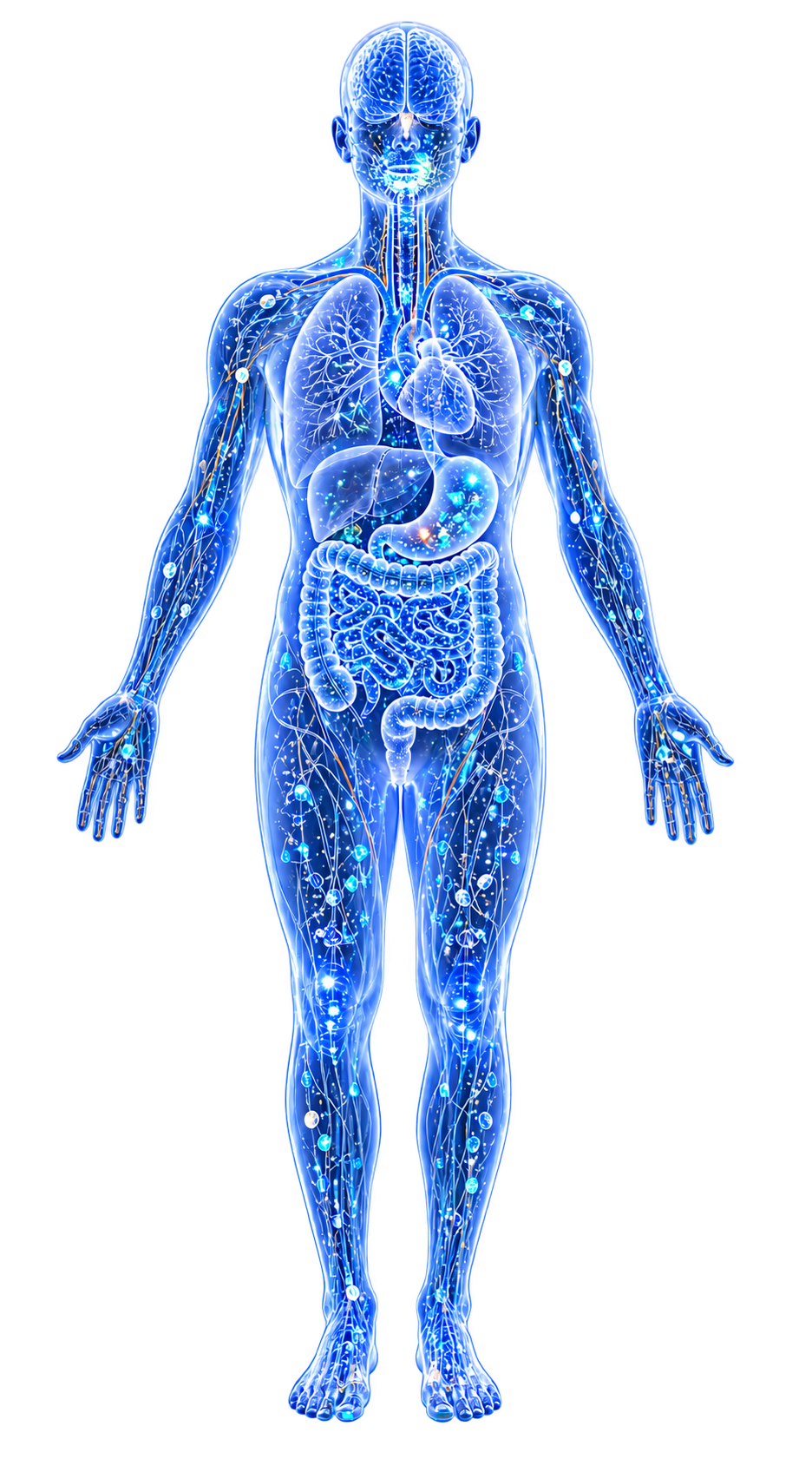
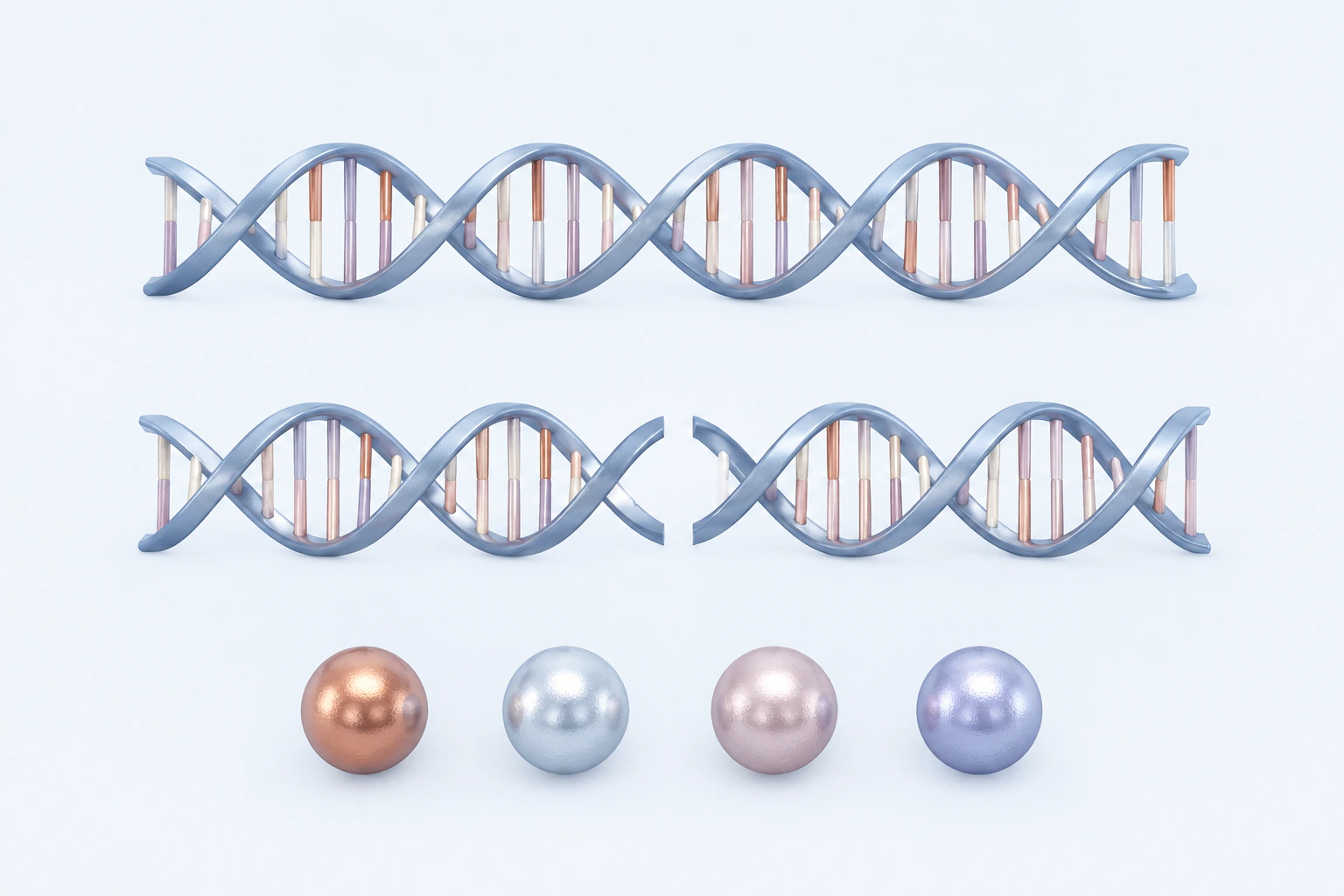
DNA-integrity concept orientation. This is not a literal molecular structure, nucleotide sequence, lesion classification, causal metal mechanism, assay result, mutation, cancer finding, or diagnosis.
Scientific media record2 verified identifiers
- Subject
- DNA Damagebiological-process
- Identifiers
- WikiBiome:dna-damagePMID:24788233
- Review
- Editorial review completeIdentifiers authority-verified · Accessibility validated · · dna-damage|dna-damage-mechanism-v1.webp
- Digital source
- Trained-algorithmic mediaCreated with a trained generative algorithm and reviewed by WikiBiome for subject identity, scientific framing, identifiers, provenance, and accessibility.
- Scientific basis
- DNA damage and repair in metal carcinogenesisMetal exposure and DNA damage contextDNA Damage
- License
- CC BY-SA 4.0Created
Direct DNA damage is the primary carcinogenic mechanism for Chromium but is notably absent or minor for Nickel and Arsenic. This distinction is fundamental to understanding why these three metals cause cancer through such different pathways.
Contents
1. Chromium: The DNA-Damaging Metal2. Nickel and Arsenic: Indirect DNA Effects3. Repair Inhibition as a Unifying Theme4. ConnectionsChromium: The DNA-Damaging Metal#
Cr-DNA Adducts [[salnikov-2008-metal-carcinogenesis]]#
- The signature lesion of chromium (Cr)(VI) carcinogenesis.
- Ternary adducts (50-75% of all adducts): chromium(III) crosslinks DNA with a third molecule:
- chromium-ascorbate-DNA (dominant when ascorbate is reductant)
- chromium-glutathione-DNA
- chromium-cysteine-DNA
- chromium-amino acid-DNA
- Binary adducts (minority): chromium(III) directly on DNA bases.
- Mutagenicity: ternary adducts, especially chromium-ascorbate adducts, are mutagenic. The frequency of mutations correlates with adduct levels.
Other DNA Lesions#
DNA-protein crosslinks (DPCs): chromium (Cr)(III) bridges DNA and proteins. DNA interstrand crosslinks (ICLs): relatively rare but highly toxic. Single-strand breaks (SSBs): detected, but some may be artifacts of alkaline assay conditions (labile sites converting to breaks).
Double-strand breaks (DSBs): less well-characterized. Oxidative lesions (8-oxo-dG): occur primarily at supraphysiological chromium(VI) concentrations—not the main mechanism at realistic exposures.
The Ascorbate Paradox#
Ascorbate is both the primary reductant of chromium (Cr)(VI) (~90% of cellular reduction) and a necessary cofactor for DNA repair enzymes. This creates a paradox. More ascorbate → more chromium(VI) reduction → more chromium-DNA adducts.
Less ascorbate → impaired DNA repair. The net effect depends on relative concentrations and timing.
Nickel and Arsenic: Indirect DNA Effects#
Nickel#
Weak/no direct DNA damage. Not a significant mutagen. Carcinogenesis through Epigenetic Modifications and Hypoxic Signaling (HIF-1α Pathway).
But nickel inhibits DNA repair (NER)—making cells more vulnerable to damage from other agents → cocarcinogenesis.
Arsenic#
No DNA adducts formed. Methylated arsenic intermediates (DMA^III) may cause some oxidative DNA damage. Like nickel, arsenic's main DNA-related effect is repair inhibition (NER, BER) → cocarcinogenesis.
Repair Inhibition as a Unifying Theme#
All three metals inhibit DNA repair, but target different pathways:
| Metal | Target | Repair Pathway | Consequence |
|---|---|---|---|
| Nickel | NER | Nucleotide excision repair | UV damage persists |
| Arsenic | NER, BER | Multiple repair pathways | Broad repair deficit |
| Chromium | MMR | Mismatch repair | Replication errors persist |
This convergence on repair inhibition suggests that cocarcinogenic effects may be more important than direct carcinogenesis for environmental metal exposures, where doses are typically lower than occupational settings.
Connections#
- Chromium—primary DNA-damaging metal
- Nickel, Arsenic—indirect effects via repair inhibition
- Metal Carcinogenesis—DNA damage is one of the three major paradigms
- Oxidative Stress—can cause DNA damage but is secondary for all three metals
References 8
Numbered by first appearance in the article, then reconciled with its declared source list.
- 1
Yuanzhao Xu, Lingyue An, Jiling Xie et al. (2026). Xu 2026 — The Gut-Prostate Axis in Benign Prostatic Hyperplasia: Systematic Review of Microbial Dysbiosis and Pathogenic Mechanisms. BMC Urology.
- 2
★Ali AS, Nazar ME, Mustafa RM et al. (2024). Impact of heavy metals on breast cancer (Review). World Academy of Sciences Journal.
- 3
★Manish Mishra, Larry Nichols, Aditi A. Dave et al. (2022). Molecular Mechanisms of Cellular Injury and Role of Toxic Heavy Metals in Chronic Kidney Disease. International Journal of Molecular Sciences.
- 4
★Monisha Jaishankar, Tenzin Tseten, Naresh Anbalagan et al. (2014). Toxicity, Mechanism and Health Effects of Some Heavy Metals. Interdisciplinary Toxicology.
- 5
Kim HS, Kim TH, Chung HH et al. (2014). Risk and prognosis of ovarian cancer in women with endometriosis: a meta-analysis. British Journal of Cancer.
- 6
Jhommara Bautista, Walter D. Cardona-Maya, Kelly Gancino-Guevara et al. (2025). Bautista 2025 — Reprogramming Prostate Cancer Through the Microbiome. Frontiers in Medicine.
- 7
Lulu Farhana, Pratima Nangia-Makker, Evan Arbit et al. (2016). Bile acid: a potential inducer of colon cancer stem cells. Stem Cell Research & Therapy.
- 8
Dong Yeop Shin, Sang Min Lee, Yujin Jang et al. (2023). Adverse Human Health Effects of Chromium by Exposure Route: A Comprehensive Review Based on Toxicogenomic Approach. International Journal of Molecular Sciences.
Article network
Connect the evidence
Publicly readable discussion by ORCID-authenticated researchers. Questions, interpretation, methods, corrections, and new evidence stay attached to this record.
No discussion yet. Start with a precise question or a source-backed observation.
Activity and accepted changes
Accepted researcher context, editorial status, public discussion, and upstream Git revisions are shown together. Pending, declined, and withdrawn proposals remain private.
No public collaboration activity has been recorded for this page yet.