
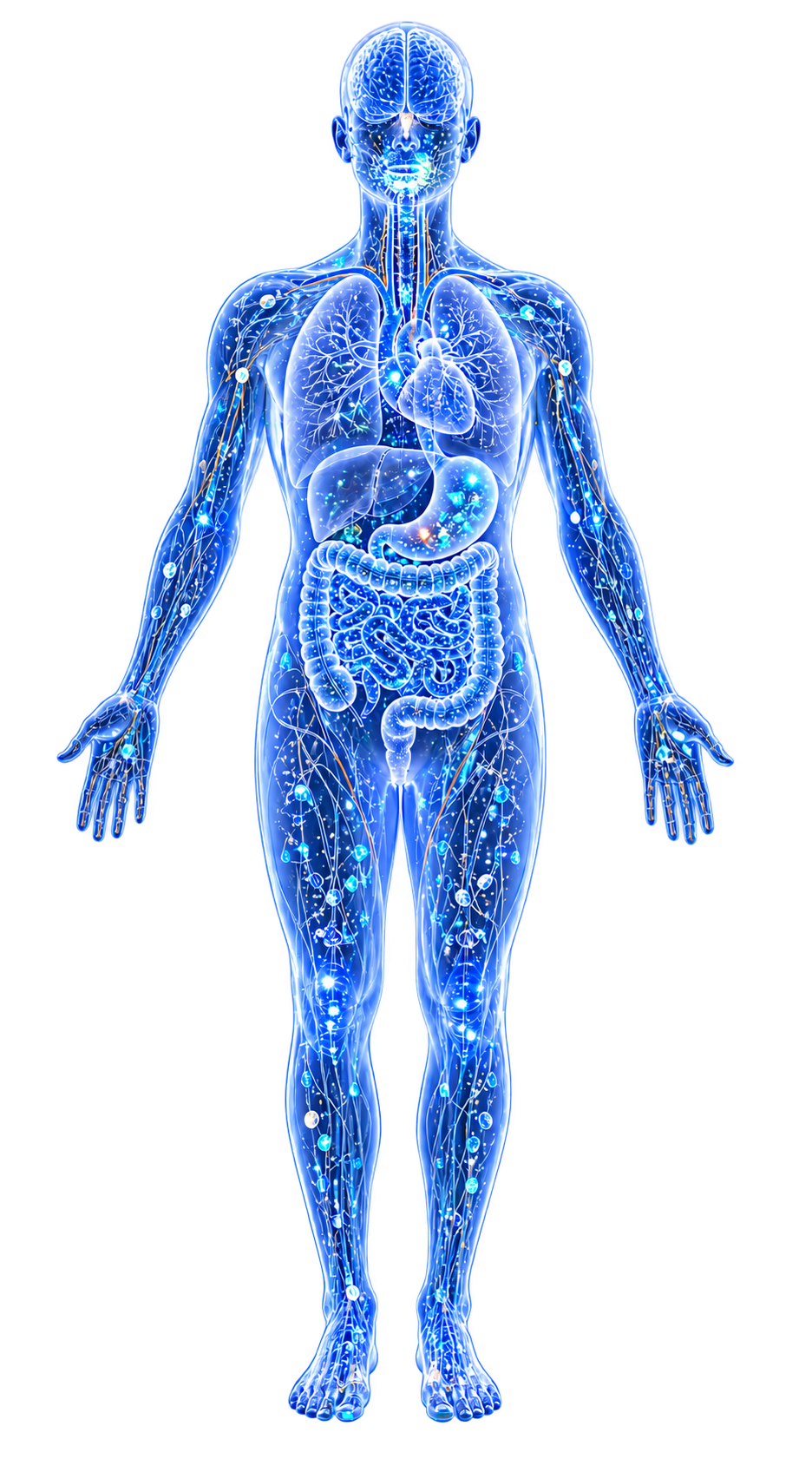
Microbial metallomics is the study of how metals and microorganisms interact at the systems level—how metal availability shapes microbial communities, how microbes acquire and weaponize metals for virulence, and how this bidirectional metal-microbe interface drives disease.
It integrates Metallomics (the analytical study of metal profiles in biological systems) with microbial ecology, connecting environmental metal exposure → microbial selection → host disease in a unified causal framework.
Where Metallomics asks "what metals are present and where?", microbial metallomics asks "what do those metals do to the microbiome, and what does the microbiome do with those metals?"
Evidence map9 cited passagesInspect provenance +
escherichia coli / shigella: Enriched in Alzheimer's disease gut microbiome. Produces curli amyloid fibers that cross-seed amyloid-beta (Aβ) aggregation in the brain, providing a direct microbial-to-neurodegeneration pathway. Iron and zinc are required for curli fiber assembly, and the inflammation-driven iron availability in the dysbiotic gut selects for E.
helicobacter pylori: Requires nickel-dependent urease for gastric survival. Chronic H. pylori infection is epidemiologically linked to Parkinson's disease risk, potentially through systemic inflammation and mis-metallation cascades. Dietary nickel exposure fuels H. pylori colonization capacity.
porphyromonas gingivalis: Zinc-dependent gingipains directly cleave amyloid precursor protein (APP) and tau, generating amyloidogenic fragments. The oral-brain translocation of P. gingivalis connects periodontal metal ecology to Alzheimer's pathogenesis. Iron/heme from gingival bleeding feeds P. gingivalis expansion.
Ferroptosis: Iron-dependent lipid peroxidation (ferroptosis) kills dopaminergic neurons in Parkinson's. The gut microbiome modulates systemic iron homeostasis via hepcidin signaling, connecting microbial iron ecology to neuronal iron death.
These organisms bloom in the preterm gut before NEC onset, connecting a specific dietary metal to a specific disease via specific microbial metal dependencies.
The resulting loss of butyrate → impaired barrier → systemic LPS → metabolic inflammation → obesity.
Zinc intoxication: Macrophages pump toxic zinc into Salmonella-containing vacuoles, displacing iron and manganese from essential enzymes.
Copper toxicity: Copper displaces iron from iron-sulfur clusters in E. coli, destroying respiratory enzymes.
The metalloproteome—the complete set of metalloenzymes in an organism—is not static. Pathogens dynamically remodel their metalloproteome under host-imposed metal stress, substituting one metal cofactor for another to maintain essential enzyme activity.
Contents
1. The Core Thesis2. Metallomic Signatures Across Disease States3. Microbial Metal Acquisition Systems4. Mis-Metallation in the Microbial Context5. Relationship to Other Concepts6. Cross-ReferencesThe Core Thesis#
Metals are not passive environmental contaminants—they are selective pressures that determine which organisms thrive, which virulence systems activate, and which diseases emerge. Every disease signature in this wiki involves a metallomic layer (elevated/depleted metals) and a taxonomic layer (enriched/depleted organisms).
Microbial metallomics is the discipline that explains why these two layers are linked.
The causal chain: Environmental metal exposure → selective enrichment of metal-tolerant/metal-dependent pathogens → activation of metal-dependent virulence systems → host disease.
Metallomic Signatures Across Disease States#
Multiple disease signatures in this wiki demonstrate the metals→microbes→disease pathway:
Neurodegeneration: Metals → Microbes → Amyloid#
The neurodegeneration pathway is the most striking example of microbial metallomics in action. Escherichia coli / Shigella: Enriched in Alzheimer's disease Gut Microbiome. Produces curli amyloid fibers that cross-seed amyloid-beta (Aβ) aggregation in the brain, providing a direct microbial-to-neurodegeneration pathway.
Iron and zinc are required for curli fiber assembly, and the Metal-Driven Inflammation-driven iron availability in the dysbiotic gut selects for E. coli/Shigella expansion.[1]Pendergrass 2025 — From Dysbiosis to Dyshomeostasis: Why Parkinson's Requires a Metallomic–Microbiome LensKaren Pendergrass · 2025Open reference 1 ↓
Helicobacter pylori: Requires nickel-dependent Urease for gastric survival. Chronic H. pylori infection is epidemiologically linked to Parkinson's disease risk, potentially through systemic inflammation and mis-metallation cascades. Dietary nickel exposure fuels H. pylori colonization capacity.[2]Role of Nickel in Microbial PathogenesisRobert J. Maier, Stéphane L. Benoit · 2019Open reference 2 ↓
Porphyromonas gingivalis: Zinc-dependent gingipains directly cleave amyloid precursor protein (APP) and tau, generating amyloidogenic fragments. The oral-brain translocation of P. gingivalis connects periodontal metal ecology to Alzheimer's pathogenesis. Iron/heme from gingival bleeding feeds P. gingivalis expansion.[3]Kim et al. 2022 — Cortisol Promotes Surface Translocation of Porphyromonas gingivalisHey-Min Kim, Christina Magda Rothenberger, Mary Ellen Davey · 2022Open reference 3 ↓
Ferroptosis: Iron-dependent lipid peroxidation (ferroptosis) kills dopaminergic neurons in Parkinson's. The gut microbiome modulates systemic iron homeostasis via hepcidin signaling, connecting microbial iron ecology to neuronal iron death.[4]Microbial Metallomics and Parkinson's Disease: A Unified Metal-Driven Framework Linking Ferroptosis, Dysbiosis, and alpha-Synuclein PathologyKaren Pendergrass · 2025Open reference 4 ↓
Preterm Infant Disease: Nickel → Pathogens → NEC#
Nickel in preterm formula selectively enriches nickel-dependent pathogens (Klebsiella, Citrobacter, Enterobacter, Ureaplasma) via urease, NiFe Hydrogenase, and glyoxalase activation.
These organisms bloom in the preterm gut before NEC onset, connecting a specific dietary metal to a specific disease via specific microbial metal dependencies.[5]Nickel as a Catalytic Driver of Necrotizing Enterocolitis: Dietary Nickel, Microbial Metallomics, and the Activation of Nickel-Dependent Virulence Pathways in the Preterm GutKaren Pendergrass · 2026Open reference 5 ↓
Obesity: Cadmium/Lead → Dysbiosis → Metabolic Disease#
Environmental cadmium and lead exposure depletes SCFA-producing commensals (Faecalibacterium prausnitzii, Roseburia) while enriching metal-tolerant Enterobacteriaceae. The resulting loss of Butyrate → impaired barrier → systemic LPS → metabolic inflammation → obesity.[6]Heavy Metals, Microbial Metallomics, and the US Obesity Epidemic: A Mechanistic Examination of a Population-Level Metabolic DisruptionKaren Pendergrass · 2026Open reference 6 ↓
IBD: Iron → Siderophore Blooms → Inflammation#
Inflammation-driven hepcidin elevation sequesters systemic iron but floods the gut lumen with unabsorbed dietary iron. Siderophore-producing Enterobacteriaceae (E. coli, Klebsiella, Citrobacter) bloom in this iron-rich environment, outcompeting iron-sensitive commensals. The Enterobacteriaceae bloom amplifies LPS-driven inflammation → more hepcidin → more luminal iron → more pathogen expansion: a self-reinforcing cycle.
Microbial Metal Acquisition Systems#
Pathogens have evolved sophisticated metal acquisition systems that define their ecological niche:
| System | Metal | Organisms | Virulence role |
|---|---|---|---|
| Siderophores (enterobactin, salmochelin, pyoverdine) | Iron | Enterobacteriaceae, Pseudomonas | Iron piracy overcoming nutritional immunity |
| Nickel-urease | Nickel | H. pylori, Proteus, Ureaplasma, Klebsiella | Acid resistance, struvite stones, Ammonia toxicity |
| NiFe-hydrogenase | Nickel | Salmonella, E. coli, Citrobacter | Anaerobic hydrogen oxidation for competitive advantage |
| Gingipains (RgpA, RgpB, Kgp) | Zinc | P. gingivalis | Tissue destruction, immune evasion, amyloid generation |
| Calprotectin evasion (ZntA, MntH) | Zinc, Manganese | Salmonella, S. aureus | Survival under host metal sequestration |
| Heme uptake (Has, Hmu systems) | Iron (as heme) | P. gingivalis, S. aureus, Streptococcus | Direct heme iron piracy from hemoglobin |
| Metallophores (staphylopine, pseudopaline) | zinc (Zn), nickel (Ni), cobalt (Co), iron (Fe) | S. aureus, P. aeruginosa | Broad-spectrum metal acquisition |
Each system represents an Achilles' heel (Karen's Brain Primitive 4): restrict the metal, disable the virulence.
Mis-Metallation in the Microbial Context#
Mis-Metallation occurs when the wrong metal occupies an enzyme's active site, inactivating it. The host weaponizes this. Zinc intoxication: Macrophages pump toxic zinc into Salmonella-containing vacuoles, displacing iron and manganese from essential enzymes.[7]Goh 2024 — An Opportunistic Pathogen Under Stress: How Group B Streptococcus Responds to Cytotoxic Reactive Species and Conditions of Metal Ion Imbalance to SurviveKelvin G K Goh, Devika Desai, Ruby Thapa et al. · 2024Open reference 7 ↓
Copper toxicity: Copper displaces iron from iron-sulfur clusters in E. coli, destroying respiratory enzymes.[8]Darwiche 2025 — The Molecular Basis of the Synergistic Toxicity of Nickel and Copper, Common Environmental Co-ContaminantsLinda Darwiche, Carlos A Rodriguez-Bornot, Rebecca A Ingrassia et al. · 2025Open reference 8 ↓ Nickel displacement: Excess nickel can mis-metallate zinc-dependent enzymes, explaining why both nickel excess and nickel deficiency affect pathogen virulence.
The metalloproteome—the complete set of metalloenzymes in an organism—is not static. Pathogens dynamically remodel their metalloproteome under host-imposed metal stress, substituting one metal cofactor for another to maintain essential enzyme activity.[9]McEwan 2024 — Metalloproteome Plasticity: A Factor in Bacterial Pathogen Adaptive Responses?Alastair G. McEwan · 2024Open reference 9 ↓[10]Rohaun 2024 — Microbes Vary Strategically in Their Metalation of Mononuclear EnzymesSanjay Kumar Rohaun, Ramakrishnan Sethu, James A Imlay · 2024Open reference 10 ↓
Relationship to Other Concepts#
Microbial metallomics is the integrative framework that connects several concepts in this wiki.
Metallomics—The analytical discipline measuring metal profiles; microbial metallomics adds the biological interpretation. Nutritional Immunity (Metal Sequestration)—The host strategy of metal restriction; microbial metallomics describes the pathogen counter-strategies. Metal-Dependent Virulence—Individual pathogen metal requirements; microbial metallomics views these at the community level.
Gut-Metal-Microbiome Interactions—The bidirectional axis between dietary metals and gut microbial composition. Siderophores—The primary microbial iron acquisition system. Functional Shielding—Interkingdom metal sharing within biofilms as community-level metallomics.
Co-Selection—Metal resistance genes co-located with antibiotic resistance, linking environmental metallomics to AMR.
Cross-References#
- Metallomics—Parent discipline
- Nutritional Immunity (Metal Sequestration)—Host side of the metal-microbe interface
- inflammation—Metal-driven inflammation via NF-kB activation
- Hepcidin—Master iron regulator connecting microbiome to systemic iron
- Interleukin-6 (IL-6)—IL-6 → hepcidin → iron sequestration axis
- Ferroptosis—Iron-dependent cell death linking microbial iron ecology to neurodegeneration
- Gut-Brain Axis—Metals → microbes → neuroinflammation pathway
- Dysbiosis—Metal-driven microbial community disruption
References 14
Numbered by first appearance in the article, then reconciled with its declared source list.
- 1
Karen Pendergrass (2025). Pendergrass 2025 — From Dysbiosis to Dyshomeostasis: Why Parkinson's Requires a Metallomic–Microbiome Lens. Zenodo Preprint.
- 2
★Robert J. Maier, Stéphane L. Benoit (2019). Role of Nickel in Microbial Pathogenesis. Inorganics.
- 3
Hey-Min Kim, Christina Magda Rothenberger, Mary Ellen Davey (2022). Kim et al. 2022 — Cortisol Promotes Surface Translocation of Porphyromonas gingivalis. Pathogens.
- 4
★Karen Pendergrass (2025). Microbial Metallomics and Parkinson's Disease: A Unified Metal-Driven Framework Linking Ferroptosis, Dysbiosis, and alpha-Synuclein Pathology. Conference Presentation.
- 5
Karen Pendergrass (2026). Nickel as a Catalytic Driver of Necrotizing Enterocolitis: Dietary Nickel, Microbial Metallomics, and the Activation of Nickel-Dependent Virulence Pathways in the Preterm Gut. Zenodo Preprint.
- 6
★Karen Pendergrass (2026). Heavy Metals, Microbial Metallomics, and the US Obesity Epidemic: A Mechanistic Examination of a Population-Level Metabolic Disruption. Zenodo Preprint.
- 7
Kelvin G K Goh, Devika Desai, Ruby Thapa et al. (2024). Goh 2024 — An Opportunistic Pathogen Under Stress: How Group B Streptococcus Responds to Cytotoxic Reactive Species and Conditions of Metal Ion Imbalance to Survive. FEMS Microbiology Reviews.
- 8
Linda Darwiche, Carlos A Rodriguez-Bornot, Rebecca A Ingrassia et al. (2025). Darwiche 2025 — The Molecular Basis of the Synergistic Toxicity of Nickel and Copper, Common Environmental Co-Contaminants. Applied and Environmental Microbiology.
- 9
Alastair G. McEwan (2024). McEwan 2024 — Metalloproteome Plasticity: A Factor in Bacterial Pathogen Adaptive Responses?. Emerging Topics in Life Sciences.
- 10
Sanjay Kumar Rohaun, Ramakrishnan Sethu, James A Imlay (2024). Rohaun 2024 — Microbes Vary Strategically in Their Metalation of Mononuclear Enzymes. Proceedings of the National Academy of Sciences.
- 11
Daiana A. Capdevila, Johnma J. Rondon, Katherine A. Edmonds et al. (2024). Capdevila 2024 — Bacterial Metallostasis: Metal Sensing, Metalloproteome Remodeling, and Metal Trafficking. Chemical Reviews.
- 12
Nigel J. Robinson, Andrea Glasfeld (2020). Robinson & Glasfeld 2020 — Metalation and Mis-metalation: Nature's Challenge in Metal Coordination. Journal of Biological Inorganic Chemistry.
- 13
★Patil RH, Luptakova D, Havlicek V (2021). Infection metallomics for critical care in the post-COVID era. Mass Spectrometry Reviews.
- 14
★James E. Cassat, Eric P. Skaar (2012). Metal Ion Acquisition in Staphylococcus aureus: Overcoming Nutritional Immunity. Seminars in Immunopathology.
Article network
Mentioned here 18
Pages linking here 4
Connect the evidence
Publicly readable discussion by ORCID-authenticated researchers. Questions, interpretation, methods, corrections, and new evidence stay attached to this record.
No discussion yet. Start with a precise question or a source-backed observation.
Activity and accepted changes
Accepted researcher context, editorial status, public discussion, and upstream Git revisions are shown together. Pending, declined, and withdrawn proposals remain private.
- published revision
Backfill gut microbiome concept links
Karen Pendergrass · +1 −1
Inspect exact Git diff ↗ - published revision
Backfill inflammation concept links
Karen Pendergrass · +2 −2
Inspect exact Git diff ↗ - published revision
Complete Ammonia contextual coverage
Karen Pendergrass · +1 −1
Inspect exact Git diff ↗ - published revision
Complete Hydrogenase contextual coverage
Karen Pendergrass · +1 −1
Inspect exact Git diff ↗ - published revision
Complete reviewed Urease contextual coverage
Karen Pendergrass · +1 −1
Inspect exact Git diff ↗ - published revision
massive wiki expansion: 149 stubs fixed, 100+ new pages, Rule 15 scan, keystone papers
WikiBiome Deploy Bot · +118 −0
Inspect exact Git diff ↗