
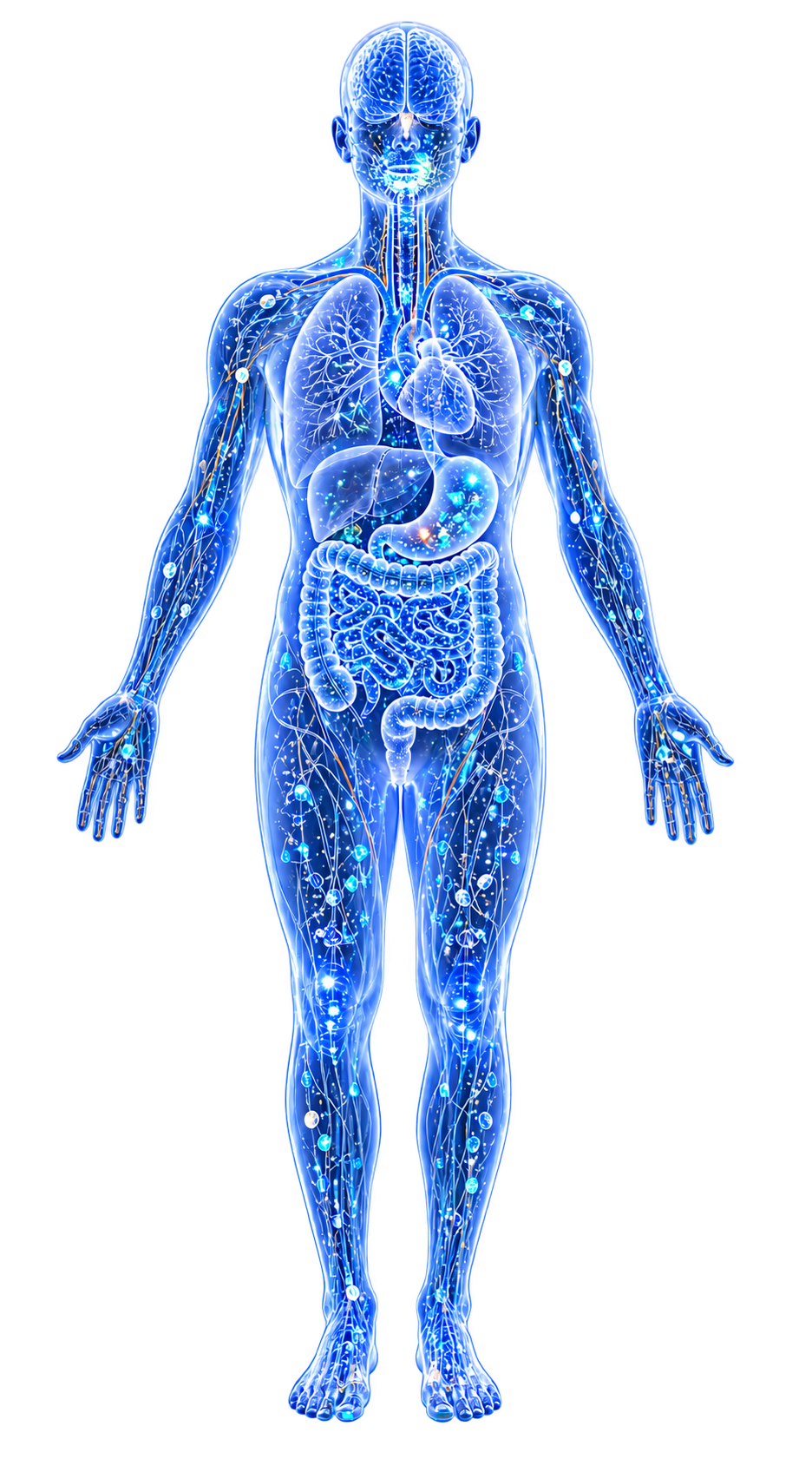
The immune system is not a monolith but a dynamic equilibrium between pro-inflammatory effector responses (Th1, Th2, Th17) and anti-inflammatory regulatory responses (Treg, IL-10, TGF-beta). Metals and the microbiome are two of the most potent environmental modulators of this balance.
When the equilibrium tips, disease follows—autoimmunity, allergy, chronic Metal-Driven Inflammation, or immunodeficiency depending on the direction of the shift.
Contents
1. The T Helper Paradigm2. Innate Immunity and Metals3. Microbiome Modulation of Immune Balance4. Disease-Specific Imbalances5. The Metal-Microbiome-Immune Triangle6. Therapeutic Leverage Points7. See AlsoThe T Helper Paradigm#
Th1 (Cell-Mediated Immunity)#
- Signature cytokines: IFN-gamma, TNF-alpha, IL-12
- Function: Intracellular pathogens, macrophage activation, delayed-type hypersensitivity
- Metal connection: Nickel activates Th1 via TLR4 engagement; lead promotes Th1 skewing; chromium (VI) drives Th1-mediated contact dermatitis
Th2 (Humoral/Allergic Immunity)#
Signature cytokines: IL-4, IL-5, IL-13. Function: Helminth defense, B cell class switching to IgE, eosinophil recruitment. Metal connection: Mercury shifts toward Th2 (shown in murine models); cadmium promotes allergic sensitization; aluminum adjuvants in vaccines leverage Th2 polarization.
Th17 (Barrier Immunity/Autoimmunity)#
- Signature cytokines: IL-17A, IL-17F, IL-22
- Function: Neutrophil recruitment, antimicrobial peptide induction, mucosal defense
- Metal connection: Nickel strongly activates Th17 in allergic individuals Nickel Allergy and Allergic Contact Dermatitis; arsenic promotes Th17 differentiation; IL-17 drives tissue damage in Crohn's Disease, Rheumatoid Arthritis, psoriasis
Treg (Immune Regulation)#
- Signature markers: FoxP3, CD25, CTLA-4
- Signature cytokines: IL-10, TGF-beta
- Function: Suppression of effector T cells, maintenance of self-tolerance, prevention of autoimmunity
- Metal connection: Selenium supports Treg differentiation and FoxP3 expression; zinc is required for thymic T cell maturation; iron deficiency impairs Treg function
Innate Immunity and Metals#
The innate immune system provides the first response and shapes downstream adaptive responses. TLR4—the lipopolysaccharide receptor, also activated directly by nickel (unique among metals). This places nickel at the intersection of microbial sensing and metal toxicity.
NLRP3 inflammasome—activated by crystalline particles (silica, uric acid) and by multiple metals (aluminum (Al), cadmium (Cd), arsenic (As)). Drives IL-1beta and IL-18 secretion. See NF-kB Signaling Pathway.
Macrophage polarization—M1 (pro-inflammatory, metal-activated) vs M2 (anti-inflammatory, resolution). Cadmium and lead lock macrophages in M1; zinc and selenium promote M2 transition. Microglia—brain-resident macrophages that adopt neurotoxic phenotypes under metal exposure, driving neuroinflammation in Alzheimer's Disease and Parkinson's Disease.
Microbiome Modulation of Immune Balance#
The Gut Microbiome is the largest immune organ by proxy. Short-Chain Fatty Acids (SCFAs) (Butyrate, propionate, acetate)—potent Treg inducers. Butyrate promotes FoxP3 expression via HDAC inhibition. Metal-driven Dysbiosis depletes SCFA producers, removing this Treg brake.
Segmented filamentous bacteria (SFB)—the canonical Th17 inducers in the gut. Their presence/absence shifts the Th17/Treg ratio. Bacteroides fragilis—polysaccharide A (PSA) activates TLR2 on Tregs, promoting IL-10 production.
Clostridia clusters IV and XIVa—major butyrate producers whose depletion under metal stress compromises Treg induction.
Pathobionts (adherent-invasive E. coli, Klebsiella)—expand under dysbiosis and drive Th1/Th17 responses.
Disease-Specific Imbalances#
| Disease | Immune Skew | Metal Driver | Microbiome Component |
|---|---|---|---|
| Crohn's Disease | Th1/Th17 excess | iron (Fe) dysregulation, zinc (Zn) deficiency | AIEC enrichment, Faecalibacterium depletion |
| Nickel Allergy and Allergic Contact Dermatitis / SNAS | Th1/Th17 via TLR4 | nickel (Ni) dietary/contact | Histamine-producing taxa |
| Hashimoto's Thyroiditis | Th1 dominant | selenium (Se) deficiency, excess I | Molecular mimicry with thyroid peroxidase |
| Rheumatoid Arthritis | Th17 dominant | cadmium (Cd), lead (Pb) exposure | Prevotella copri enrichment |
| Asthma | Th2 dominant | nickel aerosol, cadmium inhalation | Reduced microbial diversity |
| Depression | Neuroinflammation (IL-6, TNF-alpha) | zinc depletion, copper (Cu) excess | Coprococcus depletion, IDO activation |
The Metal-Microbiome-Immune Triangle#
Metals, microbiome, and immunity form an inseparable triad:
- Metals shift immune balance directly (nickel (Ni) → Th1/Th17; selenium (Se) → Treg)
- Metals cause dysbiosis, removing microbial immune modulators
- Dysbiosis-driven inflammation alters metal handling (hepcidin → iron sequestration)
- Immune activation changes the gut environment, selecting for pathobionts
This triangular feedback means that intervening at any vertex can influence the others—the rationale for Probiotics, Metal Chelation Therapy, and nutritional immunology approaches.
Therapeutic Leverage Points#
- Zinc supplementation—restores thymic function, supports Treg differentiation, strengthens gut barrier
- Selenium supplementation—enhances Treg FoxP3 expression, critical in Hashimoto's Thyroiditis
- Probiotics—Lactobacillus strains promote IL-10; Bifidobacterium enhances Treg populations
- Short-Chain Fatty Acids (SCFAs)—butyrate as HDAC inhibitor → epigenetic Treg programming
- Metal removal—chelation or dietary avoidance to remove the immune-distorting stimulus
See Also#
- inflammation—downstream consequence of immune imbalance
- NF-kB Signaling Pathway—master transcription factor in immune activation
- Probiotics—microbiome-based immune modulation
- Short-Chain Fatty Acids (SCFAs)—metabolite bridge between microbiome and immunity
- Nickel Allergy and Allergic Contact Dermatitis—paradigm case of metal-driven immune activation
References 9
Numbered by first appearance in the article, then reconciled with its declared source list.
- 1
M. Firoze Khan, Hui Wang (2020). Environmental Exposures and Autoimmune Diseases: Contribution of Gut Microbiome. Frontiers in Immunology.
- 2
★Kravchenko V, Zakharchenko T (2023). Kravchenko 2023 — Thyroid hormones and minerals in immunocorrection of disorders in autoimmune thyroid diseases. Frontiers in Endocrinology.
- 3
Borghini R, Porpora MG, Casale R et al. (2020). Irritable Bowel Syndrome-Like Disorders in Endometriosis: Prevalence of Nickel Sensitivity and Effects of a Low-Nickel Diet. An Open-Label Pilot Study. Nutrients.
- 4
★Federica Giambo, Sebastiano Italia, Michele Teodoro et al. (2021). Influence of Toxic Metal Exposure on the Gut Microbiota (Review). World Academy of Sciences Journal.
- 5
Gao C, Jiang J, Tan Y et al. (2023). Microglia in neurodegenerative diseases: mechanism and potential therapeutic targets. Signal Transduction and Targeted Therapy.
- 6
★Manish Mishra, Larry Nichols, Aditi A. Dave et al. (2022). Molecular Mechanisms of Cellular Injury and Role of Toxic Heavy Metals in Chronic Kidney Disease. International Journal of Molecular Sciences.
- 7
★Giasuddin Ahmed, Md. Shiblur Rahaman, Enrique Perez et al. (2025). Associations of Environmental Exposure to Arsenic, Manganese, Lead, and Cadmium with Alzheimer's Disease: A Review of Recent Evidence from Mechanistic Studies. Journal of Xenobiotics.
- 8
★Qinheng Zhu, Boyan Chen, Fu Zhang et al. (2024). Toxic and Essential Metals: Metabolic Interactions with the Gut Microbiota and Health Implications. Frontiers in Nutrition.
- 9
★Sweta Ghosh, Syam P. Nukavarpu, Venkatakrishna Rao Jala (2024). Effects of Heavy Metals on Gut Barrier Integrity and Gut Microbiota. Microbiota and Host.
Article network
Mentioned here 18
Pages linking here 15
Connect the evidence
Publicly readable discussion by ORCID-authenticated researchers. Questions, interpretation, methods, corrections, and new evidence stay attached to this record.
No discussion yet. Start with a precise question or a source-backed observation.
Activity and accepted changes
Accepted researcher context, editorial status, public discussion, and upstream Git revisions are shown together. Pending, declined, and withdrawn proposals remain private.
- published revision
Backfill gut microbiome concept links
Karen Pendergrass · +1 −1
Inspect exact Git diff ↗ - published revision
Backfill inflammation concept links
Karen Pendergrass · +3 −3
Inspect exact Git diff ↗ - published revision
Complete corpus-wide Dysbiosis linking
Karen Pendergrass · +2 −2
Inspect exact Git diff ↗ - published revision
Add Interleukin-22 concept and contextual links
Karen Pendergrass · +1 −1
Inspect exact Git diff ↗ - published revision
massive wiki expansion: 149 stubs fixed, 100+ new pages, Rule 15 scan, keystone papers
WikiBiome Deploy Bot · +27 −27
Inspect exact Git diff ↗ - published revision
ingest: 87 papers (17 endometriosis, 67 erectile dysfunction, 3 cross-condition)
WikiBiome Deploy Bot · +1 −1
Inspect exact Git diff ↗ - published revision
nightly maintenance: 94 stub demotions, 181 source_count fixes, 22 auto-discovered stubs, 5 adversarial audits, 3 boundary fixes, 3 evidence-level corrections
WikiBiome Deploy Bot · +1 −0
Inspect exact Git diff ↗ - published revision
pre-overnight checkpoint 2026-04-18
WikiBiome Deploy Bot · +12 −10
Inspect exact Git diff ↗ - published revision
Batch: fix 1025 broken wikilinks, wire 13 STOP pages, deepen PPD/GERD/T1D/8 microbes
WikiBiome Deploy Bot · +1 −1
Inspect exact Git diff ↗ - published revision
Deep content + citation pass: 10 entities enriched, 7 new sources, DOI integrity
WikiBiome Deploy Bot · +1 −1
Inspect exact Git diff ↗ - published revision
WikiBiome update — 2026-04-11 22:49
WikiBiome Deploy Bot · +94 −0
Inspect exact Git diff ↗