
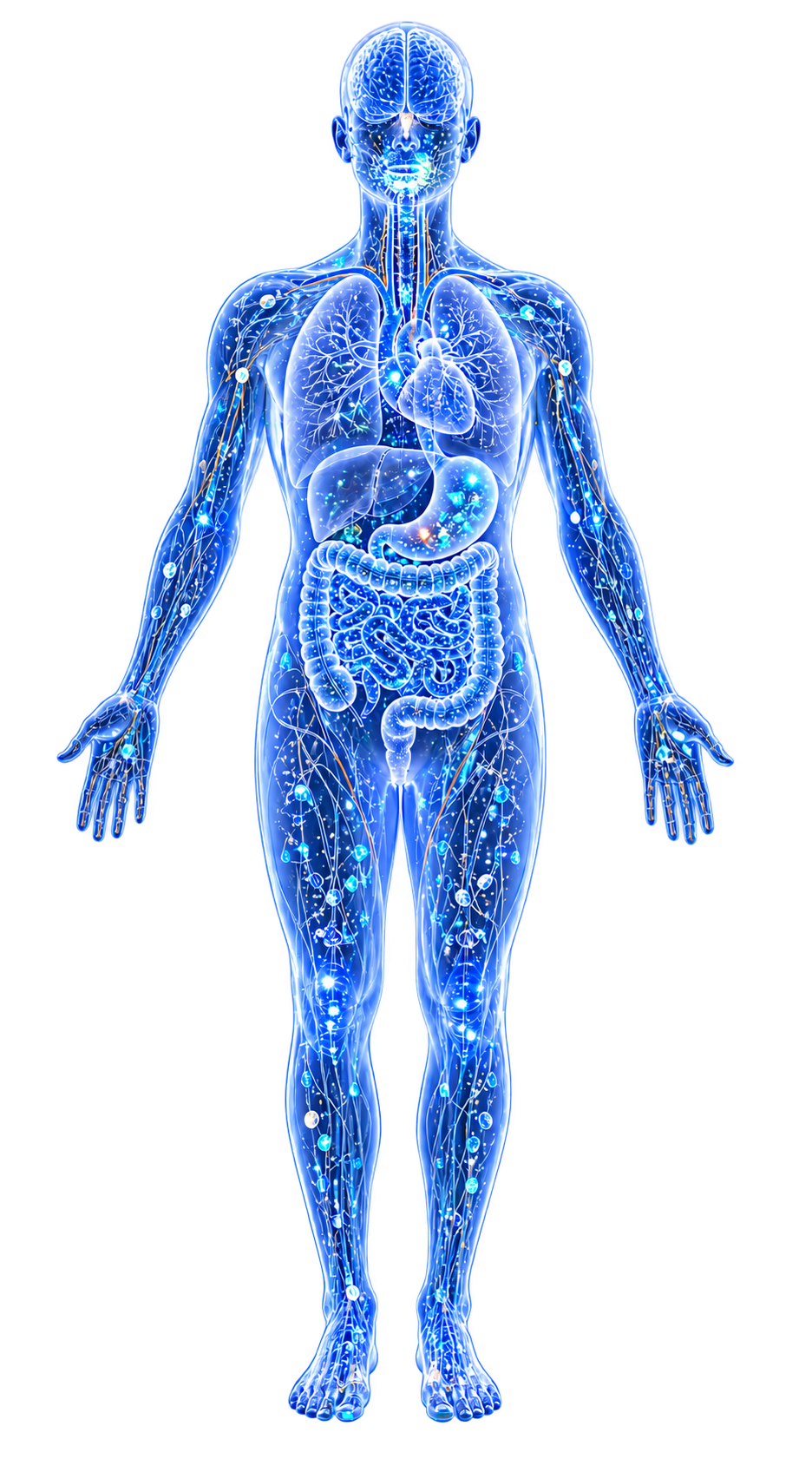
 metals · microbes · host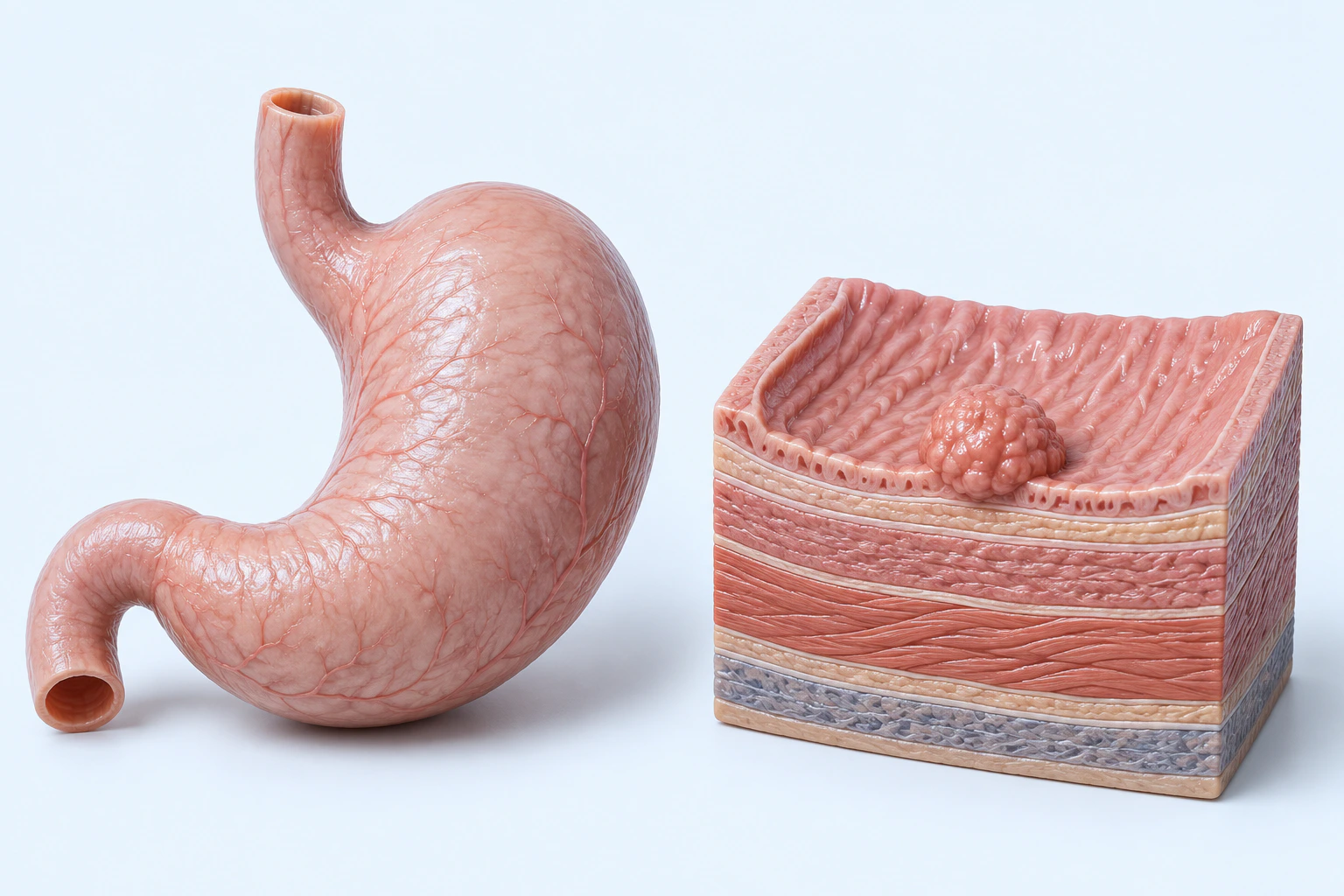
Broad stomach and localized mucosal-neoplasm orientation for gastric cancer. The nonspecific growth does not establish glandular architecture, a histologic or molecular subtype, invasion depth, stage, spread, prognosis, or diagnosis.
Scientific media record1 verified identifier
- Subject
- Stomach Neoplasmscondition
- Identifiers
- MeSH:D013274
- Review
- Editorial review completeIdentifiers authority-verified · Accessibility validated · · gastric-cancer|gastric-cancer-pathology-v1.webp
- Digital source
- Trained-algorithmic mediaCreated with a trained generative algorithm and reviewed by WikiBiome for subject identity, scientific framing, identifiers, provenance, and accessibility.
- Scientific basis
- Stomach Neoplasms — MeSHWhat Is Stomach Cancer?
- License
- CC BY-SA 4.0Created
The fifth most common cancer worldwide and third leading cause of cancer death, with over 1 million new cases annually.
Gastric cancer stands unique in this wiki as the disease where a single microorganism—Helicobacter pylori—provides the dominant causal pathway, and where that pathogen's virulence depends critically on nickel-dependent metalloenzymes.
The chain from Nickel → Hydrogenase → CagA translocation → gastric carcinogenesis is one of the most direct metal-to-cancer pathways in human disease.
Evidence map3 cited passagesInspect provenance +
| Metal | Direction | Key Evidence | |-------|-----------|-------------| | nickel | Elevated / dietary exposure | Essential cofactor for H. pylori urease (24 Ni ions per holoenzyme) and [Ni-Fe] hydrogenase; dietary nickel provides substrate for metalloenzymes; IARC Group 1 carcinogen (inhalation) | | cadmium | Elevated | IARC Group 1 carcinogen with stomach
| Source | Metals | Relevance | |--------|--------|-----------| | Diet | Nickel (cocoa, nuts, legumes, whole grains) | Provides substrate for H. pylori metalloenzymes in infected individuals | | Smoking | Cadmium (primary), lead | Each cigarette contains 1-2 ug Cd; 50% absorbed via lungs | | Occupational | Nickel, cadmium, lead | Smelting, battery production
| Taxon | Role | Evidence | |-------|------|---------| | helicobacter pylori | Primary causative organism. Ni-dependent urease neutralizes gastric acid (24 Ni ions/holoenzyme). [Ni-Fe] hydrogenase oxidizes H2 for energy. CagA oncoprotein translocation via T4SS drives Correa cascade from gastritis to adenocarcinoma. | Entity page; multiple sources | | strepto
One disease. Five evidence layers.
A generated systems view of the metals, organisms, host sequestration signals, ecological conditions, and microbial functions indexed for Gastric Cancer.
Evidence layer
Taxonomic signature
Organisms reported as enriched or depleted, with their indexed functional context kept beside the name.Primary causative organism -- nickel (Ni)-dependent urease and [nickel-iron (Fe)] hydrogenase power colonization, CagA oncoprotein translocation drives Correa cascade
Colonizes atrophic gastric mucosa after acid barrier loss; nitrosamine production potential
Oral/intestinal colonizer of atrophic stomach; contributes to inflammatory milieu
Enriched in gastric cancer tissue; FadA-mediated E-cadherin disruption; shared with colorectal cancer pathway
Opportunistic expansion in achlorhydric stomach; siderophore-mediated iron acquisition
Acid-producing competitor of H. pylori; immunomodulatory; protective functions lost in atrophic state
Butyrate producer depleted in inflammatory environment; loss removes anti-inflammatory protection
Evidence layer
Nutritional immunity
Host metal-withholding, inflammatory, antioxidant, and microbial-metabolite signals indexed in the signature.Elevated host signals
3Depleted protective signals
3Evidence layer
Ecological state
The environmental conditions that connect the organism-level observations into a system.Evidence layer
Virulence functions
Microbial structures, enzymes, and acquisition systems implicated by the linked evidence.The disease record, in full.
The original WikiBiome disease narrative remains intact beneath the generated signature atlas.
The H. pylori-Nickel-Cancer Chain#
Step 1: Nickel Enables Colonization#
H. pylori cannot survive gastric acid without two nickel-dependent enzymes. Urease—a nickel (Ni)-containing enzyme that hydrolyzes urea to Ammonia + CO2, locally neutralizing gastric acid. Contains 24 nickel ions per holoenzyme. Without nickel, urease is inactive and H. pylori cannot colonize.
[nickel-iron (Fe)] hydrogenase—oxidizes molecular H2 (produced by other gut bacteria) to generate energy for H. pylori survival in the microaerobic gastric niche. The hydrogenase is essential for full colonization density.
Step 2: Nickel Powers Virulence#
The CagA oncoprotein translocation depends on the energy derived from nickel metalloenzymes.
H. pylori injects CagA into gastric epithelial cells via the type IV secretion system (T4SS). T4SS assembly and function require ATP generated in part by hydrogenase-dependent metabolism. CagA is phosphorylated by host kinases, then hijacks SHP-2, Grb2, and other signaling molecules.
CagA disrupts cell polarity, tight junctions, and proliferation control—the "oncoprotein". Higher nickel availability → more active urease/hydrogenase → denser colonization → more CagA delivery → higher cancer risk.
Step 3: The Carcinogenic Cascade#
H. pylori infection progresses through the Correa cascade. Normal mucosa → chronic active gastritis. Chronic gastritis → atrophic gastritis (loss of acid-secreting parietal cells).
Atrophic gastritis → intestinal metaplasia.
Intestinal metaplasia → dysplasia. Dysplasia → adenocarcinoma.
Each step is driven by chronic Metal-Driven Inflammation NF-kB Signaling Pathway, Oxidative Stress, DNA Damage in Metal Carcinogenesis, immune responses (Th1/Th17—see Immune Balance), and epithelial damage. The process typically spans decades.
Beyond H. pylori: Other Metal Contributions#
Cadmium#
IARC Group 1 carcinogen with stomach as a target organ. cadmium (Cd) accumulates in gastric mucosa, generating oxidative stress and inhibiting DNA repair. cadmium exposure correlates with gastric cancer incidence in occupational and environmental studies.
cadmium may synergize with H. pylori: metal-induced inflammation + bacterial virulence = compounding carcinogenesis. See Metal Carcinogenesis.
Lead#
lead (Pb) exposure associated with gastric cancer risk in occupational cohorts. lead inhibits DNA repair enzymes (PARP, OGG1) and promotes epigenetic silencing of tumor suppressors. May compound H. pylori-driven DNA Damage in Metal Carcinogenesis.
Iron#
Iron deficiency from chronic H. pylori gastritis may paradoxically promote cancer by inducing compensatory proliferation. Conversely, excess luminal iron in atrophic gastritis (achlorhydria reduces iron absorption, but bleeding adds luminal iron (Fe)) feeds pathobionts. H. pylori actively sequesters host iron for its own use.
Nickel (Beyond H. pylori)#
Dietary nickel itself may contribute: high-nickel diets provide substrate for H. pylori's metalloenzymes. Nickel compounds are IARC Group 1 carcinogens (occupational inhalation → nasal/lung cancer; gastric route less studied). Dietary Nickel Exposure in H. pylori-infected individuals could accelerate the carcinogenic cascade.
The Gastric Microbiome Beyond H. pylori#
H. pylori dominates the gastric microbiome in infected individuals but is not alone.
Atrophic gastritis → loss of acid barrier → colonization by oral and intestinal bacteria (Streptococcus, Prevotella, Neisseria, Rothia). This "opened niche" microbiome may contribute to carcinogenesis through nitrosamine production, bile acid modification, and additional inflammation. Lactobacillus species may be protective: competition with H. pylori, acid production, immunomodulation.
Post-gastrectomy microbiome shifts associate with nutritional deficiencies and altered metal absorption.
Dietary Risk Factors#
Salt—high salt intake damages gastric mucosa, enhances CagA expression, and synergizes with H. pylori. Nitrates/nitrites—converted to N-nitroso compounds by bacterial nitrate reductases; potent mutagens. Smoked/processed foods—polycyclic aromatic hydrocarbons + nitrosamines + metals (cadmium (Cd) in smoked foods).
Low fruit/vegetable intake—reduced antioxidants (vitamin C, selenium (Se)) to counter oxidative stress. Nickel-rich foods—hypothetically, high dietary nickel fuels H. pylori metalloenzymes in infected individuals.
Prevention and Therapeutic Angles#
H. pylori eradication—the single most effective gastric cancer prevention strategy; triple/quadruple antibiotic therapy. But eradication alters the gastric and intestinal microbiome (a Pharmacomicrobiomics concern).
Nickel restriction—untested but theoretically could reduce H. pylori virulence by starving metalloenzymes. Selenium supplementation—selenium (Se) deficiency associates with gastric cancer risk; selenium supports antioxidant defense via glutathione peroxidase. Probiotics—Lactobacillus supplementation during H. pylori eradication reduces antibiotic side effects and may improve eradication rates.
Cadmium avoidance—smoking cessation (tobacco is a major cadmium (Cd) source), reducing dietary cadmium.
Connections#
- Helicobacter pylori—the causative organism; nickel-dependent urease and hydrogenase power colonization and CagA delivery
- Nickel—essential cofactor for H. pylori urease and [nickel (Ni)-iron (Fe)] hydrogenase; dietary nickel fuels virulence
- Cadmium—IARC Group 1 carcinogen targeting gastric mucosa; synergizes with H. pylori inflammation
- Iron—H. pylori sequesters host iron; iron deficiency from chronic gastritis paradoxically promotes proliferation
- Lead—associated with gastric cancer risk in occupational cohorts; inhibits DNA repair
- Selenium—deficiency associates with gastric cancer risk; antioxidant defense via glutathione peroxidase
- inflammation—chronic NF-kB-driven inflammation powers the Correa cascade from gastritis to adenocarcinoma
- oxidative stress—metal-induced and infection-driven ROS as central mutagenic mechanism
- DNA Damage in Metal Carcinogenesis—the molecular basis of carcinogenic transformation from H. pylori and metal exposure
- Metal Carcinogenesis—gastric cancer exemplifies the metal-infection-cancer triad
- Dietary Nickel Exposure—dietary nickel as substrate for H. pylori metalloenzymes in infected individuals
- Probiotics—Lactobacillus supplementation during H. pylori eradication improves outcomes
- Pharmacomicrobiomics—H. pylori eradication therapy reshapes the gastric and intestinal microbiome
- Colorectal Cancer—shared metal-carcinogenesis pathways and microbiome-driven inflammation
References 7
Numbered by first appearance in the article, then reconciled with its declared source list.
- 1
★Federica Giambo, Sebastiano Italia, Michele Teodoro et al. (2021). Influence of Toxic Metal Exposure on the Gut Microbiota (Review). World Academy of Sciences Journal.
- 2
★Monisha Jaishankar, Tenzin Tseten, Naresh Anbalagan et al. (2014). Toxicity, Mechanism and Health Effects of Some Heavy Metals. Interdisciplinary Toxicology.
- 3
Yan Zhang, Jie He, Jiao Jin et al. (2022). Recent advances in the application of metallomics in diagnosis and prognosis of human cancer. Metallomics.
- 4
★Qinheng Zhu, Boyan Chen, Fu Zhang et al. (2024). Toxic and Essential Metals: Metabolic Interactions with the Gut Microbiota and Health Implications. Frontiers in Nutrition.
- 5
Jessica Briffa, Emmanuel Sinagra, Renald Blundell (2020). Heavy Metal Pollution in the Environment and Their Toxicological Effects on Humans. Heliyon.
- 6
★Balali-Mood M, Naseri K, Tahergorabi Z et al. (2021). Toxic Mechanisms of Five Heavy Metals: Mercury, Lead, Chromium, Cadmium, and Arsenic. Frontiers in Pharmacology.
- 7
★Manish Mishra, Larry Nichols, Aditi A. Dave et al. (2022). Molecular Mechanisms of Cellular Injury and Role of Toxic Heavy Metals in Chronic Kidney Disease. International Journal of Molecular Sciences.
Article network
Mentioned here 18
Pages linking here 8
Connect the evidence
Publicly readable discussion by ORCID-authenticated researchers. Questions, interpretation, methods, corrections, and new evidence stay attached to this record.
No discussion yet. Start with a precise question or a source-backed observation.
Activity and accepted changes
Accepted researcher context, editorial status, public discussion, and upstream Git revisions are shown together. Pending, declined, and withdrawn proposals remain private.
- published revision
Backfill oxidative stress concept links
Karen Pendergrass · +3 −3
Inspect exact Git diff ↗ - published revision
Backfill inflammation concept links
Karen Pendergrass · +3 −3
Inspect exact Git diff ↗ - published revision
Complete Ammonia contextual coverage
Karen Pendergrass · +1 −1
Inspect exact Git diff ↗ - published revision
Keep Hydrogenase links contextual
Karen Pendergrass · +0 −1
Inspect exact Git diff ↗ - published revision
Remove repeated Hydrogenase links
Karen Pendergrass · +2 −2
Inspect exact Git diff ↗ - published revision
Complete Tight junctions contextual coverage
Karen Pendergrass · +1 −1
Inspect exact Git diff ↗ - published revision
Complete reviewed Urease contextual coverage
Karen Pendergrass · +1 −1
Inspect exact Git diff ↗ - published revision
Add CagA concept and contextual links
Karen Pendergrass · +1 −1
Inspect exact Git diff ↗ - published revision
massive wiki expansion: 149 stubs fixed, 100+ new pages, Rule 15 scan, keystone papers
WikiBiome Deploy Bot · +20 −20
Inspect exact Git diff ↗ - published revision
nightly maintenance: 94 stub demotions, 181 source_count fixes, 22 auto-discovered stubs, 5 adversarial audits, 3 boundary fixes, 3 evidence-level corrections
WikiBiome Deploy Bot · +1 −0
Inspect exact Git diff ↗ - published revision
cycle 1: health check + lint fixes + 8 ingests + 2 stubs + gestational-diabetes signature
WikiBiome Deploy Bot · +1 −0
Inspect exact Git diff ↗ - published revision
pre-overnight checkpoint 2026-04-18
WikiBiome Deploy Bot · +3 −3
Inspect exact Git diff ↗ - published revision
Citation integrity pass: 38 citations added, 24 parenthesized citations fixed
WikiBiome Deploy Bot · +1 −1
Inspect exact Git diff ↗ - published revision
v2 migration Priority 2: All 29 disease entity pages upgraded with associated_conditions, seo_target, wikipedia_differentiation
WikiBiome Deploy Bot · +6 −0
Inspect exact Git diff ↗ - published revision
WikiBiome v2 migration: signature pages + safety fixes + gap analysis
WikiBiome Deploy Bot · +17 −9
Inspect exact Git diff ↗ - published revision
WikiBiome update — 2026-04-11 22:49
WikiBiome Deploy Bot · +97 −0
Inspect exact Git diff ↗