
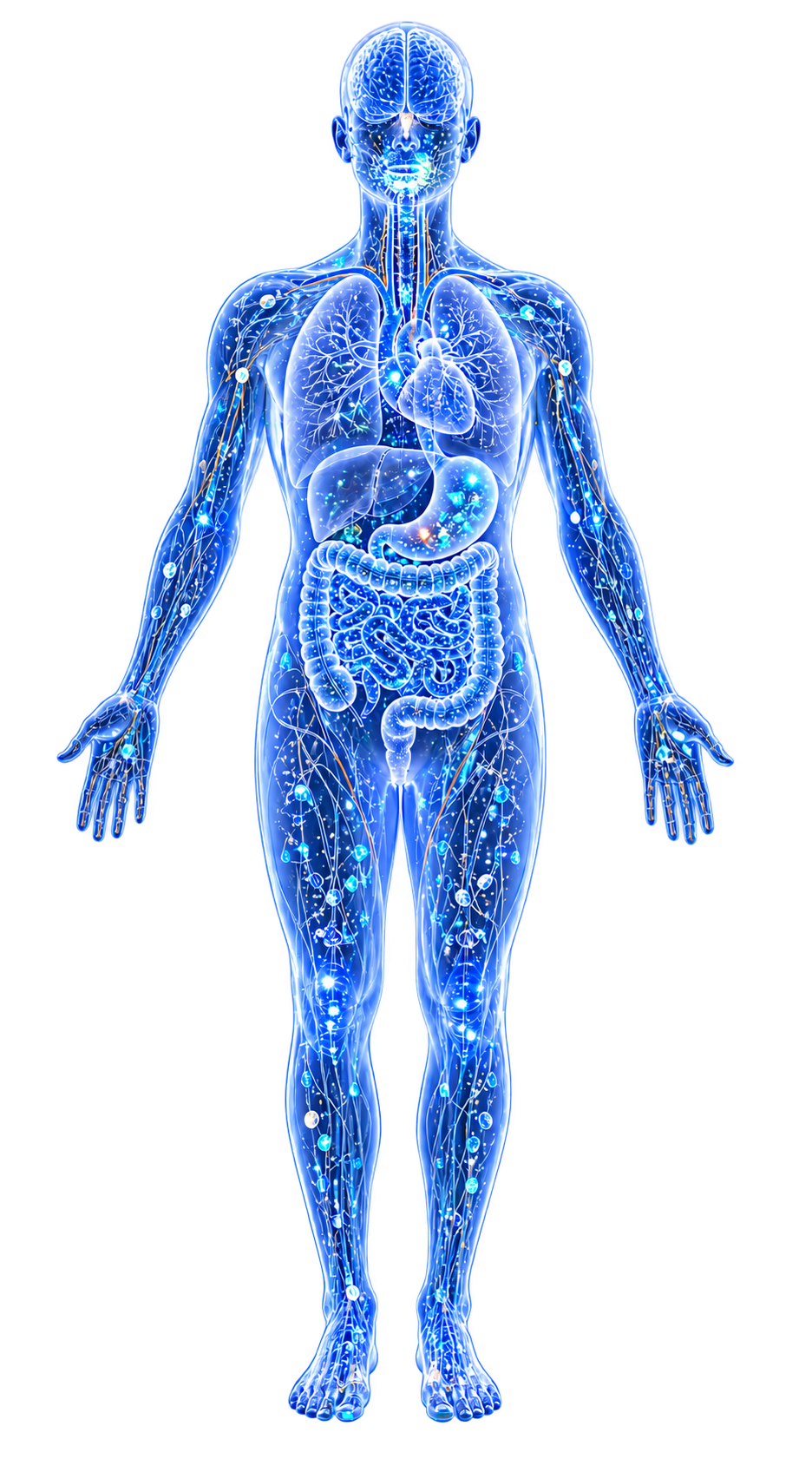
Immunotherapy harnesses the patient's own immune system to fight disease, most notably cancer. Immune checkpoint inhibitors (ICIs)—antibodies that block PD-1, PD-L1, or CTLA-4—have revolutionized oncology since their introduction in the 2010s, producing durable responses in melanoma, lung cancer, renal cell carcinoma, and other malignancies.
However, only 20-40% of patients respond to ICIs, and the search for response predictors has converged on an unexpected target: the Gut Microbiome.
In the WikiBiome framework, immunotherapy sits at the intersection of Immune Balance, Microbial Biomarkers, and metal-dependent immune regulation. The microbiome determines whether the immune system can be effectively unleashed against tumors, and metal status modulates both immune checkpoint expression and microbial community composition.
Evidence map2 cited passagesInspect provenance +
short chain fatty acids, especially butyrate, prime anti-tumor immunity through:
The gut virome also predicts ICI response:
Contents
1. The Microbiome Determines Immunotherapy Response2. Mechanisms of Microbiome-Immunotherapy Interaction3. Metal Connections4. Immunotherapy-Related Adverse Events5. Clinical Implications6. Open Questions7. Cross-ReferencesThe Microbiome Determines Immunotherapy Response#
Landmark Observations#
Multiple independent studies have demonstrated that gut microbiome composition predicts ICI response:
- Responders harbor distinct microbial communities enriched in specific taxa
- Germ-free mice do not respond to anti-PD-1 therapy
- Fecal microbiota transplant (FMT) from responders to non-responders can convert non-responders to responders
- Antibiotic use before ICI therapy dramatically reduces response rates and survival
Responder-Associated Taxa#
| Taxon | ICI Type | Evidence |
|---|---|---|
| Faecalibacterium prausnitzii | Anti-PD-1 | Butyrate production; Treg induction |
| Bifidobacterium | Anti-PD-L1 | DC maturation; enhanced T cell priming |
| Akkermansia muciniphila | Anti-PD-1 | Barrier integrity; IL-12 signaling |
| Ruminococcaceae | Anti-CTLA-4 | SCFA production |
| Bacteroides fragilis (non-toxigenic) | Anti-CTLA-4 | Polysaccharide A-driven Th1 response |
Non-Responder-Associated Taxa#
- Fusobacterium nucleatum: Immunosuppressive in the tumor microenvironment
- Bacteroides thetaiotaomicron: Associated with reduced anti-CTLA-4 response in some cohorts
- Pro-inflammatory Proteobacteria: Endotoxemia may suppress anti-tumor immunity
Mechanisms of Microbiome-Immunotherapy Interaction#
SCFA-Mediated Immune Priming#
Short-Chain Fatty Acids (SCFAs), especially butyrate, prime anti-tumor immunity through.[1]Role of the intestinal microbiome and microbial-derived metabolites in immune checkpoint blockade immunotherapy of cancerHayase E, Jenq RR · 2021Open reference 1 ↓ Butyrate enhances CD8+ T cell effector function through epigenetic modification (HDAC inhibition). Propionate promotes memory T cell formation.
SCFAs calibrate the Treg/effector T cell balance in the gut-associated lymphoid tissue (GALT).
Bile Acid Signaling#
Microbial bile acid metabolites modulate anti-tumor immunity. Secondary bile acids activate NKT cells in the liver. Bile acid composition affects dendritic cell function and antigen presentation.
Statin-induced bile acid changes (see Statins) could theoretically influence ICI response.
Virome Contribution#
The gut virome also predicts ICI response.[2]Distinct gut virome profiles are associated with response to anti-PD-1 therapy in non-small cell lung cancerZhuo Liu, Meihong Liu, Huixiang Chen et al. · 2026Open reference 2 ↓ Specific bacteriophage populations correlate with anti-PD-1 response in NSCLC. Phage-mediated bacterial lysis may release tumor-associated antigens that prime cross-reactive immune responses.
Phage composition reflects and modulates bacterial community structure.
Metal Connections#
Metals in Immune Checkpoint Regulation#
Metal homeostasis influences immune checkpoint expression.
Zinc: Zinc deficiency impairs T cell function and may increase PD-1 expression on exhausted T cells. Copper: Copper accumulates in the tumor microenvironment and promotes immunosuppressive M2 macrophage polarization (Cuproptosis). Iron: Iron-loaded macrophages in the tumor microenvironment suppress anti-tumor immunity; Ferroptosis can release tumor antigens.
Selenium: Selenoproteins are required for optimal T cell proliferation and effector function.
Calprotectin as Response Biomarker#
Calprotectin (S100A8/A9)—the zinc/manganese-sequestering protein central to Nutritional Immunity (Metal Sequestration)—is being explored as an immunotherapy response biomarker. Fecal calprotectin levels correlate with gut Metal-Driven Inflammation status and may predict ICI-induced colitis.
Metal-Dependent Microbial Metabolites#
The microbiome's immunomodulatory output depends on metal-requiring enzymes. SCFA production requires iron-sulfur cluster-containing enzymes in butyrate-producing bacteria. Indole production (via tryptophanase) requires pyridoxal phosphate, whose availability is metal-regulated. Siderophores and Metallophores from gut bacteria can directly modulate immune cell function.
Clinical Implications#
Pre-treatment microbiome profiling could stratify patients into likely responders and non-responders. Antibiotic stewardship: Avoiding unnecessary antibiotics before ICI therapy. FMT: Clinical trials of FMT to convert non-responders (NCT03341143, NCT04116775).
Dietary intervention: High-fiber diets increase SCFA-producing bacteria and may enhance ICI response. Metal supplementation: Correcting zinc and selenium deficiency before ICI therapy.
Open Questions#
Unresolved questions identified by the current evidence record.
01Can a standardized microbiome panel predict ICI response with clinical-grade accuracy?+
The current WikiBiome record identifies this as an unresolved evidence gap.
02Does metal status (zinc (Zn), selenium (Se), iron (Fe), copper (Cu)) independently predict ICI response or modify microbiome-mediated effects?+
The current WikiBiome record identifies this as an unresolved evidence gap.
03Can phage therapy selectively remove non-responder-associated taxa?+
The current WikiBiome record identifies this as an unresolved evidence gap.
04Will combination strategies (ICI + FMT + dietary intervention) become standard of care?+
The current WikiBiome record identifies this as an unresolved evidence gap.
Cross-References#
- Immune Balance—Treg/effector T cell calibration
- Microbial Biomarkers—microbiome-based predictive tools
- butyrate—SCFA-mediated immune priming
- Calprotectin (S100A8/A9)—response and toxicity biomarker
- Ferroptosis—iron-dependent cell death and immune activation
- Cuproptosis—copper-dependent cell death in tumors
References 3
Numbered by first appearance in the article, then reconciled with its declared source list.
- 1
Hayase E, Jenq RR (2021). Role of the intestinal microbiome and microbial-derived metabolites in immune checkpoint blockade immunotherapy of cancer. Genome Medicine.
- 2
Zhuo Liu, Meihong Liu, Huixiang Chen et al. (2026). Distinct gut virome profiles are associated with response to anti-PD-1 therapy in non-small cell lung cancer. Journal of Translational Medicine.
- 3
Abigail L Reens, Damien J Cabral, Xue Liang et al. (2021). Immunomodulation by the Commensal Microbiome During Immune-Targeted Interventions: Focus on Cancer Immune Checkpoint Inhibitor Therapy and Vaccination. Frontiers in Immunology.
Article network
Connect the evidence
Publicly readable discussion by ORCID-authenticated researchers. Questions, interpretation, methods, corrections, and new evidence stay attached to this record.
No discussion yet. Start with a precise question or a source-backed observation.
Activity and accepted changes
Accepted researcher context, editorial status, public discussion, and upstream Git revisions are shown together. Pending, declined, and withdrawn proposals remain private.
- published revision
Backfill gut microbiome concept links
Karen Pendergrass · +1 −1
Inspect exact Git diff ↗ - published revision
Backfill inflammation concept links
Karen Pendergrass · +1 −1
Inspect exact Git diff ↗ - published revision
massive wiki expansion: 149 stubs fixed, 100+ new pages, Rule 15 scan, keystone papers
WikiBiome Deploy Bot · +20 −20
Inspect exact Git diff ↗ - published revision
pre-overnight checkpoint 2026-04-18
WikiBiome Deploy Bot · +127 −0
Inspect exact Git diff ↗