
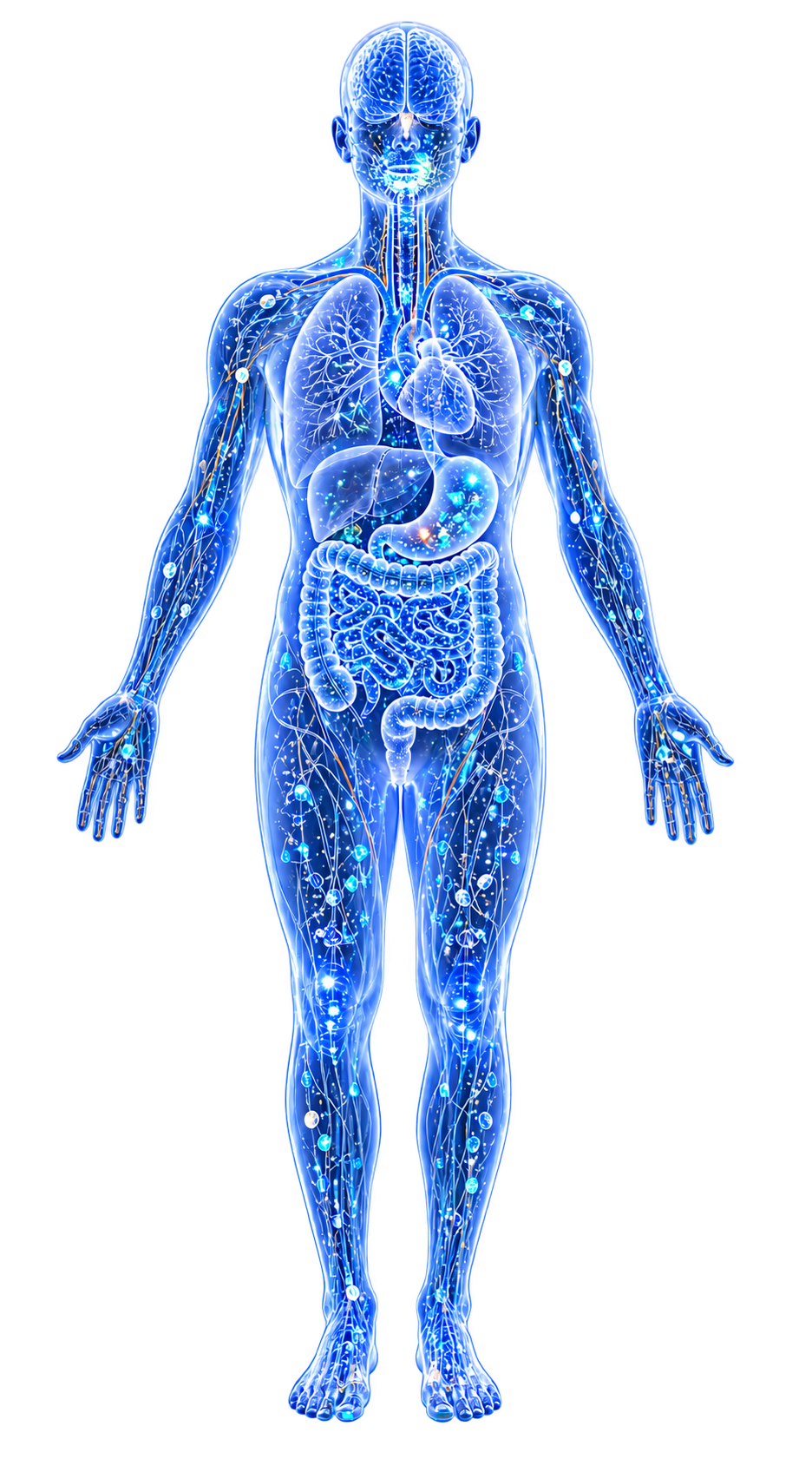
Cortisol is the primary glucocorticoid stress hormone, produced by the adrenal cortex under HPA (hypothalamic-pituitary-adrenal) axis control. In the WikiBiome framework, cortisol is the molecular bridge between psychological stress and microbiome disruption—it directly modulates bacterial virulence, suppresses mucosal immunity, and alters gut motility and permeability.
Evidence map5 cited passagesInspect provenance +
P. gingivalis virulence: Cortisol promotes surface translocation of porphyromonas gingivalis in a concentration-dependent manner, upregulating T9SS-associated genes and fimbrial proteins. This is the most direct evidence of a stress hormone activating a specific pathogen's virulence program.
Periodontitis: Salivary cortisol elevated in periodontitis (0.15 µM vs. 0.02 µM healthy); directly activates P. gingivalis migration.
Depression: HPA axis dysregulation is a core feature of MDD; cortisol drives gut dysbiosis → endotoxemia → neuroinflammation.
PPD: Cortisol dysregulation postpartum compounds estrogen/progesterone withdrawal.
PMDD: Cortisol-GABA-allopregnanolone axis disruption.
Direct Effects on the Microbiome#
P. gingivalis virulence: Cortisol promotes surface translocation of Porphyromonas gingivalis in a concentration-dependent manner, upregulating T9SS-associated genes and fimbrial proteins.[1]Kim et al. 2022 — Cortisol Promotes Surface Translocation of Porphyromonas gingivalisHey-Min Kim, Christina Magda Rothenberger, Mary Ellen Davey · 2022Open reference 1 ↓ This is the most direct evidence of a stress hormone activating a specific pathogen's virulence program.
Catecholamine-responsive bacteria: Cortisol's downstream catecholamines (norepinephrine) are sensed by enteric bacteria, promoting growth and virulence factor expression in Enterobacteriaceae. Immunosuppression: Cortisol suppresses secretory IgA, mucosal immune cell function, and tight junction integrity—removing immune barriers to pathogen expansion.
Stress-Disease Connections#
Periodontitis: Salivary cortisol elevated in periodontitis (>0.15 µM vs. 0.02 µM healthy); directly activates P. gingivalis migration.[1]Kim et al. 2022 — Cortisol Promotes Surface Translocation of Porphyromonas gingivalisHey-Min Kim, Christina Magda Rothenberger, Mary Ellen Davey · 2022Open reference 1 ↓
Depression: HPA axis dysregulation is a core feature of MDD; cortisol drives gut Dysbiosis → Endotoxemia → neuroinflammation.[2]Graves' disease as a driver of depression: a mechanistic insightSiegmann EM, Muller HHO, Luecke C et al. · 2020Open reference 2 ↓
PPD: Cortisol dysregulation postpartum compounds estrogen/progesterone withdrawal.[3]Suryawanshi 2022 — A Comprehensive Review on Postpartum DepressionOm Suryawanshi, Sandhya Pajai · 2022Open reference 3 ↓[4]Silva-Fernandes 2024 — Inflammatory Biomarkers and Perinatal Depression: A Systematic ReviewAnabela Silva-Fernandes, Ana Conde, Margarida Marques et al. · 2024Open reference 4 ↓ PMDD: Cortisol-GABA-Allopregnanolone axis disruption.[5]Cheng 2025 — Neuroinflammation in PMS and PMDD (Review)Cheng et al. · 2025Open reference 5 ↓
Cross-References#
- Porphyromonas gingivalis—cortisol directly activates virulence
- Gut-Brain Axis—HPA axis as gut-brain mediator
- Systemic Inflammation—cortisol paradox: acute anti-inflammatory, chronic pro-inflammatory
- Serotonin-Estrogen Axis—cortisol interacts with neuroendocrine axes
- Allopregnanolone—cortisol-GABA interactions in PMDD
References 5
Numbered by first appearance in the article, then reconciled with its declared source list.
- 1
Hey-Min Kim, Christina Magda Rothenberger, Mary Ellen Davey (2022). Kim et al. 2022 — Cortisol Promotes Surface Translocation of Porphyromonas gingivalis. Pathogens.
- 2
Siegmann EM, Muller HHO, Luecke C et al. (2020). Graves' disease as a driver of depression: a mechanistic insight. Frontiers in Endocrinology.
- 3
Om Suryawanshi, Sandhya Pajai (2022). Suryawanshi 2022 — A Comprehensive Review on Postpartum Depression. Cureus.
- 4
Anabela Silva-Fernandes, Ana Conde, Margarida Marques et al. (2024). Silva-Fernandes 2024 — Inflammatory Biomarkers and Perinatal Depression: A Systematic Review. PLOS ONE.
- 5
Cheng et al. (2025). Cheng 2025 — Neuroinflammation in PMS and PMDD (Review). Frontiers in Endocrinology.
Article network
Connect the evidence
Publicly readable discussion by ORCID-authenticated researchers. Questions, interpretation, methods, corrections, and new evidence stay attached to this record.
No discussion yet. Start with a precise question or a source-backed observation.
Activity and accepted changes
Accepted researcher context, editorial status, public discussion, and upstream Git revisions are shown together. Pending, declined, and withdrawn proposals remain private.
- published revision
Complete corpus-wide Dysbiosis linking
Karen Pendergrass · +1 −1
Inspect exact Git diff ↗ - published revision
Complete Tight junctions contextual coverage
Karen Pendergrass · +1 −1
Inspect exact Git diff ↗ - published revision
massive wiki expansion: 149 stubs fixed, 100+ new pages, Rule 15 scan, keystone papers
WikiBiome Deploy Bot · +45 −0
Inspect exact Git diff ↗