
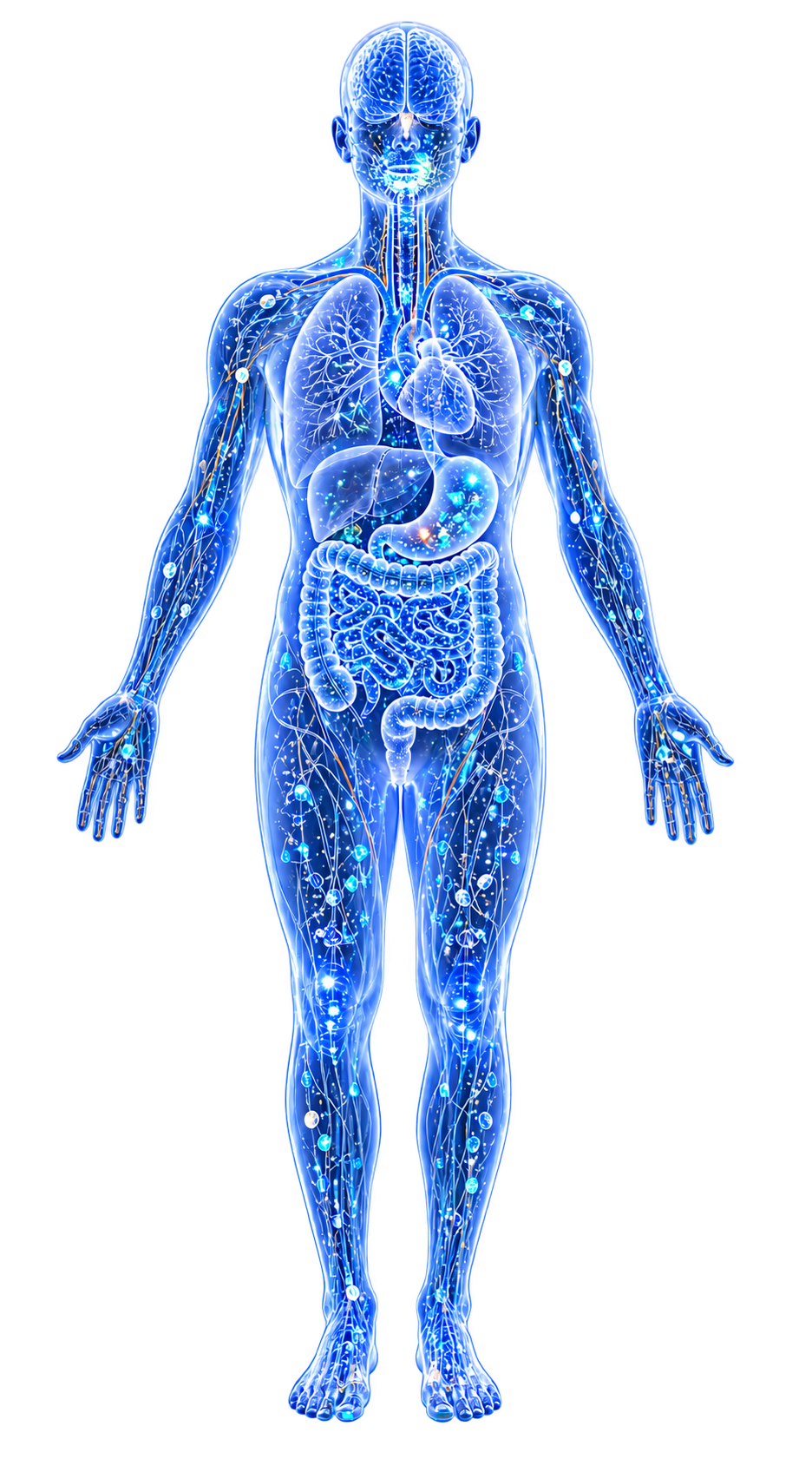
Endotoxemia is the presence of bacterial endotoxin (lipopolysaccharide, LPS) in the bloodstream. Metabolic endotoxemia—chronic, low-grade LPS translocation from the gut—is a central mechanism linking Dysbiosis to systemic disease across dozens of conditions in this wiki.
It is the molecular bridge between gut barrier failure and systemic Metal-Driven Inflammation.
Evidence map5 cited passagesInspect provenance +
Hit 1: Metals (cadmium, lead, arsenic) damage tight junctions directly, increasing paracellular permeability.
Cardiovascular disease: LPS drives endothelial dysfunction and atherosclerosis.
Type 2 diabetes: Metabolic endotoxemia → insulin resistance via TLR4/NF-kB.
CKD: Uremic toxins compound LPS-driven inflammation.
Erectile dysfunction: Endotoxemia → endothelial dysfunction → impaired NO-dependent erection.
Mechanism#
Gut barrier disruption: Loss of tight junction integrity (ZO-1, occludin, claudin) allows LPS from Gram-negative bacteria to translocate across the intestinal epithelium into the portal circulation.
TLR4 activation: LPS binds TLR4 on macrophages, dendritic cells, and hepatocytes, activating NF-kB Signaling Pathway signaling. Cytokine cascade: NF-kB drives production of IL-6, TNF-alpha, IL-1beta—the same pro-inflammatory cytokines elevated across virtually every disease signature in this wiki.
Systemic consequences: Chronic low-grade endotoxemia drives insulin resistance, endothelial dysfunction, neuroinflammation, and hepatic inflammation.
Metal-Microbiome Connection#
Heavy Metals drive endotoxemia through a two-hit mechanism. Hit 1: Metals (Cadmium, Lead, Arsenic) damage tight junctions directly, increasing paracellular permeability.[1]Effects of Heavy Metals on Gut Barrier Integrity and Gut MicrobiotaSweta Ghosh, Syam P. Nukavarpu, Venkatakrishna Rao Jala · 2024Open reference 1 ↓
Hit 2: Metals selectively enrich LPS-rich Gram-negative Enterobacteriaceae while depleting barrier-protective SCFA producers (Faecalibacterium prausnitzii, Roseburia), increasing the luminal LPS load available for translocation.
The result: more LPS in the lumen AND a leakier barrier = amplified endotoxemia.
Conditions Associated#
Metabolic endotoxemia is documented across. Cardiovascular disease: LPS drives endothelial dysfunction and atherosclerosis.[2]The gut microbiome in atherosclerotic cardiovascular diseaseZhuye Jie, Huihua Xia, Shi-Long Zhong et al. · 2017Open reference 2 ↓ Type 2 diabetes: Metabolic endotoxemia → insulin resistance via TLR4/NF-kB.[3]Salamone 2021 — The Relationship between Gut Microbiota, Short-Chain Fatty Acids and Type 2 Diabetes: The Role of Dietary FibreDominic Salamone, Angela Albarosa Rivellese, Claudia Vetrani · 2021Open reference 3 ↓
CKD: Uremic toxins compound LPS-driven inflammation.[4]Protein-Bound Uremic Toxins from Gut Microbiota and Inflammatory Markers in CKDNatalia A. Borges, Amanda F. Barros, Lia S. Nakao et al. · 2016Open reference 4 ↓[5]Alterations to the Gut Microbiota and Their Correlation with Inflammatory Factors in CKDFengXia Li, MeiHong Wang, JunPing Wang et al. · 2019Open reference 5 ↓[6]Gut Microbiota Composition and Frailty in Elderly Patients with Chronic Kidney DiseaseElisabetta Margiotta, Francesco Miragoli, Maria Luisa Callegari et al. · 2020Open reference 6 ↓
Erectile dysfunction: Endotoxemia → endothelial dysfunction → impaired NO-dependent erection.[7]Ben Khedher 2017 — Disturbed Fatty Acids Metabolism in Diabetic Erectile DysfunctionMohamed Raâfet Ben Khedher, Houda Bouhajja, Samia Haj Ahmed et al. · 2017Open reference 7 ↓[8]Lv 2024 — Gut Microbiota Is Involved in Male Reproductive Function: A ReviewShuya Lv, Jingrong Huang, Yadan Luo et al. · 2024Open reference 8 ↓
Neurodegeneration: LPS crosses the blood-brain barrier and activates Microglia, driving Neuroinflammation. Obesity: High-fat diet increases Gram-negative bacteria and gut permeability simultaneously.
Cross-References#
- Lipopolysaccharide—the endotoxin molecule
- Intestinal Permeability—barrier failure enabling translocation
- inflammation—downstream systemic consequence
- NF-kB Signaling Pathway—signaling pathway activated by LPS/TLR4
- Interleukin-6 (IL-6)—key cytokine in endotoxemia-driven inflammation
- dysbiosis—microbial imbalance increasing luminal LPS
- Short-Chain Fatty Acids (SCFAs)—Butyrate maintains barrier integrity; depletion enables endotoxemia
References 9
Numbered by first appearance in the article, then reconciled with its declared source list.
- 1
★Sweta Ghosh, Syam P. Nukavarpu, Venkatakrishna Rao Jala (2024). Effects of Heavy Metals on Gut Barrier Integrity and Gut Microbiota. Microbiota and Host.
- 2
Zhuye Jie, Huihua Xia, Shi-Long Zhong et al. (2017). The gut microbiome in atherosclerotic cardiovascular disease. Nature Communications.
- 3
Dominic Salamone, Angela Albarosa Rivellese, Claudia Vetrani (2021). Salamone 2021 — The Relationship between Gut Microbiota, Short-Chain Fatty Acids and Type 2 Diabetes: The Role of Dietary Fibre. Acta Diabetologica.
- 4
Natalia A. Borges, Amanda F. Barros, Lia S. Nakao et al. (2016). Protein-Bound Uremic Toxins from Gut Microbiota and Inflammatory Markers in CKD. Journal of Renal Nutrition.
- 5
FengXia Li, MeiHong Wang, JunPing Wang et al. (2019). Alterations to the Gut Microbiota and Their Correlation with Inflammatory Factors in CKD. Frontiers in Cellular and Infection Microbiology.
- 6
Elisabetta Margiotta, Francesco Miragoli, Maria Luisa Callegari et al. (2020). Gut Microbiota Composition and Frailty in Elderly Patients with Chronic Kidney Disease. PLOS ONE.
- 7
Mohamed Raâfet Ben Khedher, Houda Bouhajja, Samia Haj Ahmed et al. (2017). Ben Khedher 2017 — Disturbed Fatty Acids Metabolism in Diabetic Erectile Dysfunction. Lipids in Health and Disease.
- 8
Shuya Lv, Jingrong Huang, Yadan Luo et al. (2024). Lv 2024 — Gut Microbiota Is Involved in Male Reproductive Function: A Review. Frontiers in Microbiology.
- 9
Arpana Gupta, Vadim Osadchiy, Emeran A. Mayer (2020). Gupta, Osadchiy & Mayer 2020 — Brain-Gut-Microbiome Interactions in Obesity and Food Addiction. Nature Reviews Gastroenterology & Hepatology.
Article network
Mentioned here 18
Pages linking here 19
Connect the evidence
Publicly readable discussion by ORCID-authenticated researchers. Questions, interpretation, methods, corrections, and new evidence stay attached to this record.
No discussion yet. Start with a precise question or a source-backed observation.
Activity and accepted changes
Accepted researcher context, editorial status, public discussion, and upstream Git revisions are shown together. Pending, declined, and withdrawn proposals remain private.
- published revision
Backfill heavy metals concept links
Karen Pendergrass · +1 −1
Inspect exact Git diff ↗ - published revision
Backfill inflammation concept links
Karen Pendergrass · +1 −1
Inspect exact Git diff ↗ - published revision
Complete corpus-wide Dysbiosis linking
Karen Pendergrass · +1 −1
Inspect exact Git diff ↗ - published revision
Complete Tight junctions contextual coverage
Karen Pendergrass · +1 −1
Inspect exact Git diff ↗ - published revision
massive wiki expansion: 149 stubs fixed, 100+ new pages, Rule 15 scan, keystone papers
WikiBiome Deploy Bot · +64 −0
Inspect exact Git diff ↗