
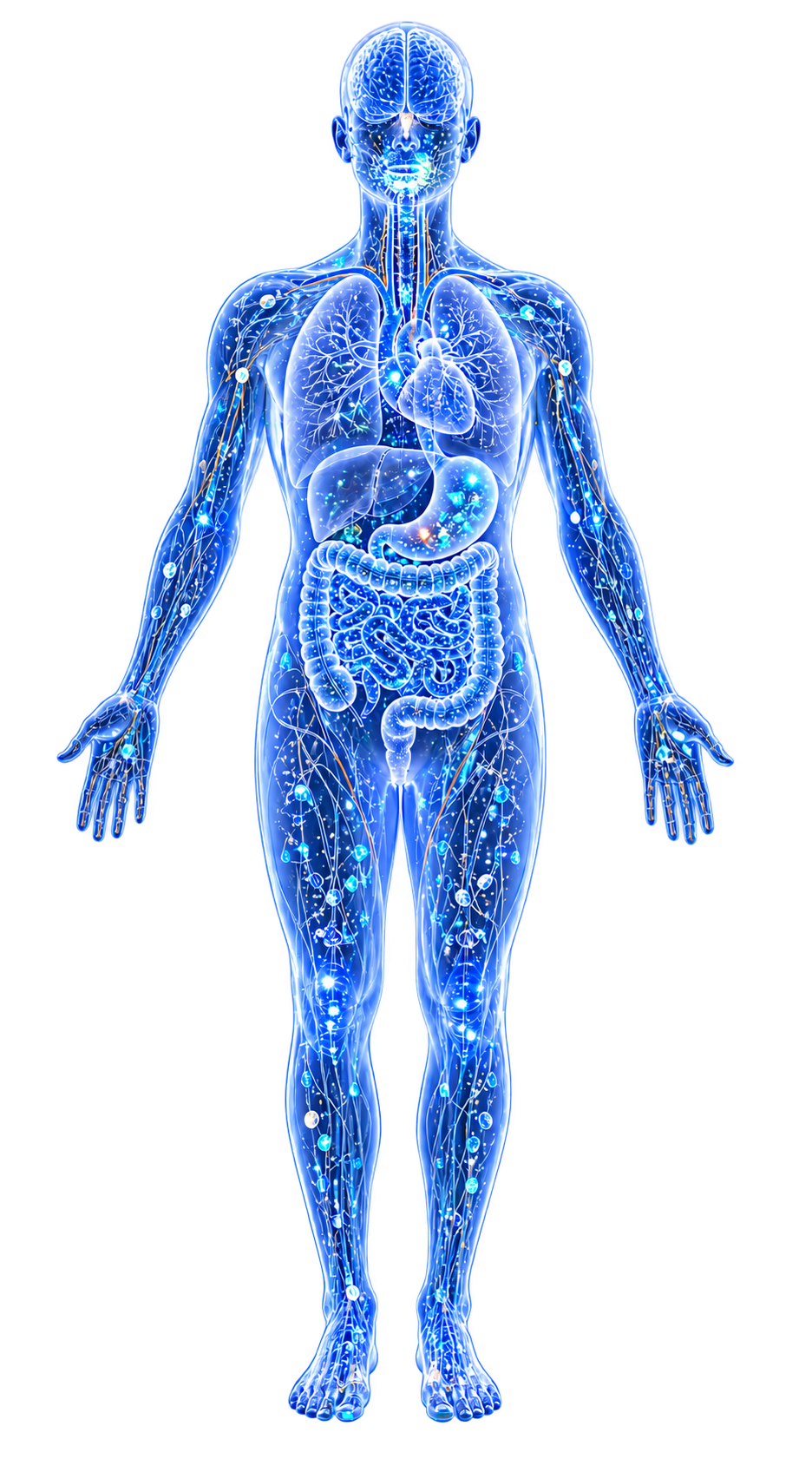
Lipopolysaccharide (LPS), also called endotoxin, is a major structural component of the outer membrane of Gram-negative bacteria. When released into circulation through a compromised gut barrier, LPS triggers potent inflammatory signaling via Toll-like receptor 4 (TLR4), linking gut Dysbiosis directly to systemic Metal-Driven Inflammation.
The concept of "metabolic endotoxemia"—chronic low-grade LPS translocation driving metabolic disease—has become a central framework for understanding how gut microbial ecology affects organs far from the intestine.
Contents
1. Structure and Signaling2. Metabolic Endotoxemia3. Metal Interactions4. Nutritional Immunity Context5. Cross-ReferencesStructure and Signaling#
LPS consists of three regions: lipid A (the bioactive component), a core oligosaccharide, and the O-antigen polysaccharide. Lipid A binds the MD-2/TLR4 complex on innate immune cells, activating NF-kB and triggering production of TNF-alpha, IL-6, IL-1beta, and other pro-inflammatory cytokines.
Not all LPS is equally inflammatory. Porphyromonas species produce atypical LPS that modulates both TLR4 and TLR2 signaling differently from classic Enterobacteriaceae LPS. Bacteroides fragilis produces penta-acylated LPS that is 100-fold less potent than the hexa-acylated LPS of E. coli—a distinction with significant immunological consequences for disease versus commensalism.
Metabolic Endotoxemia#
When the intestinal barrier is compromised—whether by metal-induced tight junction damage, SCFA depletion, or Akkermansia muciniphila loss—LPS translocates from the gut lumen into portal and systemic circulation. This low-grade chronic endotoxemia drives.
Obesity—LPS activates TLR4 on adipose tissue macrophages, promoting insulin resistance and adipose inflammation. Erectile Dysfunction—Circulating LPS activates TLR4 on endothelial cells, upregulating TNF-alpha and IL-6 which suppress eNOS in penile vasculature. Atherosclerosis—LPS-TLR4 signaling accelerates foam cell formation and plaque instability.
Hepatic steatosis—Portal vein LPS activates Kupffer cells, driving hepatic inflammation and fat accumulation.
Metal Interactions#
Heavy Metals amplify LPS-mediated pathology through several mechanisms. Barrier disruption: Cadmium, lead, and arsenic damage tight junction proteins (ZO-1, occludin, claudin-1), increasing paracellular LPS translocation. Immune priming: Metal-induced NF-kB activation lowers the threshold for TLR4 signaling, creating synergistic inflammation between metal exposure and LPS.
Microbiome shift: Metals select for Gram-negative Proteobacteria (Pseudomonadota) (LPS-rich organisms) while depleting Gram-positive Butyrate producers that maintain barrier integrity—a dual mechanism that simultaneously increases LPS production and its translocation route.
Nutritional Immunity Context#
The host response to LPS translocation overlaps with nutritional immunity markers. Elevated Calprotectin (S100A8/A9), Lactoferrin, and Hepcidin indicate both antimicrobial defense and LPS-driven inflammation.
In clinical interpretation, these markers should be read not as simple inflammation indicators but as evidence of active host defense against microbial translocation—consistent with Karen's Brain Primitive 2 (nutritional immunity as interpretive constraint).
Cross-References#
- barrier-dysfunction—prerequisite for LPS translocation
- NF-kB Signaling Pathway—downstream transcription factor activated by TLR4
- Proteobacteria (Pseudomonadota)—primary source of pathogenic LPS in dysbiosis
- Akkermansia muciniphila—barrier protector whose depletion increases endotoxemia
- Obesity—metabolic endotoxemia as driver
- Kynurenine—metal-induced TLR4 activation upregulates IDO1 via IFN-gamma
References 6
Numbered by first appearance in the article, then reconciled with its declared source list.
- 1
★Sweta Ghosh, Syam P. Nukavarpu, Venkatakrishna Rao Jala (2024). Effects of Heavy Metals on Gut Barrier Integrity and Gut Microbiota. Microbiota and Host.
- 2
Safadi JM, Quinton AMG, Lennox B et al. (2022). Gut Dysbiosis in Severe Mental Illness and Chronic Fatigue: A Novel Trans-Diagnostic Construct? A Systematic Review and Meta-Analysis. Molecular Psychiatry.
- 3
Zhuye Jie, Huihua Xia, Shi-Long Zhong et al. (2017). The gut microbiome in atherosclerotic cardiovascular disease. Nature Communications.
- 4
Chen S, Jiang D, Zhuang Q et al. (2024). Esophageal microbial dysbiosis impairs mucosal barrier integrity via toll-like receptor 2 pathway in patients with gastroesophageal reflux symptoms. Journal of Translational Medicine.
- 5
Yuling Chen, Chang Chen (2023). Chen, Chen 2023 — Gut microbiota, inflammatory proteins and COVID-19: a Mendelian randomisation study. Frontiers in Immunology.
- 6
Chadchan SB, Cheng M, Parnell LA et al. (2019). Antibiotic therapy with metronidazole reduces endometriosis disease progression in mice: a potential role for gut microbiota. Human Reproduction.
Article network
Mentioned here 18
Pages linking here 8
Connect the evidence
Publicly readable discussion by ORCID-authenticated researchers. Questions, interpretation, methods, corrections, and new evidence stay attached to this record.
No discussion yet. Start with a precise question or a source-backed observation.
Activity and accepted changes
Accepted researcher context, editorial status, public discussion, and upstream Git revisions are shown together. Pending, declined, and withdrawn proposals remain private.
- published revision
Backfill heavy metals concept links
Karen Pendergrass · +1 −1
Inspect exact Git diff ↗ - published revision
Backfill inflammation concept links
Karen Pendergrass · +1 −1
Inspect exact Git diff ↗ - published revision
Complete corpus-wide Dysbiosis linking
Karen Pendergrass · +1 −1
Inspect exact Git diff ↗ - published revision
Complete Tight junctions contextual coverage
Karen Pendergrass · +1 −1
Inspect exact Git diff ↗ - published revision
massive wiki expansion: 149 stubs fixed, 100+ new pages, Rule 15 scan, keystone papers
WikiBiome Deploy Bot · +21 −16
Inspect exact Git diff ↗ - published revision
maintenance: 409 source fixes, 34 entity updates, 17 concept updates, 30 analysis outputs
WikiBiome Deploy Bot · +66 −0
Inspect exact Git diff ↗