
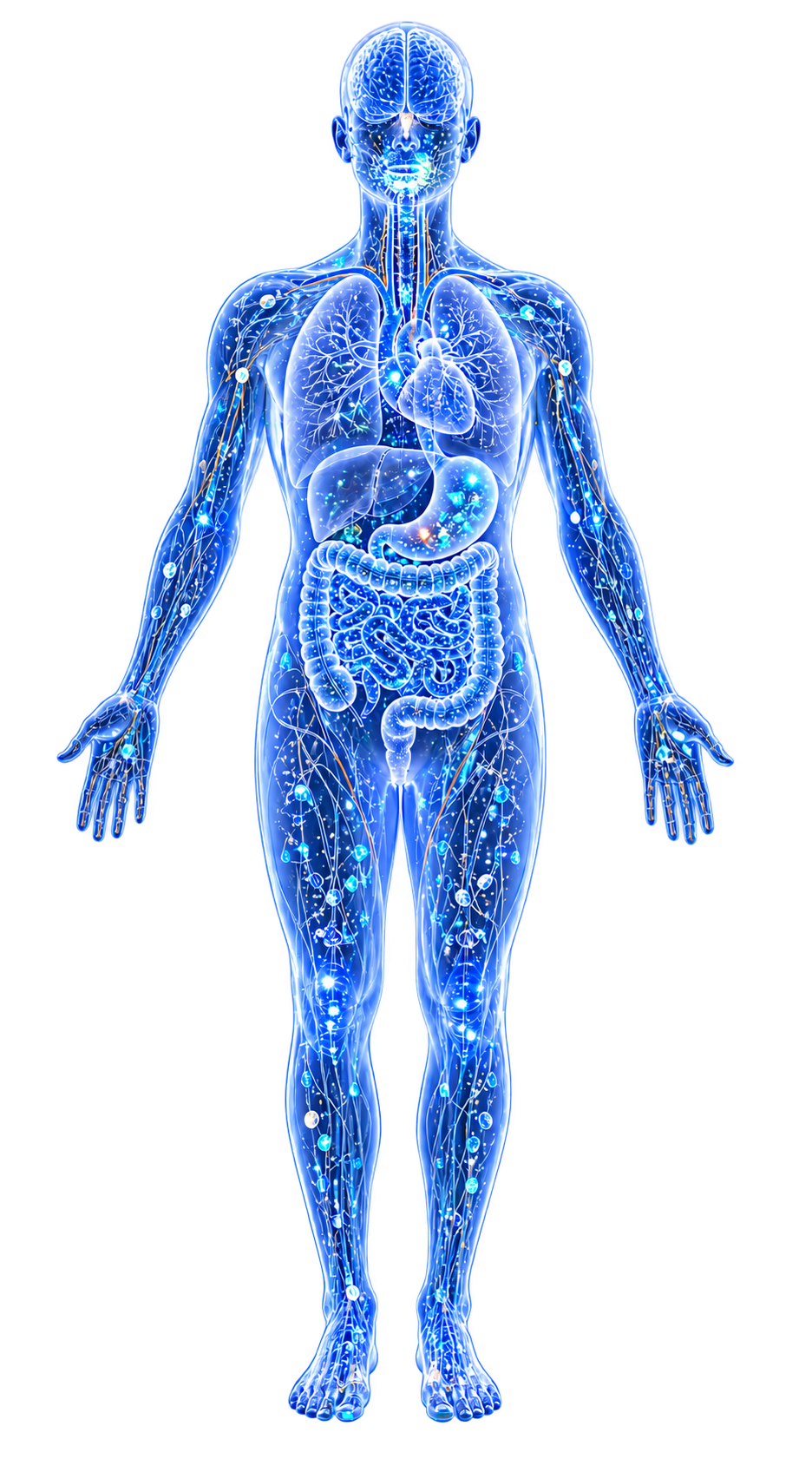
Leptin is an adipokine (hormone produced by adipose tissue) that signals satiety to the hypothalamus—suppressing appetite and increasing energy expenditure. Leptin resistance (elevated leptin with impaired signaling) is a hallmark of obesity, paralleling insulin resistance. The Gut Microbiome modulates leptin sensitivity through Endotoxemia-driven Metal-Driven Inflammation and SCFA signaling.
Evidence map2 cited passagesInspect provenance +
Heavy metal exposure (cadmium, lead) disrupts adipose function and leptin signaling.
High-fat diet alters gut microbiota and leptin/estrogen signaling in precocious puberty models.
Microbiome-Leptin Axis#
Dysbiosis → Endotoxemia → chronic low-grade inflammation → impaired leptin receptor signaling → leptin resistance → overeating → obesity → more adipose → more leptin → deeper resistance.
SCFAs (especially propionate) stimulate leptin secretion from adipocytes via GPR41. Heavy metal exposure (Cadmium, Lead) disrupts adipose function and leptin signaling.[1]Heavy Metals, Microbial Metallomics, and the US Obesity Epidemic: A Mechanistic Examination of a Population-Level Metabolic DisruptionKaren Pendergrass · 2026Open reference 1 ↓ High-fat diet alters gut microbiota and leptin/estrogen signaling in precocious puberty models.[2]Wu 2025 — Relationship between High-Fat Diet, Gut Microbiota, and Precocious Puberty: Mechanisms and ImplicationsNan Wu, Ke Ning, Yanan Liu et al. · 2025Open reference 2 ↓
Cross-References#
- Obesity—leptin resistance as central mechanism
- Insulin Resistance—parallel hormone resistance
- Endotoxemia—inflammation drives leptin resistance
- adiponectin—complementary adipokine (insulin-sensitizing)
References 4
Numbered by first appearance in the article, then reconciled with its declared source list.
- 1
★Karen Pendergrass (2026). Heavy Metals, Microbial Metallomics, and the US Obesity Epidemic: A Mechanistic Examination of a Population-Level Metabolic Disruption. Zenodo Preprint.
- 2
Nan Wu, Ke Ning, Yanan Liu et al. (2025). Wu 2025 — Relationship between High-Fat Diet, Gut Microbiota, and Precocious Puberty: Mechanisms and Implications. Frontiers in Microbiology.
- 3
Dominic Salamone, Angela Albarosa Rivellese, Claudia Vetrani (2021). Salamone 2021 — The Relationship between Gut Microbiota, Short-Chain Fatty Acids and Type 2 Diabetes: The Role of Dietary Fibre. Acta Diabetologica.
- 4
Arpana Gupta, Vadim Osadchiy, Emeran A. Mayer (2020). Gupta, Osadchiy & Mayer 2020 — Brain-Gut-Microbiome Interactions in Obesity and Food Addiction. Nature Reviews Gastroenterology & Hepatology.
Article network
Connect the evidence
Publicly readable discussion by ORCID-authenticated researchers. Questions, interpretation, methods, corrections, and new evidence stay attached to this record.
No discussion yet. Start with a precise question or a source-backed observation.
Activity and accepted changes
Accepted researcher context, editorial status, public discussion, and upstream Git revisions are shown together. Pending, declined, and withdrawn proposals remain private.
- published revision
Backfill gut microbiome concept links
Karen Pendergrass · +1 −1
Inspect exact Git diff ↗ - published revision
Backfill inflammation concept links
Karen Pendergrass · +1 −1
Inspect exact Git diff ↗ - published revision
Complete corpus-wide Dysbiosis linking
Karen Pendergrass · +1 −1
Inspect exact Git diff ↗ - published revision
massive wiki expansion: 149 stubs fixed, 100+ new pages, Rule 15 scan, keystone papers
WikiBiome Deploy Bot · +35 −0
Inspect exact Git diff ↗