
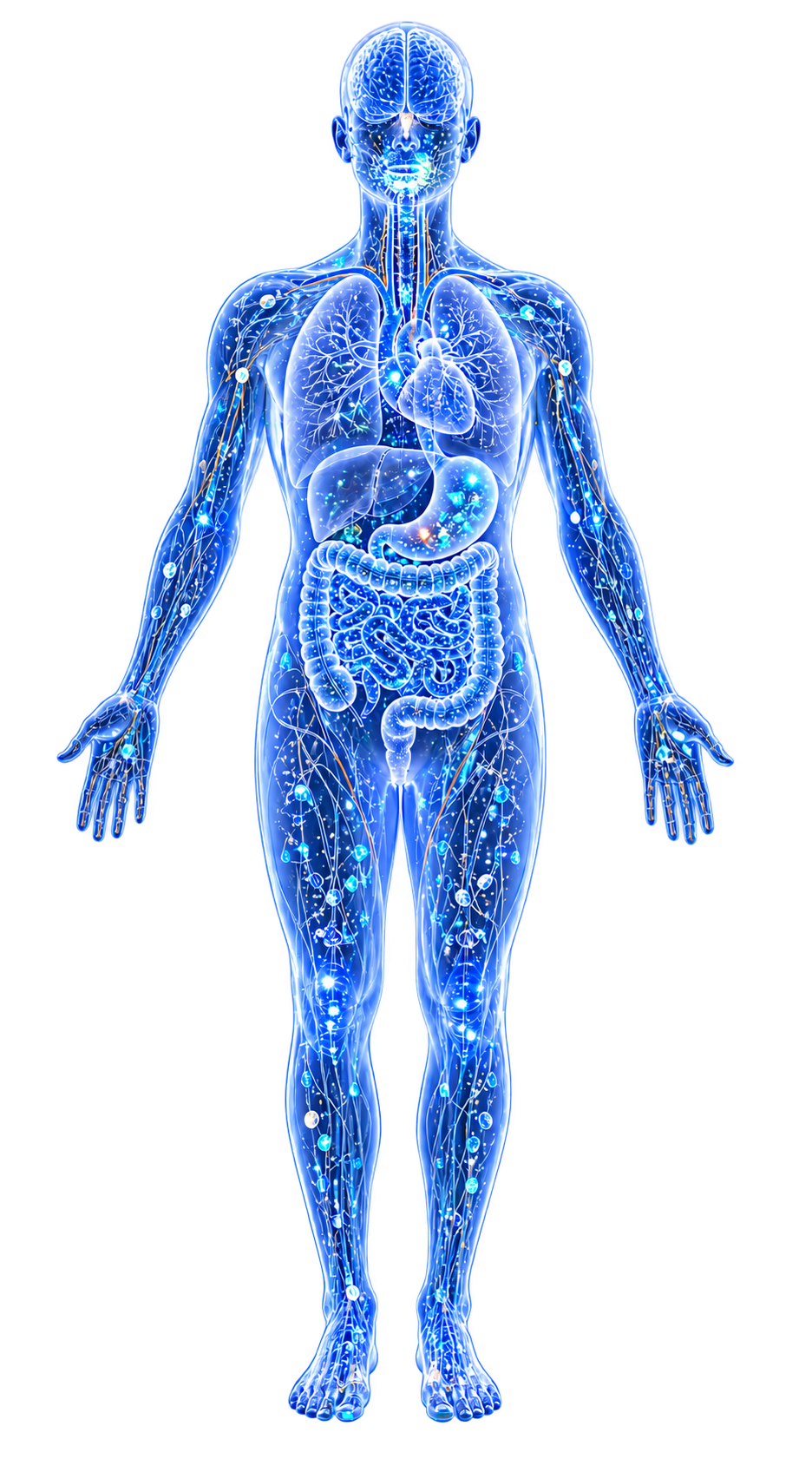
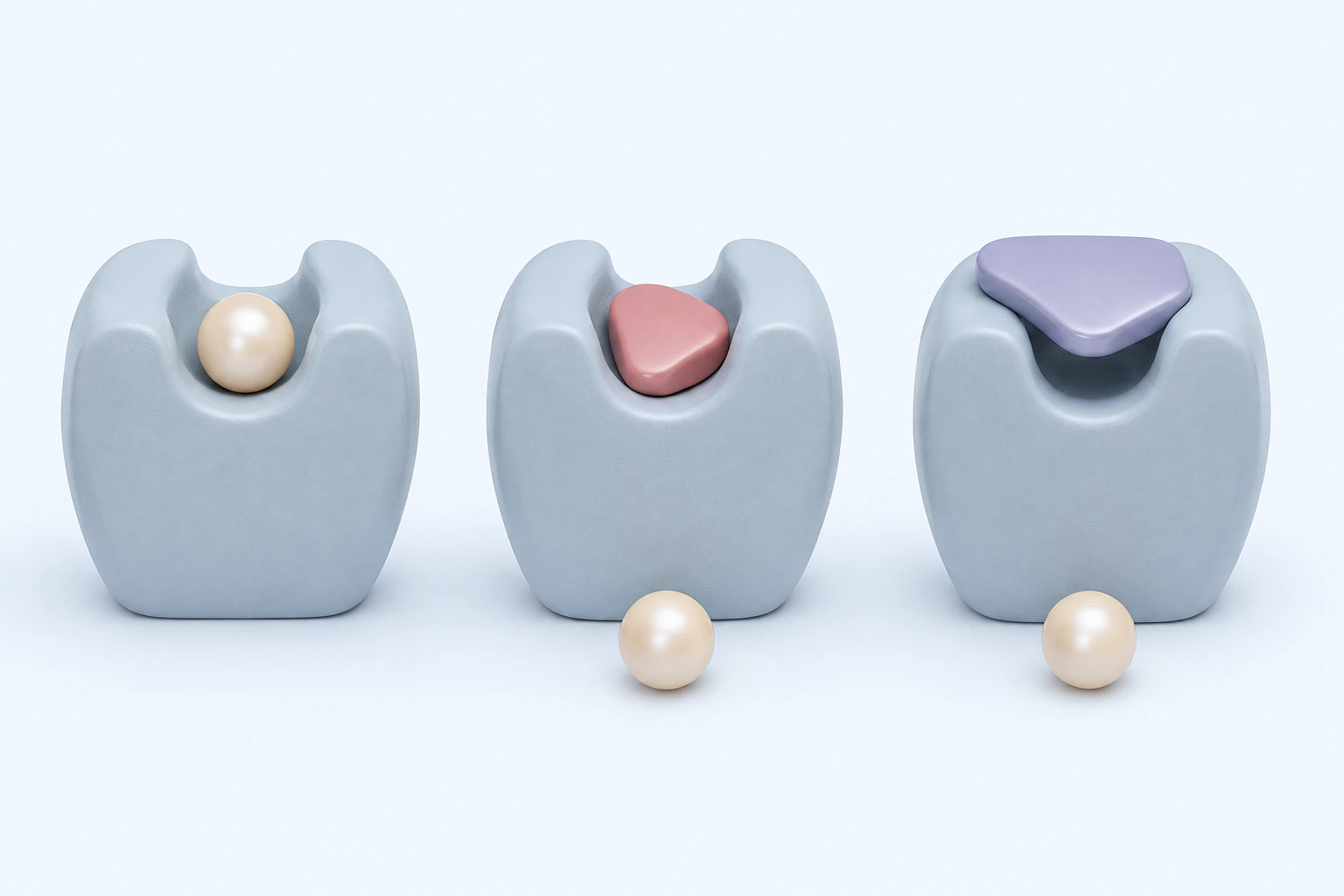
Endocrine-disruptor-effect orientation. These generic receptor states are not observed molecular binding and do not identify an agent, receptor, pose, affinity, potency, exposure, pathway, health outcome, diagnosis, or treatment.
Scientific media record4 verified identifiers
- Subject
- Endocrine Disruptionbiological-process
- Review
- Editorial review completeIdentifiers authority-verified · Accessibility validated · · endocrine-disruption|endocrine-disruption-mechanism-v1.webp
- Digital source
- Trained-algorithmic mediaCreated with a trained generative algorithm and reviewed by WikiBiome for subject identity, scientific framing, identifiers, provenance, and accessibility.
- Scientific basis
- Endocrine Disruptors — Medical Subject HeadingsOverview of Endocrine DisruptionEndocrine DisruptorsEndocrine-disrupting chemicals: an Endocrine Society scientific statementEndocrine Disruption
- License
- CC BY-SA 4.0Created
Endocrine-disrupting chemicals (EDCs) are exogenous substances that interfere with hormone synthesis, secretion, transport, binding, action, or elimination. The classical EDC list—BPA, phthalates, dioxins, PCBs, pesticides—is well established.
What WikiBiome adds to this picture is the recognition that metals are endocrine disruptors and that the Gut Microbiome is both a target of and a mediator for EDC effects.
The convergence of metallomic and microbiome perspectives reveals a more complete picture: EDCs do not act in isolation on hormone receptors. They reshape the microbial communities that metabolize hormones, and the resulting Dysbiosis amplifies endocrine disruption through inflammatory and metabolic pathways.
Evidence map5 cited passagesInspect provenance +
| Metal | Receptor Target | Potency | Key Evidence | |-------|----------------|---------|-------------| | cadmium | ERalpha, GPR30 | Kd ~4.5 x 10^-10 M (near-estradiol) | | | nickel | ERalpha (non-competitive) | Lower than Cd | | | lead | ERalpha | Moderate | In vitro binding studies | | copper | ERalpha | Variable | Context-dependent |
Nickel alters TSH secretion and thyroid hormone metabolism
Environmental chemicals, including metals, restructure gut microbial communities:
Phthalates are associated with changes in infant gut microbiome composition and increased inflammatory markers
| Condition | Primary EDC Concern | Microbiome Link | |-----------|-------------------|-----------------| | pcos | Cadmium, BPA | Reduced diversity, impaired SCFA production | | endometriosis | Cadmium, nickel, dioxins | Estrobolome-driven estrogen recirculation | | breast cancer | Cadmium (metalloestrogen) | Beta-glucuronidase estrogen reactivation | | fema
Contents
1. Metals as Endocrine Disruptors2. Microbiome as EDC Mediator3. The Exposome Perspective4. Conditions Linked to Endocrine Disruption5. Developmental Windows of Vulnerability6. Open Questions7. Cross-ReferencesMetals as Endocrine Disruptors#
Metalloestrogens#
Metalloestrogens are metals that activate estrogen receptors. The best-characterized are:
| Metal | Receptor Target | Potency | Key Evidence |
|---|---|---|---|
| Cadmium | ERalpha, GPR30 | Kd ~4.5 x 10^-10 M (near-estradiol) | [1]Role of Cadmium and Nickel in Estrogen Receptor Signaling and Breast Cancer: Metalloestrogens or Not?Aquino NB, Sevigny MB, Sabangan J et al. · 2012Open reference 1 ↓ |
| Nickel | ERalpha (non-competitive) | Lower than cadmium (Cd) | [1]Role of Cadmium and Nickel in Estrogen Receptor Signaling and Breast Cancer: Metalloestrogens or Not?Aquino NB, Sevigny MB, Sabangan J et al. · 2012Open reference 1 ↓ |
| Lead | ERalpha | Moderate | In vitro binding studies |
| Copper | ERalpha | Variable | Context-dependent |
Unlike organic xenoestrogens (BPA, phthalates), metalloestrogens are elements—they cannot be metabolized or degraded, only redistributed or excreted. They persist indefinitely in tissue, with cadmium having a biological half-life of 10-30 years.
Thyroid Disruption by Metals#
Metals also disrupt thyroid function, connecting to the Gut-Thyroid Axis:
- Cadmium interferes with iodine uptake and thyroid peroxidase activity
- Lead displaces calcium in thyroid signaling pathways
- Nickel alters TSH secretion and thyroid hormone metabolism[2]Nickel as a potential disruptor of thyroid function: benchmark modelling of human dataMaric D, Baralic K, Javorac D et al. · 2023Open reference 2 ↓
- Mercury inhibits selenoenzymes (deiodinases) required for T4-to-T3 conversion
Androgen Disruption#
Heavy Metals disrupt androgen metabolism at multiple levels. Zinc depletion impairs aromatase (see Hyperandrogenism). Cadmium disrupts testicular steroidogenesis.
Lead impairs hypothalamic-pituitary-gonadal axis signaling.
Microbiome as EDC Mediator#
The Gut Microbiome Metabolizes EDCs#
Gut bacteria transform EDCs in ways that can increase or decrease their endocrine activity. BPA glucuronide hydrolysis: Bacterial Beta-Glucuronidase deconjugates BPA-glucuronide, regenerating active BPA in the gut lumen and allowing reabsorption—the same enzyme that recirculates estrogens in the Estrobolome.
Phthalate metabolism: Gut bacteria hydrolyze phthalate diesters to monoesters, altering their endocrine potency.
Phytoestrogen activation: Bacterial metabolism converts dietary isoflavones to equol, a potent estrogen receptor agonist—but only in "equol producers" (30-50% of Western populations).
EDCs Reshape the Microbiome#
Environmental chemicals, including metals, restructure gut microbial communities.[3]Gut dysbiosis in animals due to environmental chemical exposuresRosenfeld CS · 2017Open reference 3 ↓ Cadmium exposure depletes Akkermansia muciniphila and enriches cadmium-resistant Proteobacteria. BPA alters the ratio of Firmicutes to Bacteroidetes and reduces microbial diversity.
PFAS exposure is associated with gut dysbiosis and altered bile acid metabolism.
Phthalates are associated with changes in infant gut microbiome composition and increased inflammatory markers.[4]Kim 2023 — Effects of Postnatal Exposure to Phthalate, Bisphenol A, Triclosan, Parabens, and PFAS on Maternal PPD and Infant NeurodevelopmentJu Hee Kim, Nalae Moon, Eunsun Ji et al. · 2023Open reference 4 ↓
This creates a vicious cycle: EDCs disrupt the microbiome, the dysbiotic microbiome amplifies EDC bioavailability through beta-glucuronidase activity, and increased EDC exposure further disrupts microbial communities.
The Exposome Perspective#
Endocrine disruption rarely involves a single chemical. The The Exposome framework recognizes that humans are exposed to complex mixtures of:
- Heavy metals (dietary, occupational, environmental)
- Organic EDCs (plastics, pesticides, personal care products)
- Microbial metabolites that mimic or modulate hormones
These exposures interact synergistically. Cadmium + BPA may have greater estrogenic effect than either alone. Metal-induced Oxidative Stress may sensitize estrogen receptors to organic EDCs.
And the microbiome integrates all these exposures, creating a personalized endocrine-disrupting milieu.
Conditions Linked to Endocrine Disruption#
| Condition | Primary EDC Concern | Microbiome Link |
|---|---|---|
| Polycystic Ovary Syndrome | Cadmium, BPA | Reduced diversity, impaired SCFA production[5]Heavy Metals and Essential Elements in Association with Oxidative Stress in Women with Polycystic Ovary Syndrome -- A Systematic ReviewSmovrsnik T, Virant-Klun I, Pinter B · 2023Open reference 5 ↓ |
| Endometriosis | Cadmium, nickel, dioxins | Estrobolome-driven estrogen recirculation |
| Breast Cancer | Cadmium (metalloestrogen) | Beta-glucuronidase estrogen reactivation |
| Female Infertility | Cadmium, lead, mercury | Microbiome-mediated hormone disruption[6]Female Fertility and Environmental PollutionCanipari R, De Santis L, Cecconi S · 2020Open reference 6 ↓ |
| Hashimoto's Thyroiditis | Cadmium, nickel, mercury | Gut-thyroid axis disruption |
| Postpartum depression | Phthalates, PFAS | Peripartum microbiome shifts[4]Kim 2023 — Effects of Postnatal Exposure to Phthalate, Bisphenol A, Triclosan, Parabens, and PFAS on Maternal PPD and Infant NeurodevelopmentJu Hee Kim, Nalae Moon, Eunsun Ji et al. · 2023Open reference 4 ↓ |
Developmental Windows of Vulnerability#
EDC effects are most pronounced during critical developmental windows. Prenatal: Fetal programming of reproductive and metabolic systems. Neonatal: Establishment of the gut microbiome alongside hormonal imprinting.
Puberty: Hormone-dependent microbiome maturation.
Perimenopause: Declining estrogen unmasks accumulated metal burden.
Open Questions#
Unresolved questions identified by the current evidence record.
01Can microbiome-targeted interventions reduce EDC bioavailability (e.g., probiotics that reduce beta-glucuronidase activity)?+
The current WikiBiome record identifies this as an unresolved evidence gap.
02What is the relative endocrine-disrupting potency of metalloestrogens versus organic EDCs at environmentally relevant concentrations?+
The current WikiBiome record identifies this as an unresolved evidence gap.
03How do EDC mixtures interact with the microbiome—are effects additive, synergistic, or antagonistic?+
The current WikiBiome record identifies this as an unresolved evidence gap.
04Can the microbiome serve as a biomarker of cumulative EDC exposure?+
The current WikiBiome record identifies this as an unresolved evidence gap.
Cross-References#
- Metalloestrogens—metals as estrogen mimics
- Estrobolome—microbial estrogen recirculation
- Beta-Glucuronidase—shared enzyme for hormone and EDC reactivation
- The Exposome—total environmental exposure framework
- oxidative stress—metal-induced ROS amplifying EDC effects
- Polycystic Ovary Syndrome—primary hyperandrogenism context
References 6
Numbered by first appearance in the article, then reconciled with its declared source list.
- 1
★Aquino NB, Sevigny MB, Sabangan J et al. (2012). Role of Cadmium and Nickel in Estrogen Receptor Signaling and Breast Cancer: Metalloestrogens or Not?. Journal of Environmental Science and Health Part C - Environmental Carcinogenesis and Ecotoxicology Reviews.
- 2
Maric D, Baralic K, Javorac D et al. (2023). Nickel as a potential disruptor of thyroid function: benchmark modelling of human data. Frontiers in Endocrinology.
- 3
Rosenfeld CS (2017). Gut dysbiosis in animals due to environmental chemical exposures. Frontiers in Cellular and Infection Microbiology.
- 4
Ju Hee Kim, Nalae Moon, Eunsun Ji et al. (2023). Kim 2023 — Effects of Postnatal Exposure to Phthalate, Bisphenol A, Triclosan, Parabens, and PFAS on Maternal PPD and Infant Neurodevelopment. Environmental Science and Pollution Research.
- 5
Smovrsnik T, Virant-Klun I, Pinter B (2023). Heavy Metals and Essential Elements in Association with Oxidative Stress in Women with Polycystic Ovary Syndrome -- A Systematic Review. Antioxidants.
- 6
Canipari R, De Santis L, Cecconi S (2020). Female Fertility and Environmental Pollution. International Journal of Environmental Research and Public Health.
Article network
Connect the evidence
Publicly readable discussion by ORCID-authenticated researchers. Questions, interpretation, methods, corrections, and new evidence stay attached to this record.
No discussion yet. Start with a precise question or a source-backed observation.
Activity and accepted changes
Accepted researcher context, editorial status, public discussion, and upstream Git revisions are shown together. Pending, declined, and withdrawn proposals remain private.
- published revision
Consolidate microbial metabolite knowledge
Karen Pendergrass · +1 −1
Inspect exact Git diff ↗ - published revision
Backfill heavy metals concept links
Karen Pendergrass · +1 −1
Inspect exact Git diff ↗ - published revision
Backfill oxidative stress concept links
Karen Pendergrass · +1 −1
Inspect exact Git diff ↗ - published revision
Backfill gut microbiome concept links
Karen Pendergrass · +1 −1
Inspect exact Git diff ↗ - published revision
massive wiki expansion: 149 stubs fixed, 100+ new pages, Rule 15 scan, keystone papers
WikiBiome Deploy Bot · +30 −30
Inspect exact Git diff ↗ - published revision
pre-overnight checkpoint 2026-04-18
WikiBiome Deploy Bot · +119 −0
Inspect exact Git diff ↗