
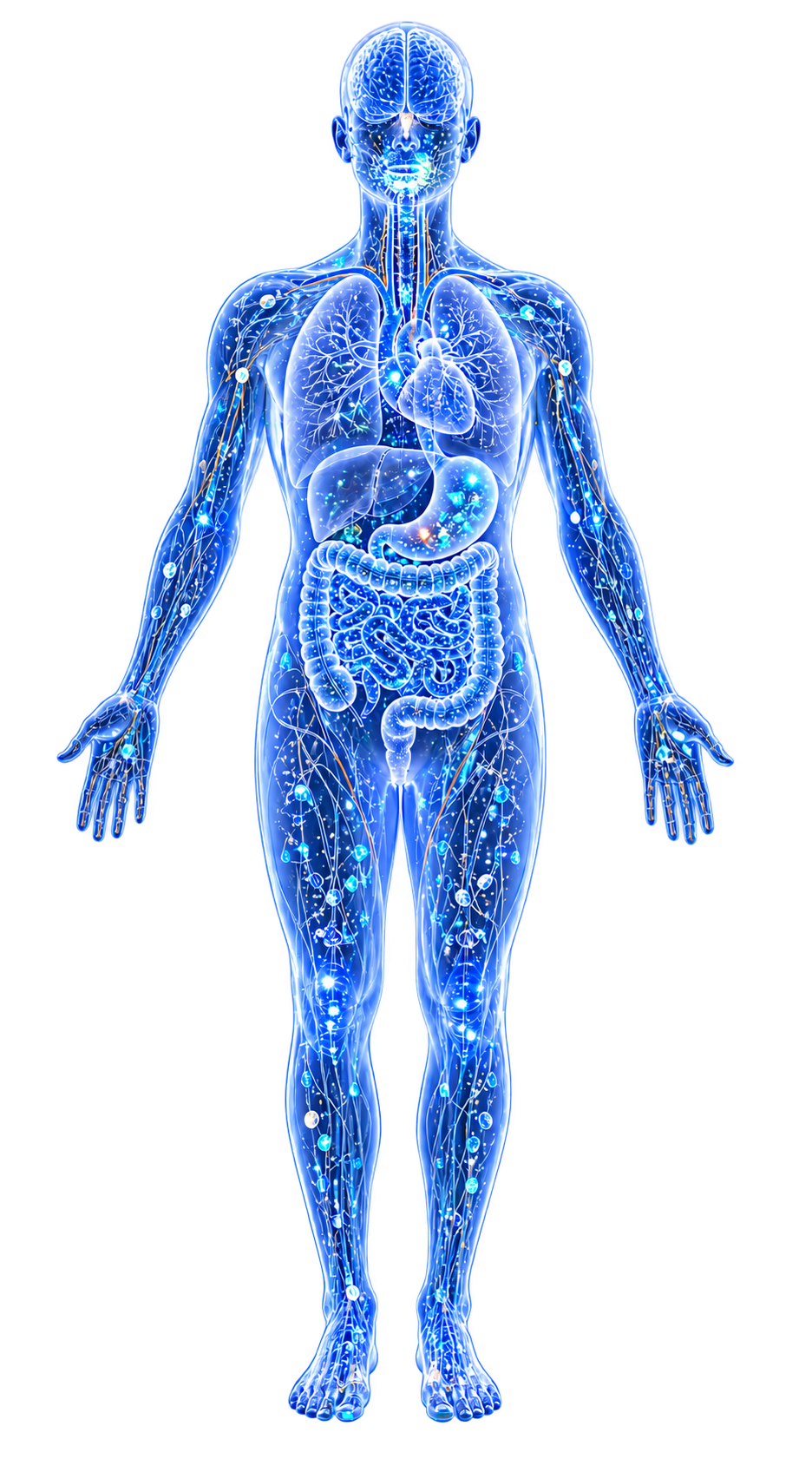
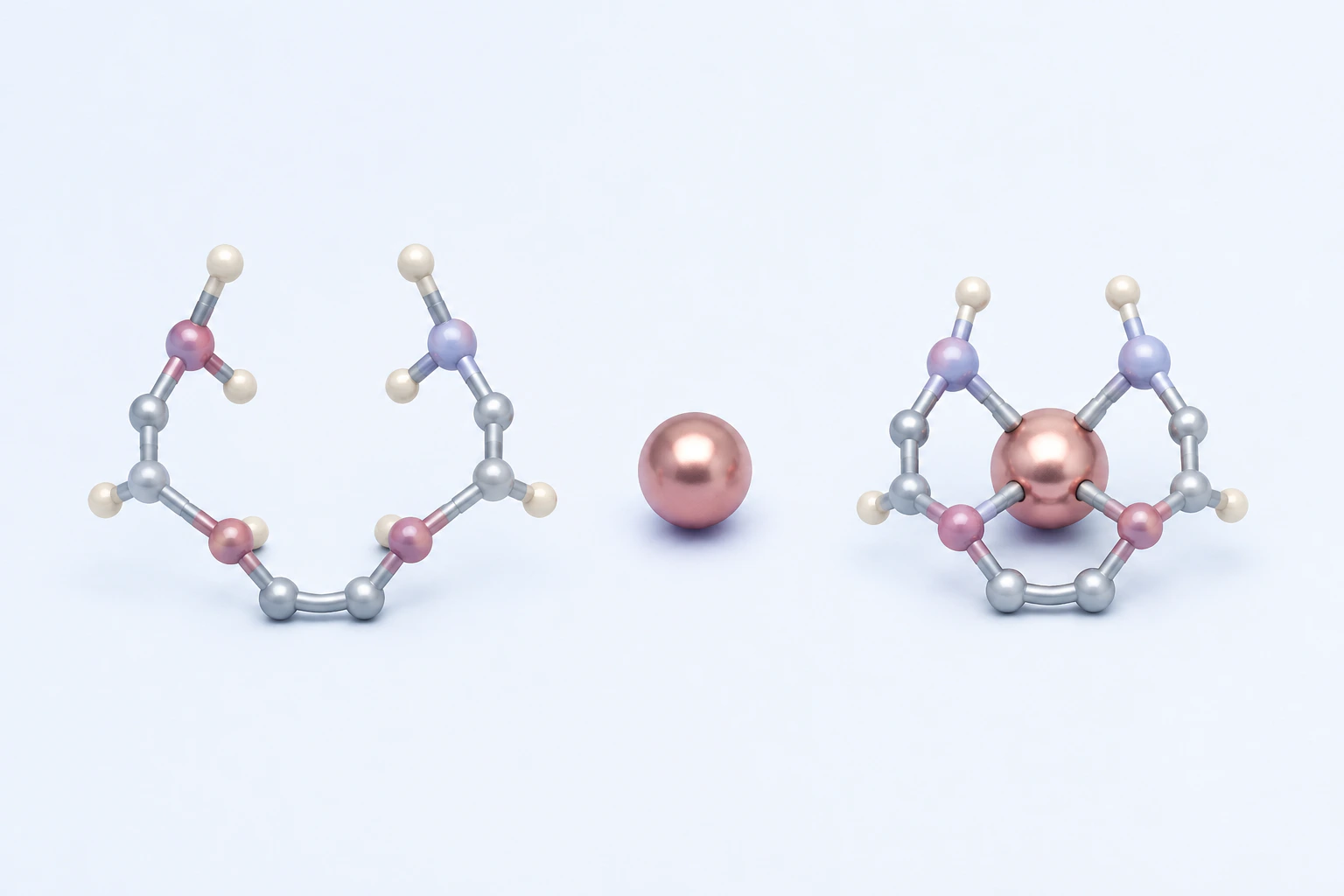
Generic chelation concept. The separated teaching models do not identify a chelator or metal, depict an observed reaction or clinical procedure, measure exposure, establish an indication, or support efficacy, safety, dosing, or treatment guidance.
Scientific media record2 verified identifiers
- Subject
- Chelation Therapyintervention
- Identifiers
- WikiBiome:chelation-therapyMeSH:D015913
- Review
- Editorial review completeIdentifiers authority-verified · Accessibility validated · · chelation-therapy|chelation-therapy-mechanism-v1.webp
- Digital source
- Trained-algorithmic mediaCreated with a trained generative algorithm and reviewed by WikiBiome for subject identity, scientific framing, identifiers, provenance, and accessibility.
- Scientific basis
- Chelation Therapy — Medical Subject HeadingsChelation Therapy
- License
- CC BY-SA 4.0Created
Chelation therapy uses high-affinity metal-binding molecules to form stable, excretable complexes with toxic metals, removing them from the body. The term derives from Greek "chele" (claw)—the chelator grips the metal ion at multiple coordination sites.
While chelation is life-saving in acute metal poisoning, its broader application raises important questions from the microbiome perspective: chelators do not distinguish between metal in human tissue and metal sustaining the Gut Microbiome, creating the potential for unintended ecological disruption.
For a comprehensive guide to individual chelating agents, see Metal Chelation Therapy. This page focuses on the microbiome implications and the broader conceptual framework.
Evidence map2 cited passagesInspect provenance +
The fundamental limitation of chelation therapy is non-selectivity. No chelator binds exclusively to toxic metals while sparing essential ones:
CKD: Chelation could theoretically address the metal accumulation vicious cycle (see chronic kidney disease), but risk of worsening renal function through essential metal depletion is high
Contents
1. Chelation and the Microbiome2. Clinical Indications (Evidence-Based)3. The WikiBiome Perspective4. Open Questions5. Cross-ReferencesChelation and the Microbiome#
The Unintended Ecological Experiment#
When a patient receives chelation therapy, the chelator passes through the gastrointestinal tract (oral agents) or reaches it via biliary excretion (IV agents). In either case, the chelator alters the metal environment of the gut lumen, with predictable ecological consequences.
Iron chelation (deferoxamine, deferasirox) removes iron from the gut environment, potentially starving iron-dependent pathogens (Escherichia coli, Klebsiella pneumoniae) but also depleting iron needed by beneficial Lactobacillus and Bifidobacterium species.
Zinc chelation (EDTA) strips zinc from the gut, disabling zinc-dependent Virulence Factors (Zinc-Metalloprotease, fragilysin) but also impairing zinc-dependent immune function. Broad-spectrum chelation (EDTA, DTPA) removes multiple metals simultaneously, creating unpredictable shifts in microbial community composition.
Evidence for Microbiome Disruption#
While direct studies of chelation-microbiome interactions remain limited, indirect evidence is strong. Iron chelation in thalassemia patients is associated with altered gut microbial composition. EDTA-based preservatives in processed foods have documented antimicrobial effects through metal stripping.
Cadmium chelation in animal models shifts gut community structure, but it is unclear whether the shift reflects toxicant removal (beneficial) or essential metal depletion (harmful).
The Essential Metal Depletion Problem#
The fundamental limitation of chelation therapy is non-selectivity. No chelator binds exclusively to toxic metals while sparing essential ones:[1]Toxic Mechanisms of Five Heavy Metals: Mercury, Lead, Chromium, Cadmium, and ArsenicBalali-Mood M, Naseri K, Tahergorabi Z et al. · 2021Open reference 1 ↓
| Chelator | Target Toxicant | Essential Metals Also Bound |
|---|---|---|
| EDTA | Lead, cadmium | Zinc, calcium, manganese, iron |
| DMSA | Lead, mercury, arsenic | Zinc (mild), copper |
| DMPS | Mercury, arsenic | Zinc, copper |
| D-Penicillamine | Copper (Wilson's) | Zinc, iron |
| Deferoxamine | Iron | (relatively selective) |
Essential metal depletion during chelation can cause. Zinc depletion → impaired Nutritional Immunity (Metal Sequestration), reduced SOD activity. Calcium depletion → cardiac arrhythmia (IV EDTA without calcium loading).
Manganese depletion → impaired antioxidant defense.
Copper depletion → anemia, neutropenia.
Clinical Indications (Evidence-Based)#
Acute Poisoning#
Chelation is clearly indicated for acute metal poisoning. Lead: Blood lead (Pb) >45 mcg/dL in children (DMSA) or >70 mcg/dL in adults (CaNa2-EDTA). Mercury: Inorganic mercury exposure (DMPS preferred) or organic mercury with symptoms.
Arsenic: Acute ingestion (DMSA or DMPS).
Iron: Acute ingestion (deferoxamine). Nickel carbonyl: Acute inhalation (disulfiram/DDC—the specific antidote).
Chronic Conditions (Controversial)#
Chelation for chronic, low-level metal exposure remains debated. TACT trial (Trial to Assess Chelation Therapy): IV EDTA showed modest benefit in post-MI diabetic patients with elevated lead, but results were driven by diabetic subgroup.
CKD: Chelation could theoretically address the metal accumulation vicious cycle (see Chronic Kidney Disease), but risk of worsening renal function through essential metal depletion is high.[2]Molecular Mechanisms of Cellular Injury and Role of Toxic Heavy Metals in Chronic Kidney DiseaseManish Mishra, Larry Nichols, Aditi A. Dave et al. · 2022Open reference 2 ↓
Autism: IV chelation for autism has no evidence of benefit and carries risk; at least one child death has been attributed to EDTA-induced hypocalcemia.
"Detox" chelation: Over-the-counter chelation supplements marketed for general "detoxification" lack evidence and may cause harm through essential metal stripping.
The WikiBiome Perspective#
From the metallomics-microbiome framework, chelation therapy presents a tension:
Potential Benefits#
- Removing cadmium, lead, and mercury reduces selective pressure for metal-resistant pathogens
- Iron chelation can starve siderophore-dependent pathogens (the siderophore starvation strategy)
- Nickel chelation disables Nickel-Urease and NiFe-Hydrogenase in Helicobacter pylori
Potential Harms#
- Essential metal depletion weakens host Nutritional Immunity (Metal Sequestration)
- Microbiome disruption through altered luminal metal availability
- Metal redistribution: chelators can mobilize metals from tissue stores, potentially causing transient toxicity before excretion
- Mis-Metallation: chelators that preferentially remove one metal can leave toxic metals to occupy vacated binding sites
The Dietary Alternative#
For chronic, low-level metal exposure, dietary metal restriction may be preferable to chelation. Low-Nickel Diet: Reduces nickel without chelator side effects. Dietary modification to reduce cadmium exposure (avoid tobacco, limit certain foods). These approaches reduce metal input rather than forcibly extracting metal already in the body.
Open Questions#
Unresolved questions identified by the current evidence record.
01Does chelation therapy alter the gut microbiome in ways that affect clinical outcomes?+
The current WikiBiome record identifies this as an unresolved evidence gap.
02Can chelation be combined with probiotic supplementation to prevent microbiome disruption?+
The current WikiBiome record identifies this as an unresolved evidence gap.
03Is targeted chelation (organ-specific delivery) feasible for reducing gut microbiome side effects?+
The current WikiBiome record identifies this as an unresolved evidence gap.
04What is the optimal monitoring strategy for essential metal levels during chelation?+
The current WikiBiome record identifies this as an unresolved evidence gap.
Cross-References#
- Metal Chelation Therapy—detailed chelator pharmacology
- Nutritional Immunity (Metal Sequestration)—host metal sequestration strategy
- Mis-Metallation—risk of metal displacement
- Siderophores and Metallophores—pathogen iron piracy
- Chronic Kidney Disease—chelation in renal disease
- Low-Nickel Diet—dietary alternative to nickel chelation
References 3
Numbered by first appearance in the article, then reconciled with its declared source list.
- 1
★Balali-Mood M, Naseri K, Tahergorabi Z et al. (2021). Toxic Mechanisms of Five Heavy Metals: Mercury, Lead, Chromium, Cadmium, and Arsenic. Frontiers in Pharmacology.
- 2
★Manish Mishra, Larry Nichols, Aditi A. Dave et al. (2022). Molecular Mechanisms of Cellular Injury and Role of Toxic Heavy Metals in Chronic Kidney Disease. International Journal of Molecular Sciences.
- 3
★Monisha Jaishankar, Tenzin Tseten, Naresh Anbalagan et al. (2014). Toxicity, Mechanism and Health Effects of Some Heavy Metals. Interdisciplinary Toxicology.
Article network
Mentioned here 16
Pages linking here 2
Connect the evidence
Publicly readable discussion by ORCID-authenticated researchers. Questions, interpretation, methods, corrections, and new evidence stay attached to this record.
No discussion yet. Start with a precise question or a source-backed observation.
Activity and accepted changes
Accepted researcher context, editorial status, public discussion, and upstream Git revisions are shown together. Pending, declined, and withdrawn proposals remain private.
- published revision
Backfill gut microbiome concept links
Karen Pendergrass · +1 −1
Inspect exact Git diff ↗ - published revision
massive wiki expansion: 149 stubs fixed, 100+ new pages, Rule 15 scan, keystone papers
WikiBiome Deploy Bot · +21 −21
Inspect exact Git diff ↗ - published revision
massive wiki expansion: 149 stubs fixed, 100+ new pages, Rule 15 scan, keystone papers
WikiBiome Deploy Bot · +11 −4
Inspect exact Git diff ↗ - published revision
semantic integrity pass: boundary fixes, 10 interventions, 31 STOPs, 2 supersessions, keystone revalidation
WikiBiome Deploy Bot · +37 −0
Inspect exact Git diff ↗ - published revision
pre-overnight checkpoint 2026-04-18
WikiBiome Deploy Bot · +115 −0
Inspect exact Git diff ↗