
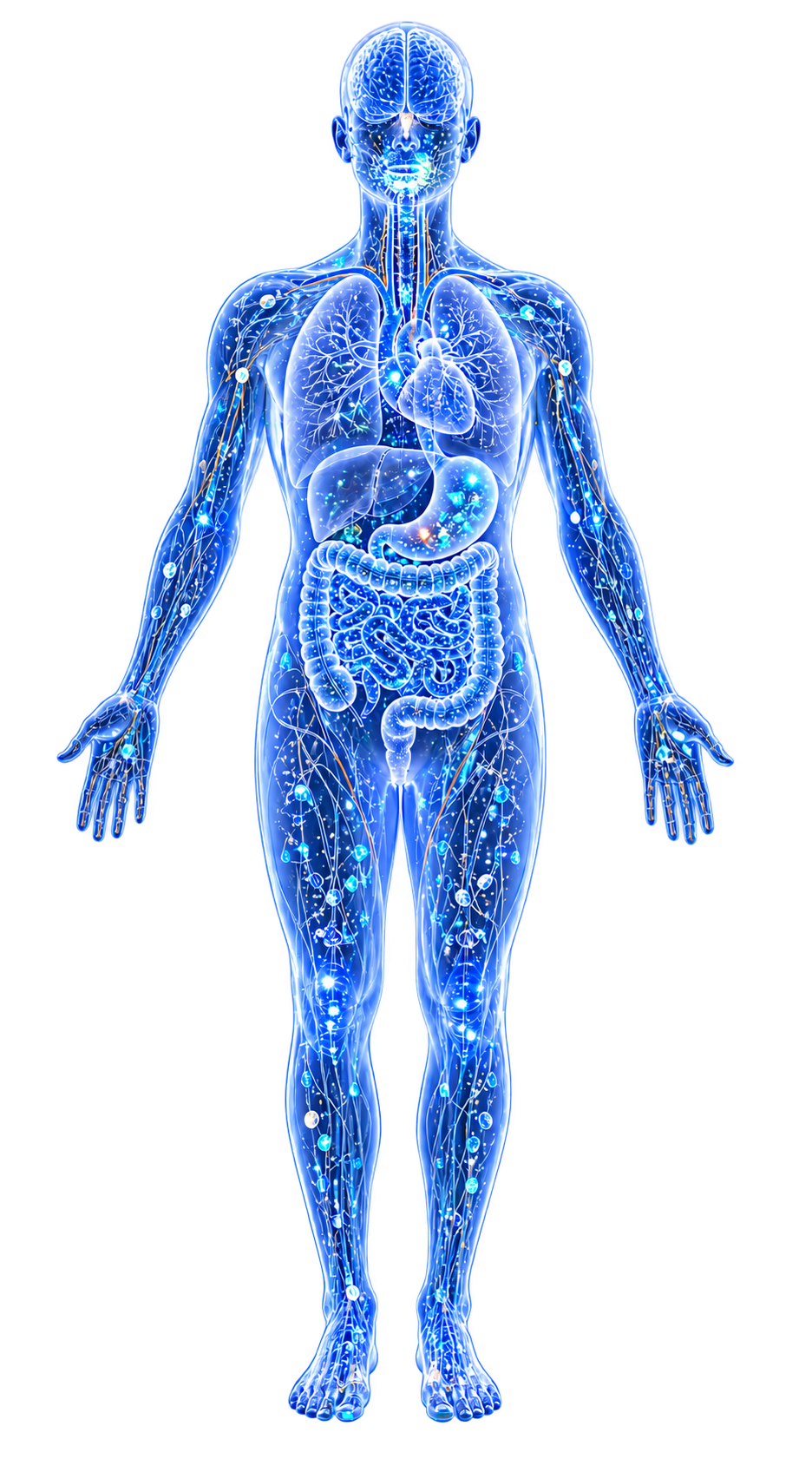
 metals · microbes · host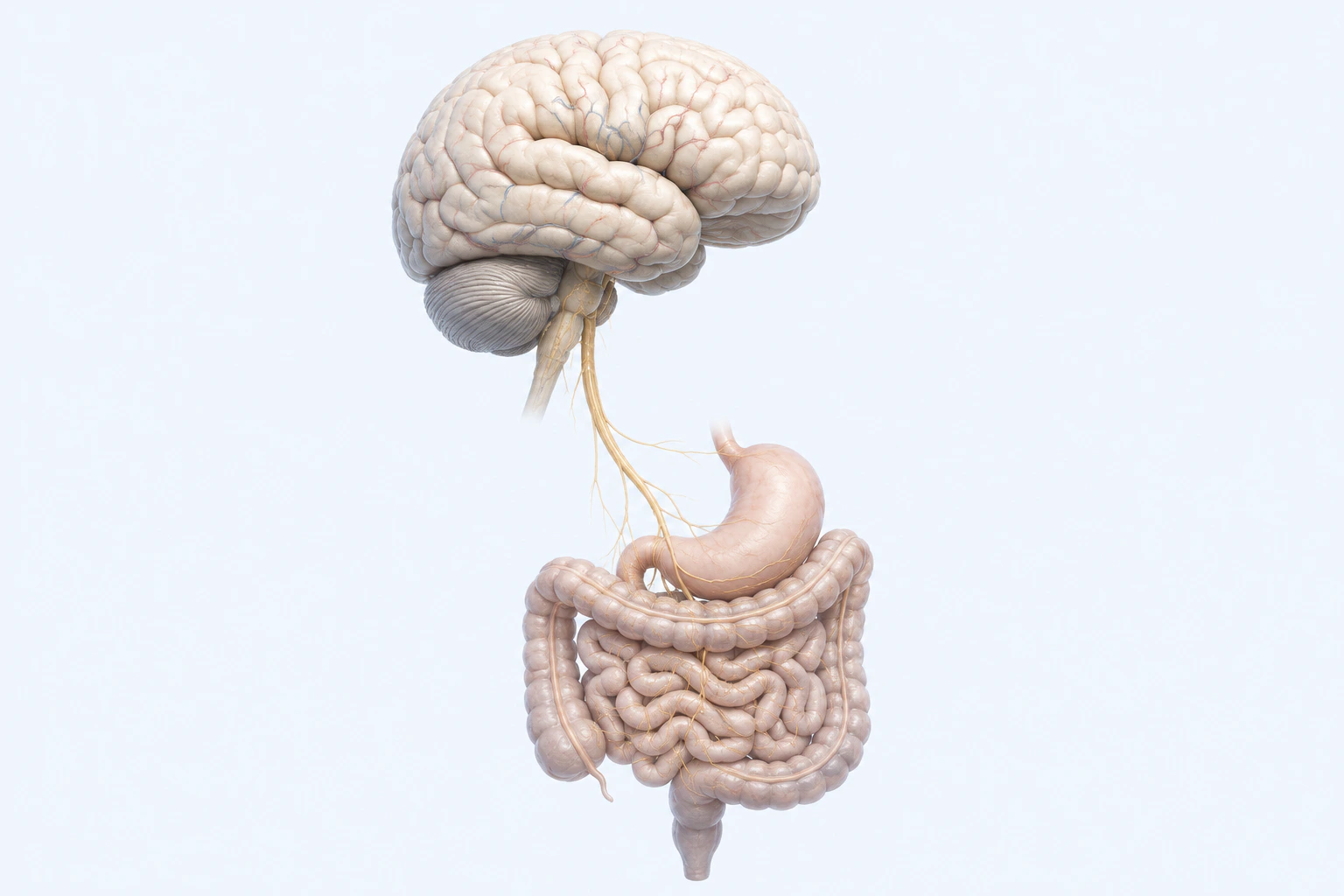
Neutral anatomical orientation to the brain and gastrointestinal structures discussed in bipolar-disorder research. Bipolar disorder is not visible as a split brain or mood image; this reconstruction is not a patient portrait, scan, biomarker, or diagnostic image.
Scientific media record1 verified identifier
- Subject
- Bipolar Disordercondition
- Identifiers
- MeSH:D001714
- Review
- Editorial review completeIdentifiers authority-verified · Accessibility validated · · bipolar-disorder|bipolar-disorder-pathology-v1.webp
- Digital source
- Trained-algorithmic mediaCreated with a trained generative algorithm and reviewed by WikiBiome for subject identity, scientific framing, identifiers, provenance, and accessibility.
- Scientific basis
- Bipolar Disorder — MeSHBipolar Disorder
- License
- CC BY-SA 4.0Created
Bipolar disorder is a chronic neuropsychiatric condition characterized by recurrent episodes of mania (or hypomania) and depression, affecting approximately 1-2.4% of the global population.
It carries significant morbidity—reduced life expectancy by 10-15 years, high suicide risk (~15-20x general population), and substantial metabolic comorbidity (obesity, Type 2 Diabetes, Cardiovascular Disease). The condition shares genetic risk loci, neuroinflammatory mechanisms, and microbiome signatures with Schizophrenia and Depression, suggesting a spectrum of related gut-brain axis disorders.
What distinguishes bipolar disorder in the metallomics-microbiome framework is the convergence of copper/zinc dysregulation, sex-specific fungal associations, and the largely unexplored microbiome effects of lithium—the oldest and most effective mood stabilizer.
Evidence map7 cited passagesInspect provenance +
The bipolar gut microbiome shows alterations consistent with other neuropsychiatric conditions:
A striking finding: candida albicans IgG antibodies are significantly elevated in bipolar disorder patients with a history of mania, and this association is sex-specific:
Can ketogenic diet interventions (being trialed; ) work partly through microbiome-metal axis correction?
comprehensive review of gut-brain axis across psychiatric conditions
sex-specific Candida associations
host-microbiome interactions in neuropsychiatric disease
ongoing dietary intervention trial
One disease. Five evidence layers.
A generated systems view of the metals, organisms, host sequestration signals, ecological conditions, and microbial functions indexed for Bipolar Disorder.
Evidence layer
Taxonomic signature
Organisms reported as enriched or depleted, with their indexed functional context kept beside the name.No structured taxa indexed yet.
No structured taxa indexed yet.
Evidence layer
Nutritional immunity
Host metal-withholding, inflammatory, antioxidant, and microbial-metabolite signals indexed in the signature.Elevated host signals
0No structured signals indexed yet.
Depleted protective signals
0No structured signals indexed yet.
Evidence layer
Ecological state
The environmental conditions that connect the organism-level observations into a system.No structured ecological features indexed yet.
Evidence layer
Virulence functions
Microbial structures, enzymes, and acquisition systems implicated by the linked evidence.No structured virulence functions indexed yet.
The disease record, in full.
The original WikiBiome disease narrative remains intact beneath the generated signature atlas.
Metallomic Signature#
Copper/Zinc Ratio#
Bipolar disorder shares the elevated copper (Cu)/zinc (Zn) ratio seen in Schizophrenia, though the pattern differs between mood states.
Manic episodes: Higher copper, increased ceruloplasmin (copper-carrying acute-phase protein), elevated Oxidative Stress markers. Depressive episodes: Lower zinc, impaired antioxidant defense (copper/zinc superoxide dismutase (Cu/Zn-SOD) activity reduced). Euthymia (stable): copper/zinc ratio may partially normalize but remains above healthy controls.
Lithium effect: Lithium alters trace metal distribution, though the mechanism is poorly characterized.
Iron#
Iron dysregulation is reported in bipolar disorder, with elevated ferritin during manic episodes suggesting an inflammatory acute-phase response rather than true iron excess.
Microbiome Associations#
Bacterial Dysbiosis#
The bipolar Gut Microbiome shows alterations consistent with other neuropsychiatric conditions:[1]Interactions between the Gut Microbiome and the Central Nervous System and Their Role in Schizophrenia, Bipolar Disorder and DepressionChrobak AA, Nowakowski J, Dudek D · 2016Open reference 1 ↓[2]Emerging Role of the Host Microbiome in Neuropsychiatric Disorders: Overview and Future DirectionsHashimoto K · 2023Open reference 2 ↓
- Depleted: Faecalibacterium prausnitzii (anti-inflammatory Butyrate producer), Bifidobacterium, Lactobacillus
- Enriched: Enterobacteriaceae, certain Clostridia species
- Functional: Reduced SCFA production, increased LPS biosynthesis, altered tryptophan metabolism
- Mood-state dependent: Microbiome composition shifts between manic and depressive episodes, though longitudinal data are limited
Candida albicans: A Sex-Specific Signal#
A striking finding: Candida albicans IgG antibodies are significantly elevated in bipolar disorder patients with a history of mania, and this association is sex-specific.[3]Severance 2016 — Candida albicans Exposures, Sex Specificity and Cognitive Deficits in Schizophrenia and Bipolar DisorderEmily G. Severance, Kristin L. Gressitt, Catherine R. Stallings et al. · 2016Open reference 3 ↓
Women with bipolar disorder show strong association between Candida antibodies and cognitive deficits (especially working memory). Men show a different pattern—Candida exposure associates with mania history but not cognitive domains. This sex specificity suggests interaction between fungal colonization, estrogen (Metalloestrogens), and immune responses.
Candida albicans biofilms concentrate metals and may contribute to local metal dyshomeostasis in the gut.
The Lithium-Microbiome Connection#
Lithium remains the gold standard for bipolar disorder treatment, yet its microbiome effects are largely unexplored.
Lithium alters ion transport (competing with Na+, K+, magnesium(II) (Mg2+), calcium(II) (Ca2+)) throughout the body, including the gut epithelium. Lithium inhibits GSK-3beta, which regulates intestinal stem cell proliferation and gut barrier maintenance. Lithium's renal toxicity (common side effect) may create a secondary gut-kidney axis disruption.
The narrow therapeutic index of lithium (0.6-1.2 mEq/L) means microbiome-mediated absorption variability could be clinically significant.
Gut-Brain Axis in Bipolar Disorder#
The bipolar gut-brain axis involves:
- Microbiome Dysbiosis → reduced SCFA production → impaired gut barrier
- Barrier dysfunction → LPS translocation → systemic Metal-Driven Inflammation
- Neuroinflammation → microglial activation, altered neurotransmitter synthesis
- Tryptophan diversion → IDO/TDO activation shunts tryptophan from serotonin toward kynurenine pathway
- Kynurenine metabolites → NMDA receptor modulation → mood instability
Metal dysregulation amplifies this cascade: copper excess catalyzes ROS generation that damages the gut barrier, and zinc depletion impairs the immune regulation that normally prevents excessive neuroinflammation.
Associated Conditions#
Bipolar disorder shares microbiome and metallomic features with several conditions in the WikiBiome knowledge graph:
| Condition | Shared Features | Significance |
|---|---|---|
| Schizophrenia | copper (Cu)/zinc (Zn) dysregulation, Faecalibacterium depletion, Candida association | Shared genetic risk (MHC locus); spectrum relationship |
| Depression | SCFA depletion, tryptophan-kynurenine shift, Bifidobacterium loss | Depressive episodes overlap; shared gut-brain mechanism |
| Cardiovascular Disease | Copper elevation, systemic inflammation, endothelial dysfunction | 2-3x CVD risk in bipolar; shared inflammatory pathway |
| Type 2 Diabetes | Insulin resistance, microbiome-mediated metabolic dysfunction | 3x T2D risk; shared SCFA depletion |
Open Questions#
Unresolved questions identified by the current evidence record.
01Does lithium directly alter gut microbial composition, and if so, is this part of its therapeutic mechanism?+
The current WikiBiome record identifies this as an unresolved evidence gap.
02Can microbiome-targeted interventions reduce mood episode frequency or severity?+
The current WikiBiome record identifies this as an unresolved evidence gap.
03Is the Candida-mania association causal, and if so, would antifungal treatment improve outcomes?+
The current WikiBiome record identifies this as an unresolved evidence gap.
04Does the copper (Cu)/zinc (Zn) ratio predict treatment response to lithium vs. anticonvulsants?+
The current WikiBiome record identifies this as an unresolved evidence gap.
05Can ketogenic diet interventions (being trialed;[4]The Effects of Ketogenic Metabolic Therapy on Mental Health and Metabolic Outcomes in Schizophrenia and Bipolar Disorder: A Randomized Controlled Clinical Trial ProtocolLonghitano C, Finlay S, Peachey I et al. · 2024Open reference 4 ↓) work partly through microbiome-metal axis correction?+
The current WikiBiome record identifies this as an unresolved evidence gap.
Key Studies#
- [1]Interactions between the Gut Microbiome and the Central Nervous System and Their Role in Schizophrenia, Bipolar Disorder and DepressionChrobak AA, Nowakowski J, Dudek D · 2016Open reference 1 ↓—comprehensive review of gut-brain axis across psychiatric conditions
- [3]Severance 2016 — Candida albicans Exposures, Sex Specificity and Cognitive Deficits in Schizophrenia and Bipolar DisorderEmily G. Severance, Kristin L. Gressitt, Catherine R. Stallings et al. · 2016Open reference 3 ↓—sex-specific Candida associations
- [2]Emerging Role of the Host Microbiome in Neuropsychiatric Disorders: Overview and Future DirectionsHashimoto K · 2023Open reference 2 ↓—host-microbiome interactions in neuropsychiatric disease
- [4]The Effects of Ketogenic Metabolic Therapy on Mental Health and Metabolic Outcomes in Schizophrenia and Bipolar Disorder: A Randomized Controlled Clinical Trial ProtocolLonghitano C, Finlay S, Peachey I et al. · 2024Open reference 4 ↓—ongoing dietary intervention trial
Cross-References#
- Schizophrenia—spectrum condition with shared metallomic profile
- Depression—depressive pole overlap
- Candida albicans—fungal association with mania
- Copper—elevated in manic episodes
- Zinc—depleted; impaired SOD function
- Gut-Brain Axis—bidirectional communication pathway
References 10
Numbered by first appearance in the article, then reconciled with its declared source list.
- 1
Chrobak AA, Nowakowski J, Dudek D (2016). Interactions between the Gut Microbiome and the Central Nervous System and Their Role in Schizophrenia, Bipolar Disorder and Depression. Archives of Psychiatry and Psychotherapy.
- 2
Hashimoto K (2023). Emerging Role of the Host Microbiome in Neuropsychiatric Disorders: Overview and Future Directions. Molecular Psychiatry.
- 3
Emily G. Severance, Kristin L. Gressitt, Catherine R. Stallings et al. (2016). Severance 2016 — Candida albicans Exposures, Sex Specificity and Cognitive Deficits in Schizophrenia and Bipolar Disorder. npj Schizophrenia.
- 4
Longhitano C, Finlay S, Peachey I et al. (2024). The Effects of Ketogenic Metabolic Therapy on Mental Health and Metabolic Outcomes in Schizophrenia and Bipolar Disorder: A Randomized Controlled Clinical Trial Protocol. Frontiers in Nutrition.
- 5
Safadi JM, Quinton AMG, Lennox B et al. (2022). Gut Dysbiosis in Severe Mental Illness and Chronic Fatigue: A Novel Trans-Diagnostic Construct? A Systematic Review and Meta-Analysis. Molecular Psychiatry.
- 6
Adriel Latorre-Pérez, Marta Hernández, Jose Ramón Iglesias et al. (2021). Latorre-Pérez 2021 — The Spanish Gut Microbiome Reveals Links Between Microorganisms and Mediterranean Diet. Scientific Reports.
- 7
Luana Leao, Galal Esmail, Saba Miri et al. (2025). Leao 2025 — Sex-Simulated Microbiome Response to Psychotropic Drug. M.Sc. Thesis, University of Ottawa.
- 8
Deniz Bengi, Rebecca Strawbridge, Melisa Drorian et al. (2025). Bengi 2025 — PMDD/PMS Comorbidity with Mood Disorders (Systematic Review & Meta-Analysis). The British Journal of Psychiatry.
- 9
Jing-Jing Ni, Qian Xu, Shan-Shan Yan et al. (2022). Ni 2022 — Gut Microbiota and Psychiatric Disorders: A Two-Sample Mendelian Randomization Study. Frontiers in Microbiology.
- 10
Olde Loohuis LM, Mangul S, Ori APS et al. (2018). Transcriptome Analysis in Whole Blood Reveals Increased Microbial Diversity in Schizophrenia. Translational Psychiatry.
Article network
Mentioned here 18
Pages linking here 1
Connect the evidence
Publicly readable discussion by ORCID-authenticated researchers. Questions, interpretation, methods, corrections, and new evidence stay attached to this record.
No discussion yet. Start with a precise question or a source-backed observation.
Activity and accepted changes
Accepted researcher context, editorial status, public discussion, and upstream Git revisions are shown together. Pending, declined, and withdrawn proposals remain private.
- published revision
Backfill oxidative stress concept links
Karen Pendergrass · +1 −1
Inspect exact Git diff ↗ - published revision
Backfill gut microbiome concept links
Karen Pendergrass · +1 −1
Inspect exact Git diff ↗ - published revision
Complete corpus-wide Dysbiosis linking
Karen Pendergrass · +1 −1
Inspect exact Git diff ↗ - published revision
massive wiki expansion: 149 stubs fixed, 100+ new pages, Rule 15 scan, keystone papers
WikiBiome Deploy Bot · +33 −27
Inspect exact Git diff ↗ - published revision
nightly maintenance: 94 stub demotions, 181 source_count fixes, 22 auto-discovered stubs, 5 adversarial audits, 3 boundary fixes, 3 evidence-level corrections
WikiBiome Deploy Bot · +2 −0
Inspect exact Git diff ↗ - published revision
pre-overnight checkpoint 2026-04-18
WikiBiome Deploy Bot · +118 −0
Inspect exact Git diff ↗