
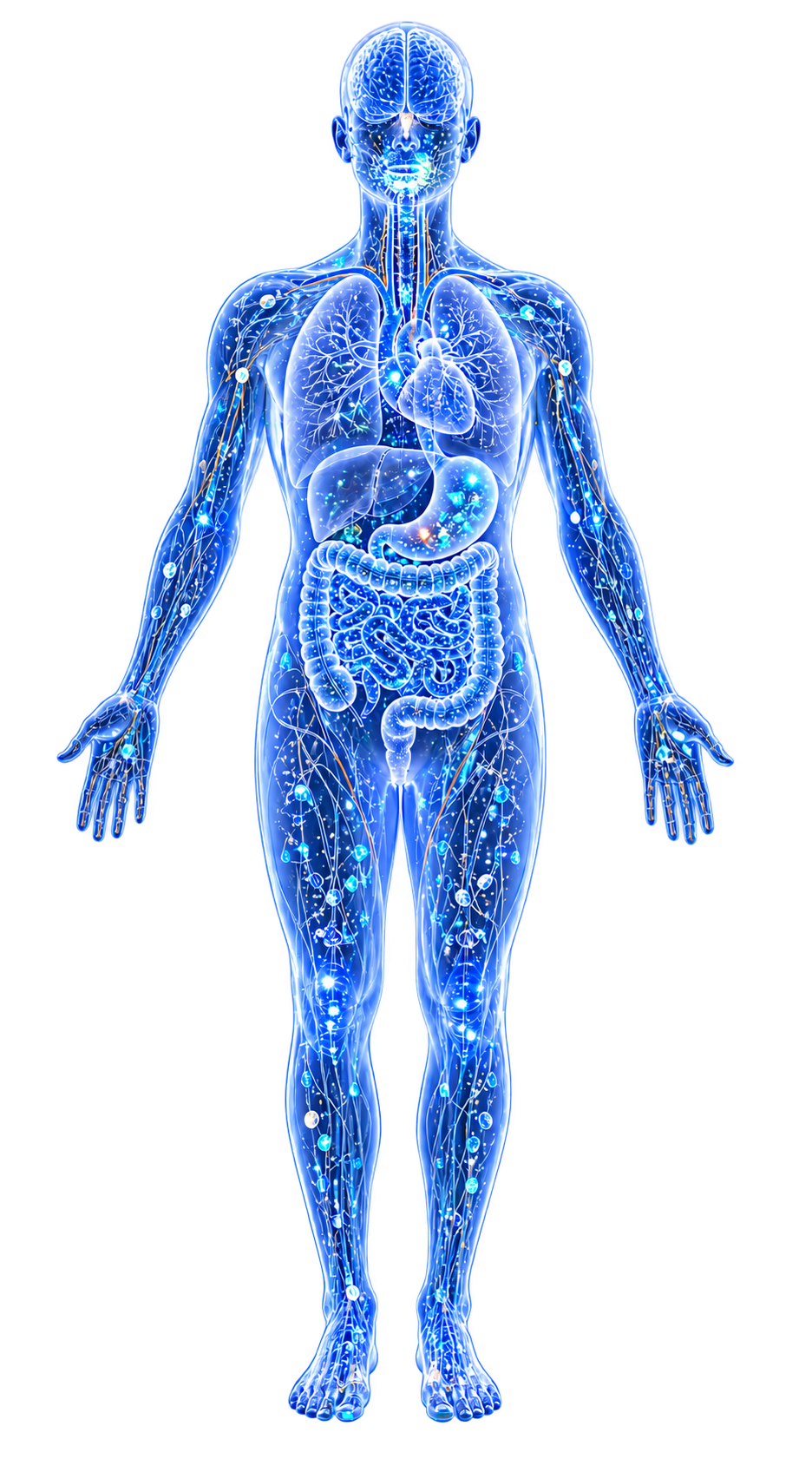
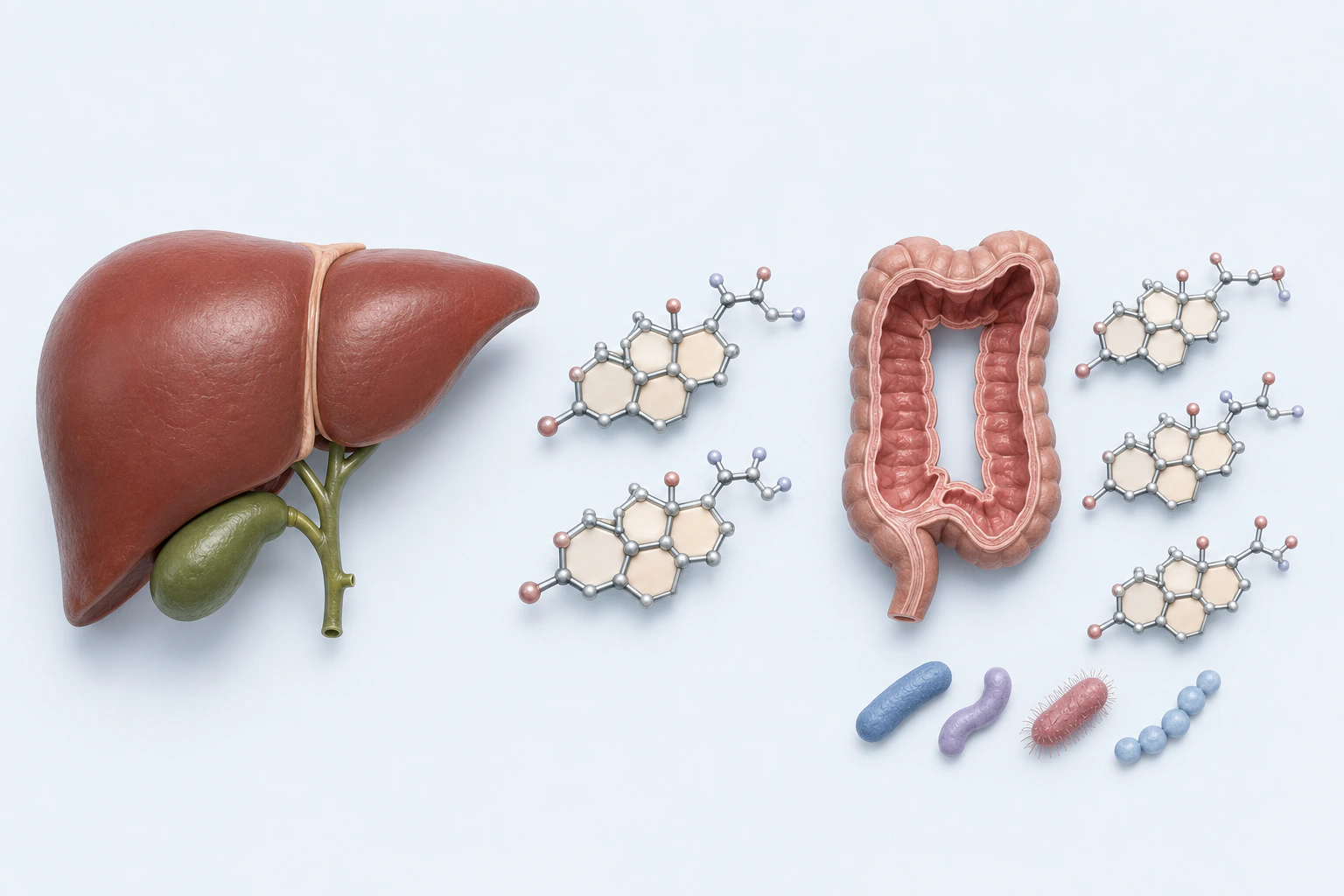
Host–microbe bile acid context. The separated teaching groups do not establish a pathway, direction, named molecule, conversion, concentration, flux, species assignment, disease mechanism, biomarker, or treatment effect.
Scientific media record2 verified identifiers
- Subject
- Bile Acid Metabolismbiological-process
- Identifiers
- WikiBiome:bile-acid-metabolismMeSH:D001647
- Review
- Editorial review completeIdentifiers authority-verified · Accessibility validated · · bile-acid-metabolism|bile-acid-metabolism-mechanism-v1.webp
- Digital source
- Trained-algorithmic mediaCreated with a trained generative algorithm and reviewed by WikiBiome for subject identity, scientific framing, identifiers, provenance, and accessibility.
- License
- CC BY-SA 4.0Created
Bile acids are cholesterol-derived amphipathic molecules synthesized in the liver, secreted into the duodenum, and extensively modified by gut bacteria. The host-microbe co-metabolism of bile acids creates a signaling network with profound effects on lipid metabolism, glucose homeostasis, immune regulation, and cancer risk.
Alterations in the bile acid pool are documented in Cardiovascular Disease, Inflammatory Bowel Disease (IBD), Multiple Sclerosis, Colorectal Cancer, and metabolic disease.
Evidence map8 cited passagesInspect provenance +
Bile salt hydrolase (BSH) removes the glycine/taurine conjugate. Found in collinsella, Lactobacillus, Clostridium, bifidobacterium, Listeria, and Bacteroides.
Metabolic effects: Decreases triglycerides, decreases insulin resistance, increases reverse cholesterol transport, decreases blood pressure via iNOS expression.
Anti-atherosclerotic: Inhibits NF-kB in macrophages, reduces monocyte infiltration, decreases foam cell formation.
DCA and LCA at high colonic concentrations promote CRC through DNA damage, ROS generation, NF-kB activation, and Wnt/beta-catenin pathway stimulation.
Ratio of primary to secondary bile acids linked to CVD severity.
BSH-expressing Lactobacillus reuteri NCIMB 30242 reduced LDL-C, non-HDL-C, and apoB100 in clinical trials.
In multiple sclerosis, bile acid supplementation is an emerging gut-oriented intervention; bile acid-FXR signaling may suppress Th17-driven neuroinflammation.
Coprostanol pathway: Microbial conversion of cholesterol to coprostanol (by Eubacterium coprostanoligenes) is sex-dependent and may be disrupted by metals, connecting to the cholesterol-CVD axis.
Contents
1. Primary Bile Acids (Host-Produced)2. Microbial Bile Acid Transformation3. Receptor Signaling4. Disease Connections5. Metal Connections6. ConnectionsPrimary Bile Acids (Host-Produced)#
Synthesized in hepatocytes from cholesterol via CYP7A1 (classic pathway) or CYP27A1 (alternative pathway). Cholic acid (CA): conjugated with glycine or taurine to form glycocholic/taurocholic acid. Chenodeoxycholic acid (CDCA): the most potent endogenous FXR agonist; conjugated similarly.
Conjugated primary bile acids are secreted into bile, stored in the gallbladder, and released into the duodenum postprandially to emulsify dietary fats. ~95% are reabsorbed in the terminal ileum via ASBT (apical sodium-dependent bile acid transporter) and recycled to the liver—the enterohepatic circulation.
Microbial Bile Acid Transformation#
The ~5% of bile acids escaping ileal absorption enter the colon, where bacteria perform transformations creating secondary bile acids:
Deconjugation (BSH Activity)#
Bile salt hydrolase (BSH) removes the glycine/taurine conjugate. Found in Collinsella, Lactobacillus, Clostridium, Bifidobacterium, Listeria, and Bacteroides.[1]Bile acids at the cross-roads of gut microbiome-host cardiometabolic interactionsPaul M. Ryan, Catherine Stanton, Noel M. Caplice · 2017Open reference 1 ↓
Collinsella is notable for its BSH activity and is enriched in atherosclerotic patients. Deconjugation is required before further microbial modifications can occur.
7-alpha-Dehydroxylation#
Performed primarily by Clostridium scindens and related Clostridium cluster XIVa species. Converts CA to deoxycholic acid (DCA) and CDCA to lithocholic acid (LCA). DCA and LCA are the dominant secondary bile acids in the human colon.
Other Transformations#
Epimerization: CDCA to ursodeoxycholic acid (UDCA) by certain Clostridium species. Oxidation/reduction at various hydroxyl positions. Esterification by gut bacteria, affecting bile acid solubility and activity.
Receptor Signaling#
FXR (Farnesoid X Receptor)#
Nuclear receptor activated most potently by CDCA, then CA, DCA.
Metabolic effects: Decreases triglycerides, decreases insulin resistance, increases reverse cholesterol transport, decreases blood pressure via iNOS expression.[1]Bile acids at the cross-roads of gut microbiome-host cardiometabolic interactionsPaul M. Ryan, Catherine Stanton, Noel M. Caplice · 2017Open reference 1 ↓
Gut barrier: Maintains epithelial integrity; FXR-deficient mice have increased intestinal permeability. Immune modulation: Suppresses NF-kB-driven Metal-Driven Inflammation in intestinal epithelium. Feedback regulation: Induces FGF15/19 (mouse/human), which suppresses CYP7A1, reducing bile acid synthesis.
TGR5 (GPBAR1)#
Membrane receptor activated most potently by LCA, then DCA, CDCA, CA. Anti-atherosclerotic: Inhibits NF-kB in macrophages, reduces monocyte infiltration, decreases foam cell formation.[1]Bile acids at the cross-roads of gut microbiome-host cardiometabolic interactionsPaul M. Ryan, Catherine Stanton, Noel M. Caplice · 2017Open reference 1 ↓ Metabolic: Increases GLP-1 secretion from enteroendocrine L-cells, improving glucose homeostasis.
Anti-inflammatory: Reduces pro-inflammatory cytokine production.
Disease Connections#
Colorectal Cancer#
DCA and LCA at high colonic concentrations promote CRC through DNA damage, ROS generation, NF-kB activation, and Wnt/beta-catenin pathway stimulation.[2]Secondary bile acids: an underrecognized cause of colon cancerHana Ajouz, Deborah Mukherji, Ali Shamseddine · 2014Open reference 2 ↓
High-fat diets increase DCA production; this is a key mechanistic link between Western diet and CRC risk. UDCA (ursodeoxycholic acid) is chemoprotective and may counteract DCA/LCA toxicity.
Cardiovascular Disease#
Ratio of primary to secondary bile acids linked to CVD severity.[3]Emerging therapy targets to modulate microbiome-mediated effects evident in cardiovascular diseaseDorothea Katharina Hoffelner, Tim Hendrikx · 2025Open reference 3 ↓ FXR agonists (OCA, CDCA) reduce blood pressure in hypertensive models. BSH-expressing Lactobacillus reuteri NCIMB 30242 reduced LDL-C, non-HDL-C, and apoB100 in clinical trials.[1]Bile acids at the cross-roads of gut microbiome-host cardiometabolic interactionsPaul M. Ryan, Catherine Stanton, Noel M. Caplice · 2017Open reference 1 ↓
Altered serum bile acid composition linked to atrial fibrillation in heart failure patients.
IBD and Multiple Sclerosis#
Bile acid pool disrupted in Inflammatory Bowel Disease (IBD) due to Dysbiosis and ileal inflammation impairing reabsorption.
In Multiple Sclerosis, bile acid supplementation is an emerging gut-oriented intervention; bile acid-FXR signaling may suppress Th17-driven Neuroinflammation.[4]Gut-oriented interventions in patients with multiple sclerosis: fact or fiction?V. Martinelli, M. Albanese, M. Altieri et al. · 2022Open reference 4 ↓
Graves' Disease and Thyroid#
- Altered bile acid metabolism documented in autoimmune thyroid disease, potentially via FXR-mediated immune modulation.
Metal Connections#
Bile acids as metal chelators: Bile acids can bind divalent cations (calcium(II) (Ca2+), iron(II) (Fe2+), zinc(II) (Zn2+), copper(II) (Cu2+)) in the intestinal lumen, affecting both metal bioavailability and bile acid solubility.
Metal-induced dysbiosis disrupts bile acid transformation: Loss of BSH-expressing and 7-alpha-dehydroxylating bacteria alters the primary/secondary bile acid ratio. FXR and metal homeostasis: FXR regulates intestinal barrier integrity; its disruption by altered bile acid signaling compounds metal-induced barrier failure.
Coprostanol pathway: Microbial conversion of cholesterol to coprostanol (by Eubacterium coprostanoligenes) is sex-dependent and may be disrupted by metals, connecting to the cholesterol-CVD axis.[1]Bile acids at the cross-roads of gut microbiome-host cardiometabolic interactionsPaul M. Ryan, Catherine Stanton, Noel M. Caplice · 2017Open reference 1 ↓
Connections#
- Cardiovascular Disease—bile acid-FXR/TGR5 axis regulates cholesterol, inflammation, and vascular function
- Colorectal Cancer—DCA and LCA are tumor promoters at high concentrations
- Collinsella—BSH-expressing pathobiont enriched in atherosclerosis
- Short-Chain Fatty Acids (SCFAs)—co-produced by colonic anaerobes; bile acid-SCFA balance reflects community health
- inflammation—FXR activation suppresses NF-kB; dysregulated bile acids promote inflammation
- dysbiosis—microbial bile acid transformation is highly sensitive to community shifts
- Gut-Metal-Microbiome Interactions—bile acids modulate metal absorption and are themselves altered by metal-induced dysbiosis
References 8
Numbered by first appearance in the article, then reconciled with its declared source list.
- 1
Paul M. Ryan, Catherine Stanton, Noel M. Caplice (2017). Bile acids at the cross-roads of gut microbiome-host cardiometabolic interactions. Diabetology and Metabolic Syndrome.
- 2
Hana Ajouz, Deborah Mukherji, Ali Shamseddine (2014). Secondary bile acids: an underrecognized cause of colon cancer. World Journal of Surgical Oncology.
- 3
Dorothea Katharina Hoffelner, Tim Hendrikx (2025). Emerging therapy targets to modulate microbiome-mediated effects evident in cardiovascular disease. Frontiers in Cardiovascular Medicine.
- 4
V. Martinelli, M. Albanese, M. Altieri et al. (2022). Gut-oriented interventions in patients with multiple sclerosis: fact or fiction?. European Review for Medical and Pharmacological Sciences.
- 5
Zihong Wu, Yuqing Huang, Renyi Zhang et al. (2024). Sex differences in colorectal cancer: with a focus on sex hormone-gut microbiome axis. Cell Communication and Signaling.
- 6
Abigail L Reens, Damien J Cabral, Xue Liang et al. (2021). Immunomodulation by the Commensal Microbiome During Immune-Targeted Interventions: Focus on Cancer Immune Checkpoint Inhibitor Therapy and Vaccination. Frontiers in Immunology.
- 7
Ramya Sree Maddu, Aarthi Saima Ghanta, Veeresh Pratap (2025). Microbiome-Drug Interactions: A Critical Review of Pharmacokinetic and Pharmacodynamic Modulation. Tropical Journal of Pharmaceutical and Life Sciences.
- 8
Xianglu Wang, Qiang Tang, Huiqin Hou et al. (2021). Gut Microbiota in NSAID Enteropathy: New Insights From Inside. Frontiers in Cellular and Infection Microbiology.
Article network
Mentioned here 11
Pages linking here 34
Connect the evidence
Publicly readable discussion by ORCID-authenticated researchers. Questions, interpretation, methods, corrections, and new evidence stay attached to this record.
No discussion yet. Start with a precise question or a source-backed observation.
Activity and accepted changes
Accepted researcher context, editorial status, public discussion, and upstream Git revisions are shown together. Pending, declined, and withdrawn proposals remain private.
- published revision
Backfill inflammation concept links
Karen Pendergrass · +2 −2
Inspect exact Git diff ↗ - published revision
Complete corpus-wide Dysbiosis linking
Karen Pendergrass · +2 −2
Inspect exact Git diff ↗ - published revision
massive wiki expansion: 149 stubs fixed, 100+ new pages, Rule 15 scan, keystone papers
WikiBiome Deploy Bot · +15 −15
Inspect exact Git diff ↗ - published revision
nightly maintenance: 94 stub demotions, 181 source_count fixes, 22 auto-discovered stubs, 5 adversarial audits, 3 boundary fixes, 3 evidence-level corrections
WikiBiome Deploy Bot · +1 −0
Inspect exact Git diff ↗ - published revision
pre-overnight checkpoint 2026-04-18
WikiBiome Deploy Bot · +3 −1
Inspect exact Git diff ↗ - published revision
WikiBiome update — 2026-04-15 17:23
WikiBiome Deploy Bot · +0 −1
Inspect exact Git diff ↗ - published revision
WikiBiome update — integrity fixes, metallomic diet pages, cross-condition analyses
WikiBiome Deploy Bot · +19 −9
Inspect exact Git diff ↗ - published revision
WikiBiome update — 2026-04-10 15:45
WikiBiome Deploy Bot · +91 −0
Inspect exact Git diff ↗