
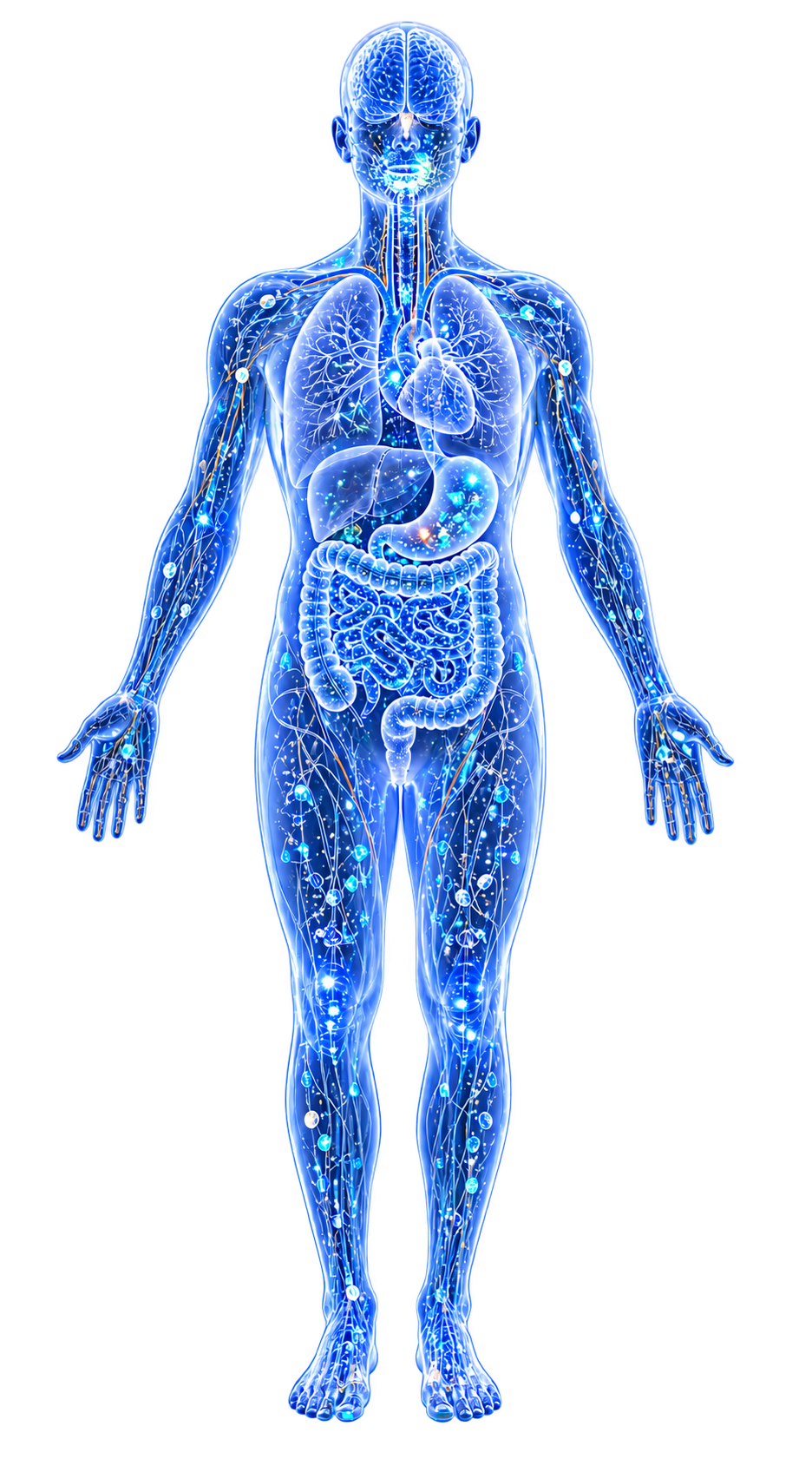
 metals · microbes · host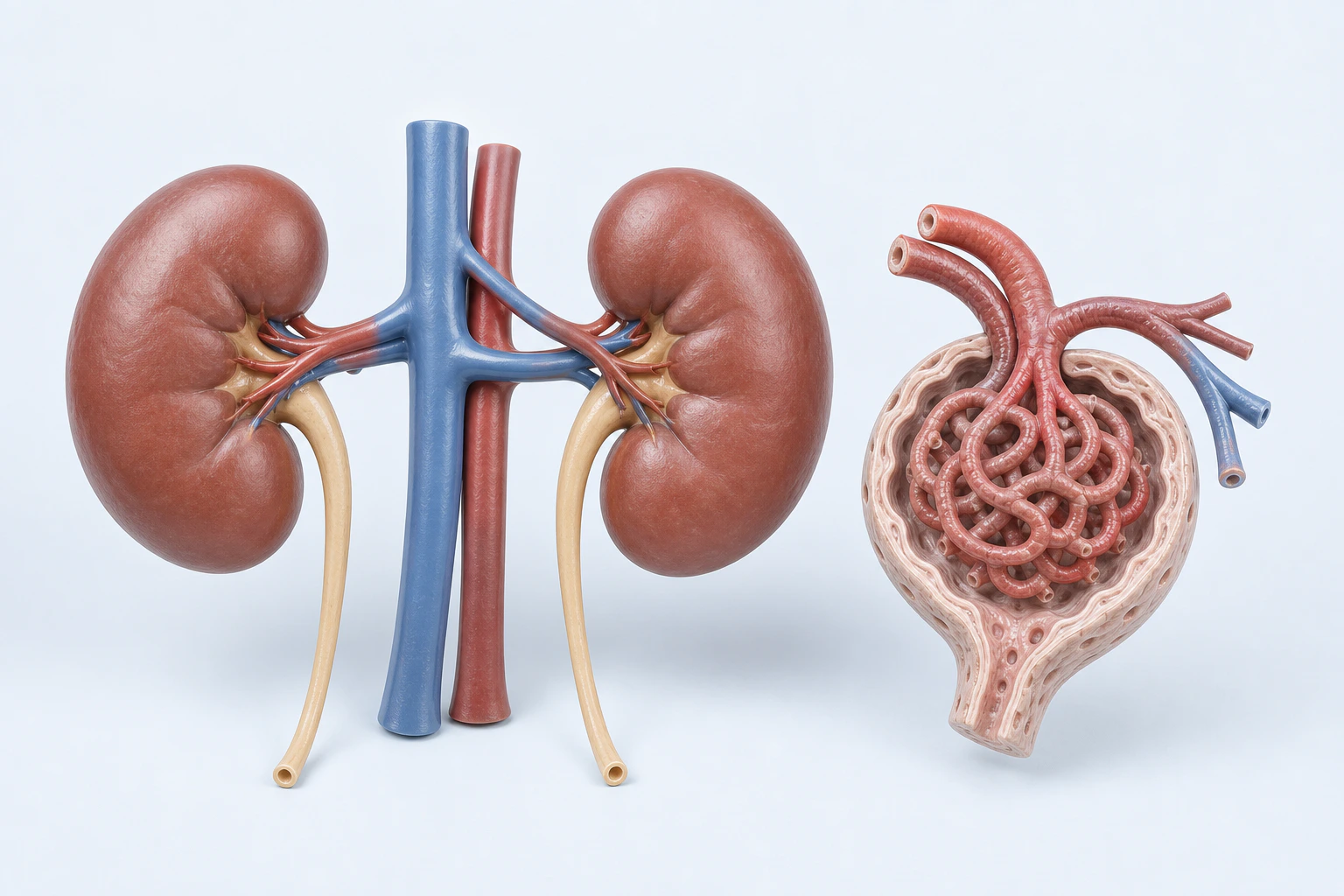
Renal and glomerular orientation for diabetic kidney disease. The output does not establish diabetes, basement-membrane thickness, a universal lesion, stage, laboratory result, severity, cause, or diagnosis.
Scientific media record1 verified identifier
- Subject
- Diabetic Nephropathiescondition
- Identifiers
- MeSH:D003928
- Review
- Editorial review completeIdentifiers authority-verified · Accessibility validated · · diabetic-kidney-disease|diabetic-kidney-disease-pathology-v1.webp
- Digital source
- Trained-algorithmic mediaCreated with a trained generative algorithm and reviewed by WikiBiome for subject identity, scientific framing, identifiers, provenance, and accessibility.
- Scientific basis
- Diabetic Nephropathies — MeSHDiabetic Kidney Disease
- License
- CC BY-SA 4.0Created
Diabetic kidney disease (DKD), also known as diabetic nephropathy, is the leading cause of end-stage renal disease (ESRD) worldwide, affecting 30-40% of patients with Type 2 Diabetes and Type 1 Diabetes. DKD is defined by progressive albuminuria, declining glomerular filtration rate (GFR), and ultimately renal failure requiring dialysis or transplantation.
It represents the convergence of two conditions that individually disrupt the Gut Microbiome—diabetes and Chronic Kidney Disease—creating a compounded Dysbiosis-metal-Metal-Driven Inflammation cycle.
In the WikiBiome framework, DKD is where the Gut-Kidney Axis meets the metabolic syndrome signature, and where cadmium toxicity intersects with hyperglycemia-driven microvascular damage.
Evidence map7 cited passagesInspect provenance +
Cadmium is the most important metal in DKD because it attacks both the diabetes and the kidney components simultaneously:
A key finding: zinc + curcumin combination attenuates cadmium-induced diabetic nephropathy through:
MR studies have identified specific gut taxa causally associated with diabetic complications including DKD, demonstrating that microbiome disruption is not merely a consequence of metabolic disease but an upstream driver of diabetic complications.
Disrupted bile acid metabolism is emerging as a key mechanism in DKD:
zinc-curcumin attenuates Cd-driven DKD via TLR4/NF-kB
bile acid disruption in DKD
MR evidence for causal gut taxa
One disease. Five evidence layers.
A generated systems view of the metals, organisms, host sequestration signals, ecological conditions, and microbial functions indexed for Diabetic Kidney Disease.
Evidence layer
Taxonomic signature
Organisms reported as enriched or depleted, with their indexed functional context kept beside the name.No structured taxa indexed yet.
No structured taxa indexed yet.
Evidence layer
Nutritional immunity
Host metal-withholding, inflammatory, antioxidant, and microbial-metabolite signals indexed in the signature.Elevated host signals
0No structured signals indexed yet.
Depleted protective signals
0No structured signals indexed yet.
Evidence layer
Ecological state
The environmental conditions that connect the organism-level observations into a system.No structured ecological features indexed yet.
Evidence layer
Virulence functions
Microbial structures, enzymes, and acquisition systems implicated by the linked evidence.No structured virulence functions indexed yet.
The disease record, in full.
The original WikiBiome disease narrative remains intact beneath the generated signature atlas.
Metallomic Signature#
Cadmium: The Primary Metal Aggravator#
Cadmium is the most important metal in DKD because it attacks both the diabetes and the kidney components simultaneously.[1]Sun et al. 2024 — Zinc-Curcumin Complex Reverses Cadmium-Aggravated Diabetic Nephropathy via Microbiome MediationYujie Sun, Xiaoyu Zhang, Yingying Liu et al. · 2024Open reference 1 ↓
Pancreatic beta-cell toxicity: Cadmium impairs insulin secretion, worsening diabetes. Proximal tubular damage: Cadmium accumulates in kidney proximal tubules (30-year half-life), causing direct nephrotoxicity. TLR4/NF-kB activation: Cadmium activates the TLR4/NF-kB inflammatory cascade in renal tissue, driving fibrosis.
Oxidative Stress: Cadmium depletes glutathione and generates reactive oxygen species in both kidney and pancreas.
Zinc-Curcumin Attenuation#
A key finding: zinc + curcumin combination attenuates cadmium-induced diabetic nephropathy through.[1]Sun et al. 2024 — Zinc-Curcumin Complex Reverses Cadmium-Aggravated Diabetic Nephropathy via Microbiome MediationYujie Sun, Xiaoyu Zhang, Yingying Liu et al. · 2024Open reference 1 ↓ Zinc competes with cadmium for cellular uptake (shared ZIP/ZnT transporters). Curcumin chelates cadmium and suppresses NF-kB activation.
The combination reduces proteinuria, improves GFR, and decreases renal fibrosis markers in animal models.
This represents a potential metal-targeted intervention at the diabetes-kidney interface.
Iron and Ferroptosis#
Iron dysregulation contributes to DKD through Ferroptosis—iron-dependent cell death. Hyperglycemia increases renal iron uptake. Excess iron catalyzes lipid peroxidation in tubular epithelial cells.
Ferroptosis drives tubular injury and interstitial fibrosis.
GPX4 (a selenoprotein requiring Selenium) is the primary defense against ferroptosis.
Microbiome in DKD#
The Double Dysbiosis#
DKD patients carry the combined microbiome disruption of diabetes AND kidney disease:
From diabetes. Reduced Bifidobacterium, Lactobacillus, Akkermansia muciniphila. Increased Proteobacteria and Enterobacteriaceae.
Impaired SCFA production.
Altered bile acid metabolism.
From CKD (added as kidney function declines). Uremic toxin-producing bacteria increase (Escherichia coli, Clostridium species). Further SCFA depletion as dietary fiber is restricted.
Metal-resistant bacteria enriched due to impaired cadmium/lead excretion.
See Gut-Kidney Axis for detailed treatment.
Mendelian Randomization Evidence#
MR studies have identified specific gut taxa causally associated with diabetic complications including DKD,[2]Liu 2024 — Causal relationship between gut microbiota and diabetic complications: a two-sample Mendelian randomization studyLiu J, Chen Y, Peng C · 2024Open reference 2 ↓ demonstrating that microbiome disruption is not merely a consequence of metabolic disease but an upstream driver of diabetic complications.
Bile Acid Metabolism#
Disrupted bile acid metabolism is emerging as a key mechanism in DKD.[3]Metabolomic Profiling Reveals Step-Wise Alteration of Bile Acid Metabolism in Diabetic Kidney DiseaseQing Zhang, Liqian Lu, Jiao Wang et al. · 2024Open reference 3 ↓
Gut bacteria transform primary bile acids (from liver) into secondary bile acids. In DKD, dysbiotic bacteria alter the bile acid pool composition. Altered bile acids dysregulate FXR and TGR5 receptor signaling in the kidney.
This affects renal lipid metabolism, inflammation, and fibrosis. Bile Acid Metabolism disruption connects gut dysbiosis directly to renal pathology.
Bile acids also affect metal absorption: bile acid-metal complexes influence cadmium and zinc bioavailability in the gut, meaning DKD-associated bile acid disruption may worsen metal toxicity.
The Convergence Model#
DKD represents the convergence of three pathological axes:
`` Diabetes (hyperglycemia, insulin resistance) │ ├─→ Pancreatic metal toxicity (Cd, As) ├─→ Gut dysbiosis (metabolic) └─→ Microvascular damage │ ▼ Kidney Damage │ ├─→ Impaired metal excretion (Cd, Pb accumulation) ├─→ Uremic gut dysbiosis (added to metabolic dysbiosis) ├─→ Uremic toxin production (IS, pCS, TMAO) └─→ Further kidney damage (vicious cycle) ``
This convergence explains why DKD progresses more rapidly than either diabetes or CKD alone.
Associated Conditions#
| Condition | Relationship | Shared Features |
|---|---|---|
| Type 2 Diabetes | Primary driver | Insulin resistance, cadmium exposure, gut dysbiosis |
| Chronic Kidney Disease | Consequence that amplifies cause | Vicious cycle of metal accumulation and dysbiosis |
| Cardiovascular Disease | Major comorbidity (leading cause of death in DKD) | Endothelial dysfunction, TMAO, systemic inflammation |
| Hypertension | Both cause and consequence | Lead/cadmium vascular toxicity; RAAS dysregulation |
Open Questions#
Unresolved questions identified by the current evidence record.
01Can zinc-curcumin supplementation slow DKD progression in human trials?+
The current WikiBiome record identifies this as an unresolved evidence gap.
02Does cadmium reduction (smoking cessation, dietary cadmium avoidance) reduce DKD incidence?+
The current WikiBiome record identifies this as an unresolved evidence gap.
03Can microbiome-targeted interventions reduce uremic toxin production in early DKD?+
The current WikiBiome record identifies this as an unresolved evidence gap.
04Is ferroptosis inhibition a viable therapeutic strategy for DKD-associated tubular injury?+
The current WikiBiome record identifies this as an unresolved evidence gap.
05Can bile acid-based therapies (FXR agonists) slow DKD progression through microbiome-kidney cross-talk?+
The current WikiBiome record identifies this as an unresolved evidence gap.
Key Studies#
- [1]Sun et al. 2024 — Zinc-Curcumin Complex Reverses Cadmium-Aggravated Diabetic Nephropathy via Microbiome MediationYujie Sun, Xiaoyu Zhang, Yingying Liu et al. · 2024Open reference 1 ↓—zinc-curcumin attenuates cadmium (Cd)-driven DKD via TLR4/NF-kB
- [3]Metabolomic Profiling Reveals Step-Wise Alteration of Bile Acid Metabolism in Diabetic Kidney DiseaseQing Zhang, Liqian Lu, Jiao Wang et al. · 2024Open reference 3 ↓—bile acid disruption in DKD
- [2]Liu 2024 — Causal relationship between gut microbiota and diabetic complications: a two-sample Mendelian randomization studyLiu J, Chen Y, Peng C · 2024Open reference 2 ↓—MR evidence for causal gut taxa
Cross-References#
- Type 2 Diabetes—metabolic driver
- Chronic Kidney Disease—renal progression
- Gut-Kidney Axis—mechanistic framework
- Cadmium—primary nephrotoxicant
- Ferroptosis—iron-dependent cell death
- Bile Acid Metabolism—disrupted signaling pathway
- TLR4—cadmium-activated inflammatory cascade
References 4
Numbered by first appearance in the article, then reconciled with its declared source list.
- 1
Yujie Sun, Xiaoyu Zhang, Yingying Liu et al. (2024). Sun et al. 2024 — Zinc-Curcumin Complex Reverses Cadmium-Aggravated Diabetic Nephropathy via Microbiome Mediation. Frontiers in Pharmacology.
- 2
Liu J, Chen Y, Peng C (2024). Liu 2024 — Causal relationship between gut microbiota and diabetic complications: a two-sample Mendelian randomization study. Diabetology & Metabolic Syndrome.
- 3
Qing Zhang, Liqian Lu, Jiao Wang et al. (2024). Metabolomic Profiling Reveals Step-Wise Alteration of Bile Acid Metabolism in Diabetic Kidney Disease. Nutrition and Diabetes.
- 4
Tingting Geng, Qi Lu, Limiao Jiang et al. (2024). Circulating Concentrations of Bile Acids and Prevalent CKD among Newly Diagnosed Type 2 Diabetes. Nutrition Journal.
Article network
Mentioned here 18
Connect the evidence
Publicly readable discussion by ORCID-authenticated researchers. Questions, interpretation, methods, corrections, and new evidence stay attached to this record.
No discussion yet. Start with a precise question or a source-backed observation.
Activity and accepted changes
Accepted researcher context, editorial status, public discussion, and upstream Git revisions are shown together. Pending, declined, and withdrawn proposals remain private.
- published revision
Backfill oxidative stress concept links
Karen Pendergrass · +1 −1
Inspect exact Git diff ↗ - published revision
Backfill gut microbiome concept links
Karen Pendergrass · +1 −1
Inspect exact Git diff ↗ - published revision
Backfill inflammation concept links
Karen Pendergrass · +1 −1
Inspect exact Git diff ↗ - published revision
Complete corpus-wide Dysbiosis linking
Karen Pendergrass · +1 −1
Inspect exact Git diff ↗ - published revision
massive wiki expansion: 149 stubs fixed, 100+ new pages, Rule 15 scan, keystone papers
WikiBiome Deploy Bot · +17 −16
Inspect exact Git diff ↗ - published revision
nightly maintenance: 94 stub demotions, 181 source_count fixes, 22 auto-discovered stubs, 5 adversarial audits, 3 boundary fixes, 3 evidence-level corrections
WikiBiome Deploy Bot · +2 −0
Inspect exact Git diff ↗ - published revision
pre-overnight checkpoint 2026-04-18
WikiBiome Deploy Bot · +144 −0
Inspect exact Git diff ↗