
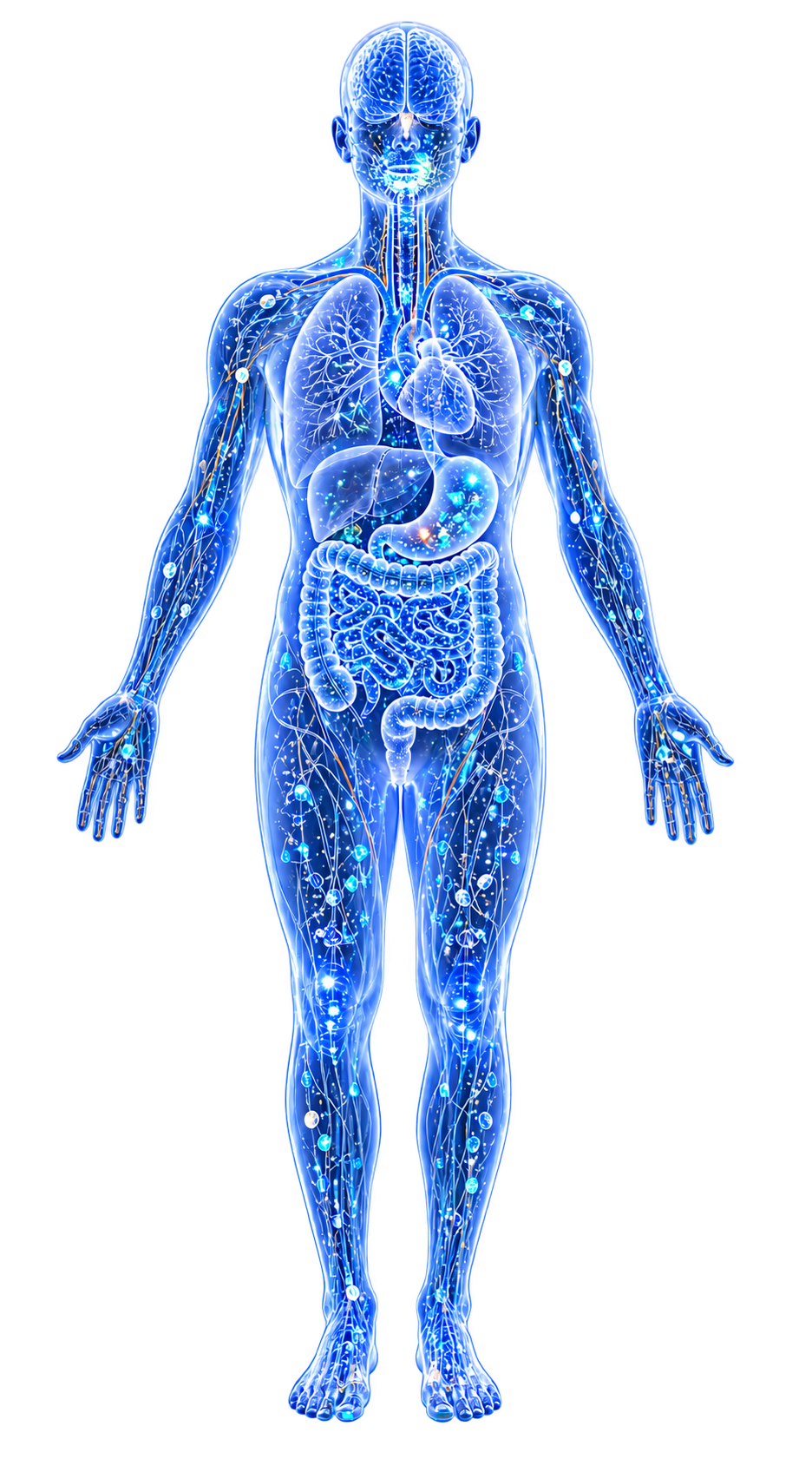
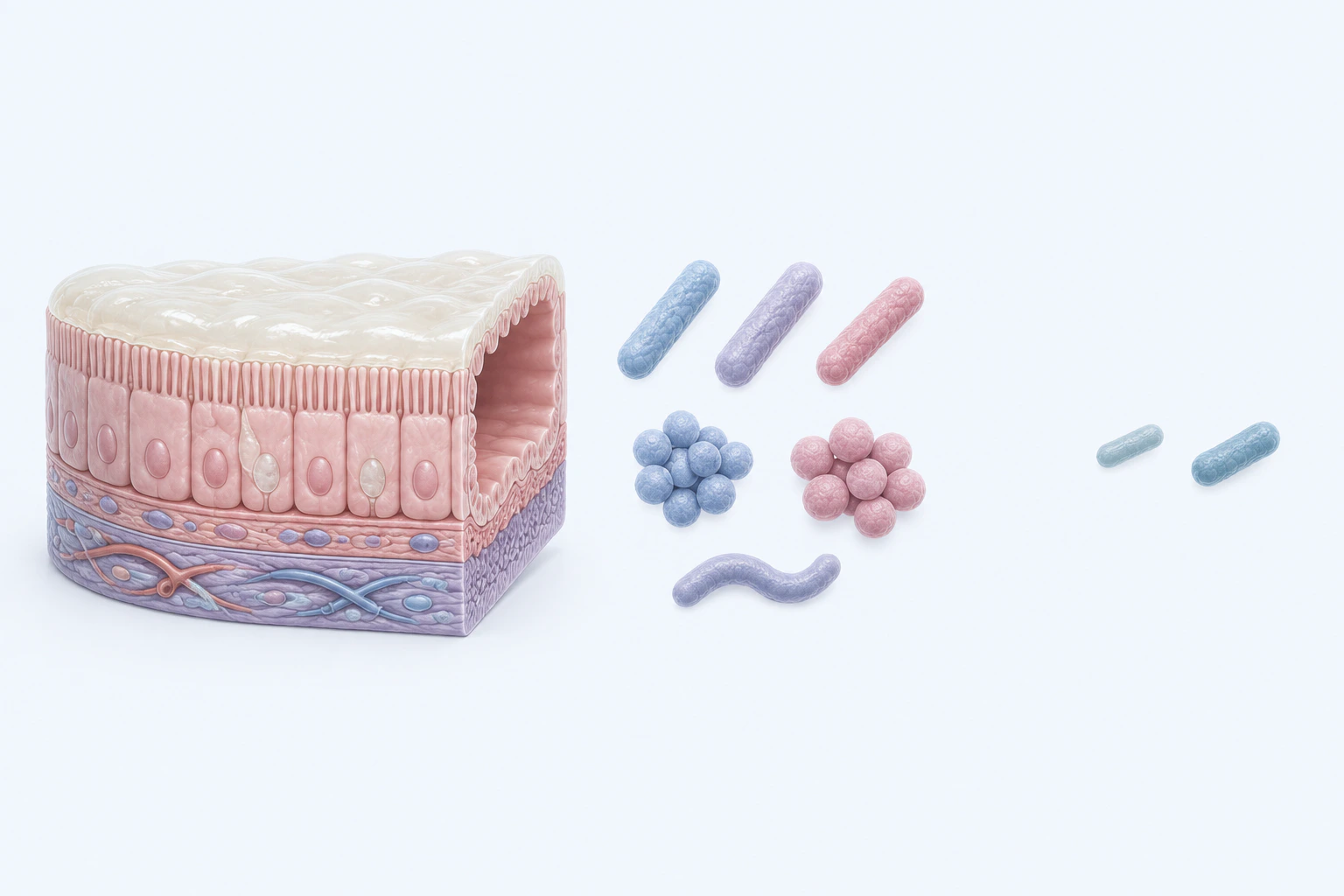
Intestinal colonization-resistance orientation. The separated models do not identify taxa or pathogens, define a universal healthy community, measure abundance, depict exclusion or infection, establish a mechanism, or support a biomarker or treatment claim.
Scientific media record2 verified identifiers
- Subject
- Colonization Resistancebiological-process
- Review
- Editorial review completeIdentifiers authority-verified · Accessibility validated · · colonization-resistance|colonization-resistance-mechanism-v1.webp
- Digital source
- Trained-algorithmic mediaCreated with a trained generative algorithm and reviewed by WikiBiome for subject identity, scientific framing, identifiers, provenance, and accessibility.
- Scientific basis
- Intestinal colonization resistanceColonization Resistance
- License
- CC BY-SA 4.0Created
The collective ability of the resident Gut Microbiome to prevent colonization by exogenous pathogens and suppress expansion of resident pathobionts.
Colonization resistance is not a property of any single organism but an emergent function of the whole microbial community—a biological firewall built from nutrient competition, metabolite-mediated inhibition, immune priming, and ecological niche occupation.
When this firewall fails—through antibiotics, heavy metal exposure, dietary disruption, or disease-driven Dysbiosis—the consequences cascade through virtually every disease domain covered in this wiki.
Evidence map3 cited passagesInspect provenance +
Metal competition: Commensal bacteria compete for iron, zinc, and manganese. Siderophore-producing commensals can outcompete pathogens for iron in the same ecological niche. This connects colonization resistance directly to nutritional immunity—both the host and the commensals are restricting metal availability to pathogens
Environmental metals can selectively eliminate sensitive commensals while sparing metal-resistant pathobionts:
Iron supplementation delivers unabsorbed iron to the colon, feeding siderophore-producing Enterobacteriaceae while outcompeting commensals that lack siderophore systems
Contents
1. Mechanisms2. Disruption of Colonization Resistance3. Restoration of Colonization Resistance4. Metal Dimensions5. ConnectionsMechanisms#
Nutrient Competition#
The commensal microbiome occupies metabolic niches that deprive incoming pathogens of essential resources. Carbon source competition: Established commensals consume available sugars, amino acids, and other carbon sources more efficiently than newly arriving organisms.
Metal competition: Commensal bacteria compete for iron, zinc, and manganese. Siderophore-producing commensals can outcompete pathogens for iron in the same ecological niche.[1]Bushman 2025 — The Exploitation of Nutrient Metals by Bacteria for Survival and Infection in the GutSummer D Bushman, Eric P Skaar, N Luisa Hiller · 2025Open reference 1 ↓ This connects colonization resistance directly to Nutritional Immunity (Metal Sequestration)—both the host and the commensals are restricting metal availability to pathogens.
Bile acid metabolism: Commensal bacteria convert primary bile acids to secondary bile acids (e.g., deoxycholic acid) that inhibit C. difficile germination. Loss of this metabolic function after antibiotics is a primary reason CDI occurs.
Short-Chain Fatty Acid Production#
SCFA-producing commensals (Faecalibacterium prausnitzii, Roseburia, Bifidobacterium) create an environment inhospitable to many pathogens:
- Butyrate maintains epithelial tight junctions, preventing pathogen translocation
- SCFAs lower luminal pH, inhibiting pH-sensitive pathogens
- Butyrate promotes epithelial oxygen consumption, maintaining the anaerobic environment that favors obligate anaerobe commensals over facultative aerobe pathobionts (Enterobacteriaceae)
Immune Education#
The commensal microbiome primes mucosal immunity:
- Induces secretory IgA that coats potential pathogens
- Stimulates antimicrobial peptide production (defensins, cathelicidins)
- Trains innate immune cells to discriminate commensals from pathogens
- Maintains regulatory T cells that prevent excessive Metal-Driven Inflammation
Physical Niche Occupation#
Commensal bacteria physically occupy binding sites on the intestinal epithelium, preventing pathogen adhesion. The mucus layer, maintained partly by commensal metabolic output, serves as an additional physical barrier.
Disruption of Colonization Resistance#
Antibiotics#
The most well-characterized disruptor. A single course of ciprofloxacin can reduce gut microbiome diversity measurably for months, eliminating SCFA producers, bile acid metabolizers, and niche competitors. This is why Clostridioides difficile infection overwhelmingly follows antibiotic exposure—the biological firewall is dismantled.
Heavy Metal Exposure#
Environmental metals can selectively eliminate sensitive commensals while sparing metal-resistant pathobionts.[2]Zhang 2021 -- Lead Exposure and Gut Microbiome Alterations in NeurodegenerationPengya Zhang, Huizhen Zheng, Guangbo Qu · 2021Open reference 2 ↓ Lead exposure shifts the gut community toward Proteobacteria (often metal-tolerant) and away from Firmicutes (often metal-sensitive SCFA producers).
Iron supplementation delivers unabsorbed iron to the colon, feeding siderophore-producing Enterobacteriaceae while outcompeting commensals that lack siderophore systems.[1]Bushman 2025 — The Exploitation of Nutrient Metals by Bacteria for Survival and Infection in the GutSummer D Bushman, Eric P Skaar, N Luisa Hiller · 2025Open reference 1 ↓
This metal-mediated disruption creates a colonization resistance failure through selective toxicity rather than broad killing.
Dietary Changes#
Abrupt dietary shifts (especially low-fiber diets) starve SCFA-producing commensals, reducing their competitive advantage and allowing pathobiont expansion.
Restoration of Colonization Resistance#
Fecal Microbiota Transplant#
Fecal-microbiota-transplant is the most direct method of restoring colonization resistance—transferring a complete microbial community from a healthy donor. The ~90% cure rate for recurrent C. difficile infection demonstrates that colonization resistance can be rebuilt wholesale.
Ecological Engineering#
The Two-Sided Ecological Engineering principle (Primitive 5) applies directly to colonization resistance restoration. Suppress side: Remove or reduce pathobionts (targeted antimicrobials, metal restriction). Restore side: Reintroduce missing beneficial functions (probiotics, prebiotics, FMT).
Neither side alone is sufficient—suppressing pathogens without restoring commensals leaves ecological niches open for recolonization.
Metal Dimensions#
Colonization resistance has a distinctly metallomic dimension that distinguishes WikiBiome's treatment from conventional microbiome science. Iron ecology: The gut iron environment determines which organisms can compete. High luminal iron favors siderophore-producers (Enterobacteriaceae); low iron favors organisms adapted to iron scarcity (Lactobacillus, some Bifidobacterium).
Zinc: Supports defensin production by Paneth cells; zinc deficiency impairs antimicrobial peptide-mediated colonization resistance. Lactoferrin: Chelates iron at mucosal surfaces, simultaneously starving iron-dependent pathogens and supporting iron-independent commensals—a molecular embodiment of colonization resistance.
Connections#
- dysbiosis—colonization resistance failure is the functional definition of dysbiosis
- Clostridioides difficile—CDI as the paradigmatic colonization resistance failure
- Fecal Microbiota Transplant (FMT)—FMT restores colonization resistance
- butyrate—SCFA production maintains the anaerobic niche favoring commensals
- Nutritional Immunity (Metal Sequestration)—host and commensal metal restriction overlap
- Antimicrobial Resistance—antibiotic disruption of colonization resistance
- Iron—luminal iron ecology shapes competitive dynamics
- Lactoferrin—iron chelation supporting colonization resistance
- gut microbiome—colonization resistance as an emergent community property
References 3
Numbered by first appearance in the article, then reconciled with its declared source list.
- 1
Summer D Bushman, Eric P Skaar, N Luisa Hiller (2025). Bushman 2025 — The Exploitation of Nutrient Metals by Bacteria for Survival and Infection in the Gut. PLOS Pathogens.
- 2
Pengya Zhang, Huizhen Zheng, Guangbo Qu (2021). Zhang 2021 -- Lead Exposure and Gut Microbiome Alterations in Neurodegeneration. Microbiome.
- 3
Sumit (2025). Targeting the Microbiome: New Frontiers in Drug Development and Therapeutic Strategies. Scholar's Digest: Journal of Pharmacology.
Article network
Mentioned here 12
Pages linking here 8
Connect the evidence
Publicly readable discussion by ORCID-authenticated researchers. Questions, interpretation, methods, corrections, and new evidence stay attached to this record.
No discussion yet. Start with a precise question or a source-backed observation.
Activity and accepted changes
Accepted researcher context, editorial status, public discussion, and upstream Git revisions are shown together. Pending, declined, and withdrawn proposals remain private.
- published revision
Backfill gut microbiome concept links
Karen Pendergrass · +2 −2
Inspect exact Git diff ↗ - published revision
Backfill inflammation concept links
Karen Pendergrass · +1 −1
Inspect exact Git diff ↗ - published revision
Complete corpus-wide Dysbiosis linking
Karen Pendergrass · +2 −2
Inspect exact Git diff ↗ - published revision
Complete Tight junctions contextual coverage
Karen Pendergrass · +1 −1
Inspect exact Git diff ↗ - published revision
massive wiki expansion: 149 stubs fixed, 100+ new pages, Rule 15 scan, keystone papers
WikiBiome Deploy Bot · +9 −9
Inspect exact Git diff ↗ - published revision
ingest: 87 papers (17 endometriosis, 67 erectile dysfunction, 3 cross-condition)
WikiBiome Deploy Bot · +1 −1
Inspect exact Git diff ↗ - published revision
pre-overnight checkpoint 2026-04-18
WikiBiome Deploy Bot · +100 −0
Inspect exact Git diff ↗