
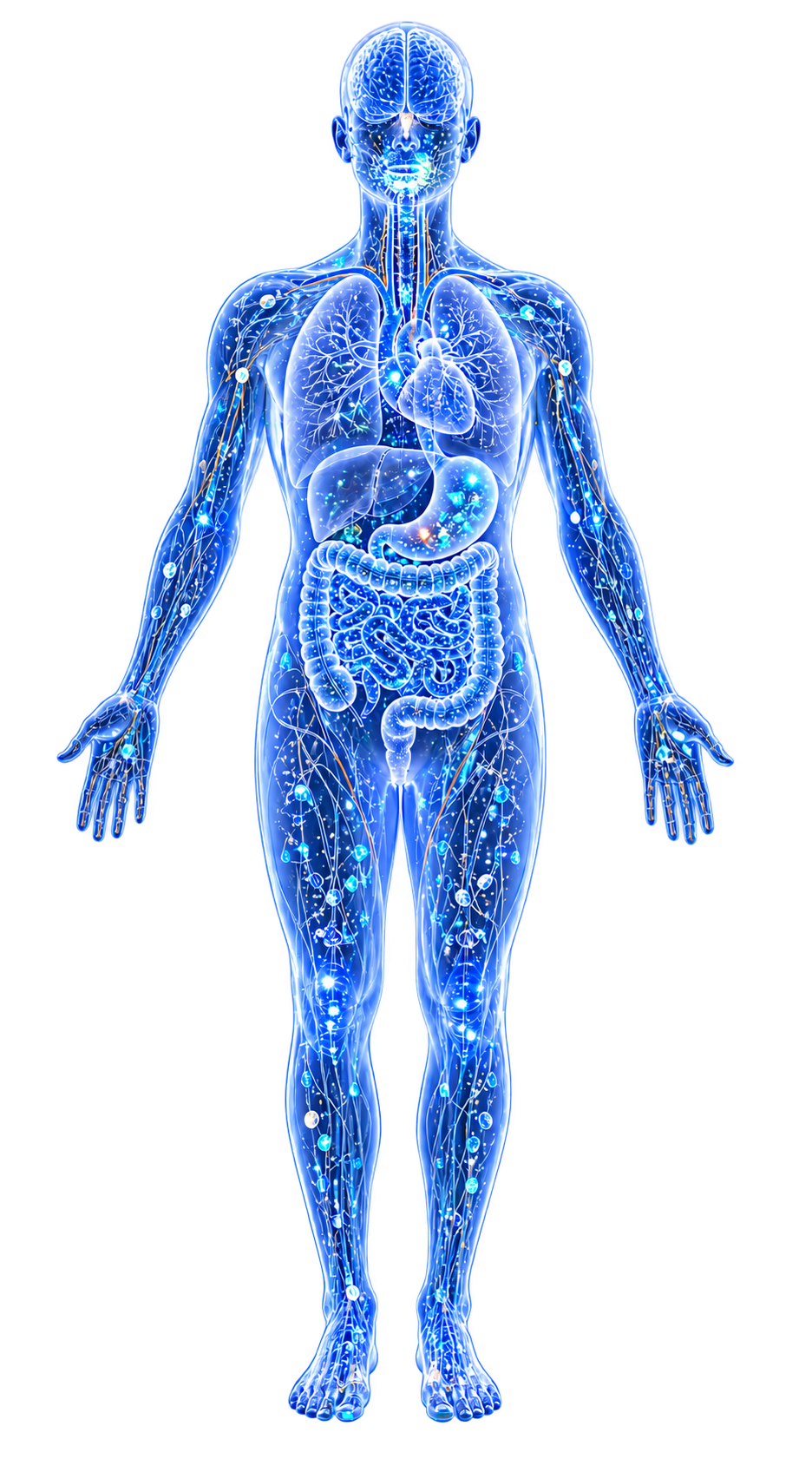
Indole is a microbial metabolite produced from tryptophan by bacterial tryptophanase (TnaA).
It is one of the most abundant microbial signals in the gut (concentrations reach 250–1,100 µM in the colon) and the primary endogenous ligand for the aryl hydrocarbon receptor (AhR)—a transcription factor that regulates barrier integrity, immune tolerance, and xenobiotic metabolism.
With 120 source mentions, indole derivatives are among the most discussed microbial metabolites in this wiki.
Evidence map4 cited passagesInspect provenance +
| Metabolite | Producer | Receptor | Function | |-----------|----------|----------|----------| | Indole | E. coli, Bacteroides, Clostridium (TnaA+) | AhR | Barrier integrity, IL-22 induction | | Indole-3-aldehyde (3-IAld) | Lactobacillus | AhR | Tolerogenic immunity in MS | | Indole-3-propionic acid (IPA) | Clostridium sporogenes | PXR, AhR | Neuroprotection
ASD: Faecalibacterium hominis-derived indole activates AhR signaling, rescuing social behavior in BTBR mice.
MS: Microbial 3-IAld promotes tolerogenic dendritic cell responses.
Chlamydia: BV-associated bacteria provide indole to C. trachomatis, rescuing IFN-γ-induced tryptophan starvation—the microbiome determines pathogen survival.
Key Indole Derivatives#
Across these metabolites, IL-22 is represented as an AhR-responsive mucosal signal connecting microbial indole chemistry to epithelial defense.
| Metabolite | Producer | Receptor | Function |
|---|---|---|---|
| Indole | E. coli, Bacteroides, Clostridium (TnaA+) | AhR | Barrier integrity, IL-22 induction |
| Indole-3-aldehyde (3-IAld) | Lactobacillus | AhR | Tolerogenic immunity in MS[1]A microbially produced AhR ligand promotes a Tph1-driven tolerogenic program in multiple sclerosisTeresa Zelante, Giuseppe Paolicelli, Francesca Fallarino et al. · 2024Open reference 1 ↓ |
| Indole-3-propionic acid (IPA) | Clostridium sporogenes | PXR, AhR | Neuroprotection, barrier strengthening |
| Indole-3-acetic acid (IAA) | Multiple genera | AhR | Anti-inflammatory |
| Indoxyl sulfate | Host liver sulfation of indole | Toxic at high levels | Uremic toxin in CKD |
Dual Role#
Beneficial (at physiological levels): AhR activation → IL-22 production → antimicrobial peptide secretion → barrier integrity → Colonization Resistance. Harmful (at excess levels or after hepatic modification): Indoxyl sulfate accumulates in CKD → cardiovascular and neurological toxicity.
Disease-Specific#
ASD: Faecalibacterium hominis-derived indole activates AhR signaling, rescuing social behavior in BTBR mice.[2]Yu 2025 — The Gut Commensal Faecalibacterium hominis Attenuates Indole-AhR Signaling and Restores ASD-Like Behaviors with BTBR MiceYou Yu, Yujing Wang, Jie Zhang et al. · 2025Open reference 2 ↓ MS: Microbial 3-IAld promotes tolerogenic dendritic cell responses.[1]A microbially produced AhR ligand promotes a Tph1-driven tolerogenic program in multiple sclerosisTeresa Zelante, Giuseppe Paolicelli, Francesca Fallarino et al. · 2024Open reference 1 ↓
Chlamydia: BV-associated bacteria provide indole to C. trachomatis, rescuing IFN-γ-induced tryptophan starvation—the microbiome determines pathogen survival.[3]Chen 2021 — Alterations of vaginal microbiota in women with infertility and Chlamydia trachomatis infectionChen H, Wang L, Zhao L et al. · 2021Open reference 3 ↓
Cross-References#
- Tryptophan—precursor amino acid
- AhR (Aryl Hydrocarbon Receptor)—primary receptor for indole derivatives
- Kynurenine Pathway—competing tryptophan catabolism route
- Faecalibacterium prausnitzii—F. hominis indole production
- Chlamydia trachomatis—indole rescues tryptophan starvation
- microbiome-derived metabolites—broader microbial metabolite context
References 5
Numbered by first appearance in the article, then reconciled with its declared source list.
- 1
Teresa Zelante, Giuseppe Paolicelli, Francesca Fallarino et al. (2024). A microbially produced AhR ligand promotes a Tph1-driven tolerogenic program in multiple sclerosis. Scientific Reports.
- 2
You Yu, Yujing Wang, Jie Zhang et al. (2025). Yu 2025 — The Gut Commensal Faecalibacterium hominis Attenuates Indole-AhR Signaling and Restores ASD-Like Behaviors with BTBR Mice. Frontiers in Microbiology.
- 3
Chen H, Wang L, Zhao L et al. (2021). Chen 2021 — Alterations of vaginal microbiota in women with infertility and Chlamydia trachomatis infection. Frontiers in Cellular and Infection Microbiology.
- 4
Eduardo Duarte-Silva, Sven G. Meuth, Christina Alves Peixoto (2022). Microbial Metabolites in Multiple Sclerosis: Implications for Pathogenesis and Treatment. Frontiers in Neuroscience.
- 5
Correale J (2021). Immunosuppressive Amino-Acid Catabolizing Enzymes in Multiple Sclerosis. Frontiers in Immunology.
Article network
Connect the evidence
Publicly readable discussion by ORCID-authenticated researchers. Questions, interpretation, methods, corrections, and new evidence stay attached to this record.
No discussion yet. Start with a precise question or a source-backed observation.
Activity and accepted changes
Accepted researcher context, editorial status, public discussion, and upstream Git revisions are shown together. Pending, declined, and withdrawn proposals remain private.
- published revision
Consolidate microbial metabolite knowledge
Karen Pendergrass · +2 −2
Inspect exact Git diff ↗ - published revision
Add Interleukin-22 concept and contextual links
Karen Pendergrass · +2 −0
Inspect exact Git diff ↗ - published revision
massive wiki expansion: 149 stubs fixed, 100+ new pages, Rule 15 scan, keystone papers
WikiBiome Deploy Bot · +54 −0
Inspect exact Git diff ↗