
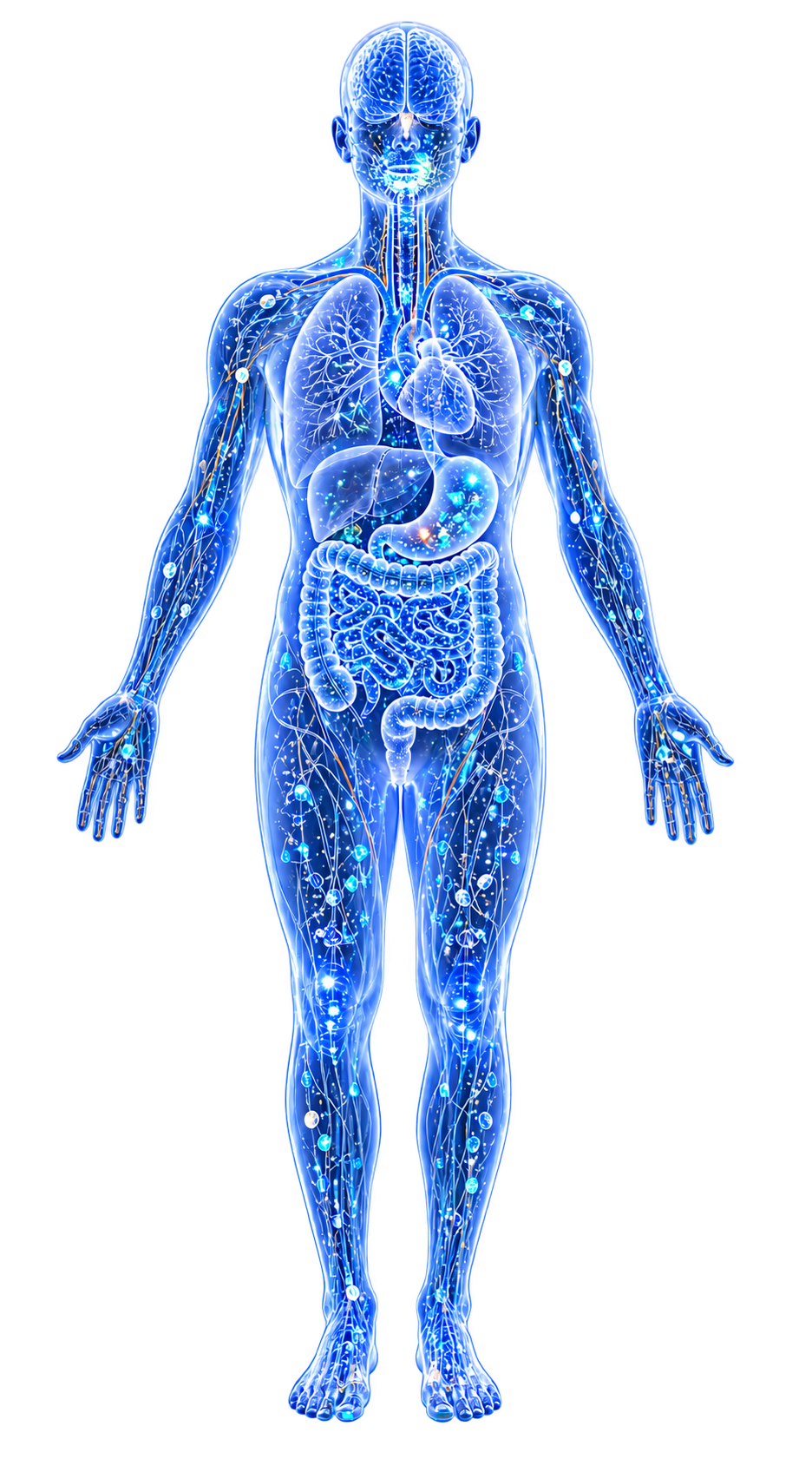
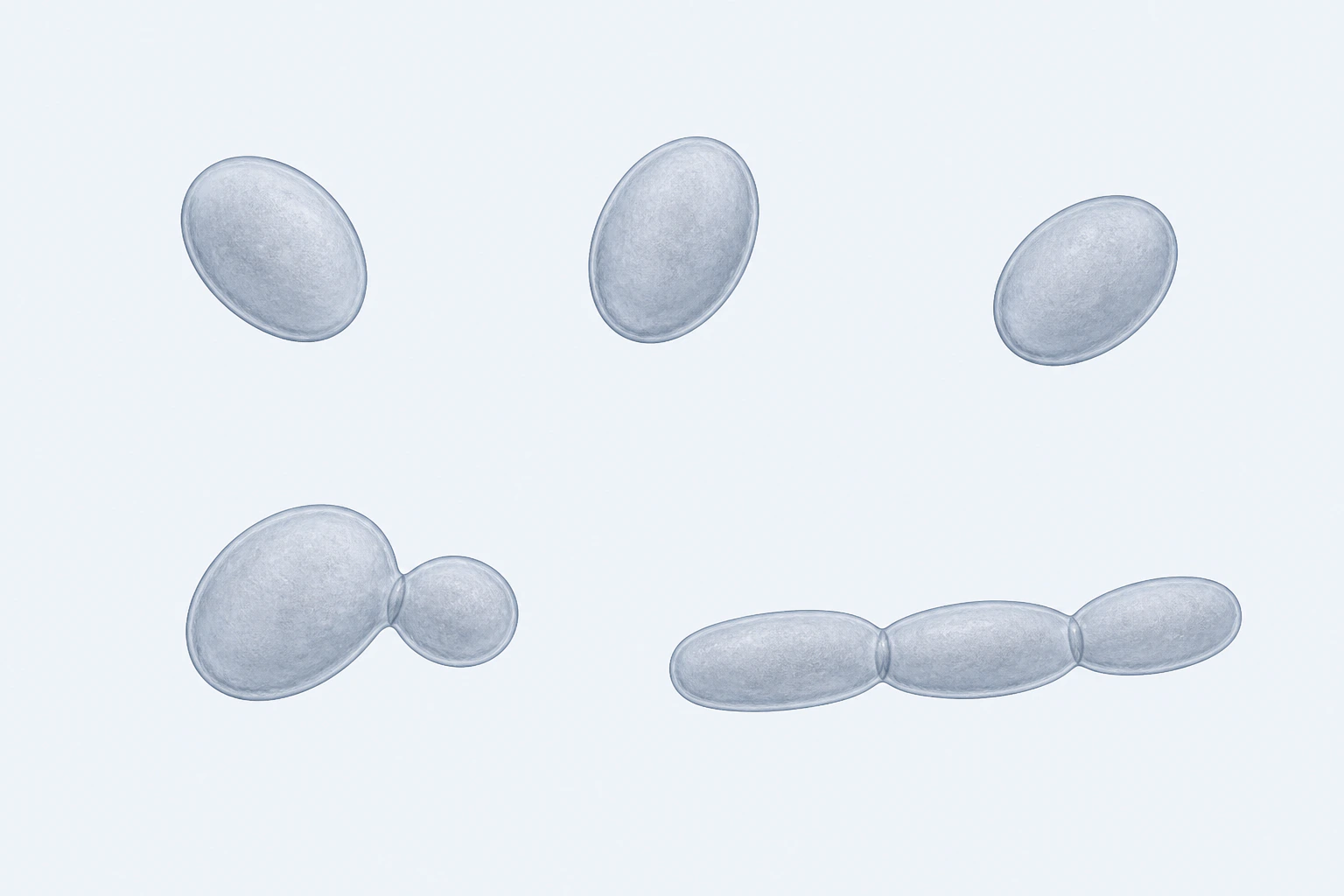
Selected Candida tropicalis yeast and short pseudohyphal forms, shown as eight bodies in five groupings. This species-level reconstruction is non-diagnostic and is not a micrograph.
Scientific media record1 verified identifier
- Subject
- Candida tropicalistaxon · species
- Identifiers
- NCBITaxon:5482
- Review
- Editorial review completeIdentifiers authority-verified · Accessibility validated · · candida-tropicalis|candida-tropicalis-morphology-v1.webp
- Digital source
- Trained-algorithmic mediaCreated with a trained generative algorithm and reviewed by WikiBiome for subject identity, scientific framing, identifiers, provenance, and accessibility.
- Scientific basis
- Candida tropicalis — NCBI TaxonomyCandida tropicalis morphology studyCandida tropicalis morphogenesis microscopy
- License
- CC BY-SA 4.0Created
Candida tropicalis is an opportunistic fungal pathogen and occasional gut commensal, increasingly recognized as one of the most clinically significant non-albicans Candida (NAC) species.
Once considered a distant runner-up to C. albicans, it has emerged as a major driver of invasive fungal disease in tropical and subtropical regions, in immunocompromised populations, and in specific chronic conditions including Crohn's disease and schizophrenia.
Its clinical trajectory reflects a broader epidemiological shift: as azole exposure has reshaped Candida ecology, C. tropicalis and other NAC species have become proportionally more important.
Unlike C. albicans, C. tropicalis retains a more obligate pseudohyphal/hyphal character, produces distinct virulence enzymes, and shows different antifungal susceptibility patterns—all of which shape its clinical niche and therapeutic response.
Evidence map7 cited passagesInspect provenance +
Secreted aspartic proteinases (SAPs)—a family of acidic proteases that degrade host proteins including mucin, complement components, and immunoglobulins, facilitating tissue invasion and immune evasion. Expression is coordinated with morphogenesis and nutrient status
Beta-glucan masking—shields immunogenic beta-glucan under an outer mannoprotein layer, evading dectin-1 mediated innate recognition; the masking is itself metabolically regulated
Iron—acquired via reductive assimilation, heme uptake systems, and siderophore-like scavenging pathways; iron restriction is a validated antifungal strategy, with iron chelators demonstrating activity against Candida species in multiple experimental systems
Crohn's disease—elevated in mycobiome surveys of CD patients relative to healthy controls; participates in the C. tropicalis + AIEC + S. marcescens triple-species biofilm; cross-reacts with ASCA (anti-Saccharomyces cerevisiae antibody), the established serologic CD marker, making it a plausible true antigen behind part of the ASCA response
Schizophrenia—recently implicated by rat-model work showing that C. tropicalis is one of the fungal species that persists in the gut after fecal microbiota transplant in a schizophrenia model, suggesting a refractory fungal reservoir that standard FMT does not clear
Pancreatic cancer—oral and gut mycobiome profiles in pancreatic cancer cohorts include C. tropicalis among fungi associated with risk or disease status
Candidemia in immunocompromised hosts—particularly in hematologic malignancy, where neutropenia and gut barrier disruption permit translocation
Contents
1. Clinical Relevance2. Virulence Mechanisms3. Metal Dependencies4. Biofilm and Functional Shielding5. Disease Associations6. Antifungal Resistance7. Distinction from Candida albicans8. Ecological Context9. Cross-ReferencesClinical Relevance#
C. tropicalis is consistently among the second or third most common cause of candidemia globally, behind C. albicans and variably C. glabrata or C. parapsilosis. Its prevalence is highest in:
- Hematologic malignancy patients, particularly those with neutropenia following chemotherapy
- Solid-organ cancer patients with indwelling catheters or recent abdominal surgery
- ICU patients with broad-spectrum antibiotic exposure
- Tropical and subtropical populations, where it often overtakes C. albicans as the dominant candidemia species
Mortality associated with C. tropicalis candidemia is high—often exceeding 40% in some series—reflecting both host vulnerability and the organism's intrinsic virulence.
Virulence Mechanisms#
C. tropicalis deploys a multi-layered virulence program. Secreted aspartic proteinases (SAPs)—a family of acidic proteases that degrade host proteins including mucin, complement components, and immunoglobulins, facilitating tissue invasion and immune evasion. Expression is coordinated with morphogenesis and nutrient status.[1]Alves et al. 2020 — Adapting to Survive: How Candida Overcomes Host-Imposed ConstraintsAlves R, et al. · 2020Open reference 1 ↓
Phospholipases and lipases—lyse host cell membranes and participate in lipid remodeling during invasion. Biofilm formation—produces dense, structurally robust biofilms on both biological surfaces (mucosa, endothelium) and abiotic surfaces (catheters, prostheses).
Morphogenesis—transitions between yeast and pseudohyphal/hyphal forms in response to temperature, pH, serum, and nutrient cues, with pseudohyphae playing a major role in tissue penetration.
Beta-glucan masking—shields immunogenic beta-glucan under an outer mannoprotein layer, evading dectin-1 mediated innate recognition; the masking is itself metabolically regulated.[2]Chen, Wagner & Reynolds 2022 — Beta-Glucan Masking Signaling Pathways in CandidaChen T, Wagner AS, Reynolds TB · 2022Open reference 2 ↓
Metal Dependencies#
C. tropicalis virulence depends on the acquisition of three transition metals. Iron—acquired via reductive assimilation, heme uptake systems, and siderophore-like scavenging pathways; iron restriction is a validated antifungal strategy, with iron chelators demonstrating activity against Candida species in multiple experimental systems.[3]Corrales 2024 — Characterization of a Selective, Iron-Chelating Antifungal Compound That Disrupts Fungal Metabolism and Synergizes with FluconazoleJeanne Corrales, Lucia Ramos-Alonso, Javier Gonzalez-Sabin et al. · 2024Open reference 3 ↓
Zinc—required for activity of the secreted aspartic proteinases and zinc-dependent transcription factors governing morphogenesis; zinc-binding Pra1-family proteins may also mediate zinc piracy from host nutritional immunity.
Copper—central to antioxidant defense via copper/zinc superoxide dismutase (Cu/Zn-SOD) and to respiratory electron transport; copper homeostasis is a conditional virulence determinant, particularly during phagocyte challenge.
Because each of these metals is simultaneously required by the fungus and sequestered by host nutritional immunity (calprotectin, transferrin, lactoferrin, ceruloplasmin), C. tropicalis virulence unfolds within a sustained metal-competition battle with the host.
Biofilm and Functional Shielding#
C. tropicalis forms robust, often polymicrobial biofilms that are a dominant mechanism of persistence and antifungal tolerance.
Triple-species biofilms with E. coli and Serratia marcescens are documented in the Crohn's disease mucosa, where the three organisms cooperate metabolically and provide mutual protection against host defenses and antimicrobials—a canonical example of Functional Shielding.
Candida-Staphylococcus synergy—mixed biofilms with Staphylococcus aureus and coagulase-negative staphylococci enhance bacterial drug tolerance and extend fungal persistence on catheters and prostheses. Matrix-mediated drug sequestration—extracellular polymeric substances bind azoles and echinocandins, raising effective MICs by 10- to 1000-fold relative to planktonic cells.
Beta-glucan masking within biofilm—the immune camouflage phenotype is amplified inside the biofilm architecture.
Disease Associations#
Crohn's disease—elevated in mycobiome surveys of CD patients relative to healthy controls; participates in the C. tropicalis + AIEC + S. marcescens triple-species biofilm; cross-reacts with ASCA (anti-Saccharomyces cerevisiae antibody), the established serologic CD marker, making it a plausible true antigen behind part of the ASCA response.[1]Alves et al. 2020 — Adapting to Survive: How Candida Overcomes Host-Imposed ConstraintsAlves R, et al. · 2020Open reference 1 ↓
Schizophrenia—recently implicated by rat-model work showing that C. tropicalis is one of the fungal species that persists in the gut after fecal microbiota transplant in a schizophrenia model, suggesting a refractory fungal reservoir that standard FMT does not clear.[4]Krawczyk 2025 — Effects of Fecal Microbiota Transplantation on the Abundance and Diversity of Selected Fungal and Archaeal Species in the Gut Microbiota in the Rat Model of SchizophreniaAgnieszka Krawczyk, Tomasz Kasperski, Tomasz Gosiewski et al. · 2025Open reference 4 ↓
Pancreatic cancer—oral and gut mycobiome profiles in pancreatic cancer cohorts include C. tropicalis among fungi associated with risk or disease status.[5]Oral bacterial and fungal microbiome and subsequent risk for pancreatic cancerYixuan Meng, Feng Wu, Soyoung Kwak et al. · 2025Open reference 5 ↓
Candidemia in immunocompromised hosts—particularly in hematologic malignancy, where neutropenia and gut barrier disruption permit translocation.[1]Alves et al. 2020 — Adapting to Survive: How Candida Overcomes Host-Imposed ConstraintsAlves R, et al. · 2020Open reference 1 ↓
Invasive abdominal candidiasis—associated with peritonitis following GI surgery, anastomotic leak, or recurrent perforation.
Antifungal Resistance#
C. tropicalis exhibits a rising resistance profile that differs meaningfully from C. albicans. Azole resistance—increasing, driven by ERG11 mutations, UPC2 gain-of-function variants, and overexpression of CDR1 and MDR1 efflux pumps; fluconazole resistance rates above 10% are now routine in many tertiary centers.
Echinocandin resistance—documented FKS1/FKS2 hotspot mutations reduce susceptibility to caspofungin, micafungin, and anidulafungin. Polyene tolerance—usually susceptible to amphotericin B, but tolerance phenotypes have been reported in biofilm contexts. Cross-resistance patterns—azole exposure selects for efflux-pump-mediated multi-azole resistance more readily than in C. albicans.
Rising resistance combined with biofilm-based drug tolerance means that clinical C. tropicalis infections often require combination therapy, source control (catheter removal, debridement), and adjunctive strategies targeting iron or biofilm matrix.
Distinction from Candida albicans#
Although frequently lumped with C. albicans, C. tropicalis differs in several clinically relevant ways:
| Feature | C. albicans | C. tropicalis |
|---|---|---|
| True hyphae | Abundant | Rare; mostly pseudohyphae |
| Chlamydospores | Yes | No |
| Primary disease niches | Mucosal (oral, vaginal); broadly invasive | Neutropenic candidemia; hematologic malignancy; tropical regions |
| Azole resistance trajectory | Slow rise | Faster rise |
| SAP repertoire | SAP1-10 | Distinct SAPT family |
| Morphogenesis regulation | Extensive | Overlapping but divergent signaling |
Ecological Context#
C. tropicalis expansion is a Dysbiosis-driven phenomenon. Several patterns recur. Loss of commensal Saccharomyces (notably S. boulardii and gut S. cerevisiae) correlates with C. tropicalis expansion; restoration of Saccharomyces tone is associated with C. tropicalis reduction in several probiotic-intervention studies.
Broad-spectrum antibiotic exposure removes competing bacteria and unmasks fungal niches. Gut iron loading, whether from supplementation, Metal-Driven Inflammation, or hemolysis, provides a permissive environment. Mucin barrier erosion—from antibiotic injury, low fiber intake, or loss of SCFA producers—enables mucosal attachment.
The ecological picture mirrors that of other opportunistic fungi: C. tropicalis is not a primary invader but a beneficiary of ecosystem collapse, emerging when commensal competitors are suppressed and host nutritional immunity is overwhelmed.
Cross-References#
- Candida albicans—the most common Candida species; shares interkingdom biofilm behavior
- Candidozyma auris—current-name record for the emerging species historically called Candida auris
- Nakaseomyces glabratus—current-name record for the non-albicans yeast historically called Candida glabrata
- Saccharomyces cerevisiae—commensal counterweight whose loss permits C. tropicalis expansion
- Crohn's Disease—primary inflammatory bowel disease association
- Schizophrenia—recently implicated condition with refractory fungal reservoir
- Functional Shielding—the interkingdom biofilm mechanism
- Mycobiome—the gut fungal community context
- Escherichia coli—bacterial partner in interkingdom biofilm
- Serratia marcescens—third partner in the Crohn's triple-species biofilm
- Biofilm—strong biofilm former; triple-species biofilm with E. coli and S. marcescens
- Iron—iron scavenging via multiple acquisition systems supports growth in host environment
- Zinc—zinc-dependent secreted aspartic proteinases enable host tissue invasion
- Copper—required for copper/zinc superoxide dismutase (Cu/Zn-SOD) antioxidant defense
- asca—serologic Crohn's marker; cross-reacts with C. tropicalis antigens
References 5
Numbered by first appearance in the article, then reconciled with its declared source list.
- 1
Alves R, et al. (2020). Alves et al. 2020 — Adapting to Survive: How Candida Overcomes Host-Imposed Constraints. PLoS Pathogens.
- 2
Chen T, Wagner AS, Reynolds TB (2022). Chen, Wagner & Reynolds 2022 — Beta-Glucan Masking Signaling Pathways in Candida. Frontiers in Fungal Biology.
- 3
Jeanne Corrales, Lucia Ramos-Alonso, Javier Gonzalez-Sabin et al. (2024). Corrales 2024 — Characterization of a Selective, Iron-Chelating Antifungal Compound That Disrupts Fungal Metabolism and Synergizes with Fluconazole. Microbiology Spectrum.
- 4
Agnieszka Krawczyk, Tomasz Kasperski, Tomasz Gosiewski et al. (2025). Krawczyk 2025 — Effects of Fecal Microbiota Transplantation on the Abundance and Diversity of Selected Fungal and Archaeal Species in the Gut Microbiota in the Rat Model of Schizophrenia. Pharmacological Reports.
- 5
Yixuan Meng, Feng Wu, Soyoung Kwak et al. (2025). Oral bacterial and fungal microbiome and subsequent risk for pancreatic cancer. JAMA Oncology.
Article network
Mentioned here 16
Pages linking here 3
Connect the evidence
Publicly readable discussion by ORCID-authenticated researchers. Questions, interpretation, methods, corrections, and new evidence stay attached to this record.
No discussion yet. Start with a precise question or a source-backed observation.
Activity and accepted changes
Accepted researcher context, editorial status, public discussion, and upstream Git revisions are shown together. Pending, declined, and withdrawn proposals remain private.
- published revision
Backfill inflammation concept links
Karen Pendergrass · +1 −1
Inspect exact Git diff ↗ - published revision
Complete corpus-wide Dysbiosis linking
Karen Pendergrass · +1 −1
Inspect exact Git diff ↗ - published revision
Canonicalize Candida fungal names
Karen Pendergrass · +2 −2
Inspect exact Git diff ↗ - published revision
massive wiki expansion: 149 stubs fixed, 100+ new pages, Rule 15 scan, keystone papers
WikiBiome Deploy Bot · +29 −29
Inspect exact Git diff ↗ - published revision
ingest: 87 papers (17 endometriosis, 67 erectile dysfunction, 3 cross-condition)
WikiBiome Deploy Bot · +1 −1
Inspect exact Git diff ↗ - published revision
Add 11 deepened microbe entities and 9 new OC/CVD/infertility source pages
WikiBiome Deploy Bot · +2 −2
Inspect exact Git diff ↗ - published revision
Deep citation pass: 25 new sources + major entity citations
WikiBiome Deploy Bot · +99 −20
Inspect exact Git diff ↗ - published revision
Health check fixes: 40 intervention pages + 14 entity Connections sections
WikiBiome Deploy Bot · +5 −0
Inspect exact Git diff ↗ - published revision
WikiBiome v2 migration: signature pages + safety fixes + gap analysis
WikiBiome Deploy Bot · +42 −0
Inspect exact Git diff ↗