
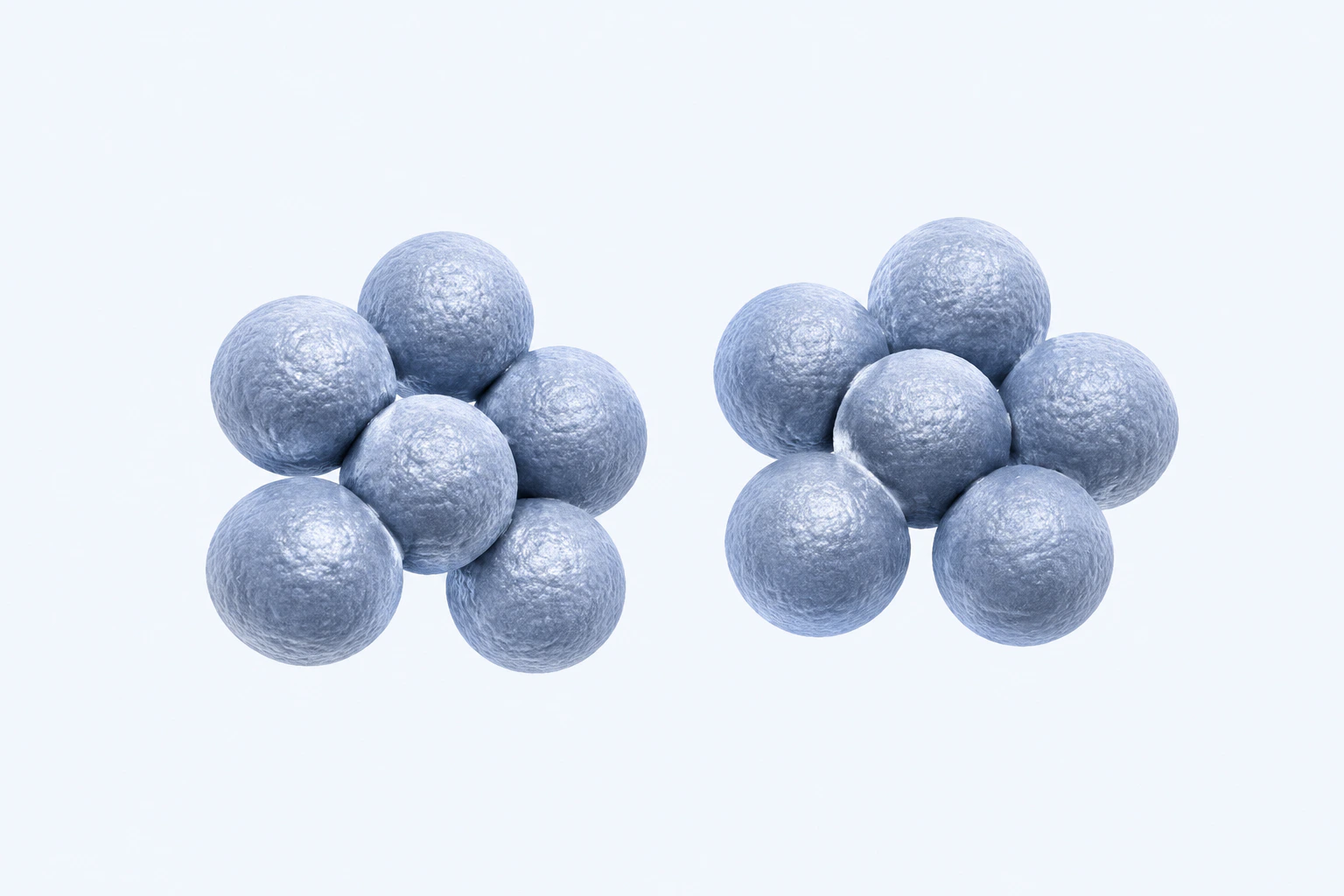
Type-strain-anchored Staphylococcus aureus reconstruction with twelve cocci. Representative, non-diagnostic, not visually separable from other staphylococci, and not a micrograph; golden colony pigment is not depicted.
Scientific media record1 verified identifier
- Subject
- Staphylococcus aureustaxon · species
- Identifiers
- NCBITaxon:1280
- Review
- Editorial review completeIdentifiers authority-verified · Accessibility validated · · staphylococcus-aureus|staphylococcus-aureus-morphology-v1.webp
- Digital source
- Trained-algorithmic mediaCreated with a trained generative algorithm and reviewed by WikiBiome for subject identity, scientific framing, identifiers, provenance, and accessibility.
- Scientific basis
- Staphylococcus aureus — NCBI TaxonomyStaphylococcus aureus — LPSNStaphylococcus aureus morphology
- License
- CC BY-SA 4.0Created
A versatile Gram-positive pathogen with one of the best-characterized nutritional immunity evasion systems known. S. aureus requires Nickel, Iron, Zinc, and Manganese for virulence and has evolved dedicated acquisition systems for each, including the novel metallophore staphylopine—a nicotianamine-like chelator that scavenges multiple transition metals from the host.
Evidence map6 cited passagesInspect provenance +
Urease is critical for skin survival: human sweat contains ~22 mM urea, and urease-mediated hydrolysis provides ammonia for acid neutralization and nitrogen acquisition on the skin surface.
Staphyloferrin A and B: endogenous siderophores for iron scavenging in iron-limited host environments.
A broad-spectrum metallophore originally thought to be zinc-specific but now known to also bind nickel and other transition metals.
Calprotectin (S100A8/A9): the dominant host metal-sequestering protein at infection sites. Coordinates Ni(II) preferentially over Zn(II) at the hexahistidine site; sequesters nickel from S. aureus, directly inhibiting urease activity.
This parallels findings in enterococcus where metal and antibiotic resistance genes co-occur on conjugative plasmids.
Device-associated biofilm infections (catheters, prosthetic joints), including synergistic mixed-species biofilms with Candida albicans where reciprocal virulence masking is observed
Contents
1. Metal-Dependent Virulence Factors2. Metal Acquisition Systems3. Nutritional Immunity Evasion4. Metal-Antibiotic Co-Resistance (MRSA)5. Disease Associations6. Connection to Environmental Metal Exposure7. ConnectionsMetal-Dependent Virulence Factors#
Ni-Dependent Urease#
Urease is critical for skin survival: human sweat contains ~22 mM urea, and urease-mediated hydrolysis provides Ammonia for acid neutralization and nitrogen acquisition on the skin surface.[1]Role of Nickel in Microbial PathogenesisRobert J. Maier, Stéphane L. Benoit · 2019Open reference 1 ↓
Required for kidney colonization in systemic infection models. Urease genes are upregulated in biofilm-embedded cells, linking nickel metabolism directly to chronic/device-associated infections. Biofilm formation on implanted medical devices depends partly on urease activity.
Fe-Dependent Virulence#
Staphyloferrin A and B: endogenous siderophores for iron scavenging in iron-limited host environments.[2]Pandey et al. 2021 — Galbofloxacin: Rationally Designed Gallium-Siderophore Antibiotic Against S. aureusPandey, A., et al. · 2021Open reference 2 ↓
IsdB/heme uptake system (Isd pathway): surface-anchored hemoglobin receptors (IsdB, IsdH) extract heme from host hemoglobin, pass it through the cell wall (IsdA, IsdC), and import it via the ABC transporter IsdDEF. One of the most elegant iron piracy systems characterized.
Sortase-anchored surface proteins: multiple iron-binding surface proteins critical for infection.
Mn-Superoxide Dismutase (Mn-SOD)#
manganese (Mn)-dependent SOD detoxifies superoxide produced by host neutrophils and macrophages during the oxidative burst. manganese acquisition is essential for surviving phagocyte killing.
Metal Acquisition Systems#
Staphylopine Metallophore#
A broad-spectrum metallophore originally thought to be zinc-specific but now known to also bind nickel and other transition metals.[1]Role of Nickel in Microbial PathogenesisRobert J. Maier, Stéphane L. Benoit · 2019Open reference 1 ↓
Synthesized by the CntKLM enzymes, exported by CntE, and reimported as metal-staphylopine complexes by the CntABCDF transporter. Allows metal scavenging in the calprotectin-rich abscess environment where free metal concentrations are vanishingly low.
Nickel Transport#
NikABCDE-type (Nik/Cnt system): ABC-type nickel import. NixA homologs: secondary nickel-specific transport. Nickel import is upregulated during infection and is required for urease metalation.
Iron Transport#
Staphyloferrin A/B siderophores + IsdB/heme pathway (see above). Multiple redundant iron import systems ensure iron access across diverse infection sites.
Zinc/Manganese Transport#
AdcABC: zinc import system similar to streptococcal homologs. MntABC: manganese import for SOD metalation.
Nutritional Immunity Evasion#
S. aureus faces aggressive metal restriction by the host, particularly in abscesses. Calprotectin (S100A8/A9): the dominant host metal-sequestering protein at infection sites. Coordinates nickel (Ni)(II) preferentially over zinc (Zn)(II) at the hexahistidine site; sequesters nickel from S. aureus, directly inhibiting urease activity.[1]Role of Nickel in Microbial PathogenesisRobert J. Maier, Stéphane L. Benoit · 2019Open reference 1 ↓
NRAMP1: macrophage metal exporter that restricts nickel, manganese (Mn), and iron (Fe) availability in phagolysosomes. S. aureus counters with staphylopine (outcompetes calprotectin for metals), redundant siderophores, and heme piracy. The calprotectin-staphylopine battle at the abscess is one of the clearest examples of metal tug-of-war between host and pathogen.
Metal-Antibiotic Co-Resistance (MRSA)#
MRSA strains frequently carry metal resistance genes on the same mobile genetic elements as methicillin resistance (mecA) and other antibiotic resistance genes. Environmental metal exposure (heavy metal-contaminated hospitals, agricultural metal use) can co-select for antibiotic resistance.
This parallels findings in Enterococcus where metal and antibiotic resistance genes co-occur on conjugative plasmids.[3]Diversity of metal and antibiotic resistance genes in Enterococcus spp. from the last century reflects multiple pollution and genetic exchange among phyla from overlapping ecosystemsRebelo A, Mourao J, Freitas AR et al. · 2021Open reference 3 ↓
Disease Associations#
- Skin and soft tissue infections (boils, abscesses, cellulitis)
- Bacteremia and endocarditis
- Osteomyelitis
- Pneumonia (hospital-acquired)
- Device-associated biofilm infections (catheters, prosthetic joints), including synergistic mixed-species biofilms with Candida albicans where reciprocal virulence masking is observed[4]Pasman et al. 2025 — Candida-Staphylococcus Reciprocal Virulence and Masking in Co-culturePasman ME, et al. · 2025Open reference 4 ↓
- Toxic shock syndrome
- Food poisoning
Connection to Environmental Metal Exposure#
Dietary and environmental nickel may support S. aureus urease activity during skin colonization and kidney infection. Hospital environments with elevated metal levels may promote MRSA metal-antibiotic co-resistance. Skin contact with nickel-releasing alloys (jewelry, implants) creates local nickel-enriched environments where urease-expressing S. aureus has a survival advantage.
Connections#
- Metal-Dependent Virulence—nickel (Ni)-urease, iron (Fe)-siderophores, manganese (Mn)-SOD all metal-dependent virulence factors
- Nickel—cofactor for urease; scavenged by staphylopine
- Iron—essential for growth; acquired via siderophores and heme piracy
- Zinc—scavenged by staphylopine; target of host calprotectin
- Manganese—cofactor for SOD; critical for Oxidative Stress defense
- Nutritional Immunity (Metal Sequestration)—calprotectin-mediated metal restriction is central to the host-S. aureus battle
- Helicobacter pylori—both use nickel-dependent urease but in very different niches (stomach vs. skin/kidney)
- Enterococcus—parallel metal-antibiotic co-resistance evolution
- Proteus mirabilis—both use nickel-urease for urinary tract pathogenesis
- Antimicrobial Resistance—MRSA is a paradigmatic AMR pathogen; metal-antibiotic co-resistance is well-documented
- Co-Selection—czrC zinc resistance gene co-located with mecA on SCCmec elements in MRSA
References 10
Numbered by first appearance in the article, then reconciled with its declared source list.
- 1
★Robert J. Maier, Stéphane L. Benoit (2019). Role of Nickel in Microbial Pathogenesis. Inorganics.
- 2
Pandey, A., et al. (2021). Pandey et al. 2021 — Galbofloxacin: Rationally Designed Gallium-Siderophore Antibiotic Against S. aureus. Chemical Science.
- 3
Rebelo A, Mourao J, Freitas AR et al. (2021). Diversity of metal and antibiotic resistance genes in Enterococcus spp. from the last century reflects multiple pollution and genetic exchange among phyla from overlapping ecosystems. Science of the Total Environment.
- 4
Pasman ME, et al. (2025). Pasman et al. 2025 — Candida-Staphylococcus Reciprocal Virulence and Masking in Co-culture. Frontiers in Cellular and Infection Microbiology.
- 5
Akbari MS, Doran KS, Burcham LR (2022). Metal Homeostasis in Pathogenic Streptococci. Microorganisms.
- 6
★James E. Cassat, Eric P. Skaar (2012). Metal Ion Acquisition in Staphylococcus aureus: Overcoming Nutritional Immunity. Seminars in Immunopathology.
- 7
Riley A McFarlane, Jana N Radin, Rafat Mazgaj et al. (2025). McFarlane 2025 — A Manganese-Sparing Response Balances Competing Cellular Demands to Enable Staphylococcus aureus Infection. mBio.
- 8
Pavlic A, Begic G, Tota M et al. (2021). Bacterial Exposure to Nickel: Influence on Adhesion and Biofilm Formation on Orthodontic Archwires and Sensitivity to Antimicrobial Agents. Materials.
- 9
Nathan A Jones, Usha Kadiyala, Benjamin Serratos et al. (2026). Jones 2026 — Targeting of Bacteria Using Amylase-Degradable, Copper-Loaded Starch Nanoparticles. Antibiotics.
- 10
Yamil Sanchez-Rosario, Natasha R Cornejo, Isaiah S Gonzalez et al. (2026). Sanchez-Rosario 2026 — N-benzyl-N-methyldithiocarbamate (BMDC) Combines with Metals to Produce Antimicrobial and Anti-Biofilm Activity Against MRSA and S. epidermidis. mSphere.
Article network
Mentioned here 14
Pages linking here 44
Connect the evidence
Publicly readable discussion by ORCID-authenticated researchers. Questions, interpretation, methods, corrections, and new evidence stay attached to this record.
No discussion yet. Start with a precise question or a source-backed observation.
Activity and accepted changes
Accepted researcher context, editorial status, public discussion, and upstream Git revisions are shown together. Pending, declined, and withdrawn proposals remain private.
- published revision
Backfill oxidative stress concept links
Karen Pendergrass · +1 −1
Inspect exact Git diff ↗ - published revision
Complete Ammonia contextual coverage
Karen Pendergrass · +1 −1
Inspect exact Git diff ↗ - published revision
Complete reviewed Urease contextual coverage
Karen Pendergrass · +1 −1
Inspect exact Git diff ↗ - published revision
massive wiki expansion: 149 stubs fixed, 100+ new pages, Rule 15 scan, keystone papers
WikiBiome Deploy Bot · +25 −21
Inspect exact Git diff ↗ - published revision
nightly maintenance: 94 stub demotions, 181 source_count fixes, 22 auto-discovered stubs, 5 adversarial audits, 3 boundary fixes, 3 evidence-level corrections
WikiBiome Deploy Bot · +3 −0
Inspect exact Git diff ↗ - published revision
18 foundational sources + 10 microbe entities deepened
WikiBiome Deploy Bot · +2 −2
Inspect exact Git diff ↗ - published revision
WikiBiome update — 2026-04-15 17:23
WikiBiome Deploy Bot · +0 −1
Inspect exact Git diff ↗ - published revision
v2 migration Priority 3: 17 metal + 82 microbe entities upgraded with seo_target, wikipedia_differentiation, conditions data
WikiBiome Deploy Bot · +6 −0
Inspect exact Git diff ↗ - published revision
WikiBiome v2 migration: signature pages + safety fixes + gap analysis
WikiBiome Deploy Bot · +2 −0
Inspect exact Git diff ↗ - published revision
WikiBiome update — integrity fixes, metallomic diet pages, cross-condition analyses
WikiBiome Deploy Bot · +15 −5
Inspect exact Git diff ↗ - published revision
WikiBiome v7 — interactive microbiome metallomics encyclopedia
Karen Pendergrass · +92 −0
Inspect exact Git diff ↗