
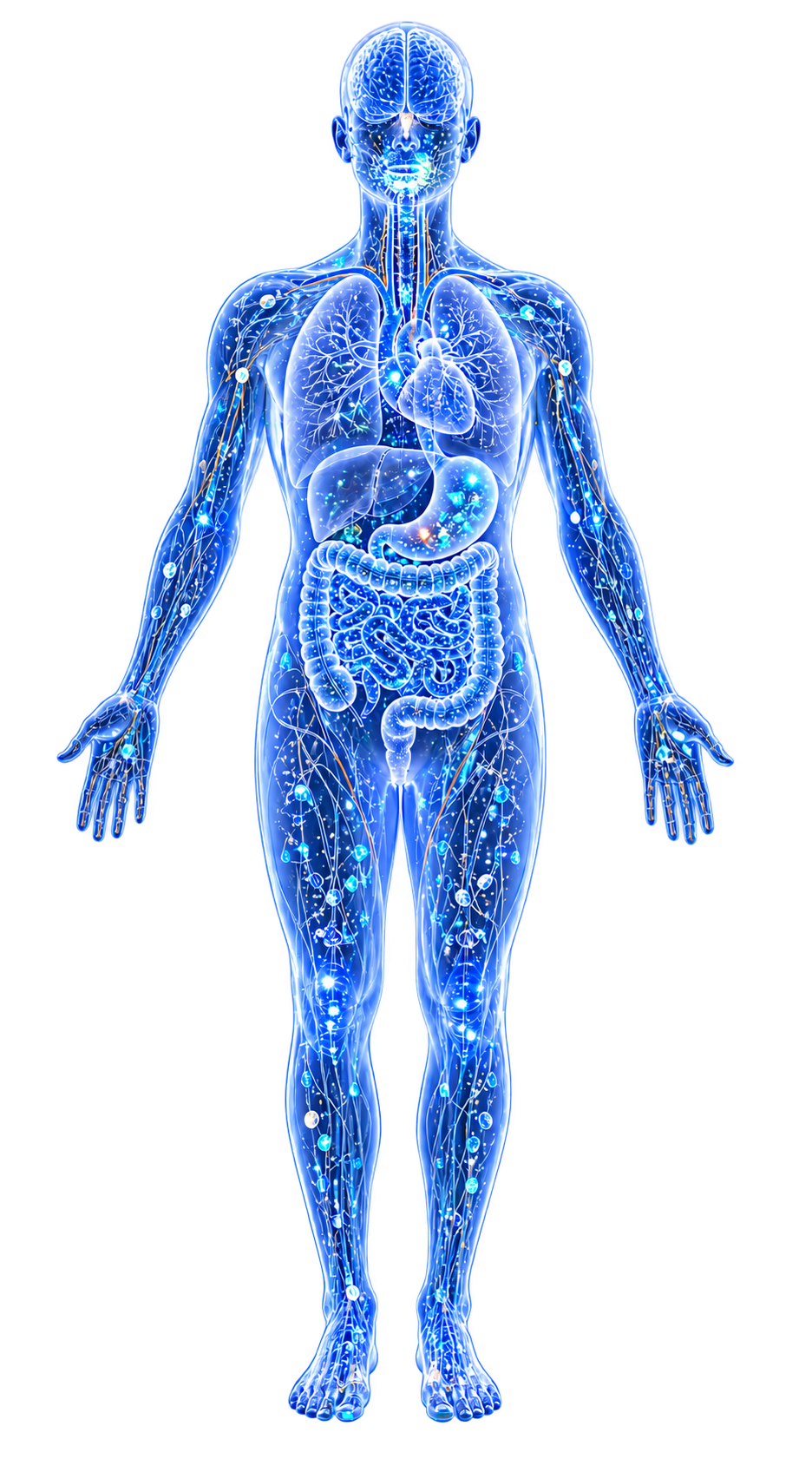
Isoflavones (genistein, daidzein, glycitein) are phytoestrogens found primarily in soy products.
They bind estrogen receptors (ERα and ERβ) with weak agonist/antagonist activity and are among the most microbiome-dependent dietary bioactives—their clinical effects depend on whether the individual's gut bacteria can convert daidzein to equol, the most potent isoflavone metabolite.
Evidence map4 cited passagesInspect provenance +
Endometriosis: Isoflavones may modulate estrogen-dependent lesion growth.
MS: Dietary isoflavones studied as immunomodulatory intervention in EAE models.
CVD: Polyphenol bioavailability including isoflavones linked to cardiovascular protection.
IBD: Anti-inflammatory effects in IBD models.
Microbiome Dependence#
Only ~30-50% of Western populations harbor equol-producing bacteria (primarily certain Clostridia and Gordonibacter). "Equol producers" have stronger clinical responses to soy isoflavones than "non-producers."
Equol production is a function of Gut Microbiome composition, making isoflavone efficacy a pharmacomicrobiomics question.
Disease Relevance#
Endometriosis: Isoflavones may modulate estrogen-dependent lesion growth.[1]I Am the 1 in 10 -- What Should I Eat? A Research Review of Nutrition in EndometriosisPiecuch M, Garbicz J, Waliczek M et al. · 2022Open reference 1 ↓ MS: Dietary isoflavones studied as immunomodulatory intervention in EAE models.[2]Gut Microbiome-Modulated Dietary Strategies in EAE and Multiple SclerosisHoffman K, Doyle WJ, Schumacher SM et al. · 2023Open reference 2 ↓[3]The immunology of multiple sclerosisKathrine E. Attfield, Lise Torp Jensen, Max Kaufmann et al. · 2022Open reference 3 ↓ CVD: Polyphenol bioavailability including isoflavones linked to cardiovascular protection.[4]Bioavailability of Dietary Polyphenols and the Cardiovascular DiseasesK. S. Shivashankara, S. N. Acharya · 2010Open reference 4 ↓
IBD: Anti-inflammatory effects in IBD models.[5]A Review of the Efficacy of Dietary Polyphenols in Experimental Models of Inflammatory Bowel DiseasesMartin DA, Bolling BW · 2015Open reference 5 ↓
Cross-References#
- Estrobolome—microbial estrogen metabolism (Primitive 7)
- Gordonibacter—equol-producing gut bacterium
- Polyphenols—broader class of plant bioactives
- Pharmacomicrobiomics—drug/nutraceutical efficacy depends on microbiome
References 5
Numbered by first appearance in the article, then reconciled with its declared source list.
- 1
Piecuch M, Garbicz J, Waliczek M et al. (2022). I Am the 1 in 10 -- What Should I Eat? A Research Review of Nutrition in Endometriosis. Nutrients.
- 2
Hoffman K, Doyle WJ, Schumacher SM et al. (2023). Gut Microbiome-Modulated Dietary Strategies in EAE and Multiple Sclerosis. Frontiers in Nutrition.
- 3
Kathrine E. Attfield, Lise Torp Jensen, Max Kaufmann et al. (2022). The immunology of multiple sclerosis. Nature Reviews Immunology.
- 4
K. S. Shivashankara, S. N. Acharya (2010). Bioavailability of Dietary Polyphenols and the Cardiovascular Diseases. The Open Nutraceuticals Journal.
- 5
Martin DA, Bolling BW (2015). A Review of the Efficacy of Dietary Polyphenols in Experimental Models of Inflammatory Bowel Diseases. Food & Function.
Article network
Connect the evidence
Publicly readable discussion by ORCID-authenticated researchers. Questions, interpretation, methods, corrections, and new evidence stay attached to this record.
No discussion yet. Start with a precise question or a source-backed observation.
Activity and accepted changes
Accepted researcher context, editorial status, public discussion, and upstream Git revisions are shown together. Pending, declined, and withdrawn proposals remain private.
- published revision
Backfill gut microbiome concept links
Karen Pendergrass · +1 −1
Inspect exact Git diff ↗ - published revision
massive wiki expansion: 149 stubs fixed, 100+ new pages, Rule 15 scan, keystone papers
WikiBiome Deploy Bot · +43 −0
Inspect exact Git diff ↗