
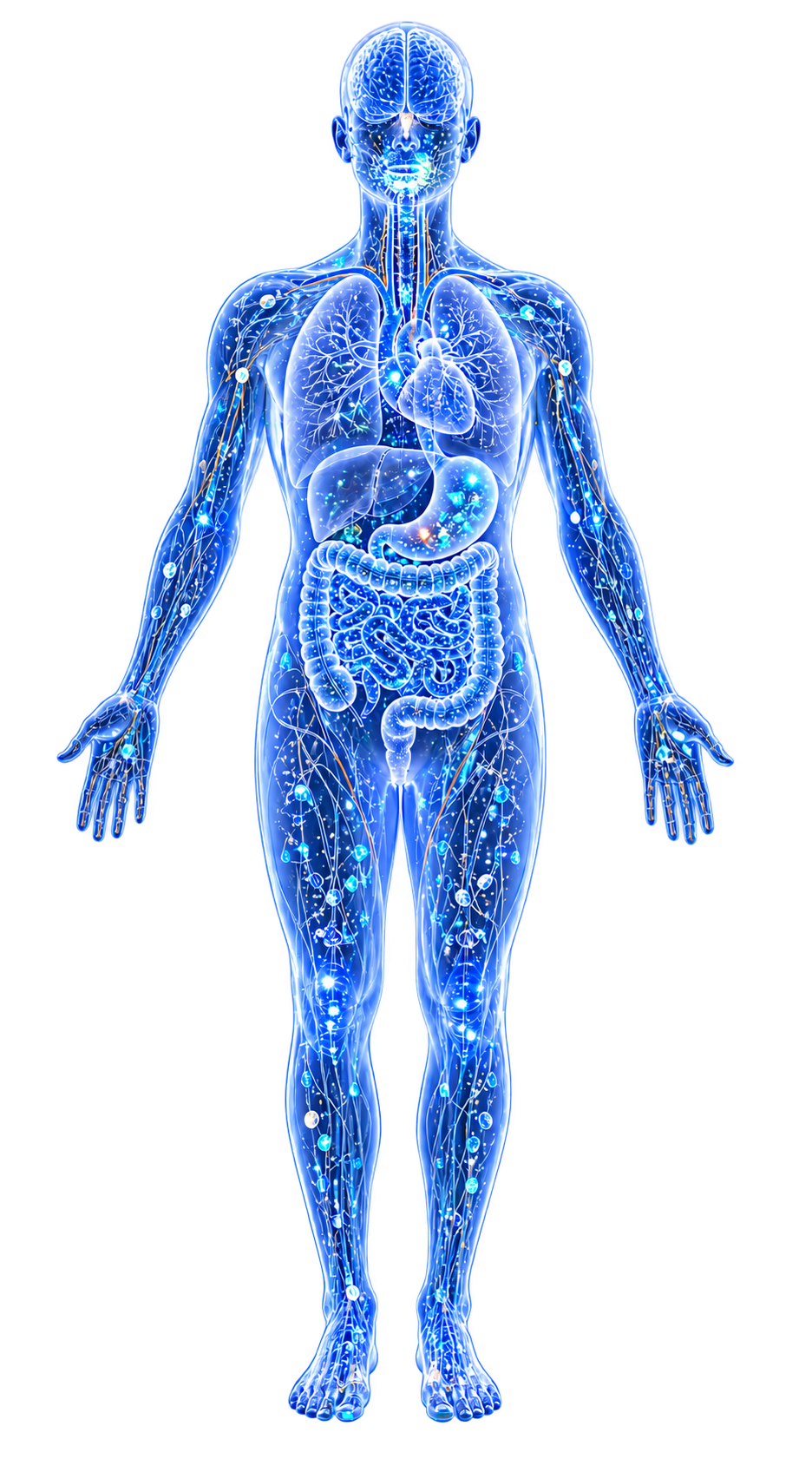
Omega-3 fatty acids—eicosapentaenoic acid (EPA) and docosahexaenoic acid (DHA)—are anti-inflammatory Polyunsaturated Fatty Acids (PUFAs) that counterbalance the pro-inflammatory effects of omega-6 Arachidonic Acid. They act through multiple mechanisms: competitive COX-2/5-LOX substrate (reducing prostaglandin/leukotriene production), precursors to specialized pro-resolving mediators (SPMs) (resolvins, protectins, maresins), and direct microbiome modulators.
Evidence map6 cited passagesInspect provenance +
Omega-3 supplementation increases Lactobacillus and Bifidobacterium while reducing Proteobacteria—shifting the microbiome toward an anti-inflammatory composition.
T1D autoimmunity: Ameliorates autoimmune diabetes in NOD mice via microbiome + immune modulation.
ED: Improves endothelial function in chronic pelvic ischemia; altered FA profiles in diabetic ED.
MS: Dietary omega-3 studied for neuroinflammation modulation.
Depression/sexual dysfunction: Systematic review evidence for anti-inflammatory interventions including omega-3.
Hashimoto's: Part of dietary prevention strategies.
Microbiome Effects#
Omega-3 supplementation increases Lactobacillus and Bifidobacterium while reducing Proteobacteria—shifting the microbiome toward an anti-inflammatory composition.[1]Bi 2017 — Omega-3 Polyunsaturated Fatty Acids Ameliorate Type 1 Diabetes and AutoimmunityXinyun Bi, Fanghong Li, Shanshan Liu et al. · 2017Open reference 1 ↓
EPA/DHA enhance intestinal barrier integrity, reducing Endotoxemia. The microbiome-mediated effects may explain why omega-3 supplementation has broader anti-inflammatory effects than expected from direct COX inhibition alone.
Condition-Specific Evidence#
T1D autoimmunity: Ameliorates autoimmune diabetes in NOD mice via microbiome + immune modulation.[1]Bi 2017 — Omega-3 Polyunsaturated Fatty Acids Ameliorate Type 1 Diabetes and AutoimmunityXinyun Bi, Fanghong Li, Shanshan Liu et al. · 2017Open reference 1 ↓
ED: Improves endothelial function in chronic pelvic ischemia;[2]Shim 2016 — Omega-3 Fatty Acids Improve Erectile Function in Atherosclerosis-induced Chronic Pelvic Ischemia Rat ModelJi Sung Shim, Dae Hee Kim, Jae Hyun Bae et al. · 2016Open reference 2 ↓ altered FA profiles in diabetic ED.[3]Ben Khedher 2017 — Disturbed Fatty Acids Metabolism in Diabetic Erectile DysfunctionMohamed Raâfet Ben Khedher, Houda Bouhajja, Samia Haj Ahmed et al. · 2017Open reference 3 ↓
MS: Dietary omega-3 studied for neuroinflammation modulation.[4]The Role of Diet in Multiple Sclerosis: Mechanistic Connections and Current EvidenceKatz Sand I · 2018Open reference 4 ↓[5]Gut Microbiome-Modulated Dietary Strategies in EAE and Multiple SclerosisHoffman K, Doyle WJ, Schumacher SM et al. · 2023Open reference 5 ↓ Depression/sexual dysfunction: Systematic review evidence for anti-inflammatory interventions including omega-3.[6]Malekpour & Malekpour 2025 — Anti-Inflammatory Interventions on Mental Health and Sexual PerformanceOmid Malekpour, Amir Mahdi Malekpour · 2025Open reference 6 ↓ Hashimoto's: Part of dietary prevention strategies.[7]Role of Food and Nutrition in Pathogenesis and Prevention of Hashimoto's ThyroiditisPuszkarz I, Guty E, Stefaniak I et al. · 2018Open reference 7 ↓
Cross-References#
- Polyunsaturated Fatty Acids (PUFAs)—PUFA umbrella concept
- Arachidonic Acid—pro-inflammatory omega-6 counterpart
- Metal-Driven Inflammation—omega-3 reduces NF-kB/COX-2/IL-6
- Interleukin-6 (IL-6)—reduced by omega-3 supplementation
- Endothelial Dysfunction—omega-3 improves endothelial NO signaling
- Lipid Peroxidation—PUFAs as both target and defense substrate
References 8
Numbered by first appearance in the article, then reconciled with its declared source list.
- 1
Xinyun Bi, Fanghong Li, Shanshan Liu et al. (2017). Bi 2017 — Omega-3 Polyunsaturated Fatty Acids Ameliorate Type 1 Diabetes and Autoimmunity. Journal of Clinical Investigation.
- 2
Ji Sung Shim, Dae Hee Kim, Jae Hyun Bae et al. (2016). Shim 2016 — Omega-3 Fatty Acids Improve Erectile Function in Atherosclerosis-induced Chronic Pelvic Ischemia Rat Model. Journal of Korean Medical Science.
- 3
Mohamed Raâfet Ben Khedher, Houda Bouhajja, Samia Haj Ahmed et al. (2017). Ben Khedher 2017 — Disturbed Fatty Acids Metabolism in Diabetic Erectile Dysfunction. Lipids in Health and Disease.
- 4
Katz Sand I (2018). The Role of Diet in Multiple Sclerosis: Mechanistic Connections and Current Evidence. Current Nutrition Reports.
- 5
Hoffman K, Doyle WJ, Schumacher SM et al. (2023). Gut Microbiome-Modulated Dietary Strategies in EAE and Multiple Sclerosis. Frontiers in Nutrition.
- 6
Omid Malekpour, Amir Mahdi Malekpour (2025). Malekpour & Malekpour 2025 — Anti-Inflammatory Interventions on Mental Health and Sexual Performance. International Journal of New Findings in Health and Educational Sciences (IJHES).
- 7
Puszkarz I, Guty E, Stefaniak I et al. (2018). Role of Food and Nutrition in Pathogenesis and Prevention of Hashimoto's Thyroiditis. Journal of Education, Health and Sport.
- 8
Martin DA, Bolling BW (2015). A Review of the Efficacy of Dietary Polyphenols in Experimental Models of Inflammatory Bowel Diseases. Food & Function.
Article network
Connect the evidence
Publicly readable discussion by ORCID-authenticated researchers. Questions, interpretation, methods, corrections, and new evidence stay attached to this record.
No discussion yet. Start with a precise question or a source-backed observation.
Activity and accepted changes
Accepted researcher context, editorial status, public discussion, and upstream Git revisions are shown together. Pending, declined, and withdrawn proposals remain private.
- published revision
massive wiki expansion: 149 stubs fixed, 100+ new pages, Rule 15 scan, keystone papers
WikiBiome Deploy Bot · +57 −16
Inspect exact Git diff ↗ - published revision
semantic integrity pass: boundary fixes, 10 interventions, 31 STOPs, 2 supersessions, keystone revalidation
WikiBiome Deploy Bot · +37 −0
Inspect exact Git diff ↗