
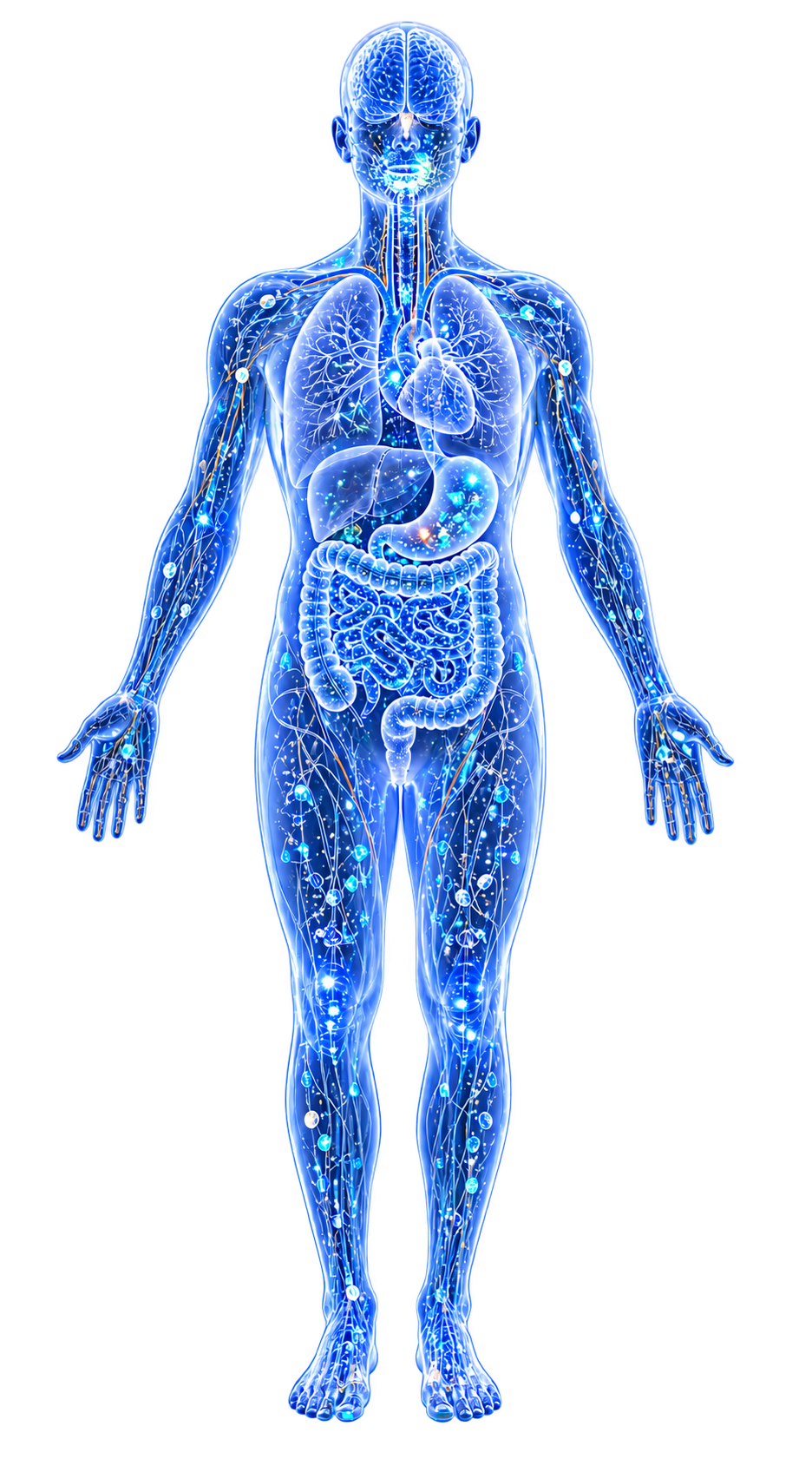
Hydrogen sulfide is a gaseous signaling molecule (gasotransmitter) produced by both host enzymes (CBS, CSE, 3-MST) and gut bacteria—primarily sulfate-reducing bacteria (Desulfovibrio). Like nitric oxide and carbon monoxide, H₂S has dual roles: physiological signaling at low concentrations and cytotoxicity at high concentrations.
This concentration-dependent duality makes H₂S a critical node in the metal-microbiome-disease axis.
Evidence map5 cited passagesInspect provenance +
High-fat diets combined with metal exposure amplify SRB abundance and H₂S production.
Vasodilation: H₂S relaxes vascular smooth muscle, complementing nitric oxide—relevant to erectile function.
Colonocyte toxicity: Excess H₂S inhibits cytochrome c oxidase (complex IV) in colonocytes, impairing butyrate oxidation—the energy source for colonic epithelium.
Endometriosis: H₂S activates NF-kB in endometrial stromal cells, promoting inflammation and lesion growth.
CKD: Altered H₂S metabolism in CKD gut.
Contents
1. Microbial H₂S Production2. Physiological Roles (Low Concentration)3. Pathological Roles (High Concentration)4. Metal Connection5. Cross-ReferencesMicrobial H₂S Production#
Desulfovibrio and other sulfate-reducing bacteria (SRB) are the primary microbial H₂S sources, reducing dietary sulfate to H₂S as a terminal electron acceptor. Protein-rich and high-sulfur amino acid diets increase colonic H₂S production.
High-fat diets combined with metal exposure amplify SRB abundance and H₂S production.[1]Liu 2020 — High-Fat Diet Affects Heavy Metal Accumulation and Kidney Toxicity via Gut MicrobiotaLiu, Liu, Liu et al. · 2020Open reference 1 ↓
Physiological Roles (Low Concentration)#
Vasodilation: H₂S relaxes vascular smooth muscle, complementing nitric oxide—relevant to erectile function.[2]Cai 2022 — Gut Microbiota Supports Male Reproduction via Nutrition, Immunity, and SignalingHui Cai, Xuanhong Cao, Dezhe Qin et al. · 2022Open reference 2 ↓ Anti-inflammatory: Inhibits NF-kB at physiological concentrations. Cytoprotection: Maintains mitochondrial electron transport chain function.
Pathological Roles (High Concentration)#
Colonocyte toxicity: Excess H₂S inhibits cytochrome c oxidase (complex IV) in colonocytes, impairing Butyrate oxidation—the energy source for colonic epithelium.[3]The Impact of Ketogenic Diet on Colorectal Cancer Progression and the Co-evolution of Gut Microbiota: A Research ProtocolMelika Shirdarreh, Yasamin Sadeghi, Tina Rahimi · 2021Open reference 3 ↓
CRC promotion: High H₂S damages DNA and promotes colorectal carcinogenesis. Endometriosis: H₂S activates NF-kB in endometrial stromal cells, promoting Metal-Driven Inflammation and lesion growth.[4]H2S promotes proliferation of endometrial stromal cells via activating the NF-kB pathway in endometriosisLei S, Cao Y, Sun J et al. · 2018Open reference 4 ↓ CKD: Altered H₂S metabolism in CKD gut.[5]Alterations to the Gut Microbiota and Their Correlation with Inflammatory Factors in CKDFengXia Li, MeiHong Wang, JunPing Wang et al. · 2019Open reference 5 ↓
Metal Connection#
H₂S binds and precipitates Heavy Metals (forming insoluble metal sulfides), potentially serving as a detoxification mechanism in the gut—but this also alters metal bioavailability for the microbiome.
Iron-sulfur cluster enzymes throughout the microbiome are sensitive to H₂S levels.
Cross-References#
- Desulfovibrio—primary microbial H₂S producer
- Colorectal Cancer—H₂S-driven colonocyte damage and carcinogenesis
- Endometriosis—H₂S/NF-kB amplification loop
- Oxidative Stress—H₂S as both antioxidant and pro-oxidant
- Iron—iron-sulfide precipitation affecting metal ecology
References 6
Numbered by first appearance in the article, then reconciled with its declared source list.
- 1
Liu, Liu, Liu et al. (2020). Liu 2020 — High-Fat Diet Affects Heavy Metal Accumulation and Kidney Toxicity via Gut Microbiota. Frontiers in Microbiology.
- 2
Hui Cai, Xuanhong Cao, Dezhe Qin et al. (2022). Cai 2022 — Gut Microbiota Supports Male Reproduction via Nutrition, Immunity, and Signaling. Frontiers in Microbiology.
- 3
Melika Shirdarreh, Yasamin Sadeghi, Tina Rahimi (2021). The Impact of Ketogenic Diet on Colorectal Cancer Progression and the Co-evolution of Gut Microbiota: A Research Protocol. URNCST Journal.
- 4
Lei S, Cao Y, Sun J et al. (2018). H2S promotes proliferation of endometrial stromal cells via activating the NF-kB pathway in endometriosis. American Journal of Translational Research.
- 5
FengXia Li, MeiHong Wang, JunPing Wang et al. (2019). Alterations to the Gut Microbiota and Their Correlation with Inflammatory Factors in CKD. Frontiers in Cellular and Infection Microbiology.
- 6
Ji Sung Shim, Dae Hee Kim, Jae Hyun Bae et al. (2016). Shim 2016 — Omega-3 Fatty Acids Improve Erectile Function in Atherosclerosis-induced Chronic Pelvic Ischemia Rat Model. Journal of Korean Medical Science.
Article network
Connect the evidence
Publicly readable discussion by ORCID-authenticated researchers. Questions, interpretation, methods, corrections, and new evidence stay attached to this record.
No discussion yet. Start with a precise question or a source-backed observation.
Activity and accepted changes
Accepted researcher context, editorial status, public discussion, and upstream Git revisions are shown together. Pending, declined, and withdrawn proposals remain private.
- published revision
Backfill heavy metals concept links
Karen Pendergrass · +1 −1
Inspect exact Git diff ↗ - published revision
Backfill inflammation concept links
Karen Pendergrass · +1 −1
Inspect exact Git diff ↗ - published revision
massive wiki expansion: 149 stubs fixed, 100+ new pages, Rule 15 scan, keystone papers
WikiBiome Deploy Bot · +57 −0
Inspect exact Git diff ↗