
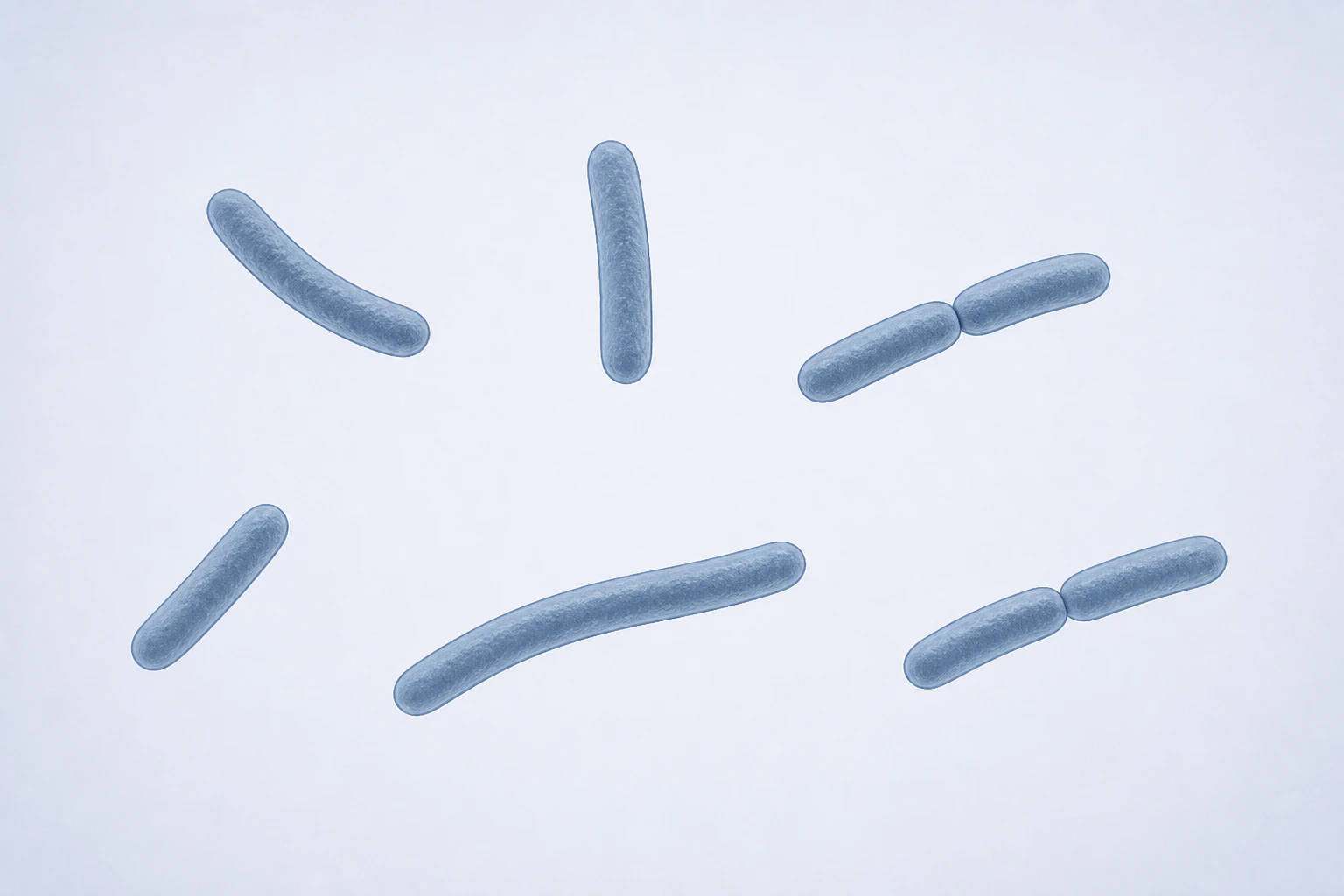
Selected type-species-anchored Flavobacterium straight-to-gently-curved rod forms, shown as eight bodies in four single and two paired groupings. This genus-level scientific reconstruction is representative, non-diagnostic, and not a micrograph.
Scientific media record1 verified identifier
- Subject
- Flavobacteriumtaxon · genus
- Identifiers
- NCBITaxon:237
- Review
- Editorial review completeIdentifiers authority-verified · Accessibility validated · · flavobacterium|flavobacterium-morphology-v1.webp
- Digital source
- Trained-algorithmic mediaCreated with a trained generative algorithm and reviewed by WikiBiome for subject identity, scientific framing, identifiers, provenance, and accessibility.
- Scientific basis
- Flavobacterium — NCBI TaxonomyFlavobacterium — LPSNFlavobacterium aquatile — LPSNEmended description of the genus FlavobacteriumFlavobacterium genus treatmentFlavobacterium aquatile type strain — BacDive
- License
- CC BY-SA 4.0Created
Flavobacterium is a genus of Gram-negative, aerobic bacteria within the phylum Bacteroidetes. Primarily environmental organisms found in soil and freshwater, Flavobacterium species have been identified in human microbiome studies of the cervical and reproductive tract, where their presence is considered atypical and potentially indicative of microbial community disruption.
Evidence map1 cited passagesInspect provenance +
In endometriosis, Flavobacterium has been detected in cervical mucus microbial communities, representing a departure from the Lactobacillus-dominated healthy cervical microbiome (). Its presence may reflect compromised mucosal barriers or altered cervical immune defenses that permit environmental organisms to colonize the reproductive tract ().
Endometriosis Associations#
In endometriosis, Flavobacterium has been detected in cervical mucus microbial communities, representing a departure from the Lactobacillus-dominated healthy cervical microbiome ([1]Molecular detection of microbial colonization in cervical mucus of women with and without endometriosisAkiyama K, Nishioka K, Khan KN et al. · 2019Open reference 1 ↓).
Its presence may reflect compromised mucosal barriers or altered cervical immune defenses that permit environmental organisms to colonize the reproductive tract ([2]Ser 2023 — Current Updates on the Role of Microbiome in Endometriosis: A Narrative ReviewHooi-Leng Ser, Siu-Jung Au Yong, Mohamad Nasir Shafiee et al. · 2023Open reference 2 ↓).
Cross-References#
- Endometriosis—cervical microbiome associations
- Lactobacillus—healthy cervical microbiome reference
- Bacteroidetes (Bacteroidota)—parent phylum
- cervical microbiome—reproductive tract niche
References 4
Numbered by first appearance in the article, then reconciled with its declared source list.
- 1
Akiyama K, Nishioka K, Khan KN et al. (2019). Molecular detection of microbial colonization in cervical mucus of women with and without endometriosis. American Journal of Reproductive Immunology.
- 2
Hooi-Leng Ser, Siu-Jung Au Yong, Mohamad Nasir Shafiee et al. (2023). Ser 2023 — Current Updates on the Role of Microbiome in Endometriosis: A Narrative Review. Microorganisms.
- 3
Kanoko Akiyama, Keisuke Nishioka, Khaleque N. Khan et al. (2019). Akiyama 2019 — Molecular Detection of Microbial Colonization in Cervical Mucus of Women With and Without Endometriosis. American Journal of Reproductive Immunology.
- 4
Magill RG, MacDonald SM (2023). Magill 2023 — Male Infertility and the Human Microbiome. Frontiers in Reproductive Health.
Article network
Mentioned here 3
Connect the evidence
Publicly readable discussion by ORCID-authenticated researchers. Questions, interpretation, methods, corrections, and new evidence stay attached to this record.
No discussion yet. Start with a precise question or a source-backed observation.
Activity and accepted changes
Accepted researcher context, editorial status, public discussion, and upstream Git revisions are shown together. Pending, declined, and withdrawn proposals remain private.
- published revision
massive wiki expansion: 149 stubs fixed, 100+ new pages, Rule 15 scan, keystone papers
WikiBiome Deploy Bot · +40 −0
Inspect exact Git diff ↗