
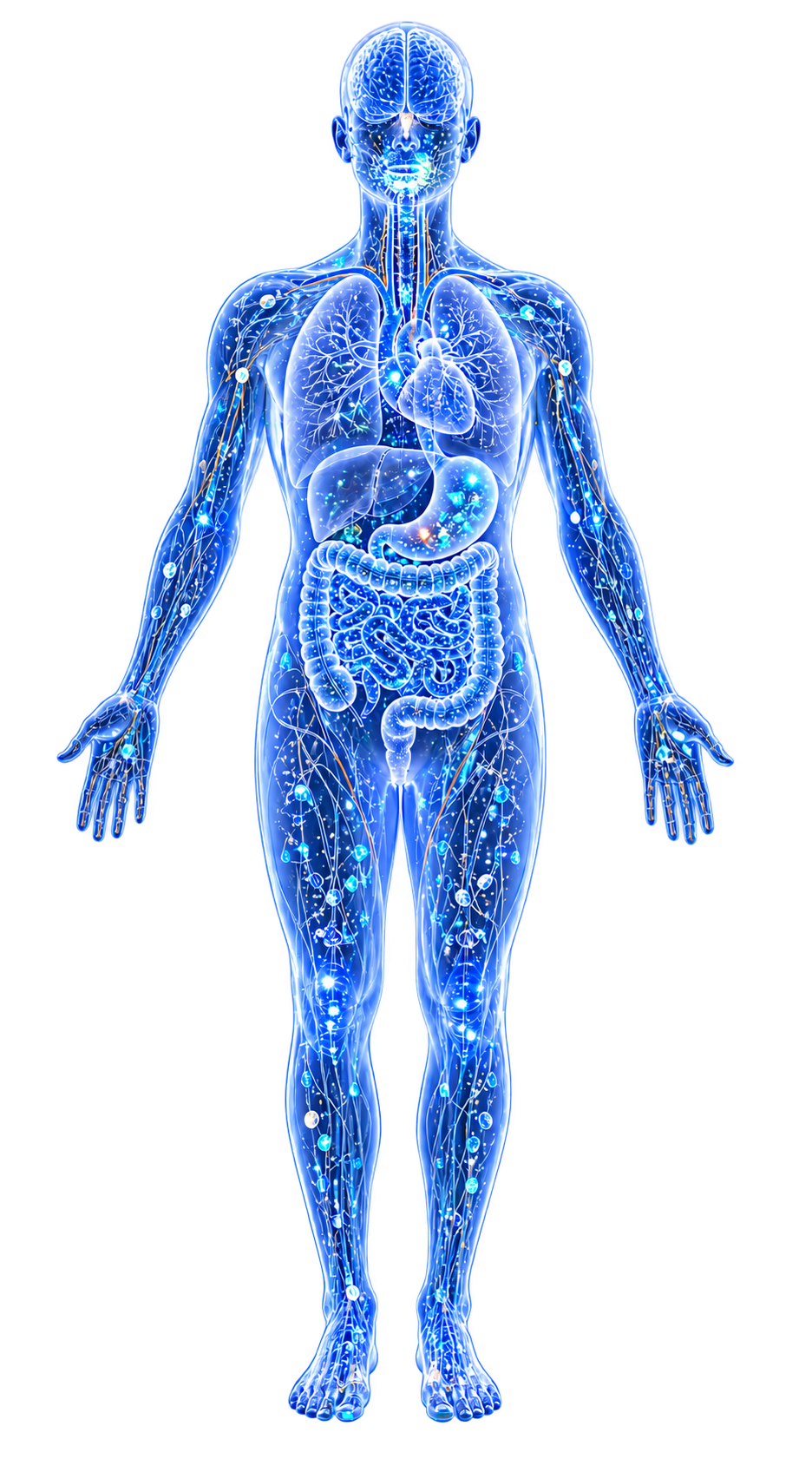
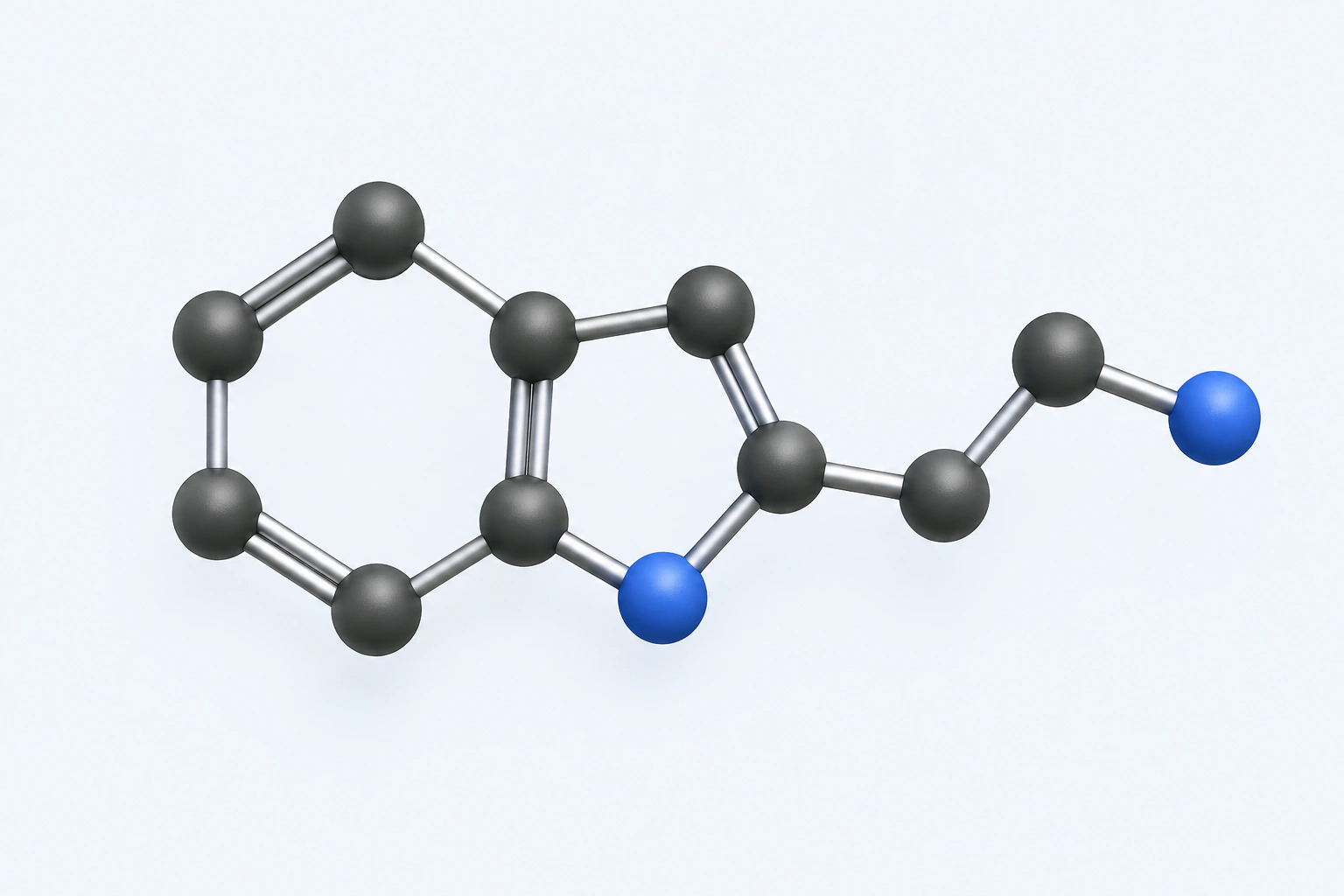
Heavy-atom connectivity orientation for neutral tryptamine. Hydrogens, protonation-state changes, measured conformation, receptor binding, microbial production, and disease claims are intentionally omitted; this is an educational reconstruction.
Scientific media record4 verified identifiers
- Subject
- Tryptaminebiological-process
- Review
- Editorial review completeIdentifiers authority-verified · Accessibility validated · · tryptamine|tryptamine-mechanism-v1.webp
- Digital source
- Trained-algorithmic mediaCreated with a trained generative algorithm and reviewed by WikiBiome for subject identity, scientific framing, identifiers, provenance, and accessibility.
- Scientific basis
- Tryptamine — PubChemTryptamine — ChEBITryptamine
- License
- CC BY-SA 4.0Created
Tryptamine is a microbial decarboxylation product of Tryptophan, produced by bacterial tryptophan decarboxylase (found in Ruminococcus gnavus, Clostridium sporogenes, and others). It is a serotonin receptor agonist (particularly 5-HT4) that stimulates gut motility and fluid secretion.
Tryptamine represents a direct route by which gut bacteria modulate GI function and neuroactive signaling independently of host serotonin synthesis.
Evidence map2 cited passagesInspect provenance +
Part of the broader tryptophan metabolite landscape alongside indole derivatives, serotonin, and kynurenine pathway products.
Altered in schizophrenia gut-brain axis and MS.
Neuroactive Significance#
Tryptamine activates 5-HT4 receptors on colonocytes → Cl⁻ secretion → fluid movement → accelerated transit. This explains why some dysbiotic states cause diarrhea (excess tryptamine) while others cause constipation (tryptamine deficiency).
Part of the broader tryptophan metabolite landscape alongside Indole and Indole Derivatives derivatives, Serotonin, and Kynurenine Pathway products.[1]Kamath 2025 — Gut Microbiome and Mental Health: Causation or Correlation? (Review)Srinivas Kamath, Elysia Sokolenko, Scott R Clark et al. · 2025Open reference 1 ↓
Altered in schizophrenia gut-brain axis[2]Functional Associations of the Gut Microbiome with Dopamine, Serotonin, and BDNF in Schizophrenia: A Pilot StudyGhorbani M, Joseph GBS, Tew MM et al. · 2024Open reference 2 ↓ and MS.[3]Microbial Metabolites in Multiple Sclerosis: Implications for Pathogenesis and TreatmentEduardo Duarte-Silva, Sven G. Meuth, Christina Alves Peixoto · 2022Open reference 3 ↓
Cross-References#
- Tryptophan—precursor amino acid
- Serotonin—endogenous 5-HT (tryptamine mimics its receptor activity)
- Indole and Indole Derivatives—competing tryptophan metabolite
- Ruminococcus gnavus—major tryptamine producer
- Gut-Brain Axis—neuroactive metabolite signaling
References 3
Numbered by first appearance in the article, then reconciled with its declared source list.
- 1
Srinivas Kamath, Elysia Sokolenko, Scott R Clark et al. (2025). Kamath 2025 — Gut Microbiome and Mental Health: Causation or Correlation? (Review). Preprint (no DOI found in document).
- 2
Ghorbani M, Joseph GBS, Tew MM et al. (2024). Functional Associations of the Gut Microbiome with Dopamine, Serotonin, and BDNF in Schizophrenia: A Pilot Study. Egyptian Journal of Neurology, Psychiatry and Neurosurgery.
- 3
Eduardo Duarte-Silva, Sven G. Meuth, Christina Alves Peixoto (2022). Microbial Metabolites in Multiple Sclerosis: Implications for Pathogenesis and Treatment. Frontiers in Neuroscience.
Article network
Connect the evidence
Publicly readable discussion by ORCID-authenticated researchers. Questions, interpretation, methods, corrections, and new evidence stay attached to this record.
No discussion yet. Start with a precise question or a source-backed observation.
Activity and accepted changes
Accepted researcher context, editorial status, public discussion, and upstream Git revisions are shown together. Pending, declined, and withdrawn proposals remain private.
- published revision
massive wiki expansion: 149 stubs fixed, 100+ new pages, Rule 15 scan, keystone papers
WikiBiome Deploy Bot · +34 −0
Inspect exact Git diff ↗