
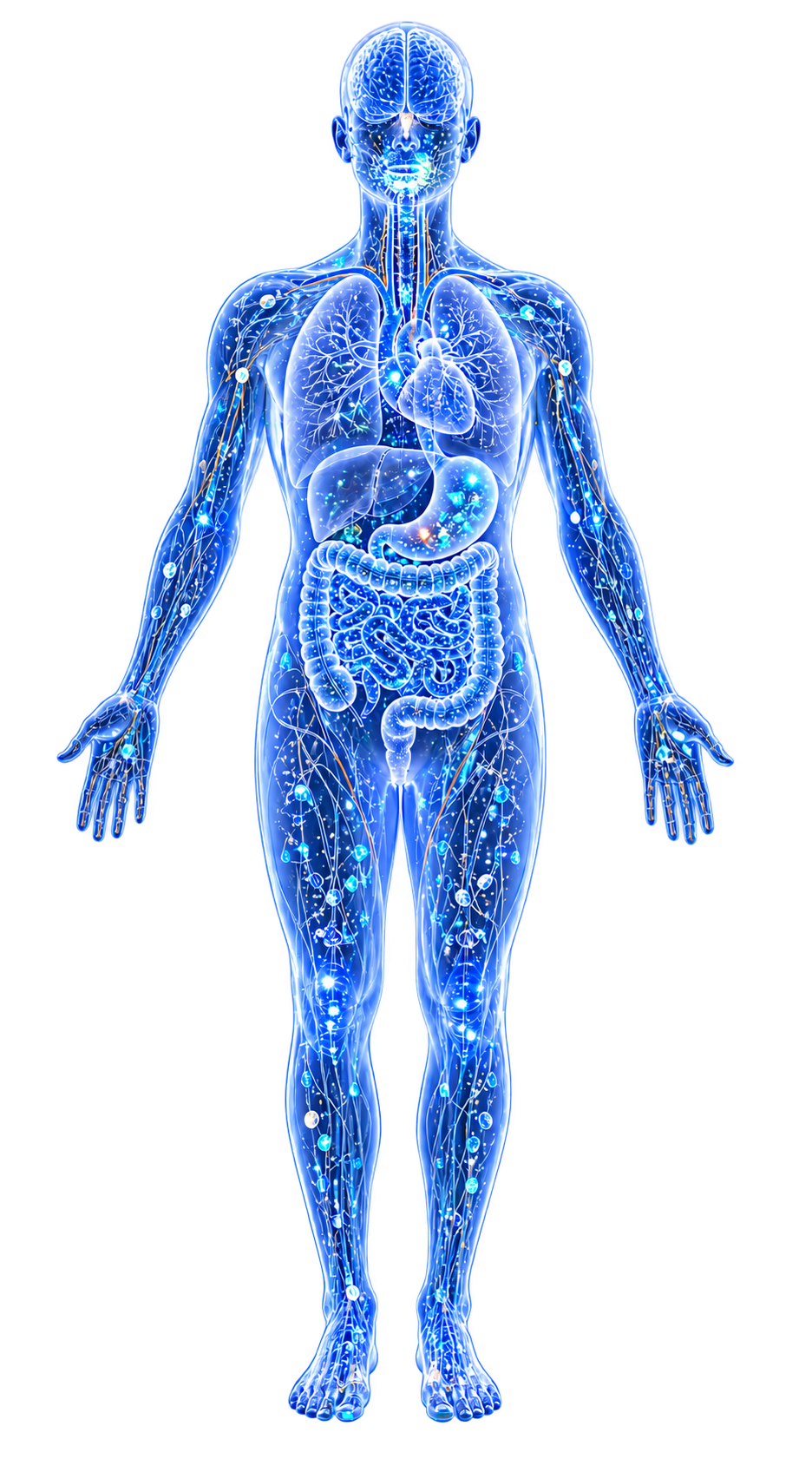
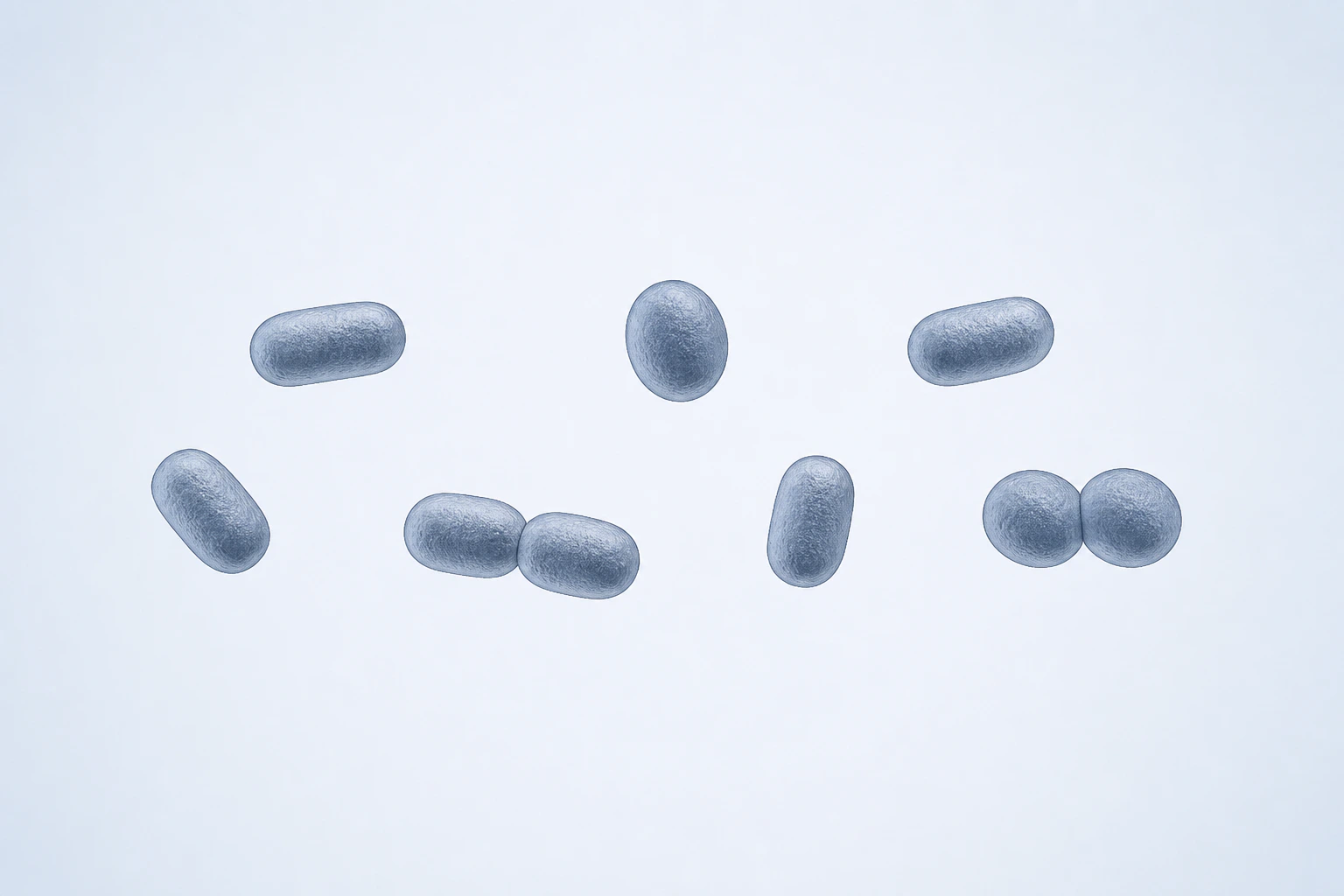
Representative compact short rods and coccobacilli of Gordonibacter urolithinfaciens, shown as nine bodies in five single and two paired groupings. This species-evidence-bounded scientific reconstruction is non-diagnostic, does not imply visual separation from other Gordonibacter, and is not a micrograph.
Scientific media record1 verified identifier
- Subject
- Gordonibacter urolithinfacienstaxon · species
- Identifiers
- NCBITaxon:1335613
- Review
- Editorial review completeIdentifiers authority-verified · Accessibility validated · · gordonibacter-urolithinfaciens|gordonibacter-urolithinfaciens-morphology-v1.webp
- Digital source
- Trained-algorithmic mediaCreated with a trained generative algorithm and reviewed by WikiBiome for subject identity, scientific framing, identifiers, provenance, and accessibility.
- Scientific basis
- Gordonibacter urolithinfaciens — NCBI TaxonomyGordonibacter urolithinfaciens — LPSNGordonibacter urolithinfaciens sp. nov.Gordonibacter urolithinfaciens species description
- License
- CC BY-SA 4.0Created
Gordonibacter urolithinfaciens is a Gram-positive, obligate anaerobic bacterium belonging to the family Eggerthellaceae that plays a specialized and critical role in polyphenol metabolism and conversion of ellagic acid to urolithin A.
This microbial conversion is one of the most important metabolic steps in translating dietary polyphenols from berries, pomegranates, and walnuts into bioavailable anti-inflammatory metabolites that protect against Cardiovascular Disease and age-related degeneration.
Contents
1. Taxonomy2. The Urolithin Pathway3. Metal Dependencies4. Key Enzymes and Metabolic Functions5. Disease Associations and Protective Roles6. Ecological Context7. Biofilm and Spatial Organization8. Detection and Quantification9. ConnectionsTaxonomy#
- Phylum: Actinobacteria
- Family: Eggerthellaceae
- Genus: Gordonibacter
- Species: G. urolithinfaciens
- Key characteristic: Obligate anaerobe; bile-tolerant; capable of novel enzymatic transformations on plant metabolites
The Urolithin Pathway#
Ellagic Acid → Urolithin A Conversion#
G. urolithinfaciens catalyzes a multi-step enzymatic transformation of ellagic acid (found in high concentrations in pomegranate fruit, berries, and walnuts) into urolithin A, a potent polyphenol metabolite with demonstrated anti-inflammatory and mitochondrial-protective properties.
Substrate: Ellagic acid and related ellagitannins from dietary sources. Enzymes: Lactonase and successive lactonase/decarboxylase enzymes unique to Gordonibacter species. Product: Urolithin A (and other urolithin isomers A, B, C depending on secondary metabolism).
Bioavailability: Urolithin A is absorbed in the colon and circulates systemically, crossing the blood-brain barrier.
Why This Matters for Health#
Humans cannot directly metabolize ellagic acid; all urolithin production depends on bacterial conversion. G. urolithinfaciens abundance directly predicts serum and urinary urolithin A levels in dietary intervention studies.
Individuals lacking this species or with reduced urolithinfaciens abundance cannot access the neuroprotective and cardioprotective effects of pomegranate and berry polyphenols, regardless of dietary intake.
Metal Dependencies#
Iron: G. urolithinfaciens uses iron-dependent oxidoreductases in the urolithin synthesis pathway. Iron restriction may impair conversion efficiency. Prefers microaerophilic-adjacent conditions typical of the mid-colon where oxygen is limiting.
Key Enzymes and Metabolic Functions#
- Lactonases – break down the lactone ring in ellagic acid
- Oxidoreductases (iron-dependent) – catalyze successive oxidation/decarboxylation steps
- Decarboxylases – remove CO2 groups during urolithin isomerization
- Short-chain fatty acid synthases – produces Butyrate as a byproduct
Disease Associations and Protective Roles#
Cardiovascular Disease#
Gordonibacter urolithinfaciens protection against Cardiovascular Disease is mediated by urolithin A's effects on. Endothelial function: Urolithin A restores endothelial nitric oxide synthase (eNOS) activity and improves vasodilation. Vascular Metal-Driven Inflammation: Suppresses NF-κB signaling and reduces pro-inflammatory cytokine production.
Arterial stiffness: Improves arterial elasticity and reduces pulse wave velocity in aging cohorts.
Oxidative Stress: Potent mitochondrial antioxidant; restores complex I and III function.
Healthy Aging and Longevity#
Urolithin A activates mitophagy (selective mitochondrial autophagy), clearing dysfunctional mitochondria. Restores NAD+ metabolism and sirtuins in aged tissues. Associated with improved muscle strength and cognitive function in older adults.
Neurodegeneration Prevention#
- Urolithin A crosses the blood-brain barrier and reduces neuroinflammation via microglial suppression
- Protects against amyloid-β aggregation and tau pathology (preclinical evidence)
- Associated with better cognitive outcomes in polyphenol-responsive cohorts
Ecological Context#
Typically abundant (0.1–1% of fecal microbiota) in individuals with high polyphenol intake. Depleted in Western diets low in fruits, nuts, and plant metabolites. Thrives in glycan-rich, polyphenol-rich colonic environments.
Competes successfully with other Actinobacteria in the presence of ellagitannins. Part of a coordinated metabolic network including other urolithin-producing Eggerthellaceae members.
Biofilm and Spatial Organization#
Does not typically form robust biofilms but colonizes mucin-rich microdomains near the intestinal epithelium. Spatial proximity to epithelial cells may enhance urolithin absorption. Influenced by colonic pH; prefers pH 6.0–6.5 (more acidic environment favors fermentation competitors).
Detection and Quantification#
16S rRNA gene: Taxonomic abundance measured by high-throughput sequencing (genus Gordonibacter, species urolithinfaciens via species-specific qPCR). Functional marker: lactonase gene copies; presence correlates with urolithin A production. Phenotype: Serum and urinary urolithin A levels (LC-MS/MS) as indirect measure of bacterial activity.
Typical abundance: 0.01–1% of fecal microbiota (highly variable; >0.1% in polyphenol consumers).
Connections#
- Cardiovascular Disease – urolithin A producer; protects vascular endothelium and reduces atherosclerosis risk
- – metabolizes ellagic acid and ellagitannins from berries and pomegranate
- Short-Chain Fatty Acids (SCFAs) – produces butyrate alongside urolithin synthesis
- – urolithin A restores mitophagy and oxidative phosphorylation
- – urolithin pathway implicated in healthy aging and longevity
- Iron – iron-dependent urolithin synthesis pathway
- Dysbiosis – depleted in Western diets lacking polyphenol diversity
- – family-level link; other members also produce urolithin metabolites
References 6
Numbered by first appearance in the article, then reconciled with its declared source list.
- 1
Eduardo Duarte-Silva, Sven G. Meuth, Christina Alves Peixoto (2022). Microbial Metabolites in Multiple Sclerosis: Implications for Pathogenesis and Treatment. Frontiers in Neuroscience.
- 2
Zhexin Ni, Shuai Sun, Yanli Bi et al. (2020). Ni 2020 — Fecal Metabolomics and Gut Microbiota Correlation in Endometriosis Mice. American Journal of Reproductive Immunology.
- 3
Keer Zhou, Ancha Baranova, Hongbao Cao et al. (2024). Zhou 2024 — Gut Microbiome and Schizophrenia: Insights from Two-Sample Mendelian Randomization. Schizophrenia (Nature Partner Journal).
- 4
Bucciero C, Croce A, Castellano G et al. (2026). The Diet-Multiple Sclerosis Connection: Oxidative Stress and Emerging Mechanisms. Molecular Neurobiology.
- 5
Thirion F, Sellebjerg F, Fan Y et al. (2023). The Gut Microbiota in Multiple Sclerosis Varies with Disease Activity. Genome Medicine.
- 6
Stefan Heinzel, Sepehr Rahnemaiard, Daniela Berg (2021). Heinzel 2021 -- Urolithins: Potential Biomarkers of Gut Dysbiosis and Disease Stage in Parkinson's Patients. Nutrients.
Article network
Connect the evidence
Publicly readable discussion by ORCID-authenticated researchers. Questions, interpretation, methods, corrections, and new evidence stay attached to this record.
No discussion yet. Start with a precise question or a source-backed observation.
Activity and accepted changes
Accepted researcher context, editorial status, public discussion, and upstream Git revisions are shown together. Pending, declined, and withdrawn proposals remain private.
- published revision
Backfill oxidative stress concept links
Karen Pendergrass · +1 −1
Inspect exact Git diff ↗ - published revision
Backfill inflammation concept links
Karen Pendergrass · +1 −1
Inspect exact Git diff ↗ - published revision
massive wiki expansion: 149 stubs fixed, 100+ new pages, Rule 15 scan, keystone papers
WikiBiome Deploy Bot · +37 −33
Inspect exact Git diff ↗ - published revision
nightly maintenance: 94 stub demotions, 181 source_count fixes, 22 auto-discovered stubs, 5 adversarial audits, 3 boundary fixes, 3 evidence-level corrections
WikiBiome Deploy Bot · +3 −0
Inspect exact Git diff ↗ - published revision
WikiBiome update — 2026-04-15 17:23
WikiBiome Deploy Bot · +4 −4
Inspect exact Git diff ↗ - published revision
wiki: bulk entity upgrades, new article pages, and site regeneration
WikiBiome Deploy Bot · +6 −0
Inspect exact Git diff ↗ - published revision
WikiBiome update — integrity fixes, metallomic diet pages, cross-condition analyses
WikiBiome Deploy Bot · +3 −1
Inspect exact Git diff ↗ - published revision
WikiBiome update — 2026-04-10 17:16
WikiBiome Deploy Bot · +103 −0
Inspect exact Git diff ↗