
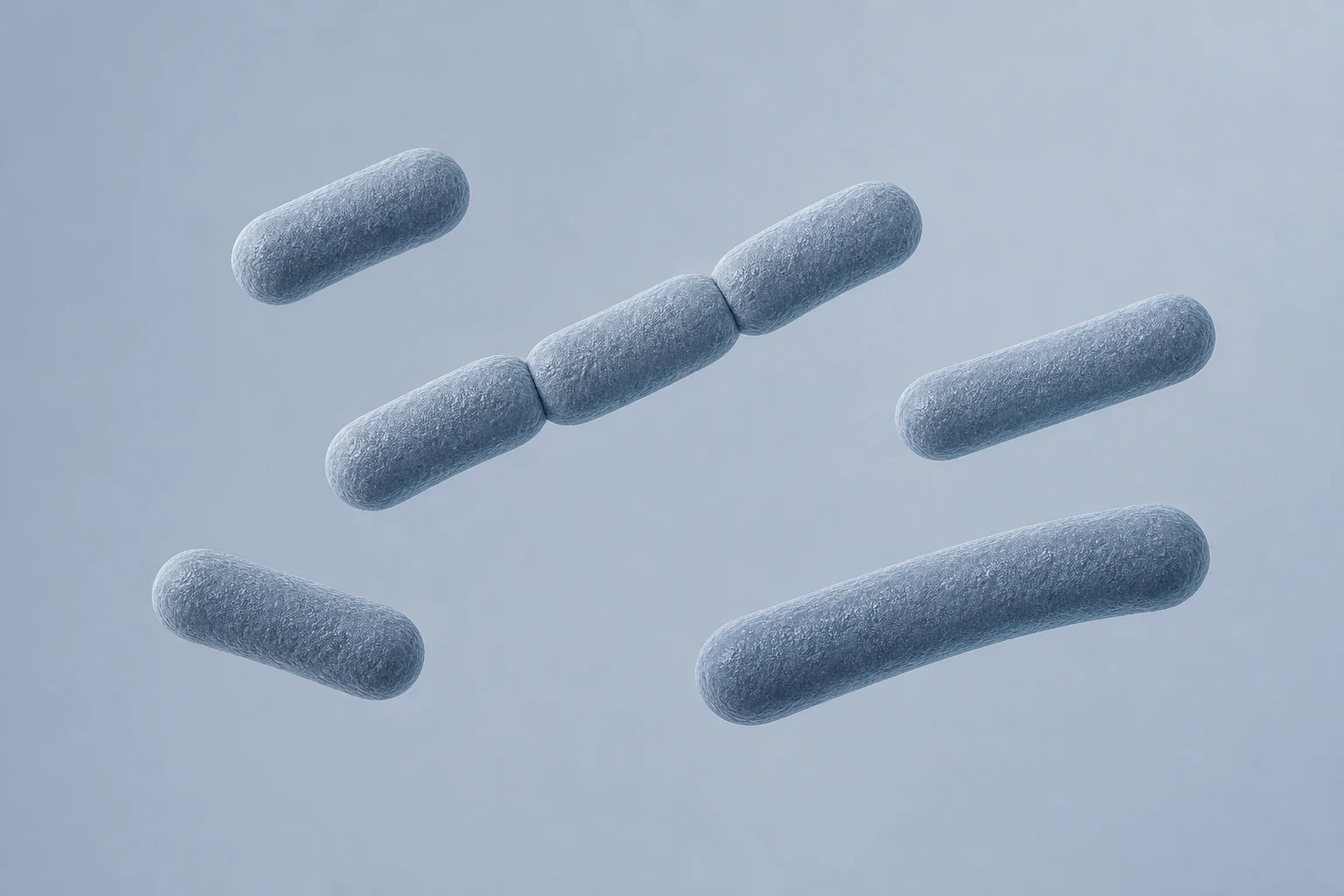
Representative Alloprevotella bacilli. The original A. rava description reports nonmotile cells occurring singly or in short chains with substantial length variation; this reconstruction is genus-level and not diagnostic.
Scientific media record1 verified identifier
- Subject
- Alloprevotellataxon · genus
- Identifiers
- NCBITaxon:1283313
- Review
- Editorial review completeIdentifiers authority-verified · Accessibility validated · · alloprevotella|alloprevotella-morphology-v1.webp
- Digital source
- Trained-algorithmic mediaCreated with a trained generative algorithm and reviewed by WikiBiome for subject identity, scientific framing, identifiers, provenance, and accessibility.
- License
- CC BY-SA 4.0Created
Alloprevotella is a genus of Gram-negative, obligate anaerobic bacteria within the family Prevotellaceae that represents a distinct clade from Prevotella with specific protective roles in Type 2 Diabetes prevention and metabolic health. Alloprevotella depletion is one of the strongest consistent associations in type 2 diabetes microbiota research across independent cohorts.
The genus is also a short-chain fatty acid (SCFA) producer, particularly propionate, and is enriched in healthy oral and gut microbiota.
Evidence map7 cited passagesInspect provenance +
Significantly depleted in T2D patients across multiple independent cohorts (Chinese, European, North American populations) (; )
Depletion magnitude correlates with HbA1c levels and insulin resistance severity ()
Restoration of Alloprevotella abundance associated with improved insulin sensitivity in dietary intervention trials ()
Present in healthy controls at 1–5% relative abundance; typically <0.1% in T2D ()
Propionate Production and GPR43 Signaling - Alloprevotella's primary SCFA output is propionate (via propionyl-CoA synthetase and associated enzymes) () - Propionate activates GPR43 (free fatty acid receptor 2) on intestinal epithelial cells and immune cells (Maslowski et al. 2009 Nature; ) - GPR43 signaling strengthens intestinal barrier integrity and reduce
Intestinal Barrier Function and Endotoxemia - Alloprevotella's propionate production maintains tight junction protein expression (claudin-2, occludin, ZO-1) () - Depletion is associated with increased gut permeability and elevated fasting endotoxemia (LPS) (Cani et al. 2007 Diabetes) - LPS is a key driver of systemic inflammation and insulin resistance in T2
Alloprevotella depletion has also been observed in T1D cohorts alongside SCFA depletion ()
Contents
1. Taxonomy and Distinction from Prevotella2. Type 2 Diabetes and Glucose Metabolism3. Oral Health and Periodontal Microbiota4. Metal Dependencies5. Key Metabolites and Enzymes6. Type 1 Diabetes and the Oral-Gut Axis7. Ecological Context8. Detection and Quantification9. Restoration and Dietary Associations10. Clinical Significance11. ConnectionsTaxonomy and Distinction from Prevotella#
Phylum: Bacteroidetes. Family: Prevotellaceae. Genus: Alloprevotella (formerly grouped with Prevotella; reclassified ~2015 based on 16S and genomic analysis).
Key species: A. rava, A. melaninogenica, A. tannerae, A. enocis. Critical distinction: While related to Prevotella, Alloprevotella possesses distinct glycan-degradation gene clusters and SCFA production profiles that confer different metabolic and immune effects.
Why This Distinction Matters#
Many older microbiota studies reported "Prevotella" changes in T2D but did not resolve to the Alloprevotella/Prevotella species level. Alloprevotella is protective; some Prevotella species are dysbiotic. This distinction explains seeming contradictions in the literature.
Type 2 Diabetes and Glucose Metabolism#
Protective Association#
Significantly depleted in T2D patients across multiple independent cohorts (Chinese, European, North American populations) (;[1]Li 2020 — Implication of the Gut Microbiome Composition of Type 2 Diabetic Patients from Northern ChinaQian Li, Yujun Chang, Ke Zhang et al. · 2020Open reference 1 ↓[2]Dash 2023 — Functional Alterations and Predictive Capacity of Gut Microbiome in Type 2 DiabetesNihar Ranjan Dash, Mohammad T. Al Bataineh, Rohia Alili et al. · 2023Open reference 2 ↓).
Depletion magnitude correlates with HbA1c levels and insulin resistance severity ([3]Salamone 2021 — The Relationship between Gut Microbiota, Short-Chain Fatty Acids and Type 2 Diabetes: The Role of Dietary FibreDominic Salamone, Angela Albarosa Rivellese, Claudia Vetrani · 2021Open reference 3 ↓). Restoration of Alloprevotella abundance associated with improved insulin sensitivity in dietary intervention trials ([4]Herrema 2020 — Intestinal Microbial Metabolites in Human Metabolism and Type 2 DiabetesHilde Herrema, Jan Hendrik Niess · 2020Open reference 4 ↓).
Present in healthy controls at 1–5% relative abundance; typically <0.1% in T2D ([1]Li 2020 — Implication of the Gut Microbiome Composition of Type 2 Diabetic Patients from Northern ChinaQian Li, Yujun Chang, Ke Zhang et al. · 2020Open reference 1 ↓).
Mechanistic Protection Against Insulin Resistance#
Propionate Production and GPR43 Signaling. Alloprevotella's primary SCFA output is propionate (via propionyl-CoA synthetase and associated enzymes) ([3]Salamone 2021 — The Relationship between Gut Microbiota, Short-Chain Fatty Acids and Type 2 Diabetes: The Role of Dietary FibreDominic Salamone, Angela Albarosa Rivellese, Claudia Vetrani · 2021Open reference 3 ↓).
Propionate activates GPR43 (free fatty acid receptor 2) on intestinal epithelial cells and immune cells (Maslowski et al. 2009 Nature;[5]Hoyles 2018 — Microbiome-Host Systems Interactions: Protective Effects of Propionate upon the Blood-Brain BarrierLesley Hoyles, Tom Snelling, Umm-Kulthum Umlai et al. · 2018Open reference 5 ↓).
GPR43 signaling strengthens intestinal barrier integrity and reduces systemic LPS translocation ([4]Herrema 2020 — Intestinal Microbial Metabolites in Human Metabolism and Type 2 DiabetesHilde Herrema, Jan Hendrik Niess · 2020Open reference 4 ↓). Propionate also activates PPAR-γ in colonocytes, promoting insulin sensitivity (Den Besten et al. 2013 J Lipid Res).
Glucose and Lipid Metabolism. Alloprevotella fermentation produces succinate and lactate alongside propionate. These metabolites improve hepatic glucose homeostasis and reduce hepatic steatosis (NAFLD).
Propionate directly suppresses de novo lipogenesis in the liver.
Intestinal Barrier Function and Endotoxemia. Alloprevotella's propionate production maintains tight junction protein expression (claudin-2, occludin, ZO-1) ([5]Hoyles 2018 — Microbiome-Host Systems Interactions: Protective Effects of Propionate upon the Blood-Brain BarrierLesley Hoyles, Tom Snelling, Umm-Kulthum Umlai et al. · 2018Open reference 5 ↓). Depletion is associated with increased gut permeability and elevated fasting endotoxemia (LPS) (Cani et al.
2007 Diabetes).
LPS is a key driver of systemic Metal-Driven Inflammation and insulin resistance in T2D ([4]Herrema 2020 — Intestinal Microbial Metabolites in Human Metabolism and Type 2 DiabetesHilde Herrema, Jan Hendrik Niess · 2020Open reference 4 ↓).
Bile Acid Metabolism. Alloprevotella possesses moderate bile salt hydrolase (BSH) activity. Secondary bile acids produced support FXR and TGR5 signaling, enhancing insulin sensitivity.
Depletion reduces secondary bile acid diversity, impairing metabolic signaling.
Immune Tolerance and Th17 Suppression. Propionate produced by Alloprevotella activates HDAC inhibition in dendritic cells. This skews immune differentiation toward Tregs and away from pro-inflammatory Th17 cells.
Loss of Alloprevotella correlates with elevated Th17 abundance and increased intestinal IL-17 production, which impairs barrier function.
Oral Health and Periodontal Microbiota#
Alloprevotella is a major member of healthy gingival microbiota (Downes et al. 2013 IJSEM—original Alloprevotella description). Competes for niches with pathogenic Prevotella species and periodontal pathogens.
Associated with stable, non-inflamed periodontal tissues.
Depleted in periodontitis and aggressive gingivitis (Abusleme et al. 2013 ISME J).
Metal Dependencies#
- Iron: Alloprevotella requires iron for cytochrome c oxidases and electron transport chain components. Iron-limited environments may reduce its fitness; iron overload in dysbiotic states may impair its competitive ability relative to siderophore-producing pathogens.
- Prefers low-iron, high-glycan-rich ecological niches typical of healthy colons
Key Metabolites and Enzymes#
- Propionate – primary SCFA output via the succinate pathway
- Acetate – secondary SCFA product
- Succinate and lactate – intermediate fermentation products
- Bile salt hydrolase – moderate activity; produces secondary bile acids
- Glycan-degradation complex – multiple polysaccharide lyases and glycosidases for plant and host polysaccharide utilization
Type 1 Diabetes and the Oral-Gut Axis#
Alloprevotella depletion has also been observed in T1D cohorts alongside SCFA depletion ([6]Bile Acids and T1D — Calprotectin and SCFA AssociationsVarious · 2023Open reference 6 ↓). The oral-gut axis is relevant: as Alloprevotella is a shared oral–intestinal commensal, systemic depletion may reflect broader loss of mucosal SCFA-producing diversity.
Ecological Context#
- Thrives in high-fiber, high-plant-glycan environments (resistant starch, inulin, beta-glucans)
- Competes well with other Bacteroidetes in diverse, stable microbiota
- cobalt (Co)-enriched with Faecalibacterium prausnitzii and Roseburia in healthy controls (SCFA producer network)
- Depleted rapidly in dysbiotic shifts driven by high-sugar/low-fiber Western diets, antibiotic exposure, or metabolic disease
- Sensitive to bile-induced stress but tolerant of moderate primary bile acid concentrations
Detection and Quantification#
16S rRNA profiling: Genus-level quantification; species-level resolution requires additional markers. Functional markers: propionyl-CoA synthetase gene copies; malonyl-CoA decarboxylase copies. Metabolomics: Fecal and serum propionate levels as proxy for Alloprevotella activity.
Typical abundance: 1–5% of fecal microbiota in healthy controls; <0.5% in T2D.
Restoration and Dietary Associations#
High-fiber diets: Selectively enrich Alloprevotella (resistant starch > 15g/day shows strongest associations). Polyphenol-rich foods: Berries, pomegranate, tea; secondary metabolites favor Alloprevotella growth. Whole grains and legumes: Beta-glucans and arabinoxylan substrates support abundance.
Mediterranean dietary pattern: Strong association with Alloprevotella restoration in T2D intervention trials.
Clinical Significance#
Alloprevotella restoration is considered one of the most important microbiota targets in T2D prevention and reversal. Its abundance is a strong independent predictor of response to intensive dietary interventions for T2D.
Connections#
- Type 2 Diabetes – one of the strongest protective depleted taxa; protective marker of insulin sensitivity
- – propionate improves hepatic glucose homeostasis and reduces gluconeogenesis
- Insulin Resistance – Alloprevotella depletion strongly associated with HOMA-IR elevation
- Short-Chain Fatty Acids (SCFAs) – primary propionate producer; key SCFA in metabolic disease prevention
- nutritional immunity – propionate maintains tight junctions and reduces endotoxemia
- – loss increases LPS translocation; propionate-mediated barrier maintenance is key protective mechanism
- – depleted in active periodontal disease; oral-gut axis shared Dysbiosis
- Bile Acid Metabolism – moderate BSH activity; produces secondary bile acids for metabolic signaling
- Iron – iron-dependent metabolism; dysbiotic iron overload may impair competitive fitness
- – secondary metabolites favor Alloprevotella growth
- – resistant starch and beta-glucans selectively enrich this genus
- inflammation – loss correlates with elevated systemic inflammation and Th17 skewing
- Prevotella – genus family member but distinct metabolic and immune profiles; often opposing trends
- Faecalibacterium prausnitzii – frequently co-enriched; synergistic SCFA network
- dysbiosis – Alloprevotella depletion is a key dysbiosis marker in metabolic disease
References 6
Numbered by first appearance in the article, then reconciled with its declared source list.
- 1
Qian Li, Yujun Chang, Ke Zhang et al. (2020). Li 2020 — Implication of the Gut Microbiome Composition of Type 2 Diabetic Patients from Northern China. Scientific Reports.
- 2
Nihar Ranjan Dash, Mohammad T. Al Bataineh, Rohia Alili et al. (2023). Dash 2023 — Functional Alterations and Predictive Capacity of Gut Microbiome in Type 2 Diabetes. Scientific Reports.
- 3
Dominic Salamone, Angela Albarosa Rivellese, Claudia Vetrani (2021). Salamone 2021 — The Relationship between Gut Microbiota, Short-Chain Fatty Acids and Type 2 Diabetes: The Role of Dietary Fibre. Acta Diabetologica.
- 4
Hilde Herrema, Jan Hendrik Niess (2020). Herrema 2020 — Intestinal Microbial Metabolites in Human Metabolism and Type 2 Diabetes. Diabetologia.
- 5
Lesley Hoyles, Tom Snelling, Umm-Kulthum Umlai et al. (2018). Hoyles 2018 — Microbiome-Host Systems Interactions: Protective Effects of Propionate upon the Blood-Brain Barrier. Microbiome.
- 6
Various (2023). Bile Acids and T1D — Calprotectin and SCFA Associations. Various.
Article network
Mentioned here 12
Pages linking here 3
Connect the evidence
Publicly readable discussion by ORCID-authenticated researchers. Questions, interpretation, methods, corrections, and new evidence stay attached to this record.
No discussion yet. Start with a precise question or a source-backed observation.
Activity and accepted changes
Accepted researcher context, editorial status, public discussion, and upstream Git revisions are shown together. Pending, declined, and withdrawn proposals remain private.
- published revision
Backfill inflammation concept links
Karen Pendergrass · +2 −2
Inspect exact Git diff ↗ - published revision
Complete corpus-wide Dysbiosis linking
Karen Pendergrass · +2 −2
Inspect exact Git diff ↗ - published revision
Complete Tight junctions contextual coverage
Karen Pendergrass · +1 −1
Inspect exact Git diff ↗ - published revision
massive wiki expansion: 149 stubs fixed, 100+ new pages, Rule 15 scan, keystone papers
WikiBiome Deploy Bot · +31 −31
Inspect exact Git diff ↗ - published revision
nightly maintenance: 94 stub demotions, 181 source_count fixes, 22 auto-discovered stubs, 5 adversarial audits, 3 boundary fixes, 3 evidence-level corrections
WikiBiome Deploy Bot · +1 −0
Inspect exact Git diff ↗ - published revision
Deep content + citation pass: 10 entities enriched, 7 new sources, DOI integrity
WikiBiome Deploy Bot · +19 −14
Inspect exact Git diff ↗ - published revision
WikiBiome update — 2026-04-15 17:23
WikiBiome Deploy Bot · +22 −22
Inspect exact Git diff ↗ - published revision
wiki: bulk entity upgrades, new article pages, and site regeneration
WikiBiome Deploy Bot · +6 −0
Inspect exact Git diff ↗ - published revision
WikiBiome update — integrity fixes, metallomic diet pages, cross-condition analyses
WikiBiome Deploy Bot · +3 −1
Inspect exact Git diff ↗ - published revision
WikiBiome update — 2026-04-10 17:16
WikiBiome Deploy Bot · +130 −0
Inspect exact Git diff ↗